The Malay-language edition of "The Classic Quotes by Xi Jinping", a multilingual program produced by China Media Group (CMG), began airing on Malaysian mainstream media on Tuesday, drawing public interest and highlighting bilateral cultural exchange amid Chinese President Xi Jinping's state visit to the country.
The program features classical Chinese texts and sayings quoted by Xi in his speeches, writings, and remarks, shedding light on his governance philosophy, cultural outlook, and historical perspective.
Through themes such as building a shared future for mankind, cultural inheritance, biodiversity protection, and mutual learning among civilizations, the series presents China's traditional values and modern vision.
Malaysia's national broadcaster, Radio Televisyen Malaysia, along with news agency Bernama and Malaysia-China Insight, have reported on the broadcast. A CMG journalist also appeared in a live interview on local television to introduce the series and explore the cultural depth of Xi's references.
Leading newspapers "Sin Chew Daily", "The Star", and "Sinar Harian" covered the program's debut, noting its inclusion of quotes such as "All things that grow live in harmony and benefit from the nourishment of Nature", which underscores the idea that nature is the cradle of all life, providing the essential conditions for humanity to survive and flourish.
The coverage emphasized China's promotion of equal dialogue among civilizations and its commitment to shared global development.
The program has been well received by viewers and commentators in Malaysia, who see it as a window into China's approach to governance and a gateway to better understanding the richness of Chinese civilization.
The launch coincides with President Xi's state visit to Malaysia, the second leg of his current three-nation Southeast Asia tour.
Xi, also General Secretary of Communist Party of China (CPC) Central Committee, arrived in Kuala Lumpur Tuesday at the invitation of Malaysia's King Sultan Ibrahim.
The five-day trip began with a two-day state visit to Vietnam and will conclude in Cambodia.
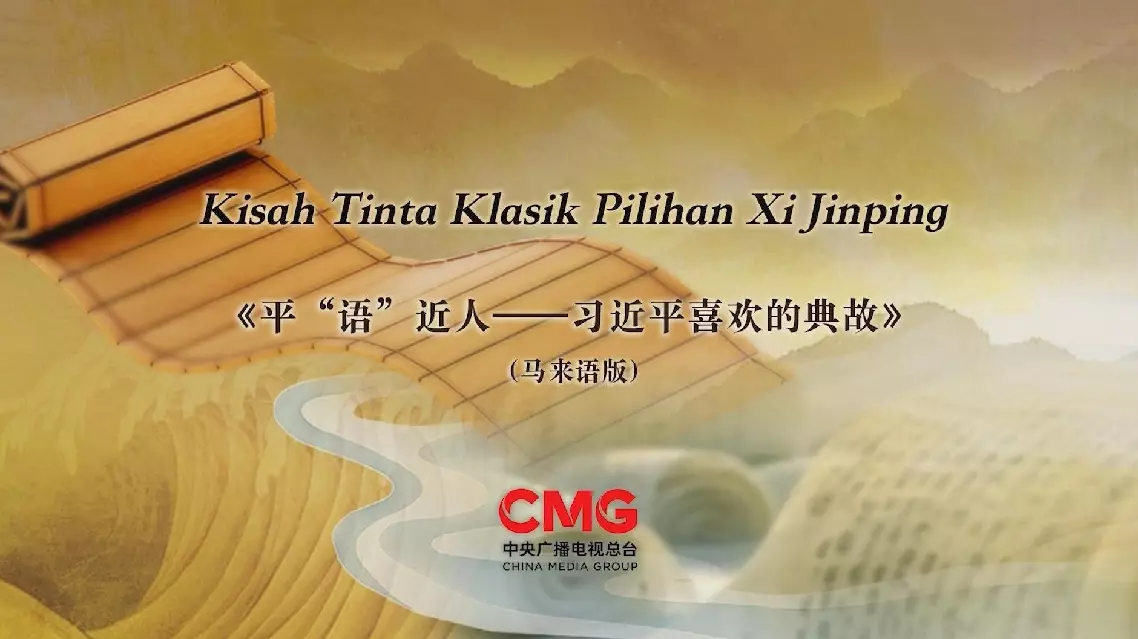
CMG program on Xi Jinping's classical quotes airs in Malaysia
China's fiscal operations remained stable and orderly in 2025, with satisfactory budget execution, according to a fiscal policy execution report released by the Finance Ministry on Tuesday.
China's general public budget revenue hit 21.6 trillion yuan (about 3.14 trillion U.S. dollars) last year, with tax revenue registering positive growth, said the report.
Expenditure in the national general public budget totaled 28.7 trillion yuan, ensuring spending in key areas such as social security and employment, education, and healthcare.
In compliance with the requirement for Party and government offices to tighten their belts, budgets for spending on official overseas visits, official vehicles, and official hospitality decreased by 5 percent compared to that in 2024, ensuring more effective use of government funds.
In terms of measures to boost consumption, efforts were made to expand the scope of consumer goods trade-in program, and provide interest subsidies for consumer loans, according to the report.
Data showed that by the end of 2025, the balance of personal consumption loans from 23 lending institutions approached nearly 6 trillion yuan, an increase of over 500 billion yuan, or 10.2 percent, compared to that in 2024.
The institutions issued more than 2 trillion yuan in loans to over 1.4 million entities in the service sector, supporting them in upgrading consumer infrastructure, and enhancing their service supply.
In terms of efforts to increase investment, the ceiling for new local government special-purpose bonds was set at 4.4 trillion yuan in 2025, an increase of 500 billion yuan from the previous year, the report said.
These funds were primarily channeled into sectors such as transportation infrastructure, government-subsidized housing projects and urban renewal projects, and infrastructure for forward-looking, strategic emerging industries.
In total, more than 48,000 projects were supported and over 300 billion yuan was used as project capital.
Furthermore, the proactive fiscal policy in 2025 played a vital role in fostering the deep integration of sci-tech and industrial innovation, advancing urban-rural integration and regional coordination, and ensuring and improving people's livelihoods, according to the report.

China's fiscal operations remain stable, orderly in 2025: report