Skip to Content Facebook Feature Image

A jungle route once carried hundreds of thousands of migrants. Now the local economy has crashed

News

A jungle route once carried hundreds of thousands of migrants. Now the local economy has crashed
News

News

A jungle route once carried hundreds of thousands of migrants. Now the local economy has crashed

2025-04-16 21:27 Last Updated At:21:30

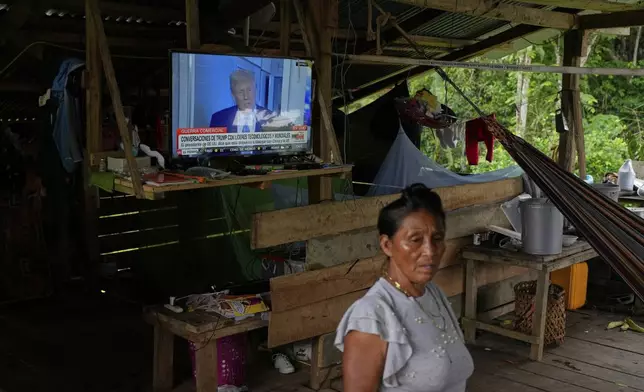
VILLA CALETA, Panama (AP) — The face of U.S. President Donald Trump flashes on the flat-screen TV that Luis Olea bought with the money he earned ferrying migrants through the remote Panamanian jungle during an unprecedented crush of migration.

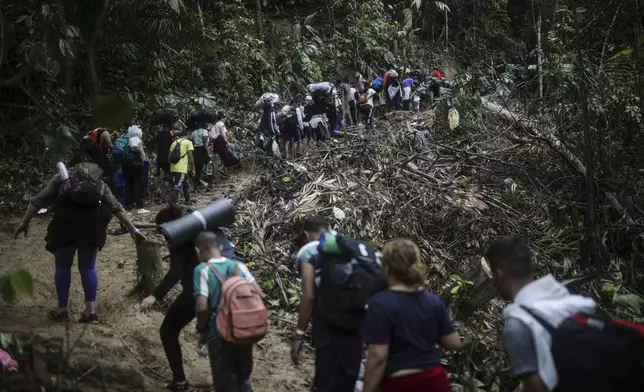
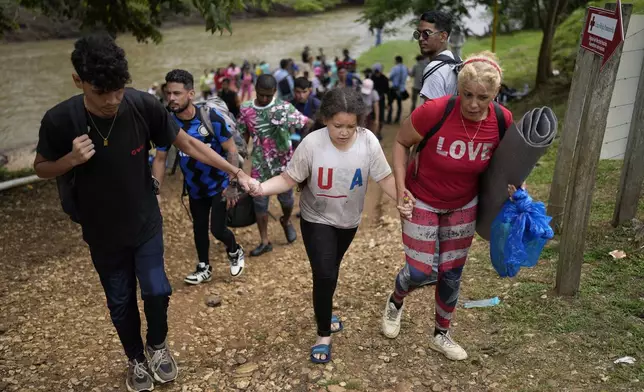
The Darien Gap, a stretch of nearly impenetrable rain forest along the border with Colombia, was transformed into a migratory highway in recent years as more than 1.2 million people from around the world traveled north toward the United States.

More Images
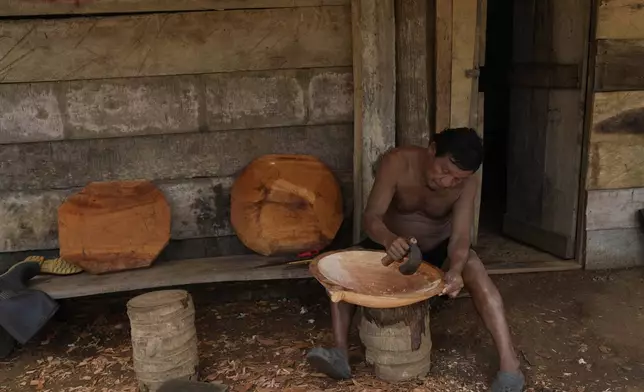
Pedro Chami carves a gold-panning dish made of wood in Villa Caleta, a community in Panama that used to benefit economically by being on the route migrants took after crossing the Darien Gap on their way north to the U.S., Monday, April 7, 2025. (AP Photo/Matias Delacroix)
Pedro Chami carves a gold-panning dish made of wood in Villa Caleta, a community in Panama that used to benefit economically by being on the route migrants took after crossing the Darien Gap on their way north to the U.S., Monday, April 7, 2025. (AP Photo/Matias Delacroix)

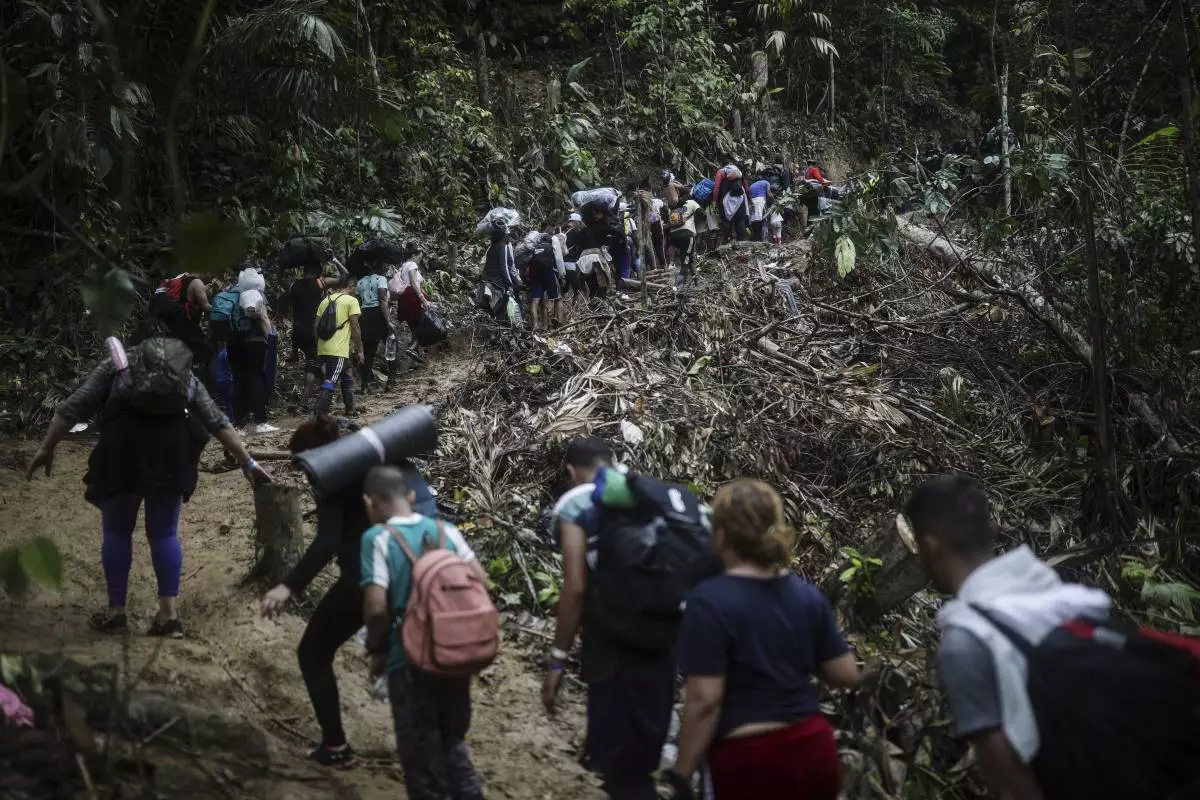
FILE - Migrants walk across the Darien Gap from Colombia to Panama in hopes of reaching the U.S., May 9, 2023. (AP Photo/Ivan Valencia, File)
FILE - Migrants walk across the Darien Gap from Colombia to Panama in hopes of reaching the U.S., May 9, 2023. (AP Photo/Ivan Valencia, File)

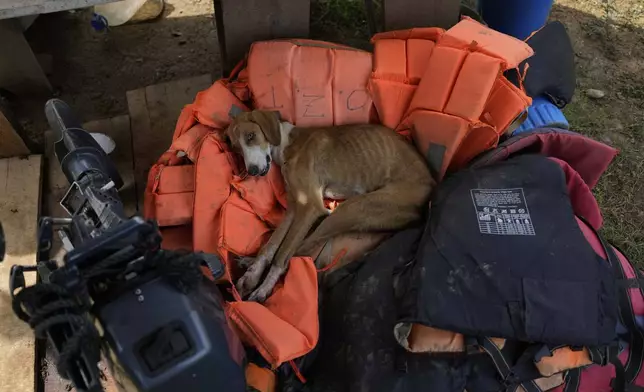
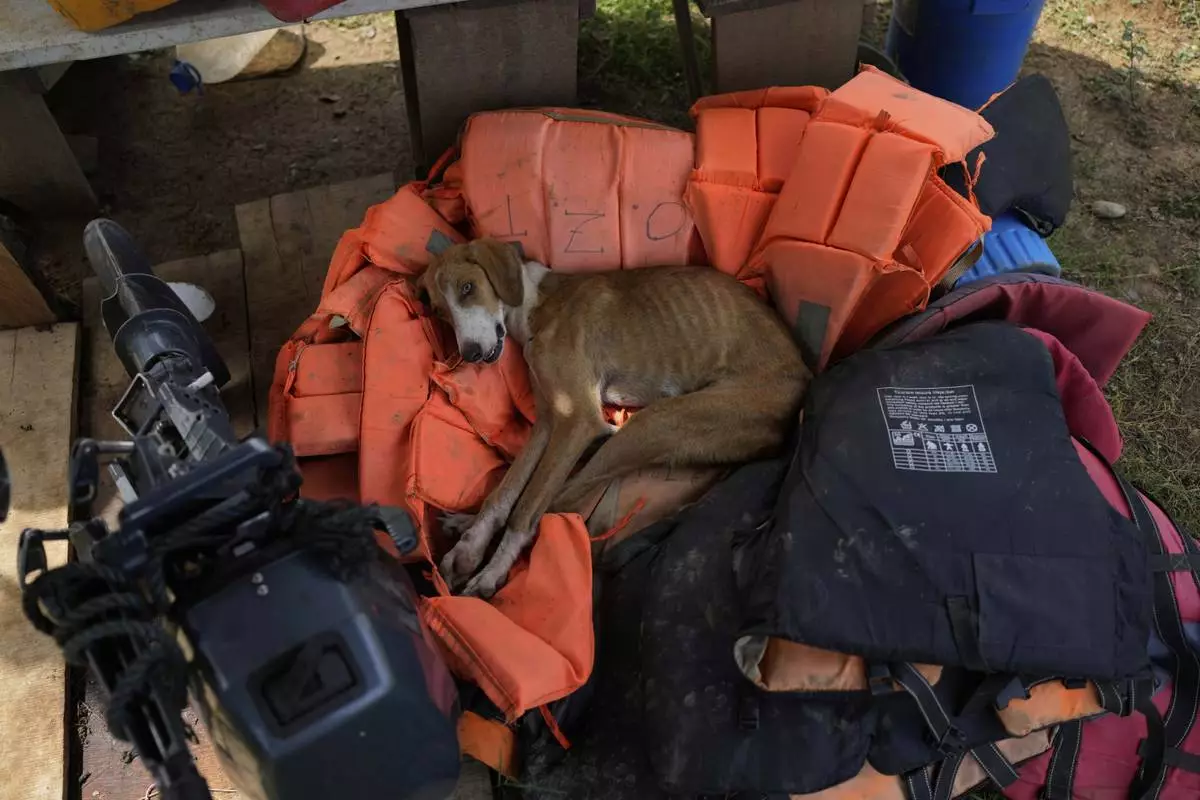
A stray dog rests on lifejackets at the home of a local in Villa Caleta, Panama, Monday, April 7, 2025. The jackets were once used to ferry migrants after their trek across the Darien Gap on their way north to the U.S. (AP Photo/Matias Delacroix)
A stray dog rests on lifejackets at the home of a local in Villa Caleta, Panama, Monday, April 7, 2025. The jackets were once used to ferry migrants after their trek across the Darien Gap on their way north to the U.S. (AP Photo/Matias Delacroix)

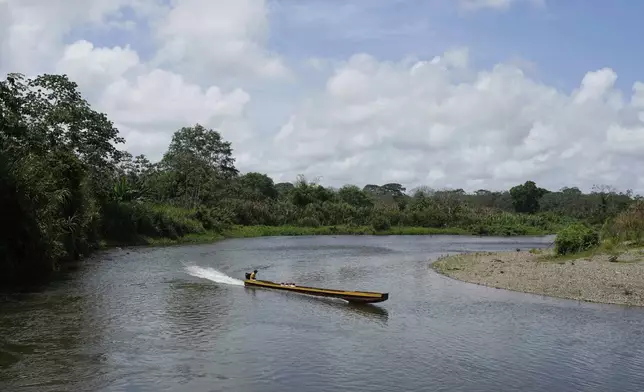
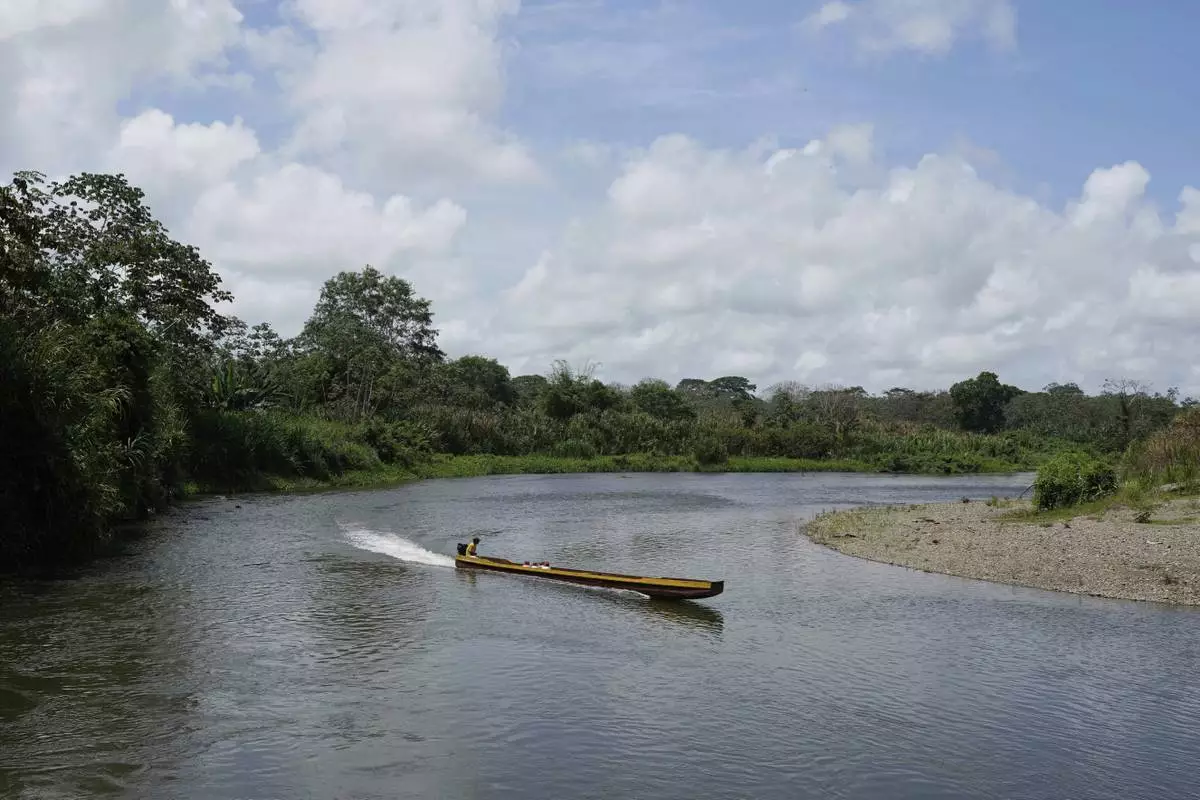
A boat navigates the Tuquesa River near Villa Caleta, a community in Panama that used to benefit economically by being on the route migrants took after crossing the Darien Gap on their way north to the U.S., Monday, April 7, 2025. (AP Photo/Matias Delacroix)
A boat navigates the Tuquesa River near Villa Caleta, a community in Panama that used to benefit economically by being on the route migrants took after crossing the Darien Gap on their way north to the U.S., Monday, April 7, 2025. (AP Photo/Matias Delacroix)
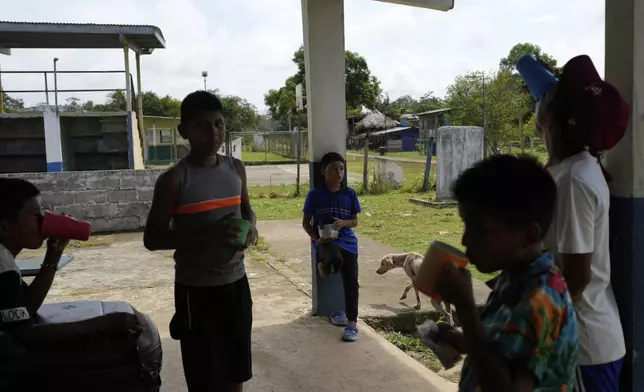
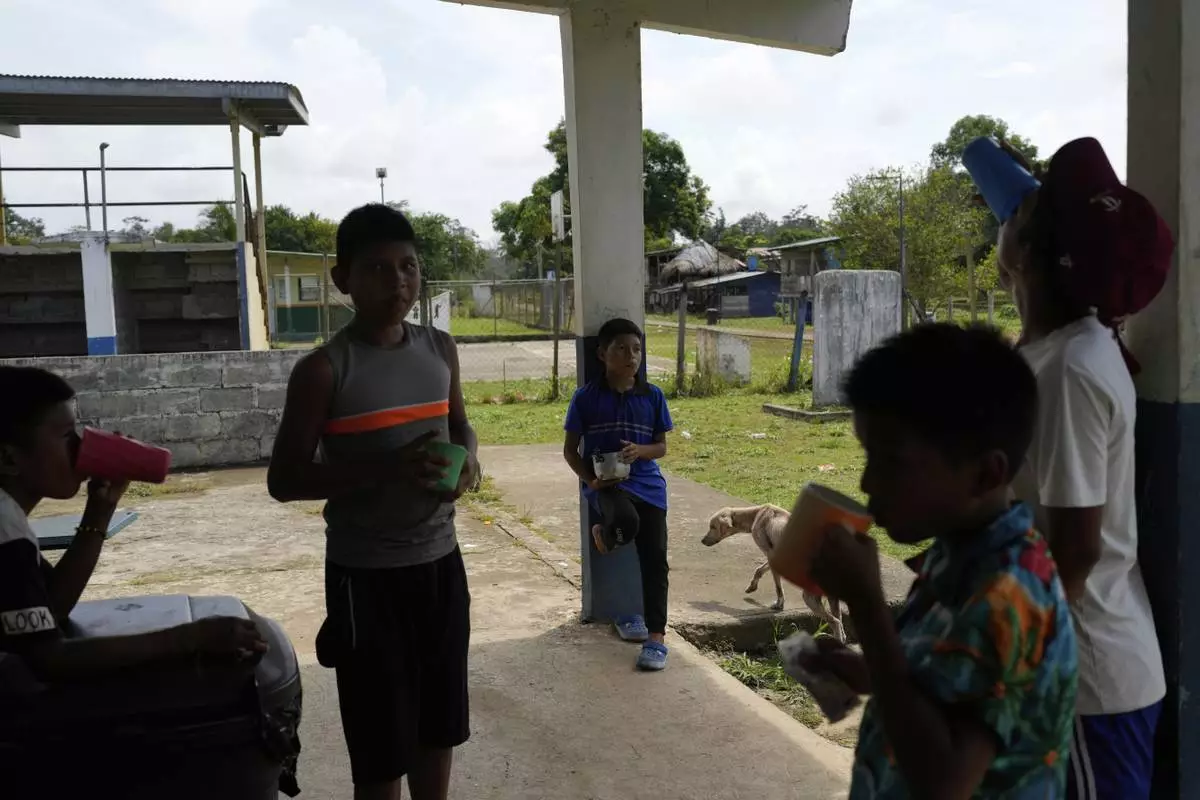
Children eat a snack during a break at school in Villa Caleta, a community in Panama that used to benefit economically by being on the route migrants took after crossing the Darien Gap on their way north to the U.S., Monday, April 7, 2025. (AP Photo/Matias Delacroix)
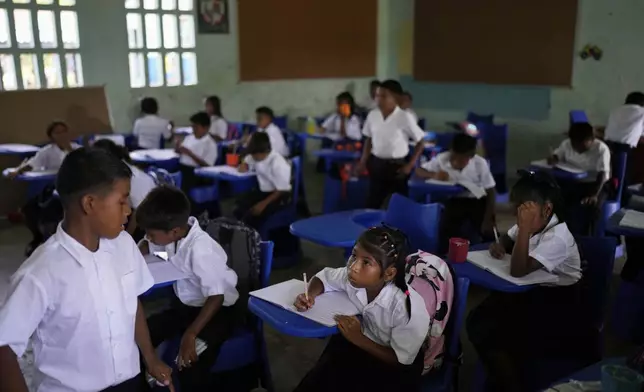
Children eat a snack during a break at school in Villa Caleta, a community in Panama that used to benefit economically by being on the route migrants took after crossing the Darien Gap on their way north to the U.S., Monday, April 7, 2025. (AP Photo/Matias Delacroix)
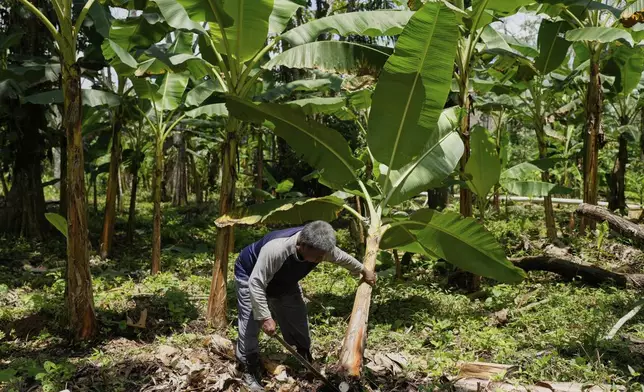
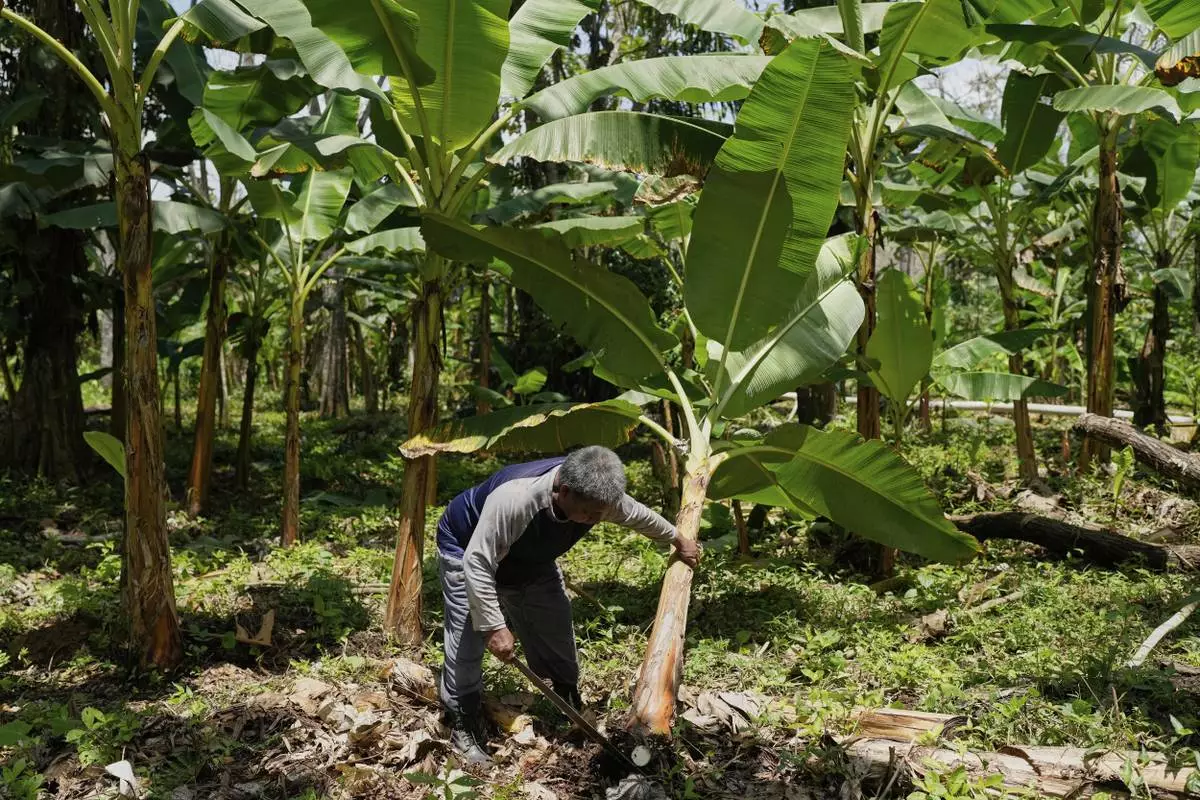
Luis Olea cuts a plantain tree in Villa Caleta, a community in Panama that used to benefit economically by being on the route migrants took after crossing the Darien Gap on their way north to the U.S., Monday, April 7, 2025. (AP Photo/Matias Delacroix)

Luis Olea cuts a plantain tree in Villa Caleta, a community in Panama that used to benefit economically by being on the route migrants took after crossing the Darien Gap on their way north to the U.S., Monday, April 7, 2025. (AP Photo/Matias Delacroix)

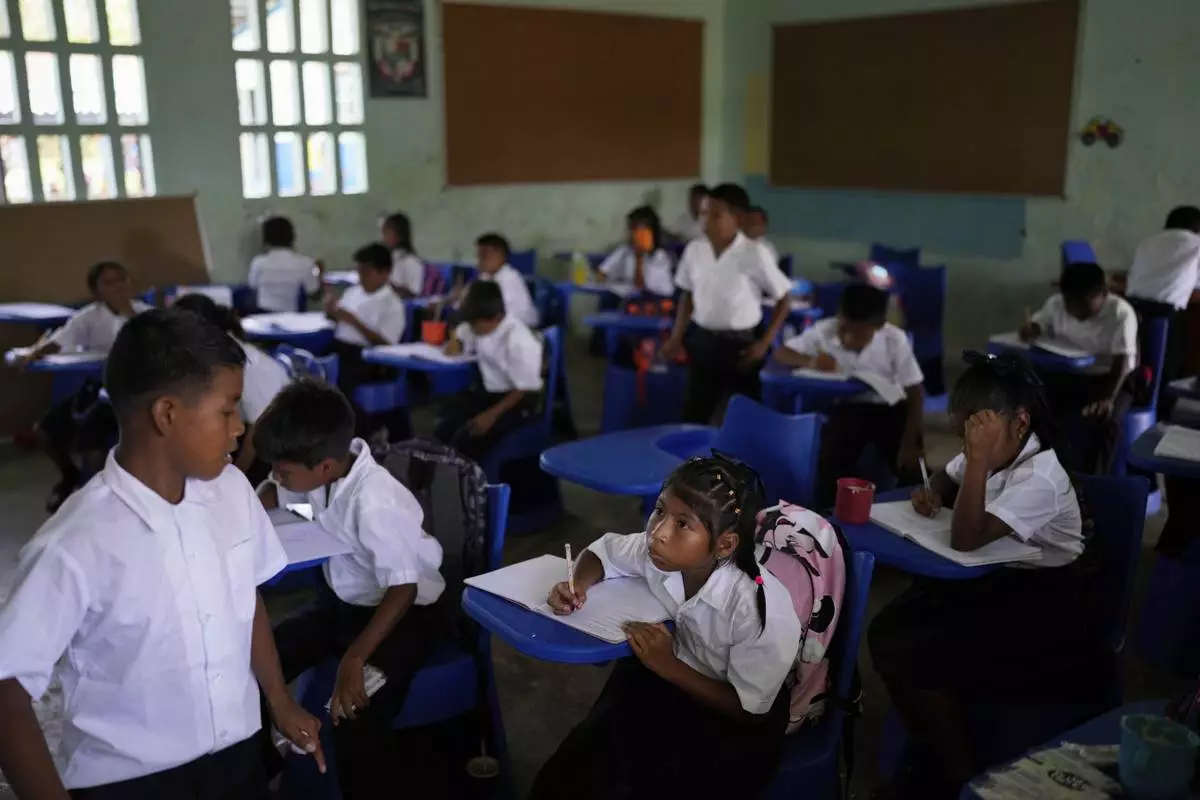
Students attend class in Villa Caleta, a community in Panama that used to benefit economically by being on the route migrants took after crossing the Darien Gap on their way north to the U.S., Monday, April 7, 2025. (AP Photo/Matias Delacroix)

Students attend class in Villa Caleta, a community in Panama that used to benefit economically by being on the route migrants took after crossing the Darien Gap on their way north to the U.S., Monday, April 7, 2025. (AP Photo/Matias Delacroix)

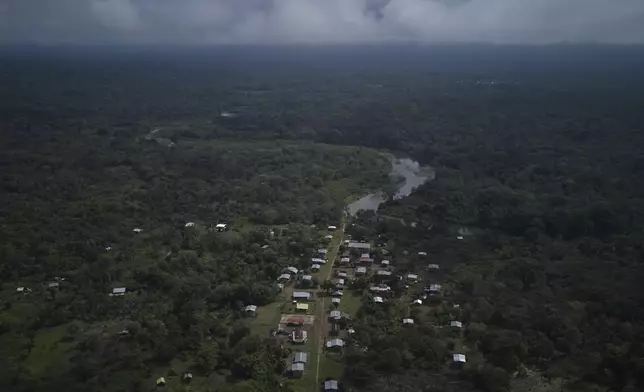
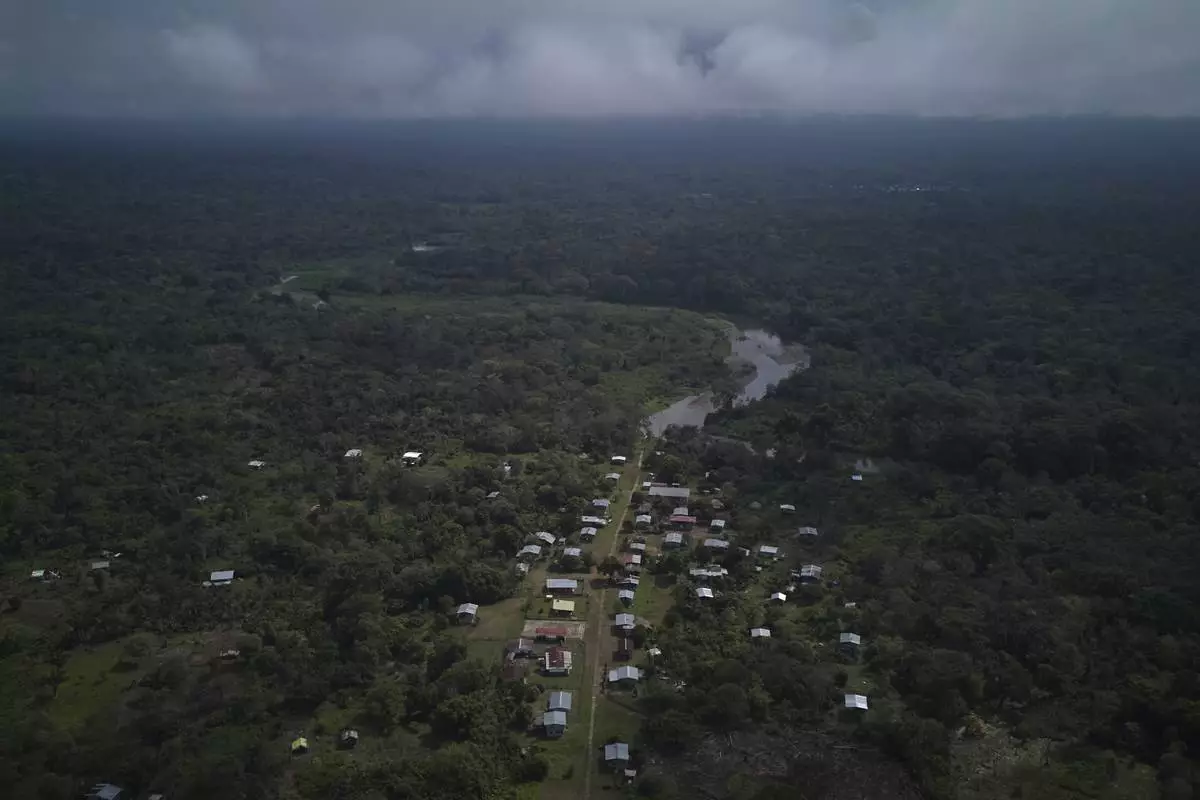
Villa Caleta, a community in Panama that used to benefit economically by being on the route migrants took after crossing the Darien Gap on their way north to the U.S., sits along the Tuquesa River, Monday, April 7, 2025. (AP Photo/Matias Delacroix)
Villa Caleta, a community in Panama that used to benefit economically by being on the route migrants took after crossing the Darien Gap on their way north to the U.S., sits along the Tuquesa River, Monday, April 7, 2025. (AP Photo/Matias Delacroix)

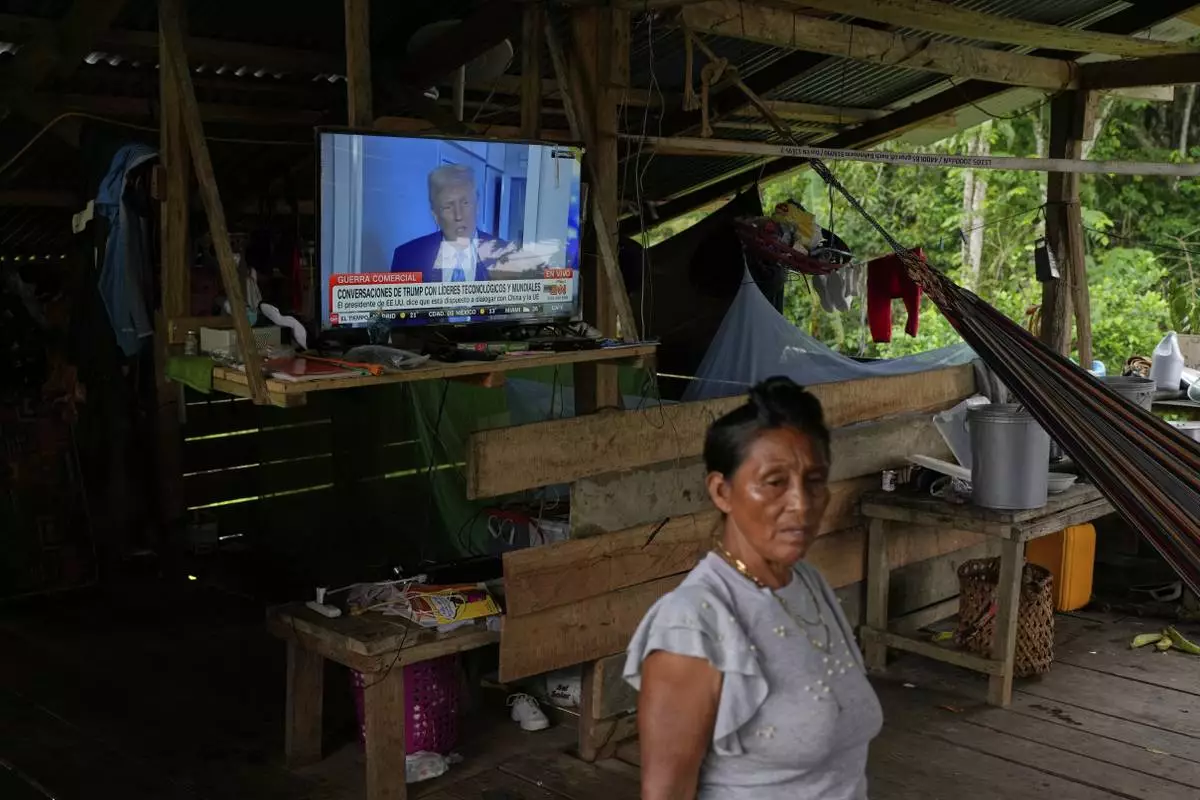
A woman stands at her home where she has the news on, showing U.S. President Donald Trump, in Villa Caleta, a community in Panama that used to benefit economically by being on the route migrants took after crossing the Darien Gap on their way north to the U.S., Monday, April 7, 2025. (AP Photo/Matias Delacroix)
A woman stands at her home where she has the news on, showing U.S. President Donald Trump, in Villa Caleta, a community in Panama that used to benefit economically by being on the route migrants took after crossing the Darien Gap on their way north to the U.S., Monday, April 7, 2025. (AP Photo/Matias Delacroix)
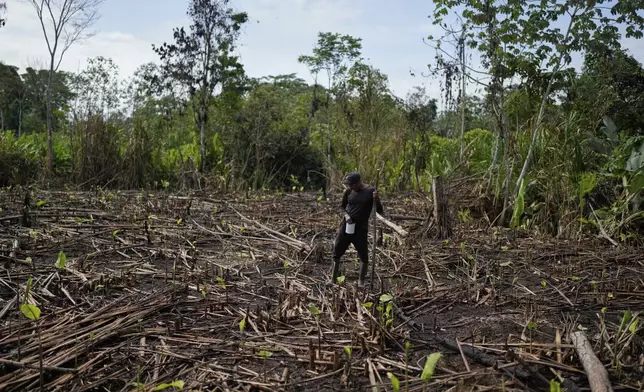
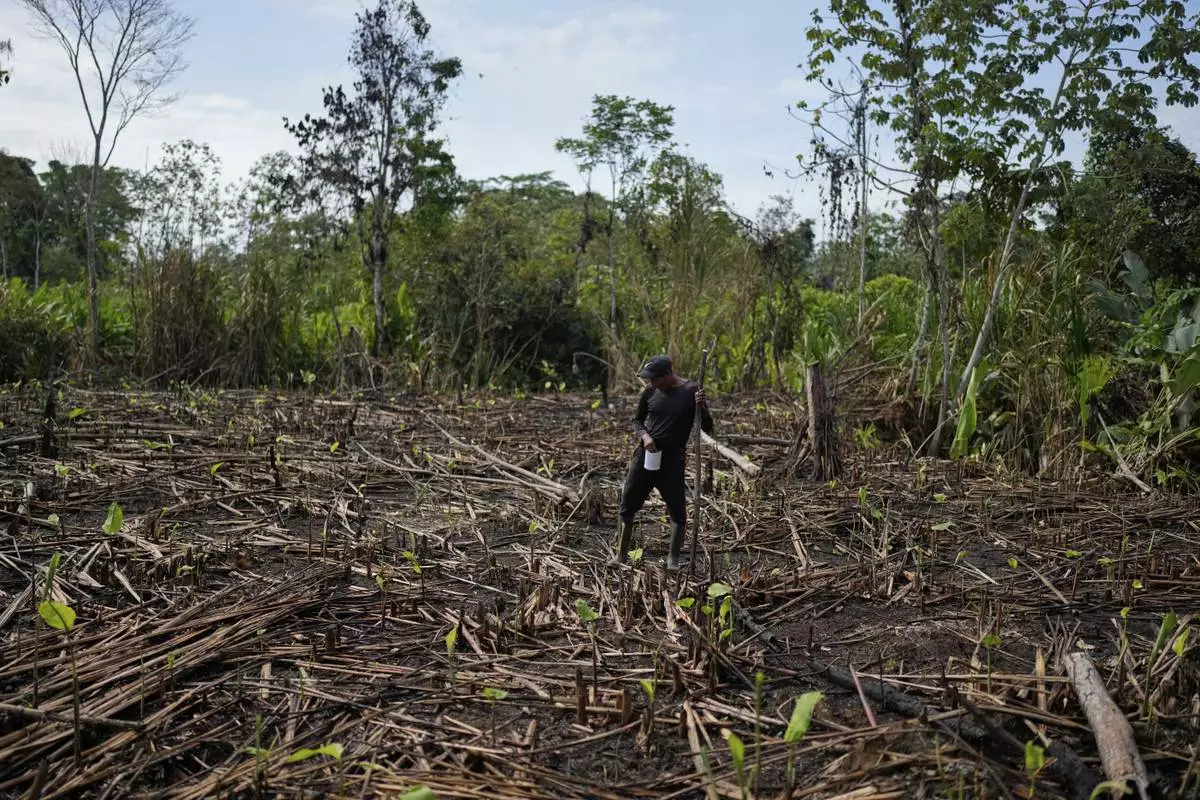
Donaldo Quiros plants rice in his small field in Villa Caleta, a community in Panama that used to benefit economically by being on the route migrants took after crossing the Darien Gap on their way north to the U.S., Monday, April 7, 2025. (AP Photo/Matias Delacroix)
Donaldo Quiros plants rice in his small field in Villa Caleta, a community in Panama that used to benefit economically by being on the route migrants took after crossing the Darien Gap on their way north to the U.S., Monday, April 7, 2025. (AP Photo/Matias Delacroix)

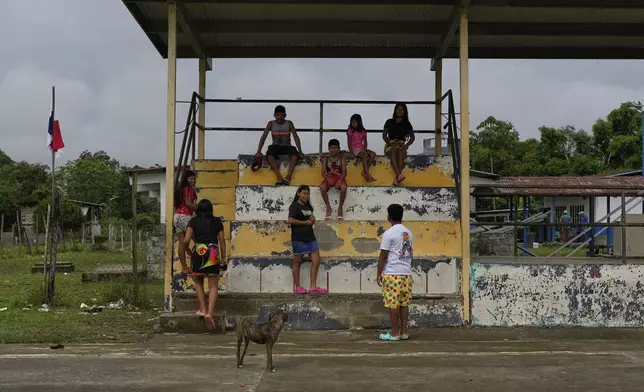
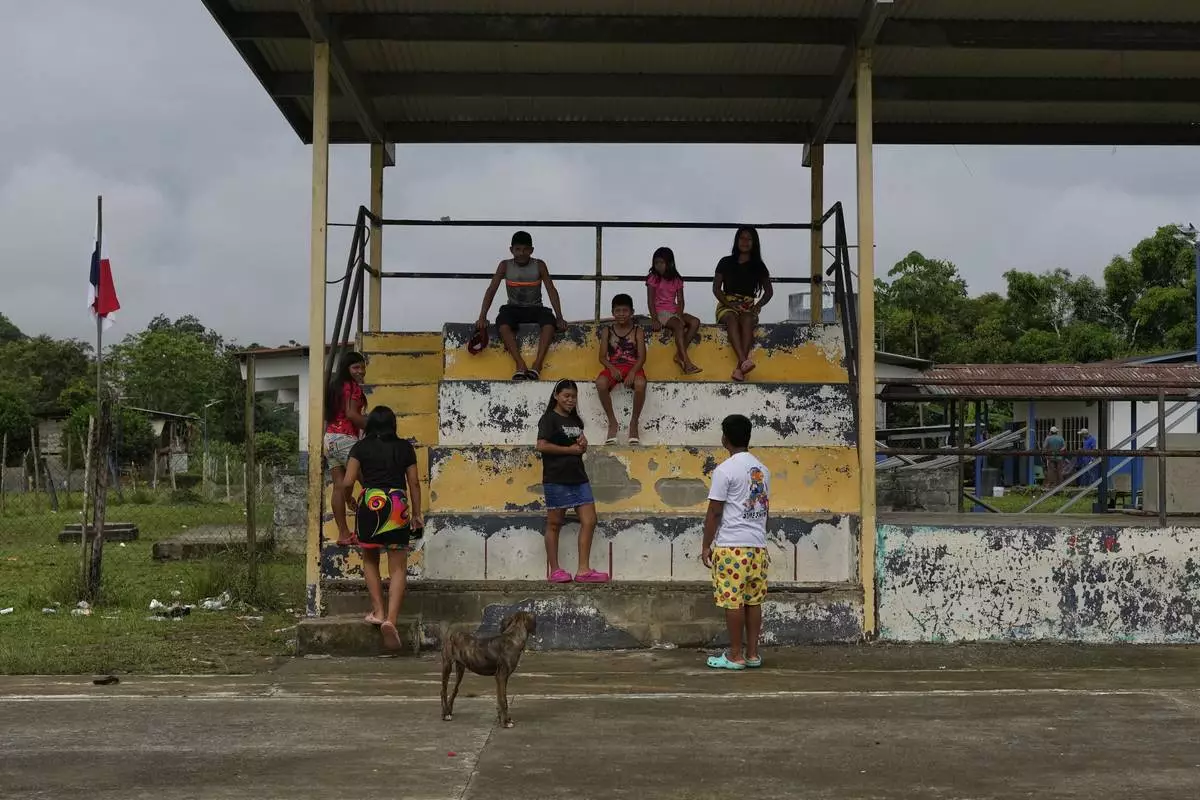
Youths hang out at a ball court in Villa Caleta, a community in Panama that used to benefit economically by being on the route migrants took after crossing the Darien Gap on their way north to the U.S., Monday, April 7, 2025. (AP Photo/Matias Delacroix)

Youths hang out at a ball court in Villa Caleta, a community in Panama that used to benefit economically by being on the route migrants took after crossing the Darien Gap on their way north to the U.S., Monday, April 7, 2025. (AP Photo/Matias Delacroix)

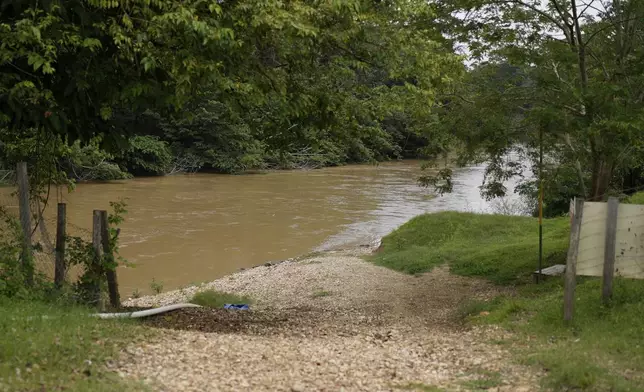
FILE - The riverbank where hundreds of migrants used to disembark daily, after crossing the Darien Gap on their journey north to the United States, in Lajas Blancas, Panama, April 6, 2025. (AP Photo/Matias Delacroix, File)
FILE - The riverbank where hundreds of migrants used to disembark daily, after crossing the Darien Gap on their journey north to the United States, in Lajas Blancas, Panama, April 6, 2025. (AP Photo/Matias Delacroix, File)

FILE - Migrants arrive to Lajas Blancas, Panama, after trekking across the Darien Gap from Colombia in hopes of reaching the U.S., Sept. 26, 2024. (AP Photo/Matias Delacroix, File)
FILE - Migrants arrive to Lajas Blancas, Panama, after trekking across the Darien Gap from Colombia in hopes of reaching the U.S., Sept. 26, 2024. (AP Photo/Matias Delacroix, File)

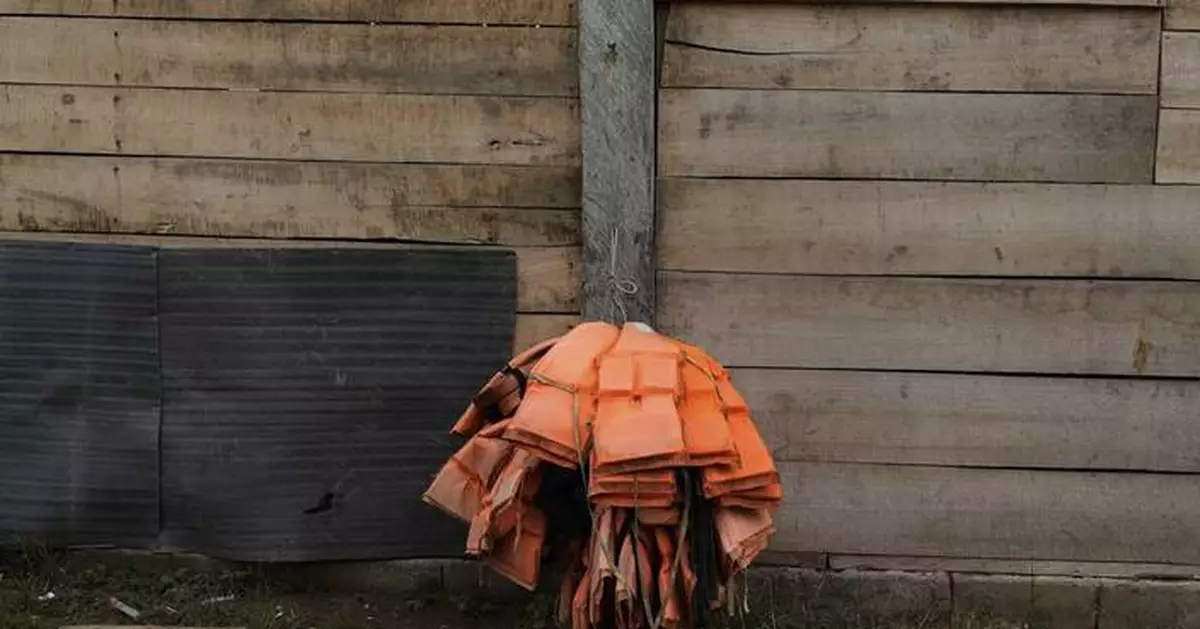
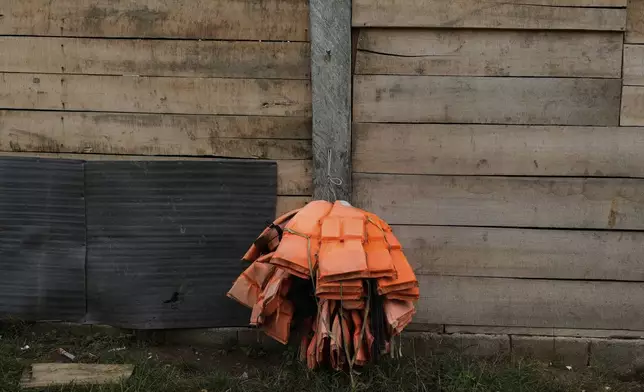
Lifejackets hang at the home of a local in Villa Caleta, Panama, Monday, April 7, 2025. The jackets were once used to ferry migrants after their trek across the Darien Gap on their way north to the U.S. (AP Photo/Matias Delacroix)

Lifejackets hang at the home of a local in Villa Caleta, Panama, Monday, April 7, 2025. The jackets were once used to ferry migrants after their trek across the Darien Gap on their way north to the U.S. (AP Photo/Matias Delacroix)

They brought an economic boom to areas that are hours, even days, from towns or mobile phone signal. Migrants paid for boat rides, clothing, meals and water after grueling and often deadly treks.

With that burst of wealth, many in towns like Olea's Villa Caleta, in the Comarca Indigenous lands, abandoned their plantain and rice crops to carry migrants down the winding rivers.

Olea installed electricity in his one-room wooden home in the heart of the jungle. Families invested in children's education. People built homes and more hopeful lives.

Then the money vanished. After Trump took office in January and slashed access to asylum in the U.S., migration through the Darien Gap virtually disappeared. The new economy bottomed out, and residents newly dependent on it scrambled for options.

“Before, we lived off of the migration,” 63-year-old Olea said. “But now that’s all gone.”

Migration through the Darien Gap soared around 2021 as people fleeing economic crises, war and repressive governments increasingly braved the days-long journey.

While criminal groups raked in money controlling migratory routes and extorting vulnerable people, the mass movement also injected cash into historically underdeveloped regions, said Manuel Orozco, director of the migration, remittances and development program at the Inter-American Dialogue.

“It became a business opportunity for a lot of people,” Orozco said. “It’s like you’ve discovered a gold mine, but once it dries up … you either leave the area and go to the city or stay living in poverty."

Olea, like many of the Comarca, once survived by growing plantains in the jungle next to Villa Caleta, near the Turquesa river flowing near the Colombia border.

When migrants began to move through the region, Olea and others invested in boats to pick up people in the town of Bajo Chiquito, where migrants arrived after their brutal trek.

The boat pilots would transport migrants to a port, Lajas Blancas, where they would take buses north.

Pilots like Olea, known as lancheros, would earn up to $300 a day, far above the $150 a month many had made from crops. The work grew so lucrative that towns along the river struck a deal to take turns transporting migrants, so each community would have their share.

Olea installed solar panels on his tin roof. He elevated his house to protect belongings from floods, and bought a water pump and a television. He now watches Trump talk about tariffs on CNN en Español.

The money connected him, and Darien communities, to the world in a way that had not existed before.

While some residents saved their cash, many more were left reeling from the abrupt drop in migration, said Cholino de Gracia, a community leader.

“The worst part is that some people struggle to eat, because without any income and no supermarkets here, what can people buy?” de Gracia said.

Olea has started growing plantains again, but said it will take at least nine months to yield anything. He could sell his boat, which now sits unused, but conceded: “Who’s going to buy it? There’s no market anymore.”

Pedro Chami, 56, another former boat pilot, gave up on his crops. Now he sits outside his home carving wooden pans. He hopes to try his luck sifting through river sand for flecks of gold.

“I’m trying this to see if things get better, see if I can buy some food," Chami said. "Before, I would always have my $200 a day without fail. Now, I don’t even have a cent.”

At the height of the migration, Panamanian authorities estimated that between 2,500 and 3,000 people crossed the Darien Gap every day. Now, they estimate around 10 cross weekly.

Many more migrants, mainly Venezuelans, have started to travel south along Panama’s Caribbean coast in a “reverse flow " back home.

The Gulf Clan, the criminal group that profited from the northward migration, now scouts the coast to see if it can make money off migrants going the other way, said Elizabeth Dickinson, a senior analyst for International Crisis Group.

Lajas Blancas, the river port where boats dropped off migrants after their jungle journey, has been transformed. It once bustled with crowds browsing stalls selling food, SIM cards, blankets and access to power banks for charging phones.

Now the port and makeshift migrant camp are a ghost town, lined with signs advertising “American clothes” written in red, white and blue.

Zobeida Concepción’s family, living on their land, is one of three that haven’t abandoned Lajas Blancas. The 55-year-old said most who sold goods to migrants have packed up and headed to Panama City to look for work.

“When Donald Trump won, everything came to a screeching halt,” she said.

Concepción’s family sold water, soda and snacks and even temporarily opened a restaurant. With the earnings, she bought a new bed, washing machine, refrigerator and three big freezers to store goods sold to migrants. She started to build a house with her husband.

She said she’s unsure what to do next, but has some savings. She'll keep the freezers, too.

“I’m going to save them for whatever comes,” she said, with future U.S. administrations in mind. “When another government enters, you never know what opportunities there will be."

Follow AP coverage of migration at https://apnews.com/hub/migration
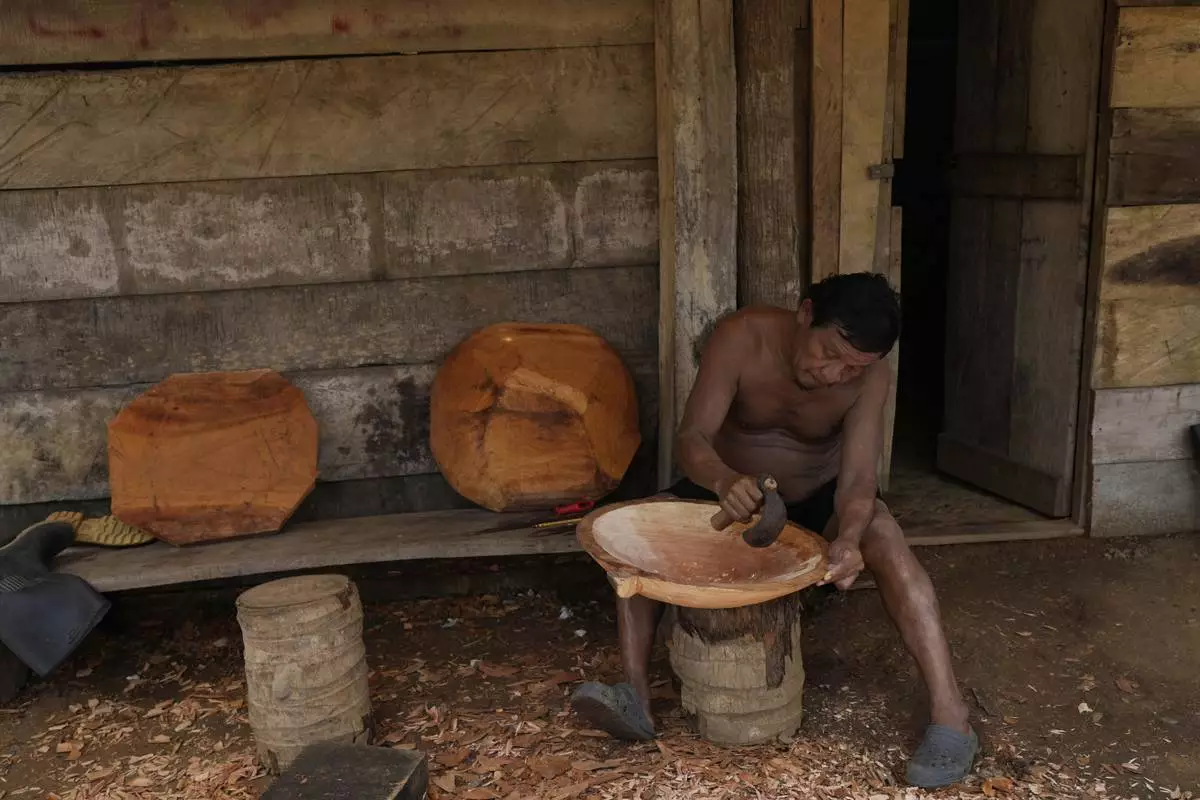
Pedro Chami carves a gold-panning dish made of wood in Villa Caleta, a community in Panama that used to benefit economically by being on the route migrants took after crossing the Darien Gap on their way north to the U.S., Monday, April 7, 2025. (AP Photo/Matias Delacroix)
Pedro Chami carves a gold-panning dish made of wood in Villa Caleta, a community in Panama that used to benefit economically by being on the route migrants took after crossing the Darien Gap on their way north to the U.S., Monday, April 7, 2025. (AP Photo/Matias Delacroix)

FILE - Migrants walk across the Darien Gap from Colombia to Panama in hopes of reaching the U.S., May 9, 2023. (AP Photo/Ivan Valencia, File)
FILE - Migrants walk across the Darien Gap from Colombia to Panama in hopes of reaching the U.S., May 9, 2023. (AP Photo/Ivan Valencia, File)

A stray dog rests on lifejackets at the home of a local in Villa Caleta, Panama, Monday, April 7, 2025. The jackets were once used to ferry migrants after their trek across the Darien Gap on their way north to the U.S. (AP Photo/Matias Delacroix)
A stray dog rests on lifejackets at the home of a local in Villa Caleta, Panama, Monday, April 7, 2025. The jackets were once used to ferry migrants after their trek across the Darien Gap on their way north to the U.S. (AP Photo/Matias Delacroix)

A boat navigates the Tuquesa River near Villa Caleta, a community in Panama that used to benefit economically by being on the route migrants took after crossing the Darien Gap on their way north to the U.S., Monday, April 7, 2025. (AP Photo/Matias Delacroix)
A boat navigates the Tuquesa River near Villa Caleta, a community in Panama that used to benefit economically by being on the route migrants took after crossing the Darien Gap on their way north to the U.S., Monday, April 7, 2025. (AP Photo/Matias Delacroix)
Children eat a snack during a break at school in Villa Caleta, a community in Panama that used to benefit economically by being on the route migrants took after crossing the Darien Gap on their way north to the U.S., Monday, April 7, 2025. (AP Photo/Matias Delacroix)
Children eat a snack during a break at school in Villa Caleta, a community in Panama that used to benefit economically by being on the route migrants took after crossing the Darien Gap on their way north to the U.S., Monday, April 7, 2025. (AP Photo/Matias Delacroix)
Luis Olea cuts a plantain tree in Villa Caleta, a community in Panama that used to benefit economically by being on the route migrants took after crossing the Darien Gap on their way north to the U.S., Monday, April 7, 2025. (AP Photo/Matias Delacroix)

Luis Olea cuts a plantain tree in Villa Caleta, a community in Panama that used to benefit economically by being on the route migrants took after crossing the Darien Gap on their way north to the U.S., Monday, April 7, 2025. (AP Photo/Matias Delacroix)

Students attend class in Villa Caleta, a community in Panama that used to benefit economically by being on the route migrants took after crossing the Darien Gap on their way north to the U.S., Monday, April 7, 2025. (AP Photo/Matias Delacroix)

Students attend class in Villa Caleta, a community in Panama that used to benefit economically by being on the route migrants took after crossing the Darien Gap on their way north to the U.S., Monday, April 7, 2025. (AP Photo/Matias Delacroix)

Villa Caleta, a community in Panama that used to benefit economically by being on the route migrants took after crossing the Darien Gap on their way north to the U.S., sits along the Tuquesa River, Monday, April 7, 2025. (AP Photo/Matias Delacroix)
Villa Caleta, a community in Panama that used to benefit economically by being on the route migrants took after crossing the Darien Gap on their way north to the U.S., sits along the Tuquesa River, Monday, April 7, 2025. (AP Photo/Matias Delacroix)

A woman stands at her home where she has the news on, showing U.S. President Donald Trump, in Villa Caleta, a community in Panama that used to benefit economically by being on the route migrants took after crossing the Darien Gap on their way north to the U.S., Monday, April 7, 2025. (AP Photo/Matias Delacroix)
A woman stands at her home where she has the news on, showing U.S. President Donald Trump, in Villa Caleta, a community in Panama that used to benefit economically by being on the route migrants took after crossing the Darien Gap on their way north to the U.S., Monday, April 7, 2025. (AP Photo/Matias Delacroix)
Donaldo Quiros plants rice in his small field in Villa Caleta, a community in Panama that used to benefit economically by being on the route migrants took after crossing the Darien Gap on their way north to the U.S., Monday, April 7, 2025. (AP Photo/Matias Delacroix)
Donaldo Quiros plants rice in his small field in Villa Caleta, a community in Panama that used to benefit economically by being on the route migrants took after crossing the Darien Gap on their way north to the U.S., Monday, April 7, 2025. (AP Photo/Matias Delacroix)

Youths hang out at a ball court in Villa Caleta, a community in Panama that used to benefit economically by being on the route migrants took after crossing the Darien Gap on their way north to the U.S., Monday, April 7, 2025. (AP Photo/Matias Delacroix)

Youths hang out at a ball court in Villa Caleta, a community in Panama that used to benefit economically by being on the route migrants took after crossing the Darien Gap on their way north to the U.S., Monday, April 7, 2025. (AP Photo/Matias Delacroix)

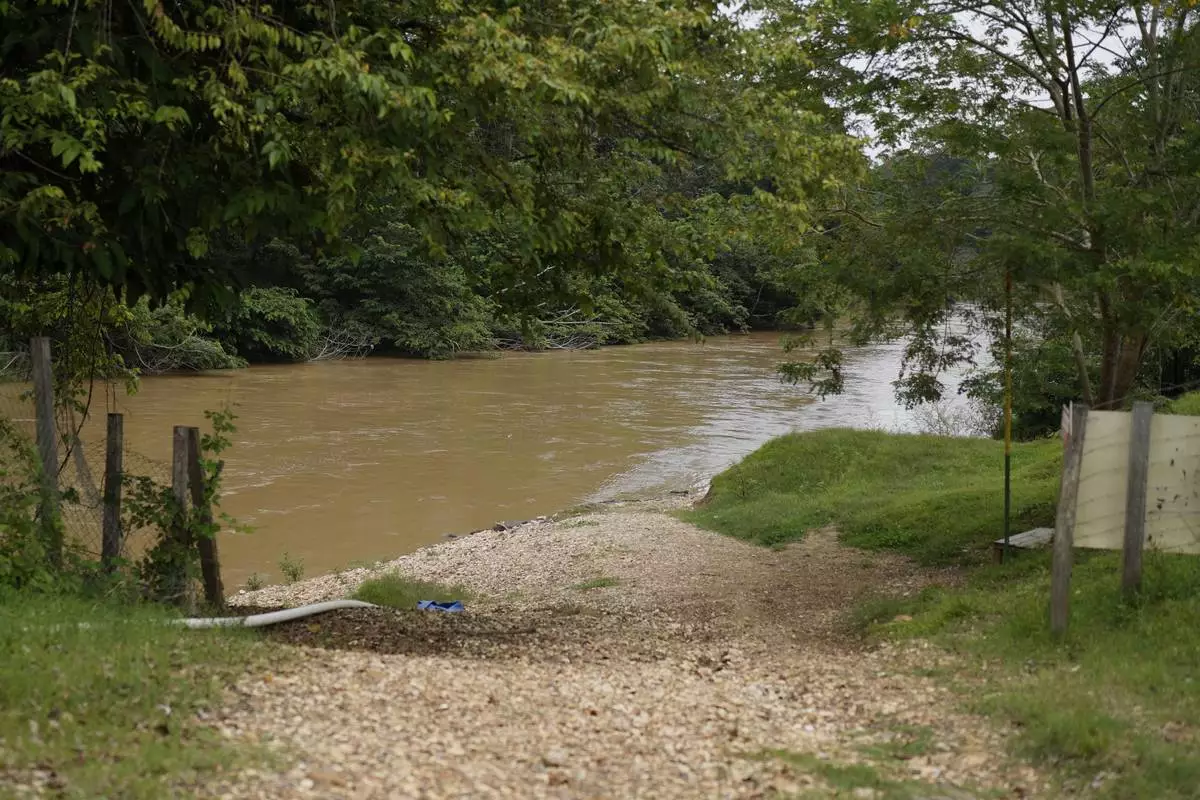
FILE - The riverbank where hundreds of migrants used to disembark daily, after crossing the Darien Gap on their journey north to the United States, in Lajas Blancas, Panama, April 6, 2025. (AP Photo/Matias Delacroix, File)
FILE - The riverbank where hundreds of migrants used to disembark daily, after crossing the Darien Gap on their journey north to the United States, in Lajas Blancas, Panama, April 6, 2025. (AP Photo/Matias Delacroix, File)

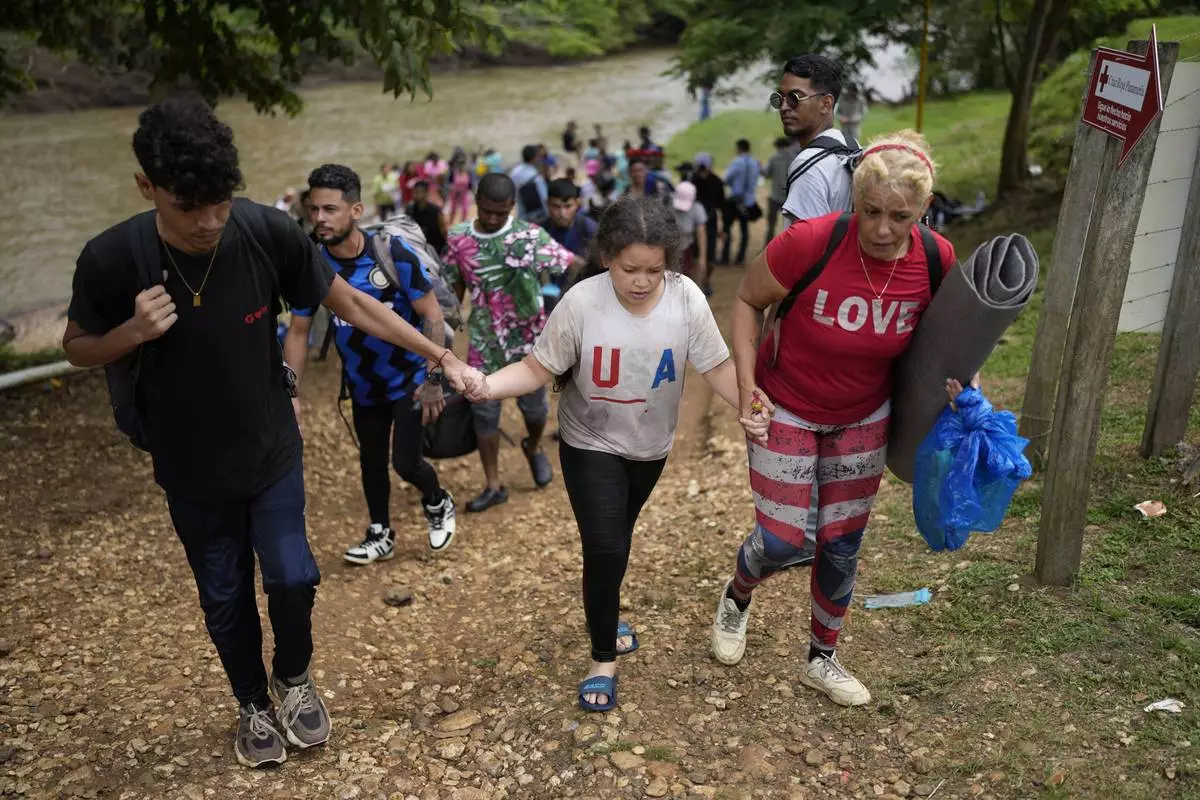
FILE - Migrants arrive to Lajas Blancas, Panama, after trekking across the Darien Gap from Colombia in hopes of reaching the U.S., Sept. 26, 2024. (AP Photo/Matias Delacroix, File)
FILE - Migrants arrive to Lajas Blancas, Panama, after trekking across the Darien Gap from Colombia in hopes of reaching the U.S., Sept. 26, 2024. (AP Photo/Matias Delacroix, File)

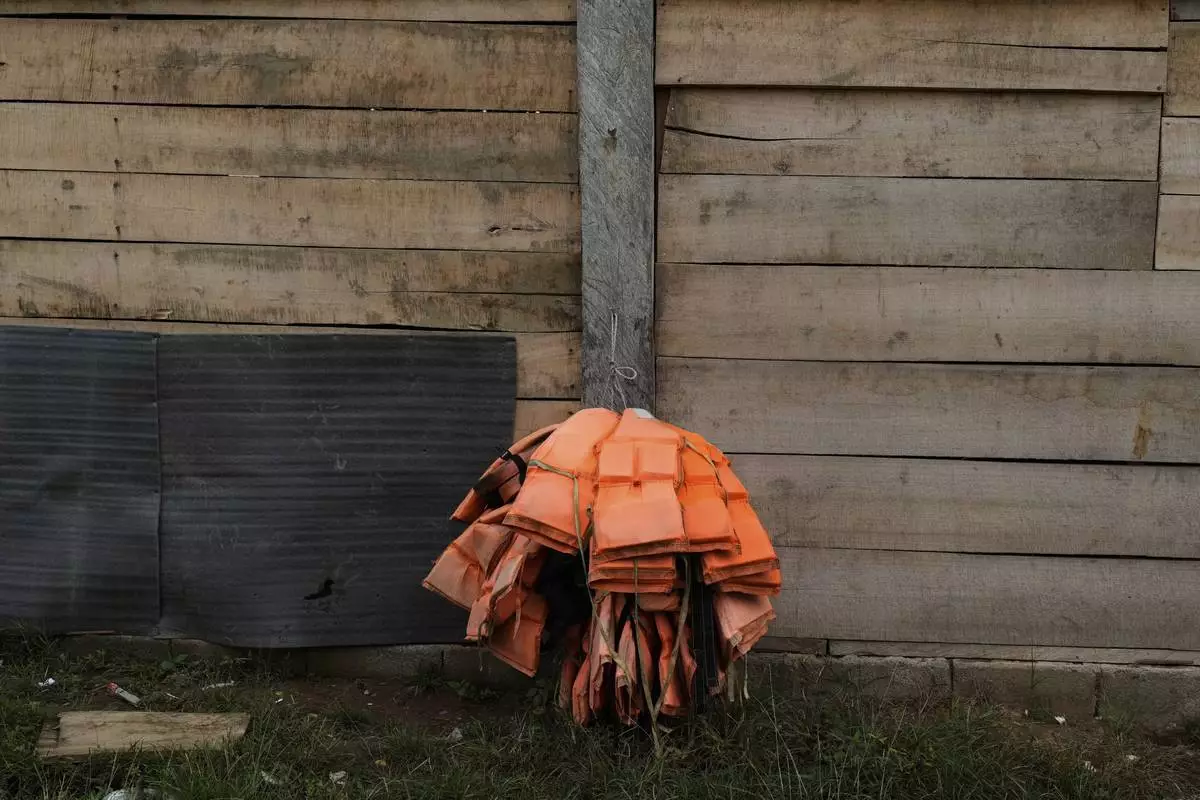
Lifejackets hang at the home of a local in Villa Caleta, Panama, Monday, April 7, 2025. The jackets were once used to ferry migrants after their trek across the Darien Gap on their way north to the U.S. (AP Photo/Matias Delacroix)

Lifejackets hang at the home of a local in Villa Caleta, Panama, Monday, April 7, 2025. The jackets were once used to ferry migrants after their trek across the Darien Gap on their way north to the U.S. (AP Photo/Matias Delacroix)

DUBAI, United Arab Emirates (AP) — U.S. President Donald Trump said Iran wants to negotiate with Washington after his threat to strike the Islamic Republic over its bloody crackdown on protesters, a move coming as activists said Monday the death toll in the nationwide demonstrations rose to at least 544.

Iran had no immediate reaction to the news, which came after the foreign minister of Oman — long an interlocutor between Washington and Tehran — traveled to Iran this weekend. It also remains unclear just what Iran could promise, particularly as Trump has set strict demands over its nuclear program and its ballistic missile arsenal, which Tehran insists is crucial for its national defense.

Meanwhile Monday, Iran called for pro-government demonstrators to head to the streets in support of the theocracy, a show of force after days of protests directly challenging the rule of 86-year-old Supreme Leader Ayatollah Ali Khamenei. Iranian state television aired chants from the crowd, who shouted “Death to America!” and “Death to Israel!”

Trump and his national security team have been weighing a range of potential responses against Iran including cyberattacks and direct strikes by the U.S. or Israel, according to two people familiar with internal White House discussions who were not authorized to comment publicly and spoke on condition of anonymity.

“The military is looking at it, and we’re looking at some very strong options,” Trump told reporters on Air Force One on Sunday night. Asked about Iran’s threats of retaliation, he said: “If they do that, we will hit them at levels that they’ve never been hit before.”

Trump said that his administration was in talks to set up a meeting with Tehran, but cautioned that he may have to act first as reports of the death toll in Iran mount and the government continues to arrest protesters.

“I think they’re tired of being beat up by the United States,” Trump said. “Iran wants to negotiate.”

He added: “The meeting is being set up, but we may have to act because of what’s happening before the meeting. But a meeting is being set up. Iran called, they want to negotiate.”

Iran through country's parliamentary speaker warned Sunday that the U.S. military and Israel would be “legitimate targets” if America uses force to protect demonstrators.

More than 10,600 people also have been detained over the two weeks of protests, said the U.S.-based Human Rights Activists News Agency, which has been accurate in previous unrest in recent years and gave the death toll. It relies on supporters in Iran crosschecking information. It said 496 of the dead were protesters and 48 were with security forces.

With the internet down in Iran and phone lines cut off, gauging the demonstrations from abroad has grown more difficult. The Associated Press has been unable to independently assess the toll. Iran’s government has not offered overall casualty figures.

Those abroad fear the information blackout is emboldening hard-liners within Iran’s security services to launch a bloody crackdown. Protesters flooded the streets in the country’s capital and its second-largest city on Saturday night into Sunday morning. Online videos purported to show more demonstrations Sunday night into Monday, with a Tehran official acknowledging them in state media.

In Tehran, a witness told the AP that the streets of the capital empty at the sunset call to prayers each night. By the Isha, or nighttime prayer, the streets are deserted.

Part of that stems from the fear of getting caught in the crackdown. Police sent the public a text message that warned: “Given the presence of terrorist groups and armed individuals in some gatherings last night and their plans to cause death, and the firm decision to not tolerate any appeasement and to deal decisively with the rioters, families are strongly advised to take care of their youth and teenagers.”

Another text, which claimed to come from the intelligence arm of the paramilitary Revolutionary Guard, also directly warned people not to take part in demonstrations.

“Dear parents, in view of the enemy’s plan to increase the level of naked violence and the decision to kill people, ... refrain from being on the streets and gathering in places involved in violence, and inform your children about the consequences of cooperating with terrorist mercenaries, which is an example of treason against the country,” the text warned.

The witness spoke to the AP on condition of anonymity due to the ongoing crackdown.

The demonstrations began Dec. 28 over the collapse of the Iranian rial currency, which trades at over 1.4 million to $1, as the country’s economy is squeezed by international sanctions in part levied over its nuclear program. The protests intensified and grew into calls directly challenging Iran’s theocracy.

Nikhinson reported from aboard Air Force One.

In this frame grab from video obtained by the AP outside Iran, a masked demonstrator holds a picture of Iran's Crown Prince Reza Pahlavi during a protest in Tehran, Iran, Friday, January. 9, 2026. (UGC via AP)

In this frame grab from video obtained by the AP outside Iran, a masked demonstrator holds a picture of Iran's Crown Prince Reza Pahlavi during a protest in Tehran, Iran, Friday, January. 9, 2026. (UGC via AP)

In this frame grab from footage circulating on social media from Iran shows protesters taking to the streets despite an intensifying crackdown as the Islamic Republic remains cut off from the rest of the world in Tehran, Iran, Friday, Jan. 9, 2026.(UGC via AP)

In this frame grab from footage circulating on social media from Iran shows protesters taking to the streets despite an intensifying crackdown as the Islamic Republic remains cut off from the rest of the world in Tehran, Iran, Friday, Jan. 9, 2026.(UGC via AP)

In this frame grab from footage circulating on social media from Iran showed protesters once again taking to the streets of Tehran despite an intensifying crackdown as the Islamic Republic remains cut off from the rest of the world in Tehran, Iran, Saturday Jan. 10, 2026. (UGC via AP)

In this frame grab from footage circulating on social media from Iran showed protesters once again taking to the streets of Tehran despite an intensifying crackdown as the Islamic Republic remains cut off from the rest of the world in Tehran, Iran, Saturday Jan. 10, 2026. (UGC via AP)

Recommended Articles