NEW YORK (AP) — U.S. stocks fell Wednesday after Nvidia warned new restrictions on exports to China will chisel billions of dollars off its results, while companies around the world said President Donald Trump’s trade war is clouding forecasts for how they and the economy will do this year.
The S&P 500 sank 2.2% after falling as much as 3.3% earlier. Such an amount would have vied for one of its worst losses in years before the historic, chaotic swings that have upended Wall Street in recent weeks.
Click to Gallery
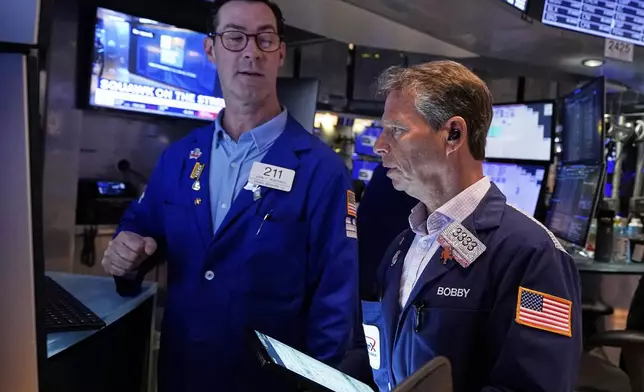
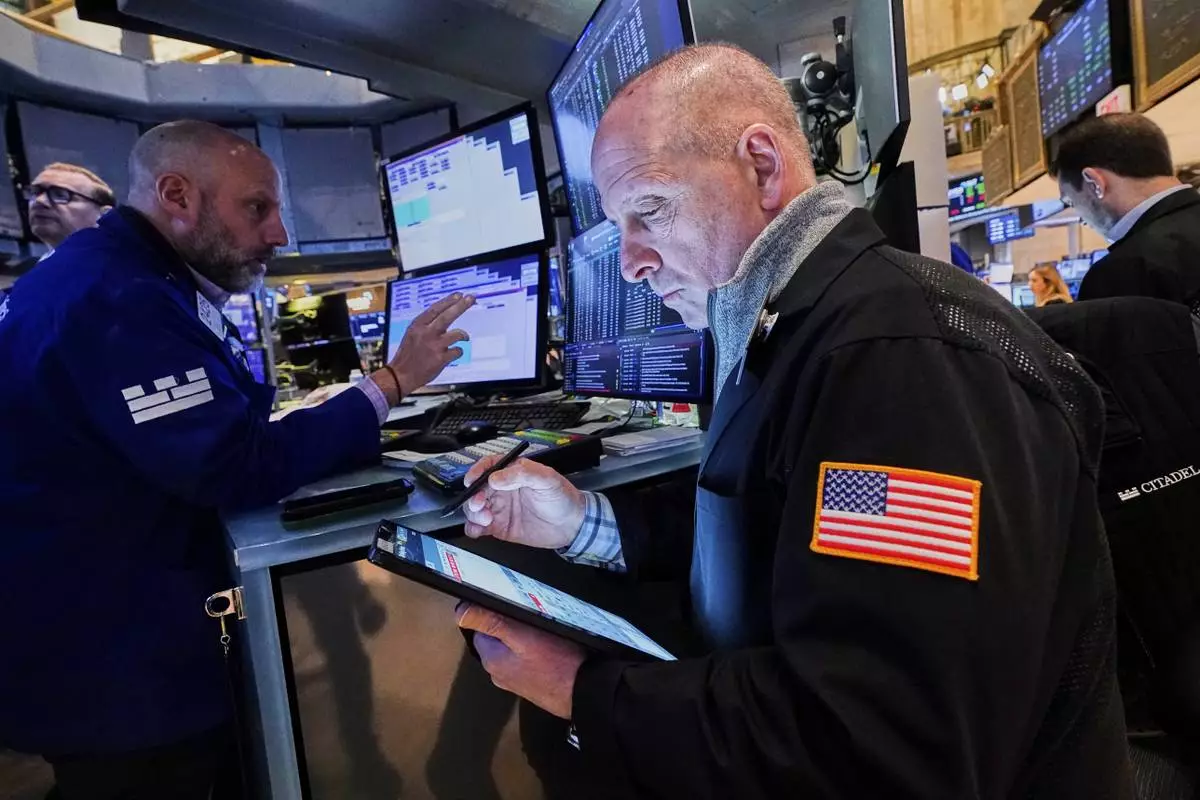
Specialist John McNierney. Left, and trader Robert Charmak work on the floor of the New York Stock Exchange, Wednesday, April 16, 2025. (AP Photo/Richard Drew)
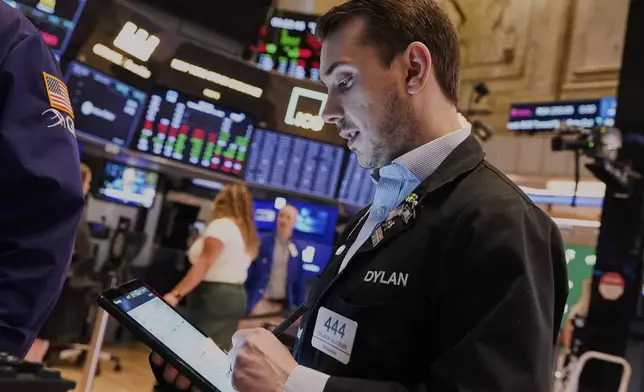
Trader Dylan Halvorsan works on the floor of the New York Stock Exchange, Wednesday, April 16, 2025. (AP Photo/Richard Drew)
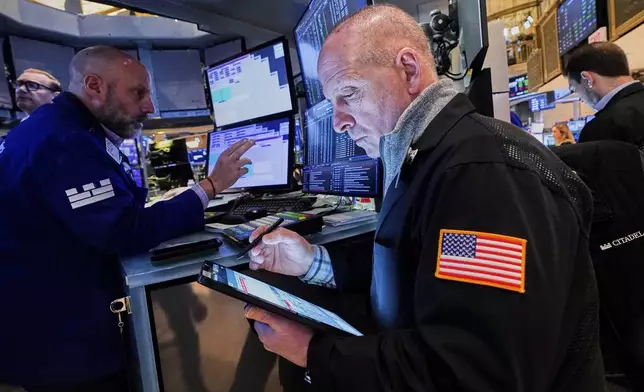
Specialist Meric Greenbaum, left and trader Michael Urkonis, center, work on the floor of the New York Stock Exchange, Wednesday, April 16, 2025. (AP Photo/Richard Drew)
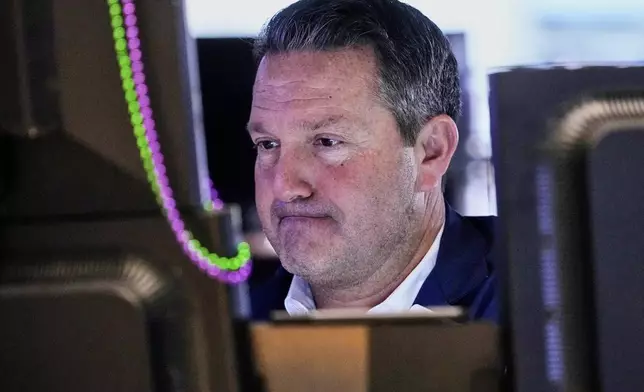
Trader Leon Montana works on the floor of the New York Stock Exchange, Wednesday, April 16, 2025. (AP Photo/Richard Drew)
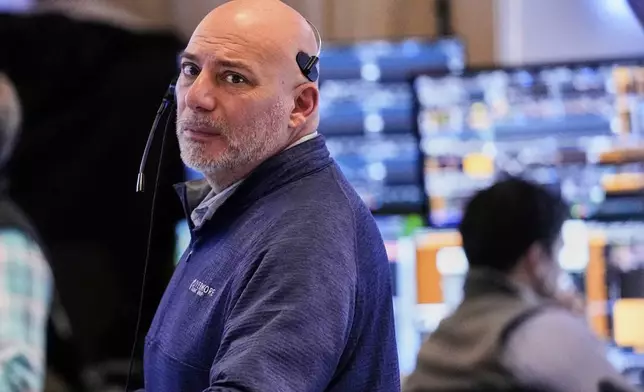
Trader Vincent Napolitano works on the floor of the New York Stock Exchange, Wednesday, April 16, 2025. (AP Photo/Richard Drew)
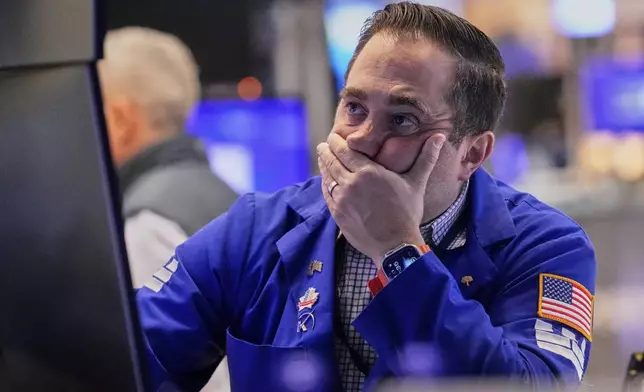
Specialist Gennaro Saporito works on the floor of the New York Stock Exchange, Wednesday, April 16, 2025. (AP Photo/Richard Drew)
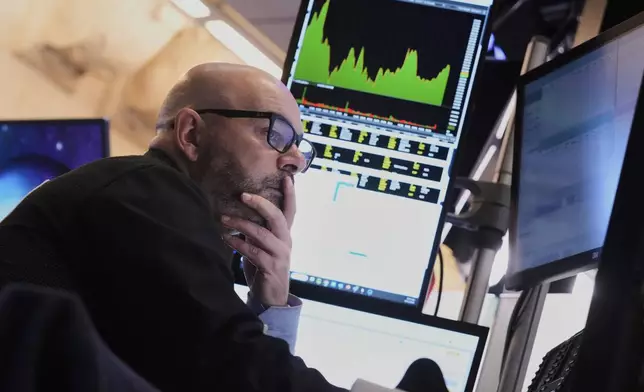
Trader Fred Demarco works on the floor of the New York Stock Exchange, Tuesday, April 15, 2025. (AP Photo/Richard Drew)
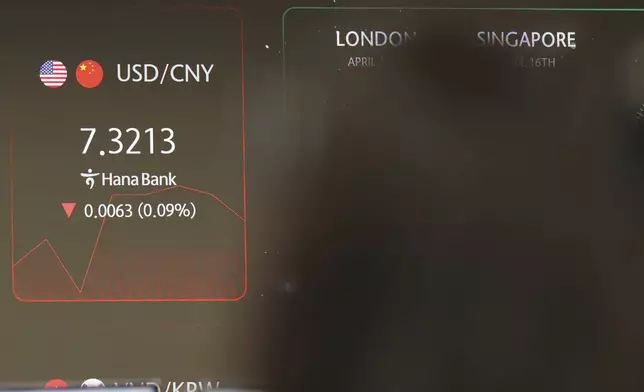
A screen showing the foreign exchange rate between U.S. dollar and Chinese yuan is seen at a foreign exchange dealing room in Seoul, South Korea, Wednesday, April 16, 2025. (AP Photo/Lee Jin-man)
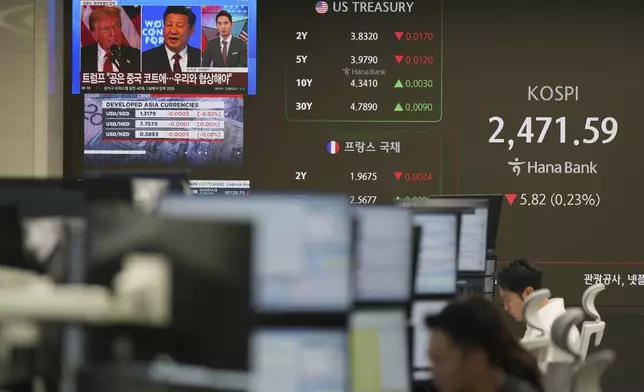
ADDS THE NAME OF THE BANK - Screens showing the Korea Composite Stock Price Index (KOSPI), right, is seen near the tv screen showing President Donald Trump and Chinese President Xi Jinping during the news reporting at a foreign exchange dealing room of Hana Bank in Seoul, South Korea, Wednesday, April 16, 2025. (AP Photo/Lee Jin-man)
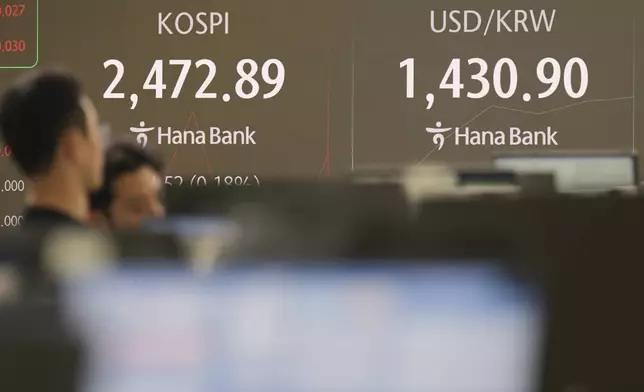
ADDS THE NAME OF THE BANK - The screens showing the Korea Composite Stock Price Index (KOSPI), left, and the foreign exchange rate between U.S. dollar and South Korean won are seen at a foreign exchange dealing room of Hana Bank in Seoul, South Korea, Wednesday, April 16, 2025. (AP Photo/Lee Jin-man)
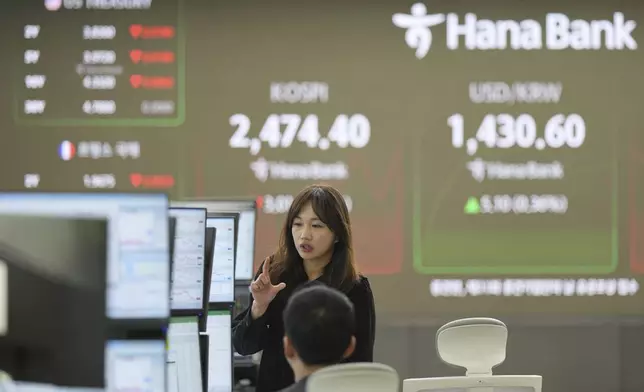
ADDS THE NAME OF THE BANK - Employees of Hana Bank talk near the screens showing the Korea Composite Stock Price Index (KOSPI), center, and the foreign exchange rate between U.S. dollar and South Korean won at a foreign exchange dealing room in Seoul, South Korea, Wednesday, April 16, 2025. (AP Photo/Lee Jin-man)
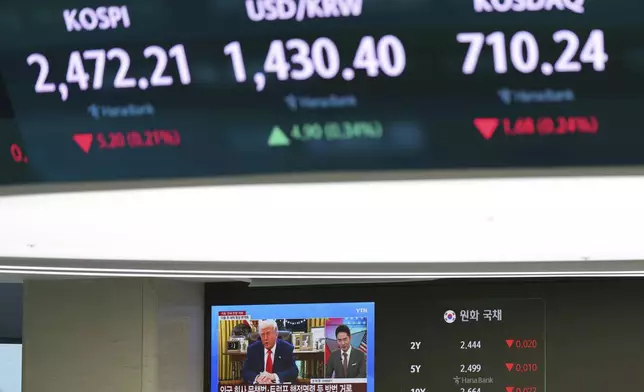
ADDS THE NAME OF THE BANK - A tv screen, bottom, showing President Donald Trump during the news reporting near the screens, top, showing the Korea Composite Stock Price Index (KOSPI), left, the foreign exchange rate between U.S. dollar and South Korean won and the Korean Securities Dealers Automated Quotations (KOSDAQ) are seen at a foreign exchange dealing room of Hana Bank in Seoul, South Korea, Wednesday, April 16, 2025. (AP Photo/Lee Jin-man)
ADDS THE NAME OF THE BANK - Hana Bank employees watch computer monitors at a foreign exchange dealing room in Seoul, South Korea, Wednesday, April 16, 2025. (AP Photo/Lee Jin-man)
The Dow Jones Industrial Average dropped 699 points, or 1.7%, and the Nasdaq composite sank a market-leading 3.1%.
Losses accelerated after the head of the Federal Reserve said again that Trump’s tariffs appear to be bigger than it expected, which could in turn slow the economy and raise inflation more than it had earlier thought. But Jerome Powell also said again that the Fed will need more time before deciding whether to lower interest rates, which could help the economy but make inflation worse, or to do the opposite.
“All of this is highly uncertain,” Powell said. “We’re thinking now, really before the tariffs have their effects, (about) how they might affect the economy. That’s why we’re waiting really to see what the policies ultimately are, and then we can make a better assessment of what the economic effects will be.”
Some companies are already seeing big effects because of changes from Washington.
Nvidia dropped 6.9% after it said the U.S. government is restricting exports of its H20 chips to China, citing worries that they could be used to build a supercomputer. The restrictions could mean a hit of $5.5 billion to Nvidia’s results for the first quarter, covering charges related to inventory and purchase commitments.
Advanced Micro Devices sank 7.3% after it said U.S. limits on exports to China for its own chips may mean a hit of up to $800 million for inventory and other charges.
In Amsterdam, ASML’s stock sank 5.2%. The Dutch company, whose machinery makes chips, said demand for artificial-intelligence technology is continuing to drive growth. “However, the recent tariff announcements have increased uncertainty in the macro environment and the situation will remain dynamic for a while,” CEO Christophe Fouquet said.
The uncertainty around Trump’s trade war has been scrambling plans for companies across industries and around the world. It’s so dynamic that United Airlines gave two different financial forecasts for how it may perform this year, one if there’s a recession and one if not.
The airline said it made the unusual move to give twin forecasts because it believes it’s “impossible to predict this year with any degree of confidence.”
United’s stock finished roughly flat even though it reported a stronger profit for the latest quarter than analysts expected.
Many investors are bracing for a possible recession because of Trump’s tariffs, which he has said he hopes will bring manufacturing jobs back to the United States and trim how much more it imports from other countries than it exports. A survey of global fund managers by Bank of America found expectations for recession are at the fourth-highest level in the last 20 years.
The World Trade Organization said Wednesday it expects tariffs to cause a 0.2% decline in the volume of world merchandise trade for 2025. That’s if the tariff situation remains as it was on Monday. Trade could shrink by 1.5% this year if conditions worsen, the WTO said.
The “enduring uncertainty threatens to act as a brake on global growth, with severe negative consequences for the world, the most vulnerable economies in particular,” Director-General Ngozi Okonjo-Iweala said.
One U.S. company that moves products around the continent, J.B. Hunt Transport Services, tumbled 7.7% for one of Wall Street’s sharper losses, even though it reported slightly stronger profit for the latest quarter than analysts expected.
All told, the S&P 500 fell 120.93 points to 5,275.70. The Dow Jones Industrial Average dropped 699.57 to 39,669.39, and the Nasdaq composite sank 516.01 to 16,307.16.
Tariffs could also drive up inflation, at least temporarily, by pushing U.S. importers to pass along the higher costs to their customers.
Fears about such price hikes drove a spending binge last month, and sales at U.S. retailers accelerated by more than economists expected. Economists said much of that was likely because of U.S. shoppers rushing to buy automobiles, electronics and other items before their prices could rise due to possible tariffs.
Recent surveys have shown U.S. households are feeling more pessimistic about the economy because of tariffs, and a fear is that it could lead them to pull back on their spending eventually, which could cause a recession by itself.
Treasury yields eased in the bond market, taking a leg lower following the comments from the Fed’s chair. The yield on the 10-year Treasury fell to 4.28% from 4.35% late Tuesday and from 4.48% at the end of last week.
It’s another notable move for the bond market and somewhat of a return to form after an unusual rise in yields last week rattled investors and Trump.
Treasury yields typically fall when investors are worried about the economy, and last week’s climb raised concerns that the trade war may be causing investors to second-guess the reputation of U.S. government bonds as one of the world’s safest possible investments.
In stock markets abroad, indexes fell across much of Asia and were mixed in Europe.
Stocks dropped 1.9% in Hong Kong, 1% in Tokyo, 1.2% in Seoul and 0.1% in Paris.
The FTSE 100 rose 0.3% in London after the government said inflation in the U.K. fell for the second month running in March, largely as a result of lower gas prices.
AP Business Writers Matt Ott and Elaine Kurtenbach contributed.
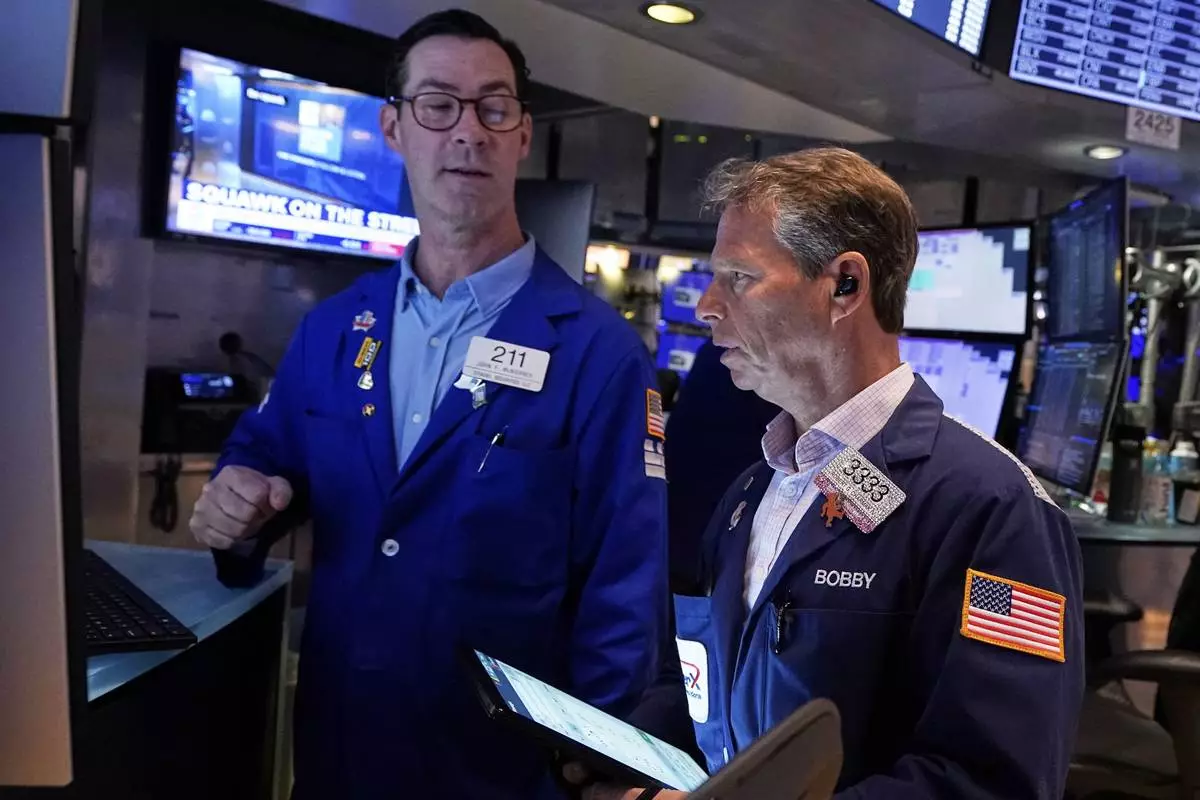
Specialist John McNierney. Left, and trader Robert Charmak work on the floor of the New York Stock Exchange, Wednesday, April 16, 2025. (AP Photo/Richard Drew)
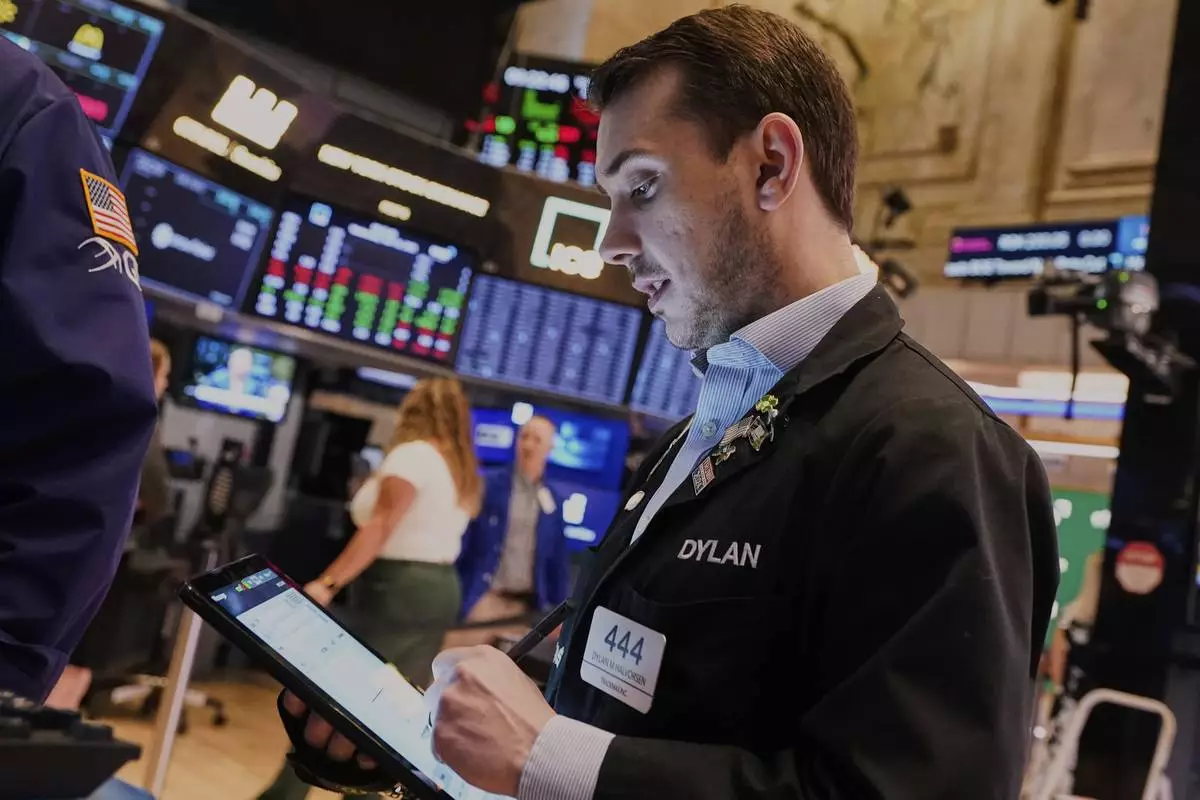
Trader Dylan Halvorsan works on the floor of the New York Stock Exchange, Wednesday, April 16, 2025. (AP Photo/Richard Drew)
Specialist Meric Greenbaum, left and trader Michael Urkonis, center, work on the floor of the New York Stock Exchange, Wednesday, April 16, 2025. (AP Photo/Richard Drew)
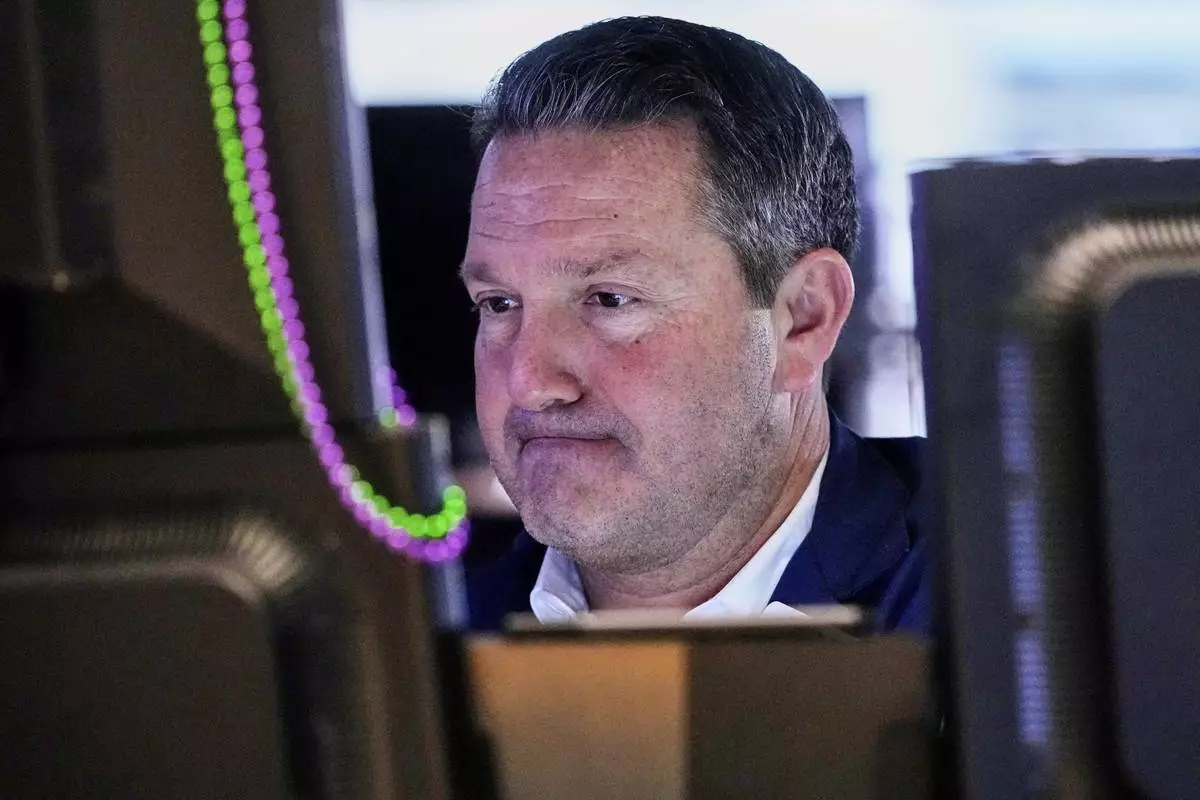
Trader Leon Montana works on the floor of the New York Stock Exchange, Wednesday, April 16, 2025. (AP Photo/Richard Drew)
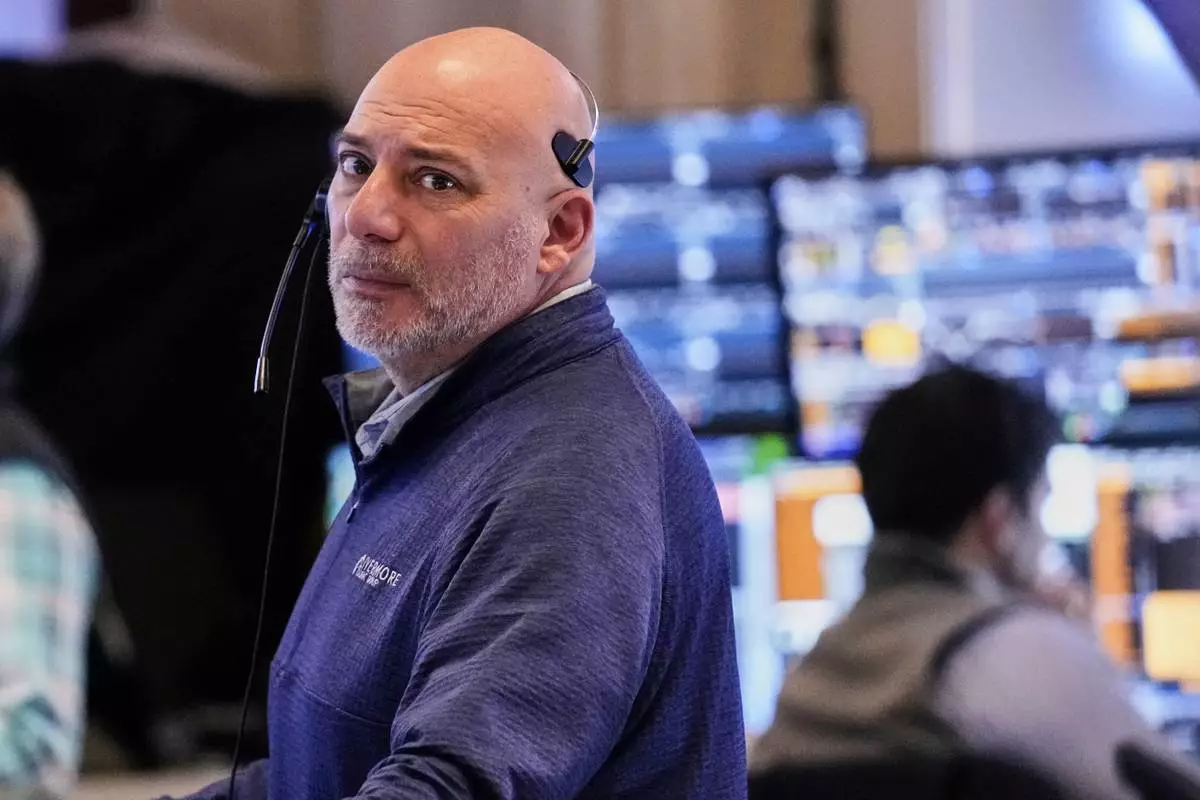
Trader Vincent Napolitano works on the floor of the New York Stock Exchange, Wednesday, April 16, 2025. (AP Photo/Richard Drew)

Specialist Gennaro Saporito works on the floor of the New York Stock Exchange, Wednesday, April 16, 2025. (AP Photo/Richard Drew)
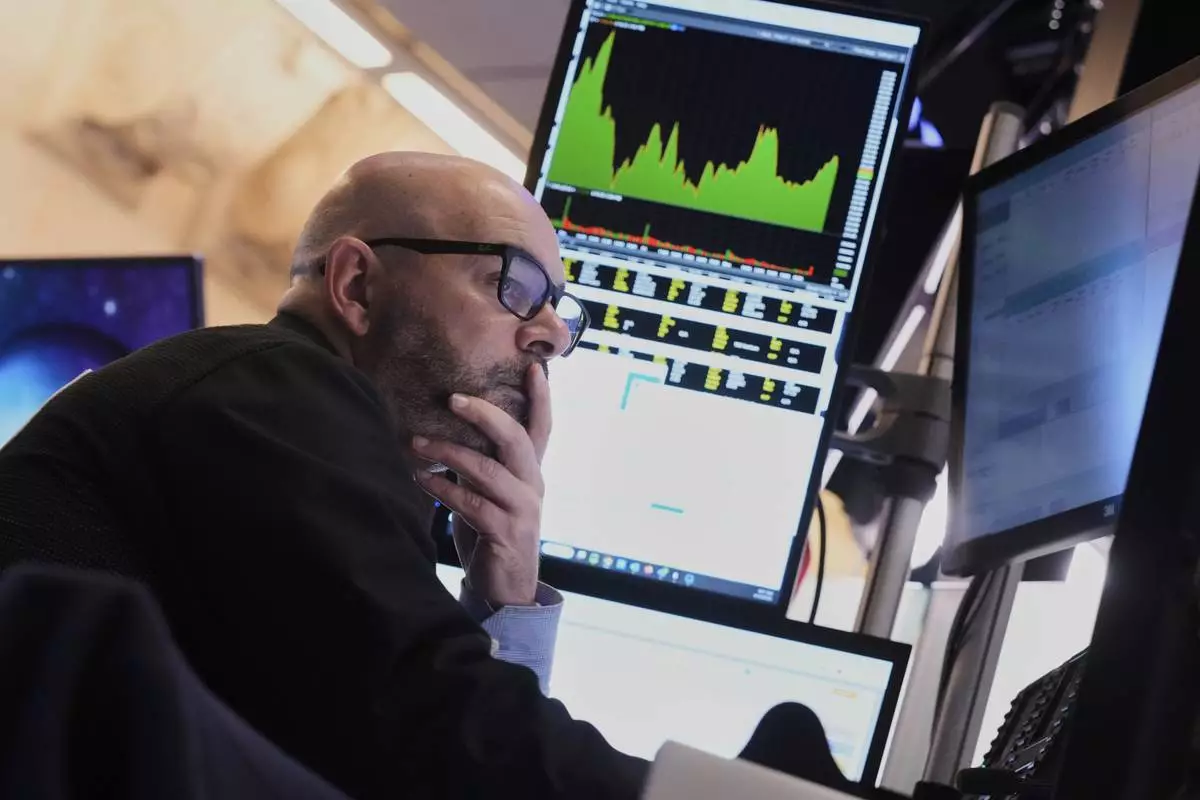
Trader Fred Demarco works on the floor of the New York Stock Exchange, Tuesday, April 15, 2025. (AP Photo/Richard Drew)

A screen showing the foreign exchange rate between U.S. dollar and Chinese yuan is seen at a foreign exchange dealing room in Seoul, South Korea, Wednesday, April 16, 2025. (AP Photo/Lee Jin-man)

ADDS THE NAME OF THE BANK - Screens showing the Korea Composite Stock Price Index (KOSPI), right, is seen near the tv screen showing President Donald Trump and Chinese President Xi Jinping during the news reporting at a foreign exchange dealing room of Hana Bank in Seoul, South Korea, Wednesday, April 16, 2025. (AP Photo/Lee Jin-man)

ADDS THE NAME OF THE BANK - The screens showing the Korea Composite Stock Price Index (KOSPI), left, and the foreign exchange rate between U.S. dollar and South Korean won are seen at a foreign exchange dealing room of Hana Bank in Seoul, South Korea, Wednesday, April 16, 2025. (AP Photo/Lee Jin-man)

ADDS THE NAME OF THE BANK - Employees of Hana Bank talk near the screens showing the Korea Composite Stock Price Index (KOSPI), center, and the foreign exchange rate between U.S. dollar and South Korean won at a foreign exchange dealing room in Seoul, South Korea, Wednesday, April 16, 2025. (AP Photo/Lee Jin-man)

ADDS THE NAME OF THE BANK - A tv screen, bottom, showing President Donald Trump during the news reporting near the screens, top, showing the Korea Composite Stock Price Index (KOSPI), left, the foreign exchange rate between U.S. dollar and South Korean won and the Korean Securities Dealers Automated Quotations (KOSDAQ) are seen at a foreign exchange dealing room of Hana Bank in Seoul, South Korea, Wednesday, April 16, 2025. (AP Photo/Lee Jin-man)

ADDS THE NAME OF THE BANK - Hana Bank employees watch computer monitors at a foreign exchange dealing room in Seoul, South Korea, Wednesday, April 16, 2025. (AP Photo/Lee Jin-man)