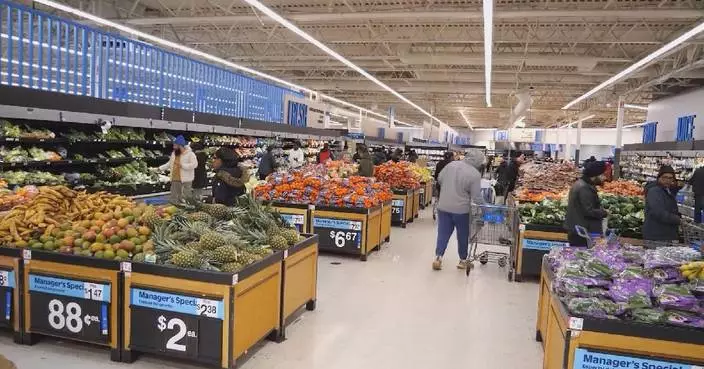
Using tariffs as an economic policy tool may fail to bring supply chains back to the United States, but may instead drive costs higher, according to a survey released by the American business news network CNBC on Tuesday.
Despite the Trump administration's claims of an impending domestic manufacturing boom, a survey of 380 American enterprises and business institutions conducted shortly after the announcement of sweeping tariffs revealed that U.S.-based companies anticipate supply chain re-shoring could double their costs, prompting a global search for low-tariff regimes.
Among those surveyed, 18 percent estimated that building a new domestic supply chain would cost at least double the current level, while 47 percent projected costs to exceed twice the current level.
Around 61 percent of respondents said that moving the supply chain to low-tariff countries is more cost-effective than relocating back to the United States. Among the enterprises that are unwilling to reshore production, 57 percent listed cost as the primary reason, while 21 percent pointed to the challenge of finding skilled workers.
Besides tariffs, consumer demand, raw material prices and other factors are also listed as the core concerns of enterprises' supply chains. Among the enterprises that are willing to return production, 41 percent expect it to take three to five years to rebuild the domestic supply chain, and 33 percent of the enterprises believe it will take more than five years.
Tariffs unlikely to restore U.S. supply chains: survey
Tariffs unlikely to restore U.S. supply chains: survey
The Israeli government is set to prohibit 37 international aid organizations from operating in the Gaza Strip and the West Bank effective Jan 1, 2026, after authorities stated the groups failed to comply with stricter registration requirements, according to an Israeli media report on Tuesday.
The report from The Times of Israel cited the statement from Israel's Ministry of Diaspora Affairs and Combating Antisemitism, saying that the new regulations are based on security concerns aimed at removing non-government organizations' staff allegedly linked to so-called "terrorist organizations."
The report came after the Israeli government announced the same day that it would suspend the activities of several international aid organizations, including Doctors Without Borders, in the Gaza Strip starting January 1, 2026, citing the organizations' failure to submit information on their Palestinian staff as required.
Last year, Israel rolled out new regulations on registration requiring international aid groups to provide detailed information of their staff's names, funding sources, and operation status.
On Wednesday, Israel's Coordinator of Government Activities in the Territories stated that the registration mandates were necessary to prevent humanitarian supplies from being exploited by Hamas.
In an online interview with China Global Television Network (CGTN) on Wednesday, Bushra Khalidi, policy lead at Oxfam, a global organization that fights inequality to end poverty and injustice, said the impact of the ban will be "devastating."
"It is devastating. We've seen the numbers from the IPC (Integrated Food Security Phase Classification) a few weeks ago. We saw them in the summer. There's been a slight improvement, but that's not good enough for the time of a ceasefire. And six months after the famine was declared, we should have seen much more improvement in Gaza," said Khalidi.
"It's winter here in Palestine. It was raining. It rained a record (amount) of rain per millimeter yesterday in Palestine since 1992. So, the impact is devastating. But the fact that shelter materials, for example, cannot enter. For families, this will mean slower repairs. It will mean fewer supplies. It will mean a longer wait for basic services. It will directly affect the access to clean water, to sanitation, to shelter materials, to public health interventions. Aid that should be moving predictably will remain delayed, it will remain restricted and it will remain stranded," she added.
She also emphasized that the operating environment became nearly impossible for organizations to navigate long before the new ban was announced.
"We have been obstructed and blocked from operating freely and unobstructedly for the last two years by Israel. Israel has killed a record number of humanitarian workers in the last two years. It has bombed our premises, it has bombed our convoys, it has blocked our items. It has driven famine like conditions in Gaza because of blocking humanitarian access. So, I think it's really important to set that scene, is that what is happening now is nothing new. It only continues within the kind of campaign that Israel has orchestrated to drive basically the population of Gazans' survival. So, we are, we have not been able to enter any materials in since March, in fact, us and many other organizations. And of course that has severely restricted our ability to scale up our operations," said Khalidi.
Hadja Lahbib, European Commissioner for Equality, Preparedness and Crisis Management, said on Wednesday that Israel's move is no different from cutting off lifesaving supplies for the local population, adding that the European Union has made clear that all obstacles to humanitarian access must be lifted.
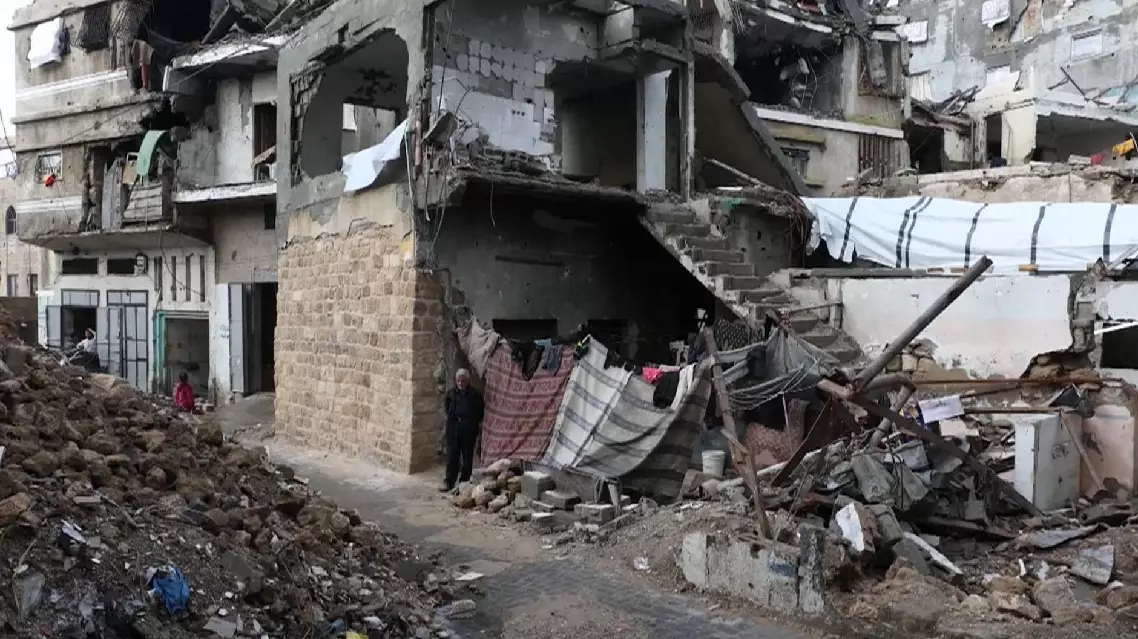
Israel bans operations of 37 int'l aid groups in Gaza Strip, West Bank