WASHINGTON (AP) — President Donald Trump on Wednesday inserted himself directly into trade talks with Japanese officials, a sign of the high stakes for the United States after its tariffs rattled the economy and caused the administration to assure the public that it would quickly reach deals.
The Republican president attended the meeting alongside Treasury Secretary Scott Bessent and Commerce Secretary Howard Lutnick, top economic advisers with a central role in his trade and tariff policies.
Click to Gallery
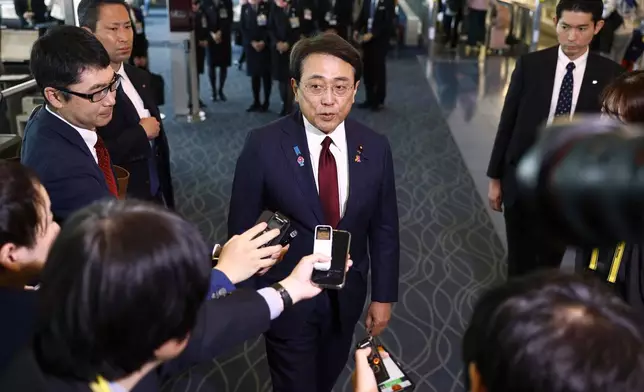
Japan's chief trade negotiator and Economic Revitalization Minister Ryosei Akazawa, center, speaks to the reporters before this departure for the U.S., at Haneda airport in Tokyo, Wednesday, April 16, 2025. (Kyodo News via AP)
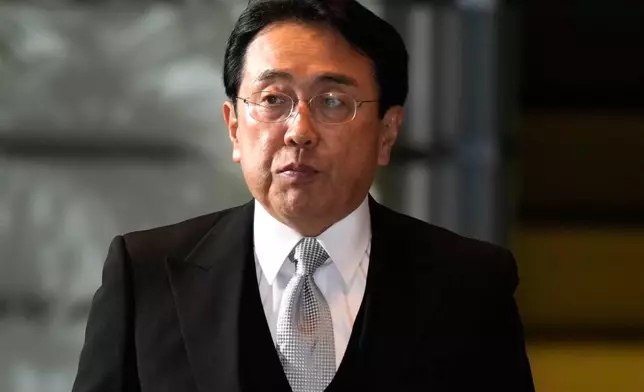
FILE - Ryosei Akazawa, newly appointed Minister in charge of Economic Revitalization, arrives at the prime minister's office Tuesday, Oct. 1, 2024, in Tokyo. (AP Photo/Hiro Komae)
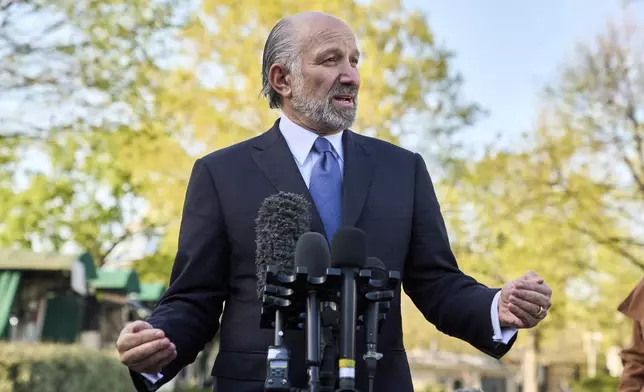
Commerce Secretary Howard Lutnick speaks to reporters outside the West Wing of the White House, Wednesday, April 9, 2025, in Washington. (AP Photo/Jacquelyn Martin)
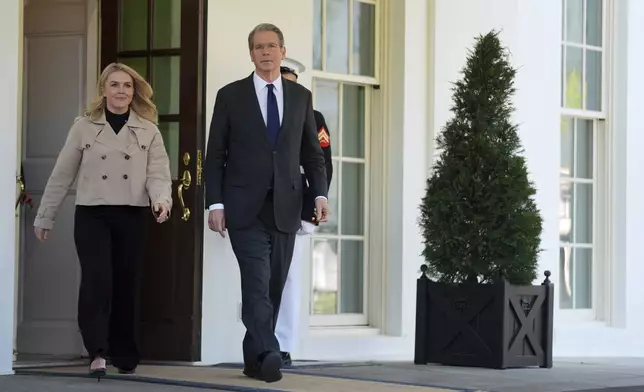
Treasury Secretary Scott Bessent and White House press secretary Karoline Leavitt walk to speak with reporters outside the West Wing of the White House, Wednesday, April 9, 2025, in Washington. (AP Photo/Evan Vucci)
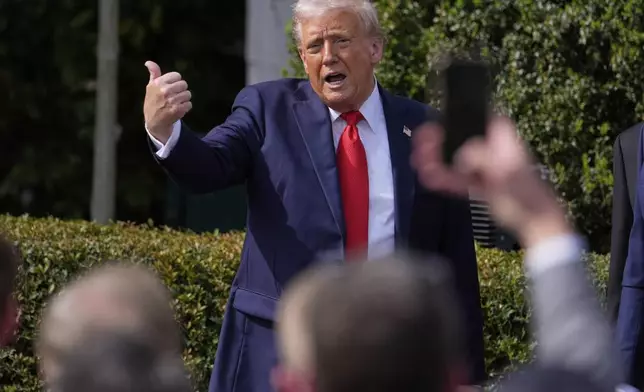
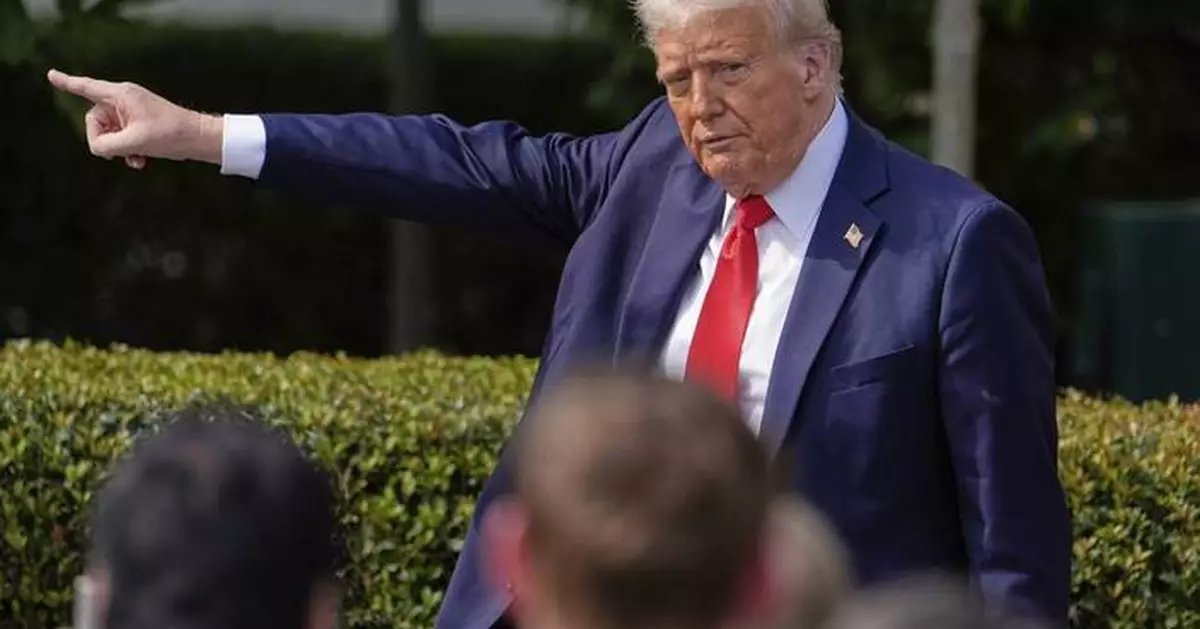
President Donald Trump gestures to the crowd as he departs after welcoming the 2025 College Football National Champions, the Ohio State University football team, during an event on the South Lawn of the White House, Monday, April 14, 2025, in Washington. (AP Photo/Manuel Balce Ceneta)
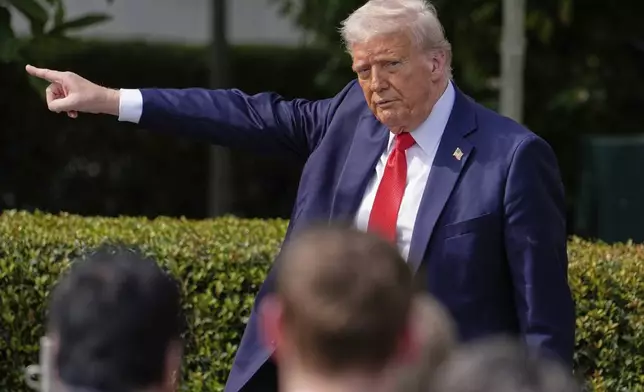
President Donald Trump gestures to the crowd as he departs after welcoming the 2025 College Football National Champions, the Ohio State University football team, during an event on the South Lawn of the White House, Monday, April 14, 2025, in Washington. (AP Photo/Manuel Balce Ceneta)
“Hopefully something can be worked out which is good (GREAT!) for Japan and the USA!” Trump wrote in a social media post ahead of the meeting.
Afterward, he posted: “A Great Honor to have just met with the Japanese Delegation on Trade. Big Progress!”
Japanese Prime Minister Shigeru Ishiba told reporters Thursday in Tokyo that his chief trade negotiator, Ryosei Akazawa, told him from Washington that the talks were “very candid and constructive.”
“Of course the talks are not easy, but President Trump stated his intention to make this negotiation a top priority,” Ishiba said. “I believe we had talks that lead to a next step.”
Ishiba said he will closely watch how ministerial talks go and plans to visit Washington to meet with Trump at an appropriate time.
Trump's choice to get directly involved in negotiations points to his desire to quickly finalize a slew of trade deals as China is pursuing its own set of agreements. It's an open test of Trump's reputation as a dealmaker as countries around the world seek to limit the potential damage unleashed by his import taxes.
The sweeping tariffs that Trump announced on April 2 triggered panic in the financial markets and generated recession fears, causing the U.S. president to quickly put a partial 90-day hold on the import taxes and increase his already steep tariffs against China to as much as 145%.
The pause temporarily spared Japan from 24% across-the-board tariffs, but there continues to be a 10% baseline tariff and a 25% tax on imported cars, auto parts, steel and aluminum exports.
With Japan charging an average tax rate of 1.9% on other countries' goods and having a longstanding alliance with the U.S., the talks on Wednesday are a crucial indicator of whether the Trump administration can achieve a meaningful deal that reassures the markets, American voters and foreign allies.
U.S. economic rival China, meanwhile, is trying to capitalize on the turmoil around Trump's announcements, with its leader, President Xi Jinping, touring nations of Southeast Asia and promoting his country as a more reliable trade partner.
Japan is among the first countries to start open negotiations with the U.S. Trump and other administration officials have said the phones have been “ringing off the hook” with dozens of countries calling, eager to strike deals with a president who views himself as a master negotiator to avoid tariffs when the 90-day pause ends. Israel and Vietnam have offered to zero out their tariff rates, but Trump has been noncommittal as to whether that would be sufficient.
On Thursday, Trump is scheduled to meet with Italian Prime Minister Giorgia Meloni, who will likely be carrying messages on behalf of the European Union about how to resolve the tariffs Trump placed on the 27-state group.
Still, the U.S. president may also be feeling increased domestic pressures to settle any tariffs as many voters say they returned Trump to the White House with the specific goal of improving the economy. California Gov. Gavin Newsom filed a lawsuit Wednesday that argues that Trump overstepped his authority by declaring an economic emergency to levy his tariffs, with the Democrat saying in a statement that the tariffs have caused economic chaos.
Federal Reserve Chair Jerome Powell said Wednesday that Trump's tariff policies would hurt the U.S. economy, a direct warning to a White House trying to sell the import taxes as a long-term positive for the country.
“The level of tariff increases announced so far is significantly larger than anticipated, and the same is likely to be true of the economic effects which will include higher inflation and slower growth,” Powell said at the Economic Club of Chicago.
Japan, like many other nations trying to minimize the possible economic fallout from Trump's tariffs, has been scrambling to respond. It has set up a special task force to assess the impact of the tariffs and offer loans to anxious companies.
Although Ishiba has been working hard to coax exemptions out of Trump, the government has said little officially on what concessions it might offer during these talks.
Nor has the administration been transparent about its asks. The Trump administration is seeking to close the $68.5 billion trade deficit with Japan and seeking greater access for U.S. goods in foreign markets, yet the president has also insisted that tariff revenues can be used to pay down the federal budget deficit.
“Japan is coming in today to negotiate Tariffs, the cost of military support, and ‘TRADE FAIRNESS,’” Trump posted Wednesday.
Japan has contended that Trump's tariff measures are likely to violate bilateral trade agreements or World Trade Organization rules. While Ishiba has said he opposes retaliatory tariffs, he also has said he is in no rush to push for a settlement because he doesn't want concessions.
Xi, meanwhile, stopped in Malaysia on Wednesday and told its leader that China will be a collaborative partner and stand with its Southeast Asian neighbors after the global economic shocks.
Xi is touring Vietnam, Malaysia and Cambodia this week on a trip that likely was planned before the tariffs' uncertainty but that he's also using to promote Beijing as a source of stability in the region and shore up relationships in that part of the world as he looks for ways to mitigate the 145% tariffs that Trump is keeping on China.
“In the face of shocks to global order and economic globalization, China and Malaysia will stand with countries in the region to combat the undercurrents of geopolitical ... confrontation, as well as the counter-currents of unilateralism and protectionism,” Xi said in remarks at a dinner with Malaysian Prime Minister Anwar Ibrahim.
“Together, we will safeguard the bright prospects of our Asian family,” he added.
Xi has promised Malaysia and Vietnam greater access to Chinese markets on his visits, although few details were shared.
In Washington, Trump has indicated that he also wants to discuss how much the Japanese contribute to the cost of U.S. troops stationed there, largely as a deterrent to China.
Trump’s demand for more defense spending concerns the Japanese government.
Under its national security strategy, Japan aims to double annual defense spending to nearly $10 trillion, or 2% of GDP, in 2027, while there is a concern that Trump may ask for that to be increased to 3% of GDP. Japanese Defense Minister Gen Nakatani said Tuesday that the military budget for this year is about 1.8% of Japan’s GDP.
Yamaguchi reported from Tokyo.
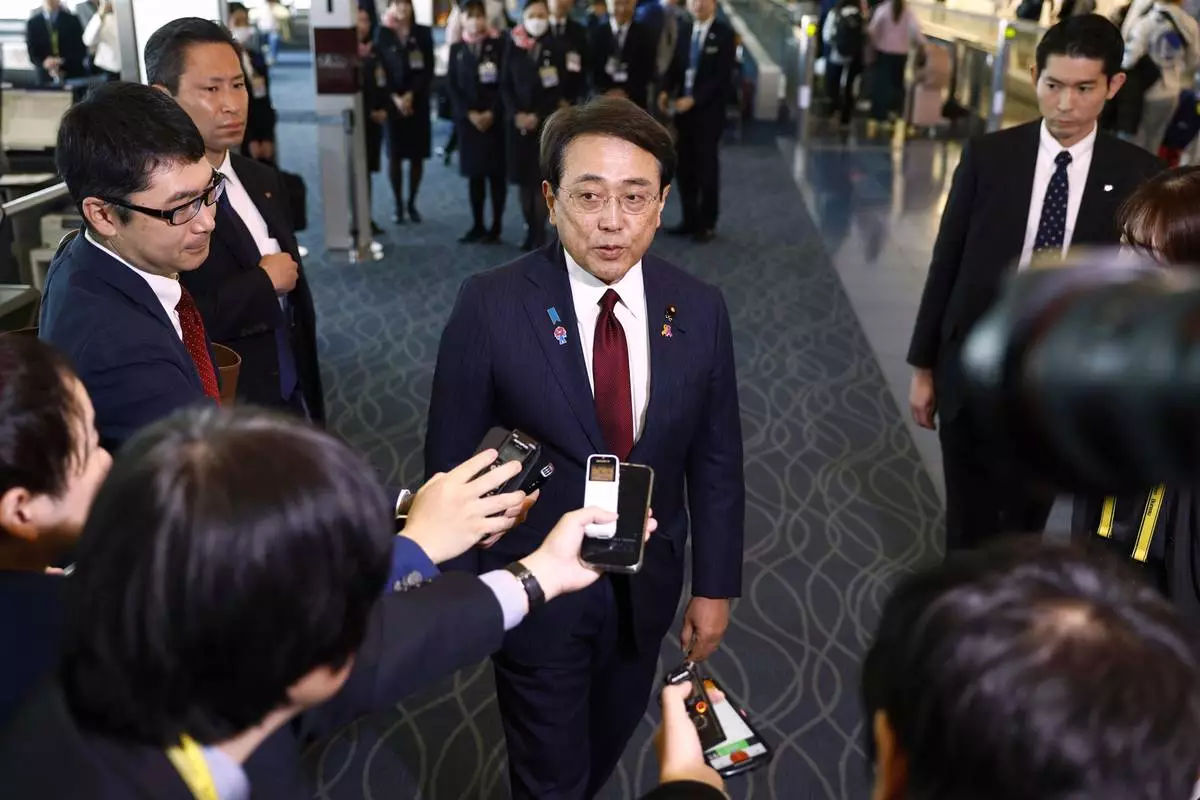
Japan's chief trade negotiator and Economic Revitalization Minister Ryosei Akazawa, center, speaks to the reporters before this departure for the U.S., at Haneda airport in Tokyo, Wednesday, April 16, 2025. (Kyodo News via AP)
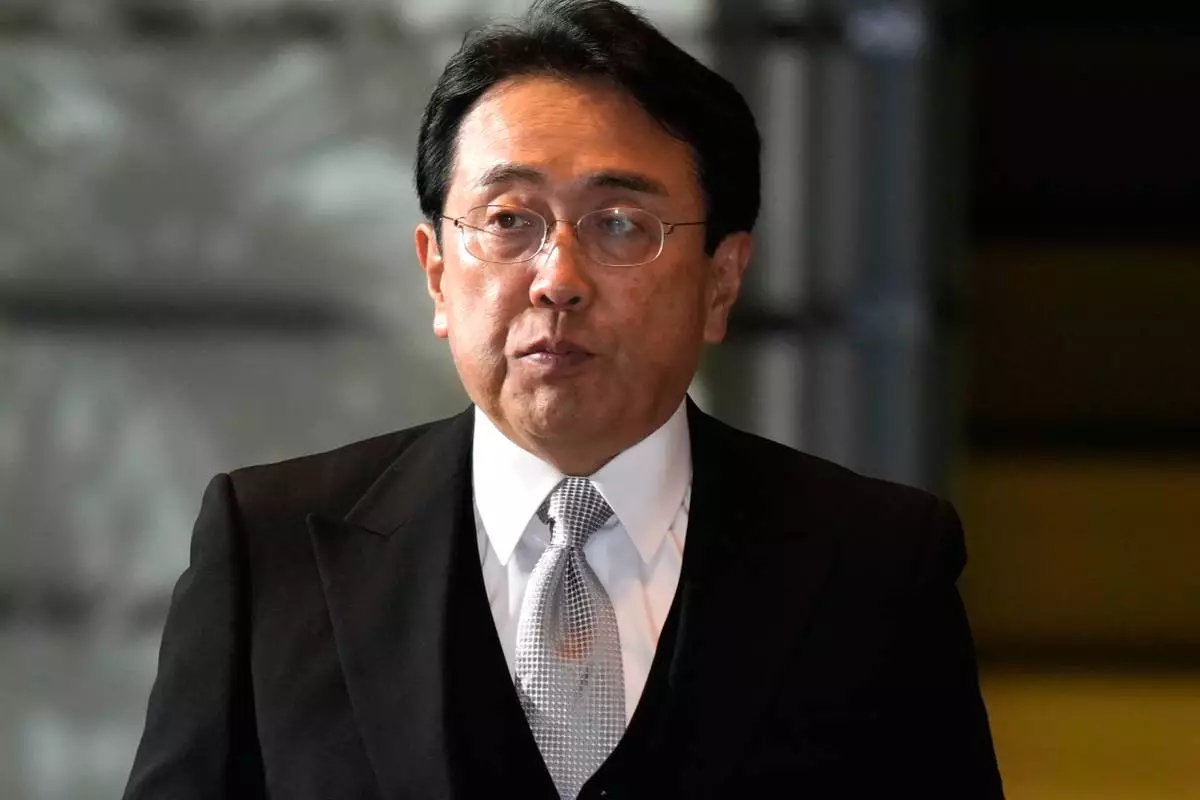
FILE - Ryosei Akazawa, newly appointed Minister in charge of Economic Revitalization, arrives at the prime minister's office Tuesday, Oct. 1, 2024, in Tokyo. (AP Photo/Hiro Komae)
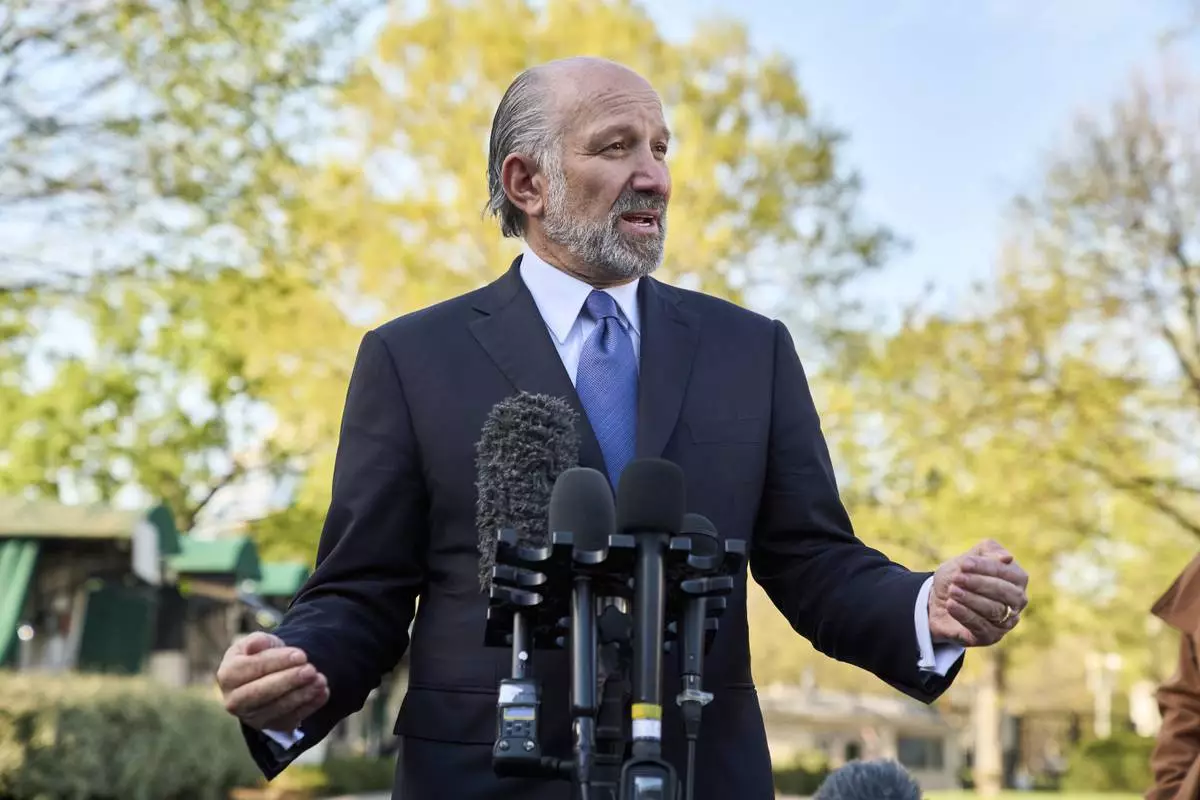
Commerce Secretary Howard Lutnick speaks to reporters outside the West Wing of the White House, Wednesday, April 9, 2025, in Washington. (AP Photo/Jacquelyn Martin)
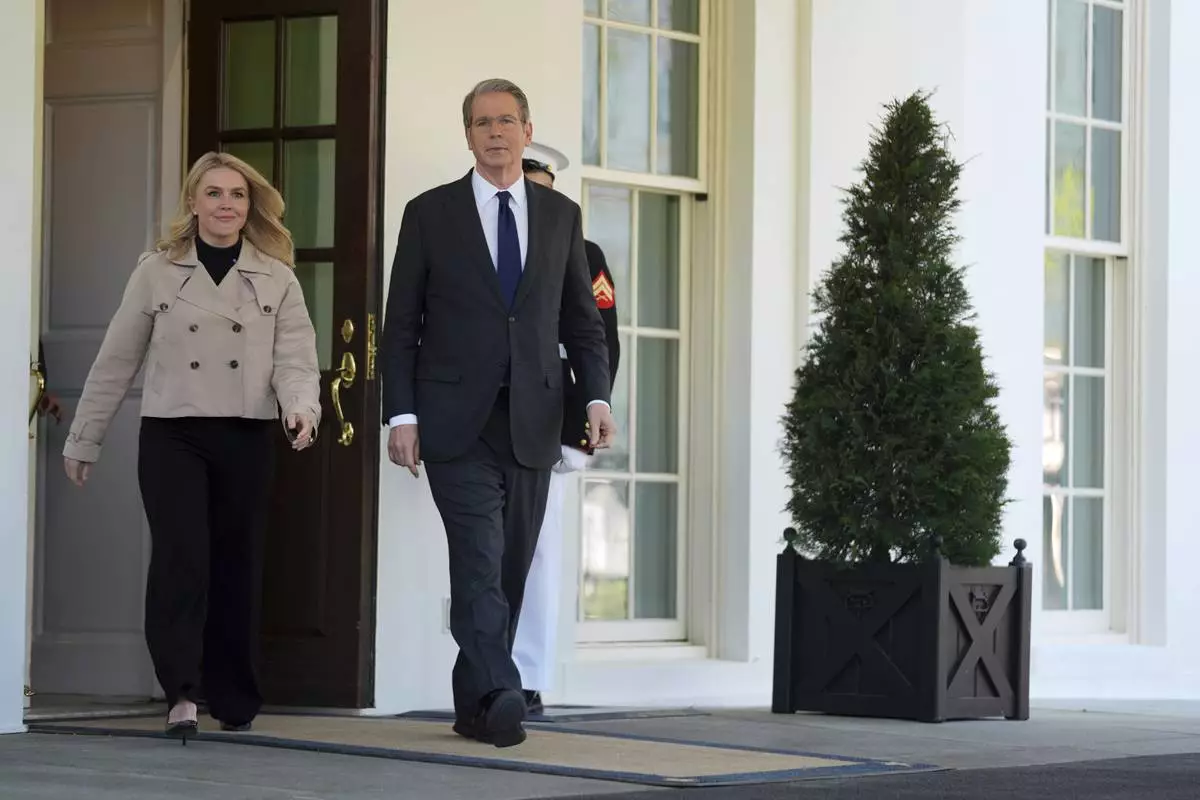
Treasury Secretary Scott Bessent and White House press secretary Karoline Leavitt walk to speak with reporters outside the West Wing of the White House, Wednesday, April 9, 2025, in Washington. (AP Photo/Evan Vucci)
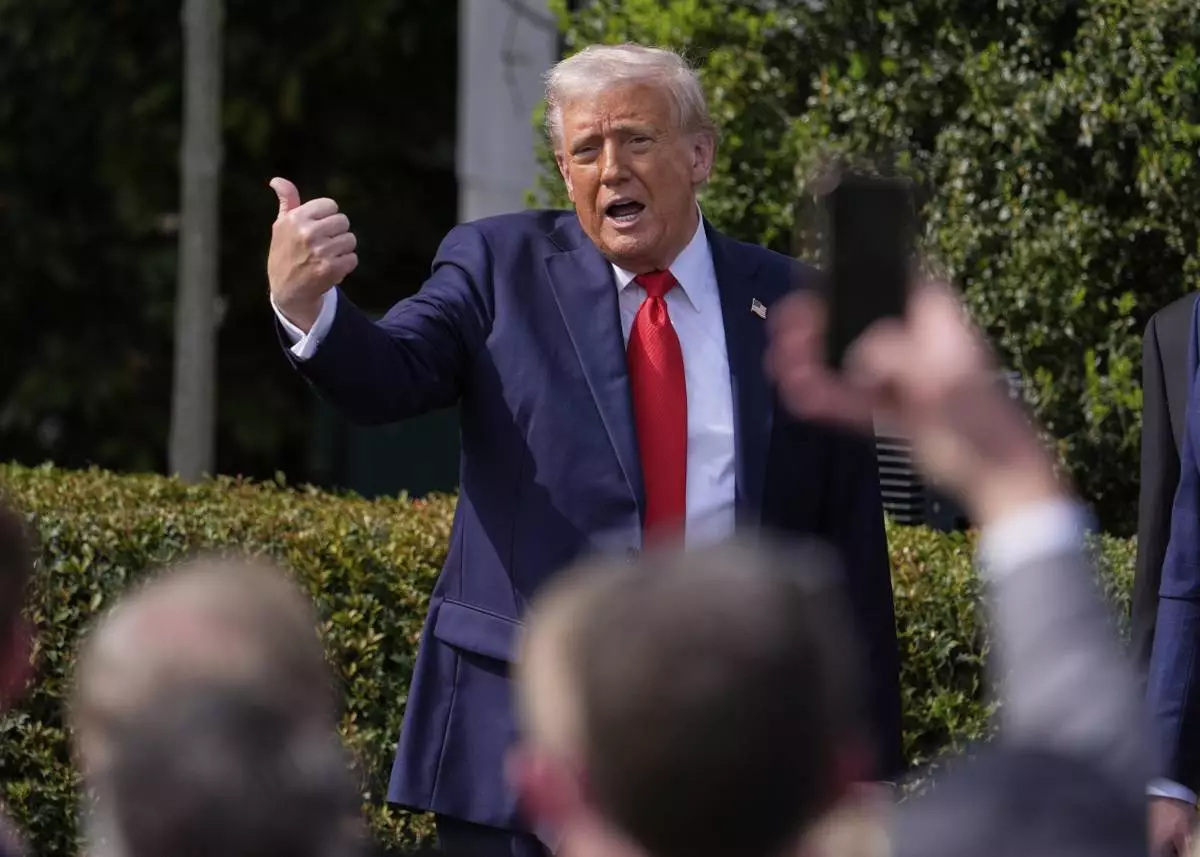
President Donald Trump gestures to the crowd as he departs after welcoming the 2025 College Football National Champions, the Ohio State University football team, during an event on the South Lawn of the White House, Monday, April 14, 2025, in Washington. (AP Photo/Manuel Balce Ceneta)
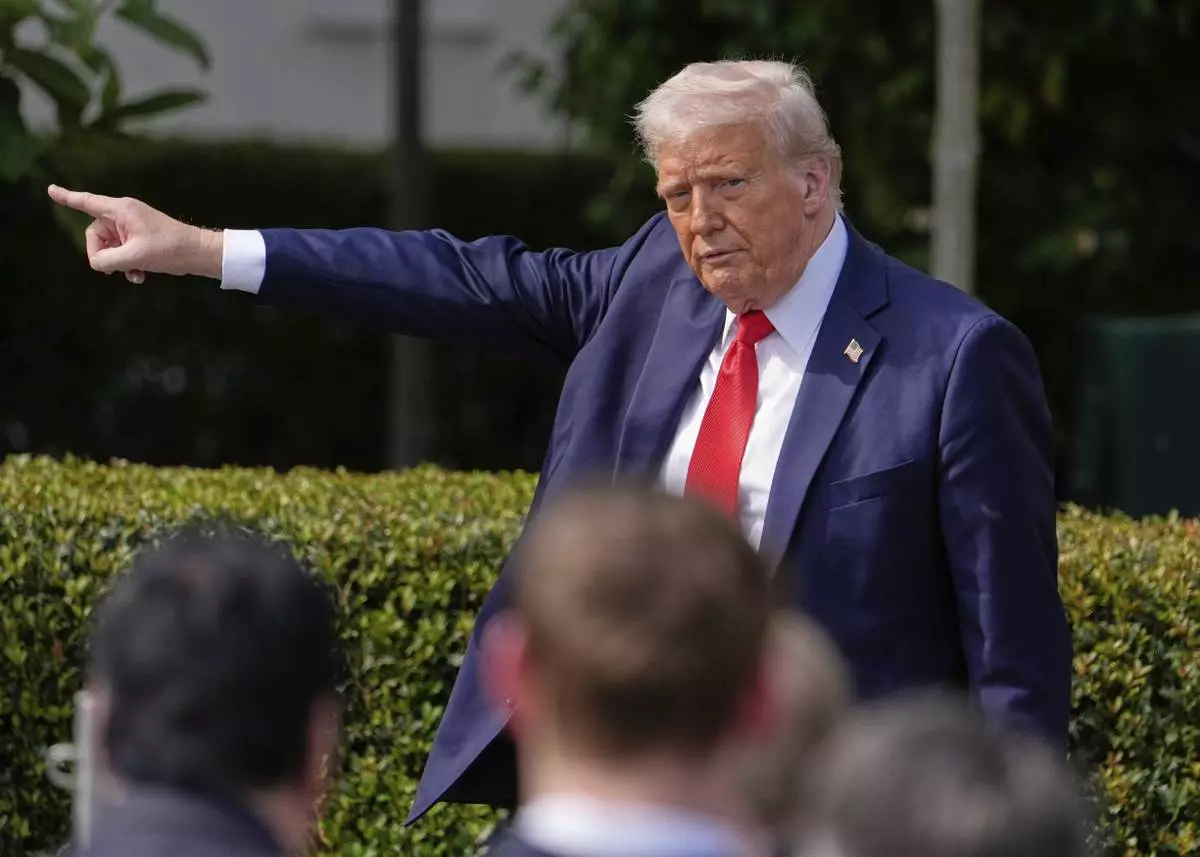
President Donald Trump gestures to the crowd as he departs after welcoming the 2025 College Football National Champions, the Ohio State University football team, during an event on the South Lawn of the White House, Monday, April 14, 2025, in Washington. (AP Photo/Manuel Balce Ceneta)