MOSCOW (AP) — Russia’s Supreme Court on Thursday lifted a ban on Afghanistan’s ruling Taliban, a group that was designated as a terrorist organization more than two decades ago.
The Taliban seized power in Afghanistan in August 2021 as U.S. and NATO troops were in the final weeks of withdrawing from the country after two decades of war.
Click to Gallery
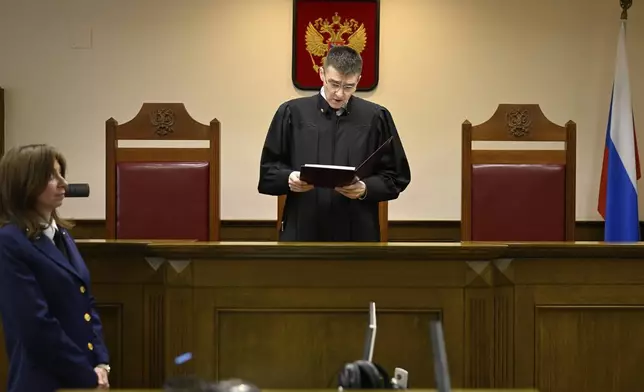
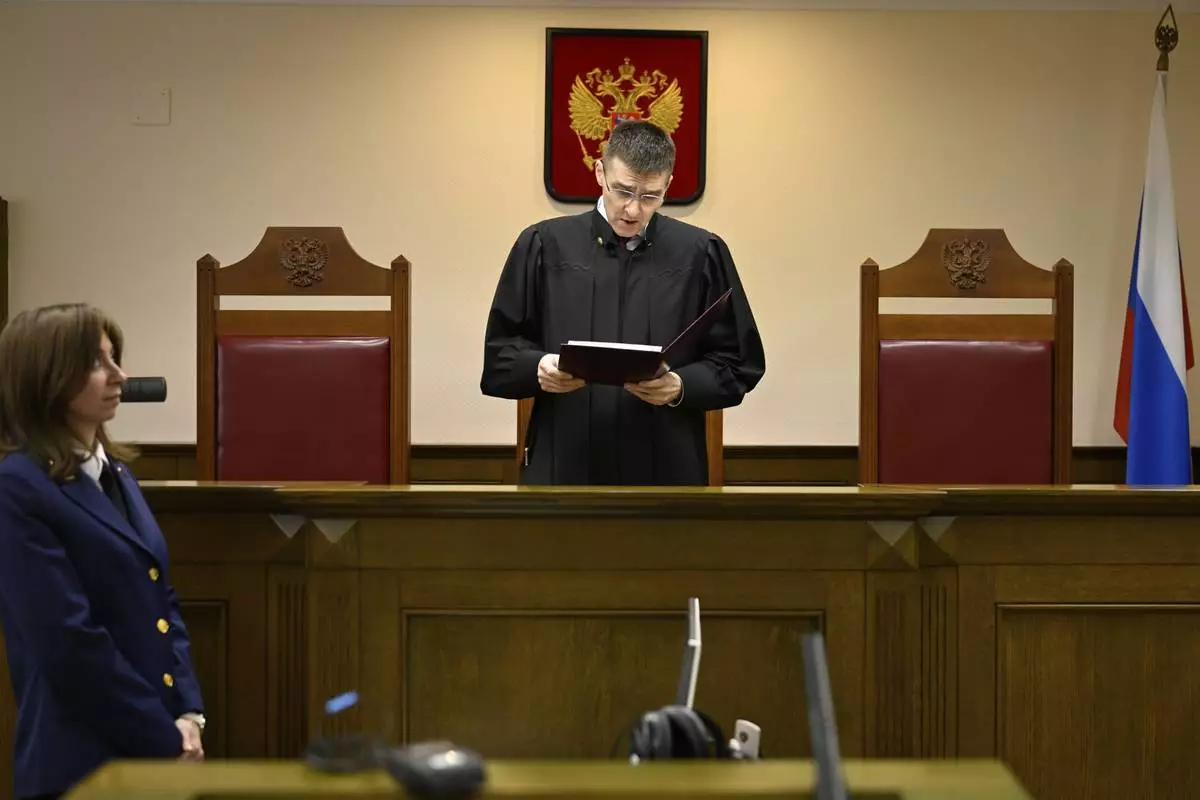
Russia's Supreme Court judge Oleg Nefyodov delivers a verdict lifting a ban on Afghanistan's Taliban, who were designated as a terrorist group more than two decades ago, in Moscow, Russia, Thursday, April 17, 2025. (AP Photo/Dmitry Serebryakov)
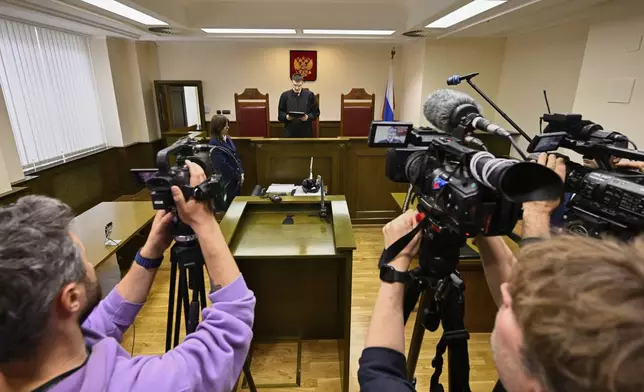
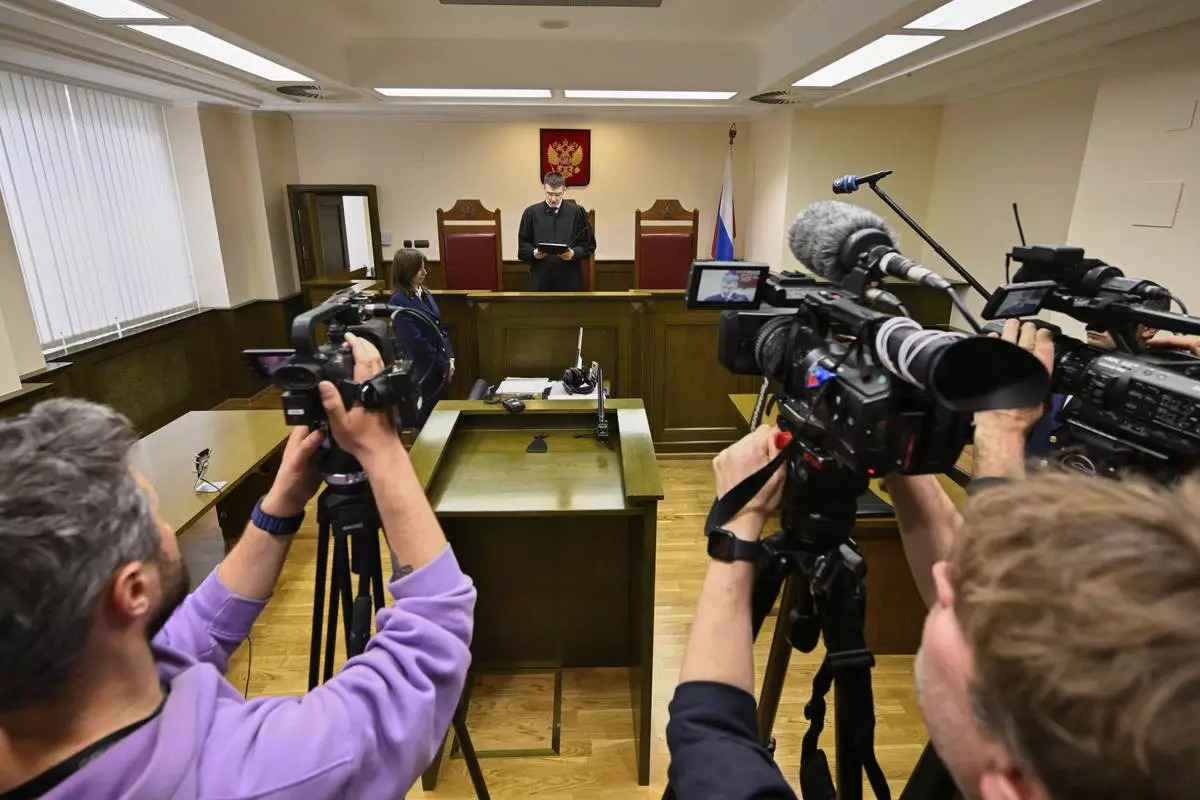
Russia's Supreme Court judge Oleg Nefyodov delivers a verdict lifting a ban on Afghanistan's Taliban, who were designated as a terrorist group more than two decades ago, in Moscow, Russia, Thursday, April 17, 2025. (AP Photo/Dmitry Serebryakov)
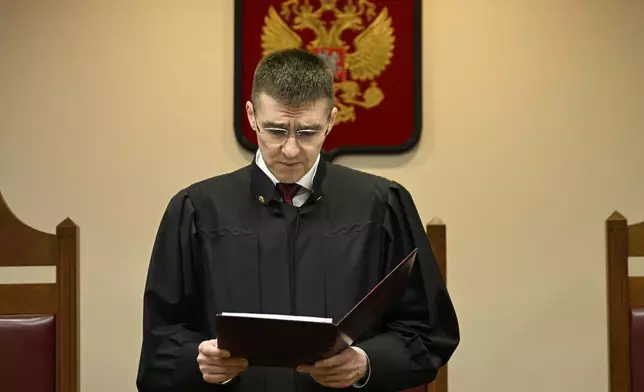
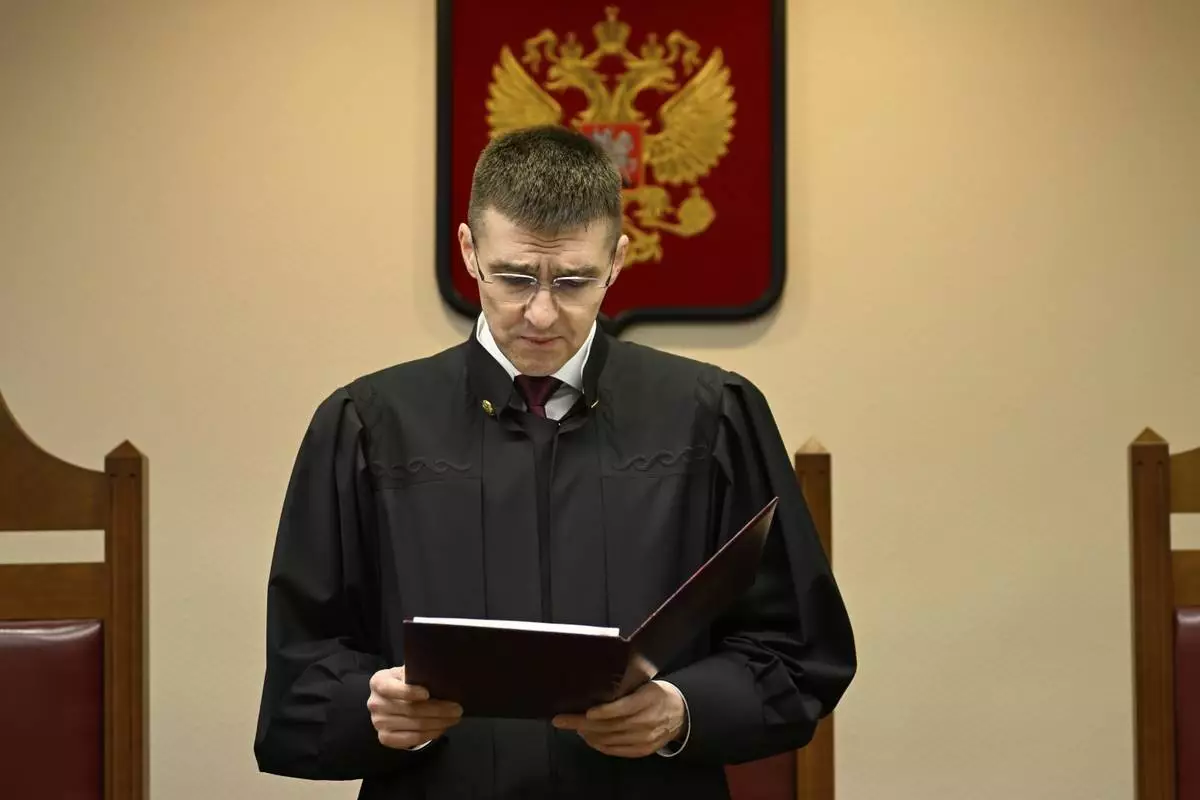
Russia's Supreme Court judge Oleg Nefyodov delivers a verdict lifting a ban on Afghanistan's Taliban, who were designated as a terrorist group more than two decades ago, in Moscow, Russia, Thursday, April 17, 2025. (AP Photo/Dmitry Serebryakov)
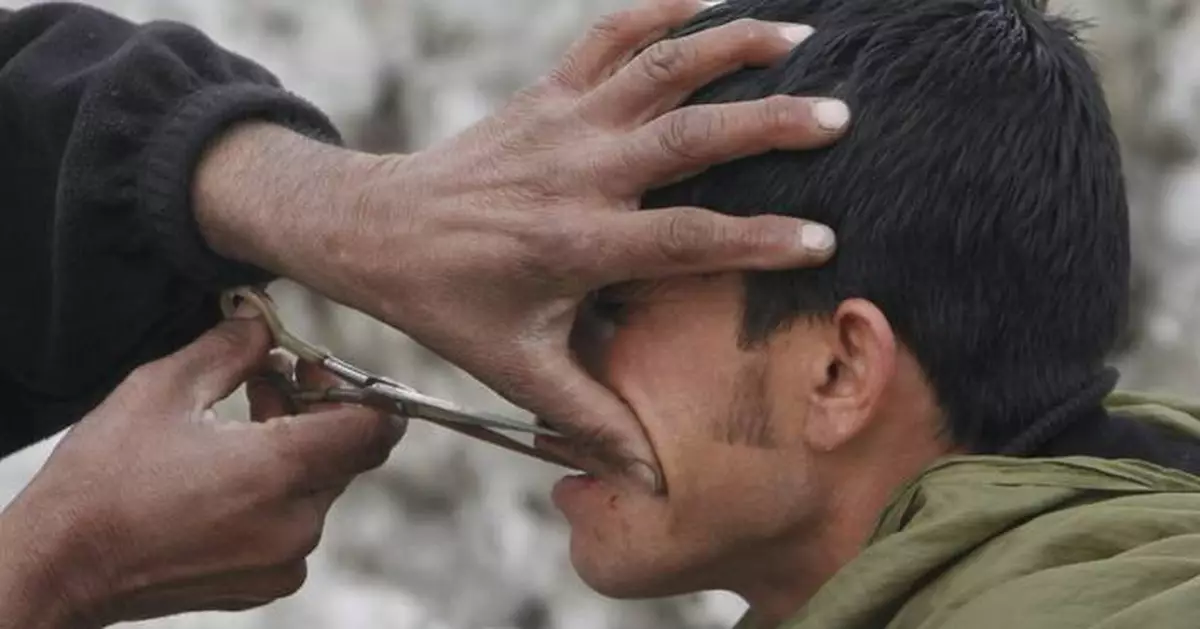
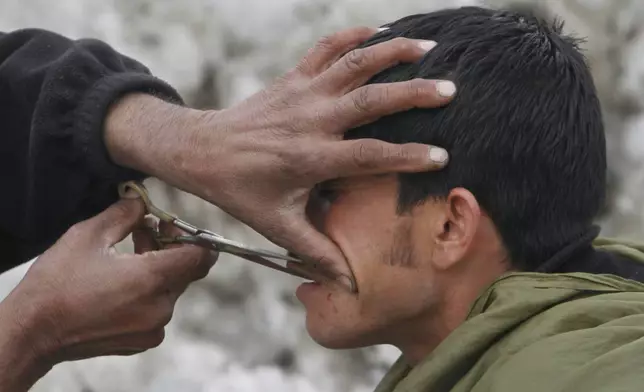
FILE -An Afghan street barber man, left, trims the mustache of a customer, as snow is seen the back ground in Kabul, Afghanistan, Feb. 9, 2012. (AP Photo/Musadeq Sadeq, File)
The Russian court's move was a diplomatic victory for the Taliban, who were put on Moscow’s list of terrorist organizations in 2003, making any contact with them punishable under Russian law.
At the same time, Taliban delegations have attended various forums hosted by Russia as Moscow has sought to position itself as a regional power broker.
The court’s ruling on a request by the Prosecutor General’s Office followed last year’s adoption of a law stipulating that the official designation as a terrorist organization could be suspended by a court.
The former Soviet Union fought a 10-year war in Afghanistan that ended with Moscow withdrawing its troops in 1989.
Russian officials have recently been emphasizing the need to engage with the Taliban to help stabilize Afghanistan.
In recent years, the Central Asian nations of Kazakhstan and Kyrgyzstan have removed the Taliban from their lists of terrorist groups.
The Taliban initially promised a more moderate rule than during their first stint in power from 1996 to 2001, but started to enforce restrictions on women and girls soon after the 2021 takeover. Women are barred from most jobs and public places, including parks, baths and gyms, while girls are banned from education beyond sixth grade.
Such measures have isolated the Taliban on the world stage, although their government has established diplomatic ties with countries including China and the United Arab Emirates.
The U.N. this year renewed its call for the Taliban to lift the bans.
The group’s decrees limiting the participation of girls and women have affected foreign aid to the country. The Taliban also have brought back their strict interpretation of Islamic law, or Shariah, including public executions.
Some Taliban want greater engagement with the international community and want to scrap harsher policies to attract more outside support. In recent months, there has been increased engagement between the Taliban and the U.S. under President Donald Trump, mostly because of prisoner exchanges and releases.
Ibraheem Bahiss, a senior analyst with Crisis Group’s Asia Program, said the Taliban’s listing as a terrorist group was a legal impairment for trade and political ties with Kabul and its lifting reflected Moscow‘s desire to improved relations.
“However, beyond making it easier for individuals and businesses to engage with Afghanistan. I am not sure what other major benefit this will have,” he said.
South Asia analyst Michael Kugelman said the Russian move was not ground-breaking because many countries had never formally designated the Taliban as a terrorist organization. At the same time, he called the decision a “win-win” for bilateral relations.
For Russia, he said it would serve as a confidence-building measure helping pave the way for more engagement and enabling Moscow to better protect its interests in Afghanistan, particularly concerns about anti-Russia terror groups like Islamic State-Khorasan.
“Meanwhile, for the Taliban, the court decision is a legitimacy-boosting outcome they can leverage to point to international acceptance of their rule,” Kugelman observed.
Associated Press writer Riazat Butt contributed to this report from Islamabad.
Russia's Supreme Court judge Oleg Nefyodov delivers a verdict lifting a ban on Afghanistan's Taliban, who were designated as a terrorist group more than two decades ago, in Moscow, Russia, Thursday, April 17, 2025. (AP Photo/Dmitry Serebryakov)
Russia's Supreme Court judge Oleg Nefyodov delivers a verdict lifting a ban on Afghanistan's Taliban, who were designated as a terrorist group more than two decades ago, in Moscow, Russia, Thursday, April 17, 2025. (AP Photo/Dmitry Serebryakov)
Russia's Supreme Court judge Oleg Nefyodov delivers a verdict lifting a ban on Afghanistan's Taliban, who were designated as a terrorist group more than two decades ago, in Moscow, Russia, Thursday, April 17, 2025. (AP Photo/Dmitry Serebryakov)
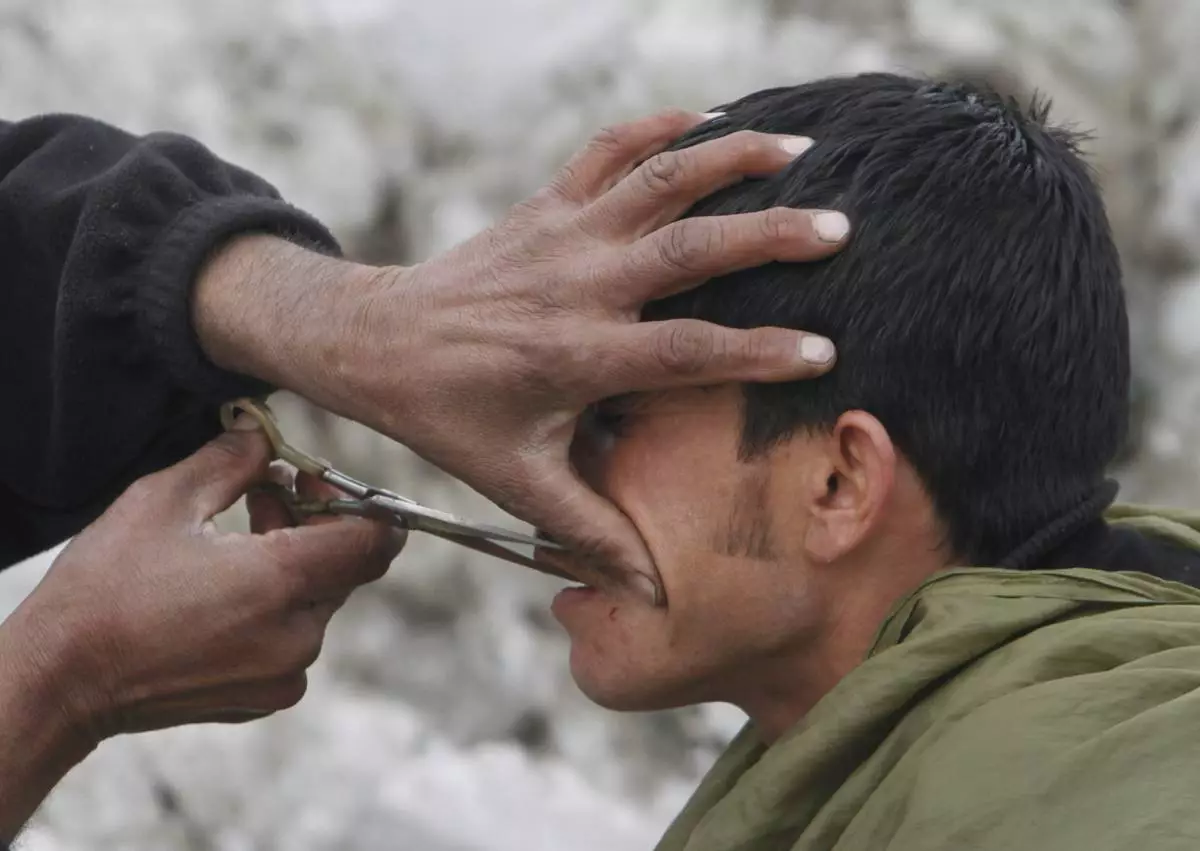
FILE -An Afghan street barber man, left, trims the mustache of a customer, as snow is seen the back ground in Kabul, Afghanistan, Feb. 9, 2012. (AP Photo/Musadeq Sadeq, File)
PROVIDENCE, R.I. (AP) — World Cup fans in a growing number of U.S. cities won't have an issue finding a well-poured pint to go with their late-night match.
State leaders across the U.S. are signing off on extending bar and restaurant hours during the world’s most-watched sporting event. They want to help businesses and improve fan experiences, particularly for those who may have been priced out of tickets. Others see the move as a last-ditch effort to boost sales as expectations for a World Cup economic boon have dampened.
So far, Kansas, Missouri, New Jersey, Pennsylvania, Rhode Island and Washington — states either hosting World Cup matches or adjacent to the activity — have all approved various measures to extend hours for alcohol sales during the tournament. Similar proposals are being considered in New York and Massachusetts.
The changes mean that closing time won’t come until 4 a.m. in Philadelphia during the World Cup and America 250 celebrations. In Kansas City, some bars can stay open as late as 5 a.m.
Many of these changes are dependent on municipality approval, and no business would be required to extend business hours. But for the hospitality industry, already struggling under waning sales and inflation, the option to stay open later is welcomed.
Mark Prinzinger, owner of Lion Sports Bar in Philadelphia, described watching soccer with fans from all over the world as a “magical experience." Now that he has the option to keep his bar open two hours longer, he’s hired extra staff, streamlined the menus and planned late-night programming.
“People want to have a beer with other soccer fans and the great thing about the World Cup is that it brings people together from all over the world into one place to watch a sport that everybody loves,” he said.
Prinzinger and other bar, restaurant and nightlife venues in Pennsylvania will be allowed to move their closing times from 2 a.m. until 4 a.m. during the World Cup and the America 250 anniversary celebrations, between June 11 and July 20. Gov. Josh Shapiro approved the legislation by releasing a video showing him cracking open a beer, signing off the social media post with a cheeky warning to the City of Brotherly Love's reputation for getting rowdy: “Celebrate responsibly, Philly.”
With more hours available to drink, some critics have raised concerns about public safety and potential strain on law enforcement even as the effort has received bipartisan support from lawmakers.
In Kansas City, Missouri, Mayor Quinton Lucas initially stated that his city “doesn't need bars operating 23 hours” during the World Cup and joked, “Worry not, if you want to drink a ton, bars can open quite early.”
Yet bar owners bristle under such opposition, saying that most businesses prioritize training staff to prevent patrons from being overserved.
“Just because people are hanging out at the bar watching a soccer game doesn’t mean they’re getting blitzed,” Prinzinger said. “In fact, I would say it’s completely the opposite. I think people want to watch the game. People want to be engaged.”
Rhode Island Rep. Teresa Tanzi agreed.
“Not everybody that’s going to walk into a place is going to be chugging drinks and getting loaded,” Tanzi, a Democrat, said earlier this month on the House floor. “There are going to be families who are going to want a cheeseburger, an American cheeseburger, and a Coca-Cola."
Rhode Island, which is closer than Boston is to World Cup matches host Gillette Stadium, is weighing whether to extend alcohol sales to 3 a.m. and closing times to 4 a.m. Currently, last call in the smallest U.S. state is 1 a.m., with some exceptions for its capital city of Providence.
Even Lucas relented, eventually submitting a plan allowing Kansas City restaurants and bars to remain open until 3 a.m., and certain establishments to remain open until 5 a.m. if they submit a security plan to the police department. Currently, alcohol sales can generally be made between 6 a.m. through 1:30 a.m.
The extended hours aren't entirely a U.S. trend. Pubs in England and Wales will be able to stay open as late as 2 a.m. if the English or Scottish teams are playing in the knockout stages after the U.K. government relaxed its licensing rules.
In Scotland, which has its own semiautonomous government, local authorities can allow pubs to stay open until 30 minutes after matches end.
According to the World Cup schedule, a majority of games will be held from early afternoon through early evening. But a handful start later, with four games starting at midnight and eight games starting at 10 p.m. for those watching in the Eastern time zone.
Just how big of a demand there will be for late-night bites and drinks is somewhat unknown. In the U.S., consumer habits have shifted drastically ever since the COVID-19 pandemic, with more people choosing to go out earlier in the day and spending less overall, said David Henkes, senior principal at Technomic, a firm that monitors restaurant and food industry trends.
“It’s so hard to stay open late night or overnight just because it’s hard to find labor,” Henkes said. “I applaud the effort to give restaurants an opportunity to earn more revenue, but I’m not sure that there’s going to be significant enough demand for it to make sense for a lot of operators to do so.”
Associated Press writer Brian Melley contributed from London.
AP World Cup: https://apnews.com/hub/fifa-world-cup
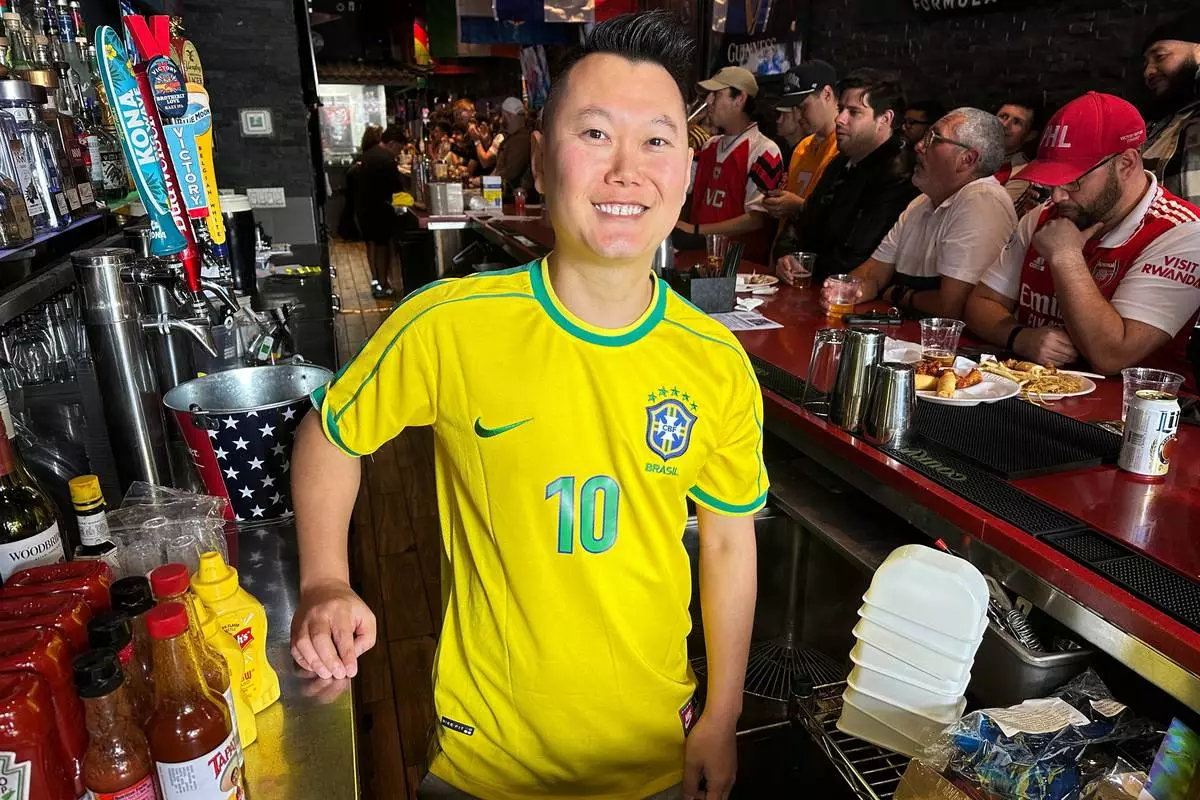
Lion Sports Bar owner Mark Prinzinger poses behind the bar as fans watch a Champion league soccer match between Arsenal and Paris Saint-Germain, Saturday, May 30, 2026, in Philadelphia. (AP Photo/Tassanee Vejpongsa)
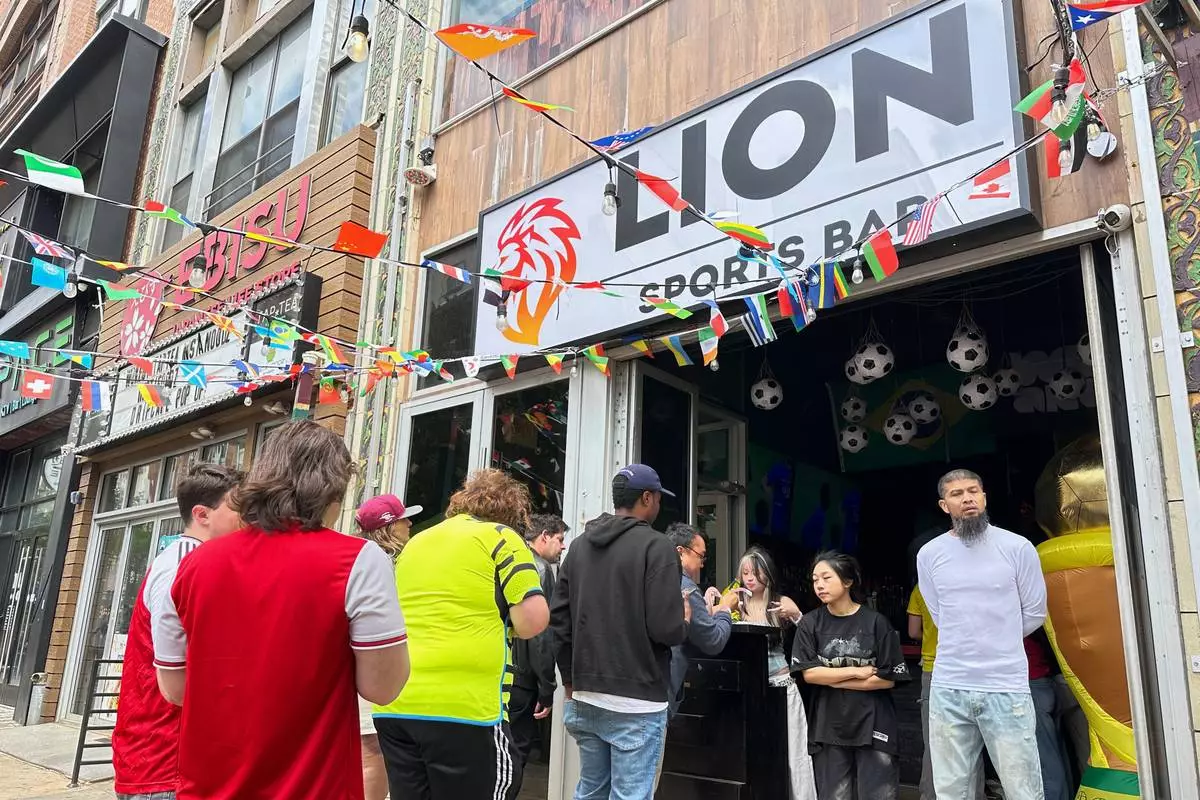
Fans arrive to watch a Champion league soccer match between Arsenal and Paris Saint-Germain at the Lion Sports Bar, Saturday, May 30, 2026, in Philadelphia. (AP Photo/Tassanee Vejpongsa)
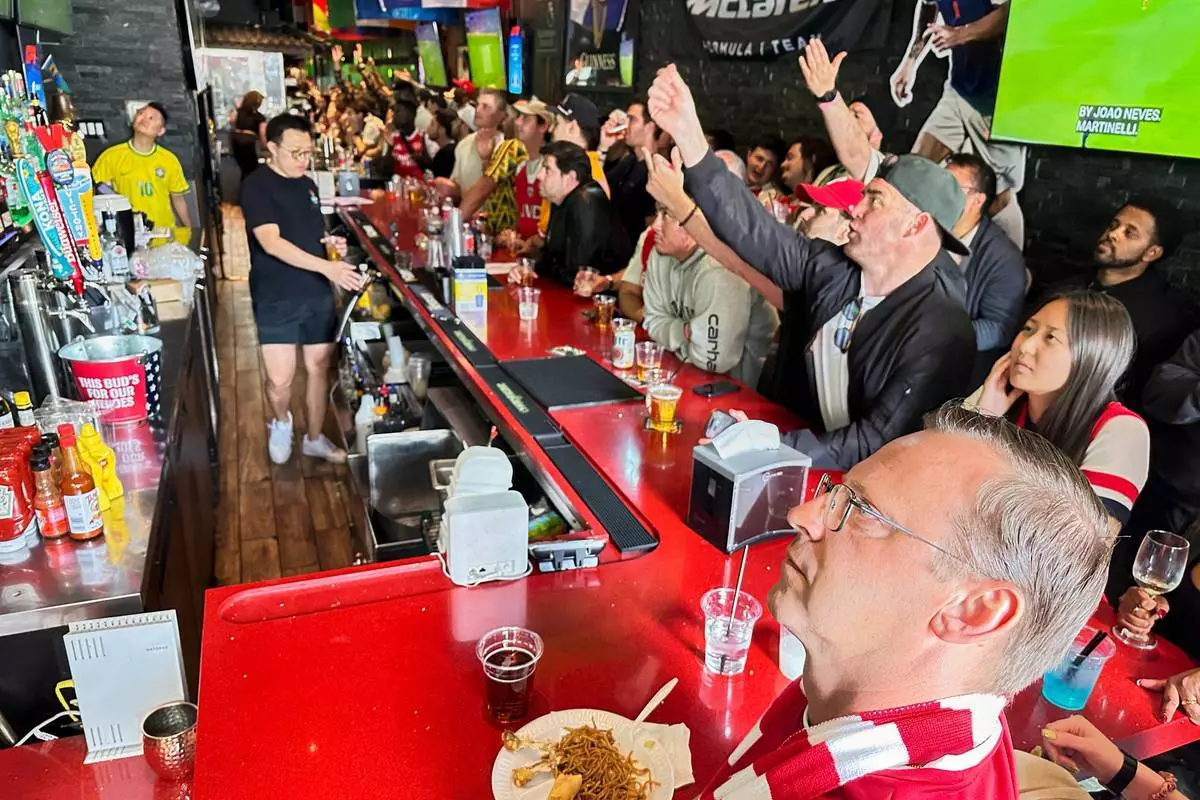
Fans watch a Champion league soccer match between Arsenal and Paris Saint-Germain at the Lion Sports Bar, Saturday, May 30, 2026, in Philadelphia. (AP Photo/Tassanee Vejpongsa)
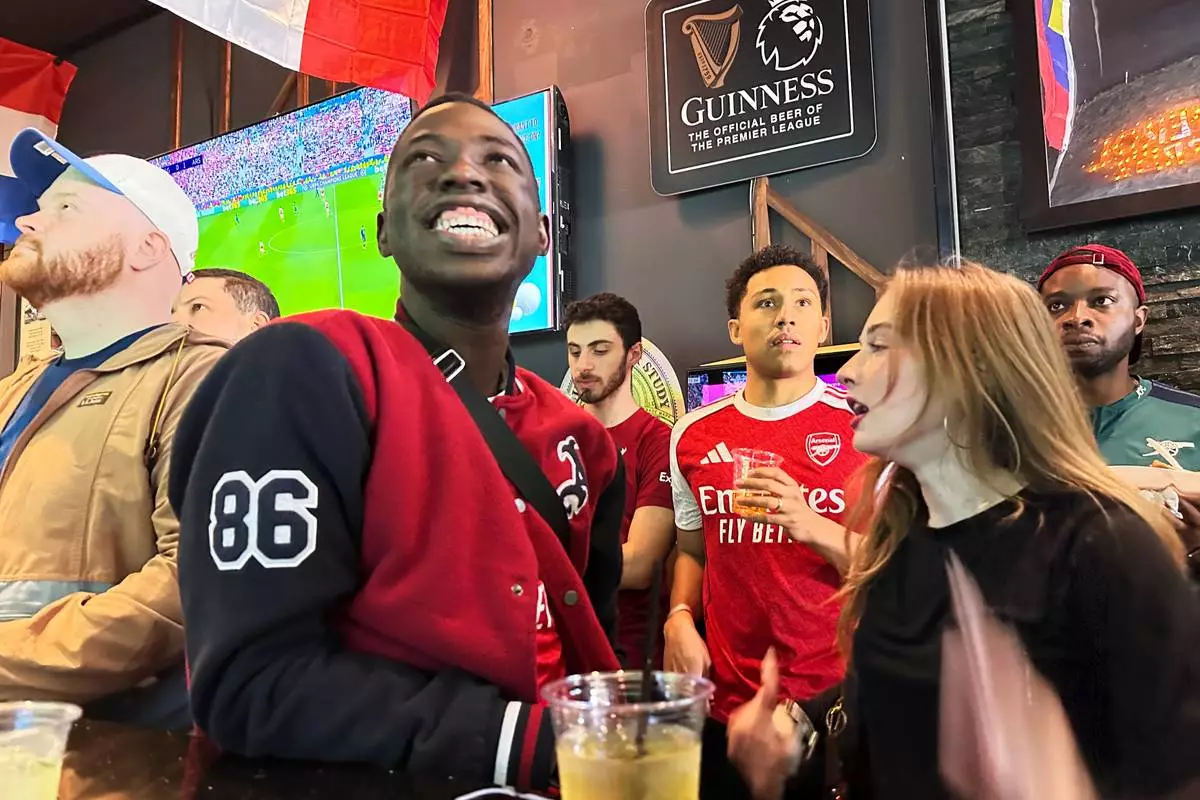
Fans watch a Champion league soccer match between Arsenal and Paris Saint-Germain at the Lion Sports Bar, Saturday, May 30, 2026, in Philadelphia. (AP Photo/Tassanee Vejpongsa)
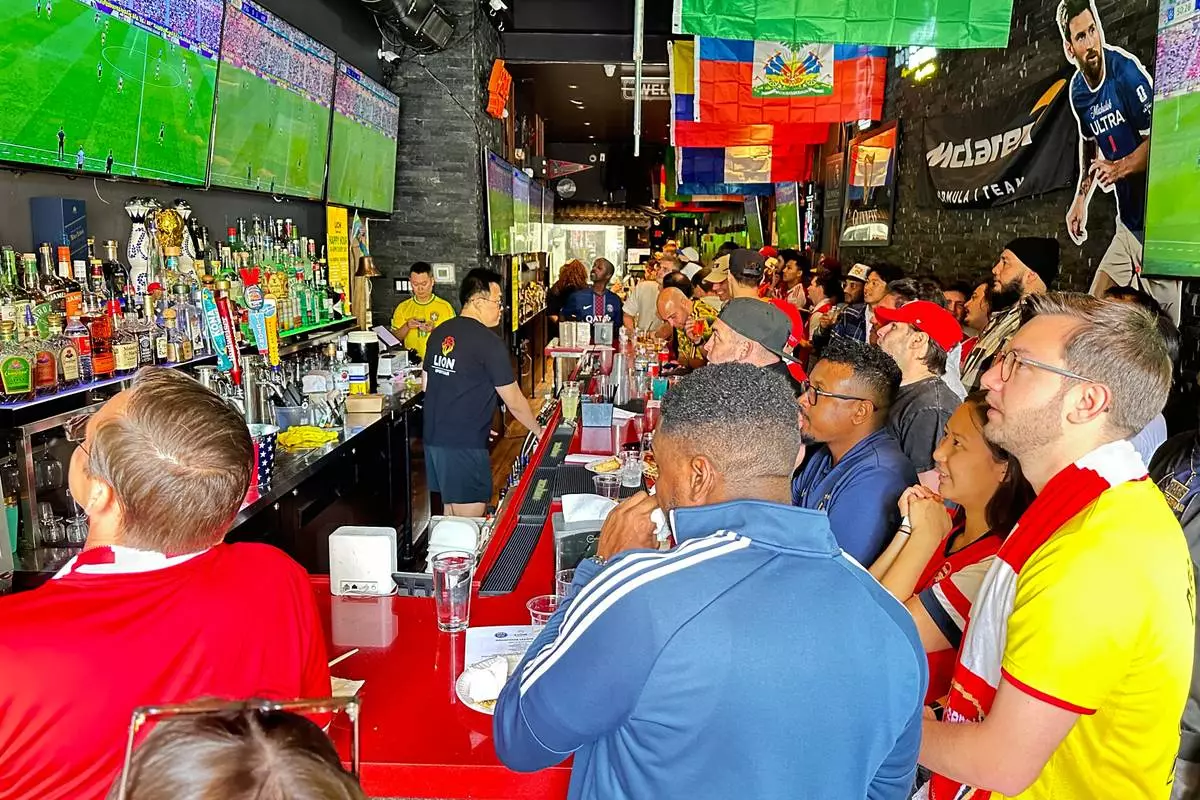
Fans watch a Champion league soccer match between Arsenal and Paris Saint-Germain at the Lion Sports Bar, Saturday, May 30, 2026, in Philadelphia. (AP Photo/Tassanee Vejpongsa)