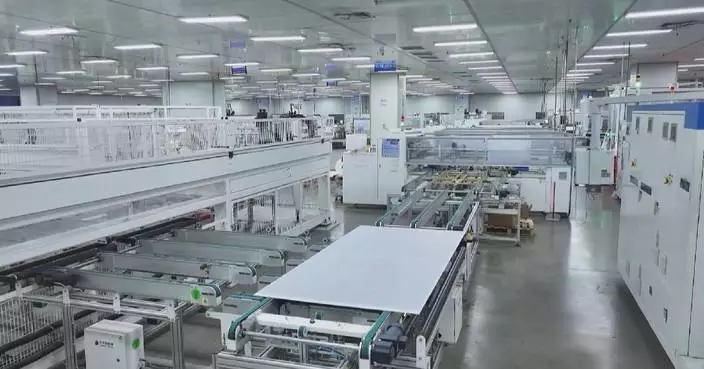
The Chinese government has decided to extend anti-dumping duties on imported paper for electrolytic capacitors from Japan for another five years, starting Friday, the Ministry of Commerce announced Thursday.
This State Council's decision follows a sunset review initiated in April 2024 at the request of the Chinese electrolytic capacitor paper industry.
If these anti-dumping measures were terminated, the dumping of imported electrolytic capacitor paper from Japan could continue or recur, potentially causing ongoing or renewed harm to China's domestic industry, the ministry said.
Under the extended measures, Japanese companies will continue to face an anti-dumping duty of up to 40.83 percent.
Electrolytic capacitor paper is used as the base material to absorb electrolytes in electrolytic capacitors, playing a crucial role in the functioning of the capacitors.
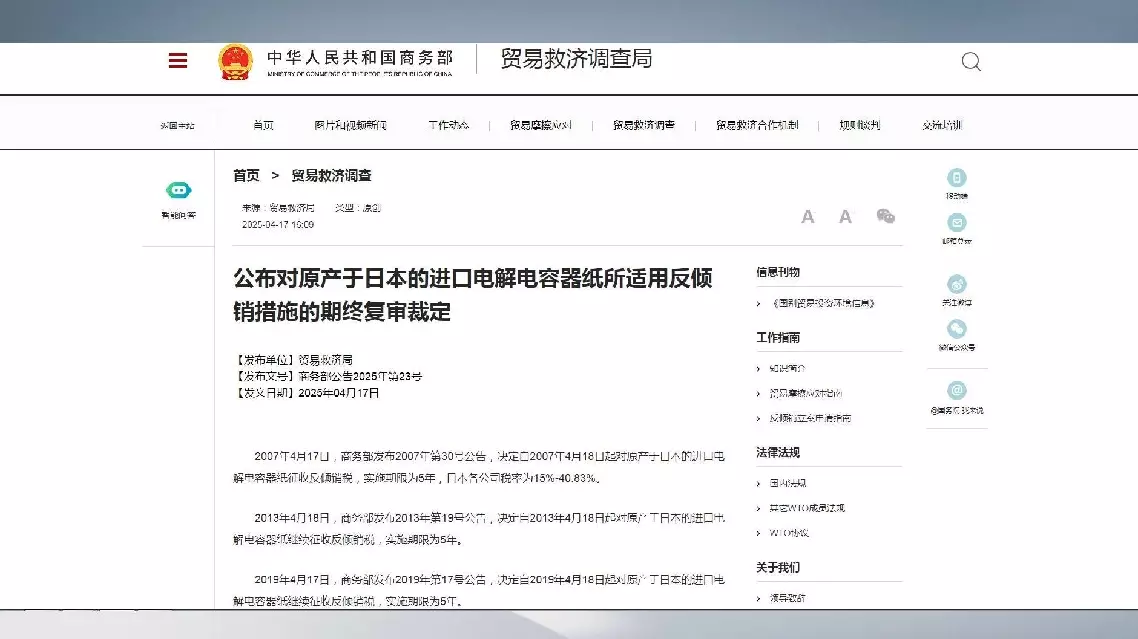
China extends anti-dumping duties on Japanese electrolytic capacitor paper
Slovak President Peter Pellegrini visited the world's first embodied intelligence robot 4S store, known as Robot Mall, at Beijing E-Town on Tuesday.
Pellegrini is paying a state visit to China from July 27 to 29 at the invitation of Chinese President Xi Jinping. He toured highlights of this year's Humanoid Robot Half Marathon Competition and interacted with humanoid and medical robots during a stop at Robot Mall.
Expressing amazement at China's robotics achievements, the Slovak president said he believes the cutting-edge technology showcased at the venue will find its way into households in the near future.
Robot Mall is designed to support the transition of robotics from technological innovation to real-world application. Its exhibition highlights how robots are entering homes and industrial scenarios, including education, delivery, companionship, entertainment, and daily services. When touring the exhibition, Pellegrini also shared his views on China-Slovakia cooperation in cutting-edge technologies.
"Slovakia is a small country, but things which are developed in China can be used already in Slovakia. So I think we have to find a way how to implement them as soon as possible into our daily life, into our companies and so on," he said.
Chinese investment in Slovakia has continued to grow in recent years, particularly in high-tech industries, green energy, and innovation-driven sectors.
Analysts say closer cooperation in modern technology and research will remain a key topic during his visit to China.
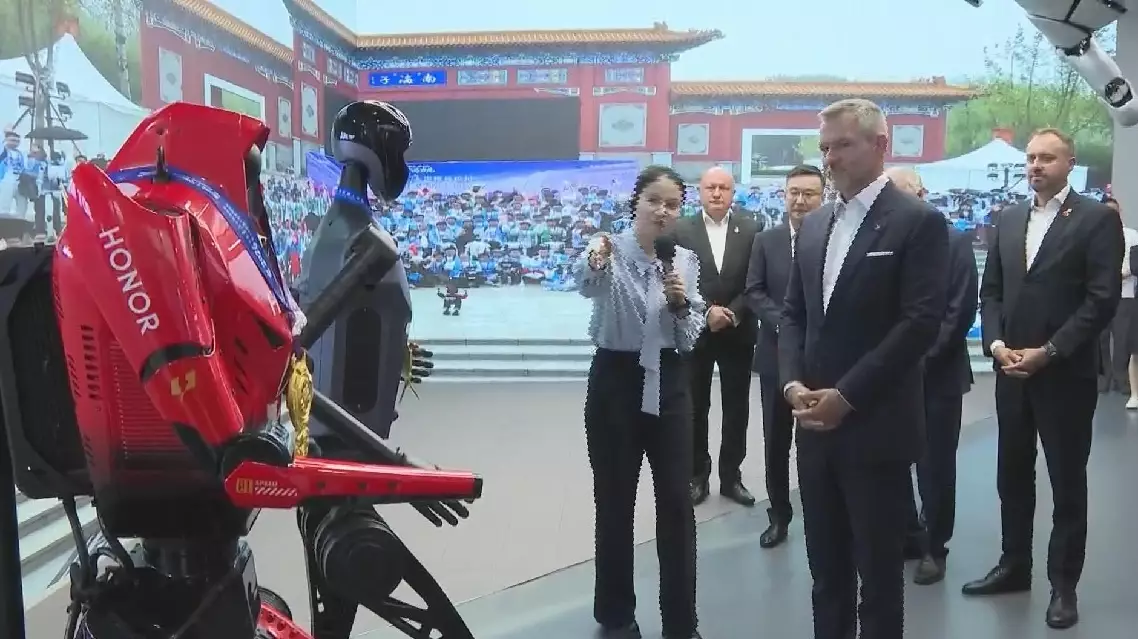
Slovak President visits robot mall at Beijing E-Town
Slovak President visits robot mall at Beijing E-Town