Skip to Content Facebook Feature Image

Trump officials' defiance over Abrego Garcia's deportation is 'shocking,' appeals court says

News

Trump officials' defiance over Abrego Garcia's deportation is 'shocking,' appeals court says
News

News

Trump officials' defiance over Abrego Garcia's deportation is 'shocking,' appeals court says

2025-04-18 09:43 Last Updated At:09:50

WASHINGTON (AP) — The Trump administration’s claim that it can't do anything to free Kilmar Abrego Garcia from an El Salvador prison and return him to the U.S. “should be shocking,” a federal appeals court said Thursday in a blistering order that ratchets up the escalating conflict between the government's executive and judicial branches.

A three-judge panel from the 4th U.S. Circuit Court of Appeals unanimously refused to suspend a judge's decision to order sworn testimony by Trump administration officials to determine if they complied with her instruction to facilitate Abrego Garcia's return.

Judge J. Harvie Wilkinson III, who was nominated by Republican President Ronald Reagan, wrote that he and his two colleagues “cling to the hope that it is not naïve to believe our good brethren in the Executive Branch perceive the rule of law as vital to the American ethos.”

“This case presents their unique chance to vindicate that value and to summon the best that is within us while there is still time,” Wilkinson wrote.

The seven-page order amounts to an extraordinary condemnation of the administration’s position in Abrego Garcia’s case and also an ominous warning of the dangers of an escalating conflict between the judiciary and executive branches the court said threatens to “diminish both.” It says the judiciary will be hurt by the “constant intimations of its illegitimacy” while the executive branch “will lose much from a public perception of its lawlessness.”

When asked by reporters Thursday afternoon if he believed Abrego Garcia was entitled to due process, President Donald Trump ducked the question.

“I have to refer, again, to the lawyers,” he said in the Oval Office. “I have to do what they ask me to do.”

The president added: “I had heard that there were a lot of things about a certain gentleman — perhaps it was that gentleman — that would make that case be a case that’s easily winnable on appeal. So we’ll just have to see. I’m gonna have to respond to the lawyers.”

The Justice Department didn’t immediately comment on the decision. In a brief accompanying their appeal, government lawyers argued that courts do not have the authority to “press-gang the President or his agents into taking any particular act of diplomacy.”

“Yet here, a single district court has inserted itself into the foreign policy of the United States and has tried to dictate it from the bench,” they wrote.

The panel said the Republican president's government is “asserting a right to stash away residents of this country in foreign prisons without the semblance of due process that is the foundation of our constitutional order.”

“Further, it claims in essence that because it has rid itself of custody that there is nothing that can be done. This should be shocking not only to judges, but to the intuitive sense of liberty that Americans far removed from courthouses still hold dear,” Wilkinson wrote.

Earlier this month, the Supreme Court said the Trump administration must work to bring back Abrego Garcia. An earlier order by U.S. District Judge Paula Xinis “properly requires the Government to ‘facilitate’ Abrego Garcia’s release from custody in El Salvador and to ensure that his case is handled as it would have been had he not been improperly sent to El Salvador,” the high court said in an unsigned order with no noted dissents.

The Justice Department appealed after Xinis on Tuesday ordered sworn testimony by at least four officials who work for U.S. Immigration and Customs Enforcement, the Department of Homeland Security and the State Department.

The 4th Circuit panel denied the government's request for a stay of Xinis' order while they appeal.

“The relief the government is requesting is both extraordinary and premature," the opinion says. "While we fully respect the Executive’s robust assertion of its Article II powers, we shall not micromanage the efforts of a fine district judge attempting to implement the Supreme Court’s recent decision.”

Wilkinson, the opinion's author, was regarded as a contender for the Supreme Court seat that was ultimately filled by Chief Justice John Roberts in 2005. Wilkinson’s conservative pedigree may complicate White House efforts to credibly assail him as a left-leaning jurist bent on thwarting the Trump administration’s agenda for political purposes, a fallback line of attack when judicial decisions run counter to the president’s wishes.

Joining Wilkinson in the ruling were judges Stephanie Thacker, who was nominated by Democratic President Barack Obama, and Robert Bruce King, who was nominated by Democratic President Bill Clinton.

White House officials claim they lack the authority to bring back the Salvadoran national from his native country. Salvadoran President Nayib Bukele also said Monday that he would not return Abrego Garcia, likening it to smuggling “a terrorist into the United States.”

While initially acknowledging Abrego Garcia was mistakenly deported, the administration has dug in its heels in recent days, describing him as a “terrorist” even though he was never criminally charged in the U.S.

Attorney General Pam Bondi said Wednesday that “he is not coming back to our country.”

Maryland Sen. Chris Van Hollen met with Abrego Garcia in El Salvador on Thursday. Van Hollen posted a photo of the meeting on X, but he did not provide an update on Abrego Garcia's status. Bukele also posted images of the meeting, saying, “Now that he’s been confirmed healthy, he gets the honor of staying in El Salvador’s custody.”

Administration officials have conceded that Abrego Garcia shouldn't have been sent to El Salvador, but they have insisted that he was a member of the MS-13 gang. Abrego Garcia's lawyers say there is no evidence linking him to MS-13 or any other gang.

The appeals court panel concluded that Abrego Garcia deserves due process, even if the government can connect him to a gang.

“If the government is confident of its position, it should be assured that position will prevail in proceedings to terminate the withholding of removal order,” the opinion says.

Xinis also was skeptical of assertions by White House officials and Bukele that they were unable to bring back Abrego Garcia. She described their statements as “two very misguided ships passing in the night.”

“The Supreme Court has spoken,” Xinis said Tuesday.

Associated Press writer Will Weissert contributed reporting.
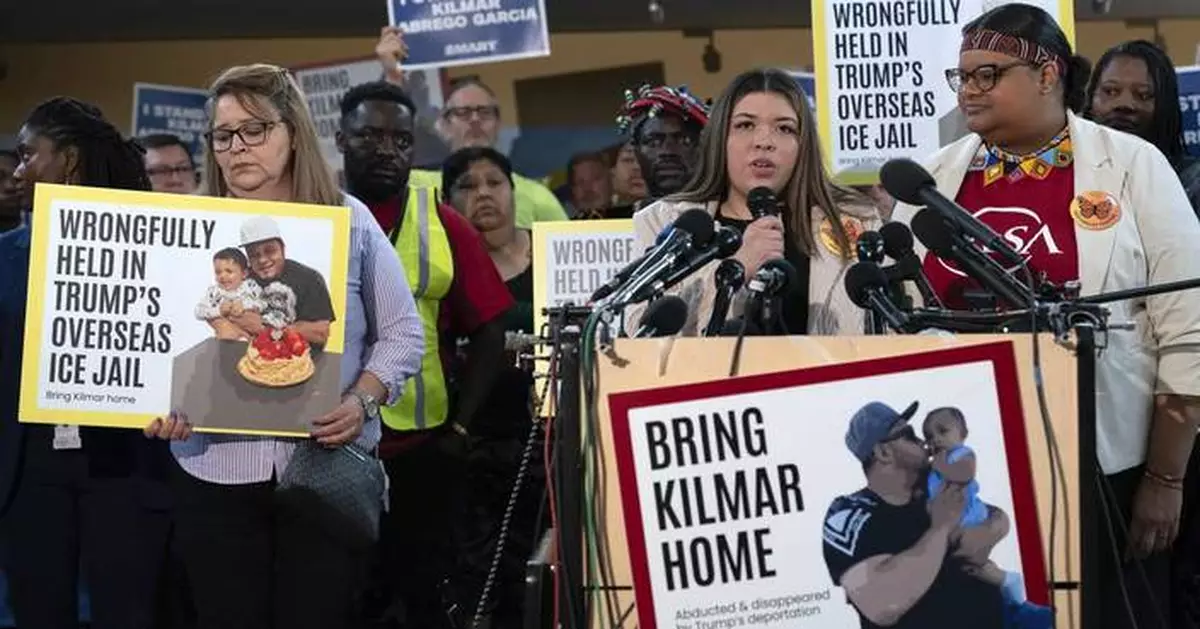
Jennifer Vasquez Sura, the wife of Kilmar Abrego Garcia of Maryland, who was mistakenly deported to El Salvador, speaks during a news conference at CASA's Multicultural Center in Hyattsville, Md., Friday, April 4, 2025. (AP Photo/Jose Luis Magana)
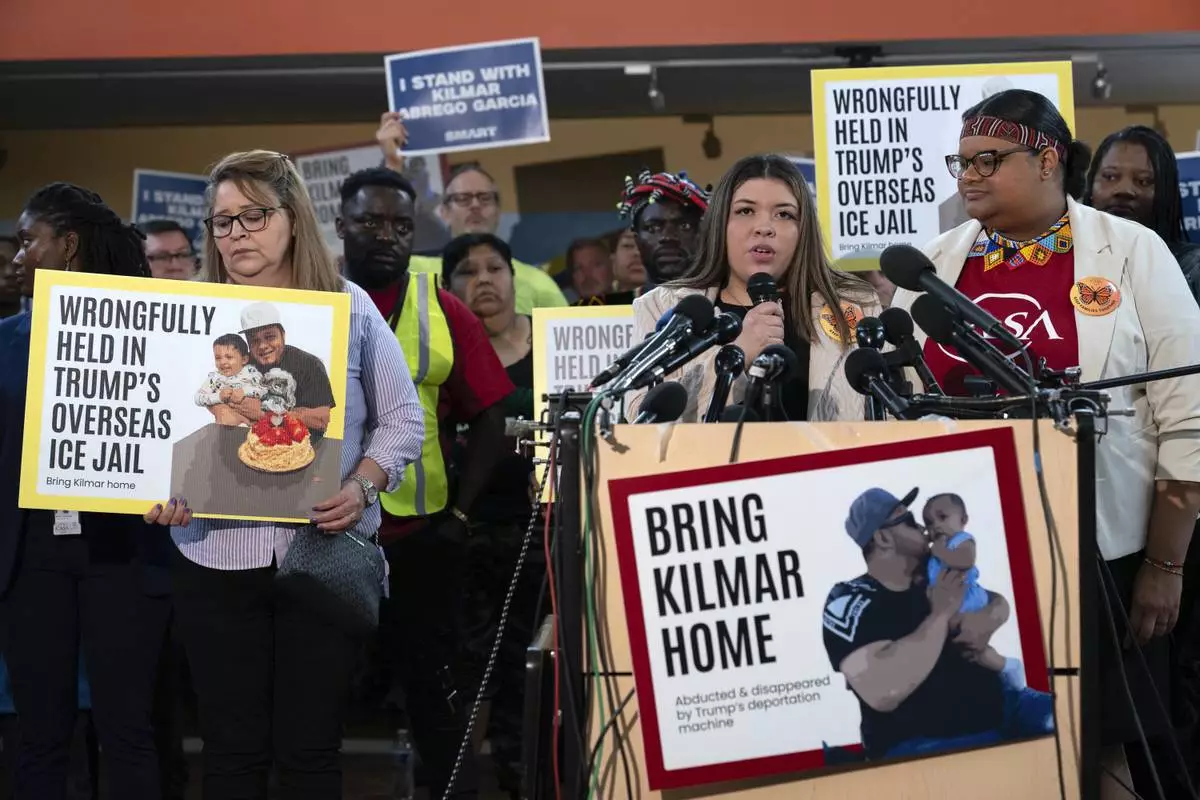
Jennifer Vasquez Sura, the wife of Kilmar Abrego Garcia of Maryland, who was mistakenly deported to El Salvador, speaks during a news conference at CASA's Multicultural Center in Hyattsville, Md., Friday, April 4, 2025. (AP Photo/Jose Luis Magana)

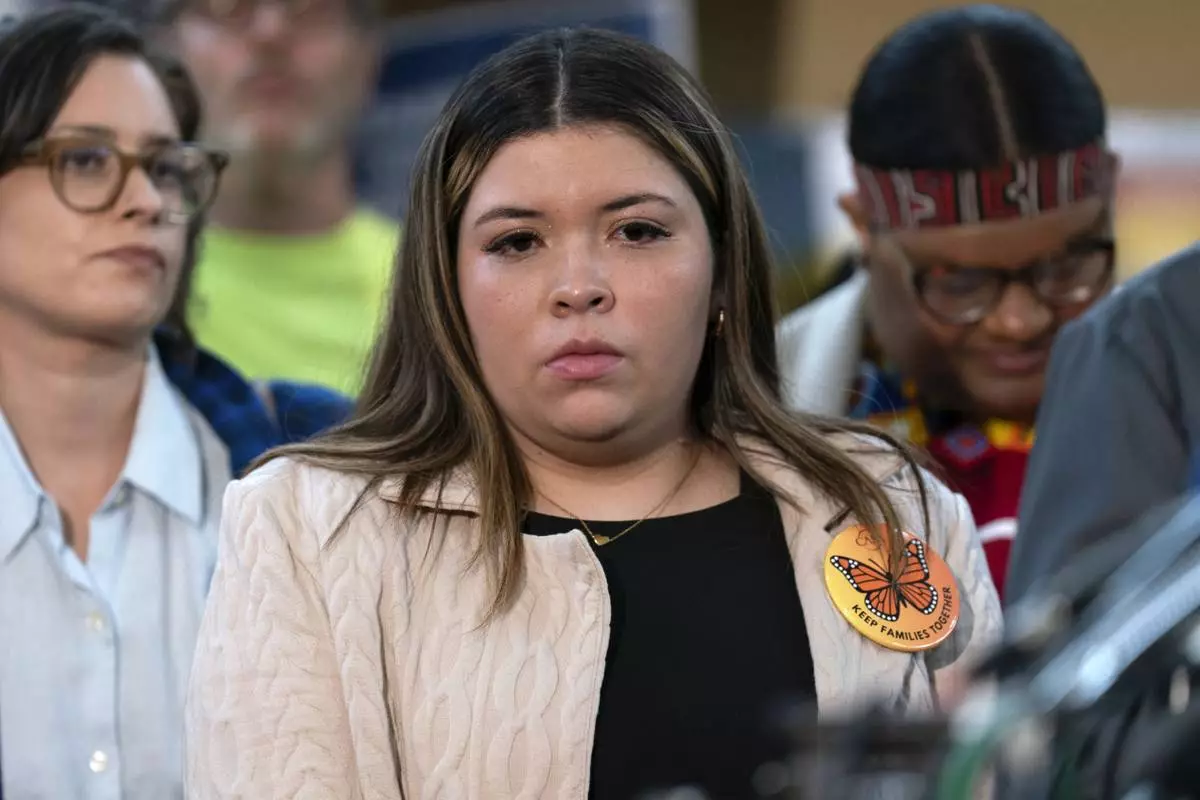
FILE - Jennifer Vasquez Sura, the wife of Kilmar Abrego Garcia of Maryland, who was mistakenly deported to El Salvador, speaks during a news conference at CASA's Multicultural Center in Hyattsville, Md., April 4, 2025. (AP Photo/Jose Luis Magana, file)
FILE - Jennifer Vasquez Sura, the wife of Kilmar Abrego Garcia of Maryland, who was mistakenly deported to El Salvador, speaks during a news conference at CASA's Multicultural Center in Hyattsville, Md., April 4, 2025. (AP Photo/Jose Luis Magana, file)
DUBAI, United Arab Emirates (AP) — U.S. President Donald Trump said Iran wants to negotiate with Washington after his threat to strike the Islamic Republic over its bloody crackdown on protesters, a move coming as activists said Monday the death toll in the nationwide demonstrations rose to at least 544.

Iran had no immediate reaction to the news, which came after the foreign minister of Oman — long an interlocutor between Washington and Tehran — traveled to Iran this weekend. It also remains unclear just what Iran could promise, particularly as Trump has set strict demands over its nuclear program and its ballistic missile arsenal, which Tehran insists is crucial for its national defense.

Meanwhile Monday, Iran called for pro-government demonstrators to head to the streets in support of the theocracy, a show of force after days of protests directly challenging the rule of 86-year-old Supreme Leader Ayatollah Ali Khamenei. Iranian state television aired chants from the crowd, who shouted “Death to America!” and “Death to Israel!”

Trump and his national security team have been weighing a range of potential responses against Iran including cyberattacks and direct strikes by the U.S. or Israel, according to two people familiar with internal White House discussions who were not authorized to comment publicly and spoke on condition of anonymity.

“The military is looking at it, and we’re looking at some very strong options,” Trump told reporters on Air Force One on Sunday night. Asked about Iran’s threats of retaliation, he said: “If they do that, we will hit them at levels that they’ve never been hit before.”

Trump said that his administration was in talks to set up a meeting with Tehran, but cautioned that he may have to act first as reports of the death toll in Iran mount and the government continues to arrest protesters.

“I think they’re tired of being beat up by the United States,” Trump said. “Iran wants to negotiate.”

He added: “The meeting is being set up, but we may have to act because of what’s happening before the meeting. But a meeting is being set up. Iran called, they want to negotiate.”

Iran through country's parliamentary speaker warned Sunday that the U.S. military and Israel would be “legitimate targets” if America uses force to protect demonstrators.

More than 10,600 people also have been detained over the two weeks of protests, said the U.S.-based Human Rights Activists News Agency, which has been accurate in previous unrest in recent years and gave the death toll. It relies on supporters in Iran crosschecking information. It said 496 of the dead were protesters and 48 were with security forces.

With the internet down in Iran and phone lines cut off, gauging the demonstrations from abroad has grown more difficult. The Associated Press has been unable to independently assess the toll. Iran’s government has not offered overall casualty figures.

Those abroad fear the information blackout is emboldening hard-liners within Iran’s security services to launch a bloody crackdown. Protesters flooded the streets in the country’s capital and its second-largest city on Saturday night into Sunday morning. Online videos purported to show more demonstrations Sunday night into Monday, with a Tehran official acknowledging them in state media.

In Tehran, a witness told the AP that the streets of the capital empty at the sunset call to prayers each night. By the Isha, or nighttime prayer, the streets are deserted.

Part of that stems from the fear of getting caught in the crackdown. Police sent the public a text message that warned: “Given the presence of terrorist groups and armed individuals in some gatherings last night and their plans to cause death, and the firm decision to not tolerate any appeasement and to deal decisively with the rioters, families are strongly advised to take care of their youth and teenagers.”

Another text, which claimed to come from the intelligence arm of the paramilitary Revolutionary Guard, also directly warned people not to take part in demonstrations.

“Dear parents, in view of the enemy’s plan to increase the level of naked violence and the decision to kill people, ... refrain from being on the streets and gathering in places involved in violence, and inform your children about the consequences of cooperating with terrorist mercenaries, which is an example of treason against the country,” the text warned.

The witness spoke to the AP on condition of anonymity due to the ongoing crackdown.

The demonstrations began Dec. 28 over the collapse of the Iranian rial currency, which trades at over 1.4 million to $1, as the country’s economy is squeezed by international sanctions in part levied over its nuclear program. The protests intensified and grew into calls directly challenging Iran’s theocracy.

Nikhinson reported from aboard Air Force One.

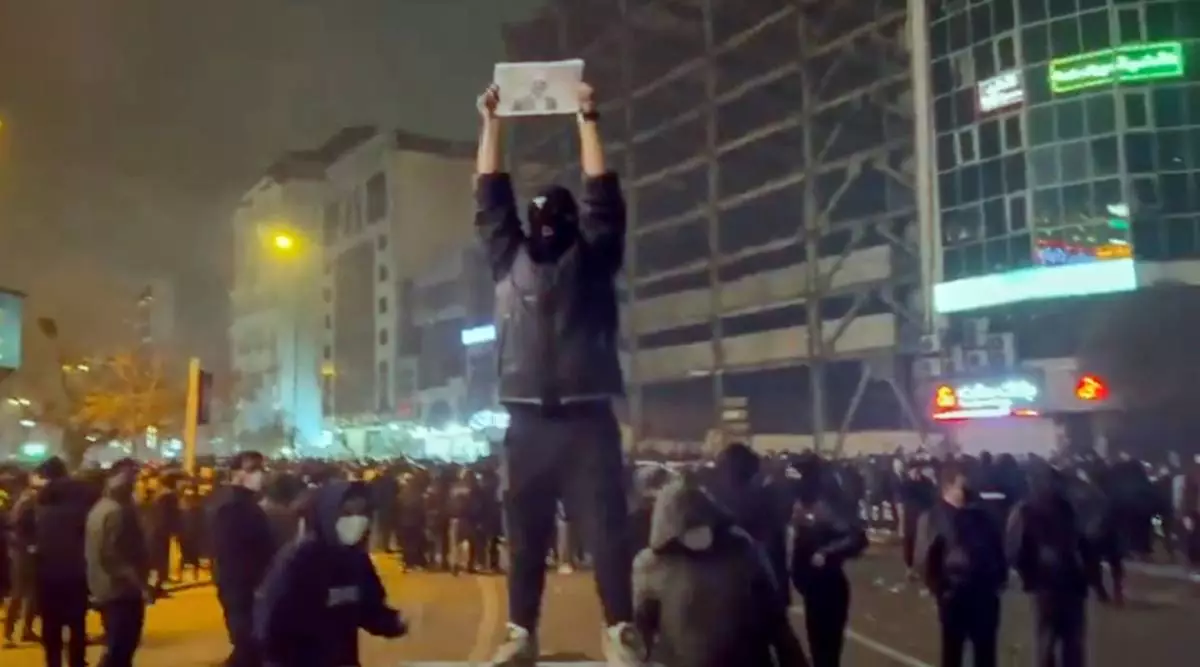
In this frame grab from video obtained by the AP outside Iran, a masked demonstrator holds a picture of Iran's Crown Prince Reza Pahlavi during a protest in Tehran, Iran, Friday, January. 9, 2026. (UGC via AP)

In this frame grab from video obtained by the AP outside Iran, a masked demonstrator holds a picture of Iran's Crown Prince Reza Pahlavi during a protest in Tehran, Iran, Friday, January. 9, 2026. (UGC via AP)

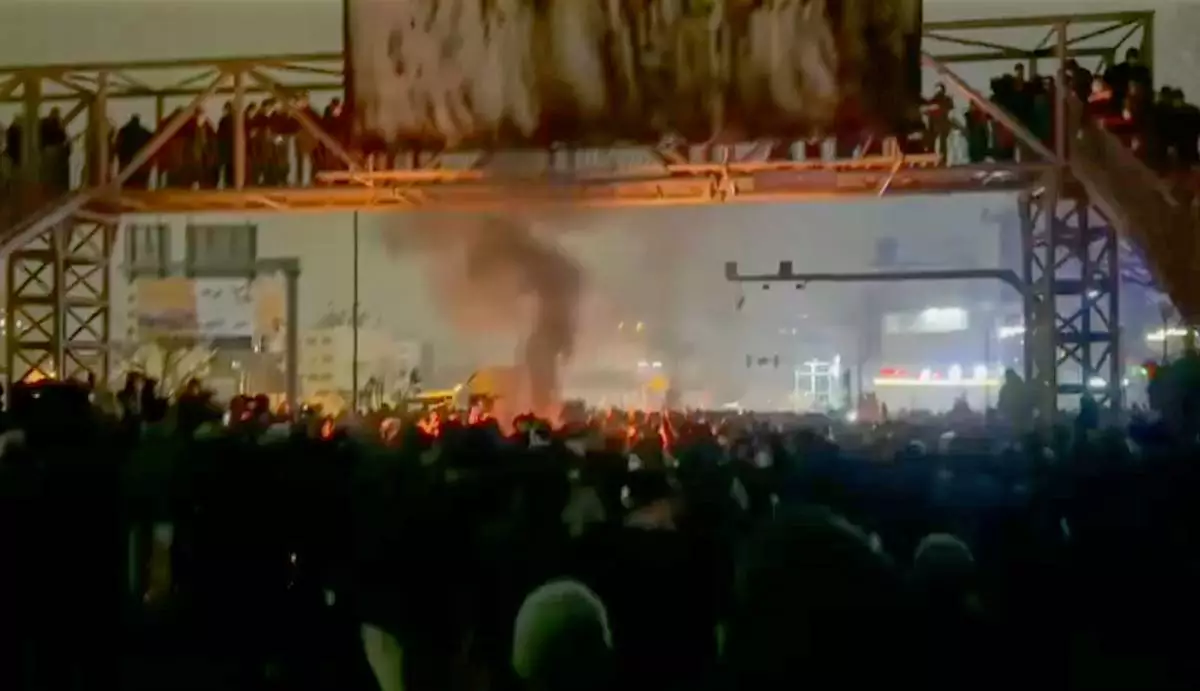
In this frame grab from footage circulating on social media from Iran shows protesters taking to the streets despite an intensifying crackdown as the Islamic Republic remains cut off from the rest of the world in Tehran, Iran, Friday, Jan. 9, 2026.(UGC via AP)

In this frame grab from footage circulating on social media from Iran shows protesters taking to the streets despite an intensifying crackdown as the Islamic Republic remains cut off from the rest of the world in Tehran, Iran, Friday, Jan. 9, 2026.(UGC via AP)

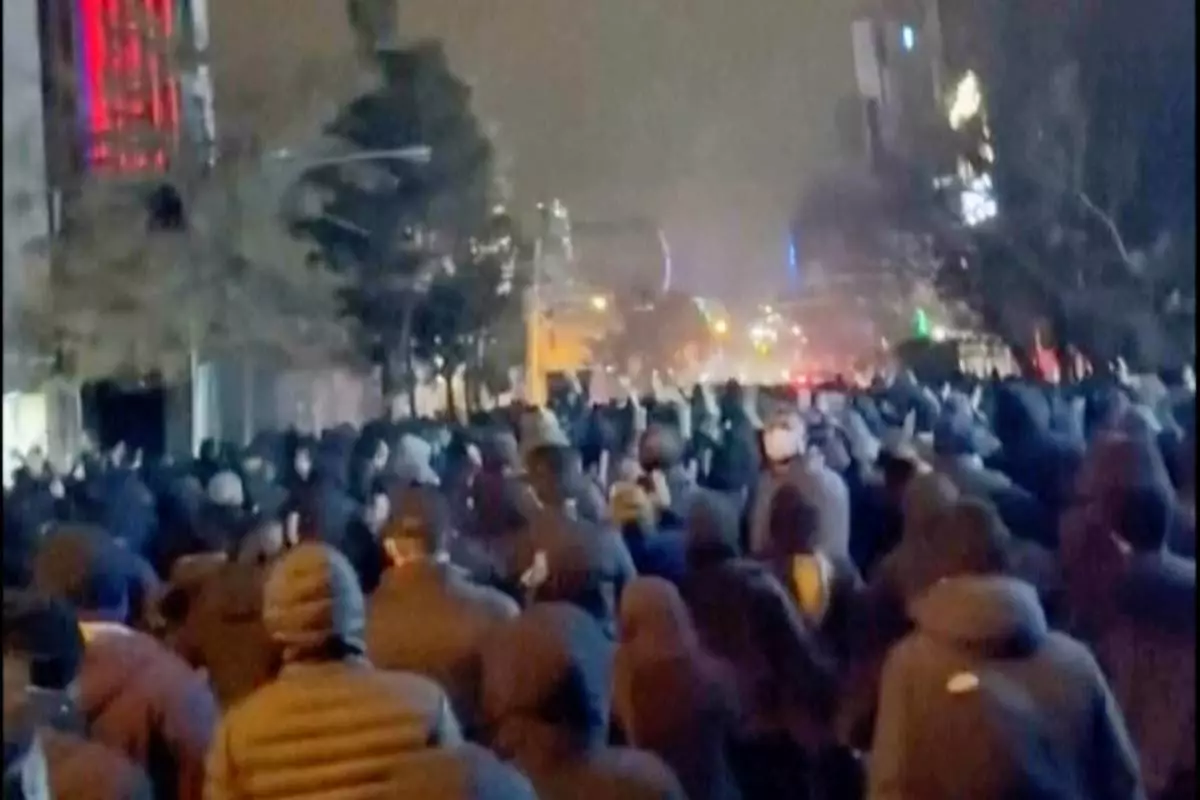
In this frame grab from footage circulating on social media from Iran showed protesters once again taking to the streets of Tehran despite an intensifying crackdown as the Islamic Republic remains cut off from the rest of the world in Tehran, Iran, Saturday Jan. 10, 2026. (UGC via AP)

In this frame grab from footage circulating on social media from Iran showed protesters once again taking to the streets of Tehran despite an intensifying crackdown as the Islamic Republic remains cut off from the rest of the world in Tehran, Iran, Saturday Jan. 10, 2026. (UGC via AP)

Recommended Articles