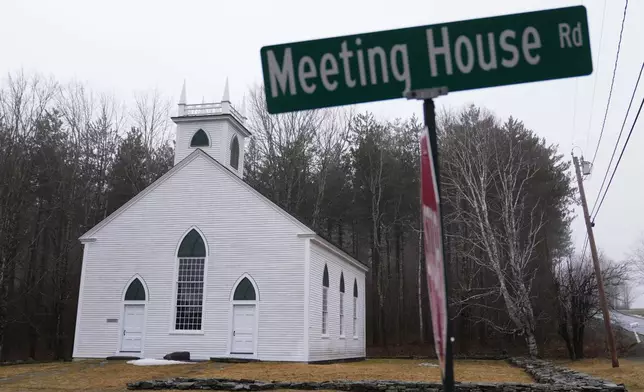
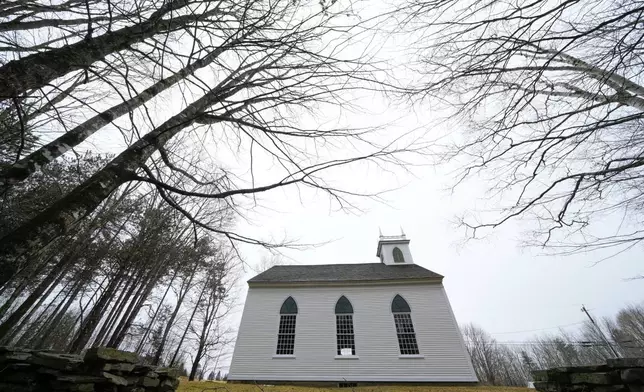
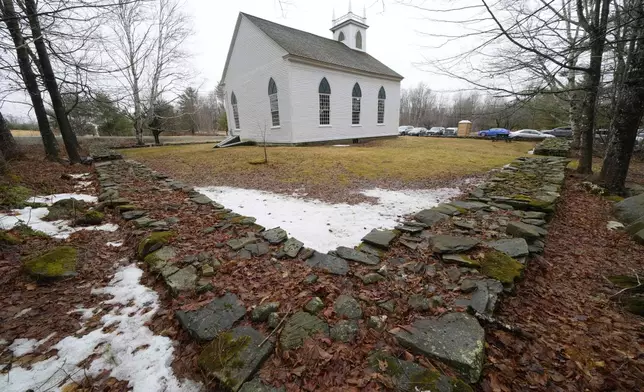
SOLON, Maine (AP) — From the outside, it looks like any other New England church building: a boxy, white structure with a single steeple surrounded by an old stone wall, set against rolling hills and pine forest.
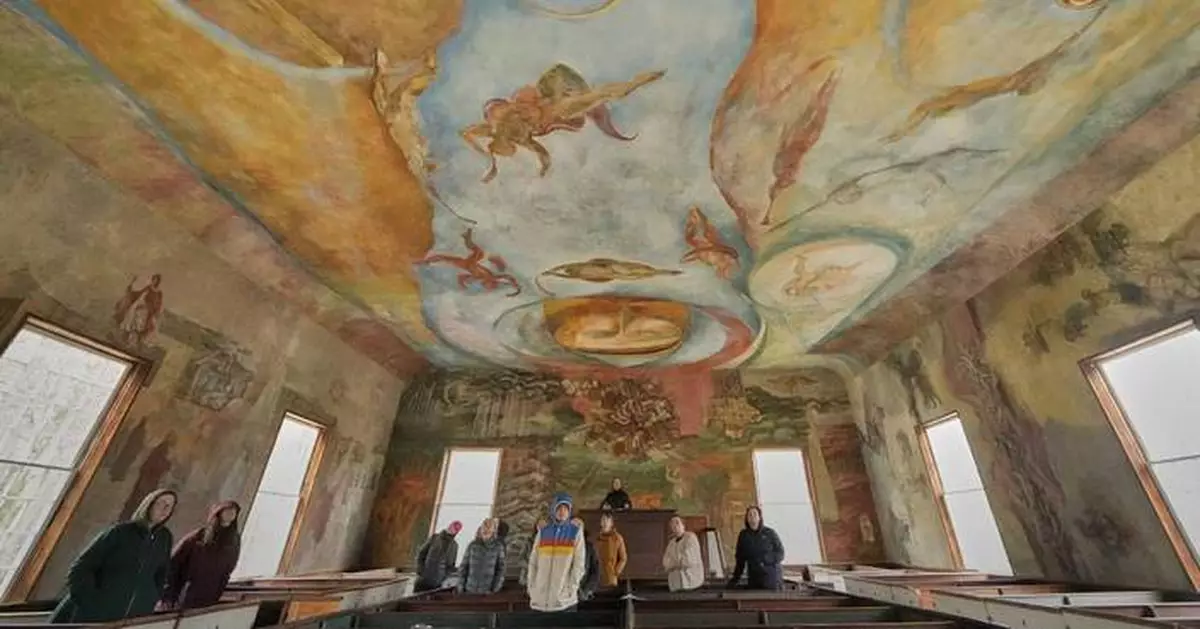
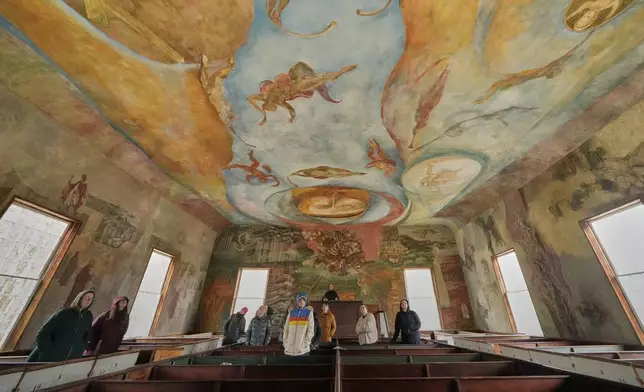
Inside, though, the South Solon Meeting House has a secret unknown even to some who drive through the tiny Maine town every day. The interior of the building is covered in 70-year-old fresco murals that encourage some in the state's art community to describe it as “Maine's Sistine Chapel.”
Click to Gallery
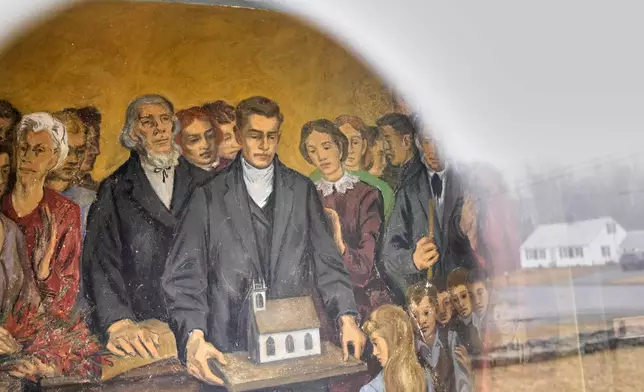
A fresco depicting community members with a model of South Solon Meeting House is seen through a window in the lobby of the building, Sunday, April 6, 2025, in Solon, Maine. (AP Photo/Robert F. Bukaty)
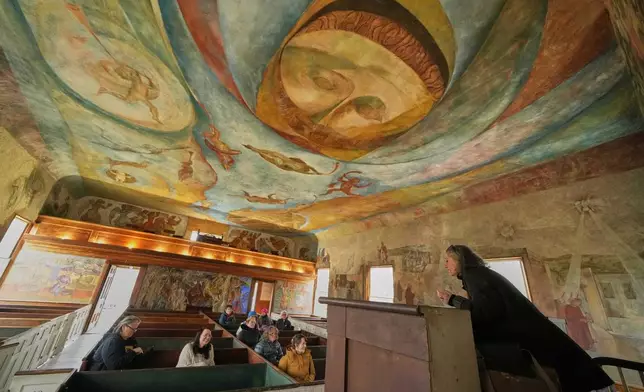
Veronique Plesch, an art professor at Colby College, gives a lecture to art teachers about the frescoes that adorn the walls and ceiling of the South Solon Meeting House, Sunday, April 6, 2025, in Solon, Maine. (AP Photo/Robert F. Bukaty)
The unassuming South Solon Meeting House, built in 1842, is pictured Sunday, April 6, 2025, in Solon, Maine. (AP Photo/Robert F. Bukaty)
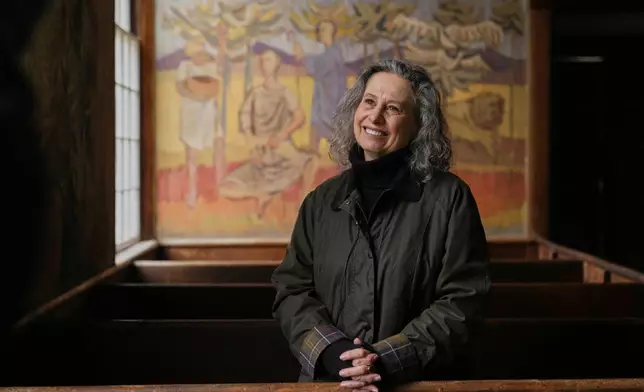
Veronique Plesch, an art professor at Colby College, pauses during a tour of the South Solon Meeting House, Sunday, April 6, 2025, in Solon, Maine. (AP Photo/Robert F. Bukaty)
The South Solon Meeting House, a clapboard building with Gothic architectural influences, is pictured, Sunday, April 6, 2025, in Solon, Maine. (AP Photo/Robert F. Bukaty)
A rock wall surrounds the South Solon Meeting House, Sunday, April 6, 2025, in Solon, Maine. (AP Photo/Robert F. Bukaty)
Visitors view the frescoes at the South Solon Meeting House, Sunday, April 6, 2025, in Solon, Maine. (AP Photo/Robert F. Bukaty)
The murals were painted by artists in the 1950s and, while they have long been appreciated by visitors, the recent creation of a website dedicated to them by students at Colby College in Waterville, Maine, has generated new interest in the paintings.
Véronique Plesch, a Colby professor of art, hopes the building inspires more appreciation of frescoes.
“I fell in love with the place, because I have studies frescoes all my life,” said Plesch, who is a member of the board of the historical society that cares for the meeting house. She added that the paintings should stay in public places and not be in private institutions.
The meeting house was built in 1842 and hosted church services until the 1940s, though there were periods of closure, such as times of war. A decade later, Margaret Day Blake found the building in a state of disuse and the former student at the nearby Skowhegan School of Painting and Sculpture put out a call for young artists to paint frescoes under the school's supervision in 1951.
The artists were given creative freedom and told there would be no limits to subject matter, but that Biblical scenes would “offer rich and suitable” imagery. The interior was covered in such scenes from 1952 to 1956 and the walls remain adorned with frescoes, including one that references Leonardo da Vinci's “The Last Supper."
Another fresco depicts the binding of Isaac, in which a hooded Abraham prepares to sacrifice his son on God's orders. The Great Flood is depicted as it was by Michelangelo at the Sistine Chapel at the Vatican.
Two of the 13 artists — Sigmund Abeles of New York City and Sidney Hurwitz of Newton, Massachusetts — both in their 90s, are still living. Both spoke fondly about their time at the meeting house.
“We would go out there and paint and then take a lunch break in the cemetery behind the building. It was a very idyllic time,” Hurwitz said. “I very much enjoyed it.”
Today, the meeting house, which is open to the public without locks on its doors, serves as a community gathering and performance space. Many of its old features, including box pews made for smaller people of a different time, are still intact.
Abeles recalled painting the scene of Jacob wrestling with the angel from the Book of Genesis.
“It's a very, very special place, and it was a unique experience" to work on the frescoes, Abeles said.
On a recent Sunday morning, Plesch gave a lecture at the meeting house before a group of members of the Maine Art Education Association as part of the group's spring conference. Long ago, attendants of the building might have been preparing for an Easter service, but on this day it was full of teachers fascinated by the frescoes.
Suzanne Goulet, an art teacher at a nearby high school, said she was previously aware of the frescoes and confessed she had peeked into the windows of the old building, adding that it's great the paintings are still inspiring art lovers decades later.
“The inspiration is that we bring it back to our students,” Goulet said.
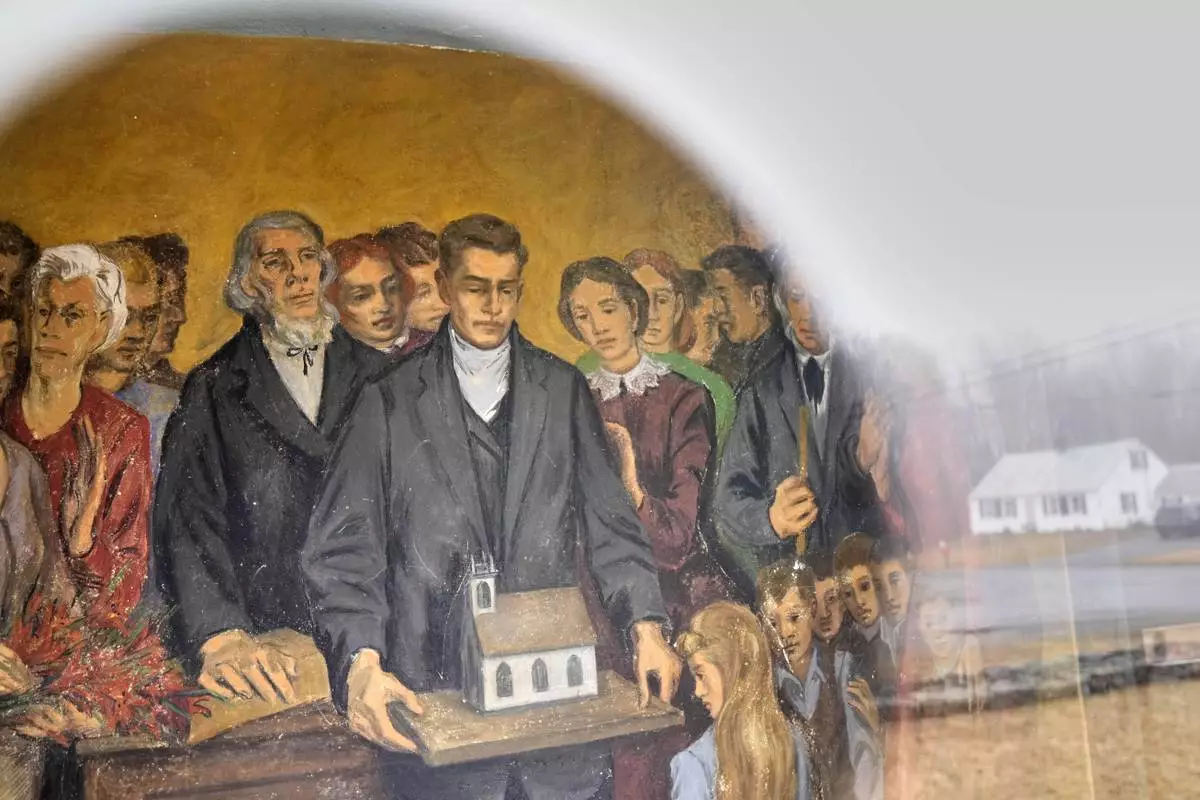
A fresco depicting community members with a model of South Solon Meeting House is seen through a window in the lobby of the building, Sunday, April 6, 2025, in Solon, Maine. (AP Photo/Robert F. Bukaty)
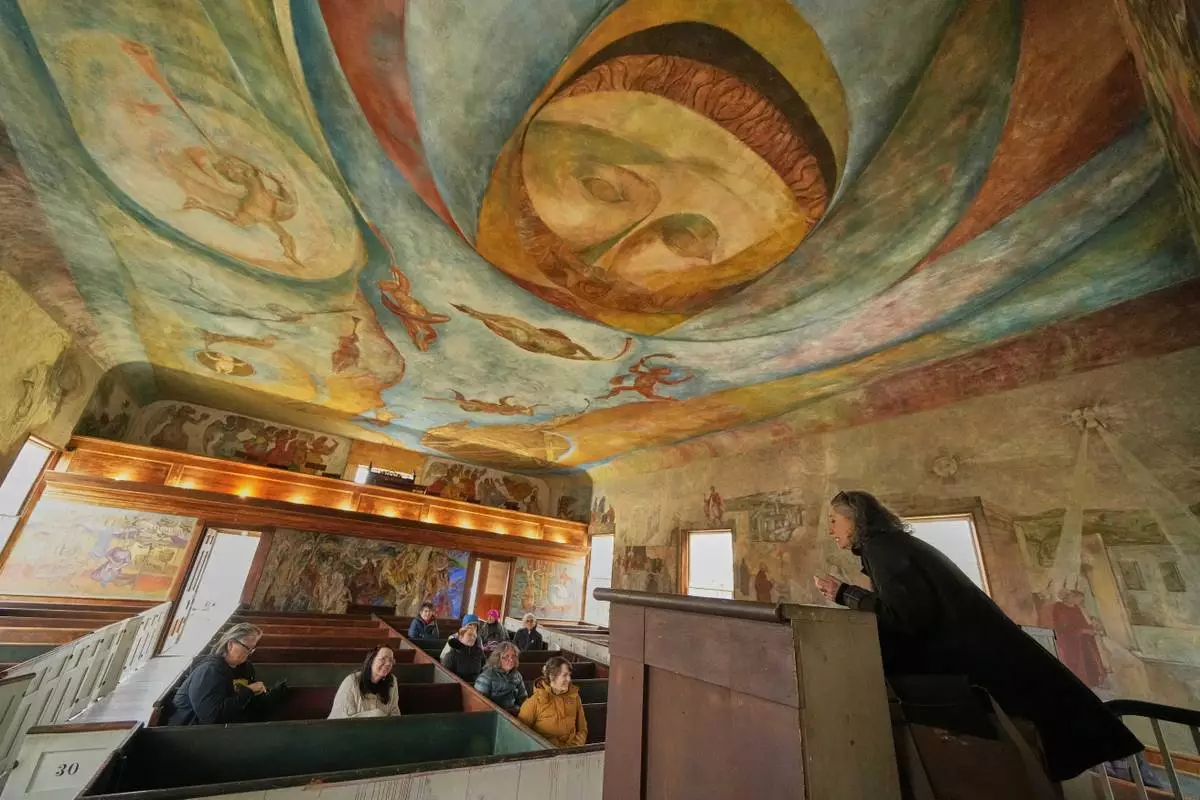
Veronique Plesch, an art professor at Colby College, gives a lecture to art teachers about the frescoes that adorn the walls and ceiling of the South Solon Meeting House, Sunday, April 6, 2025, in Solon, Maine. (AP Photo/Robert F. Bukaty)
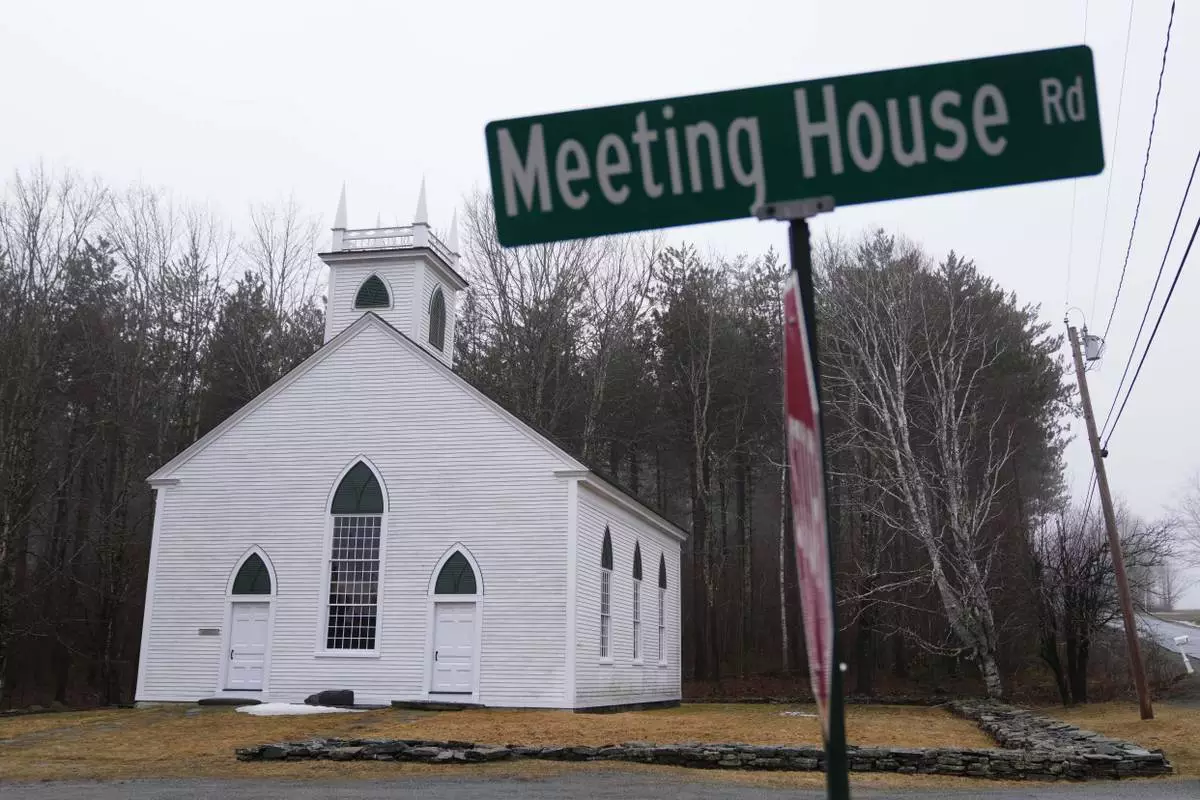
The unassuming South Solon Meeting House, built in 1842, is pictured Sunday, April 6, 2025, in Solon, Maine. (AP Photo/Robert F. Bukaty)
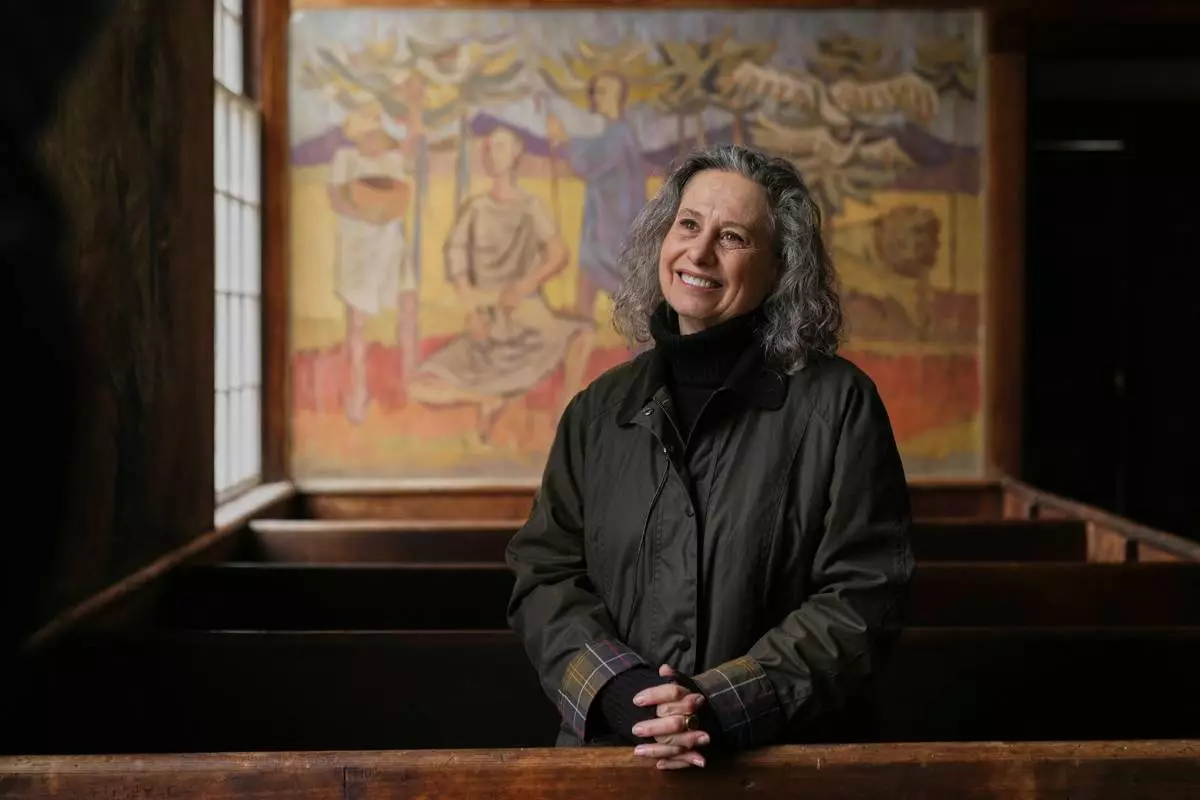
Veronique Plesch, an art professor at Colby College, pauses during a tour of the South Solon Meeting House, Sunday, April 6, 2025, in Solon, Maine. (AP Photo/Robert F. Bukaty)
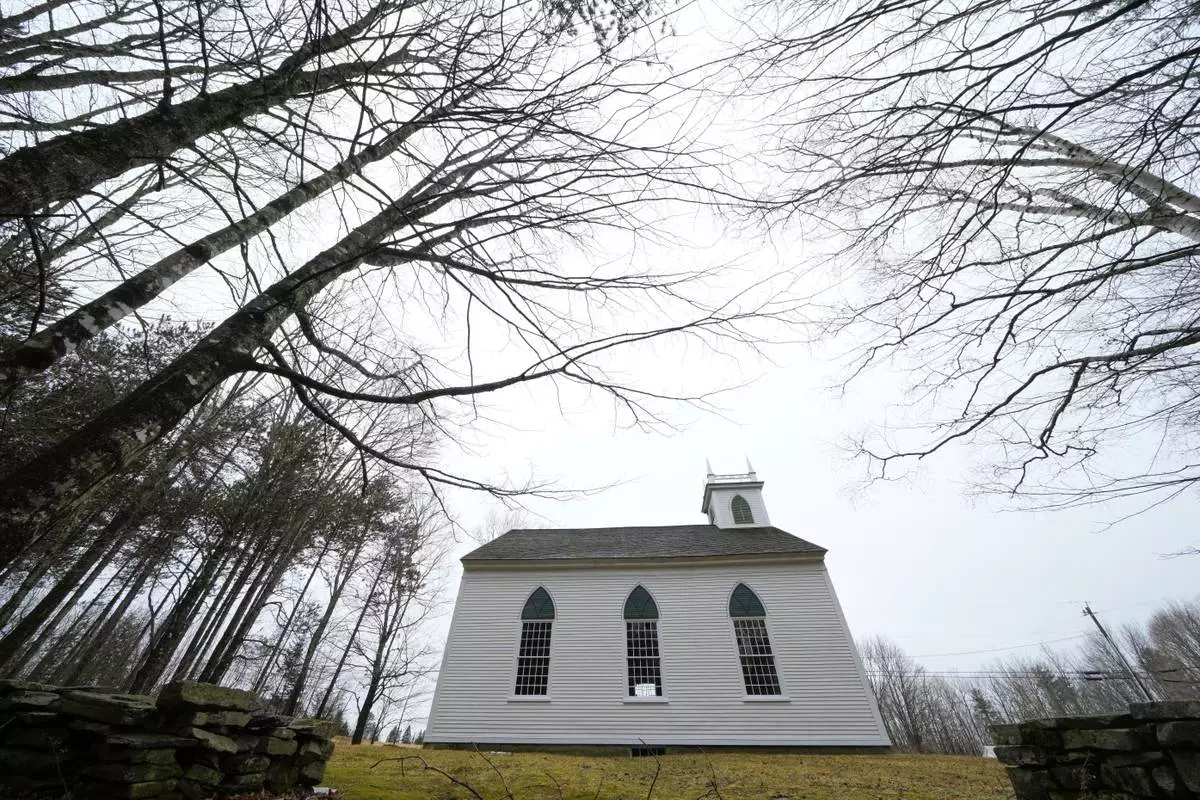
The South Solon Meeting House, a clapboard building with Gothic architectural influences, is pictured, Sunday, April 6, 2025, in Solon, Maine. (AP Photo/Robert F. Bukaty)
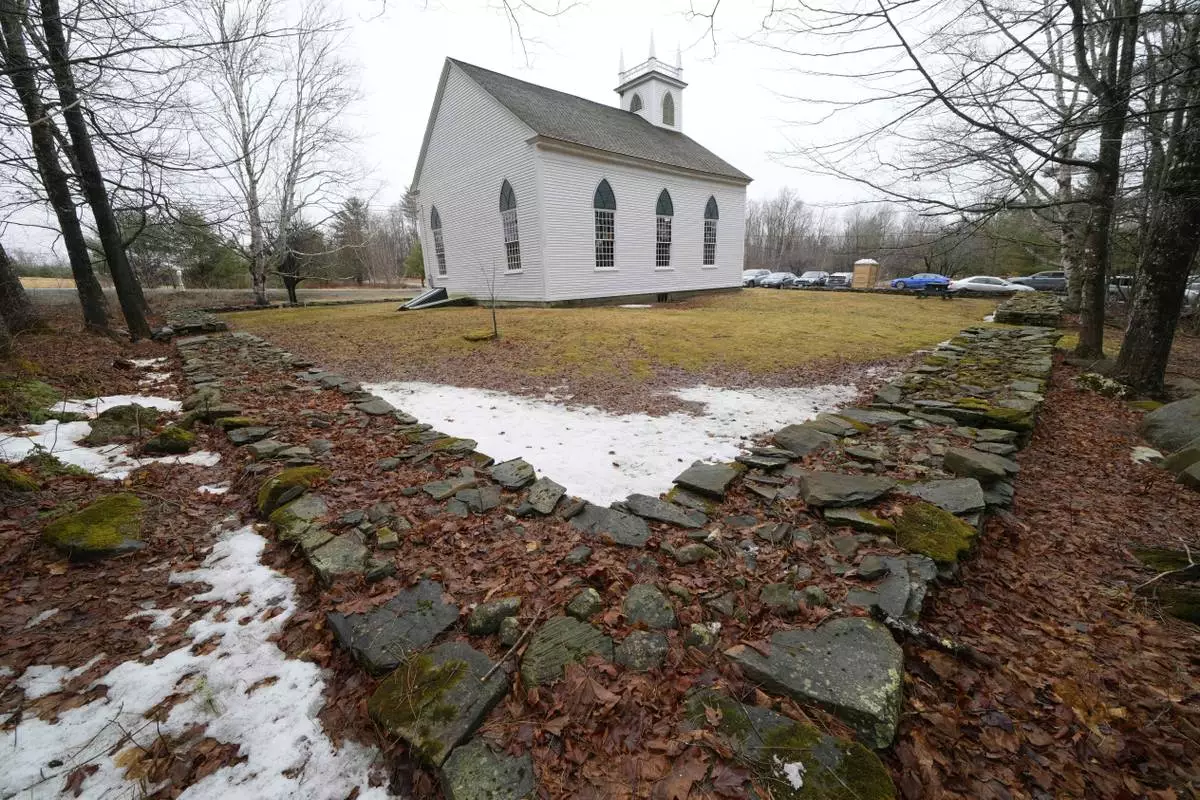
A rock wall surrounds the South Solon Meeting House, Sunday, April 6, 2025, in Solon, Maine. (AP Photo/Robert F. Bukaty)
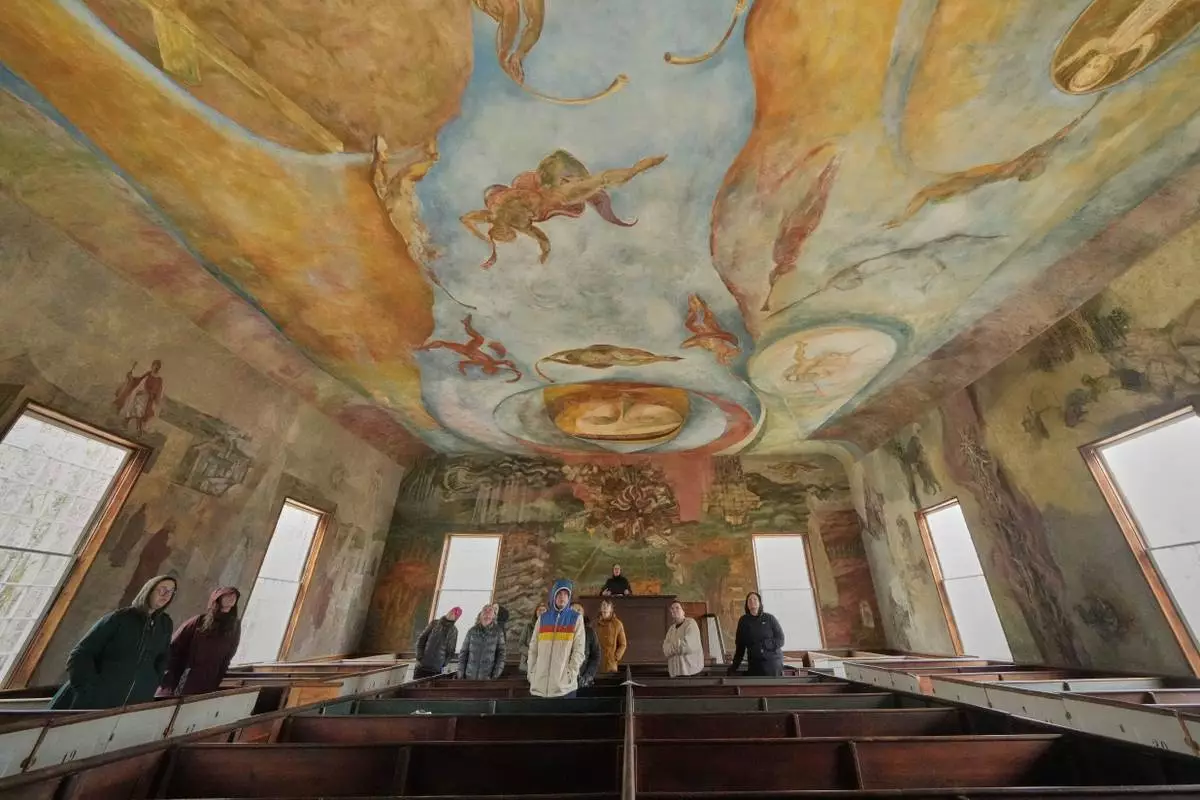
Visitors view the frescoes at the South Solon Meeting House, Sunday, April 6, 2025, in Solon, Maine. (AP Photo/Robert F. Bukaty)
The Carolina Panthers are NFC South champions for the first time in 10 years. The Denver Broncos are the AFC's No. 1 seed. And all but one playoff matchup is locked in.
The Panthers (8-9) clinched the division title when the Falcons beat the Saints 19-17 on Sunday to eliminate the Tampa Bay Buccaneers.
The Broncos (14-3) secured a first-round bye and home-field advantage throughout the playoffs with a 19-3 victory over the Los Angeles Chargers. Seattle earned the NFC's No. 1 seed on Saturday night, defeating San Francisco 13-3.
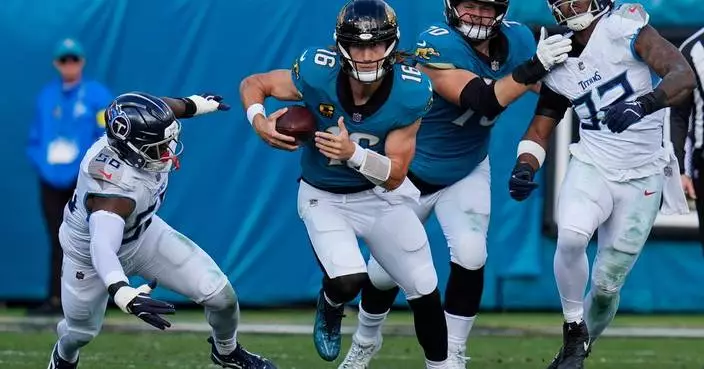
The Jaguars won the AFC South with a 41-7 rout of Tennessee. Rookie coach Liam Coen and Trevor Lawrence led the Jaguars to a major turnaround after going 4-13 in 2024.
The AFC North is still up for grabs with a winner-take-all game Sunday night between the Baltimore Ravens and Pittsburgh Steelers.
Wild-card weekend will feature these matchups:
In the AFC, it'll be the Chargers (11-6) at the New England Patriots (14-3); the Buffalo Bills (12-5) at the Jacksonville Jaguars (13-4); and the Houston Texans (12-5) at the AFC North winner.
In the NFC, it'll be the Green Bay Packers (9-6-1) at the Chicago Bears (11-6); the San Francisco 49ers (12-5) at the Philadelphia Eagles (11-6); and the Los Angeles Rams (12-5) at the Panthers.
Led by second-year coach Dave Canales and third-year quarterback Bryce Young, the Panthers are making their first playoff appearance under owner David Tepper and first since 2017, when they lost a wild-card game two years after they went 15-1 and lost the Super Bowl.
“I’m so grateful to have one more opportunity to get back to work where we can get on the grass, go through the preparation and have our meetings,” Canales said Sunday. “Once we are in cleats and on that grass it’s like the next thing becomes clear, the focus of what we are doing. ... It’s like here we go, we get one opportunity and let’s make this statement true: 1-0 with a chance to win a championship. How long can we keep that statement true?”
The Buccaneers (8-9) beat Carolina on Saturday to stay alive for an extra day but lost a three-team tiebreaker with the Falcons also finishing 8-9. Tampa Bay started 6-2 before losing seven of nine, failing to win its fifth straight division title.
While Sam Darnold and the Seahawks (14-3) earned a first-round bye, Brock Purdy, Christian McCaffrey and the injury-depleted 49ers missed an opportunity to play at home the rest of the way. Levi's Stadium, which is San Francisco's home field, hosts the Super Bowl on Feb. 8.
New England won its first division title since Tom Brady led the franchise to 11 straight from 2009-19.
Buffalo’s run of five consecutive division crowns ended, and the Bills will go on the road in the playoffs.
The Steelers beat the Ravens 27-22 at Baltimore on Dec. 7. They have to beat them again or tie them on Sunday night without wide receiver DK Metcalf to get into the playoffs.
Derrick Henry and backup quarterback Tyler Huntley led the Ravens to a win at Green Bay last Saturday night that kept Baltimore in the race and made Pittsburgh’s loss to Cleveland the next day matter. Lamar Jackson returned from a back injury to start for the Ravens, who were 3 1/2-point favorites on the road, according to BetMGM Sportsbook.
Jacksonville won the division for the first time since 2022, when first-year coach Doug Pederson guided them to a 9-8 record and a wild-card playoff victory over the Chargers, overcoming a 27-0 deficit.
The Texans secured the No. 5 seed with a 38-30 victory over Indianapolis. Houston is in the playoffs for the third straight season under coach DeMeco Ryans and QB C.J. Stroud.
The Broncos ended Kansas City’s nine-year run. Denver hasn't been the No. 1 seed since Peyton Manning and a stifling defense beat Carolina in the Super Bowl 10 years ago.
The Chargers are in the playoffs for the second straight season under Jim Harbaugh.
The defending Super Bowl champion Eagles became the first team to win this division in consecutive seasons in two decades. They missed a chance to be the No. 2 seed when they rested starters and lost 24-17 to Washington.
The Bears clinched their first division championship since 2018. They lost 19-16 to Detroit but secured the No. 2 seed because the Eagles lost.
The Packers were locked into the No. 7 seed after Week 17.
The Panthers backed into a division title but are ahead of schedule in their rebuilding process.
The Seahawks earned the No. 1 seed for the fourth time in team history. They reached the Super Bowl the first three, winning once.
The Rams beat the Arizona Cardinals 37-20 to secure the No. 5 seed and a rematch at Carolina. The Panthers beat them 31-28 on Nov. 30.
After falling to secure a bye, the 49ers dropped to the No. 6 seed and will face Philadelphia in a rematch of the NFC championship game following the 2022 season.
AP Sports Writer Steve Reed contributed to this report.
AP NFL: https://apnews.com/hub/nfl
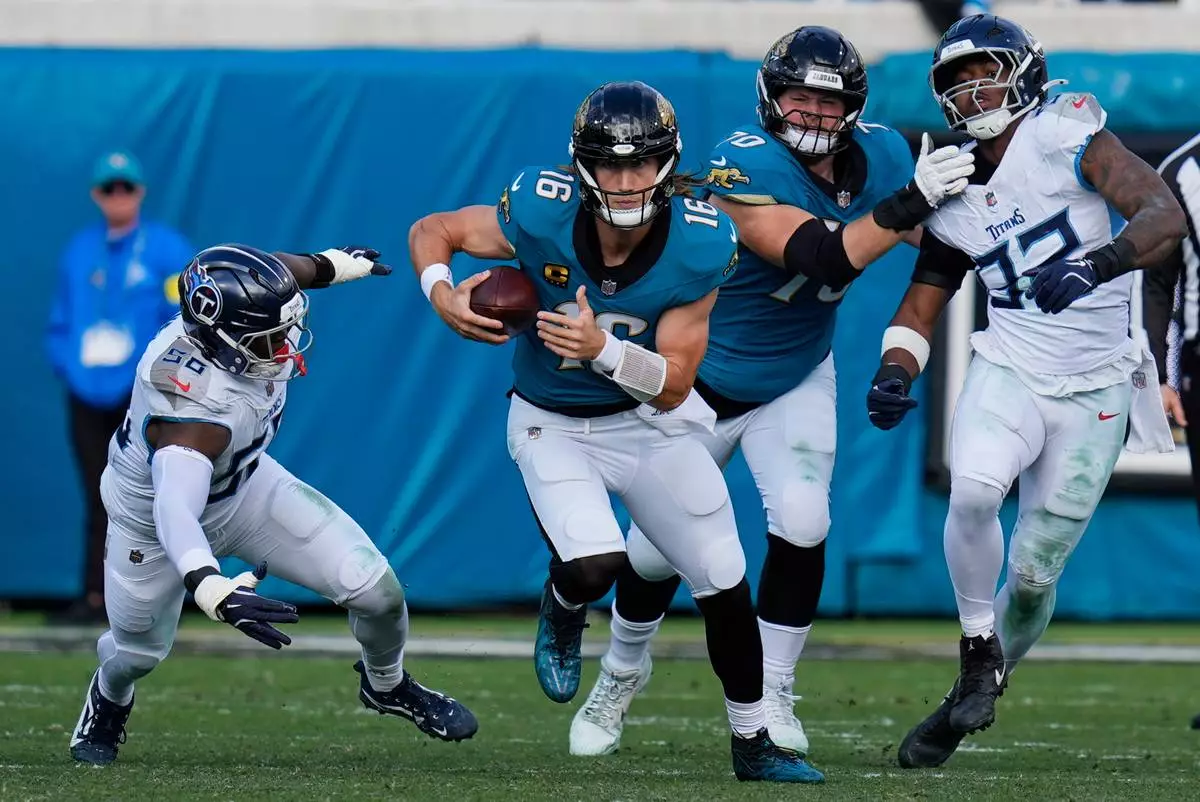
Jacksonville Jaguars quarterback Trevor Lawrence (16) runs the ball past Tennessee Titans outside linebackers Truman Jones (56) and Jaylen Harrell, far right, during the second half of an NFL football game Sunday, Jan. 4, 2026, in Jacksonville, Fla. (AP Photo/John Raoux)
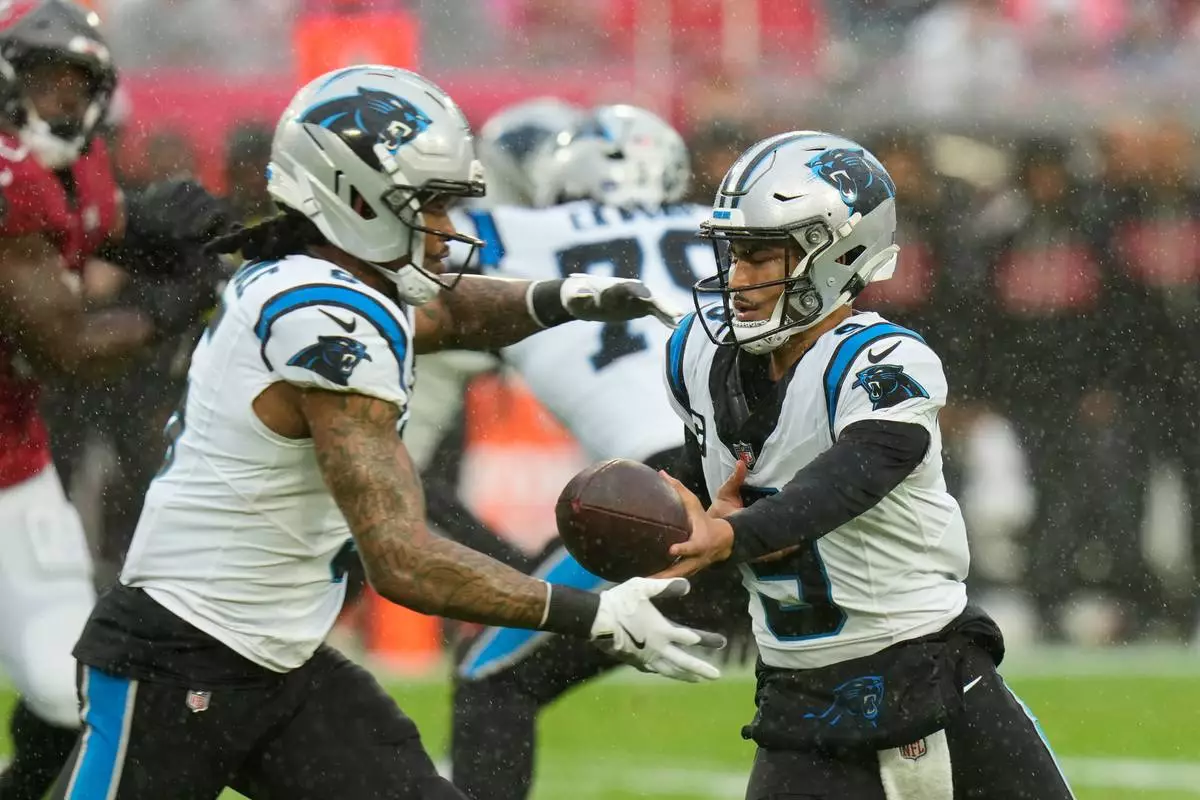
Carolina Panthers quarterback Bryce Young, right, hands off to running back Rico Dowdle (5) during the first half of an NFL football game Saturday, Jan. 3, 2026, in Tampa, Fla. (AP Photo/Chris O'Meara)
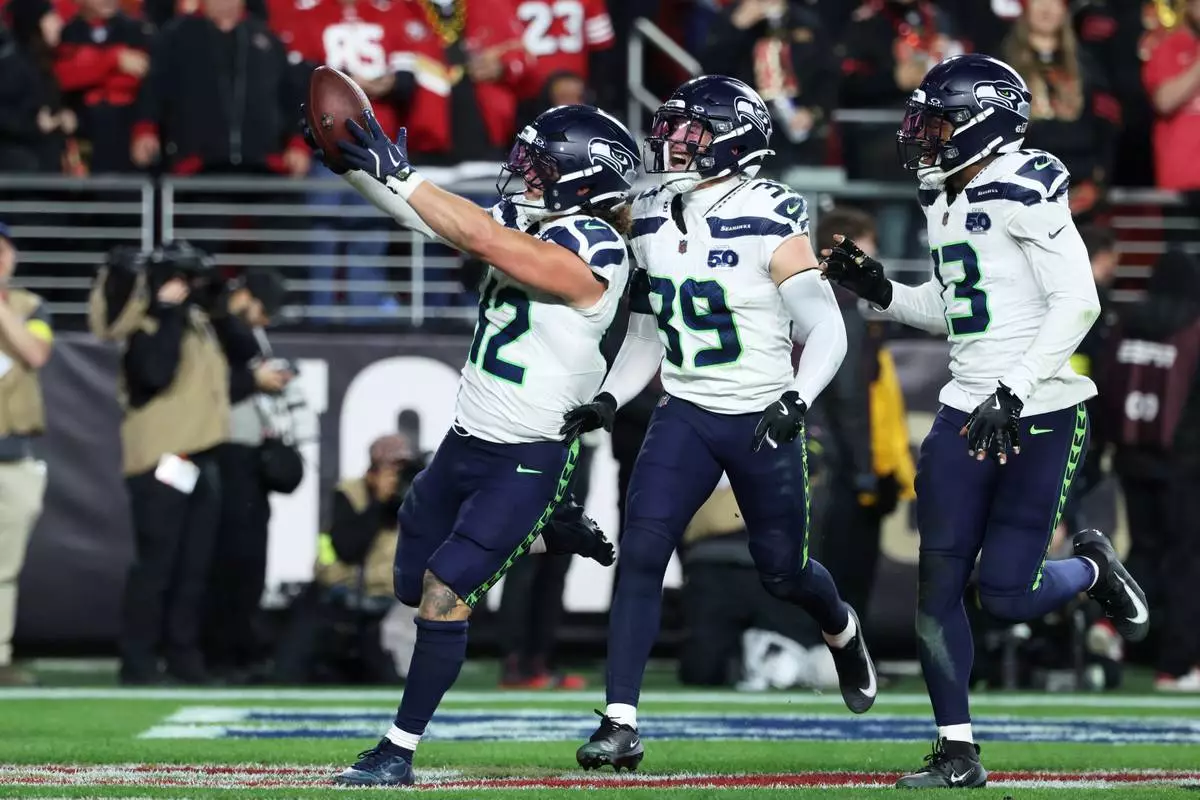
Seattle Seahawks linebacker Drake Thomas, left, is congratulated by safety Ty Okada (39) and linebacker Ernest Jones IV after intercepting a pass against the San Francisco 49ers during the second half of an NFL football game in Santa Clara, Calif., Saturday, Jan. 3, 2026. (AP Photo/Jed Jacobsohn)

Seattle Seahawks quarterback Sam Darnold (14) runs against the San Francisco 49ers during the first half of an NFL football game in Santa Clara, Calif., Saturday, Jan. 3, 2026. (AP Photo/Godofredo A. Vásquez)
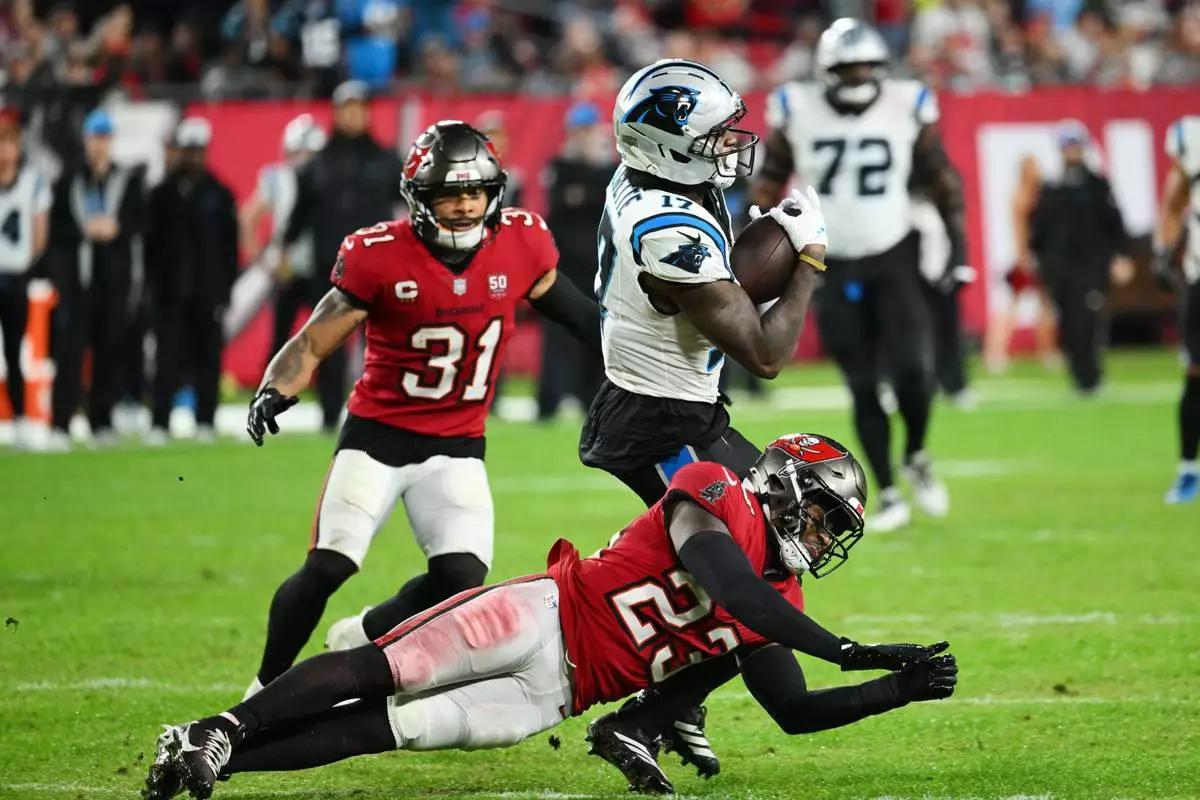
Carolina Panthers wide receiver Xavier Legette (17) makes a catch over Tampa Bay Buccaneers safety Tykee Smith (23) during the second half of an NFL football game Saturday, Jan. 3, 2026, in Tampa, Fla. (AP Photo/Jason Behnken)

Carolina Panthers wide receiver Jalen Coker (18) reacts after his touchdown catch over Tampa Bay Buccaneers cornerback Benjamin Morrison (21) during the second half of an NFL football game Saturday, Jan. 3, 2026, in Tampa, Fla. (AP Photo/Chris O'Meara)

Tampa Bay Buccaneers linebacker Lavonte David (54) celebrates after recovering a fumble by Carolina Panthers running back Rico Dowdle during the second half of an NFL football game Saturday, Jan. 3, 2026, in Tampa, Fla. (AP Photo/Jason Behnken)