TOKYO (AP) — The new U.S. ambassador to Japan arrived in Tokyo on Friday and said he is optimistic that his country and its key Asian ally will reach a deal in their ongoing tariff negotiations.
George Glass, a prominent businessperson known for his background in finance, investment banking and technology, arrives as Washington and Tokyo are negotiating President Donald Trump's tariff measures, which have triggered worldwide concern about their impact on the economy and global trade.
Click to Gallery
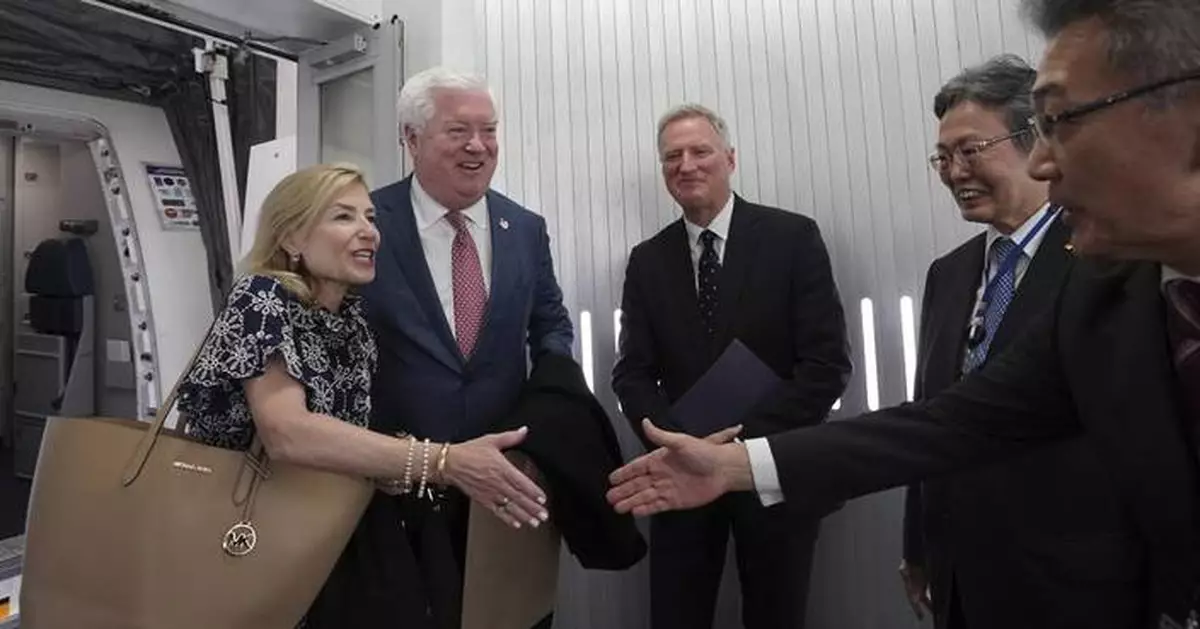
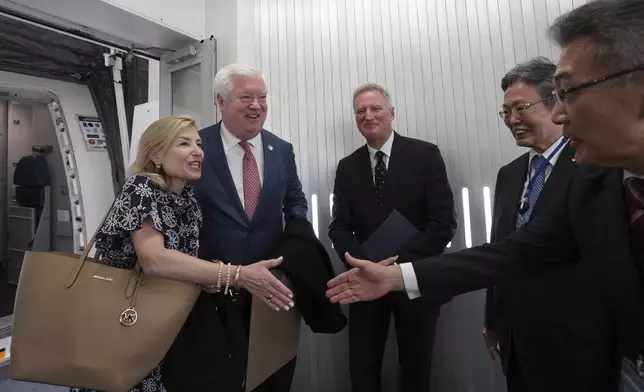
U.S. Ambassador to Japan George Glass, second left, and his wife Mary, left, are welcomed by Joseph Young, center, Acting Deputy Chief of Mission at the US Embassy in Tokyo, Eiichi Kawahara, second right, Ambassador Special Assistant to the Minister for Foreign Affairs, and Victor Osumi, right, President of Japan Operations of Delta, upon their arrival at Haneda Airport in Tokyo Friday, April 18, 2025. (Kazuhiro Nogi/Pool Photo via AP)
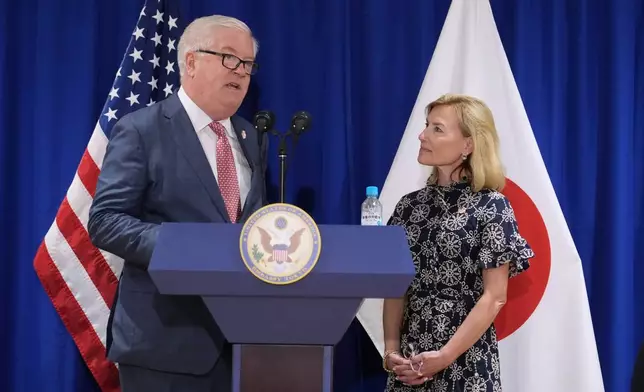
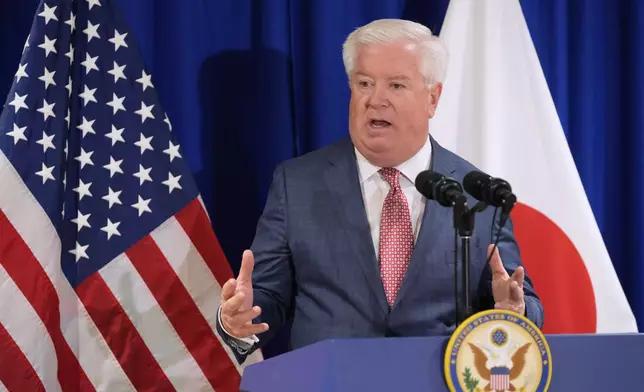
New U.S. Ambassador to Japan George Glass and his wife Mary attend a press conference after their arrival in Tokyo Friday, April 18, 2025. (Kazuhiro Nogi/Pool Photo via AP)
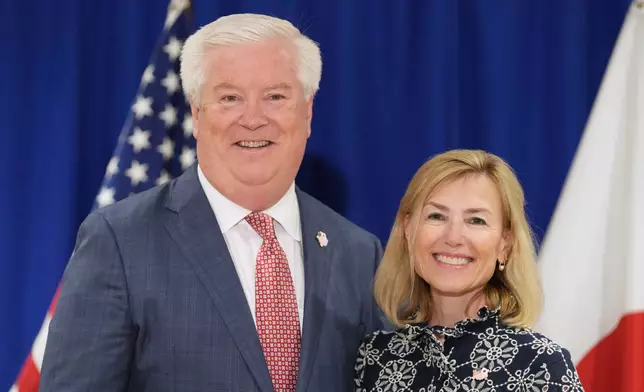
New U.S. Ambassador to Japan George Glass and his wife Mary pose for the media at a press conference after their arrival in Tokyo Friday, April 18, 2025. (Kazuhiro Nogi/Pool Photo via AP)
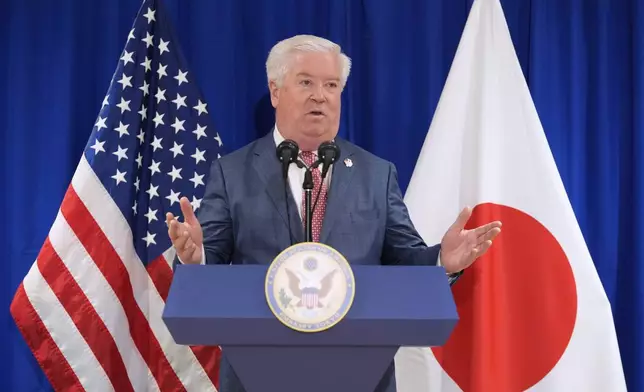
New U.S. Ambassador to Japan George Glass answers questions from journalists at a press conference after his arrival in Tokyo Friday, April 18, 2025. (Kazuhiro Nogi/Pool Photo via AP)
New U.S. Ambassador to Japan George Glass answers questions from journalists at a press conference after his arrival in Tokyo Friday, April 18, 2025. (Kazuhiro Nogi/Pool Photo via AP)
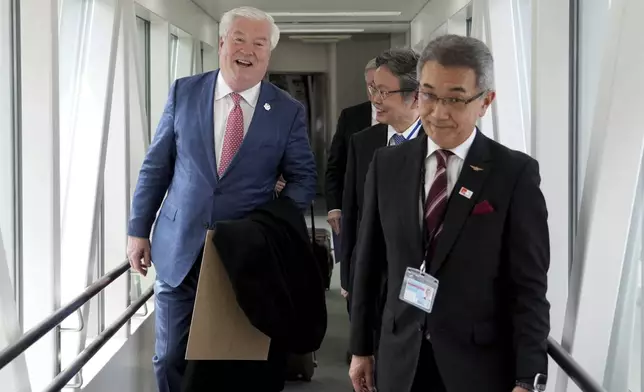
U.S. Ambassador to Japan George Glass, left, is escorted by Victor Osumi, right, president of Japan Operations of Delta, upon his arrival at Haneda Airport in Tokyo Friday, April 18, 2025. (Kazuhiro Nogi/Pool Photo via AP)
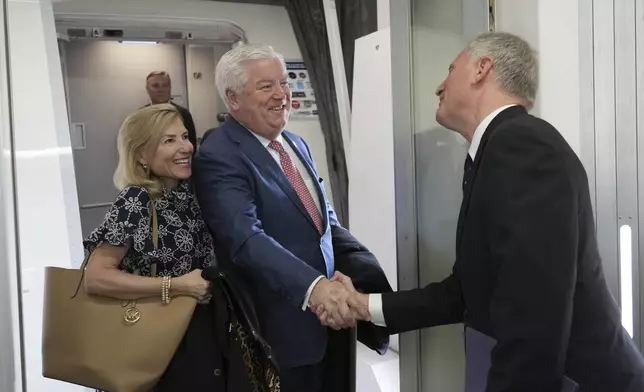
U.S. Ambassador to Japan George Glass, center, and his wife Mary are welcomed by Joseph Young, acting deputy chief of mission at the U.S. Embassy in Tokyo, upon their arrival at Haneda Airport in Tokyo Friday, April 18, 2025. (Kazuhiro Nogi/Pool Photo via AP)
U.S. Ambassador to Japan George Glass, second left, and his wife Mary, left, are welcomed by Joseph Young, center, Acting Deputy Chief of Mission at the US Embassy in Tokyo, Eiichi Kawahara, second right, Ambassador Special Assistant to the Minister for Foreign Affairs, and Victor Osumi, right, President of Japan Operations of Delta, upon their arrival at Haneda Airport in Tokyo Friday, April 18, 2025. (Kazuhiro Nogi/Pool Photo via AP)
“I'm extremely optimistic ... that a deal will be get done,” Glass told reporters after landing at Tokyo's Haneda international airport.
His arrival comes a day after the two countries held their first round of tariff talks between their top negotiators in Washington where both sides agreed to try to reach an agreement as quickly as possible and hold a second round of meetings later this month.
Trump, alongside his top economic advisers, Treasury Secretary Scott Bessent and Commerce Secretary Howard Lutnick, attended the meeting with the Japanese delegation headed by Economic Revitalization Minister Ryosei Akazawa at the White House.
With his reputation as a dealmaker being tested, Trump likely wants to finalize a series of trade deals as countries around the world seek to curb damages from the U.S. tariffs.
Trump's recent announcement of a 90-day pause temporarily spared Japan from 24% across-the-board tariffs, but a 10% baseline tariff and a 25% tax on imported cars, auto parts, steel and aluminum exports remains in place.
Japanese Prime Minister Shigeru Ishiba has said the tariffs would deal a blow to Japan's economy and chill Japanese companies' investment in the U.S. and that the two sides should seek a settlement that would benefit both.
Trump is also pushing Tokyo to further increase its defense spending and shoulder more burden for hosting some 50,000 American troops as the allies strengthen military cooperation. He brought up the issue during his tariff talks with Japan.
“We sit with Japan in a very tough neighborhood. You have Russia, you have China, and you have North Korea,” Glass said Friday, adding that the allies need to make sure their militaries have all the materials they need “to push back against a country like China.”
Glass, in his nomination testimony at the Senate Foreign Relations Committee in March, vowed to have “tough conversations” on tariffs and reducing U.S. trade deficit with Japan and to make sure Tokyo continues further increasing its defense role in the region.
Japan, a longstanding U.S. ally, is among the first countries that began negotiating tariffs with Washington. Other American allies are closely watching their talks.
Glass said he is confident that a deal can be reached because “the best and the brightest” officials from both Japan and the U.S. are negotiating and Trump is personally involved in the talks, calling them his top priority.
America’s $40 trillion national debt, he said, makes the country "unsustainable and that’s the end of our economy if we keep going down this road."
Glass, who starts work Monday, did not elaborate on how he could help Tokyo and Washington hammer out their differences. After a long flight, he said, “what I'd like to do first is to go home and take a nap."
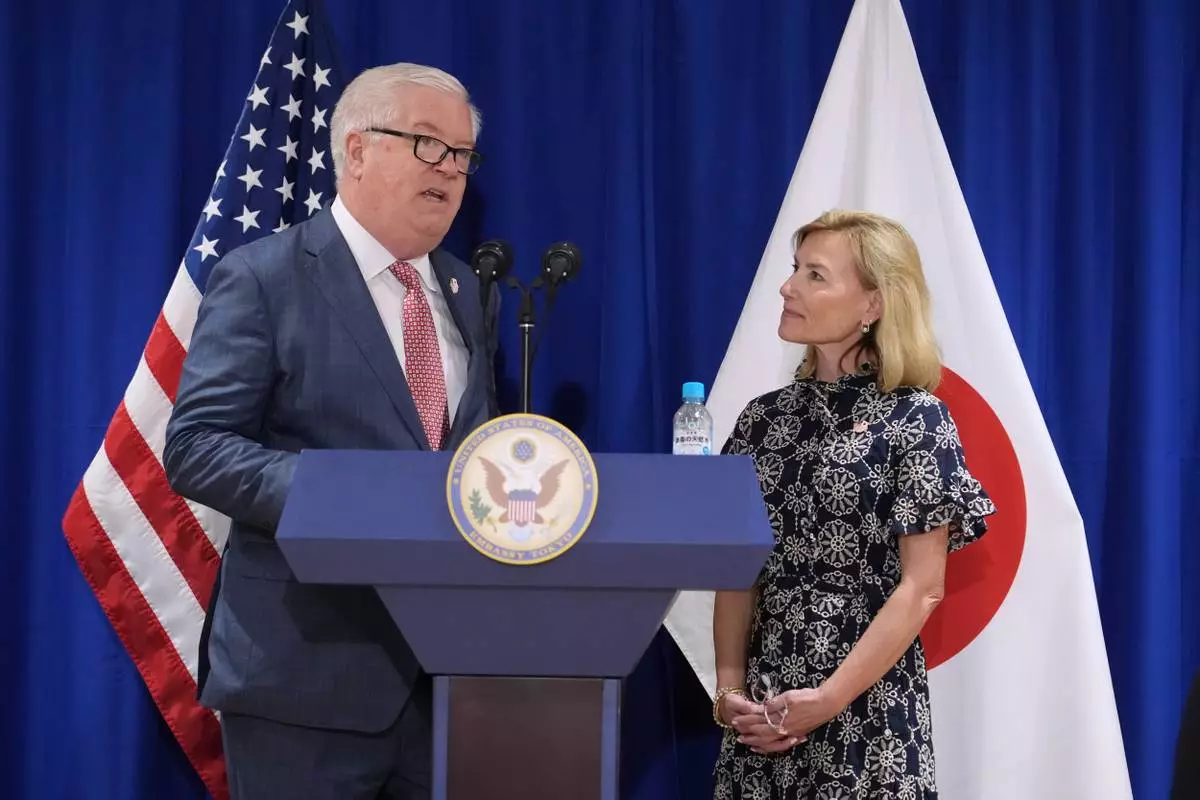
New U.S. Ambassador to Japan George Glass and his wife Mary attend a press conference after their arrival in Tokyo Friday, April 18, 2025. (Kazuhiro Nogi/Pool Photo via AP)
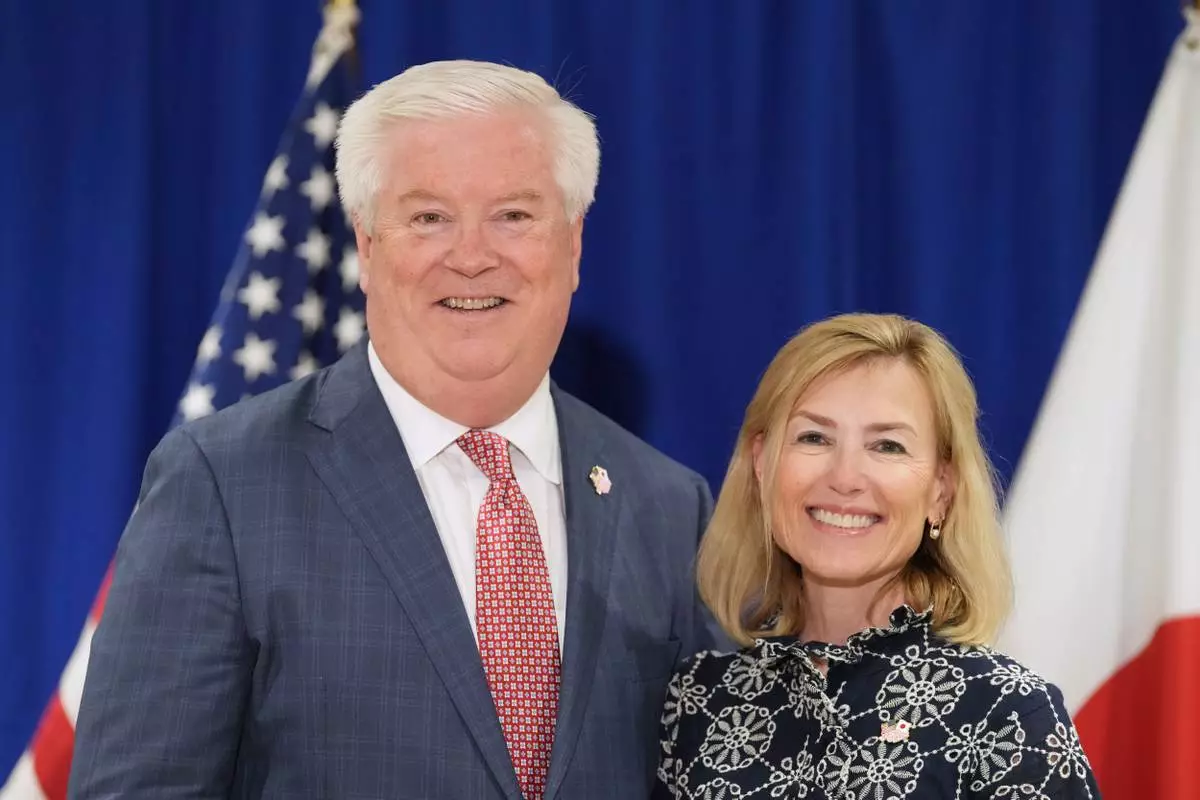
New U.S. Ambassador to Japan George Glass and his wife Mary pose for the media at a press conference after their arrival in Tokyo Friday, April 18, 2025. (Kazuhiro Nogi/Pool Photo via AP)
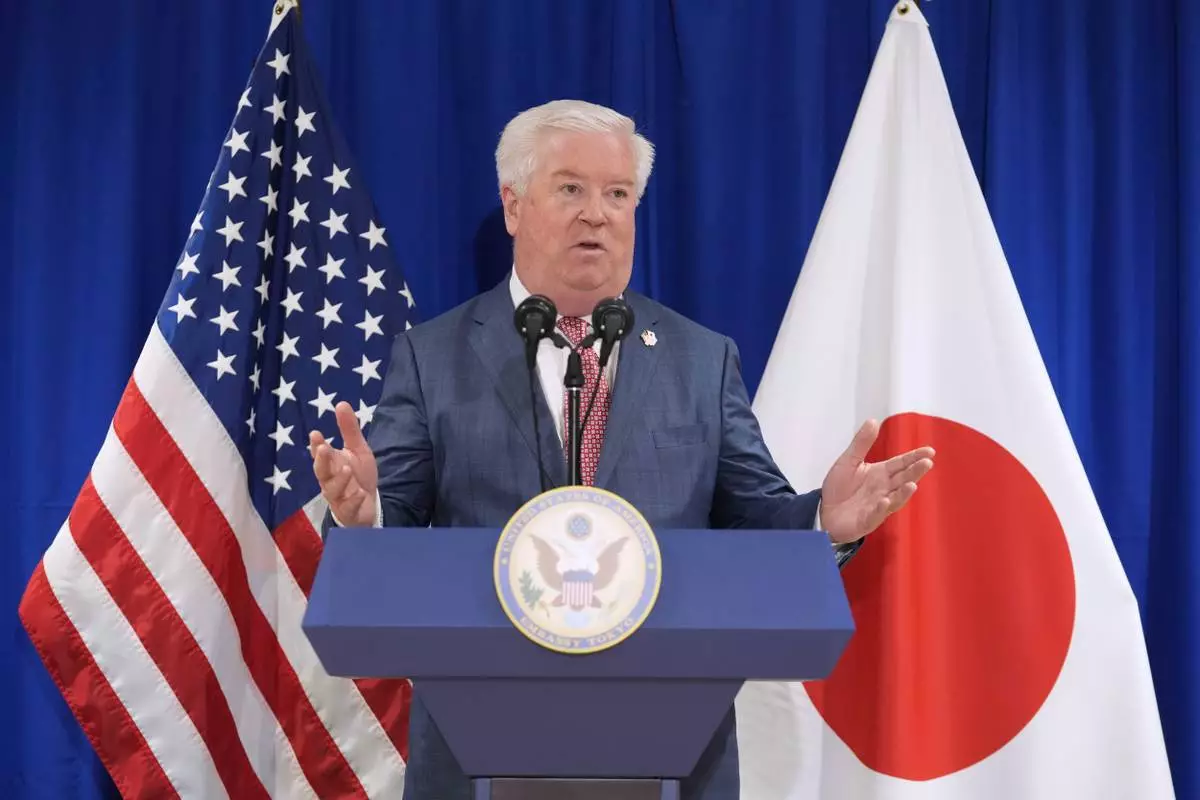
New U.S. Ambassador to Japan George Glass answers questions from journalists at a press conference after his arrival in Tokyo Friday, April 18, 2025. (Kazuhiro Nogi/Pool Photo via AP)
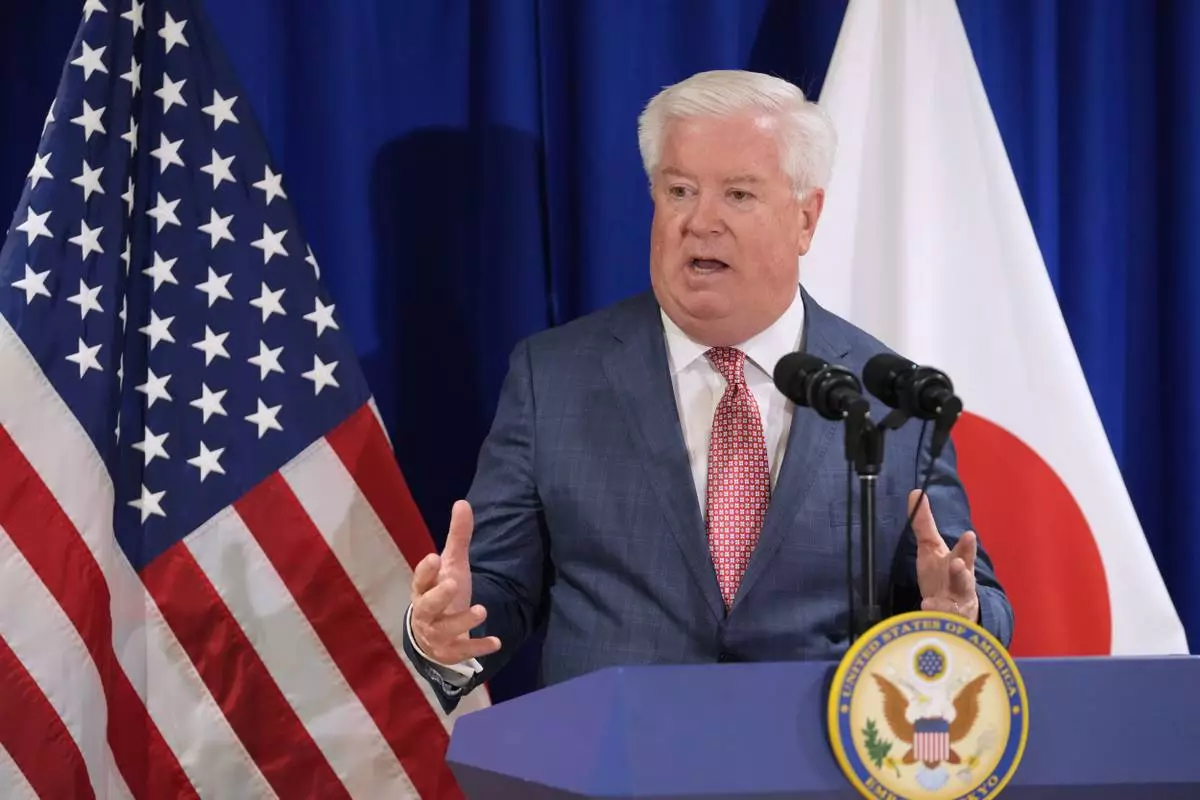
New U.S. Ambassador to Japan George Glass answers questions from journalists at a press conference after his arrival in Tokyo Friday, April 18, 2025. (Kazuhiro Nogi/Pool Photo via AP)
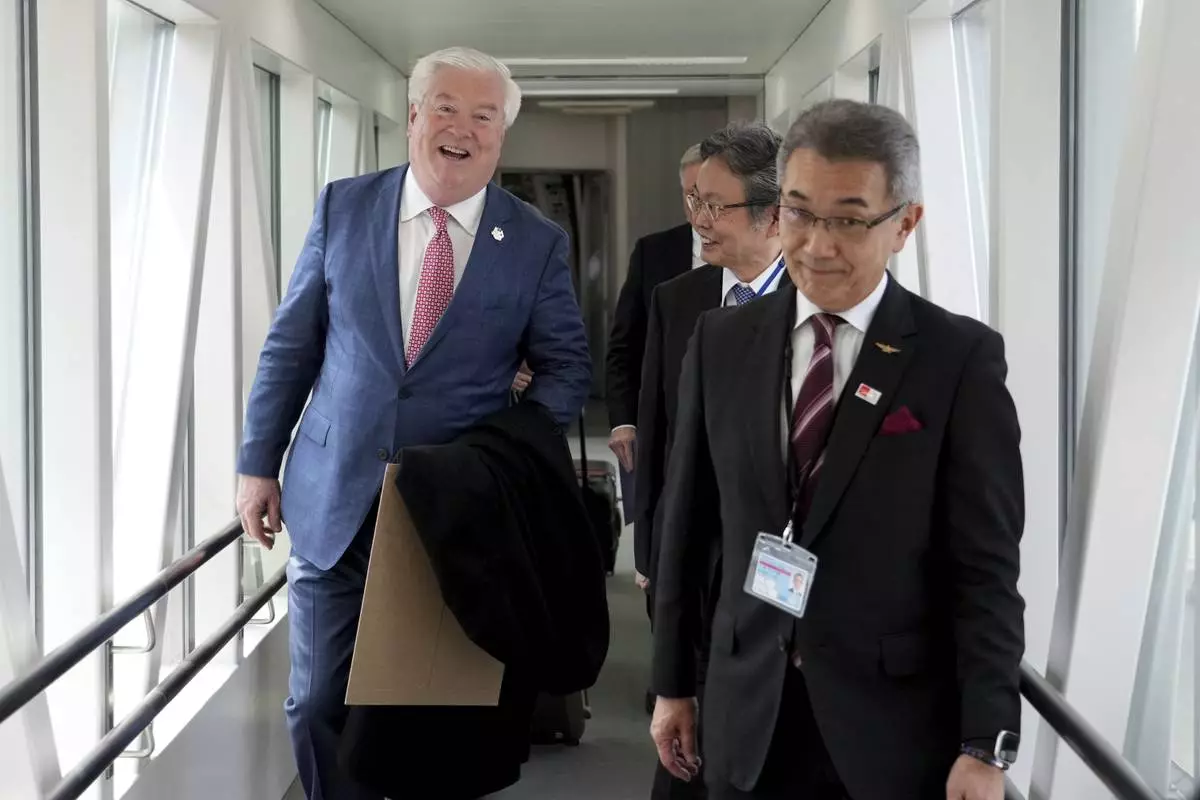
U.S. Ambassador to Japan George Glass, left, is escorted by Victor Osumi, right, president of Japan Operations of Delta, upon his arrival at Haneda Airport in Tokyo Friday, April 18, 2025. (Kazuhiro Nogi/Pool Photo via AP)
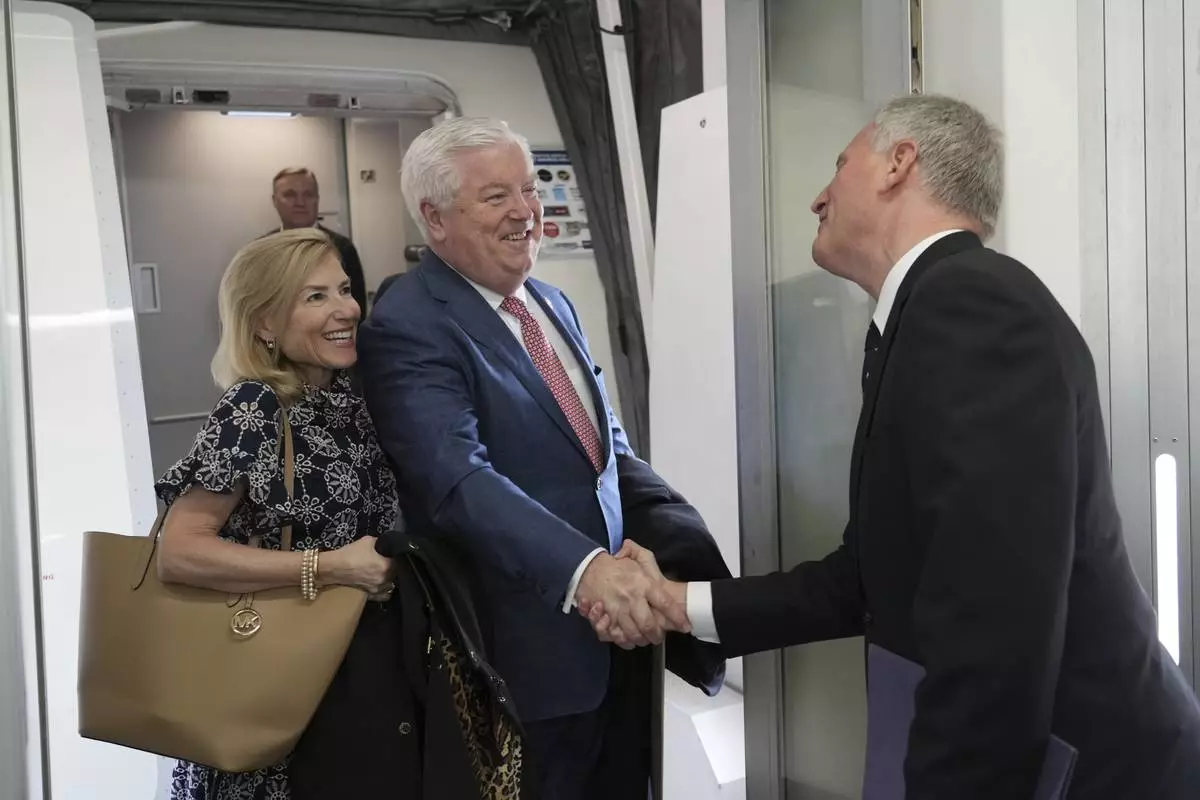
U.S. Ambassador to Japan George Glass, center, and his wife Mary are welcomed by Joseph Young, acting deputy chief of mission at the U.S. Embassy in Tokyo, upon their arrival at Haneda Airport in Tokyo Friday, April 18, 2025. (Kazuhiro Nogi/Pool Photo via AP)
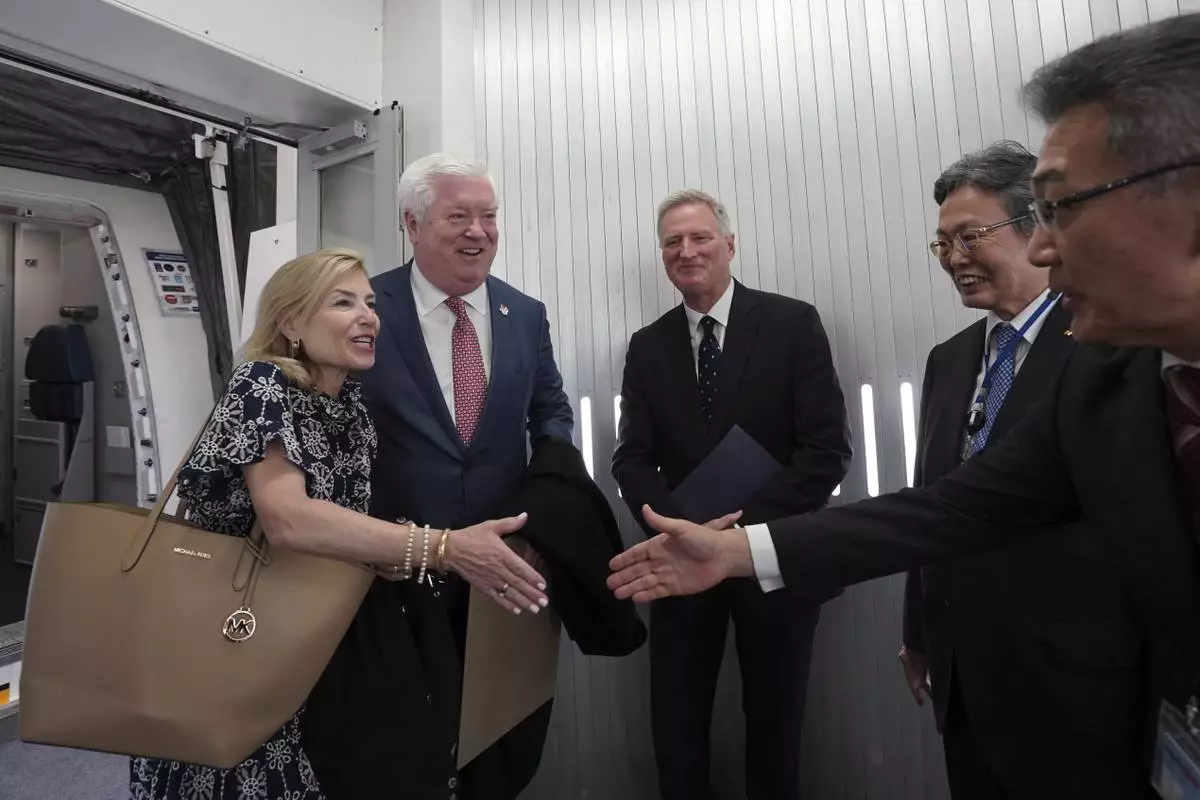
U.S. Ambassador to Japan George Glass, second left, and his wife Mary, left, are welcomed by Joseph Young, center, Acting Deputy Chief of Mission at the US Embassy in Tokyo, Eiichi Kawahara, second right, Ambassador Special Assistant to the Minister for Foreign Affairs, and Victor Osumi, right, President of Japan Operations of Delta, upon their arrival at Haneda Airport in Tokyo Friday, April 18, 2025. (Kazuhiro Nogi/Pool Photo via AP)
JACKSON, Ga. (AP) — Georgia Republicans delivered a split decision for Donald Trump in Tuesday runoffs, opting for the president’s preferred U.S. Senate candidate but rejecting his choice for governor in favor of a billionaire first-time candidate who spent freely from his personal fortune to win the nomination.
In the Senate race, Rep. Mike Collins, 58, topped former football coach Derek Dooley and advanced to face Sen. Jon Ossoff, the only Senate Democrat running for reelection in a state that Trump won two years ago. The outcome will help determine control of Capitol Hill for the final years of Trump’s second presidency.
For governor, healthcare tycoon Rick Jackson, 71, outpaced Lt. Gov. Burt Jones after spending about $100 million of his own money on the campaign. That investment ultimately outweighed Jones' backing from the president. Jackson will face Democratic nominee and former Atlanta Mayor Keisha Lance Bottoms in November.
Trump, who endorsed Jones nearly a year ago and Collins two days before the runoff, is poised to be a fault line in both general election contests. The president was notably absent in Republicans’ remarks on Tuesday, however, a shift from other primary nights where candidates paid homage to their party's leader despite his sagging approval ratings.
Collins, a second-term congressman, is a self-described “MAGA warrior” and echoes Trump’s false claims that his 2020 election loss in Georgia was rigged. Yet when celebrating in his hometown, Collins thanked his wife, children, grandchildren, siblings, friends, supporters and staffers — but never the president. He even touted his bipartisanship and pitched himself as a sound conservative who can achieve progress by “building coalitions and finding common ground.” And he promised to campaign in “every ZIP code and every community” of this closely divided state.
Ossoff, first elected during the 2020 cycle, has made Trump a focal point, blasting him as a “national embarrassment” who is using the presidency to enrich himself and his family. The 39-year-old faces tremendous pressure to hold his seat as Democrats try to gain a net of four seats to claim a Senate majority.
In the governor's race, Jackson spent months comparing himself — the tremendously wealthy political newcomer — to Trump and his unusual path to the presidency. He didn't do that as directly Tuesday night.
“I’m the only candidate who doesn’t owe a thing to the political establishment,” he said, later adding, “We proved the people of Georgia are in charge.”
Both parties in Georgia are trying to buck trends. Republicans haven't won a Senate race here since 2016, the year of Trump's first election. Democrats haven't won a governor's race since 1998.
But Democrats are bullish after they drew about 160,000 more voters than Republicans in the May primary, the first time since their victorious 1998 year that they led primary turnout. Republican runoff turnout also was lower Tuesday than in recent election cycles.
Collins said he had “good conversations” with Dooley and Gov. Brian Kemp, who had supported Dooley, and that Republicans “stand united around one mission” — defeating Ossoff in November.
Dooley offered a similar message to his more subdued crowd in metro Atlanta. “We have a lot of disagreements but the one thing that hasn’t changed is my opinion of Jon Ossoff,” Dooley said.
There were bitter attacks in both Republican runoffs — some of which Democrats are promising to recirculate in the general election.
Dooley repeatedly hammered Collins for a House ethics complaint that accuses him of abusing taxpayer funds by paying the girlfriend of his former top adviser for congressional job duties she allegedly did not fulfill. After an initial investigation, a federal panel forwarded the matter to the House Ethics Committee. Kemp told voters for months that they should nominate Dooley as a “political outsider” who could relentlessly attack Ossoff without having to defend a record of his own.
Jones lambasted Jackson as a faux conservative who has employed immigrants in the country illegally and whose wife has donated to Democratic candidates.
State Republican Chairman Josh McKoon said he's confident about corralling the party base and appealing to swing voters.
“This election is going to be won by the side that is able to become the party of common sense,” he said.
Collins also begins the general election campaign at a financial disadvantage. He raised about $4.9 million through the end of May, and reported having less than $1.2 million remaining. Through late April, the last time Ossoff had to file before his primary, the incumbent had raised $60.4 million and had $32.5 million on hand.
Despite his ties to Trump, Collins has argued that he has broad appeal, and he plans to use immigration as a contrast with Ossoff.
In the House, Collins sponsored the Laken Riley Act, a 2025 law that requires immigrants accused of certain crimes to be detained. It is named for a Georgia nursing student killed in 2021 by a Venezuelan man who was in the U.S. illegally. Ossoff voted against a version of the legislation before backing the final proposal after Trump’s return to power.
He leaned heavily on his decades building his trucking company, based in the same community where he was raised.
“You see, I know what it’s like to have employees and their families count on you to make the right decisions every day. Jon Ossoff doesn’t,” he said.
Trump's mixed results in Georgia come after most of his preferred candidates have prevailed in primaries this spring. But Jackson's seemingly bottomless personal coffers were a new variable.
Jackson blanketed television and online platforms with ads. He's pledged that immigrants in Georgia illegally will be “deported or departed.” He promises a slew of tax cuts. And previewing a potential general election argument, he played up his biography as a product of the state foster care system and featured his grandchildren advising him on how to make friendlier ads.
Jones, 47, comes from a wealthy family but his personal spending measured in the single millions. And despite Trump's endorsement, the president did not travel to Georgia to campaign with Jones.
Georgia's secretary of state race was open for the first time since Trump’s attempts to subvert the 2020 election, famously pressuring outgoing Secretary of State Brad Raffensperger to “find 11,780 votes” to overtake Biden. Raffensberger refused.
For his potential successor, Republicans were left to choose between an outright election denier, Vernon Jones, and a state lawmaker, Tim Fleming, who avoids explicitly disputing the president’s 2020 election lies. They went with Fleming, who won the nomination on Tuesday.
Jones, a perennial candidate who was once a Democrat, embraced Trump’s “stop the steal” movement and said he stood “with those who believe there was election fraud.” Fleming, who once served as deputy secretary of state, has said there were “irregularities” in 2020, a word choice that has become code for Republicans who want neither to ratify nor call out Trump’s errant claims.
Democrats voted for Penny Brown Reynolds — a former state judge in Fulton County who also served in the Biden administration as deputy assistant secretary for civil rights for the Department of Agriculture — over Dana Barrett, a Fulton County commissioner.
—-
Associated Press reporters Kate Brumback in Jackson, Tom Beaumont in Des Moines, Iowa, and Matt Brown in Washington contributed.
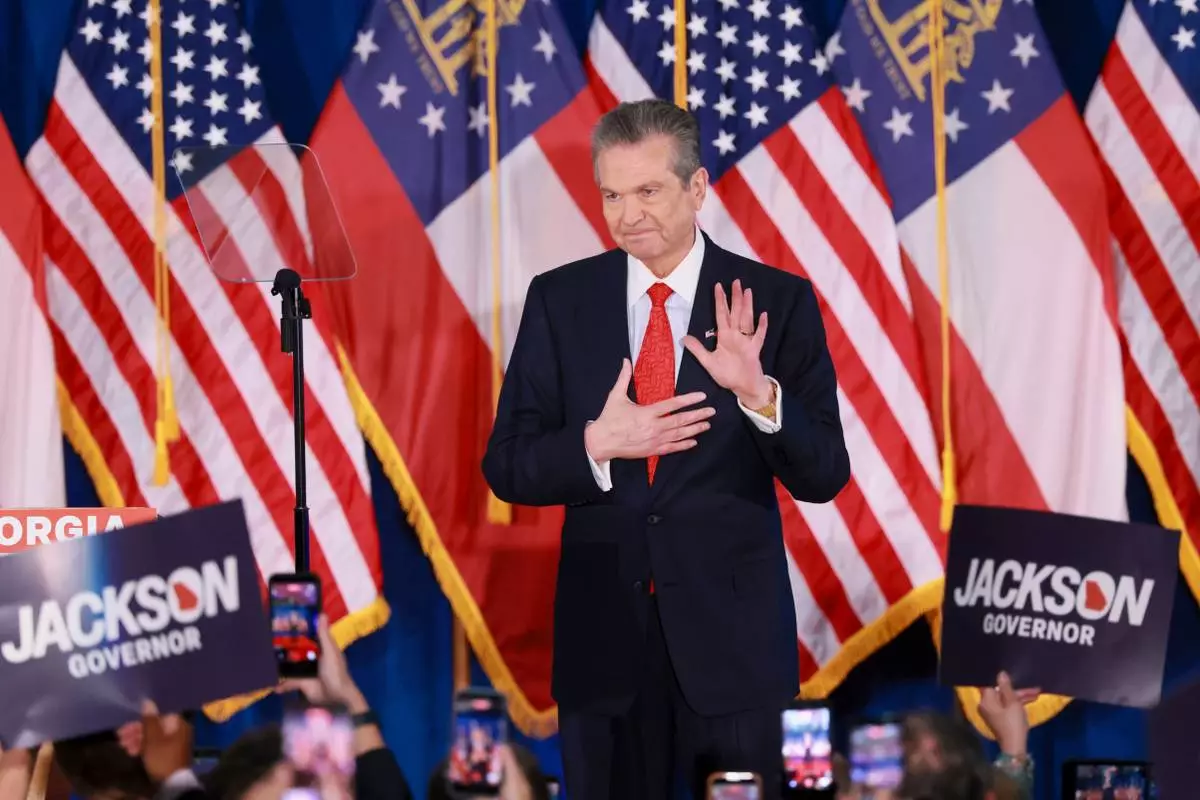
Georgia gubernatorial candidate Rick Jackson greets supporters before speaking at his runoff election night watch party Tuesday, June 16, 2026, in Atlanta. (Jason Getz/Atlanta Journal-Constitution via AP)
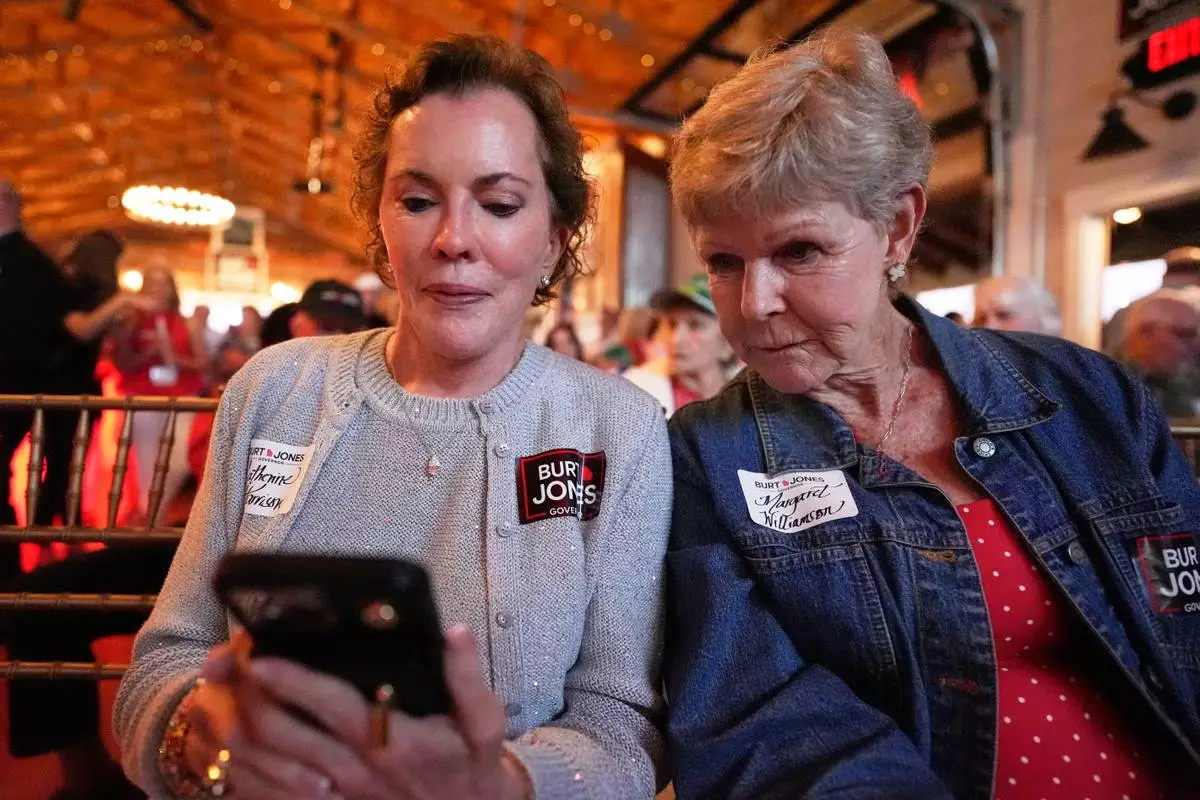
Catherine Harrison, left, and Margaret Williamson view election results during a runoff election night watch party for Republican gubernatorial candidate Burt Jones, Tuesday, June 16, 2026, in Jackson, Ga. (AP Photo/Mike Stewart)
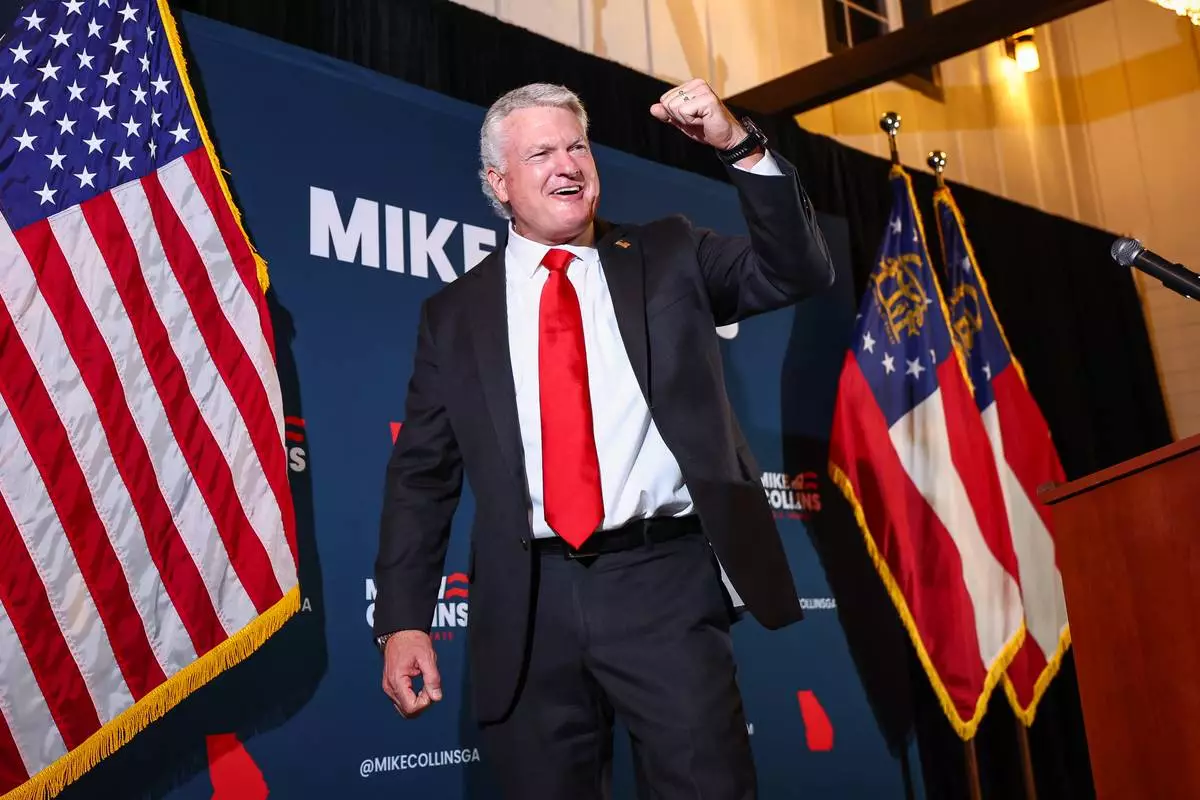
U.S. Senate candidate Mike Collins celebrates during an election-night watch party after winning the Republican nomination, Tuesday, June 16, 2026, in Jackson, Ga. (AP Photo/Colin Hubbard)

A woman speaks to a Fulton County Election worker before she votes in a runoff election at the C.T. Martin Recreation Center, Tuesday, June 16, 2026, in Atlanta. (AP Photo/Mike Stewart)
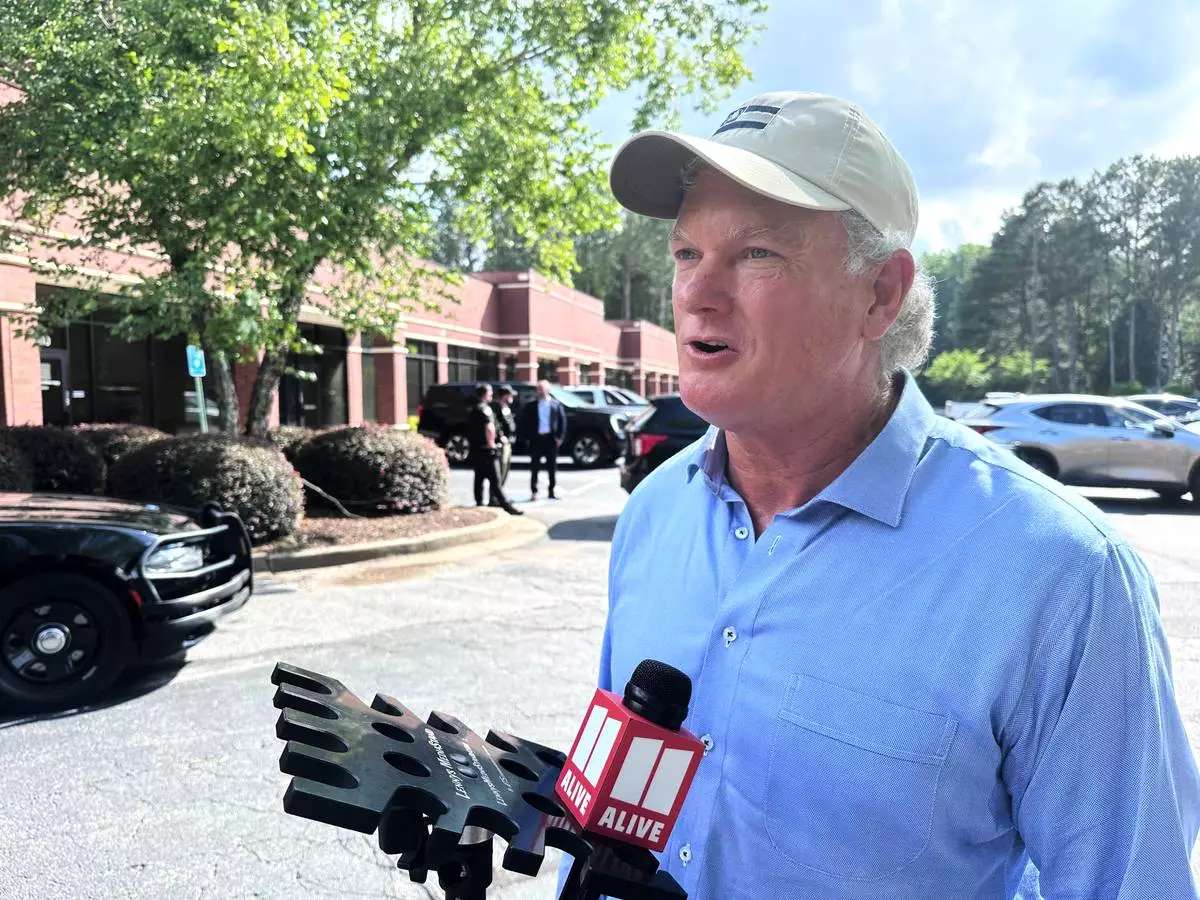
U.S. Rep Mike Collins campaigns in Woodstock, Ga., Sunday, June 14, 2026. ( AP Photo/Bill Barrow)

FILE - Gov. Brian Kemp, center left, and Republican U.S. Senate candidate Derek Dooley greet supporters at campaign stop for Dooley at Farmview Market in Madison, Ga., on May 8, 2026. (Arvin Temkar/Atlanta Journal-Constitution via AP, File)