MILWAUKEE (AP) — Milwaukee Bucks guard Damian Lillard isn’t sure exactly when he will be playing again. He’s just grateful that moment will come sooner than anyone could have reasonably expected.
Lillard was cleared for full-scale basketball activities and taken off blood-thinning medication this week after missing the last month with deep vein thrombosis in his right calf. The news comes as the Bucks prepare to open the playoffs Saturday at Indiana.
Deep vein thrombosis is an abnormal clot within a vessel where the congealing of blood blocks the flow through on the way back to the heart.
“Obviously there’s people with way worse issues than I’ve dealt with, so I don’t want to be dramatic about it, but you just never know when something could come up and change your life,” Lillard said Friday. “It’s been guys like Chris Bosh who dealt with this and then it’s another issue and it could be a career-ending thing, so I think you just can’t take days and opportunities and things in your life for granted.”
Lillard couldn’t do much from a basketball standpoint beyond shooting free throws while he was on the blood-thinning medication, but the seven-time All-NBA guard said specialists permitted him to do some exercises, such as lifting weights, that could hasten his return to the court now that he’s been cleared.
The Bucks have ruled him out for Saturday’s game.
“I knew that if there was a chance that I could come back and play, I didn’t just want to be sitting around doing nothing,” said Lillard, who practiced Thursday without restrictions.
Returning to the court wasn’t his primary concern when he got the diagnosis. He was more worried about how this might impact him on a personal level.
Lillard said he was familiar with the potential impact of blood clots because of a cousin who dealt with a blood clot in his calf without being aware of it during the pandemic.
“During COVID, they couldn’t get him in because everything was on Zoom, and he ended up having a pulmonary embolism and dying, so obviously that’s the first thing that comes to mind,” Lillard said.
Lillard said he was at dinner last month when he noticed his leg was swollen and felt particularly tight, different from a typical calf strain. Once he learned he had DVT, he started envisioning all the scary possibilities.
“The millions of thoughts that went through my head like, ‘Man, what if this? What if that?’" Lillard said. “I was panicking. My back randomly started hurting, my chest started hurting, and I’m like, ‘Man, is it moving?’ I’m thinking all kinds of stuff.”
Lillard said he initially didn’t really ask his doctors when he might play again and instead focused on how long it takes for a clot to go away and stop becoming an issue.
“The term they kept using was you’re not a 65-year-old person coming in that usually would have a blood clot,” Lillard said. “It’s like, you’re a 34-year-old athlete, you’re in good shape, your body is strong. That was kind of like the language they used.
“But I would say what made it a different thing is I was able to go in weekly. That’s not the usual protocol. If it’s something where you’re on a blood-thinning medication, I feel like it’s more of a drawn-out process where they’ll just go that route, as opposed to me going in every week, doing labs, getting the ultrasound. I was kind of going in each week just monitoring it inch-by-inch pretty much, just to see if it was like even a little progress or just to make sure that it was going how I wanted it to go.”
Lillard’s potential return is coming remarkably fast.
Victor Wembanyama of the San Antonio Spurs was diagnosed with DVT in his shoulder after he returned from the All-Star Game and was quickly ruled out for the season. Bosh’s career was cut short after he was diagnosed with blood clots while playing with Miami.
Lillard says doctors have told him his case was unusual.
“They were just like, ‘We don’t see this,’ “ Lillard said. “For me, I was just like, it was a different experience for me because I went in there a bunch of times and it was the same size. So I’m like, it didn’t seem that special, and then it just reached a point where it just got a lot smaller out of nowhere.”
Now he’s on the verge of playing again. Bucks coach Doc Rivers believes Lillard’s attitude has something to do with his rapid return.
“He just kept saying, ‘I’m going to get through this,'" Rivers said. “The energy of positive thinking, there may be something there. There is in this case, I can tell you that.”
Exactly when Lillard will take the floor remains uncertain. Lillard doesn’t want to set a particular target date because he’s not quite sure exactly when he’ll be ready after not having any real basketball activity at all for a month. The last game he played was on March 18.
“The moment that I feel I can go, I’m going to go,” Lillard said.
AP NBA: https://apnews.com/hub/nba
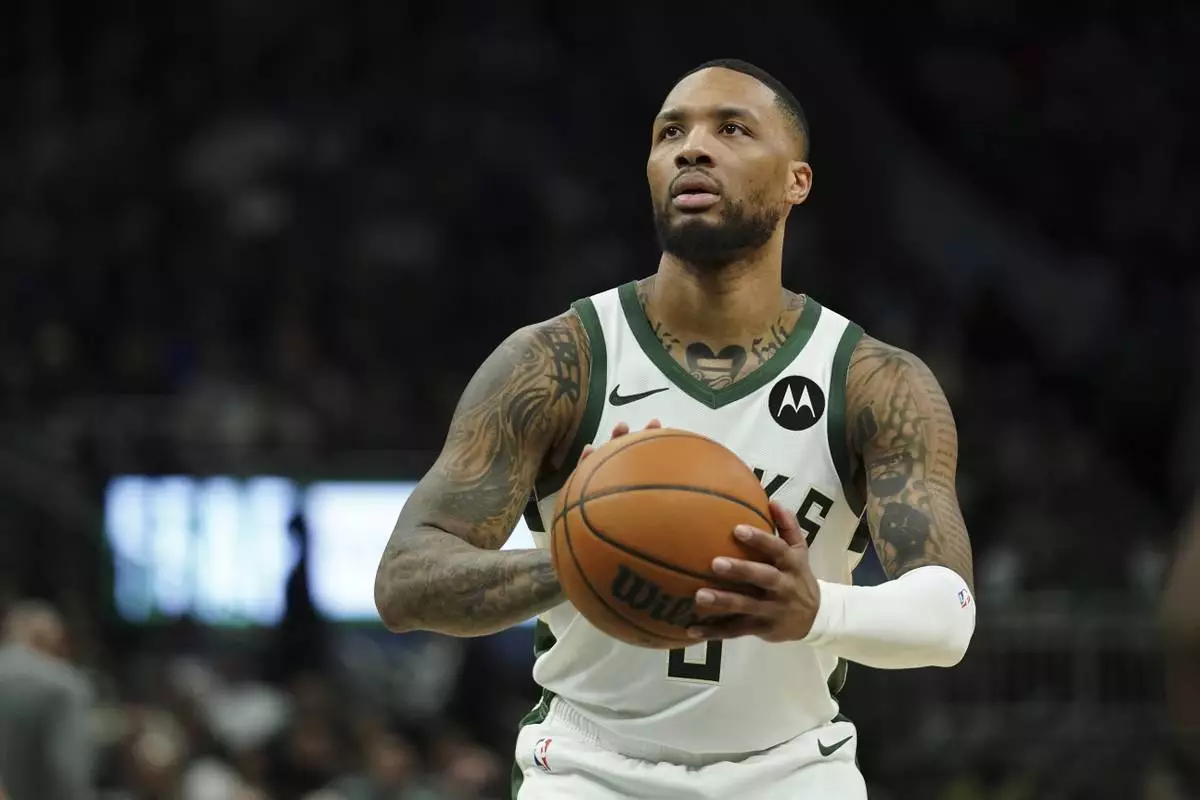
FILE - Milwaukee Bucks' Damian Lillard shoots a free throw during the second half of an NBA basketball game against the Orlando Magic, March 8, 2025, in Milwaukee. (AP Photo/Aaron Gash, File)
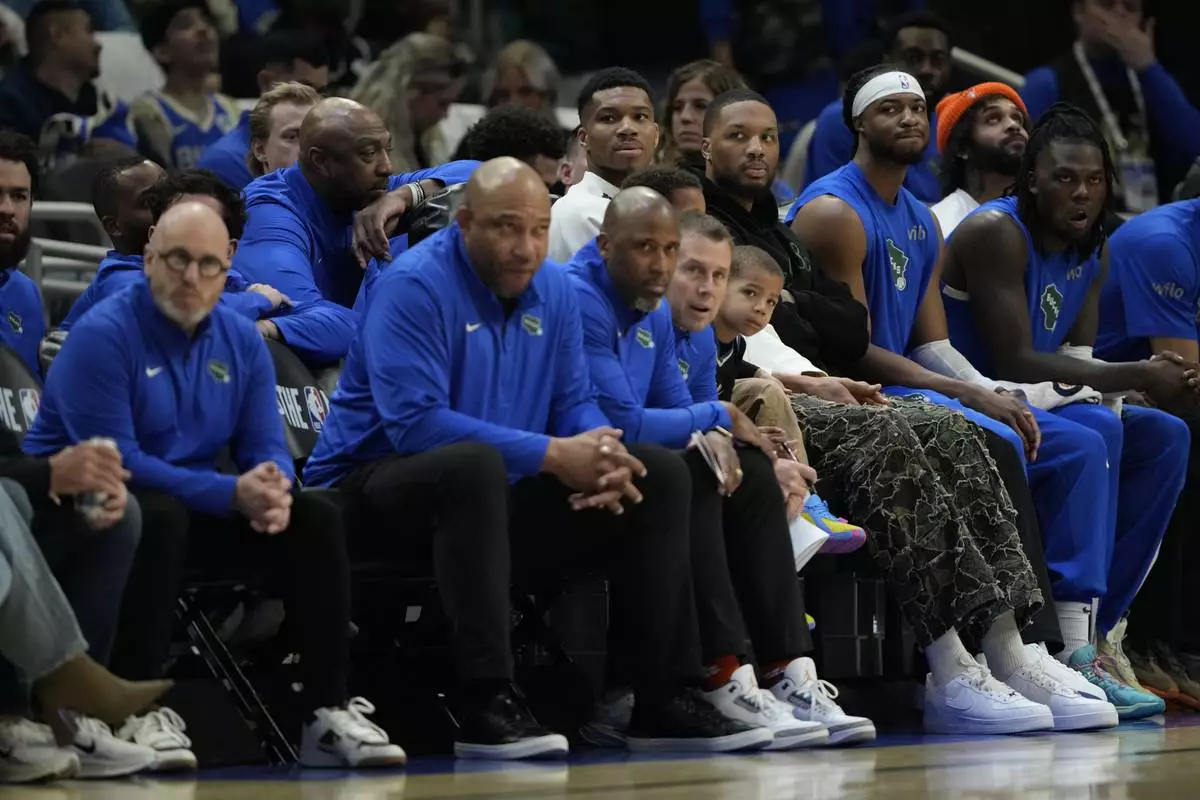
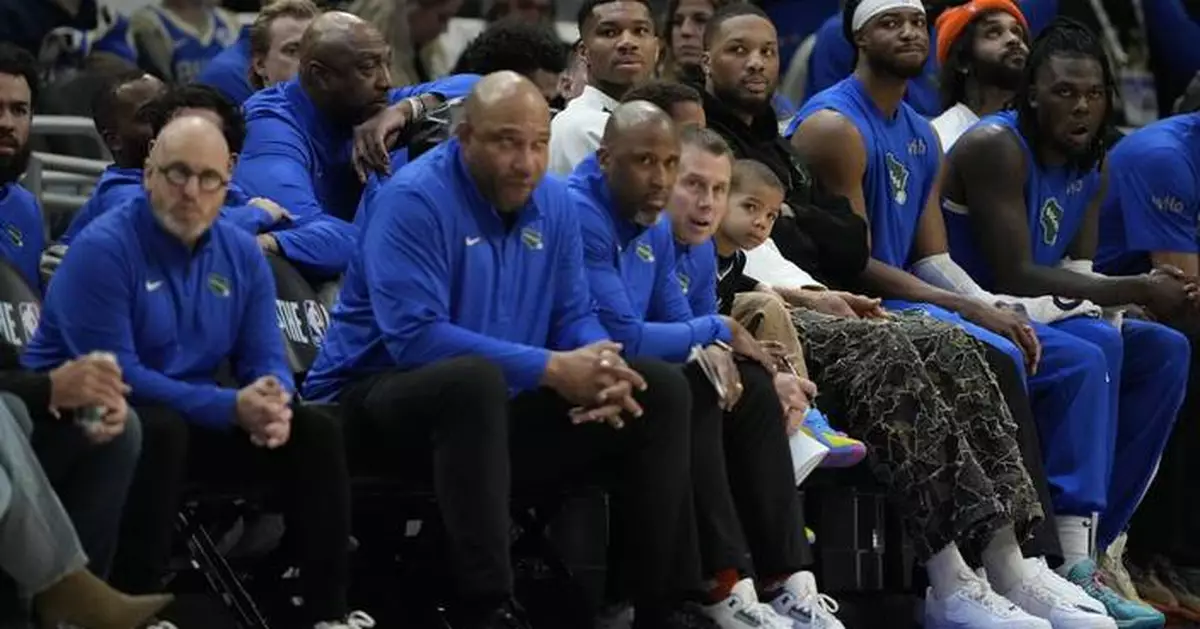
Milwaukee Bucks' Giannis Antetokounmpo and Damian Lillard watch from the bench during the first half of an NBA basketball game against the Detroit Pistons, Sunday, April 13, 2025, in Milwaukee. (AP Photo/Aaron Gash)
DUBAI, United Arab Emirates (AP) — U.S. President Donald Trump said Iran wants to negotiate with Washington after his threat to strike the Islamic Republic over its bloody crackdown on protesters, a move coming as activists said Monday the death toll in the nationwide demonstrations rose to at least 544.
Iran had no immediate reaction to the news, which came after the foreign minister of Oman — long an interlocutor between Washington and Tehran — traveled to Iran this weekend. It also remains unclear just what Iran could promise, particularly as Trump has set strict demands over its nuclear program and its ballistic missile arsenal, which Tehran insists is crucial for its national defense.
Meanwhile Monday, Iran called for pro-government demonstrators to head to the streets in support of the theocracy, a show of force after days of protests directly challenging the rule of 86-year-old Supreme Leader Ayatollah Ali Khamenei. Iranian state television aired chants from the crowd, who shouted “Death to America!” and “Death to Israel!”
Trump and his national security team have been weighing a range of potential responses against Iran including cyberattacks and direct strikes by the U.S. or Israel, according to two people familiar with internal White House discussions who were not authorized to comment publicly and spoke on condition of anonymity.
“The military is looking at it, and we’re looking at some very strong options,” Trump told reporters on Air Force One on Sunday night. Asked about Iran’s threats of retaliation, he said: “If they do that, we will hit them at levels that they’ve never been hit before.”
Trump said that his administration was in talks to set up a meeting with Tehran, but cautioned that he may have to act first as reports of the death toll in Iran mount and the government continues to arrest protesters.
“I think they’re tired of being beat up by the United States,” Trump said. “Iran wants to negotiate.”
He added: “The meeting is being set up, but we may have to act because of what’s happening before the meeting. But a meeting is being set up. Iran called, they want to negotiate.”
Iran through country's parliamentary speaker warned Sunday that the U.S. military and Israel would be “legitimate targets” if America uses force to protect demonstrators.
More than 10,600 people also have been detained over the two weeks of protests, said the U.S.-based Human Rights Activists News Agency, which has been accurate in previous unrest in recent years and gave the death toll. It relies on supporters in Iran crosschecking information. It said 496 of the dead were protesters and 48 were with security forces.
With the internet down in Iran and phone lines cut off, gauging the demonstrations from abroad has grown more difficult. The Associated Press has been unable to independently assess the toll. Iran’s government has not offered overall casualty figures.
Those abroad fear the information blackout is emboldening hard-liners within Iran’s security services to launch a bloody crackdown. Protesters flooded the streets in the country’s capital and its second-largest city on Saturday night into Sunday morning. Online videos purported to show more demonstrations Sunday night into Monday, with a Tehran official acknowledging them in state media.
In Tehran, a witness told the AP that the streets of the capital empty at the sunset call to prayers each night. By the Isha, or nighttime prayer, the streets are deserted.
Part of that stems from the fear of getting caught in the crackdown. Police sent the public a text message that warned: “Given the presence of terrorist groups and armed individuals in some gatherings last night and their plans to cause death, and the firm decision to not tolerate any appeasement and to deal decisively with the rioters, families are strongly advised to take care of their youth and teenagers.”
Another text, which claimed to come from the intelligence arm of the paramilitary Revolutionary Guard, also directly warned people not to take part in demonstrations.
“Dear parents, in view of the enemy’s plan to increase the level of naked violence and the decision to kill people, ... refrain from being on the streets and gathering in places involved in violence, and inform your children about the consequences of cooperating with terrorist mercenaries, which is an example of treason against the country,” the text warned.
The witness spoke to the AP on condition of anonymity due to the ongoing crackdown.
The demonstrations began Dec. 28 over the collapse of the Iranian rial currency, which trades at over 1.4 million to $1, as the country’s economy is squeezed by international sanctions in part levied over its nuclear program. The protests intensified and grew into calls directly challenging Iran’s theocracy.
Nikhinson reported from aboard Air Force One.
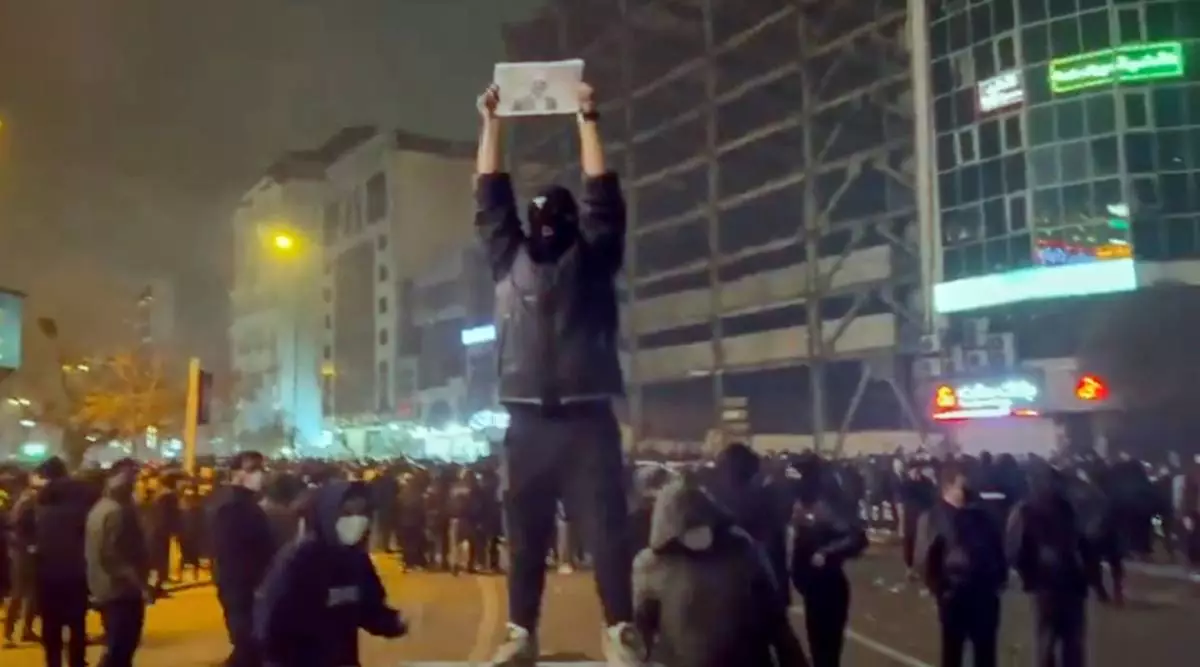
In this frame grab from video obtained by the AP outside Iran, a masked demonstrator holds a picture of Iran's Crown Prince Reza Pahlavi during a protest in Tehran, Iran, Friday, January. 9, 2026. (UGC via AP)
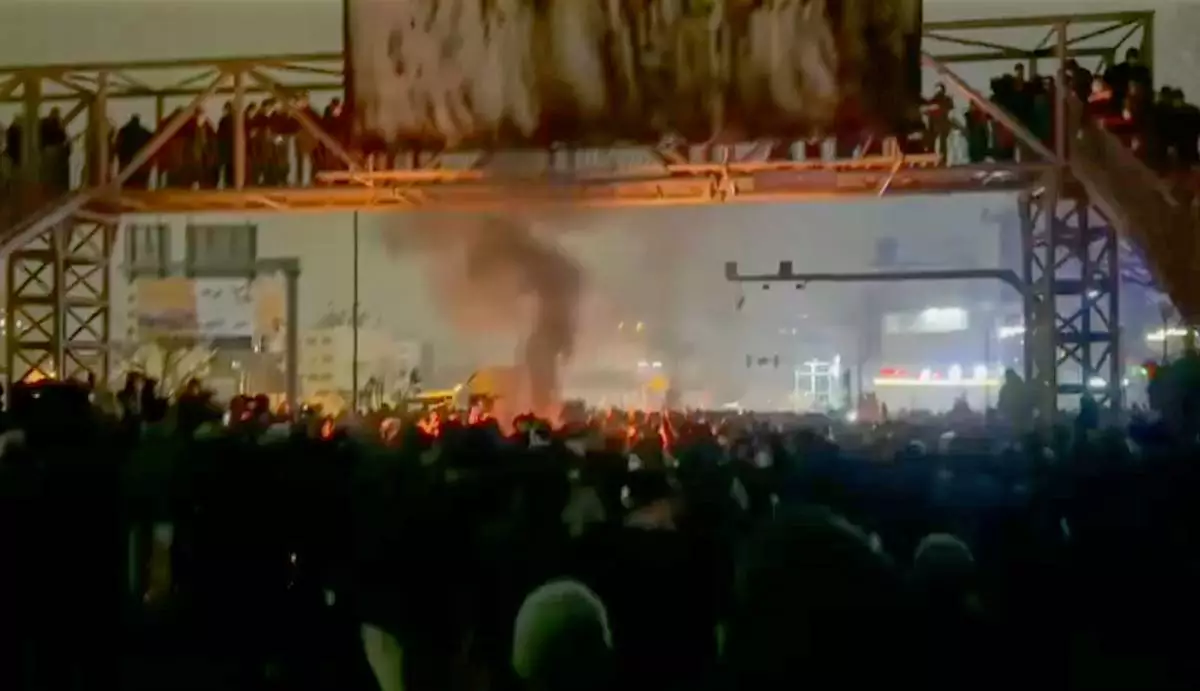
In this frame grab from footage circulating on social media from Iran shows protesters taking to the streets despite an intensifying crackdown as the Islamic Republic remains cut off from the rest of the world in Tehran, Iran, Friday, Jan. 9, 2026.(UGC via AP)
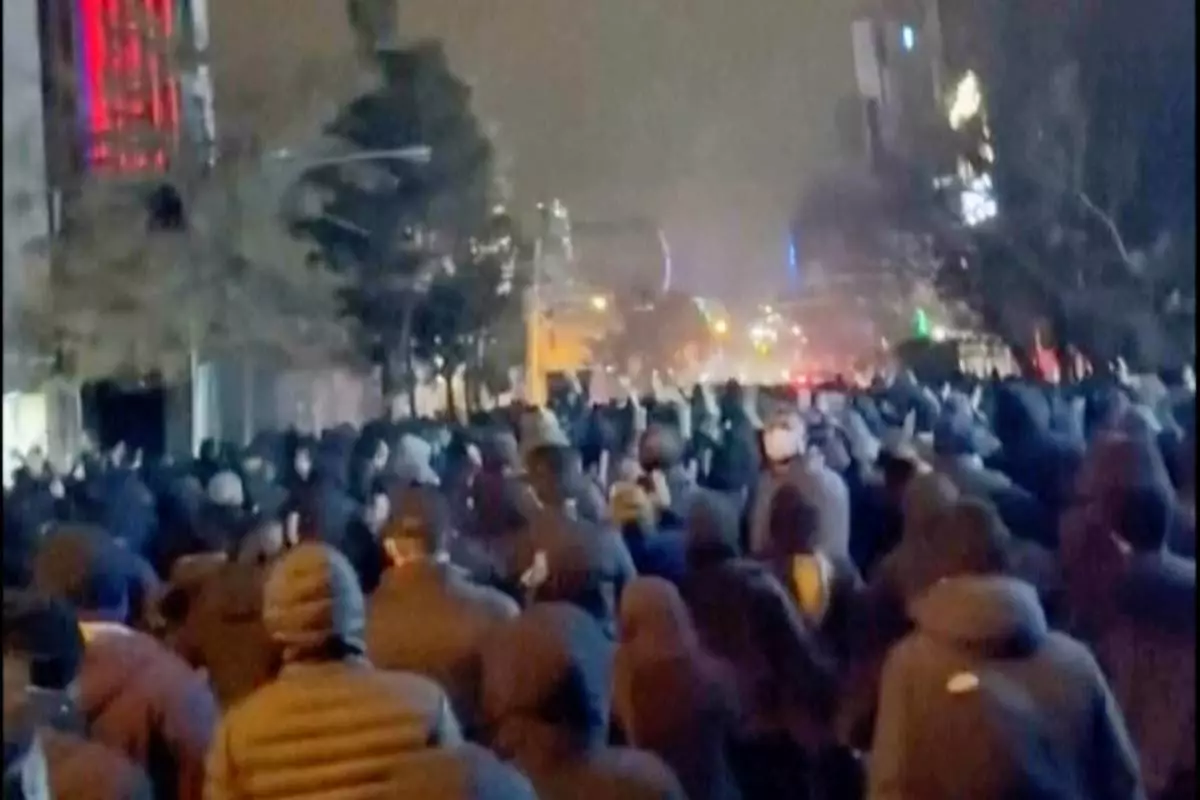
In this frame grab from footage circulating on social media from Iran showed protesters once again taking to the streets of Tehran despite an intensifying crackdown as the Islamic Republic remains cut off from the rest of the world in Tehran, Iran, Saturday Jan. 10, 2026. (UGC via AP)