PROVIDENCE, R.I. (AP) — A Texas doctor who has been treating children in a measles outbreak was shown on video with a measles rash on his face in a clinic a week before Health Secretary Robert F. Kennedy Jr. met him and praised him as an “extraordinary” healer.
Dr. Ben Edwards appeared in the video posted March 31 by the anti-vaccine group Kennedy once led, Children’s Health Defense. In it, Edwards appears wearing scrubs and talking with parents and children in a makeshift clinic he set up in Seminole, Texas, ground zero of the outbreak that has sickened hundreds of people and killed three, including two children.
Edwards is asked whether he had measles, and he responded, “Yes,” then said his infection started the day before the video was recorded.
“Yesterday was pretty achy. Little mild fever. Spots came in the afternoon. Today, I woke up feeling good,” Edwards said in the video.
Measles is most contagious for about four days before and four days after the rash appears and is one of the world's most contagious diseases, according to the U.S. Centers for Disease Control and Prevention. Doctors and public health experts said Edwards' decision to go into the clinic put children, their parents and their community at risk because he could have spread it to others. They said there was no scenario in which Edwards' conduct would be reasonable.
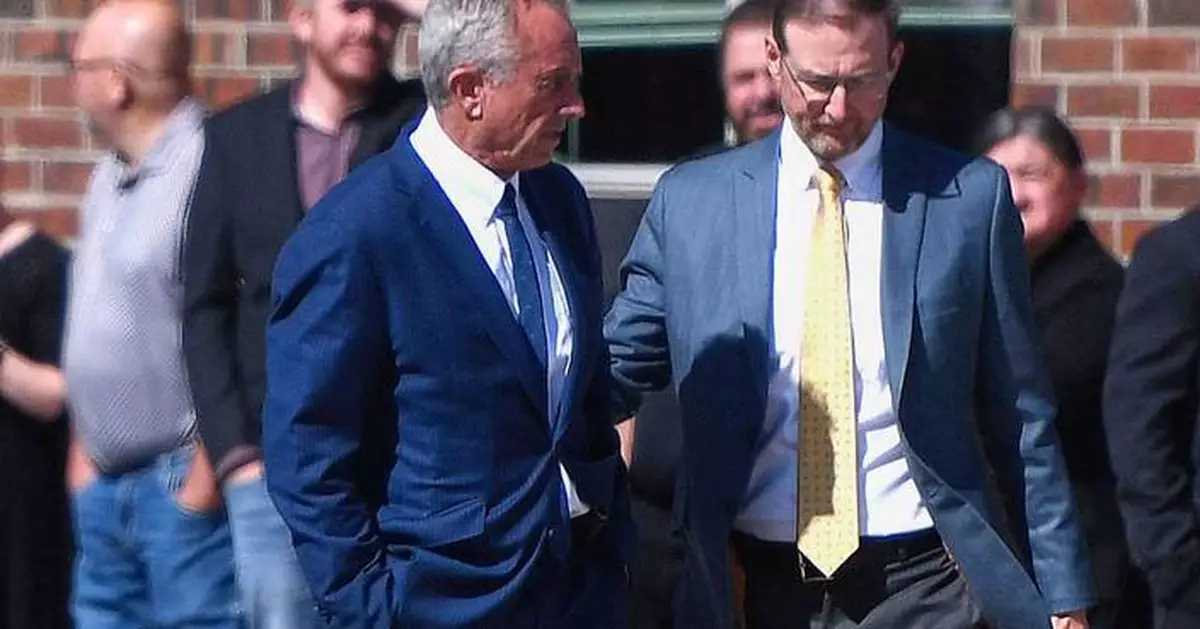
Kennedy met with Edwards about a week after the video was posted by Children's Health Defense, the group Kennedy led for years until December. In an April 6 post on X, Kennedy said he “visited with these two extraordinary healers,” including Edwards and another doctor, and praised their use of two unproven treatments for measles.
Even as measles has exploded in Texas and spread across the country, Kennedy, the nation's top health official, has declined to consistently and forcefully encourage people to vaccinate their children and remind them that the vaccine is safe. Kennedy's post drawing attention to Edwards is inappropriate but unsurprising given Kennedy's record, said Dr. Craig Spencer, a medical doctor who is also a professor at the Brown University School of Public Health.
"I think is unfortunately perfectly on-brand for how he thinks that medicine should be practiced," Spencer said. "And that is what makes me remarkably uncomfortable and extremely concerned and scared for the next three-and-a-half years.”
It was unclear whether Kennedy knew that Edwards had gone into his clinic while infected with measles before meeting him. A spokesperson for Kennedy said he is not anti-vaccine and that he is “committed to improving children’s health in America and has re-deployed resources to Texas to help with the current outbreak.” He did not answer why the health secretary chose to meet with and praise Edwards rather than any of the other doctors in West Texas who have been treating children in the outbreak.
Edwards told The Associated Press in an email that he “interacted with zero patients that were not already infected with measles” during the time he was infectious. “Therefore, obviously, there were no patients that were put in danger of acquiring measles since they already had measles.”
But Jessica Steier, a public health scientist, said the video shows Edwards in the room with people who do not appear sick, including parents of sick children and the people who visited the clinic from Children's Health Defense. She also questioned what steps Edwards was taking to confirm people were sick with measles, rather than relying on guesswork.
Steier, who runs the Science Literacy Lab and co-wrote an article about Edwards' conduct, said while there may be some extraordinary emergencies where it would be appropriate for a sick doctor to work, this is not one of those situations because there is no shortage of providers who are not infected. She also pointed out that the video shows Edwards was not wearing a mask.
“You have the HHS secretary lifting him up," she said. "You know, it’s so, so dangerous. I really feel for the people who are on the ground.”
Children’s Health Defense has sued a number of news organizations, among them the AP, accusing them of violating antitrust laws by taking action to identify misinformation, including about the COVID-19 pandemic and vaccines.
Kennedy's promotion of a doctor who has touted unproven measles treatments is “wholly irresponsible” but is in line with Kennedy's long public record of anti-vaccine views, said Dr. Paul Offit, a pediatrician at Children’s Hospital of Philadelphia. He said Kennedy has carried those views to his new job as the head of the U.S. Department of Health and Human Services.
"He’s not the director of Children’s Health Defense anymore. He’s responsible for the health and well-being of children in this country,” Offit said. “It's an emergency, but Kennedy is not treating it that way.”
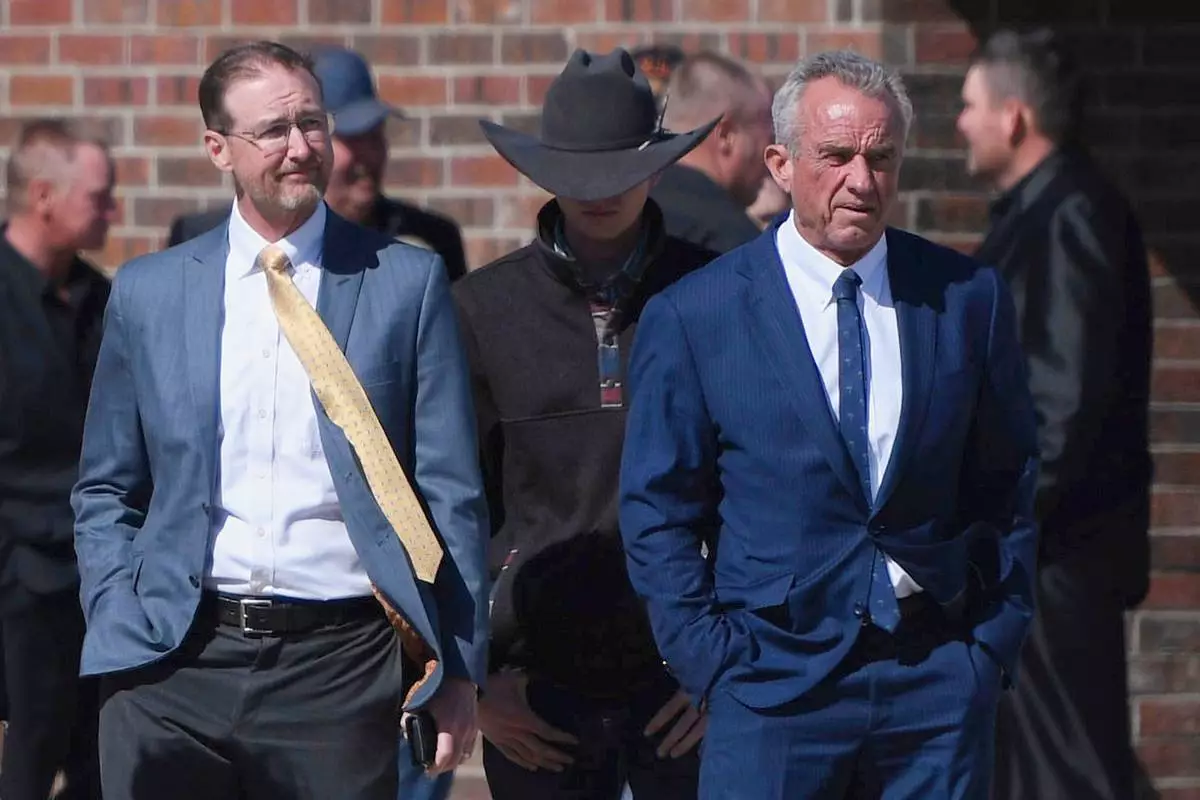
FILE - Health and Human Services Secretary Robert F. Kennedy Jr., right, stands with Dr. Ben Edwards, left, outside the Reinlander Mennonite Church in Seminole, Texas, on Sunday, April 6, 2025, after a second measles death. (AP Photo/Annie Rice, File)
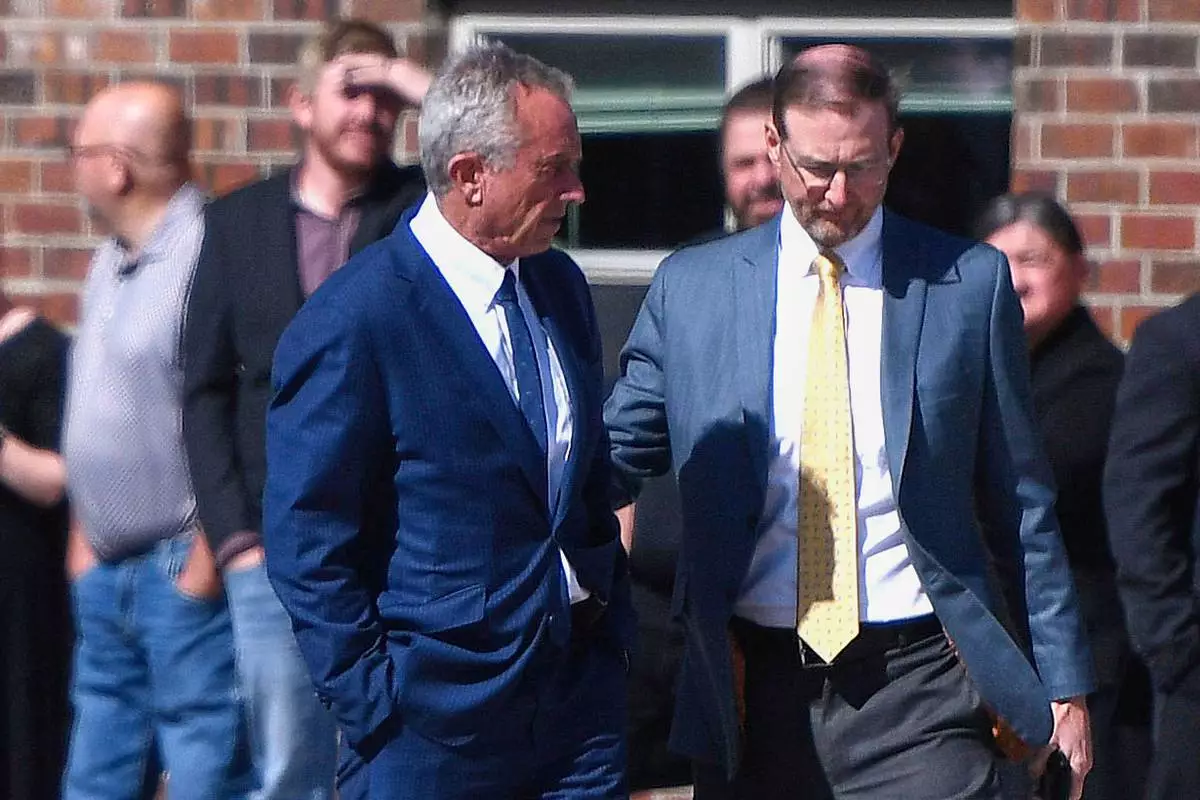
Health and Human Services Secretary Robert F. Kennedy Jr., left, stands with Dr. Ben Edwards, right, outside the Reinlander Mennonite Church in Seminole, Texas, on Sunday, April 6, 2025, after a second measles death. (AP Photo/Annie Rice, File)
Iran's top judge hinted at fast trials and executions for those who were detained in nationwide protests against the country's theocracy, even as activists said Wednesday that the death toll rose to levels unseen in decades, with at least 2,571 people killed so far.
Iran’s judiciary chief Gholamhossein Mohseni-Ejei, made the comments about trials and executions in a video Tuesday, despite a warning from U.S. President Donald Trump that he would “take very strong action” if executions take place.
The U.S.-based Human Rights Activists News Agency said the number of dead climbed to at least 2,571 early Wednesday. The figure dwarfs the death toll from any other round of protest or unrest in Iran in decades and recalls the chaos surrounding the country’s 1979 Islamic Revolution.
After Trump was informed of the number of deaths, he warned Iran's leaders that he was terminating any negotiations and would “act accordingly.”
Details of the crackdown began emerging Tuesday as Iranians made phone calls abroad for the first time in days after authorities severed communications countrywide when the protests broke out.
Here is the latest:
Tens of thousands of mourners thronged the streets near Tehran University for the funeral of more than 300 security forces and civilians on Wednesday.
Many held Iranian flags and identical photos of Ayatollah Ali Khamenei and their relatives. The caskets, covered in Iranian flags, were stacked at least three high in the backs of trucks and covered with red and white roses and framed photographs of people who were killed. The crowd chanted and beat their chests in response to an emcee speaking from a stage.
One man in the crowd held up a photo of U.S. President Donald Trump during the Pennsylvania assassination attempt, emblazoned with: “The arrow doesn’t always miss!”
India's Embassy in Tehran urged Wednesday all Indian nationals to leave Iran, citing what it called an “evolving situation” in the Islamic Republic.
The statement, posted on X, also advised Indian citizens to remain highly vigilant and avoid areas where protests are taking place.
German police said Wednesday the two climbed over a fence into embassy grounds and tore down an Iranian flag. Both wanted to hoist two pre-Islamic Republic flags but failed, German news agency dpa reported.
They left the grounds when guards used pepper spray and were detained on the sidewalk outside.
The incident happened late Tuesday.
Major Middle East governments were discouraging the Trump administration from waging a war with Iran, fearing “unprecedented consequences” in the volatile region, an Arab Gulf diplomat said Wednesday.
The Cairo-based diplomat, who was given anonymity because he wasn't authorized to speak to the media, said major governments in the region, including Turkey, Egypt, Saudi Arabia and Pakistan, have been “in constant contact” with the U.S. administration over a potential American strike on Iran that could explode into a “full-blown war.”
Such a war will “certainly” have dire repercussions “not only on the Middle East but also on the global economy," he said.
Iranian state television said Wednesday’s mass funeral in Tehran would include 300 bodies of security force members and civilians. The funeral is expected to take place at Tehran University under heavy security.
The U.S.-based Human Rights Activists News Agency said the crackdown killed at least 2,571 people. It said 2,403 of the dead were protesters and 147 were government-affiliated. Twelve children were killed, along with nine civilians it said were not taking part in protests. More than 18,100 people have been detained, the group said.
Gauging the demonstrations and the death toll from abroad has grown more difficult. The Associated Press has been unable to independently assess the toll, given the communications being disrupted in the country.
Melanie Lidman contributed from Jerusalem.
Trump’s decision to impose a 25% tariff on countries that trade with Iran could impact India, an expert said, as New Delhi already faces existing 50% U.S. trade levies due to its purchases of Russian oil.
Abhijit Mukhopadhyay, a senior economist at the Chintan Research Foundation in New Delhi, said the bigger risk is not India-Iran trade, but India’s access to the U.S. market, as its exports to Iran are modest.
India mainly exports rice, tea, sugar, pharmaceuticals and electrical machinery to Iran, while importing dry fruits and chemical products. Textiles and garments, gems and jewelry and engineering goods are likely to be the most vulnerable sectors, he said.
Trump’s latest move also could affect India’s investments in Iran, including the strategically important Chabahar port, which gives India a trade route to Afghanistan, Central Asia and Europe while bypassing Pakistan, Mukhopadhyay said.
Iran’s judiciary chief signals fast trials and executions for those detained in nationwide protests.
Gholamhossein Mohseni-Ejei made the comment in a video shared by Iranian state television on Wednesday.
He emphasized the need for swift action, saying delays would lessen the impact.
His remarks challenge Trump, who warned Iran about executions in an interview aired Tuesday.
Trump stated the U.S. would take strong action if Iran proceeded with executions. The situation highlights escalating tensions between the two countries over the handling of the protests.
Dozens of Pakistani students studying in Iran have returned home through a remote southwestern border crossing, a Pakistani immigration official said Wednesday.
Federal Investigation Agency spokesperson in Quetta city, Samina Raisani, said about 60 students crossed into Pakistan on Tuesday through Gabd border in Balochistan province with valid travel documents.
More students were expected to return through the same crossing later Wednesday, she said.
Mudassir Tipu, Pakistan’s ambassador to Iran, said Tuesday that Iranian universities had rescheduled exams and permitted international students to leave the country.
The satellite internet provider Starlink now offers free service to people in Iran who have access to the company's receivers, activists said Wednesday.
Mehdi Yahyanejad, a Los Angeles-based activist who helped get the units into Iran, told The Associated Press that the free service had started. Other activists also confirmed in messages online that the service was free.
Starlink has been the only way for Iranians to communicate with the outside world since authorities shut down the internet Thursday night as nationwide protests swelled and they began a bloody crackdown against demonstrators.
Starlink did not immediately acknowledge the decision.

This frame grab from videos taken between Jan. 9 and Jan. 11, 2026, and circulating on social media purportedly shows images from a morgue with dozens of bodies and mourners after crackdown on the outskirts of Iran's capital, in Kahrizak, Tehran Province. (UGC via AP)