Chinese President Xi Jinping's state visit to Malaysia, which wrapped up on Thursday, has yielded fruitful results and serves as a milestone in further promoting the bilateral relationship, said Chinese Ambassador to Malaysia Ouyang Yujing.
President Xi arrived in Kuala Lumpur on Tuesday evening to begin the state visit to Malaysia at the invitation of Malaysia's King Sultan Ibrahim Sultan Iskandar. This marks the Chinese president's first visit to the country in 12 years.
In an interview with China Media Group (CMG) on Thursday, the Chinese ambassador to Malaysia elaborated on the outcomes of President Xi's visit from multiple dimensions.
"First, I think overall, the visit has been defined by high-standard receptions and a positive atmosphere. Second, the meetings and talks were substantially carried out. During this visit, President Xi met with both King Sultan Ibrahim and Malaysian Prime Minister Anwar Ibrahim, exchanging views on bilateral relations and international issues with the two leaders in an in-depth and extensive manner, with important consensuses reached on many issues. To be specifically, the leaders carried out in-depth exchanges and reached extensive consensuses in a wide range of fields spanning from politics, economy and trade cooperation, to culture and people-to-people ties, and regional affairs. Third, the visit bears fruitful results. The two countries have elevated their bilateral relationship to a high-level strategic China-Malaysia community with shared future. At the same time, more than 30 bilateral documents were signed, covering a diversity of sectors. Fourth, the visit is expected to exert far-reaching influence. What had been discussed at the talks between the two sides during President Xi's visit will have a far-reaching influence on the Malaysian society, on China and on the future development of China-Malaysia ties," said the ambassador.
The high level and strategic nature of China-Malaysia relations can be seen in many fields including politics, economy, and people-to-people and cultural exchanges, Ouyang said.
"In the field of politics and security, the interaction and communication between the two country's leaders, including the mutual visits, are worth noting. Prime Minister Anwar has visited China three times, and Sultan Ibrahim, the Malaysian supreme head of state, visited China last year. Plus President Xi's visit to Malaysia this time, it is actually an important manifestation of the strategic coordination between the two countries in the field of politics. The two countries have also aligned their initiatives in economy, trade and investment, such as the alignment of their five-year plans for economic development. In particular, the synergy between China's high and new technologies advancement and Malaysia's Madani Economy framework reflects a certain level of strategic considerations on both sides in the field of economy, trade and investment," he said.
"In the field of people-to-people and cultural exchanges, one of the highlights is that the two countries have enjoyed sound people-to-people ties, which are currently at an all-time high according to data from public opinion polls. On the basis of sound people-to-people ties, the bilateral relationship will only grow ever stronger. On many international and regional occasions, China has potently supported Malaysia in performing its duties as the current rotating chair of the ASEAN (Association of Southeast Asian Nations), and the two sides have also worked together to facilitate China's coordination with the ASEAN," said the ambassador.
Ouyang also expressed the confidence that the signing of bilateral documents will pave the way for another "Golden 50 Years" for China-Malaysia bilateral ties.
"The two sides have signed more than 30 bilateral documents in diverse fields covering politics and security, trade and investment, science and technology which highlights the concept of new quality productivity forces, and people-to-people and cultural exchanges. Therefore, we are confident that under the strategic guidance of the leaders of the two countries, we can carry out higher-level cooperation in these areas while elevating such cooperation to new heights. As President Xi has said, we have laid a very good legal foundation for ushering in another 'Golden 50 Years' for bilateral ties," the Chinese ambassador said.
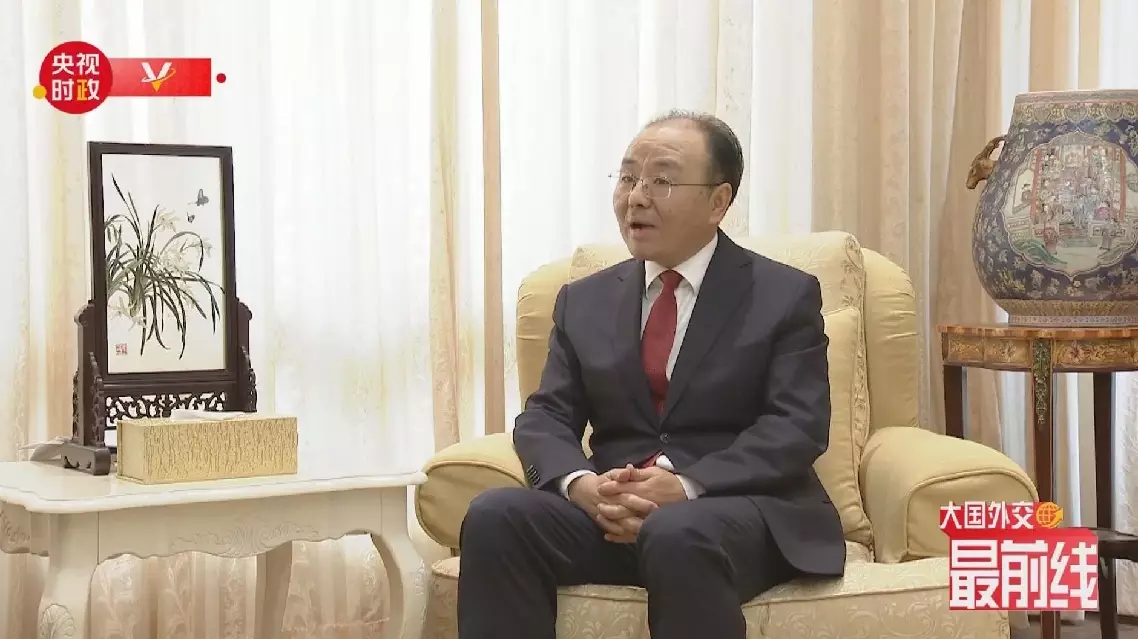
Xi's Malaysia visit to further elevate bilateral ties: Chinese ambassador