An international group of Buddhist representatives from different countries visited Lhasa, the capital of southwest China's Xizang Autonomous Region, recently, witnessing and experiencing firsthand the religious life there.
With over 20 members, the group visited some of the most sacred sites in Lhasa, impressed and inspired by the Tibetan rich spiritual heritage and thriving of ancient traditions.
On top of the group's visit was the iconic Potala Palace, symbolizing Tibetan culture and Buddhist spirituality. The group saw how the Tibetan Buddhist architectural buildings, artifacts, and books are carefully preserved.
"When I come to Lhasa, every time I must go to the Potala Palace and Jokhang Temple, also the Sera Monastery. These one [are] very attractive, and very nice, historical and beautiful places. [There are] lots of exhibitions and lots of Buddhist cultural writings. Monks are also very happy. They're seeing lots of these Buddhist statues and Thangkas," said Dr. Nergui Sainbuyan, lama of Sain Nomuun Buddhist Monastery in Mongolia.
The group also toured Jokhang Temple, Lhasa's most revered monastery, which is considered the city's spiritual heart. Pilgrims could be seen worshipping on their knees or walking clockwise in prayer almost daily.
These scenes reflect religious freedom and vibrant spiritual life in today's Xizang. Many group members also gained insights into how religious tradition and modern governance coexist harmoniously.
"The history of Buddhism and the administration of the country went together. Buddhism and the administration came together, protecting the nation," said Nishantha Kumara, director of planning at Sri Lanka's Ministry of Buddha Sasana, Religious and Cultural Affairs.
At Sera Monastery, the group observed the practice of monastic debate - the centuries-old Buddhist tradition, with teachings passed down through rigorous intellectual exchanges.
These on-site visits and close encounters with historical architecture and cultural relics offered the group firsthand experiences of religious life in Xizang. Many expressed their appreciation for China's efforts in preserving religious traditions, protecting cultural heritage, and the city's modern development.
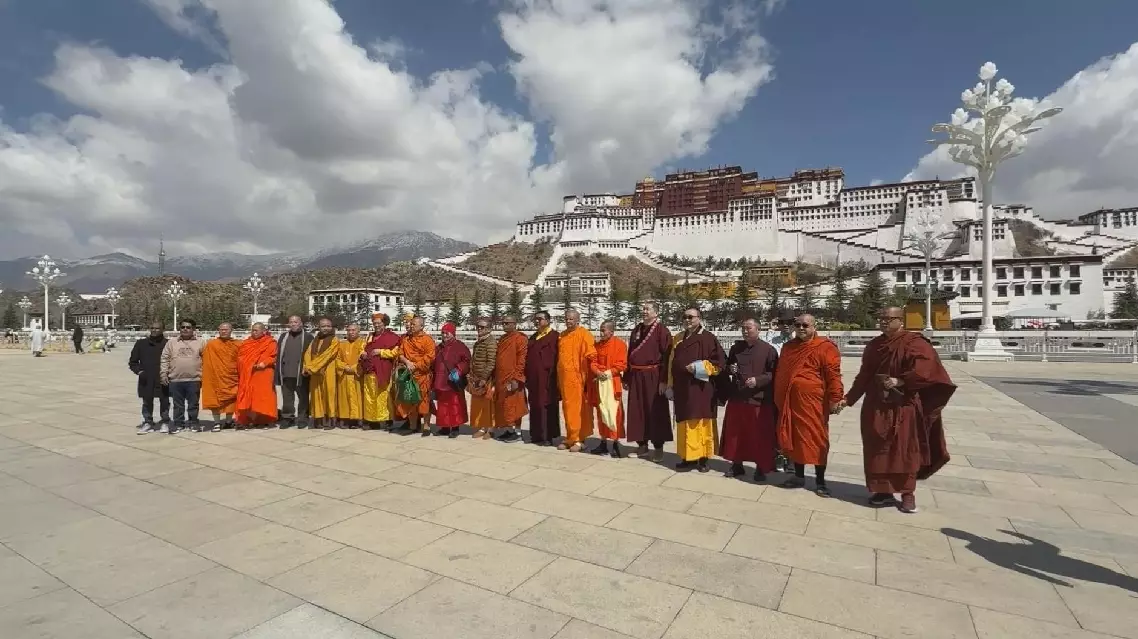
Int'l Buddhist delegation experience firsthand Tibetan Buddhism in Lhasa