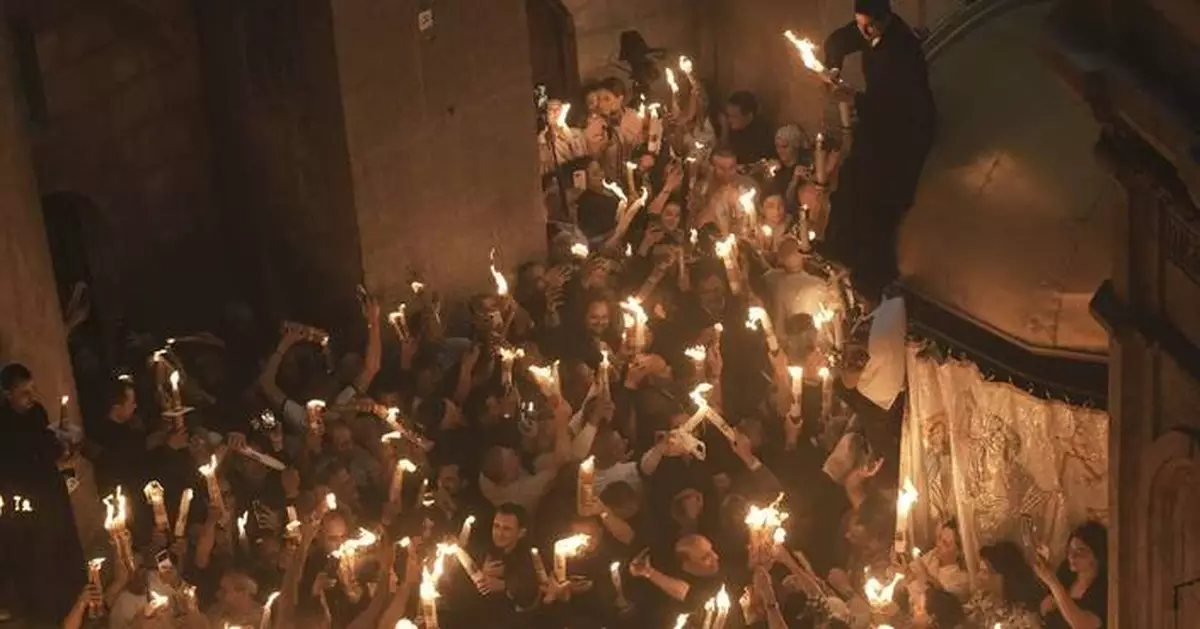
JERUSALEM (AP) — On the Saturday before Easter, thousands of Christians gather in the cavernous Church of the Holy Sepulcher for a centuries-old ceremony known as the Holy Fire.
Holding unlit candles, they pack into the sprawling 12th century basilica built on the site where, according to tradition, Jesus was crucified and buried. In near-total darkness, the Greek patriarch enters the Holy Edicule and emerges with two lit candles.
Click to Gallery
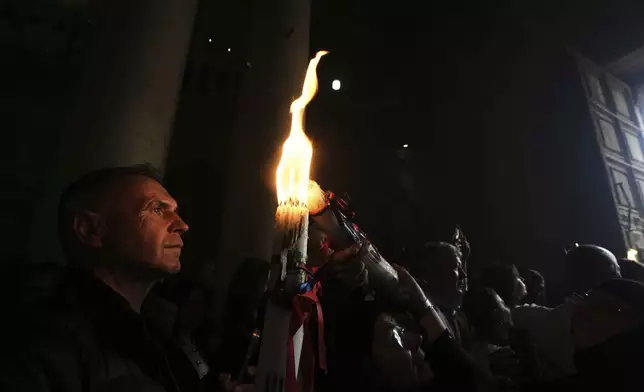
Christian pilgrims light candles during the Holy Fire ceremony, at the Church of the Holy Sepulcher, the site where according to tradition Jesus was crucified and buried, in Jerusalem's Old City, Saturday, April 19, 2025. (AP Photo/Mahmoud Illean)

Christian pilgrims hold candles during the Holy Fire ceremony, at the Church of the Holy Sepulcher, the site where according to tradition Jesus was crucified and buried, in Jerusalem's Old City, Saturday, April 19, 2025. (AP Photo/Mahmoud Illean)
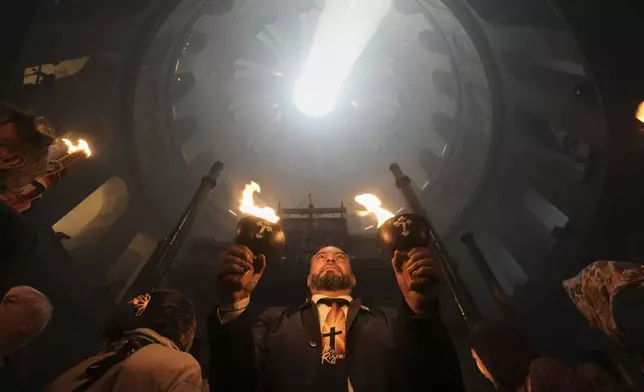
Christian pilgrims hold candles during the Holy Fire ceremony, at the Church of the Holy Sepulcher, the site where according to tradition Jesus was crucified and buried, in Jerusalem's Old City, Saturday, April 19, 2025. (AP Photo/Mahmoud Illean)
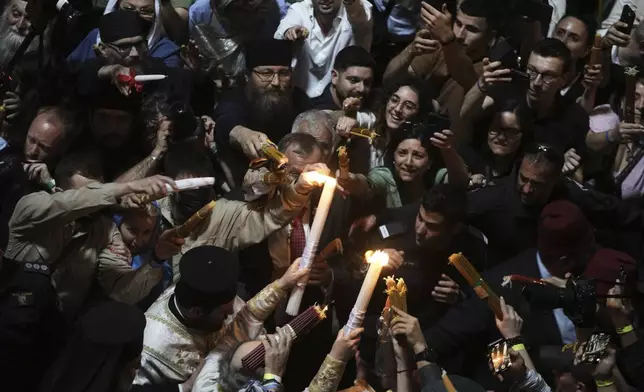
Christian pilgrims light candles during the Holy Fire ceremony, at the Church of the Holy Sepulcher, the site where according to tradition Jesus was crucified and buried, in Jerusalem's Old City, Saturday, April 19, 2025. (AP Photo/Mahmoud Illean)
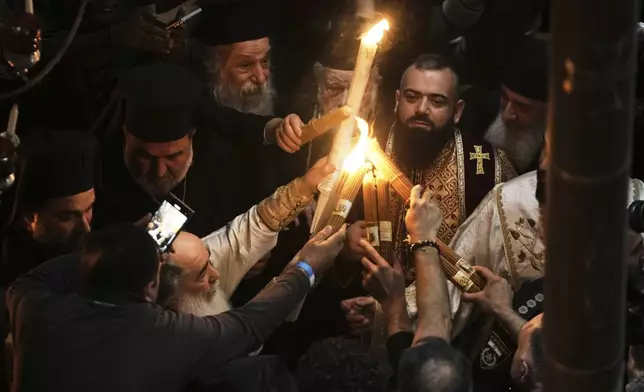
Greek Orthodox Patriarch of Jerusalem Theophilos III, left, light candles for Christian pilgrims during the Holy Fire ceremony, at the Church of the Holy Sepulcher, the site where according to tradition Jesus was crucified and buried, in Jerusalem's Old City, Saturday, April 19, 2025. (AP Photo/Mahmoud Illean)
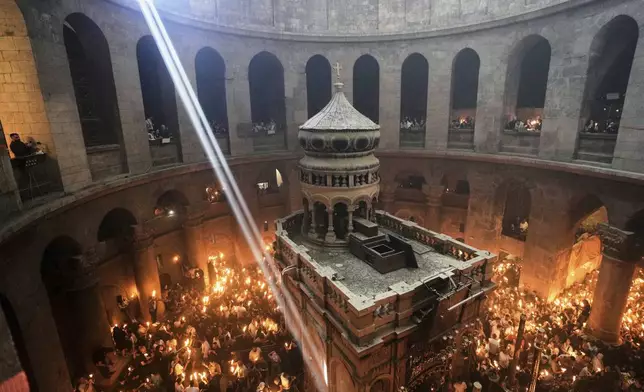
Christian pilgrims light candles during the Holy Fire ceremony, at the Church of the Holy Sepulcher, the site where according to tradition Jesus was crucified and buried, in Jerusalem's Old City, Saturday, April 19, 2025. (AP Photo/Mahmoud Illean)
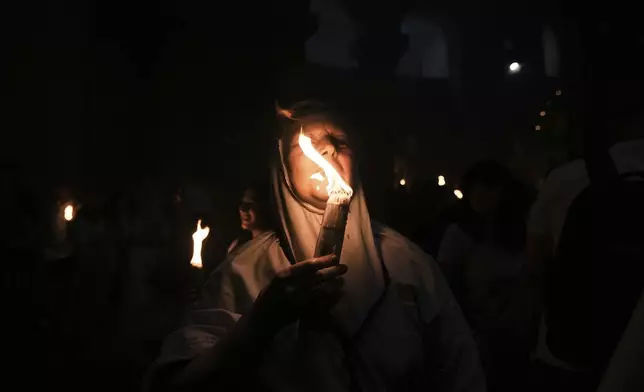
Christian pilgrims hold candles during the Holy Fire ceremony, at the Church of the Holy Sepulcher, the site where according to tradition Jesus was crucified and buried, in Jerusalem's Old City, Saturday, April 19, 2025. (AP Photo/Mahmoud Illean)
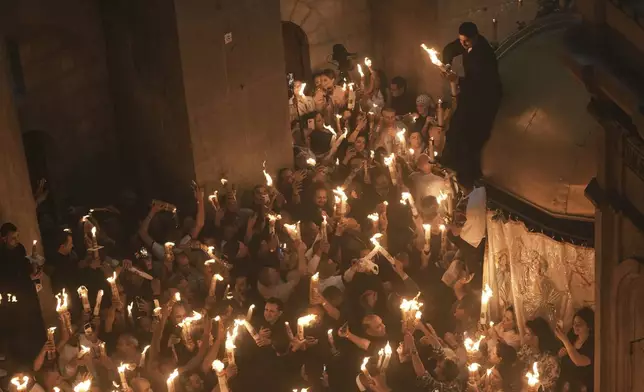
Christian pilgrims light candles during the Holy Fire ceremony, at the Church of the Holy Sepulcher, the site where according to tradition Jesus was crucified and buried, in Jerusalem's Old City, Saturday, April 19, 2025. (AP Photo/Mahmoud Illean)
The flame is passed from one candle to the next, the light overcoming the darkness in the rotunda. The flame is later transferred to Orthodox communities in other countries on special flights.
Eastern Orthodox Christians believe the light miraculously appears inside the Holy Edicule, built on the traditional site of Jesus’ tomb, while skeptics going back to the Middle Ages have dismissed it as a carnival trick for the masses.
Either way, the ceremony, which goes back at least 1,200 years, is a sight to behold.
It has also ignited safety concerns. In 1834 a frenzied stampede broke out in the darkened church, and the ruler of the Holy Land at the time barely escaped after his guards drew swords and hacked their way through the crowd, the historian Simon Sebag Montefiore recounts in his history of Jerusalem. Some 400 pilgrims died in the melee, most from suffocation or trampling.
Israeli authorities have sought to limit participants in recent years, citing safety concerns. That has drawn protests from church leaders, who have accused it of upsetting the delicate, unwritten arrangements around Jerusalem's holy sites known as the status quo.
On Saturday, there was a heavy military presence as thousands of worshipers passed through Israeli checkpoints to enter. AP reporters saw police detain one man, while scuffles occurred between police and some women who were barred from entering the courtyard.
Some worshipers lamented that the turnout lacked in numbers this year because of Israel's 18-month war with Hamas.
“The number of police is higher than the number of pilgrims,” said Adeeb Joude, key holder for the Holy Sepulcher.
Israel captured east Jerusalem, including the Old City with major sites sacred to Jews, Christians and Muslims, in the 1967 Mideast war, and annexed it in a move not recognized internationally. The Palestinians want east Jerusalem to be the capital of their future state.
The Old City has a long history of tensions between Israelis and Palestinians, among different religious groups that share its hilly confines and even within certain faiths. Perceived infringements on the status quo in the Church of the Holy Sepulcher have sparked brawls between monks of different denominations.
Israel says it is committed to ensuring freedom of worship for Jews, Christians and Muslims, and has long presented itself as an island of tolerance in the Middle East.
In recent years, however, tensions have risen with the local Christian community, most of whom are Palestinian Christians, a population that has dwindled through decades of conflict as many have sought economic opportunities abroad.
Associated Press reporter Maya Alleruzzo in Jerusalem contributed.
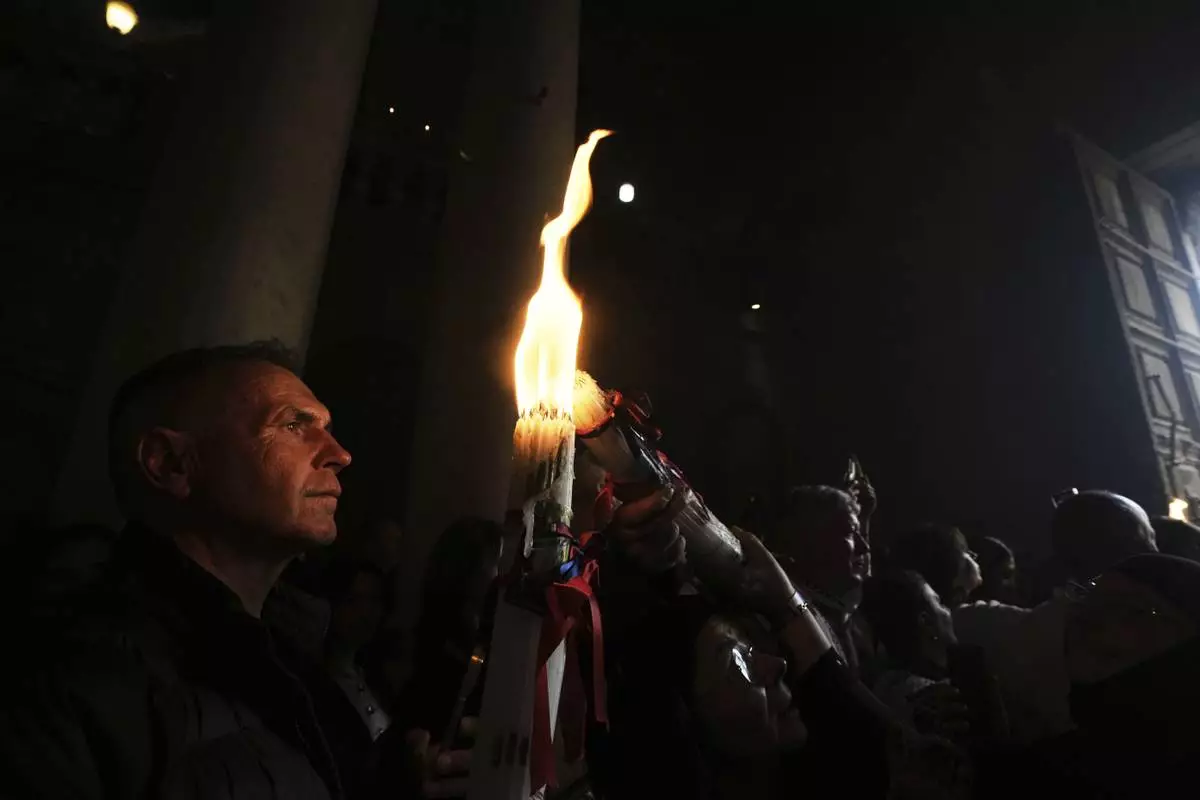
Christian pilgrims light candles during the Holy Fire ceremony, at the Church of the Holy Sepulcher, the site where according to tradition Jesus was crucified and buried, in Jerusalem's Old City, Saturday, April 19, 2025. (AP Photo/Mahmoud Illean)
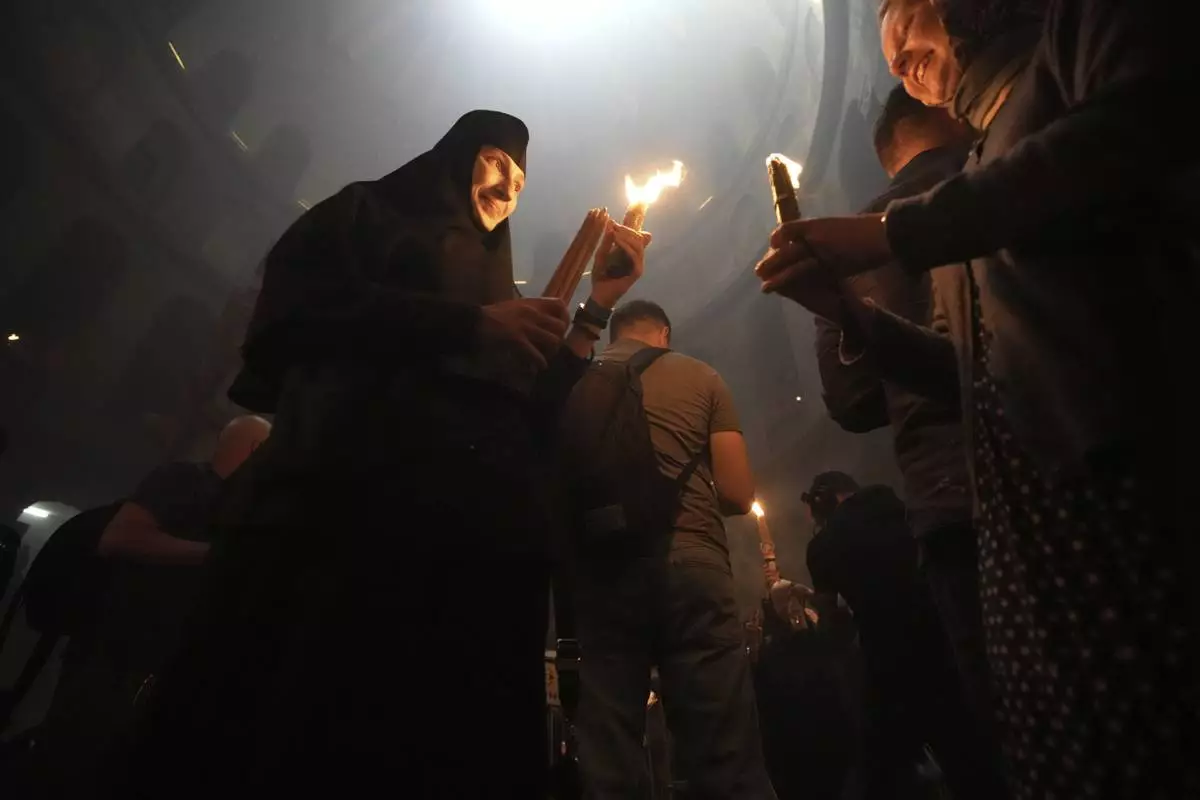
Christian pilgrims hold candles during the Holy Fire ceremony, at the Church of the Holy Sepulcher, the site where according to tradition Jesus was crucified and buried, in Jerusalem's Old City, Saturday, April 19, 2025. (AP Photo/Mahmoud Illean)
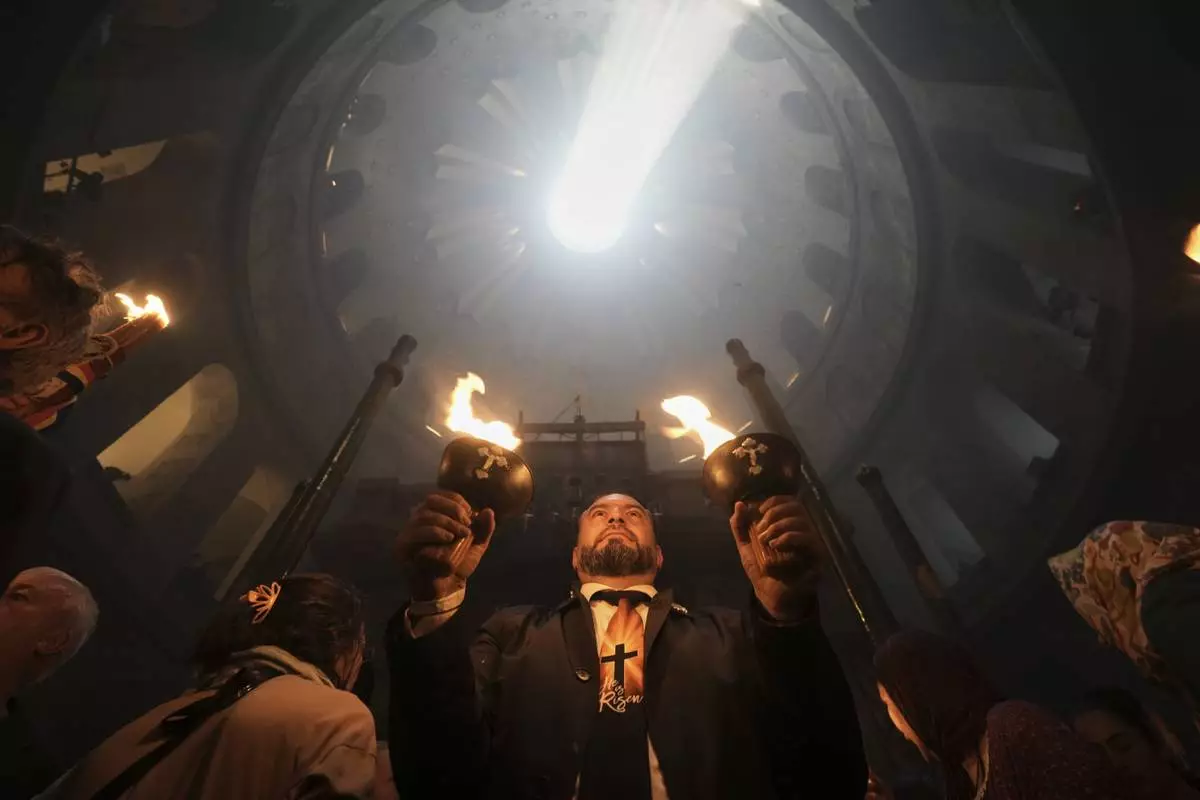
Christian pilgrims hold candles during the Holy Fire ceremony, at the Church of the Holy Sepulcher, the site where according to tradition Jesus was crucified and buried, in Jerusalem's Old City, Saturday, April 19, 2025. (AP Photo/Mahmoud Illean)
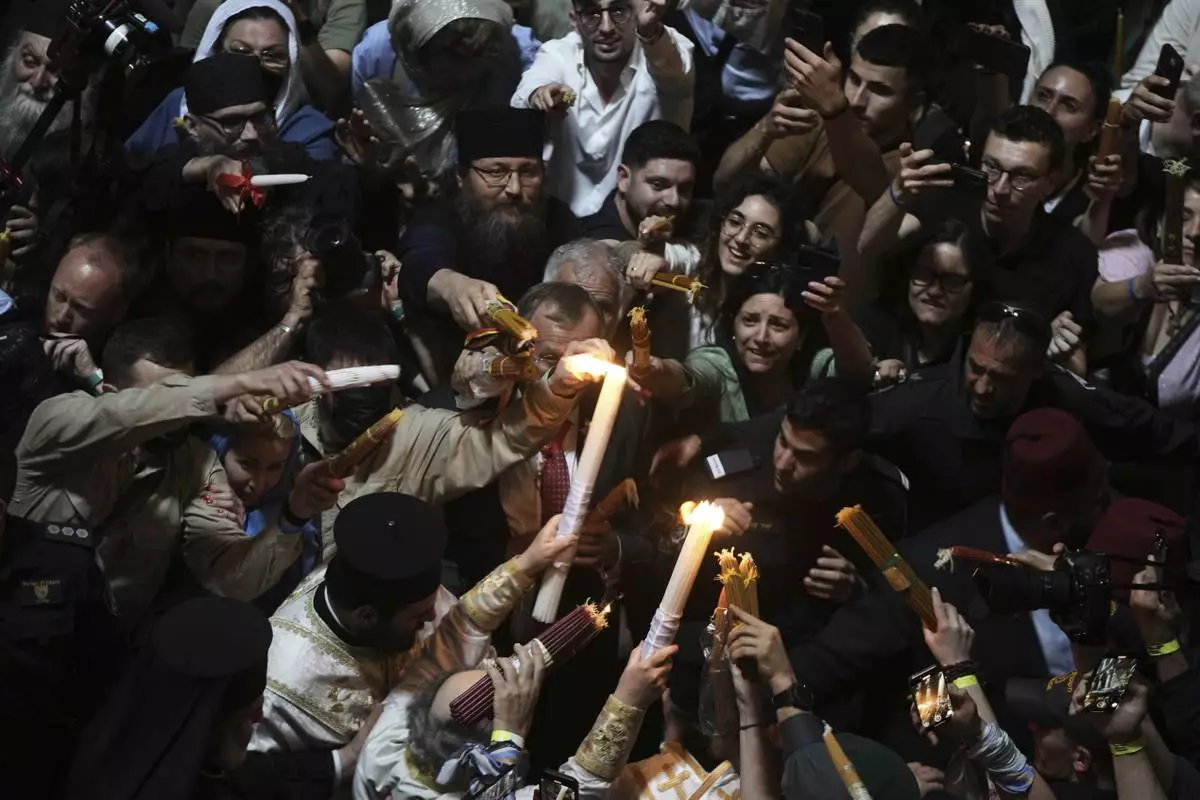
Christian pilgrims light candles during the Holy Fire ceremony, at the Church of the Holy Sepulcher, the site where according to tradition Jesus was crucified and buried, in Jerusalem's Old City, Saturday, April 19, 2025. (AP Photo/Mahmoud Illean)
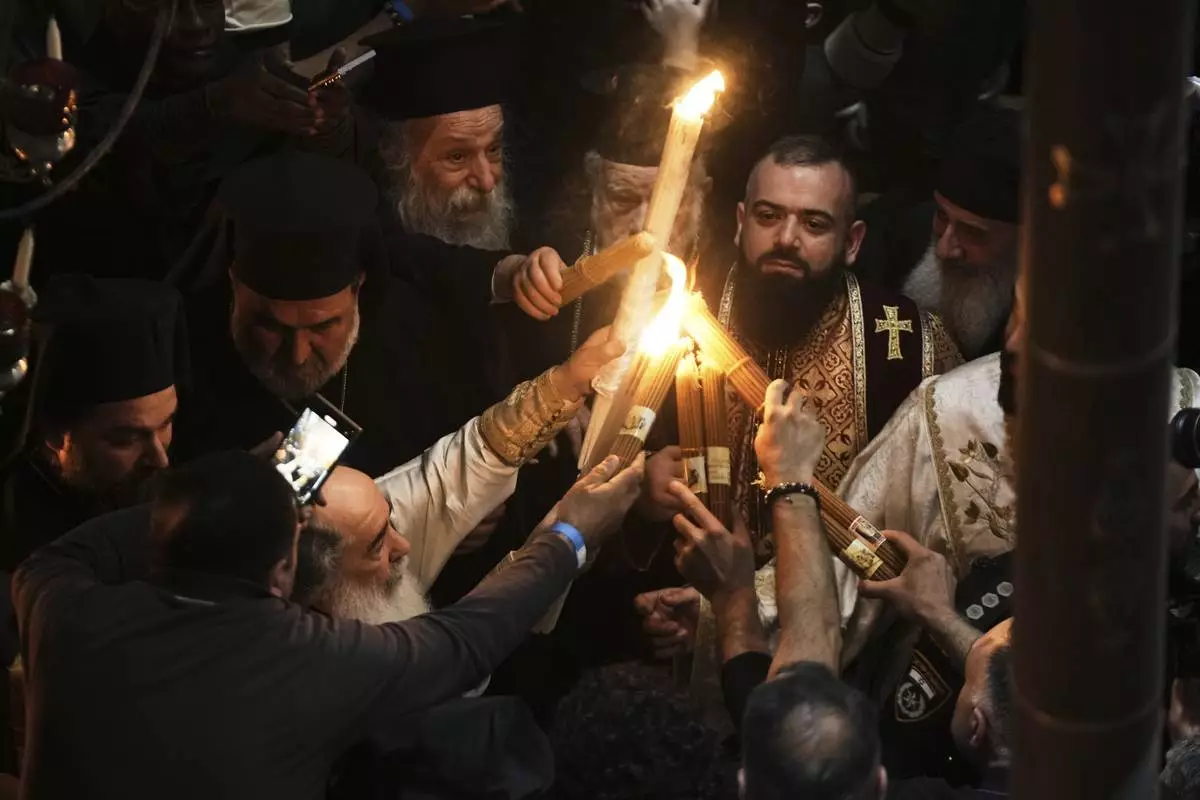
Greek Orthodox Patriarch of Jerusalem Theophilos III, left, light candles for Christian pilgrims during the Holy Fire ceremony, at the Church of the Holy Sepulcher, the site where according to tradition Jesus was crucified and buried, in Jerusalem's Old City, Saturday, April 19, 2025. (AP Photo/Mahmoud Illean)
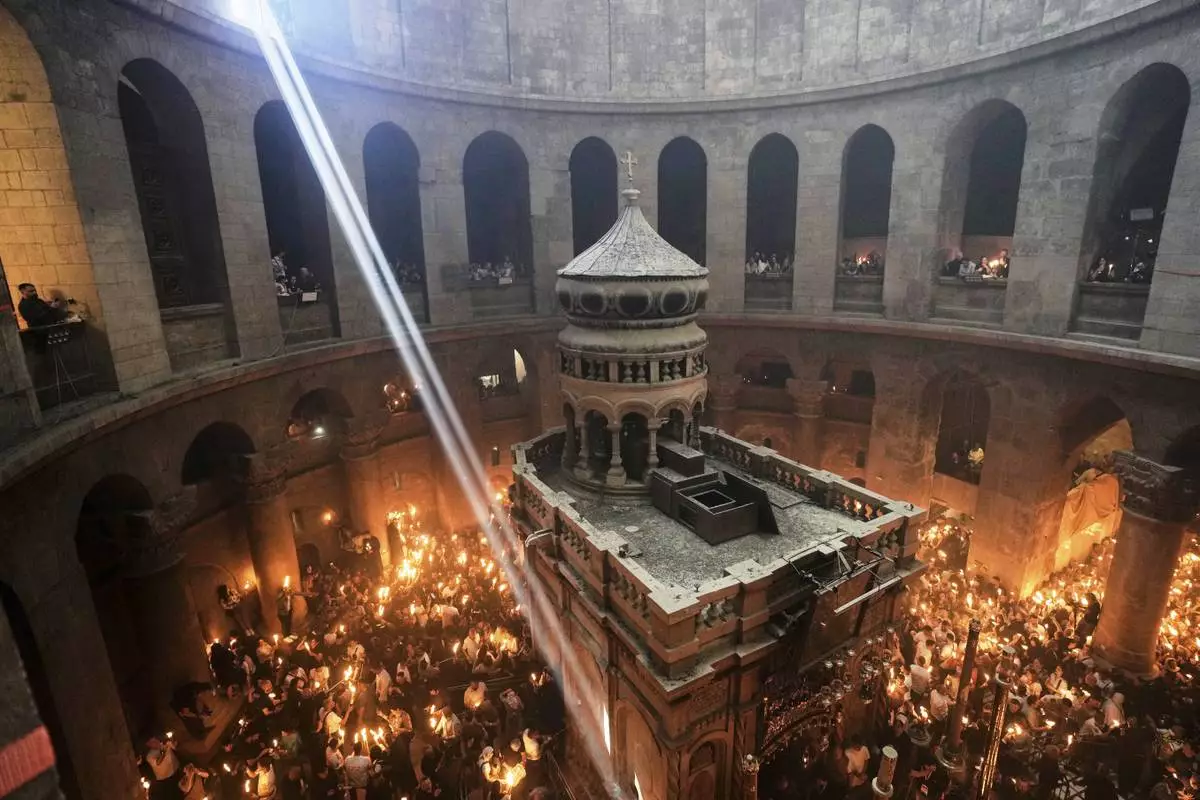
Christian pilgrims light candles during the Holy Fire ceremony, at the Church of the Holy Sepulcher, the site where according to tradition Jesus was crucified and buried, in Jerusalem's Old City, Saturday, April 19, 2025. (AP Photo/Mahmoud Illean)
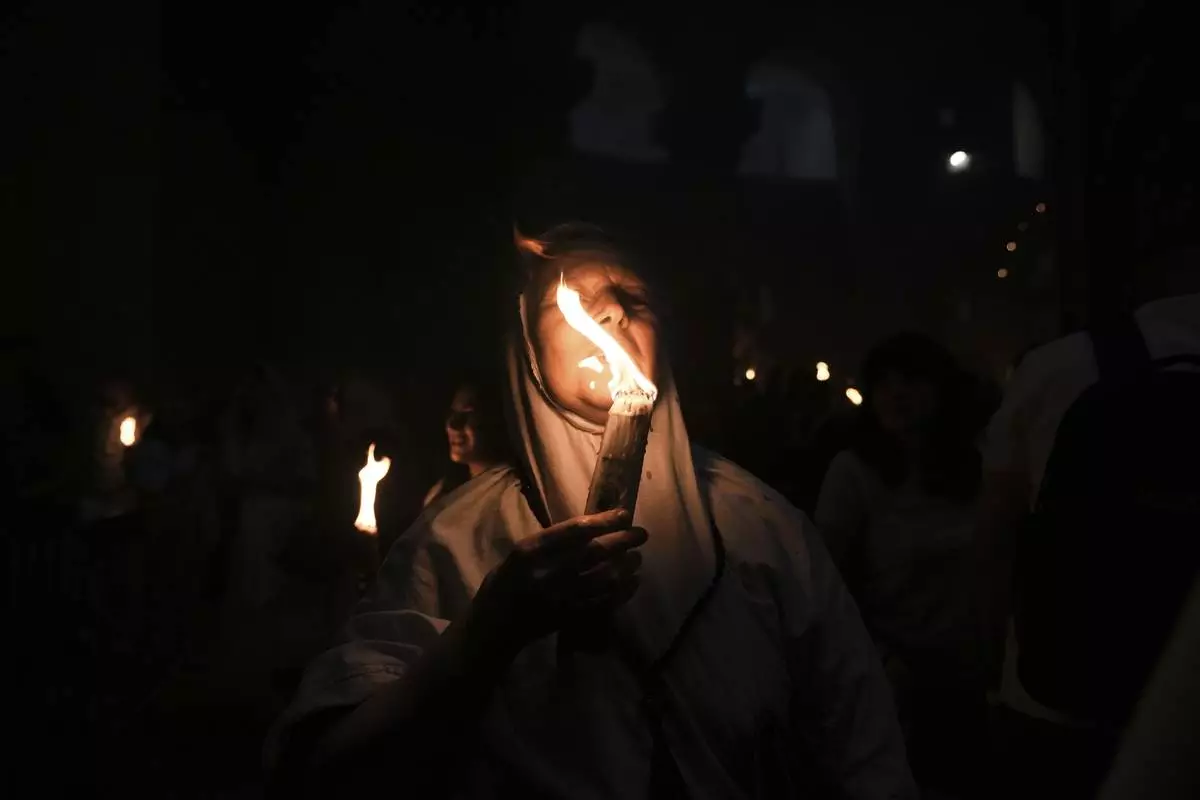
Christian pilgrims hold candles during the Holy Fire ceremony, at the Church of the Holy Sepulcher, the site where according to tradition Jesus was crucified and buried, in Jerusalem's Old City, Saturday, April 19, 2025. (AP Photo/Mahmoud Illean)
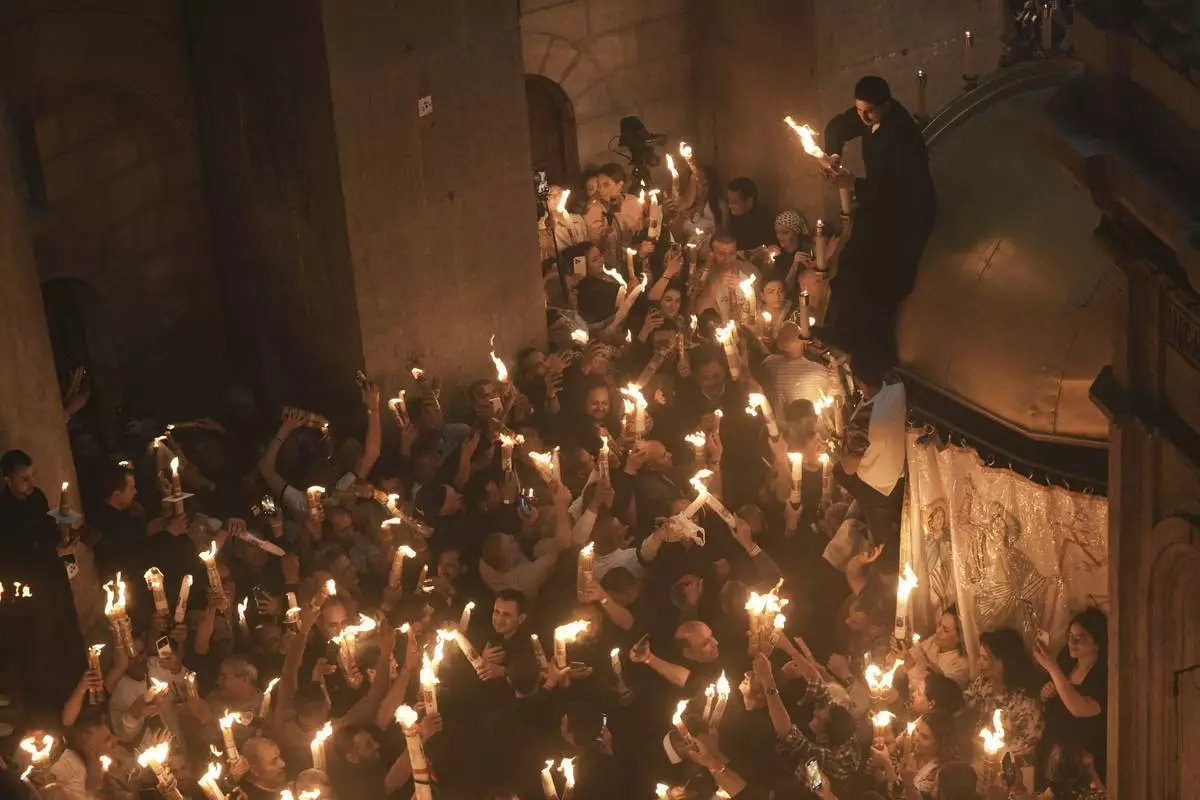
Christian pilgrims light candles during the Holy Fire ceremony, at the Church of the Holy Sepulcher, the site where according to tradition Jesus was crucified and buried, in Jerusalem's Old City, Saturday, April 19, 2025. (AP Photo/Mahmoud Illean)