ISLAMORADA, Fla. (AP) — The Everglades is more than just swamps, fan boats and alligators and restoration efforts impact more than the land between Florida's east and west coasts.
Florida Bay, a body of water located between the southern end of mainland Florida and the Florida Keys, makes up about a third of Everglades National Park.
Click to Gallery
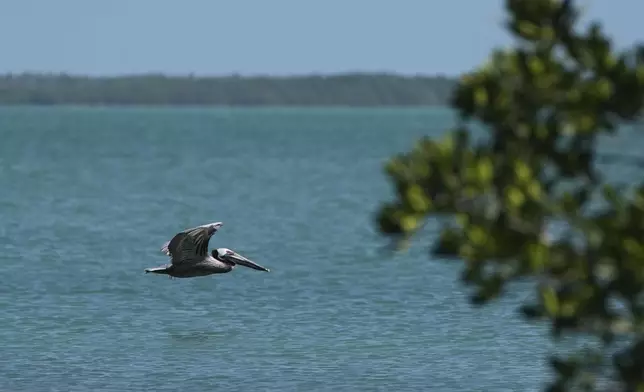
A brown pelican flies past mangrove islands in Florida Bay, part of the Everglades ecosystem, near Islamorada, Fla., during a media visit organized by The Everglades Foundation, Monday, April 7, 2025. (AP Photo/Rebecca Blackwell)
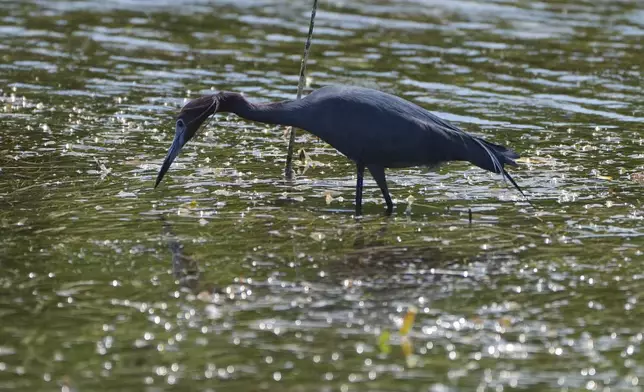
A little blue heron hunts for food in Florida Bay, part of the Everglades ecosystem, near Islamorada, Fla., during a media visit organized by The Everglades Foundation, Monday, April 7, 2025. (AP Photo/Rebecca Blackwell)
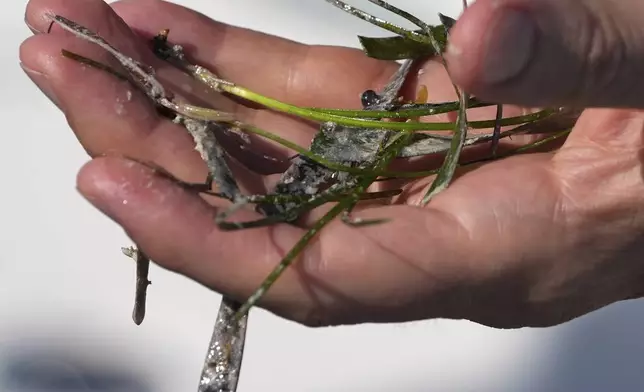
Steve Davis, chief science officer with The Everglades Foundation, displays pieces of seagrass as he talks to journalists during a media visit to Florida Bay organized by The Everglades Foundation, near Islamorada, Fla., Monday, April 7, 2025. (AP Photo/Rebecca Blackwell)
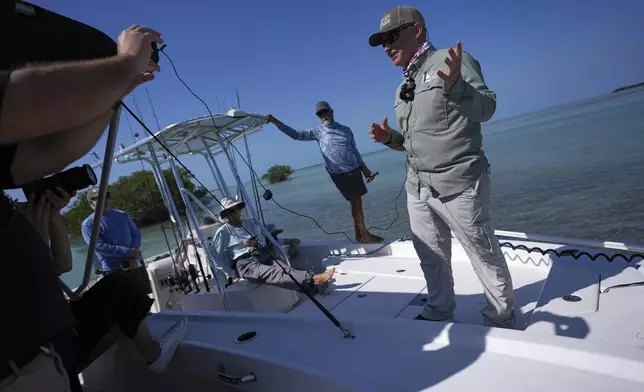
Steve Davis, chief science officer with The Everglades Foundation, talks to journalists during a media visit to Florida Bay organized by The Everglades Foundation, near Islamorada, Fla., Monday, April 7, 2025. (AP Photo/Rebecca Blackwell)
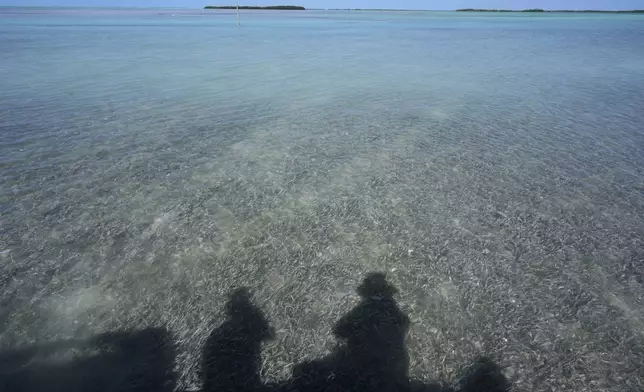
The shadows of journalists are cast on seagrass visible through shallow water in Florida Bay near Islamorada, Fla., during a media visit organized by The Everglades Foundation, Monday, April 7, 2025. (AP Photo/Rebecca Blackwell)
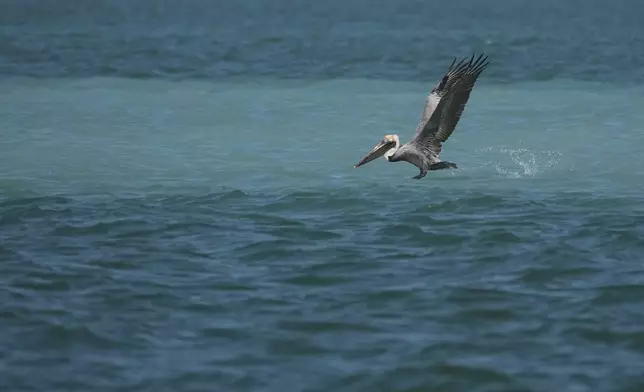
A brown pelican hunts for mullet in Florida Bay, part of the Everglades ecosystem, near Islamorada, Fla., during a media visit organized by The Everglades Foundation, Monday, April 7, 2025. (AP Photo/Rebecca Blackwell)
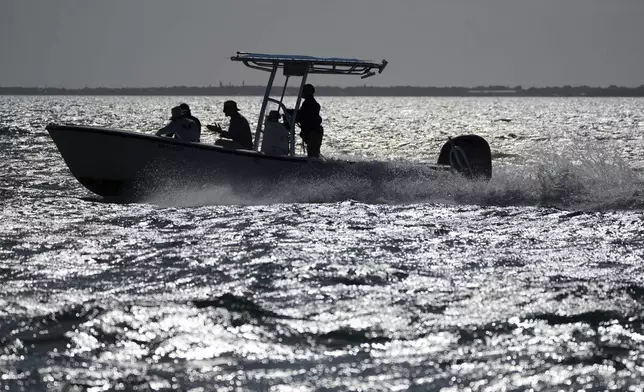
Everglades Foundation chief economist Paul Hindsley, hands outstretched, speaks with journalists during a media visit to Florida Bay organized by The Everglades Foundation, near Islamorada, Fla., Monday, April 7, 2025. (AP Photo/Rebecca Blackwell)
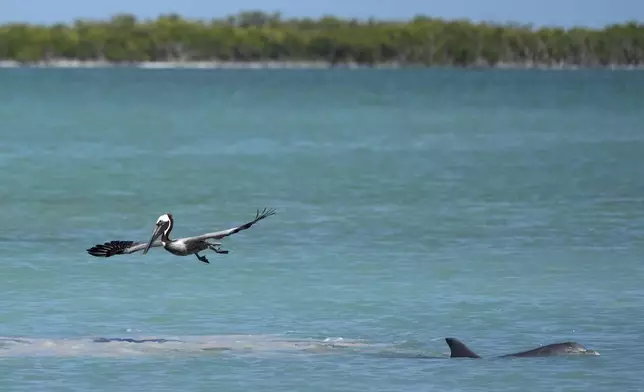
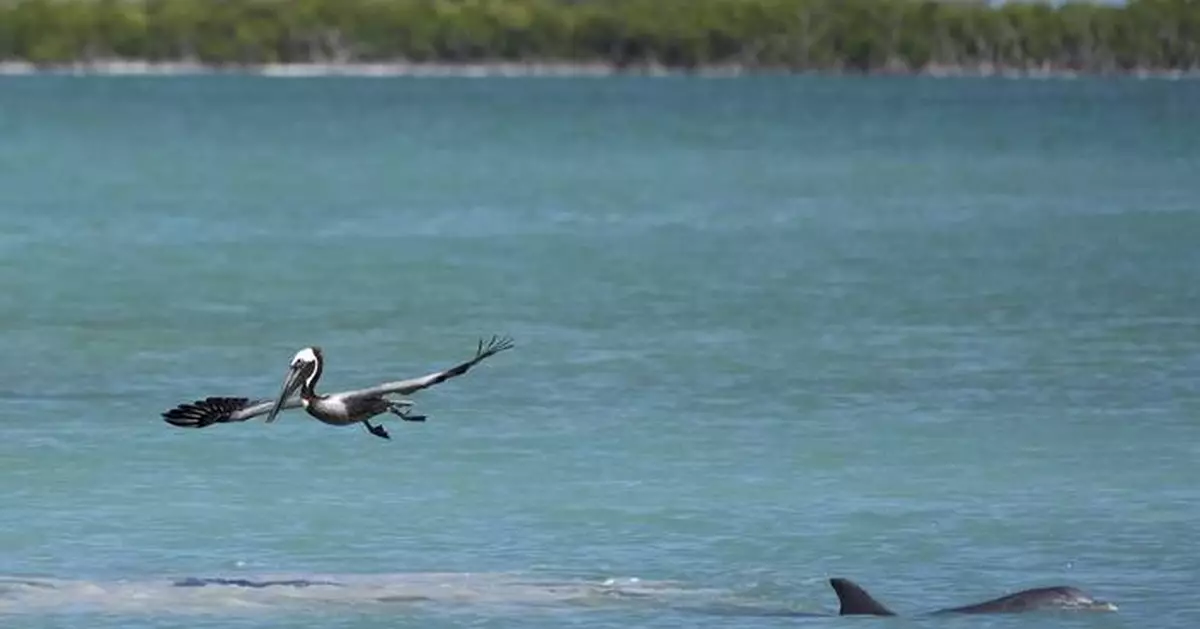
A brown pelican hunts mullet in tandem with a dolphin in Florida Bay, part of the Everglades ecosystem, near Islamorada, Fla., during a media visit organized by The Everglades Foundation, Monday, April 7, 2025. (AP Photo/Rebecca Blackwell)
High salt levels during dry periods can have fatal consequences for the plants and animals living in the region, though experts are hopeful an early rain season this year will prevent a massive sea grass die-off like those experienced in the past.
Steve Davis, chief science officer with The Everglades Foundation, called Florida Bay the estuary of the Everglades, which is actually a giant, slow-moving river starting around Orlando and running toward the southern end of the Florida peninsula.
“What that meant for Florida Bay was that during wet years, there’s enough water getting into the bay to keep the salinities within that optimal salinity range," Davis said. “But when we run into an average-to-dry year or a drought year, it meant that salinity levels in the bay would get so high that it could be detrimental to the health of the seagrasses and the other species that depend on that habitat.”
Florida Bay doesn’t have particularly strong tides, meaning water can sit in the bay for up to a year. When evaporating seawater isn't replaced by water from the Everglades, bay salinity levels can double normal ocean salinity, Davis explained.
“And that’s when we really run into some problems with the health of the habitats down here in the bay,” he said.
The last major sea grass die-off occurred in 2015. Xavier Figueredo, a recreational boat captain with Bay and Reef Company, said he was working in the area when the massive die-off hit about 40,000 acres (16,000 hectares).
“You can’t see the water. All you see is dead grass floating on top,” Figueredo said. “And it smells like sulfur, like rotting eggs. As the die-off continued, more of the ecosystem was affected, the fish were affected.”
Even with more than 40% of Florida under drought conditions, Davis said he is not especially worried yet about another sea-grass die-off. Salt levels in the bay are already comparatively lower this year than they were in 2015.
Davis said that is at least partially thanks to a massive project that elevated more than 3.5 miles (5.6 kilometers) of the Tamiami Trail, a roadway built in 1928 that runs through the Everglades from Miami to Naples before heading north to Tampa.
The route was essentially a giant dam preventing water from flowing south, but replacing the roadway with two long bridges, completed in 2013 and 2019, unblocked the so-called river of grass.
“Months of inflow across Tamiami Trail have helped to moderate salinities," Davis said.
The other significant advantage Florida Bay has this year compared to 2015 is the forecast of an early wet season rather than a delayed wet season, Davis said.
While elevating Tamiami Trail already has created significant benefit for the Everglades and Florida Bay, scientists are counting on a massive restoration project, the Everglades Agricultural Area Reservoir, to address decades-old water problems throughout Florida.
The $3.9 billion project will create a reservoir and wetland to store and clean polluted water from Lake Okeechobee in central Florida before it’s discharged into the southern Everglades. This also should decrease the amount of polluted water being sent to Florida’s east and west coasts.
Davis called the Everglades Agricultural Area Reservoir “the game changer for freshwater flow restoration.”
“What we’re seeing right now are just the benefits of the plumbing, the infrastructure that helps to get all that water into the park,” he said. "But once we’re able to flow those larger volumes of water south, we’re going to see system-wide improvement all the way down into Florida Bay.”
Everglades restoration is not only tied to Florida's ecological future but its economic future, said Paul Hindsley, the Everglades Foundation chief economist.
“For every dollar of investment in restoration, we’re receiving $4 in economic benefits," Hindsley said.
Economic benefits include adding to the residential and industrial water supply, reducing extreme events from drought such as fires and reducing the risk of flooding from heavy precipitation, Hindsley said.
The Everglades also provide over $5 billion a year in reduced risk for costs associated with National Flood Insurance Program claims. Meanwhile, South Florida’s mangroves and reefs play an important role in reducing the impacts of storm surge.
“Protecting the environment is protecting the wealth of Floridians," Hindsley said.
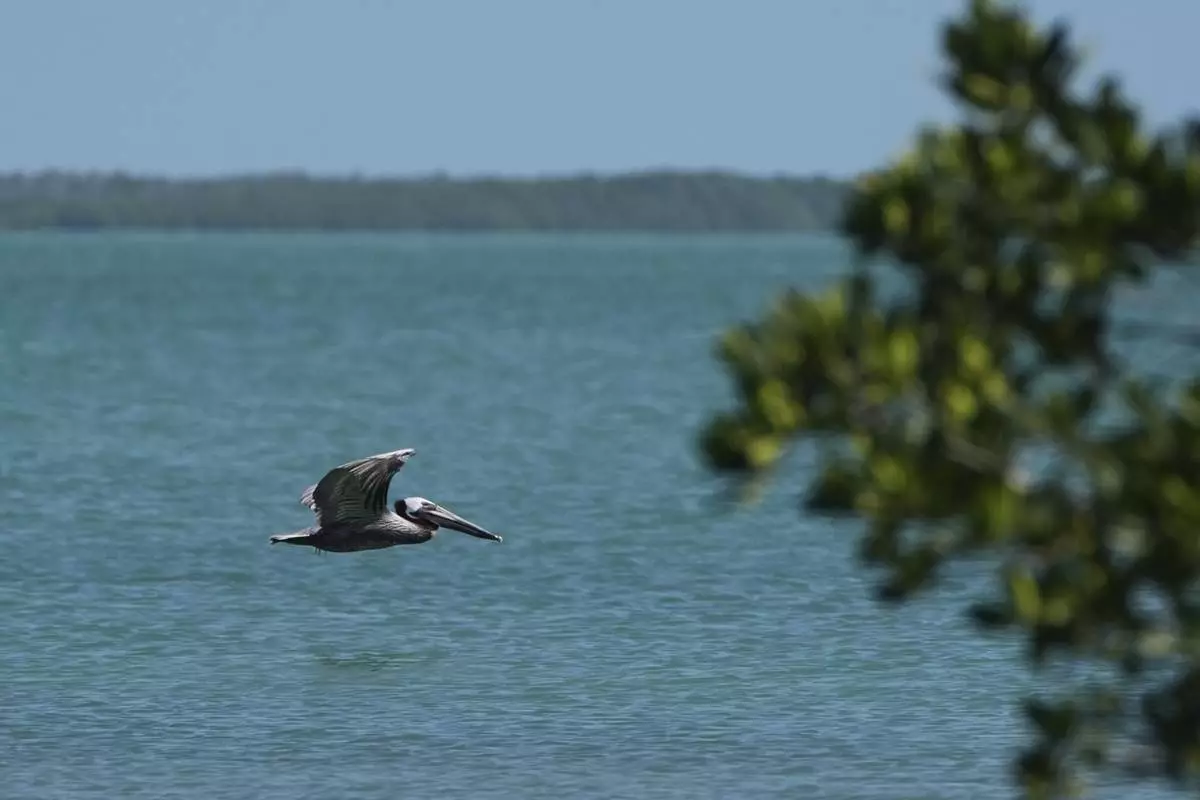
A brown pelican flies past mangrove islands in Florida Bay, part of the Everglades ecosystem, near Islamorada, Fla., during a media visit organized by The Everglades Foundation, Monday, April 7, 2025. (AP Photo/Rebecca Blackwell)
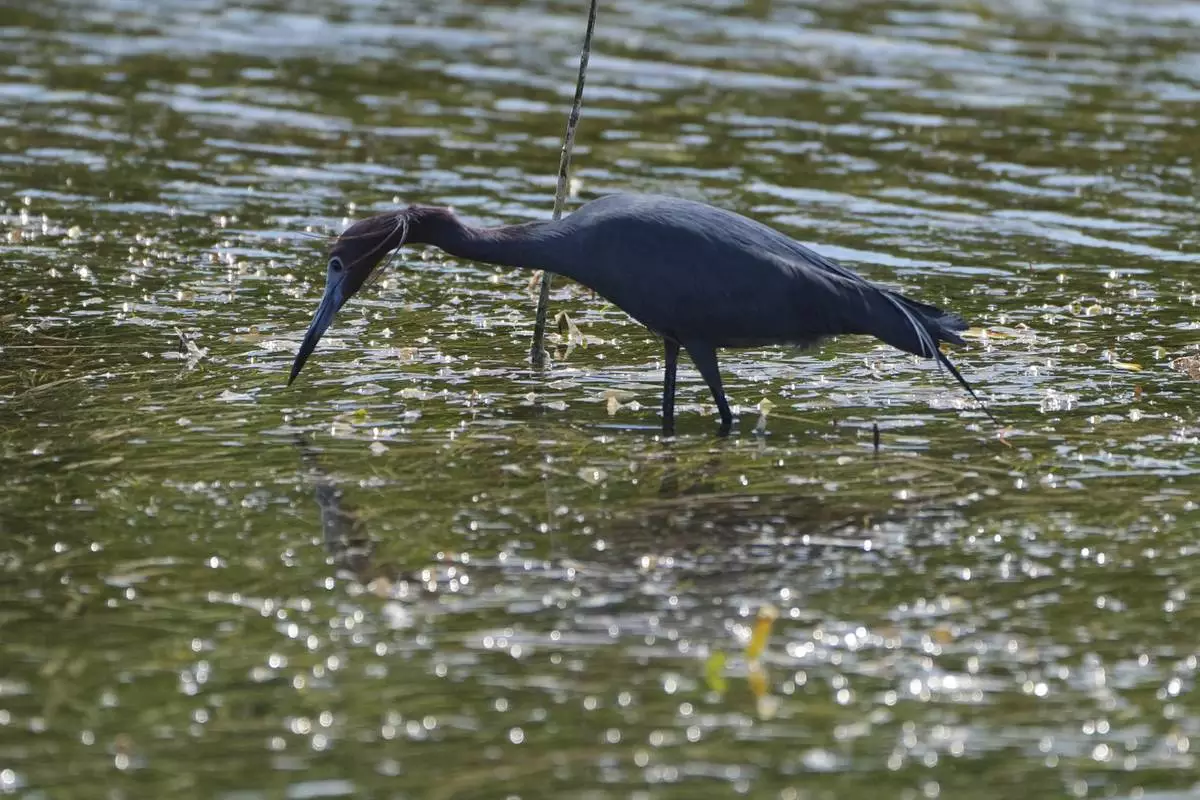
A little blue heron hunts for food in Florida Bay, part of the Everglades ecosystem, near Islamorada, Fla., during a media visit organized by The Everglades Foundation, Monday, April 7, 2025. (AP Photo/Rebecca Blackwell)
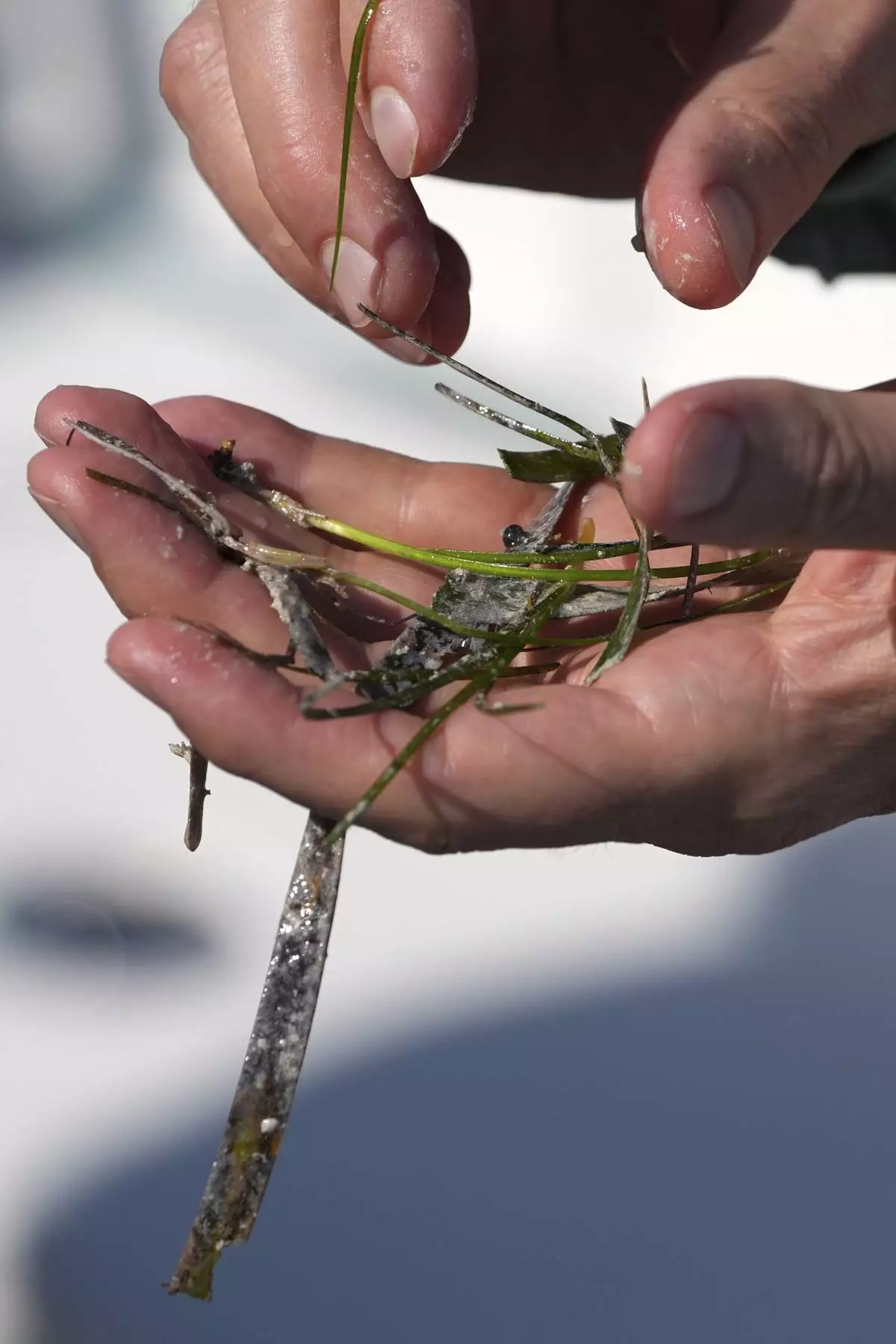
Steve Davis, chief science officer with The Everglades Foundation, displays pieces of seagrass as he talks to journalists during a media visit to Florida Bay organized by The Everglades Foundation, near Islamorada, Fla., Monday, April 7, 2025. (AP Photo/Rebecca Blackwell)
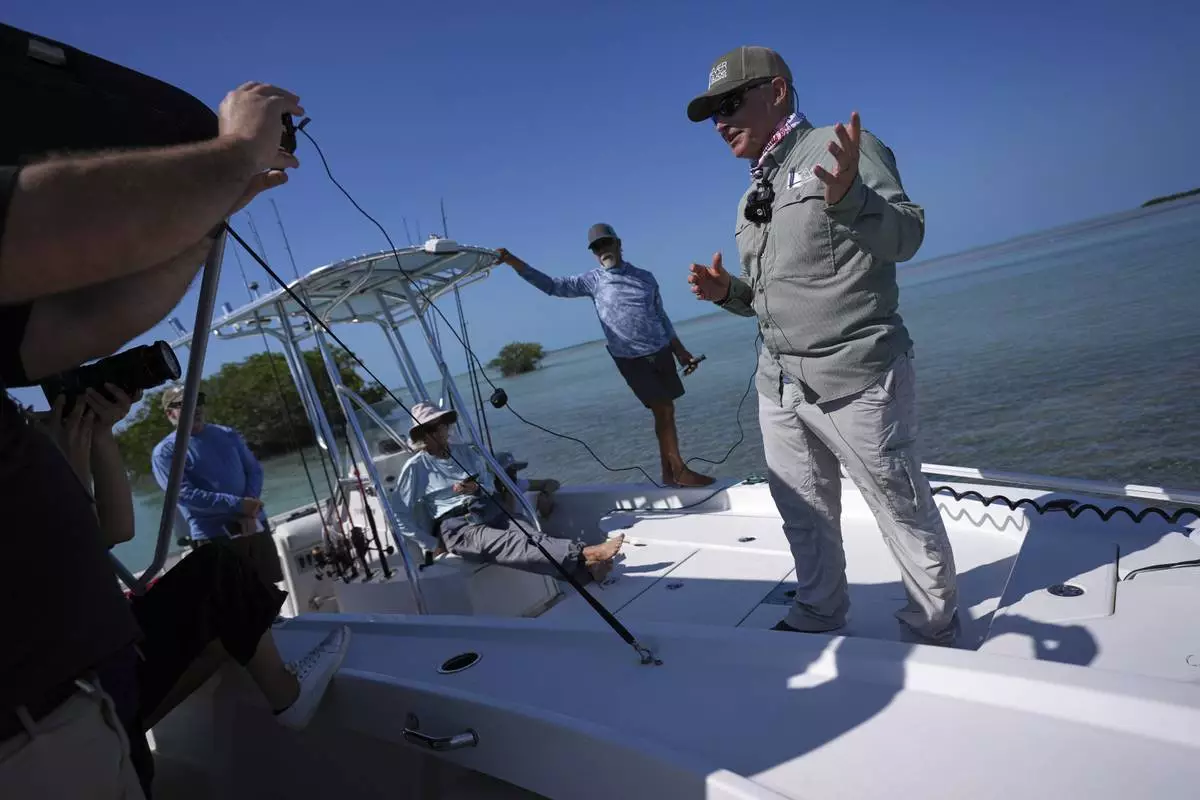
Steve Davis, chief science officer with The Everglades Foundation, talks to journalists during a media visit to Florida Bay organized by The Everglades Foundation, near Islamorada, Fla., Monday, April 7, 2025. (AP Photo/Rebecca Blackwell)
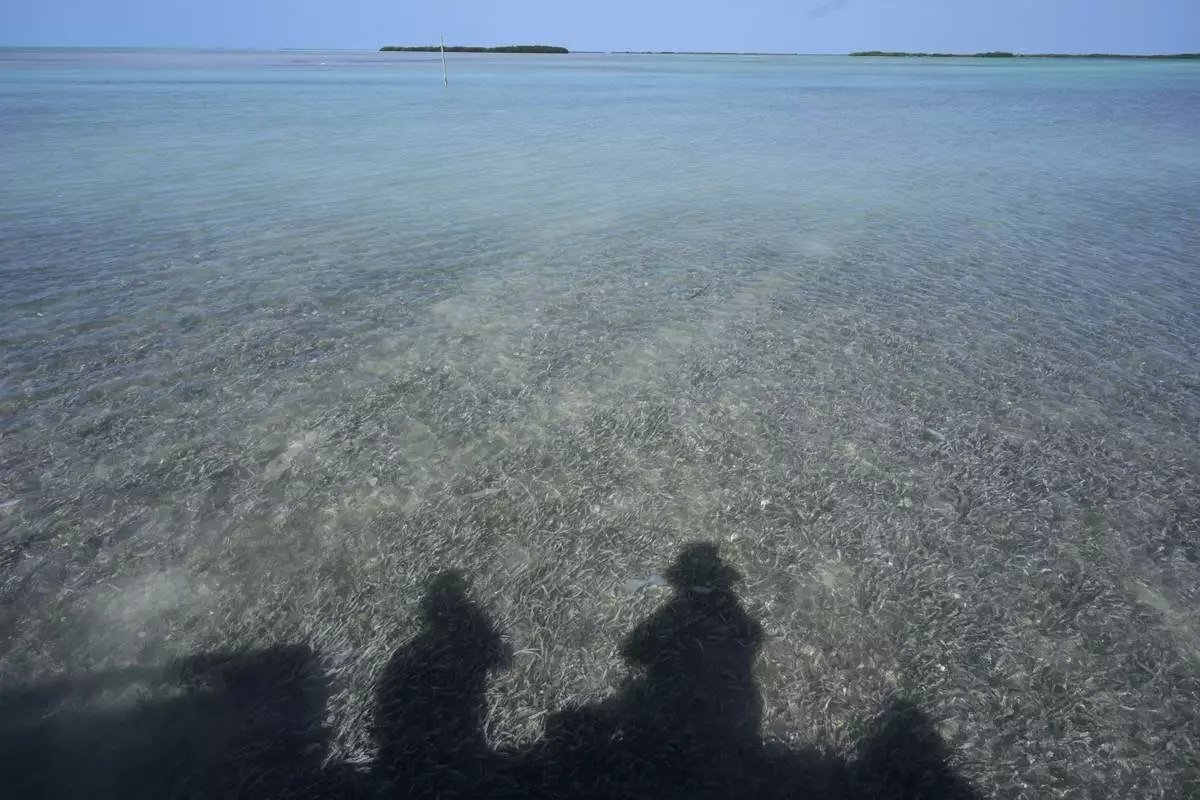
The shadows of journalists are cast on seagrass visible through shallow water in Florida Bay near Islamorada, Fla., during a media visit organized by The Everglades Foundation, Monday, April 7, 2025. (AP Photo/Rebecca Blackwell)
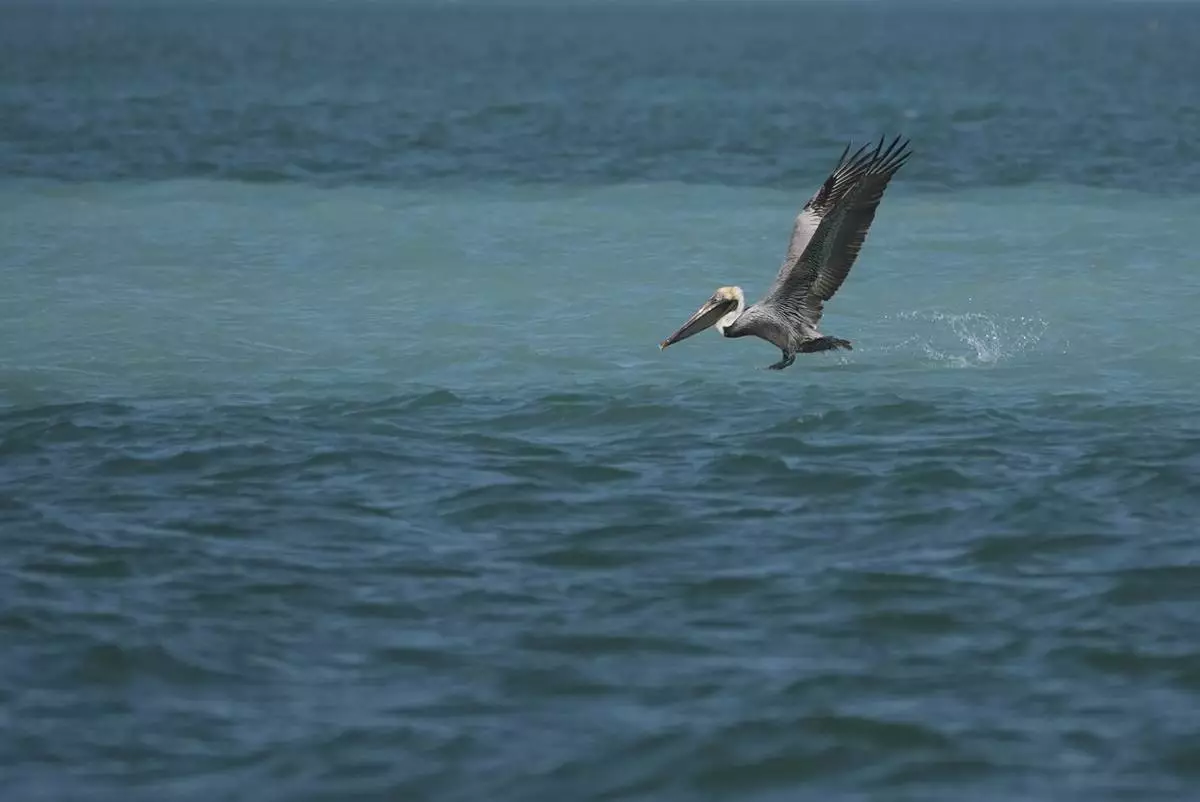
A brown pelican hunts for mullet in Florida Bay, part of the Everglades ecosystem, near Islamorada, Fla., during a media visit organized by The Everglades Foundation, Monday, April 7, 2025. (AP Photo/Rebecca Blackwell)
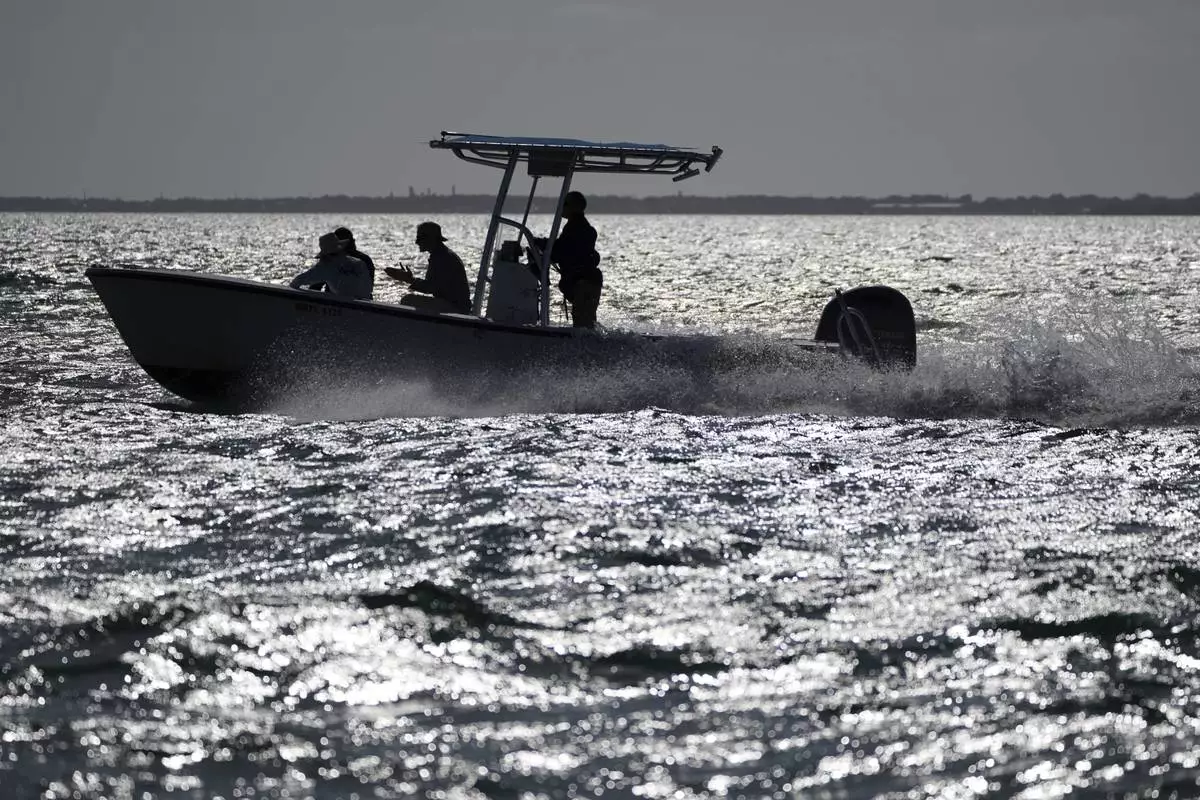
Everglades Foundation chief economist Paul Hindsley, hands outstretched, speaks with journalists during a media visit to Florida Bay organized by The Everglades Foundation, near Islamorada, Fla., Monday, April 7, 2025. (AP Photo/Rebecca Blackwell)
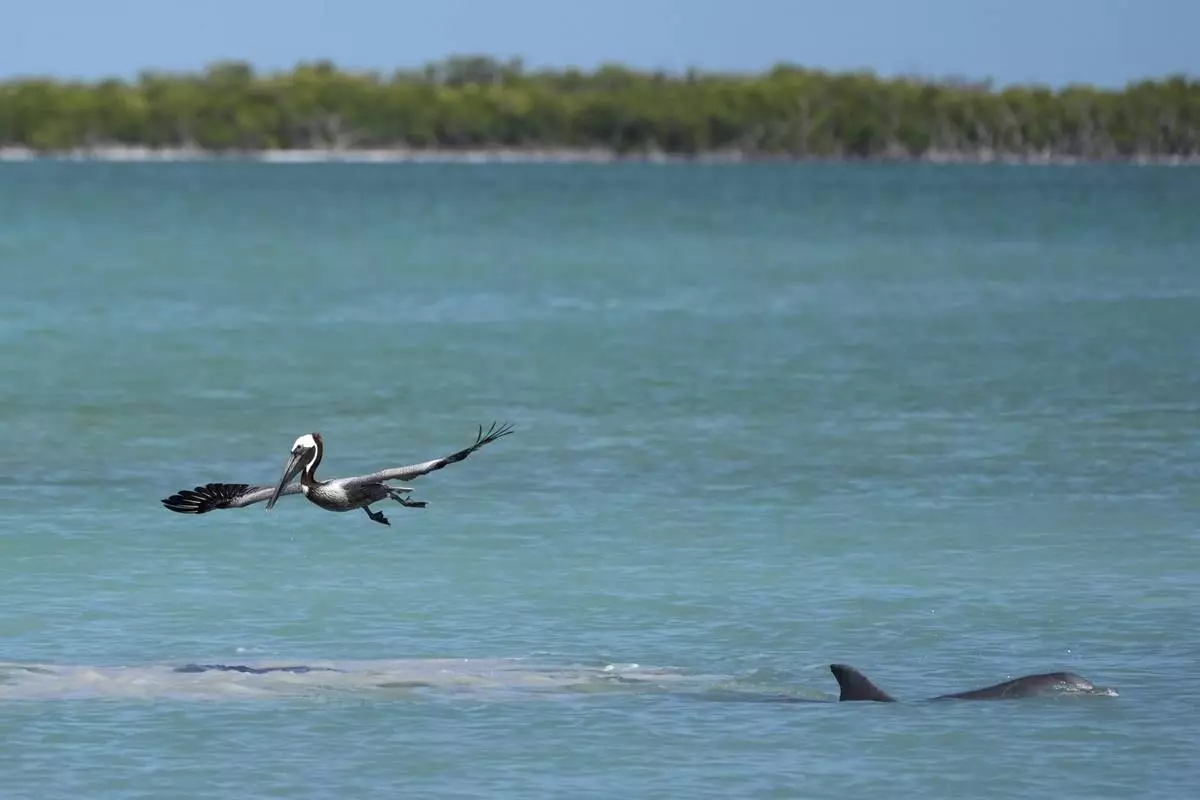
A brown pelican hunts mullet in tandem with a dolphin in Florida Bay, part of the Everglades ecosystem, near Islamorada, Fla., during a media visit organized by The Everglades Foundation, Monday, April 7, 2025. (AP Photo/Rebecca Blackwell)