Skip to Content Facebook Feature Image

China's installed power generation capacity up 14.6 percent

China

China

China

China's installed power generation capacity up 14.6 percent

2025-04-20 21:21 Last Updated At:04-21 16:07

China's cumulative installed power generation capacity reached 3.43 billion kilowatts by the end of March, marking a year-on-year increase of 14.6 percent, official data showed on Sunday.

Solar power generation capacity amounted to 950 million kilowatts by the end of last month, surging 43.4 percent compared to the same period last year, according to the National Energy Administration (NEA).

Wind power generation capacity stood at 540 million kilowatts by the end of March, rising 17.2 percent year on year, according to the NEA data.

In the first three months of 2025, China's major power generation companies invested 132.2 billion yuan (about 18.34 billion U.S. dollars) in power generation projects, down 2.5 percent year on year.

During the same period, investments in power grid projects reached 95.6 billion yuan, up 24.8 percent year on year, the NEA data showed.
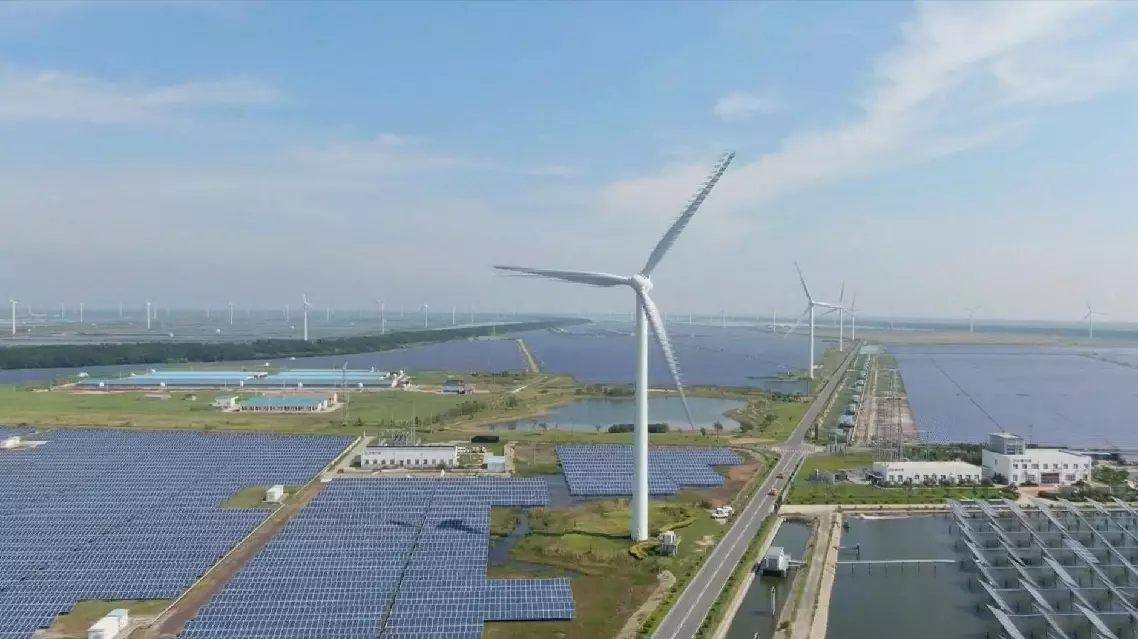
China's installed power generation capacity up 14.6 percent in Q-1

China's installed power generation capacity up 14.6 percent in Q-1

Israel and the Islamic Resistance Movement (Hamas) blamed each other for violating the Gaza ceasefire on Wednesday, following the injury of an Israeli military officer.

The Israeli military said an officer was slightly injured earlier in the day in an explosive device attack in Gaza, which Israeli Prime Minister Benjamin Netanyahu said was carried out by Hamas.

The Israeli military said, "An explosive device was detonated against an IDF (Israel Defense Forces) vehicle during operational activity aimed at dismantling terrorist infrastructure in the area of Rafah," adding that the injured officer had been evacuated to hospital. It did not specify which group it believed was responsible.

Later in the day, Netanyahu blamed the attack on Hamas, saying that the attack, along with Hamas' "ongoing and continuing public refusal to disarm," constituted a "flagrant violation" of the ceasefire.

"Hamas must be held to the agreement that it signed, which includes removal from governance, demilitarization and de-radicalization," Netanyahu said in a statement, adding that Israel "will respond accordingly."

On the same day, Hamas denied involvement in the explosion in the southern Gaza city of Rafah that wounded the Israeli officer.

In a statement, the group said the blast occurred in an area "fully controlled" by Israeli forces and where no Palestinians were present, and that it had warned of unexploded ordnance in the area and elsewhere, denying responsibility for such remnants since the ceasefire took effect, particularly those it said were left over by Israeli forces.

Hamas called on Israel to abide by the ceasefire agreement and avoid actions it said could escalate tensions or undermine the truce. The group reiterated its commitment to the deal and related obligations.

Also on Wednesday, Turkish Foreign Minister Hakan Fidan met in Ankara with a Hamas delegation led by the group's senior member Khalil al-Hayya to discuss the situation in Gaza and exchange views on the second phase of the Gaza peace plan, the semi-official Anadolu Agency reported.

The Hamas delegation stressed it had adhered to the ceasefire conditions, yet accused Israel of continuing attacks on Gaza and hindering the transition to the second phase of the peace plan.

The delegation noted that around 60 percent of the trucks entering Gaza carried commercial goods, while the flow of humanitarian aid remained insufficient to address urgent needs, including daily essentials, medicines, shelter materials and fuel.

The Anadolu Agency quoted anonymous foreign ministry sources as saying that Fidan "reiterated that Türkiye will continue to defend the rights of Palestinians" and briefed the delegation on Türkiye's ongoing efforts to address shelter and humanitarian needs in Gaza.

Later this month, Netanyahu is scheduled to visit the United States and meet President Donald Trump. The two are expected to discuss the White House's push to advance to the second phase of the U.S. plan for Gaza, which includes a full Israeli military withdrawal from the enclave -- a move senior ministers in Netanyahu's cabinet have said they would oppose.

After two years of war in Gaza, a mediated ceasefire between Israel and Hamas came into effect on Oct. 10. However, Israeli forces have since then continued to carry out strikes across Gaza, citing alleged ceasefire violations and the need to eliminate threats.

According to Gaza's health authorities, at least 406 Palestinians have been killed and 1,118 injured since the ceasefire began, bringing the overall death toll from Israeli fire to 70,942 since the outbreak of war on October 7, 2023.

The phased U.S. plan for Gaza also envisages Hamas being disarmed and having no governing role in the territory, the establishment of a transitional governing authority and the deployment of an international stabilization force in Gaza in a subsequent phase.

Israel, Hamas trade accusations on ceasefire breach

Israel, Hamas trade accusations on ceasefire breach

Recommended Articles