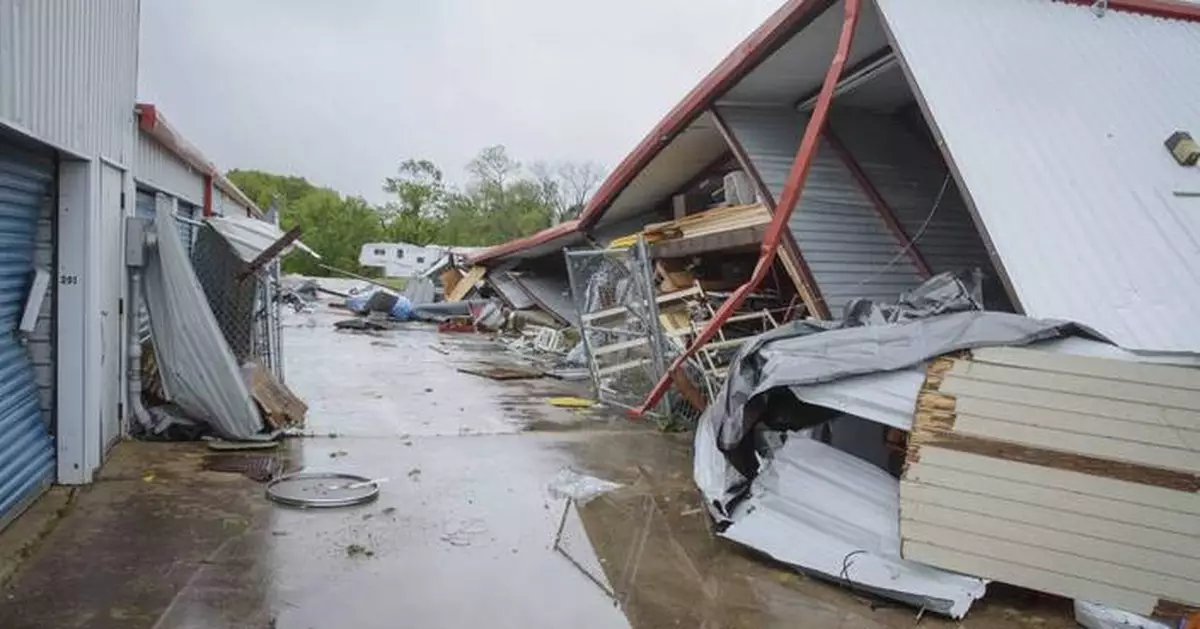
A slow-moving, active storm system brought heavy rain, large hail and tornadoes to parts of Texas and Oklahoma and left three people dead as severe weather warnings Sunday continue to threaten parts of the south-central and Midwest U.S.
On Easter Sunday, communities in Texas and Oklahoma were beginning to assess the damage wreaked by tornadoes. There were 17 reported events Saturday, according to Bob Oravec, lead forecaster with the National Weather Service's Weather Prediction Center. Five were confirmed in south-central Oklahoma, including one that inflicted substantial damage on a small town that was still recovering from a March tornado.
Click to Gallery

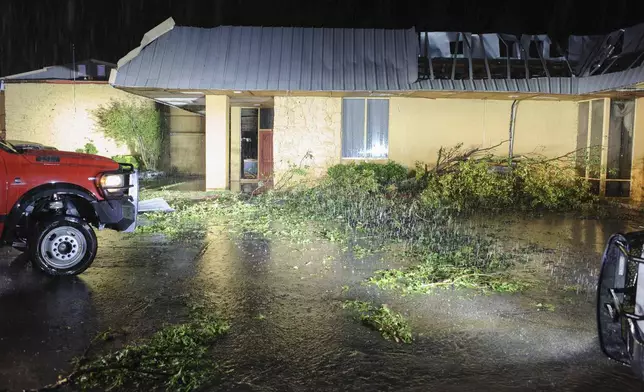
Broken power poles and power lines dangle across the parking lot of Quality Inn in Ada, Okla., after severe weather passed the area Sunday, April 20, 2025. (Richard R. Barron/The ADA News via AP)
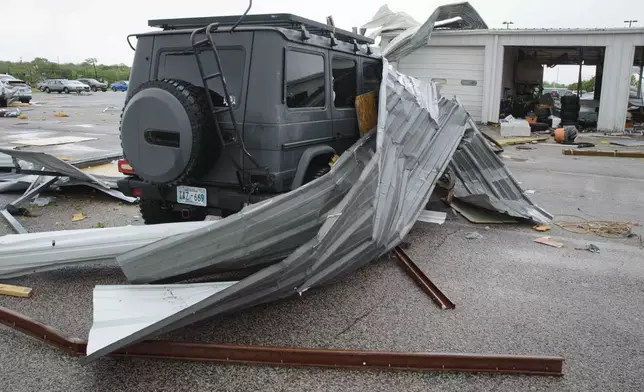
Sheet metal roofing hangs on a damaged car at a local car dealership in Ada, Okla., after severe weather passed the area Sunday, April 20, 2025. (Richard R. Barron/The ADA News via AP)

Damage to Maurices clothing is shown in Ada, Okla., after severe weather passed the area, Sunday, April 20, 2025. (Richard R. Barron/The ADA News via AP)

Rain falls as police vehicles block a road in Ada, Okla. Saturday, April 19, 2025. (Richard R. Barron /The ADA News via AP)
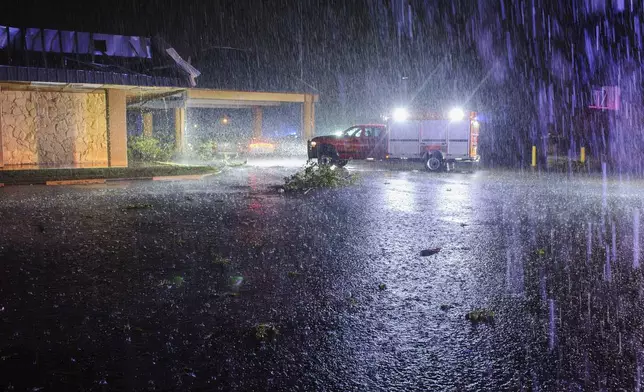
Heavy rain falls in Ada, Okla., Saturday, April 19, 2025. (Richard R. Barron/The ADA News via AP)

Torrential rain falls in Ada, Okla., Saturday, April 19, 2025. (Richard R. Barron/The ADA News via AP)
Debris covers the ground after severe storms passed the area in Ada, Okla., on Saturday, April 19, 2025. (Richard R. Barron/The ADA News via AP)
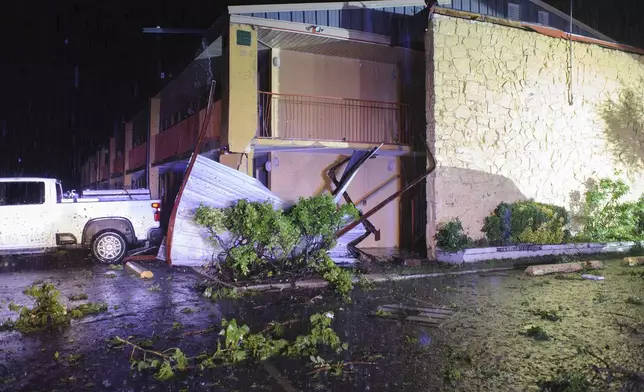
Debris covers the ground after severe storms passed the area in Ada, Okla., on Saturday, April 19, 2025. (Richard R. Barron/The ADA News via AP)
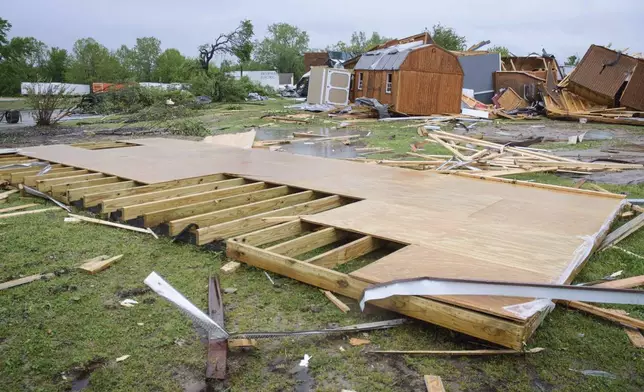
Broken sheds, lumber, and walls lie strewn on the ground behind Quality Inn, Sunday, April 20, 2025 in Ada, Okla. (Richard R. Barron/The ADA News via AP)
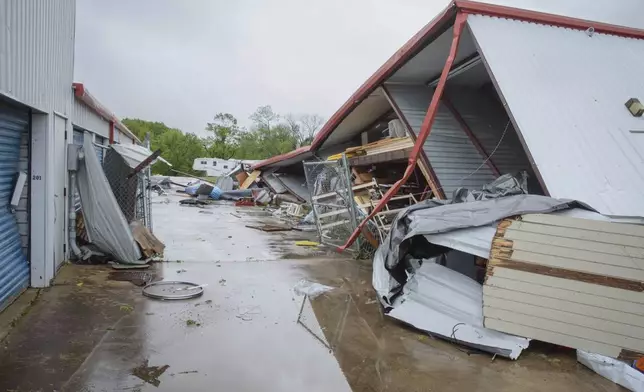
Debris covers the ground after severe storms passed the area in Ada, Okla., on Sunday, April 20, 2025. (Richard R. Barron/The ADA News via AP)
The storm also brought heavy rain to a broad swath of north-central Texas across central-eastern Oklahoma, much of which saw 2 to 4 inches (5 to 10 centimeters) accumulate Saturday into Sunday.
Police in Moore, about 10 miles (16 kilometers) south of Oklahoma City, received dozens of reports of “high-water incidents” over the weekend, including two cars stranded in flood waters Saturday evening. One car was swept away under a bridge, and police said they were able to rescue some people, but a woman and 12-year-old boy were found dead.
“This was a historical weather event that impacted roads and resulted in dozens of high-water incidents across the city,” Moore police said in a statement Sunday. Moore has about 63,000 residents.
The storm also killed one person about 80 miles (129 kilometers) farther southeast after a tornado touched down in Spaulding, according to the Hughes County Emergency Management. The department wrote on Facebook that several homes and structures were destroyed and there were “numerous washouts” of county roads.
The National Weather Service said the preliminary survey of damage showed that tornado was at least EF1, with wind speeds between 86 and 110 mph (138 to 177 kph), as was another south of Oklahoma City in Love County.
Oravec said the system wasn't moving much over Texas and Oklahoma Saturday, leaving the area stuck under a very active thunderstorm pattern that produced large hail, flash flooding and tornadoes.
Bill Macon, emergency management director in Oklahoma's Marshall County, said their early assessments show a tornado “skipped and jumped around” over a path of 6 to 7 miles (about 10 to 11 kilometers) in the rural area that left at least 20 homes damaged, with some destroyed completely.
Macon said people were mostly home when the late night tornado came through, downing “huge” trees and dozens of electric poles and power lines, but there had not been reports of injuries or fatalities.
“We take those things pretty serious down here in Oklahoma,” Macon said of the National Weather Service's warnings.
One Oklahoma town that was still rebuilding from an early March tornado was hit again late Saturday. The north side of Ada, a town home to about 16,000 people, sustained damage that the weather service said indicated at least an EF1 tornado based on a preliminary survey. Social media posts showed roofs ripped off businesses in town, storefront windows blown in and billboards knocked sideways.
In a video posted to Facebook, Jason Keck, Ada director of emergency management, said the tornado seemed to track across the north side of town to a shopping center, “leaving a lot of damage to buildings, power lines and trees.”
One clothing store was “severely damaged,” according to The Ada News, but “bracketed on both sides by intact structures.”
At least two tornadoes crossed west Parker County, Texas, on Saturday, the county’s emergency services said on Facebook. Emergency crews were dispatched to several houses with roofs torn off and homes exposed, photos showed. One detached roof ended up smashed across a driveway.
Later Sunday, the storm system moved more quickly northeast but remained active with the risk of hail, high winds and heavy rains in Arkansas, Missouri, southern Illinois and southeastern Iowa. Thousands in Missouri were without power.
While heavy rain was subsiding in Texas and Oklahoma by late Sunday afternoon, additional heavy rain is expected across parts of the Plains this week, Oravec said. With streams already swollen and the ground saturated, that leaves the area at risk of additional flooding.
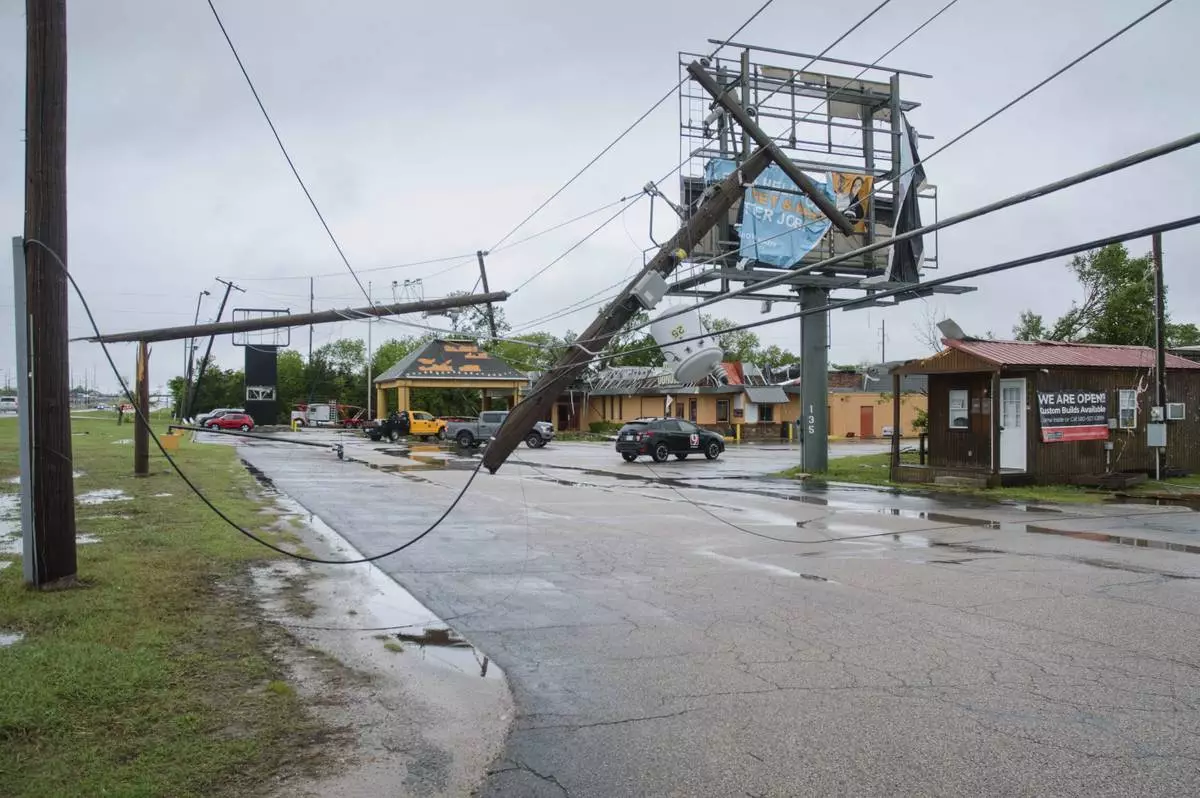
Broken power poles and power lines dangle across the parking lot of Quality Inn in Ada, Okla., after severe weather passed the area Sunday, April 20, 2025. (Richard R. Barron/The ADA News via AP)
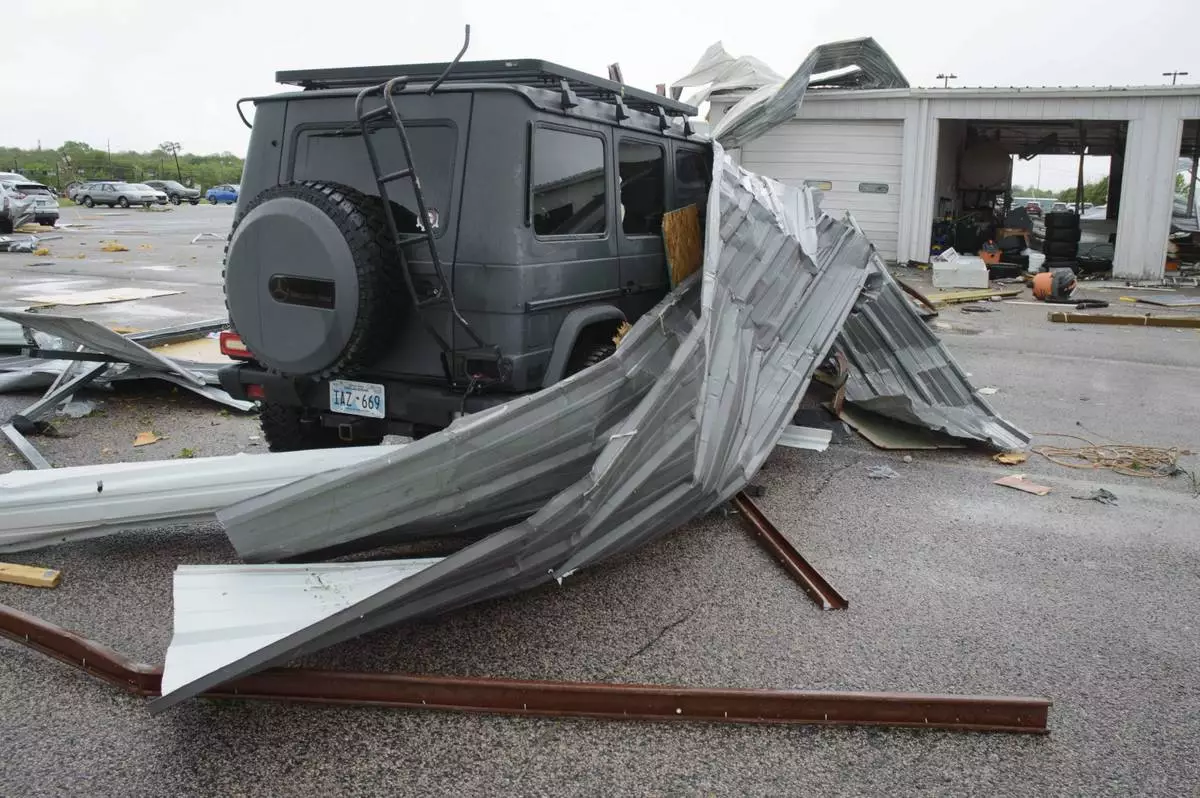
Sheet metal roofing hangs on a damaged car at a local car dealership in Ada, Okla., after severe weather passed the area Sunday, April 20, 2025. (Richard R. Barron/The ADA News via AP)

Damage to Maurices clothing is shown in Ada, Okla., after severe weather passed the area, Sunday, April 20, 2025. (Richard R. Barron/The ADA News via AP)

Rain falls as police vehicles block a road in Ada, Okla. Saturday, April 19, 2025. (Richard R. Barron /The ADA News via AP)
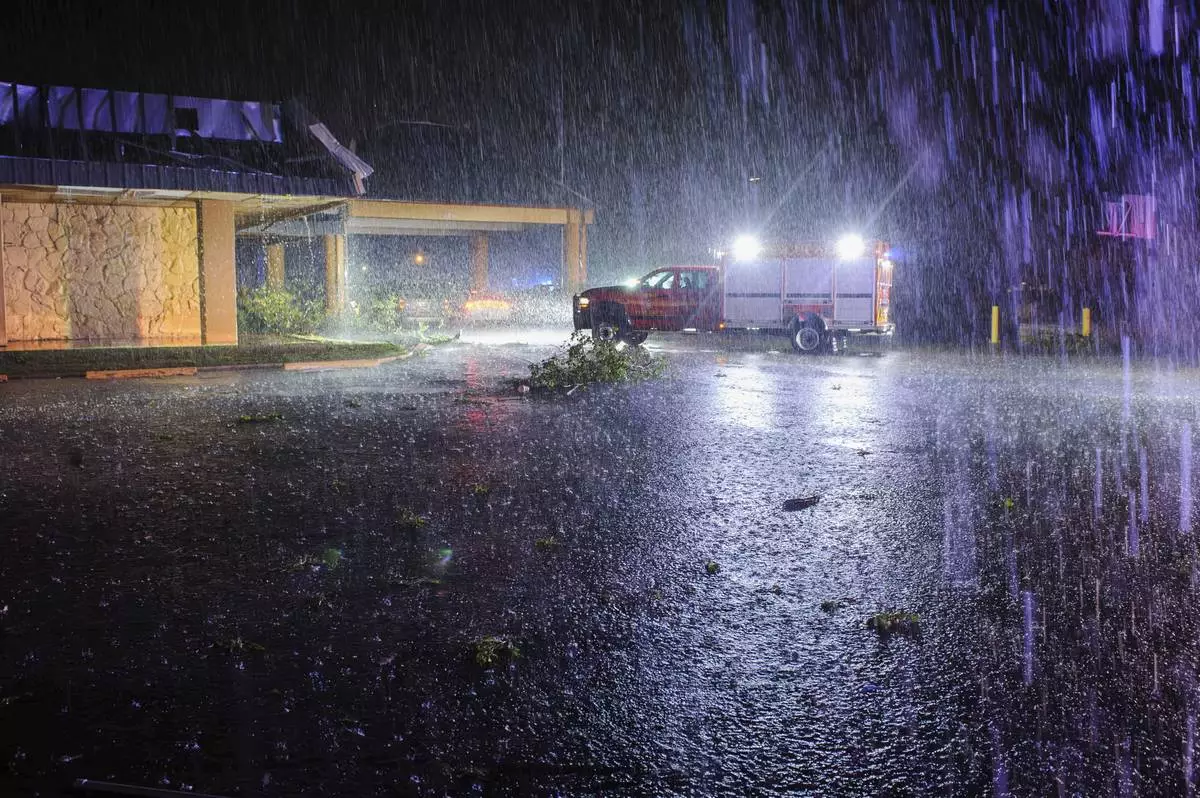
Heavy rain falls in Ada, Okla., Saturday, April 19, 2025. (Richard R. Barron/The ADA News via AP)
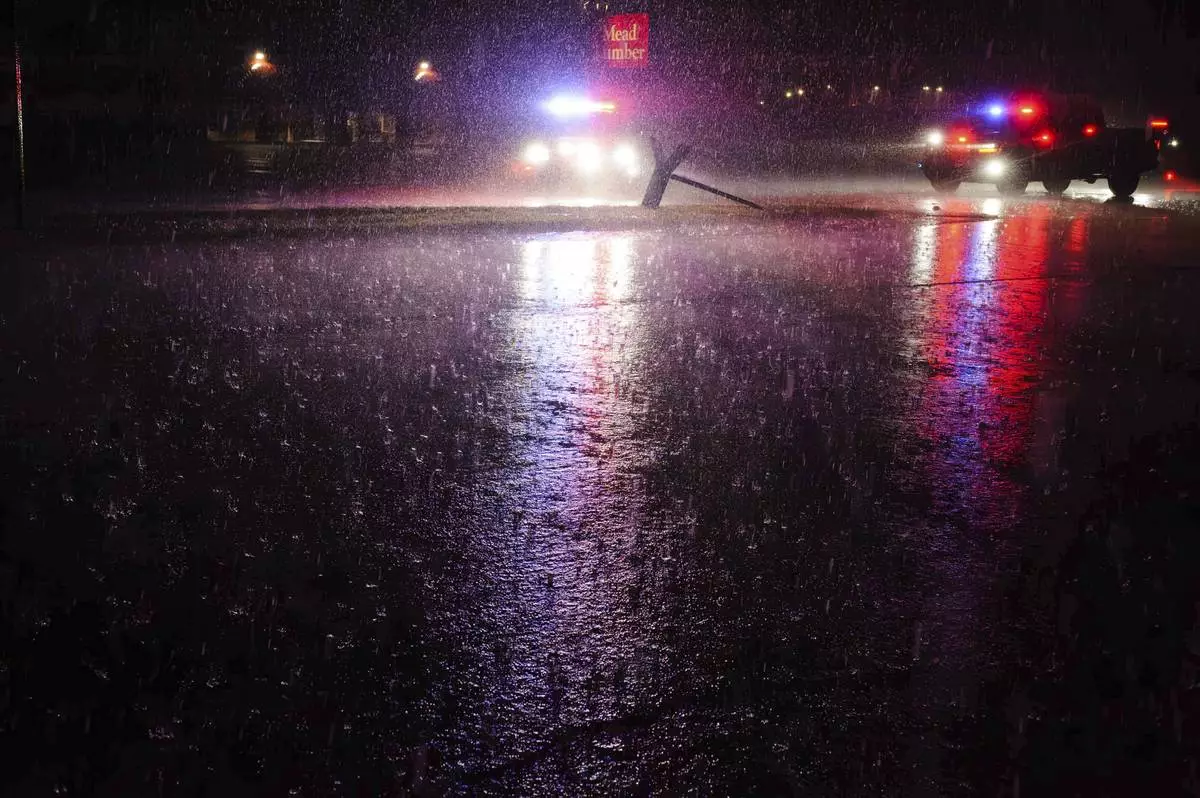
Torrential rain falls in Ada, Okla., Saturday, April 19, 2025. (Richard R. Barron/The ADA News via AP)

Debris covers the ground after severe storms passed the area in Ada, Okla., on Saturday, April 19, 2025. (Richard R. Barron/The ADA News via AP)

Debris covers the ground after severe storms passed the area in Ada, Okla., on Saturday, April 19, 2025. (Richard R. Barron/The ADA News via AP)
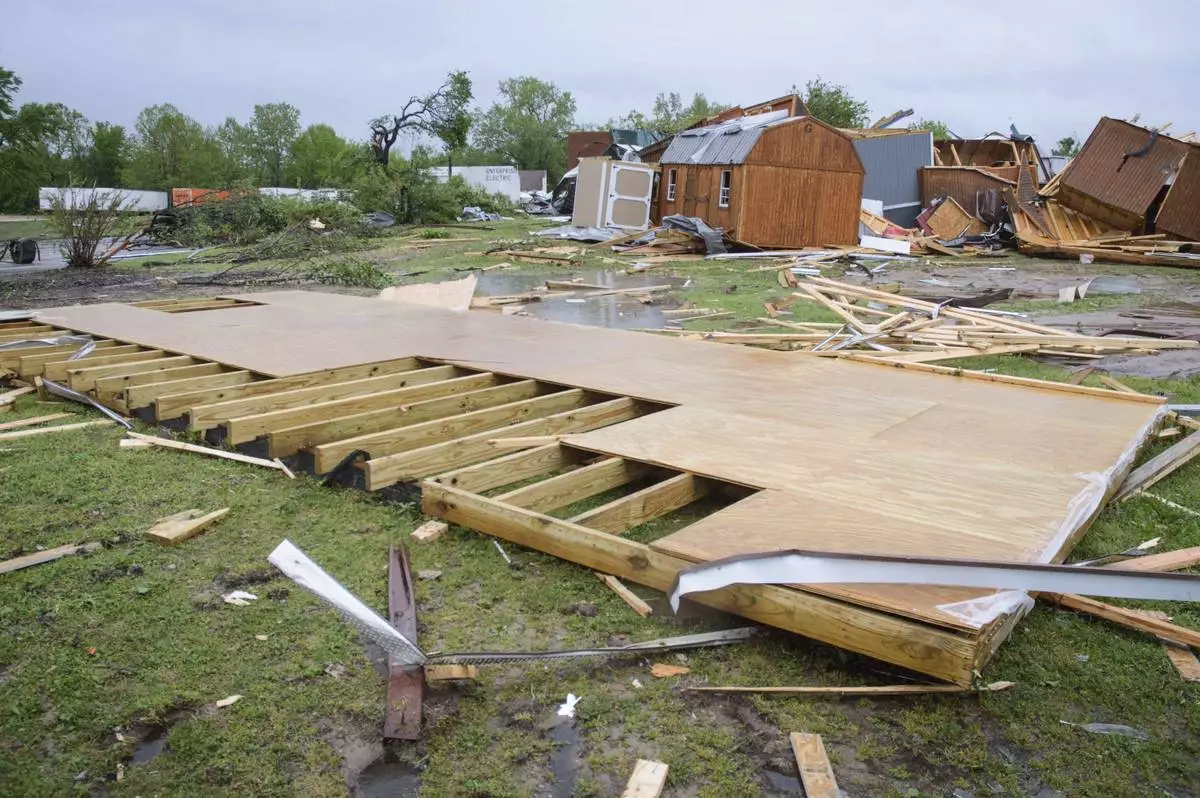
Broken sheds, lumber, and walls lie strewn on the ground behind Quality Inn, Sunday, April 20, 2025 in Ada, Okla. (Richard R. Barron/The ADA News via AP)
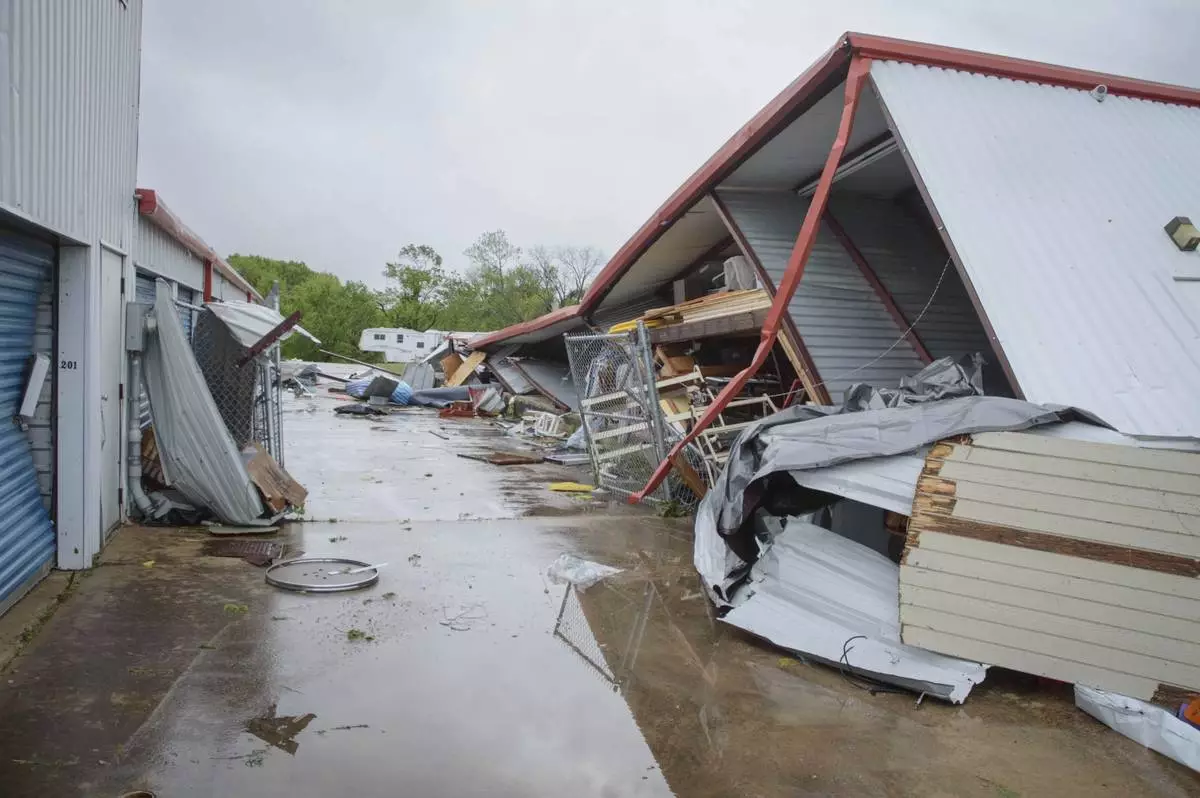
Debris covers the ground after severe storms passed the area in Ada, Okla., on Sunday, April 20, 2025. (Richard R. Barron/The ADA News via AP)