NORTHBROOK, Ill.--(BUSINESS WIRE)--Apr 20, 2025--
UL Solutions (NYSE: ULS), a global leader in applied safety science, has announced significant enhancements to the testing methods for battery energy storage systems (BESS), which are critical for storing energy from renewable sources like solar and wind.
This press release features multimedia. View the full release here: https://www.businesswire.com/news/home/20250416121212/en/
The new testing methods address industry innovations, including test methods for non-lithium-ion battery chemistries, such as sodium-ion batteries, that reflect the evolution of battery technology while continuing to address fire risk mitigation.
The changes in UL Solutions test methods reflect updates found in the fifth edition of ANSI/CAN/UL 9540A, the Standard Test Method for Evaluating Thermal Runaway Fire Propagation in Battery Energy Storage Systems, the American and Canadian national standard for addressing thermal runaway propagation for energy storage systems. The fifth edition was published by UL Standards & Engagement after collaboration with the energy storage industry, regulatory authorities and others serving on the standard’s technical committee.
“We are committed to working with industry to bring safer products to market and empower the safe and sustainable growth of the energy storage market,” said Wesley Kwok, vice president and general manager of the Energy and Industrial Automation group at UL Solutions. “These collaborative efforts with industry stakeholders and the fire safety community ultimately enhance the resilience of our energy infrastructure and protect communities worldwide.”
ANSI/CAN/UL 9540A provides a standardized test method to determine a battery technology’s susceptibility to thermal runaway, a chemical reaction that causes a battery to increase in temperature and pressure rapidly and can lead to significant safety issues, such as fire and explosions. The test method also evaluates fire and explosion hazards due to thermal runaway, such as the ejection of hot particles. After testing, a report provides data used to determine the necessary fire and explosion protection needed for tested BESS installations. The data from this test method helps bolster practical and effective safety measures within the industry.
The data from the report is also used for demonstrating compliance with codes and installation standards, which address public and first responder safety and property protection. These include NFPA 855, Standard for the Installation of Stationary Energy Storage Systems, and fire codes, including the International Fire Code ®, the International Residential Code ® and NFPA 1, Fire Code.
The original testing methods for thermal runaway propagation for energy storage systems were developed in 2017. These test methods were subsequently revised multiple times in 2018 and served as the proposed requirements, which were later published in the fourth edition of the consensus standard ANSI/CAN/UL 9540A in 2019. Key enhancements to the latest fifth edition include clearer criteria for cell-to-cell propagation, high-temperature test methods for various battery chemistries and testing protocols for emerging applications such as rooftop and open-garage BESS installations.
While ANSI/CAN/UL 9540A focuses specifically on the test method, the related UL standard, UL 9540, the Standard for Energy Storage Systems and Equipment, provides comprehensive product safety criteria and the basis for UL certification of the complete BESS itself. This includes its battery cells, modules and racks, and power conversion, battery management, energy management, communication and safety systems. The coordinated application of UL 9540A and UL 9540 and adherence to relevant installation codes help support the safe deployment of BESS.
“The rapid integration of energy storage across all sectors demands unwavering focus on mitigating fire and explosion risks and close engagement with industry, regulators and other experts. This must be accomplished with a strong foundation of science, as safety and reliability are paramount to the global energy transition,” said Ken Boyce, vice president of Principal Engineering at UL Solutions.
With the number of BESS increasing as energy demand widens, global concerns regarding BESS safety, particularly for large-scale installations, have increased. UL Solutions is also actively involved in developing large-scale fire testing (LSFT) methodologies. In collaboration with the NFPA Technical Committee, a dedicated task group is working to enhance guidance and consensus-based standards for LSFT. UL 9540A remains the only consensus standard explicitly referenced in NFPA 855 for LSFT in the U.S. and Canada.
Learn more about how UL Solutions addresses BESS fire safety.
About UL Solutions
A global leader in applied safety science, UL Solutions (NYSE: ULS) transforms safety, security and sustainability challenges into opportunities for customers in more than 110 countries. UL Solutions delivers testing, inspection and certification services, together with software products and advisory offerings, that support our customers’ product innovation and business growth. The UL Mark serves as a recognized symbol of trust in our customers’ products and reflects an unwavering commitment to advancing our safety mission. We help our customers innovate, launch new products and services, navigate global markets and complex supply chains, and grow sustainably and responsibly into the future. Our science is your advantage.
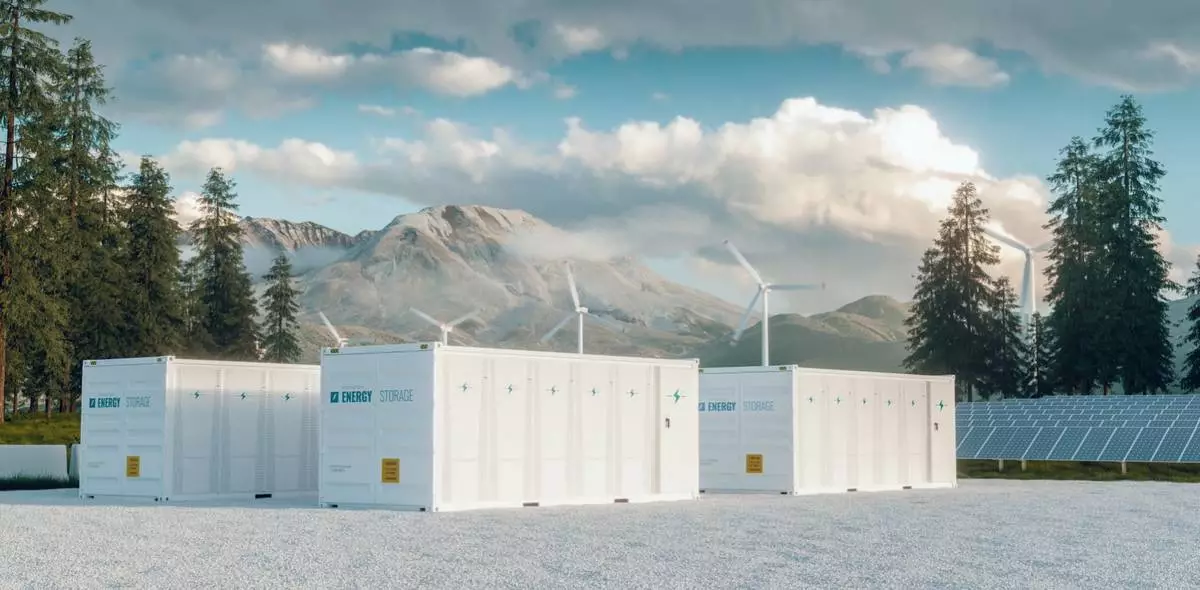
UL Solutions has announced significant enhancements to the testing methods for battery energy storage systems which are critical for storing energy from renewable sources like solar and wind. The new testing methods address industry innovations, including test methods for non-lithium-ion battery chemistries, such as sodium-ion batteries, that reflect the evolution of battery technology while continuing to address fire risk mitigation.
MINNEAPOLIS (AP) — President Donald Trump on Thursday threatened to invoke an 1807 law and deploy troops to quell persistent protests against the federal officers sent to Minneapolis to enforce his administration's massive immigration crackdown.
The threat comes a day after a man was shot and wounded by an immigration officer who had been attacked with a shovel and broom handle. That shooting further heightened the fear and anger that has radiated across the city since an Immigration and Customs Enforcement agent fatally shot Renee Good in the head.
Trump has repeatedly threatened to invoke the Insurrection Act, a rarely used federal law, to deploy the U.S. military or federalize the National Guard for domestic law enforcement, over the objections of state governors. In 2020, for example, he threatened to use the act to quell protests after George Floyd was killed by Minneapolis police, and in recent months he threatened to use it for immigration protests.
“If the corrupt politicians of Minnesota don’t obey the law and stop the professional agitators and insurrectionists from attacking the Patriots of I.C.E., who are only trying to do their job, I will institute the INSURRECTION ACT, which many Presidents have done before me, and quickly put an end to the travesty that is taking place in that once great State,” Trump said in social media post.
Presidents have invoked the law more than two dozen times, most recently in 1992 by President George H.W. Bush to end unrest in Los Angeles. In that instance, local authorities asked for the assistance.
“I’m making a direct appeal to the President: Let’s turn the temperature down. Stop this campaign of retribution. This is not who we are,” Gov. Tim Walz, a Democrat, said on X.
Minnesota Attorney General Keith Ellison said he would challenge any such action in court. He's already suing to try to stop the surge by the Department of Homeland Security, which says officers have arrested more than 2,500 people since Nov. 29 as part of an immigration operation in the Twin Cities called Metro Surge.
The operation grew when ICE, which is a DHS agency, sent 2,000 officers and agents to the area in early January.
Protesters gathered Thursday night at the federal building that is being used as a base for the crackdown, yelling “shame on you” at the officers guarding the facility.
Demonstrations have become common since Good was fatally shot Jan. 7, but this night's protest was slightly more subdued a day after the governor and mayor implored protesters to remain peaceful.
“This is an impossible situation that our city is presently being put in and at the same time we are trying to find a way forward to keep people safe,” Minneapolis Mayor Jacob Frey said Wednesday.
The American Civil Liberties Union of Minnesota filed a class-action lawsuit on behalf of three people who said they were questioned or detained in recent days. The lawsuit says two are Somali and one is Hispanic; all three are U.S. citizens. The lawsuit seeks an end to what the ACLU describes as a practice of racial profiling and warrantless arrests. The government did not immediately comment.
Similar lawsuits have been filed in Los Angeles and Chicago and despite seeing initial success, have tended to fizzle in the face of appeal. In Chicago, for example, last year a judge ordered a senior U.S. Border Patrol official to brief her nightly following a lawsuit by news outlets and protesters who said agents used too much force during demonstrations. But three days later, an appeals court stopped the updates.
Homeland Security said in a statement that federal law enforcement officers on Wednesday stopped a driver from Venezuela who is in the U.S. illegally. The person drove off then crashed into a parked car before fleeing on foot, DHS said.
Officers caught up, then two other people arrived and the three started attacking the officer, according to DHS.
“Fearing for his life and safety as he was being ambushed by three individuals, the officer fired a defensive shot to defend his life,” DHS said. The confrontation took place about 4.5 miles (7.2 kilometers) from where Good was killed.
Police Chief Brian O’Hara said the man who was shot did not have a life-threatening injury. O’Hara's account of what happened largely echoed that of Homeland Security, which later said the other two men were also in the U.S. illegally from Venezuela.
The FBI said several government vehicles were damaged and property inside was stolen when agents responded to the shooting. Photos show broken windows and insults made with paint. A reward of up to $100,000 is being offered for information. The FBI’s Minneapolis office did not immediately reply to messages seeking more details.
St. Paul Public Schools, with more than 30,000 students, said it would begin offering an online learning option for students who do not feel comfortable coming to school. Schools will be closed next week until Thursday to prepare for those accommodations.
Minneapolis Public Schools, which has a similar enrollment, is also offering temporary remote learning. The University of Minnesota will start a new term next week with different options depending on the class.
Madhani reported from Washington, and Golden from Seattle. Associated Press writers Sophia Tareen in Chicago, Bill Barrow in Atlanta, Rebecca Santana in Washington and Ed White in Detroit contributed.
Federal immigration officers confront protesters outside Bishop Henry Whipple Federal Building, Thursday, Jan. 15, 2026, in Minneapolis. (AP Photo/John Locher)
Law enforcement officers at the scene of a reported shooting Wednesday, Jan. 14, 2026, in Minneapolis. (AP Photo/Adam Gray)
A woman covers her face from tear gas as federal immigration officers confront protesters outside Bishop Henry Whipple Federal Building, Thursday, Jan. 15, 2026, in Minneapolis. (AP Photo/Adam Gray)
A protester throws back a tear gas canister during a protest after a shooting on Wednesday, Jan. 14, 2026, in Minneapolis. (AP Photo/John Locher)
Federal immigration officers confront protesters outside Bishop Henry Whipple Federal Building, Thursday, Jan. 15, 2026, in Minneapolis. (AP Photo/Adam Gray)
Minneapolis City Council Member Jason Chavez, second from left, blows a whistle with other activists to warn people of federal immigration officers Thursday, Jan. 15, 2026, in Minneapolis. (AP Photo/John Locher)
Tear gas surrounds federal law enforcement officers as they leave a scene after a shooting on Wednesday, Jan. 14, 2026, in Minneapolis. (AP Photo/John Locher)
A child and family are escorted away after federal law enforcement deployed tear gas in a neighborhood during protests on Wednesday, Jan. 14, 2026, in Minneapolis. (AP Photo/Adam Gray)
A protester holds an umbrella as sparks fly from a flash bang deployed by law enforcement on Wednesday, Jan. 14, 2026, in Minneapolis. (AP Photo/Adam Gray)
Monica Travis shares an embrace while visiting a makeshift memorial for Renee Good, who was fatally shot by an ICE officer last week, Monday, Jan. 12, 2026, in Minneapolis. (AP Photo/John Locher)
A protester yells in front of law enforcement after a shooting on Wednesday, Jan. 14, 2026, in Minneapolis. (AP Photo/John Locher)
Tear gas surrounds federal law enforcement officers as they leave a scene after a shooting on Wednesday, Jan. 14, 2026, in Minneapolis. (AP Photo/John Locher)
Protesters shout at law enforcement officers after a shooting on Wednesday, Jan. 14, 2026, in Minneapolis. (AP Photo/Abbie Parr)
Law enforcement officers stand amid tear gas at the scene of a reported shooting Wednesday, Jan. 14, 2026, in Minneapolis. (AP Photo/Adam Gray)