Skip to Content Facebook Feature Image

Trump's transportation officials buck a long-held practice of using 'road diets' to slow speeders

News

Trump's transportation officials buck a long-held practice of using 'road diets' to slow speeders
News

News

Trump's transportation officials buck a long-held practice of using 'road diets' to slow speeders

2025-04-21 23:10 Last Updated At:23:20

A stylist was just starting her shift at a salon in Kansas City, Missouri, when a car smashed through the storefront window and landed in the waiting area a few feet away.

Such crashes were so common along 31st Street that business owners regularly texted one another photos showing the damage caused by vehicles speeding along the four-lane road lined with shops, bars and restaurants, which drivers used as a shortcut between major highways.

More Images
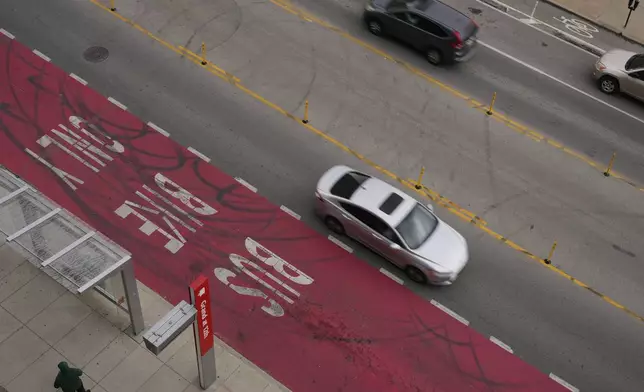
Cars drive on Grand Boulevard in Kansas City, Mo., where the city implemented a "road diet" reducing the street from four lanes to two in an effort to reduce speeding and accidents, Thursday, April 17, 2025. (AP Photo/Charlie Riedel)
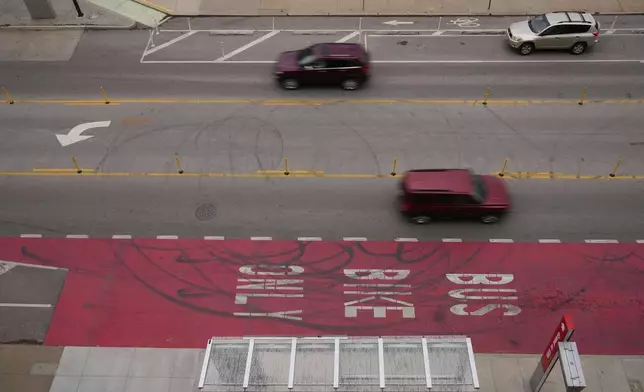
Cars drive on Grand Boulevard in Kansas City, Mo., where the city implemented a "road diet" reducing the street from four lanes to two in an effort to reduce speeding and accidents, Thursday, April 17, 2025. (AP Photo/Charlie Riedel)
Cars drive on Grand Boulevard in Kansas City, Mo., where the city implemented a "road diet" reducing the street from four lanes to two in an effort to reduce speeding and accidents, Thursday, April 17, 2025. (AP Photo/Charlie Riedel)
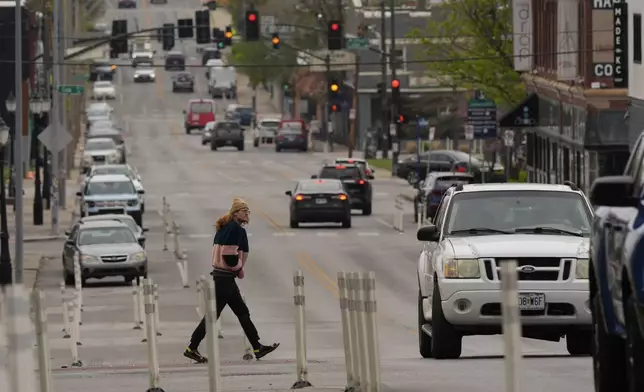
Cars drive on Grand Boulevard in Kansas City, Mo., where the city implemented a "road diet" reducing the street from four lanes to two in an effort to reduce speeding and accidents, Thursday, April 17, 2025. (AP Photo/Charlie Riedel)
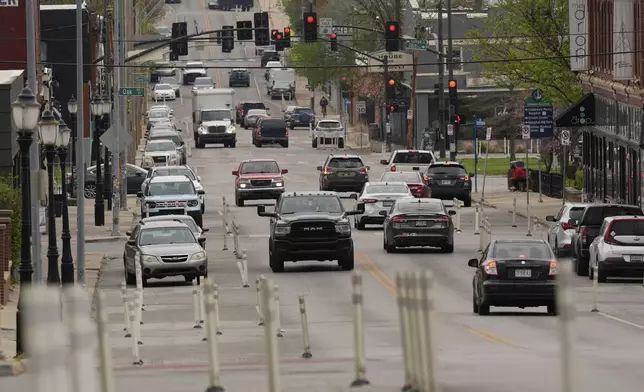
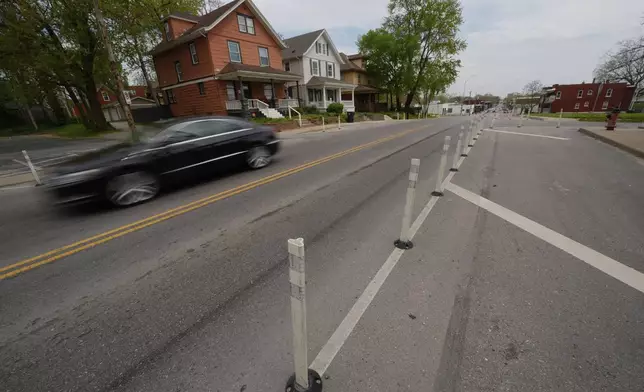
A motorist drives on 31st Street in Kansas City, Mo., where the city implemented a "road diet" reducing the street from four lanes to two in an effort to reduce speeding and accidents, Thursday, April 17, 2025. (AP Photo/Charlie Riedel)
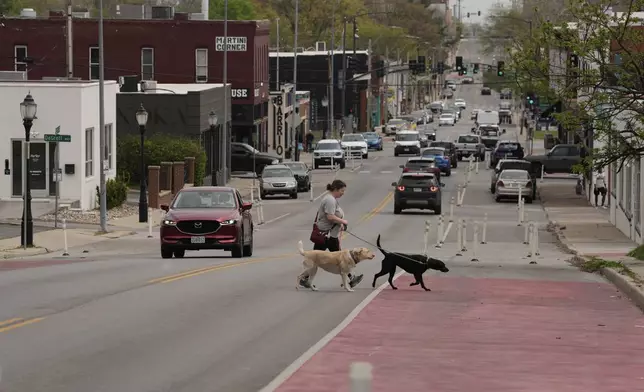
A motorist drives on 31st Street in Kansas City, Mo., where the city implemented a "road diet" reducing the street from four lanes to two in an effort to reduce speeding and accidents, Thursday, April 17, 2025. (AP Photo/Charlie Riedel)
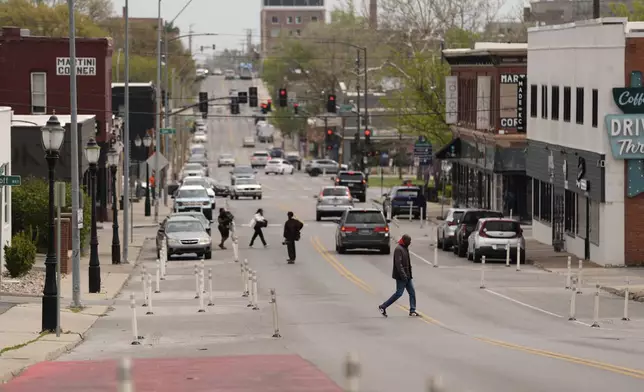
A man crosses 31st Street in Kansas City, Mo., where the city implemented a "road diet" reducing the street from four lanes to two in an effort to reduce speeding and accidents, Thursday, April 17, 2025. (AP Photo/Charlie Riedel)

A man crosses 31st Street in Kansas City, Mo., where the city implemented a "road diet" reducing the street from four lanes to two in an effort to reduce speeding and accidents, Thursday, April 17, 2025. (AP Photo/Charlie Riedel)

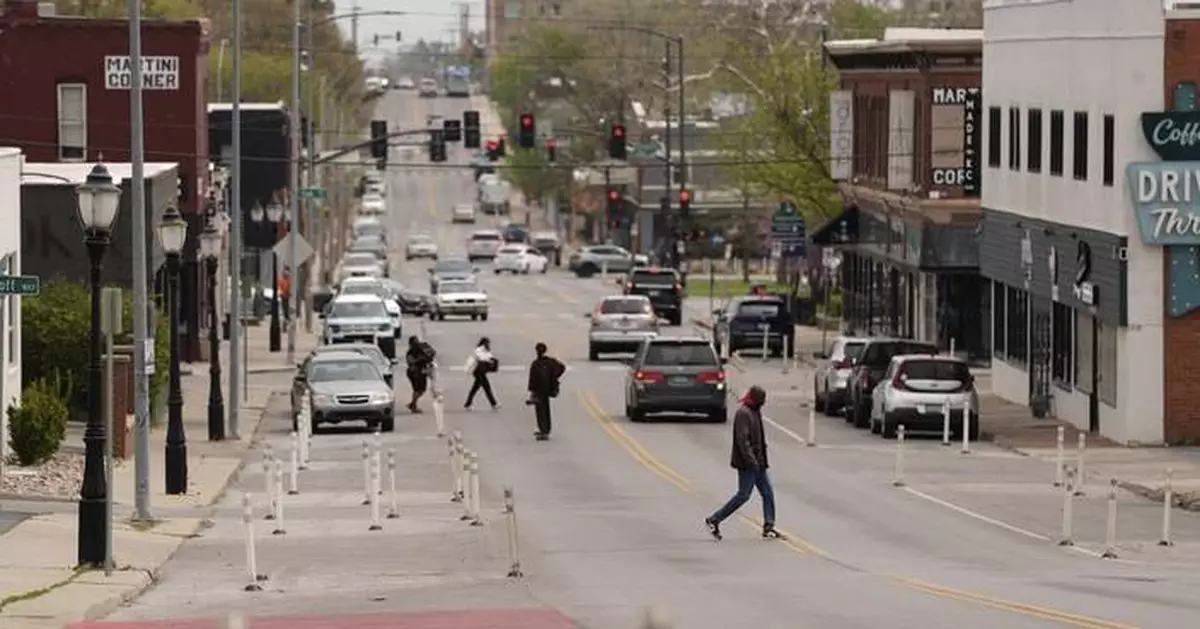
Motorists navigate 31st Street in Kansas City, Mo., where the city implemented a "road diet" reducing the street from four lanes to two in an effort to reduce speeding and accidents, Thursday, April 17, 2025. (AP Photo/Charlie Riedel)

Motorists navigate 31st Street in Kansas City, Mo., where the city implemented a "road diet" reducing the street from four lanes to two in an effort to reduce speeding and accidents, Thursday, April 17, 2025. (AP Photo/Charlie Riedel)

A woman and her dogs cross 31st Street in Kansas City, Mo., where the city implemented a "road diet" reducing the street from four lanes to two in an effort to reduce speeding and accidents, Thursday, April 17, 2025. (AP Photo/Charlie Riedel)

A woman and her dogs cross 31st Street in Kansas City, Mo., where the city implemented a "road diet" reducing the street from four lanes to two in an effort to reduce speeding and accidents, Thursday, April 17, 2025. (AP Photo/Charlie Riedel)

People cross 31st Street in Kansas City, Mo., where the city implemented a "road diet" reducing the street from four lanes to two in an effort to reduce speeding and accidents, Thursday, April 17, 2025. (AP Photo/Charlie Riedel)

People cross 31st Street in Kansas City, Mo., where the city implemented a "road diet" reducing the street from four lanes to two in an effort to reduce speeding and accidents, Thursday, April 17, 2025. (AP Photo/Charlie Riedel)

“A wide road makes people think, ‘We’ll just drive as fast as we want on it,'" said Ryan Ferrell, who owns the property housing the salon, a bookstore and apartments above.

When concrete sidewalk barriers didn’t work, Ferrell and other business leaders campaigned to put the street on a “road diet."

Removing lanes has been a tool numerous cities have used for years to calm traffic, despite resistance from some Republican governors. President Donald Trump's administration doesn't like it either.

Federal transportation officials once heralded road diets for cutting crashes by 19% to 47%, but criteria for an upcoming round of road safety grants say projects aimed at “reducing lane capacity” should be considered “less favorably," the administration said.

Forcing travelers into more constrained spaces “can lead to crashes, erratic maneuvers, and a false sense of security that puts everyone at risk,” the U.S. Department of Transportation said in an email statement to The Associated Press. “The update reflects the Department’s concerns about the safety hazards associated with congestion.”

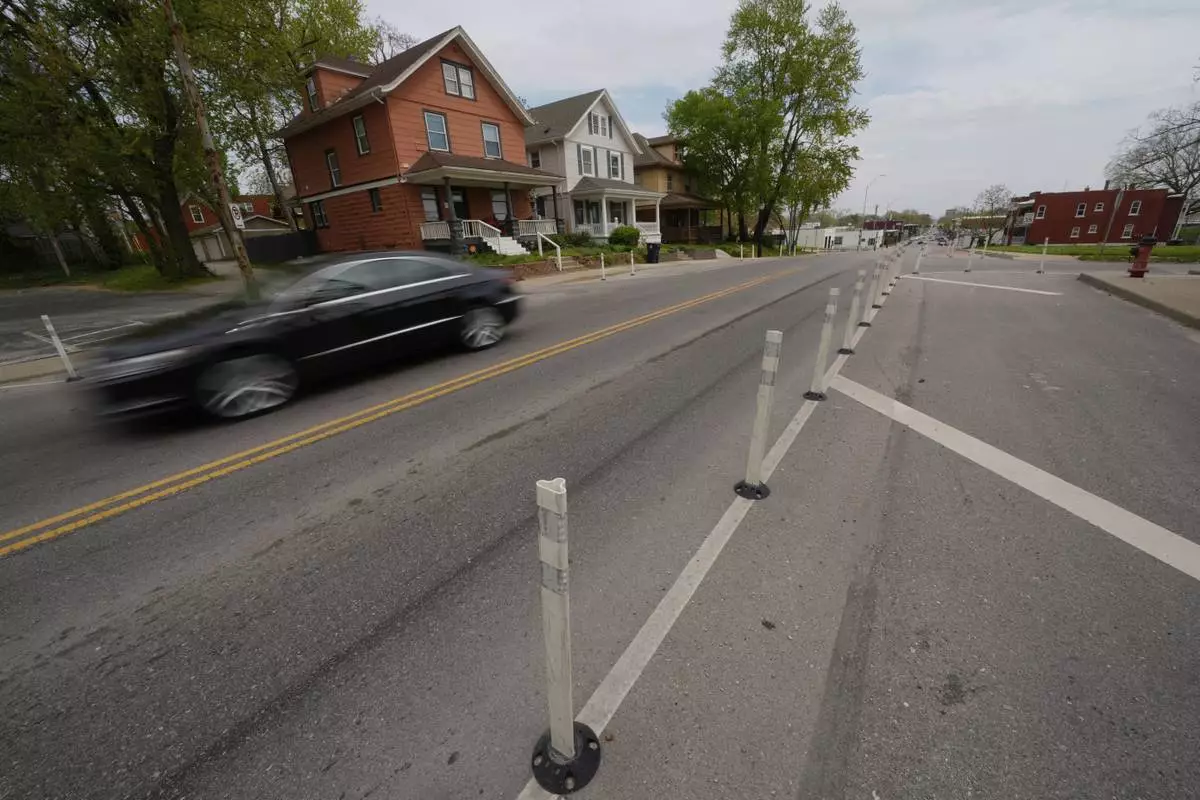
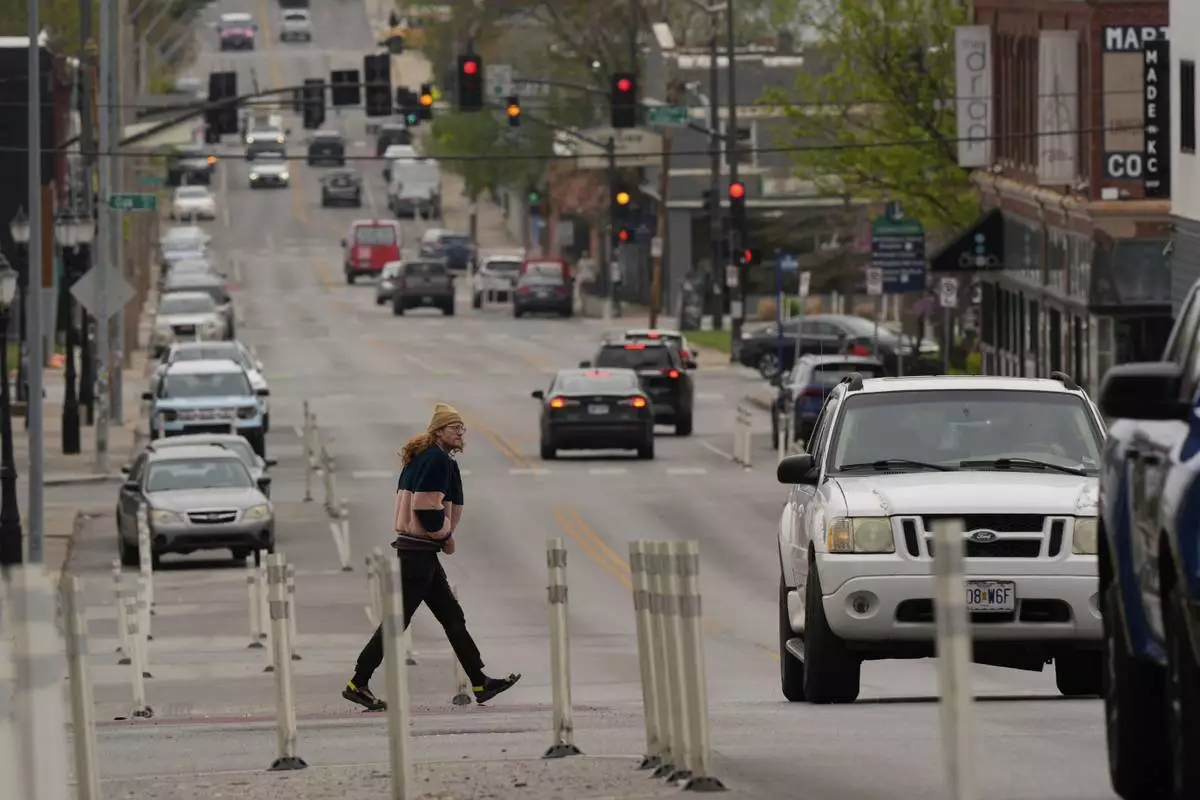
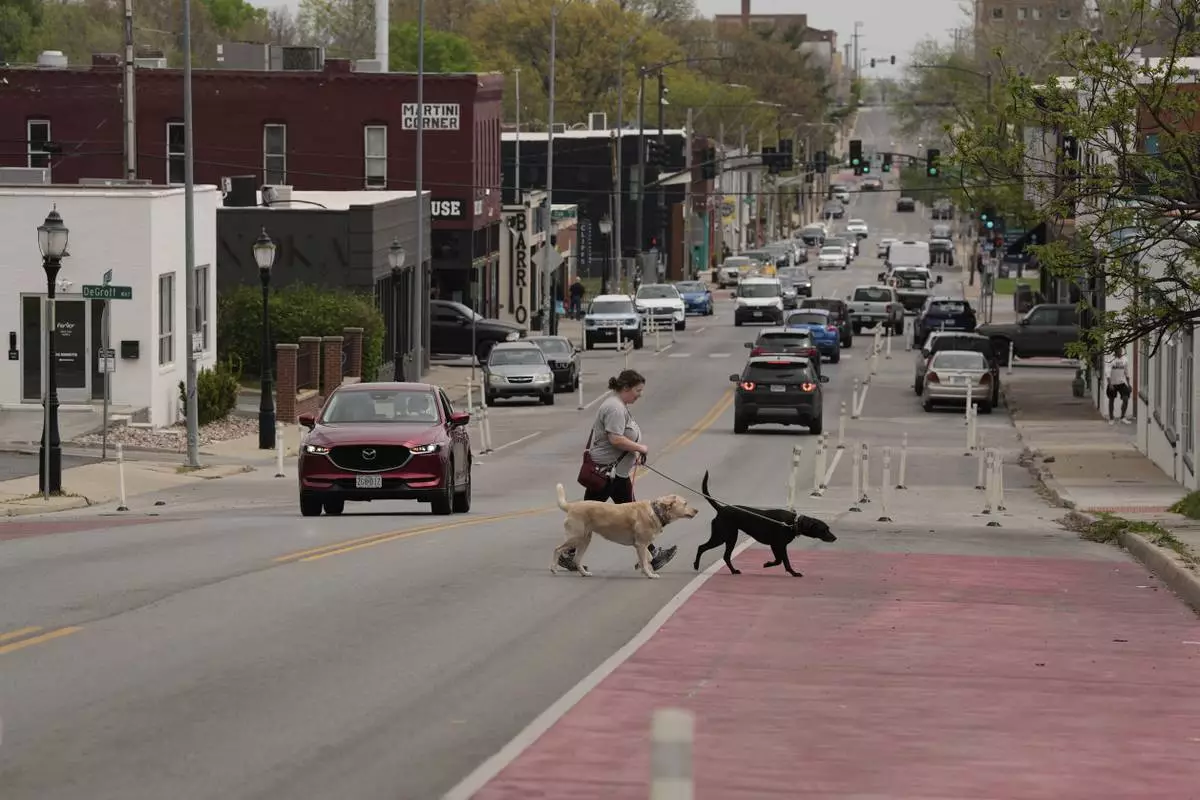
Kansas City saved some money when it converted 31st Street in 2022 because a gas line was going in anyway. It reopened with one lane in each direction instead of two, a shared turn lane near the signalized intersections, better pedestrian crossings and protected on-street parking spaces.

Road diets are now an almost automatic part of the process in Kansas City whenever a street is up for repaving. For years, federal guidelines said lane reductions were usually appropriate on roads carrying fewer than 25,000 vehicles a day. Most of the city's four-lane roads don't meet that threshold.

Bobby Evans, an urban planner at the Mid-America Regional Council who has worked on Kansas City's road diets, calls the strategy "a smashing success" and one of the most effective tools at reducing speed, crashes and injuries.

“In the architectural world you’d call it environmental determinism,” Evans said. “You want to make it so they don’t feel comfortable going too fast. You’re really not slowing them down. You’re bringing them back to the speed limit.”

Numerous other cities have credited road diets with improving safety.

Philadelphia cited a 19% drop in injury crashes. Portland, Oregon, saw a more than 70% decline in vehicles traveling at least 10 mph (16 kph) over the speed limit. The average speed in Fort Lauderdale, Florida, fell by 5 mph (8 kph) on some roads within months.

But Jay Beeber, executive director for policy at the National Motorists Association, an advocacy organization for drivers, said most road diets represent an ill-advised effort to force vehicles off the road. The number of vehicles may decline on dieted roads, but then surrounding roads have to absorb the traffic, he said.

“Those cars have to go somewhere,” he said. “Cars are like water. They seek their own level.”

Leah Shahum, who directs the Vision Zero Network, a nonprofit advocating for street safety, said road diets are inexpensive and supported by years of research. Cities in Republican-led states are among the converts and Shahum isn't sure if the Trump administration's new guidance will make them reconsider.

“I certainly hope that does not bleed over into indirectly discouraging communities from using this proven safety countermeasure,” Shahum said. “That would be a real loss.”

Trump’s transportation department cited delivery and emergency vehicles among its concerns.

When University of Iowa researchers surveyed first-responders in Cedar Rapids, their study published last year found no noticeable difference in response time when a road diet was in place. There was, however, a perceived need to educate drivers about what to do when an ambulance uses a center turn lane to pass.

Cara Hamann, an associate professor of epidemiology who co-authored the study, said she recalled no major examples of EMS or fire trucks being unable to get through.

“The road diet didn’t cause a level of congestion that slowed them down,” she said.

Even before Trump, skepticism was growing in some red states.

San Antonio spent years planning to repurpose a formerly state-owned portion of its Broadway Street by removing vehicle lanes and improving a stretch for bikes and pedestrians. But Texas abruptly reclaimed the road in 2022 and nixed the project as GOP Gov. Greg Abbott ran for reelection and called for an end to anti-car policies.

“They basically used Broadway as a political football,” said Bryan Martin, owner of Bronko Bikes, an electric bike repair shop.

Florida's Republican Gov. Ron DeSantis signed a bill last year calling for a 180-day review period and several other steps before a local government can eliminate a lane. He said it would prevent activists from intentionally clogging roads to slow vehicles.

Not all the pushback has come from Republican-led states. During the pandemic, Culver City, California, implemented a road diet to prioritize walking, biking and transit. But when cars returned and traffic backed up for miles, the city reversed the plan.

Some residents sued in Vancouver, Washington, saying the city should have put its road diets up for a public vote.

“I’ve seen people passing in the shoulder or the bike lane,” said Justin Wood, one of the opponents. “It creates more opportunity for conflict.”

Evans, the planner in Kansas City, said road diets can't stop all reckless drivers.

“If you are bound and determined to go 12 miles over the speed limit on a three-lane road, you’re going to have to engage in some stupid, dangerous driving,” Evans said.
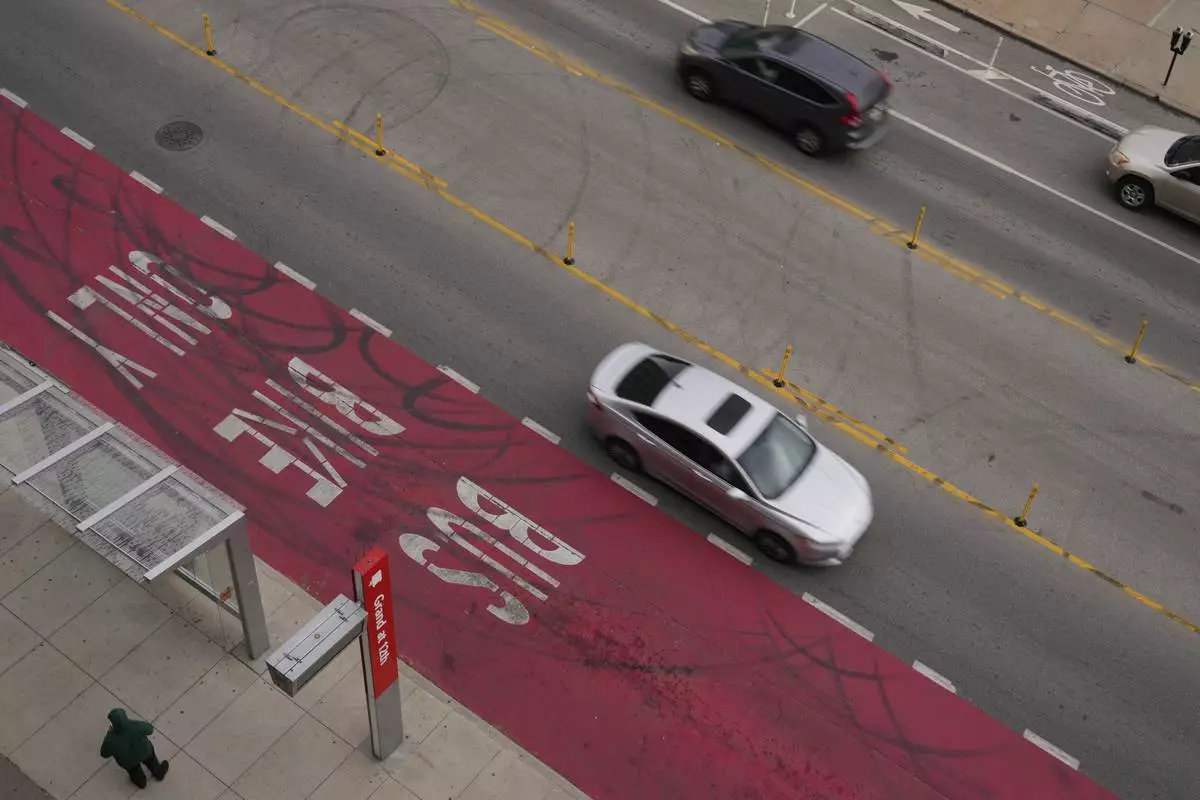
Cars drive on Grand Boulevard in Kansas City, Mo., where the city implemented a "road diet" reducing the street from four lanes to two in an effort to reduce speeding and accidents, Thursday, April 17, 2025. (AP Photo/Charlie Riedel)
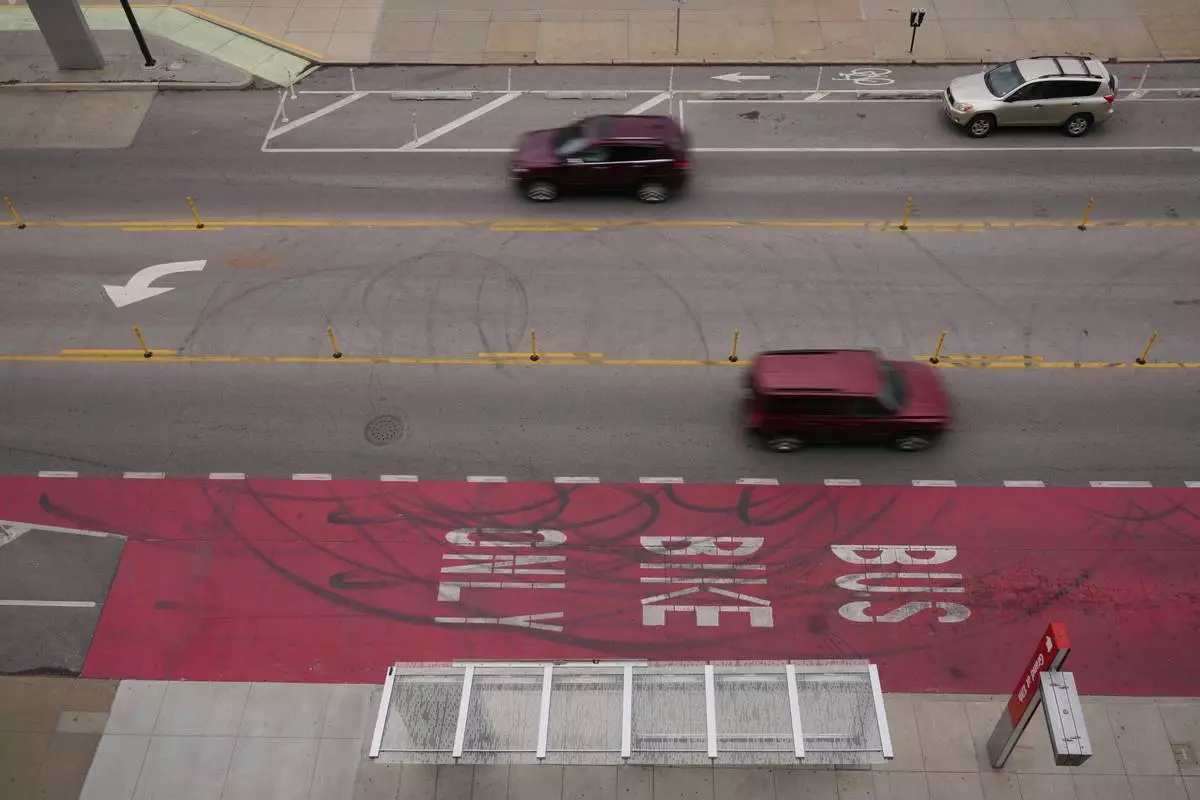
Cars drive on Grand Boulevard in Kansas City, Mo., where the city implemented a "road diet" reducing the street from four lanes to two in an effort to reduce speeding and accidents, Thursday, April 17, 2025. (AP Photo/Charlie Riedel)
Cars drive on Grand Boulevard in Kansas City, Mo., where the city implemented a "road diet" reducing the street from four lanes to two in an effort to reduce speeding and accidents, Thursday, April 17, 2025. (AP Photo/Charlie Riedel)
Cars drive on Grand Boulevard in Kansas City, Mo., where the city implemented a "road diet" reducing the street from four lanes to two in an effort to reduce speeding and accidents, Thursday, April 17, 2025. (AP Photo/Charlie Riedel)
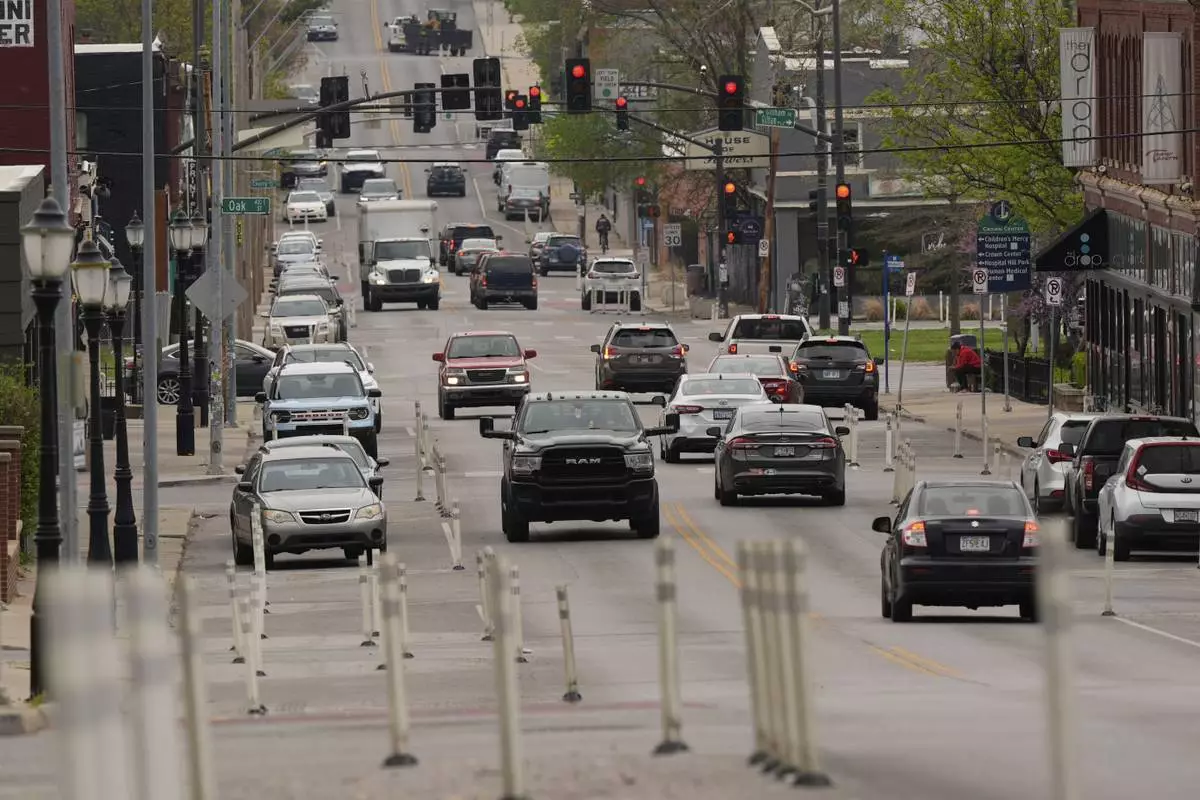
A motorist drives on 31st Street in Kansas City, Mo., where the city implemented a "road diet" reducing the street from four lanes to two in an effort to reduce speeding and accidents, Thursday, April 17, 2025. (AP Photo/Charlie Riedel)
A motorist drives on 31st Street in Kansas City, Mo., where the city implemented a "road diet" reducing the street from four lanes to two in an effort to reduce speeding and accidents, Thursday, April 17, 2025. (AP Photo/Charlie Riedel)
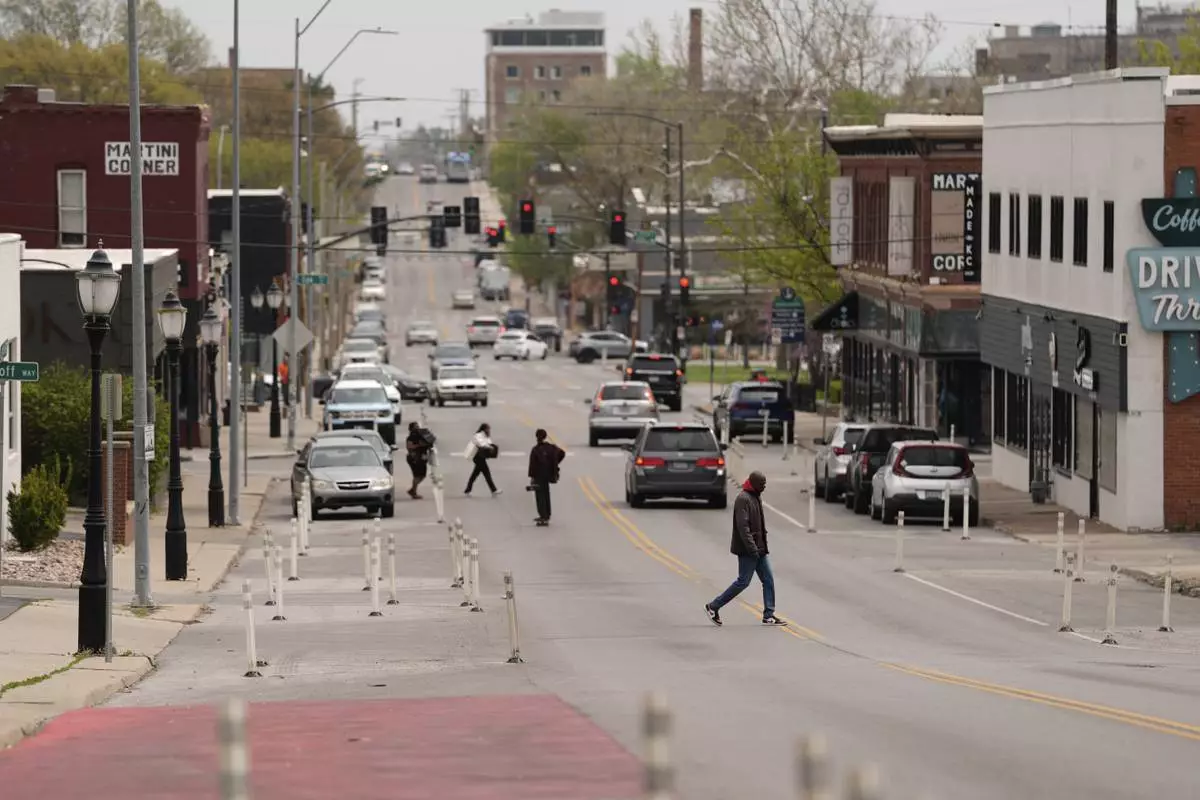
A man crosses 31st Street in Kansas City, Mo., where the city implemented a "road diet" reducing the street from four lanes to two in an effort to reduce speeding and accidents, Thursday, April 17, 2025. (AP Photo/Charlie Riedel)
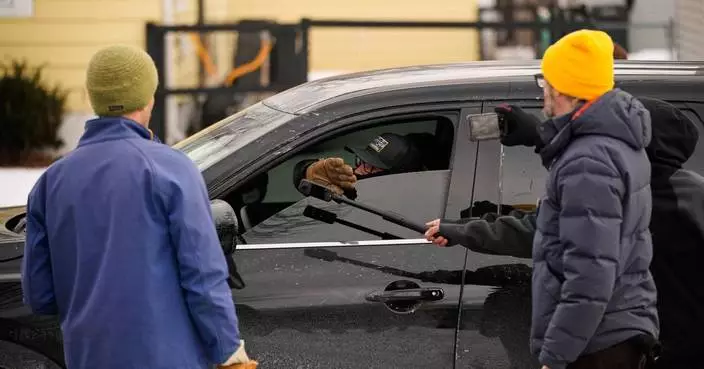
A man crosses 31st Street in Kansas City, Mo., where the city implemented a "road diet" reducing the street from four lanes to two in an effort to reduce speeding and accidents, Thursday, April 17, 2025. (AP Photo/Charlie Riedel)
Motorists navigate 31st Street in Kansas City, Mo., where the city implemented a "road diet" reducing the street from four lanes to two in an effort to reduce speeding and accidents, Thursday, April 17, 2025. (AP Photo/Charlie Riedel)

Motorists navigate 31st Street in Kansas City, Mo., where the city implemented a "road diet" reducing the street from four lanes to two in an effort to reduce speeding and accidents, Thursday, April 17, 2025. (AP Photo/Charlie Riedel)
A woman and her dogs cross 31st Street in Kansas City, Mo., where the city implemented a "road diet" reducing the street from four lanes to two in an effort to reduce speeding and accidents, Thursday, April 17, 2025. (AP Photo/Charlie Riedel)
A woman and her dogs cross 31st Street in Kansas City, Mo., where the city implemented a "road diet" reducing the street from four lanes to two in an effort to reduce speeding and accidents, Thursday, April 17, 2025. (AP Photo/Charlie Riedel)
People cross 31st Street in Kansas City, Mo., where the city implemented a "road diet" reducing the street from four lanes to two in an effort to reduce speeding and accidents, Thursday, April 17, 2025. (AP Photo/Charlie Riedel)
People cross 31st Street in Kansas City, Mo., where the city implemented a "road diet" reducing the street from four lanes to two in an effort to reduce speeding and accidents, Thursday, April 17, 2025. (AP Photo/Charlie Riedel)
DUBAI, United Arab Emirates (AP) — U.S. President Donald Trump said Iran wants to negotiate with Washington after his threat to strike the Islamic Republic over its bloody crackdown on protesters, a move coming as activists said Monday the death toll in the nationwide demonstrations rose to at least 544.

Iran had no immediate reaction to the news, which came after the foreign minister of Oman — long an interlocutor between Washington and Tehran — traveled to Iran this weekend. It also remains unclear just what Iran could promise, particularly as Trump has set strict demands over its nuclear program and its ballistic missile arsenal, which Tehran insists is crucial for its national defense.

Meanwhile Monday, Iran called for pro-government demonstrators to head to the streets in support of the theocracy, a show of force after days of protests directly challenging the rule of 86-year-old Supreme Leader Ayatollah Ali Khamenei. Iranian state television aired chants from the crowd, who shouted “Death to America!” and “Death to Israel!”

Trump and his national security team have been weighing a range of potential responses against Iran including cyberattacks and direct strikes by the U.S. or Israel, according to two people familiar with internal White House discussions who were not authorized to comment publicly and spoke on condition of anonymity.

“The military is looking at it, and we’re looking at some very strong options,” Trump told reporters on Air Force One on Sunday night. Asked about Iran’s threats of retaliation, he said: “If they do that, we will hit them at levels that they’ve never been hit before.”

Trump said that his administration was in talks to set up a meeting with Tehran, but cautioned that he may have to act first as reports of the death toll in Iran mount and the government continues to arrest protesters.

“I think they’re tired of being beat up by the United States,” Trump said. “Iran wants to negotiate.”

He added: “The meeting is being set up, but we may have to act because of what’s happening before the meeting. But a meeting is being set up. Iran called, they want to negotiate.”

Iran through country's parliamentary speaker warned Sunday that the U.S. military and Israel would be “legitimate targets” if America uses force to protect demonstrators.

More than 10,600 people also have been detained over the two weeks of protests, said the U.S.-based Human Rights Activists News Agency, which has been accurate in previous unrest in recent years and gave the death toll. It relies on supporters in Iran crosschecking information. It said 496 of the dead were protesters and 48 were with security forces.

With the internet down in Iran and phone lines cut off, gauging the demonstrations from abroad has grown more difficult. The Associated Press has been unable to independently assess the toll. Iran’s government has not offered overall casualty figures.

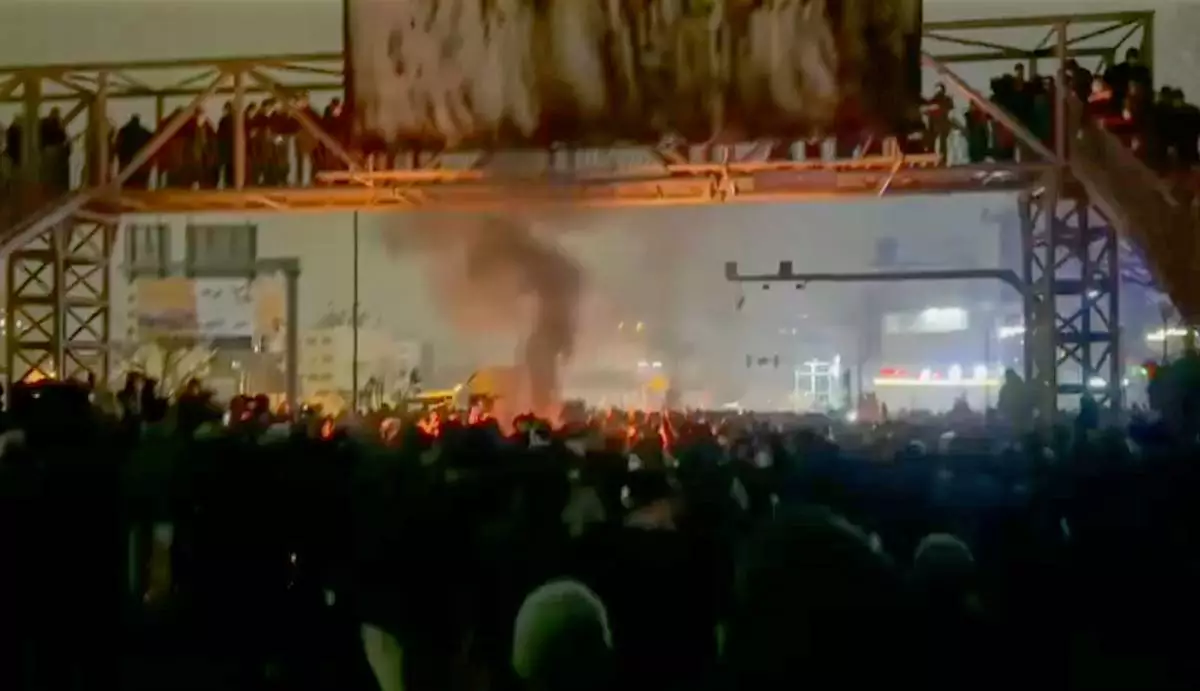
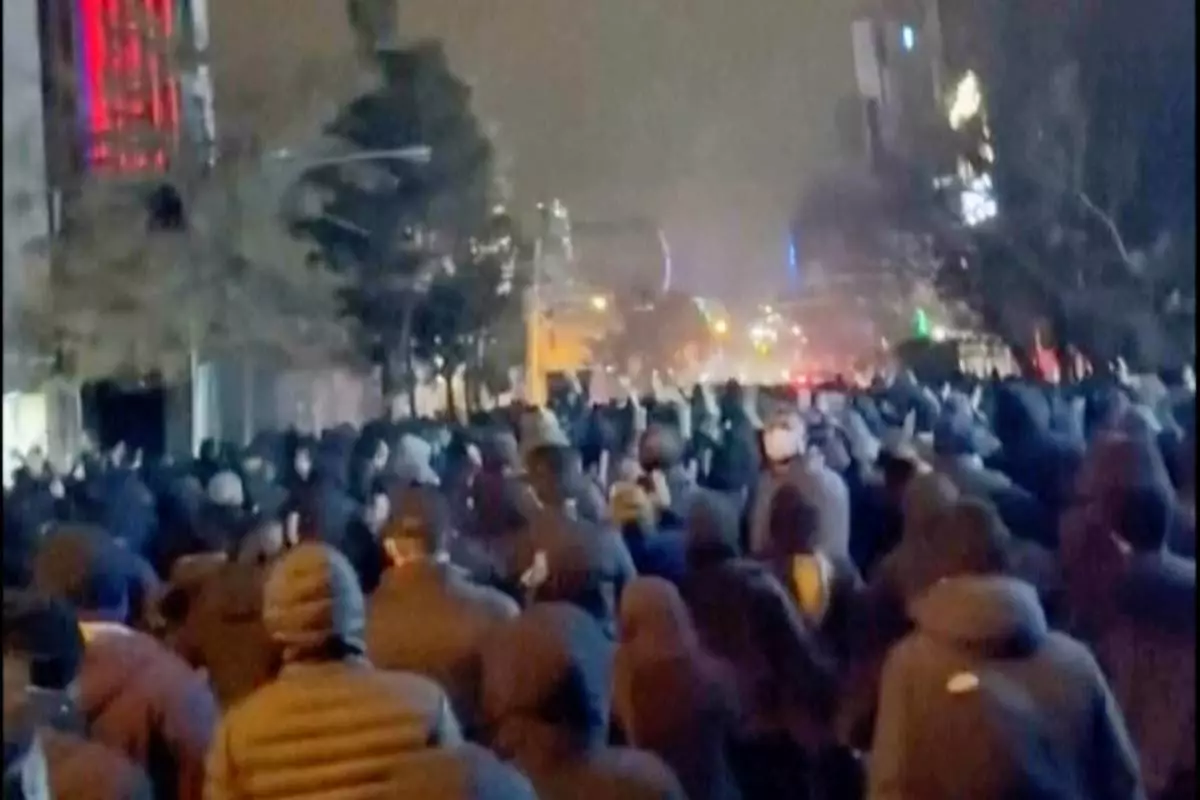
Those abroad fear the information blackout is emboldening hard-liners within Iran’s security services to launch a bloody crackdown. Protesters flooded the streets in the country’s capital and its second-largest city on Saturday night into Sunday morning. Online videos purported to show more demonstrations Sunday night into Monday, with a Tehran official acknowledging them in state media.

In Tehran, a witness told the AP that the streets of the capital empty at the sunset call to prayers each night. By the Isha, or nighttime prayer, the streets are deserted.

Part of that stems from the fear of getting caught in the crackdown. Police sent the public a text message that warned: “Given the presence of terrorist groups and armed individuals in some gatherings last night and their plans to cause death, and the firm decision to not tolerate any appeasement and to deal decisively with the rioters, families are strongly advised to take care of their youth and teenagers.”

Another text, which claimed to come from the intelligence arm of the paramilitary Revolutionary Guard, also directly warned people not to take part in demonstrations.

“Dear parents, in view of the enemy’s plan to increase the level of naked violence and the decision to kill people, ... refrain from being on the streets and gathering in places involved in violence, and inform your children about the consequences of cooperating with terrorist mercenaries, which is an example of treason against the country,” the text warned.

The witness spoke to the AP on condition of anonymity due to the ongoing crackdown.

The demonstrations began Dec. 28 over the collapse of the Iranian rial currency, which trades at over 1.4 million to $1, as the country’s economy is squeezed by international sanctions in part levied over its nuclear program. The protests intensified and grew into calls directly challenging Iran’s theocracy.

Nikhinson reported from aboard Air Force One.

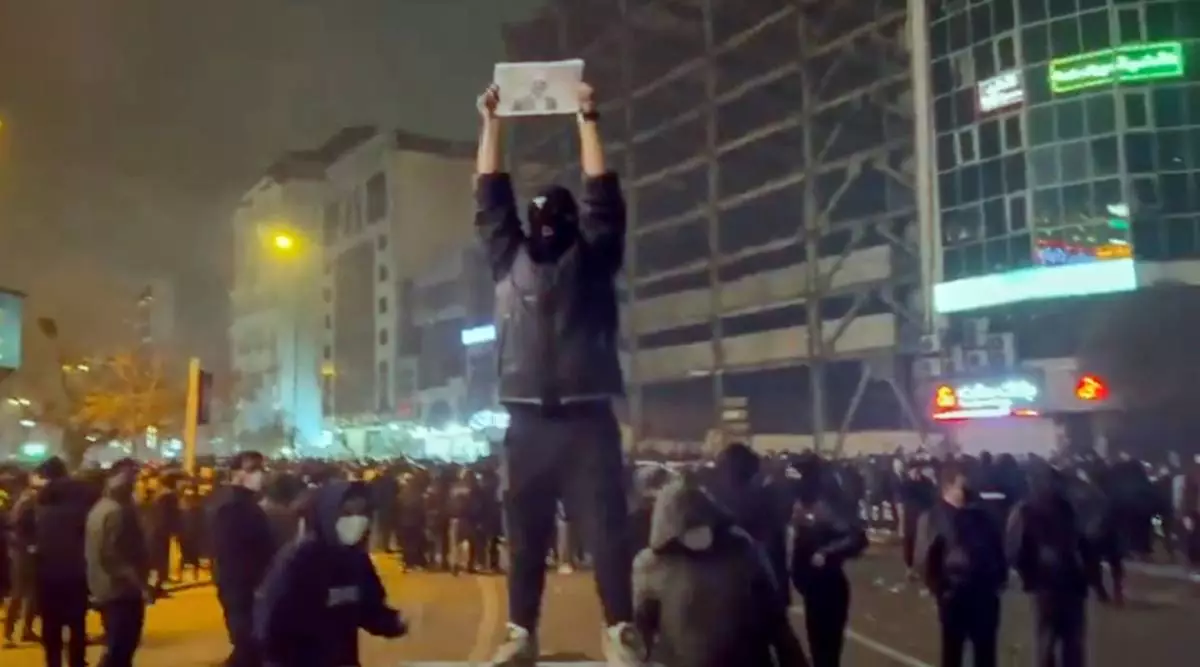
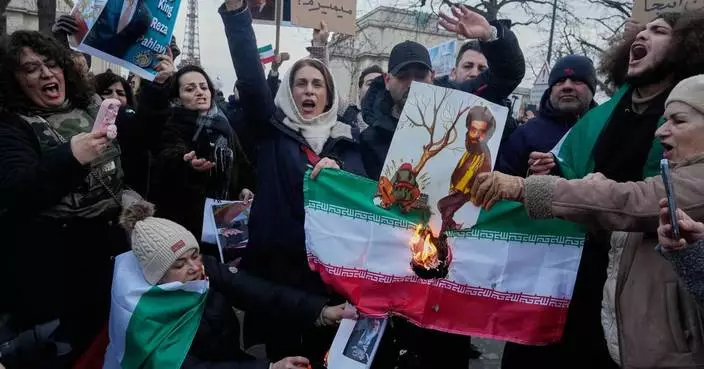
In this frame grab from video obtained by the AP outside Iran, a masked demonstrator holds a picture of Iran's Crown Prince Reza Pahlavi during a protest in Tehran, Iran, Friday, January. 9, 2026. (UGC via AP)

In this frame grab from video obtained by the AP outside Iran, a masked demonstrator holds a picture of Iran's Crown Prince Reza Pahlavi during a protest in Tehran, Iran, Friday, January. 9, 2026. (UGC via AP)

In this frame grab from footage circulating on social media from Iran shows protesters taking to the streets despite an intensifying crackdown as the Islamic Republic remains cut off from the rest of the world in Tehran, Iran, Friday, Jan. 9, 2026.(UGC via AP)

In this frame grab from footage circulating on social media from Iran shows protesters taking to the streets despite an intensifying crackdown as the Islamic Republic remains cut off from the rest of the world in Tehran, Iran, Friday, Jan. 9, 2026.(UGC via AP)

In this frame grab from footage circulating on social media from Iran showed protesters once again taking to the streets of Tehran despite an intensifying crackdown as the Islamic Republic remains cut off from the rest of the world in Tehran, Iran, Saturday Jan. 10, 2026. (UGC via AP)

In this frame grab from footage circulating on social media from Iran showed protesters once again taking to the streets of Tehran despite an intensifying crackdown as the Islamic Republic remains cut off from the rest of the world in Tehran, Iran, Saturday Jan. 10, 2026. (UGC via AP)

Recommended Articles