Lesotho - one of the world’s least developed countries, as classified by the United Nations - is facing steep hurdles now in its textile exports in the wake of U.S. sweeping “reciprocal tariffs.”
Lesotho’s economy heavily depends on textile exports, particularly to the United States.
But under the new tariff regime, its garments are now subject to a staggering 50-percent duty.
In the capital city Maseru, the founder of a major garment factory warned that the high tariffs will deliver a crippling blow to the country's already fragile economy.
"These tariffs come as a shock to us, to our business, to Lesotho as a country and its economy. No buyer will consider coming to Lesotho to put their orders on their tariff of 50 percent. So basically that means the business stops. We need to soldier on. We need to look for other markets," said Teboho Kobeli, founder and managing director of Afri Expo Textiles.
Workers have also voiced growing uncertainty about their future as the economic fallout begins to take hold.
"[There are] around 200 people that are sitting at home. That means they have families to feed. Some of them got five heads under them. So if one person that was waking is now unemployed, that means it's a disaster for the whole family and for us also the production, the income, because the minute the production declines, it means the income also," said Malerai Mosotho, production manager of the company.
"It has affected me negatively. I'm scared that I might lose my job because you know, if we are not able to export, that means there'll be no income and the prices are going higher each and every day for basic needs," said a worker of the factory.
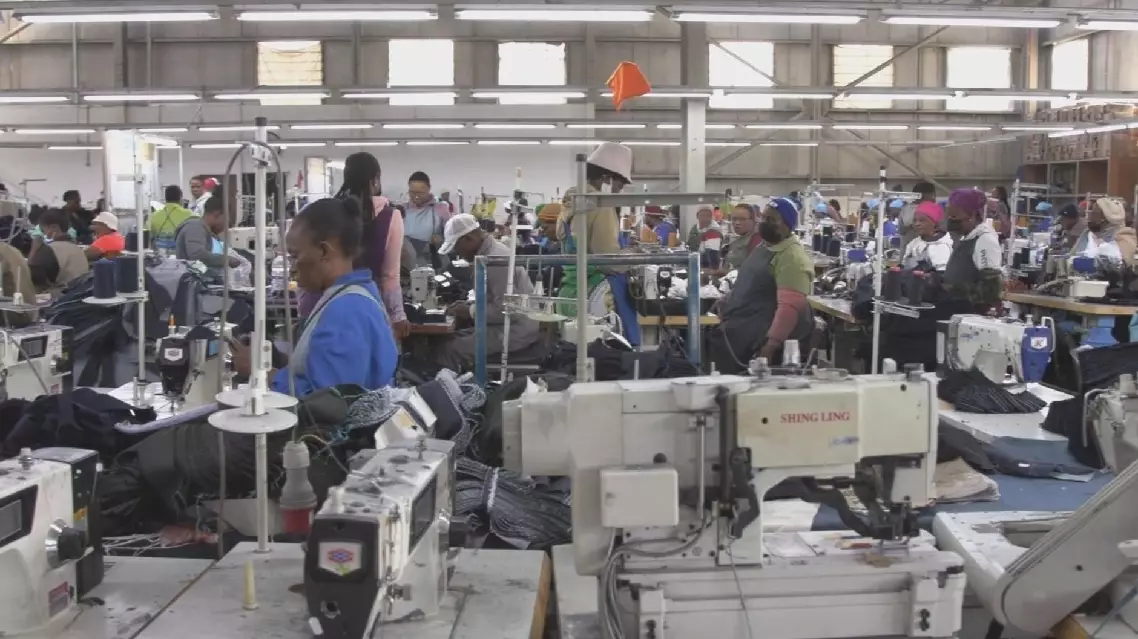
Lesotho's textile industry reels from steep US tariffs
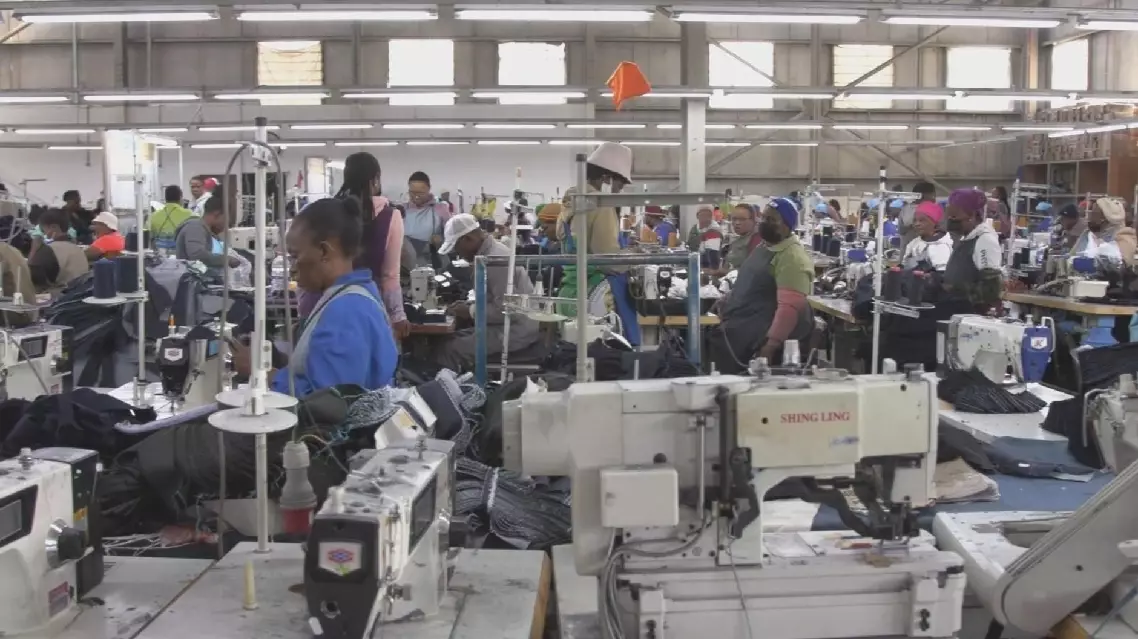
Lesotho's textile industry reels amid steep US tariffs
A total of 12 group standards for connected vehicles in two areas -- collaborative intelligent connected vehicles based on advanced mobile telecommunication" and "intelligent driving on complex roads" -- were officially released at an industry conference in the southern Chinese city of Guangzhou, on Saturday.
The standards were issued by the China Association of Automation in collaboration with Central South University and 10 other universities and research institutions. These standards convert achievements from national key research and development programs, including "vehicle-road-cloud integration," into a series of group standards. This initiative fills critical gaps in standards for cooperative driving testing and decision-making on complex roads.
"First, we standardize industry order and unify technology and testing standards to break the bottleneck of enterprises competing individually, promoting orderly development of the industry. Second, we accelerate technology transformation by creating bridges for innovation and implementation, which will lower R and D costs for enterprises and consolidate the foundation for industry growth. Third, we empower new quality productive forces, promote the integration of multiple industries, drive upgrades in the industrial chain, and support the construction of a modern industrial system. In the meantime, we also improve the standard collaboration framework to help the industry engage in international competition," said Hou Zengguang, vice president of the Chinese Association of Automation and professor at the Institute of Automation of the Chinese Academy of Sciences.
The two-day national conference on new quality productive forces and intelligent industry development concluded on Saturday.
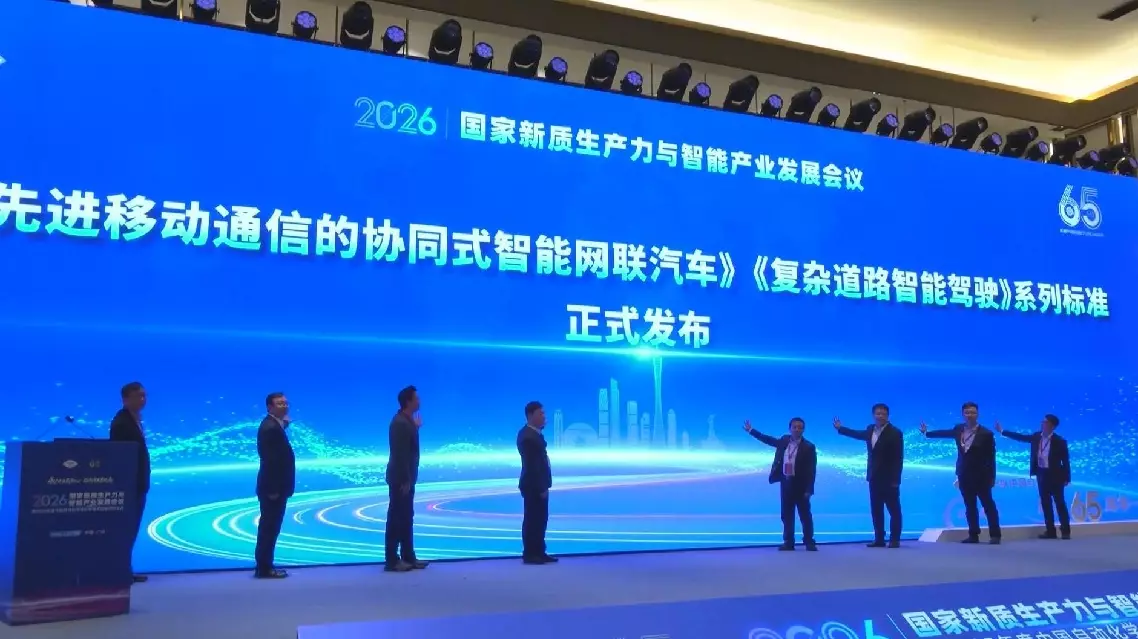
China releases group standards for intelligent connected vehicles