VATICAN CITY (AP) — The death of a pope starts a centuries-old ritual involving sacred oaths by the cardinals electing a successor, the piercing of ballots with a needle and thread after they're counted, and then burning them to produce either the white or black smoke to signal if there's a new leader for the world's 1.3 billion Catholics.
The election itself is shrouded in secrecy, with cardinals forbidden from communicating with the outside world what happened during the voting in the conclave behind the frescoed walls of the Sistine Chapel. While there were some leaps of artistic license, the process is in many ways as it was depicted in last year's Oscar-winning film “Conclave.”
Click to Gallery
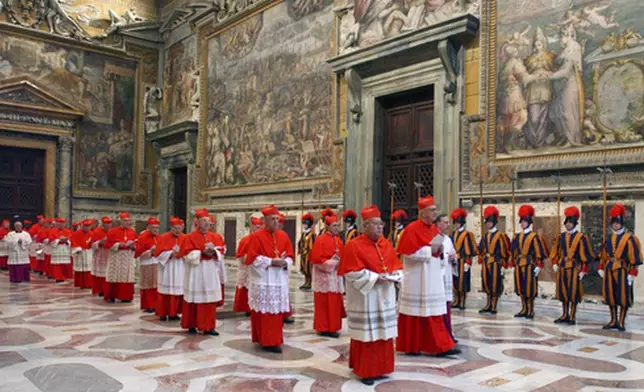
FILE - In this photo from files taken on April 18, 2005 and released by the Vatican paper L'Osservatore Romano, Cardinals walk in procession to the Sistine Chapel at the Vatican, at the beginning of the conclave. (Osservatore Romano via AP, File)

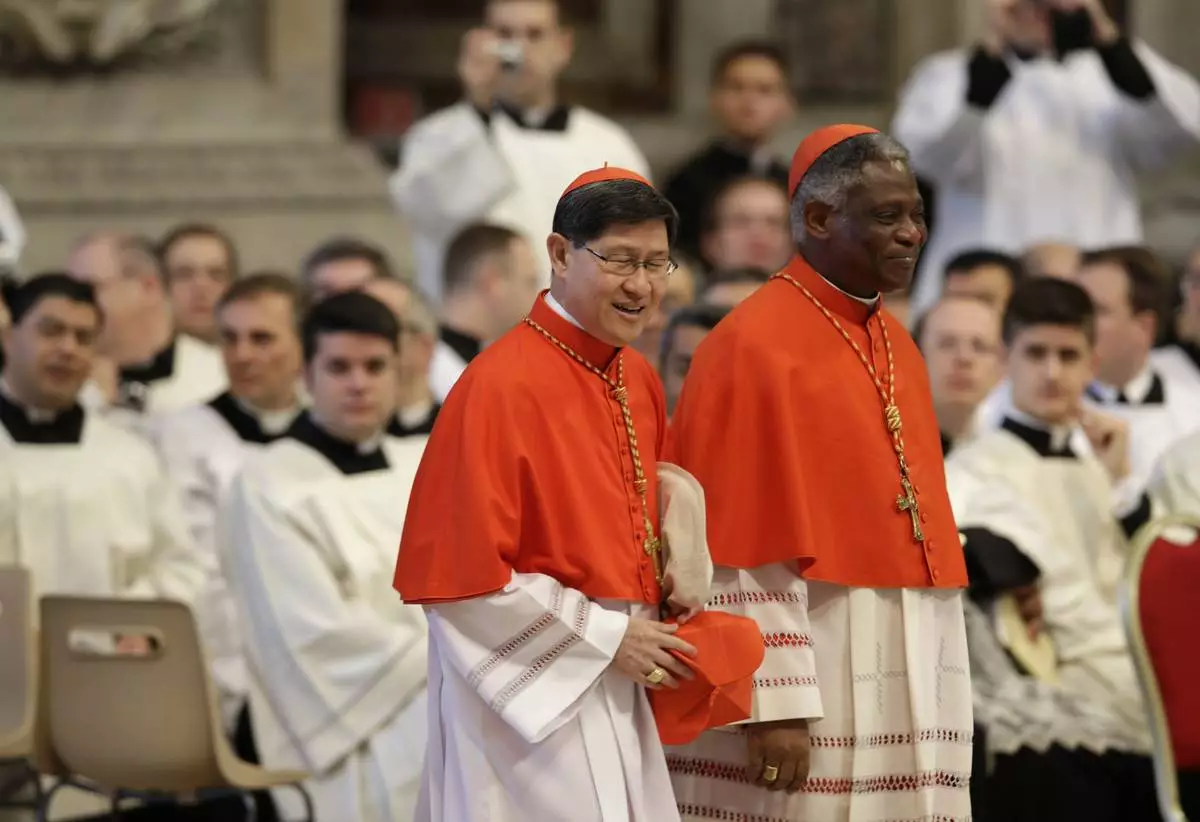
FILE - Cardinals Luis Antonio Tagle, of the Philippines, left, and Peter Kodwo Appiah Turkson, of Nigeria, attend a Mass for the election of a new pope celebrated by Cardinal Angelo Sodano inside St. Peter's Basilica, at the Vatican, Tuesday, March 12, 2013. (AP Photo/Andrew Medichini, File)

FILE - Cardinal Marc Ouellet shows a copy of the Pope Francis' Lumen Fidei encyclical letter prior to the start of a press conference for its presentation at the Vatican, Wednesday, July 3, 2013. (AP Photo/Riccardo De Luca, file)

FILE - Vatican Secretary of State Cardinal Pietro Parolin attends a meeting with Russian Foreign Minister Sergey Lavrov in Moscow, Russia, Tuesday, Aug. 22, 2017. (AP Photo/Pavel Golovkin, file)

FILE - Pope Francis greets Cardinal Luis Antonio Tagle, archbishop of Manila, second from right, and group of migrants, during his weekly general audience, at the Vatican, Wednesday, Sept. 27, 2017. (AP Photo/Andrew Medichini, File)

FILE - Cardinal Marc Ouellet, left, talks with Cardinal Vincent Nichols, before the start of an event to celebrate the Canonization of Cardinal John Henry Newman who will be named a Saint in a ceremony presided by Pope Francis on Sunday, at the Vatican, Saturday, Oct. 12, 2019. (AP Photo/Alessandra Tarantino, file)
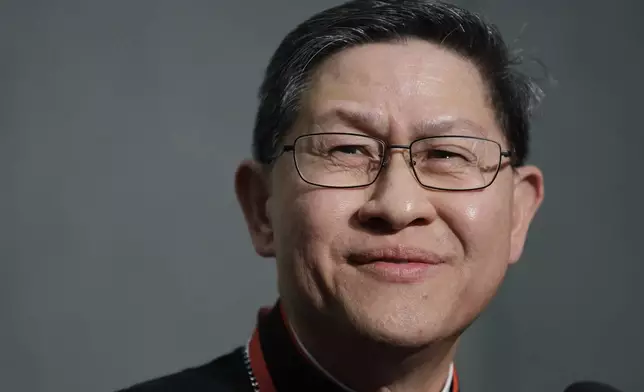
FILE - Cardinal Luis Tagle smiles as he listens reporters questions during a press conference on the Synod at the Vatican, Tuesday, Oct. 23, 2018. (AP Photo/Alessandra Tarantino, File)

FILE - Black smoke emerges from the chimney on the Sistine Chapel as cardinals voted on the second day of the conclave to elect a pope in St. Peter's Square at the Vatican, Wednesday, March 13, 2013. (AP Photo/Michael Sohn, File)

FILE - White smoke is seen billowing out from the chimney of the Sistine Chapel and announcing that a new pope has been elected on Wednesday, March 13, 2013. (AP Photo/Gregorio Borgia, File)

FILE - A view of the Cardinals' tables in the Sistine Chapel in Vatican City, Aug. 25, 1978. The conclave will celebrate Mass here for prayers for inspiration to elect the successor of the late Pope Paul VI. (AP Photo, File)
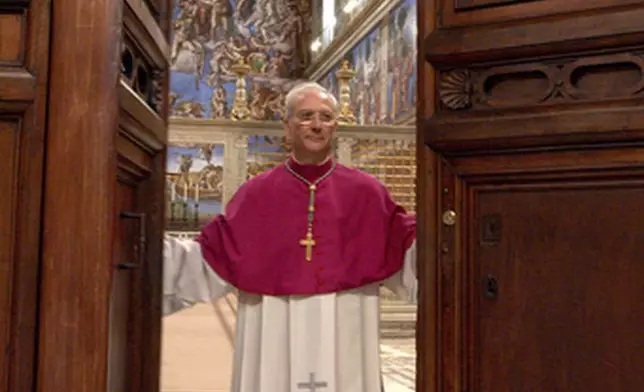
FILE - Master of Liturgical Celebrations Archbishop Piero Marini closes the door of the Sistine Chapel at the Vatican, after proclaiming the "extra omnes", which is the Latin order for all those not taking part in the conclave to leave the chapel, at the beginning of the conclave, on April 18, 2005. (Osservatore Romano via AP, File)
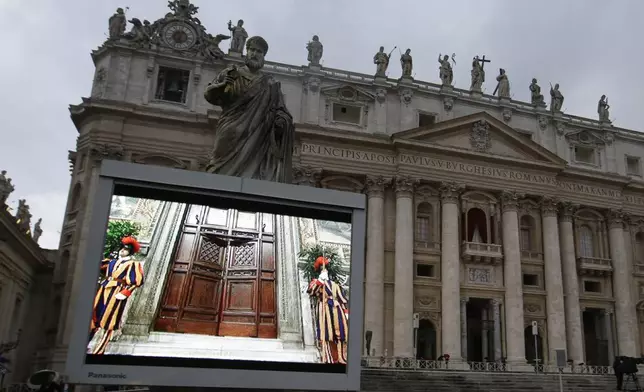
FILE - A giant monitor in St. Peter's Square at the Vatican, Tuesday, March 12, 2013 shows the heavy wooden door to the Sistine Chapel being closed and locked, signaling the start of the conclave to elect a new pope to succeed Benedict XVI following his stunning resignation. (AP Photo/Gregorio Borgia, File)

FILE - Cardinal Camerlengo Kevin Farrell talks during an interview with The Associated Press in his office in Rome, Tuesday, July 31, 2018. (AP Photo/Paolo Santalucia, File)

FILE - Tables and chairs line the Sistine Chapel at the Vatican in preparation for the conclave, on April 16, 2005. (AP Photo/Pier Paolo Cito, File)
St. John Paul II rewrote the regulations on papal elections in a 1996 document that remains largely in force, though Pope Benedict XVI amended it twice before he resigned. Here is what happens when a pope dies, a period known as the “sede vacante,” or the “vacant See.”
After the pope has died, the camerlengo, or chamberlain, must certify the death and seal the papal apartment. He runs administrative and financial duties of the Holy See until a new pope takes over.
The largely ceremonial job of camerlengo is currently held by Cardinal Kevin Farrell, the Irish-born American head of the Vatican’s laity office, who also announced the death on Monday morning.
Nearly all prefects of Vatican offices lose their jobs when a pope dies, but a few stay on, including the foreign minister and the master of liturgical ceremonies, who plays a key role in assembling the conclave.
The dean of the College of Cardinals summons the cardinals for the funeral, presiding at the Mass before the conclave begins. That position is currently held by Cardinal Giovanni Battista Re, the retired head of the Vatican’s office for bishops.
In November 2024, Francis reformed the rites to be used for his funeral, simplifying them to emphasize his role as a mere bishop and allowing for burial outside the Vatican. Francis has chosen to be buried in St. Mary Major Basilica, where his favorite icon of the Virgin Mary, the Salus Populi Romani, is located.
The death of a pope begins a precise sequence of events that include the confirmation of death in the pontiff's home, the transfer of the coffin to St. Peter's Basilica for public viewing, a funeral Mass and burial. Interment must take place between the fourth and sixth day after his death.
After the funeral, there are nine days of official mourning, known as the “novendiali.”
During this period, the cardinals arrive in Rome. To give everyone time to assemble, the conclave must begin 15-20 days after the “sede vacante” is declared, although it can start sooner if the cardinals agree.
Only cardinals under age 80 are eligible to vote. Current regulations notionally limit the number of electors to 120, but popes have often exceeded that ceiling. According to the most recently updated Vatican statistics, there were 135 cardinals under age 80 and eligible to vote. Cardinals over age 80 can be elected pope.
Those over 80 can’t vote but can participate in pre-conclave meetings, known as general congregations, in which church problems are discussed. It was in these meetings in 2013 that then-Cardinal Jorge Mario Bergoglio spoke about the need for the church to go to the “existential peripheries” to find those who suffer — an off-the-cuff speech that helped his election.
Any baptized Roman Catholic male is eligible to be pope, but since 1378, only cardinals have been selected. Some current leading candidates:
— Cardinal Pietro Parolin of Italy, 70, Francis’ secretary of state and a veteran Vatican diplomat.
— Cardinal Marc Ouellet of Canada, 80, head of the Vatican’s bishops office from 2010 to 2023.
— Cardinal Christoph Schoenborn of Austria, 80, a student of Pope Benedict XVI and thus ostensibly having appeal for conservatives.
— Cardinal Luis Tagle of the Philippines, 67, brought by Francis to head the Vatican’s massive missionary office.
— Cardinal Matteo Zuppi of Italy, 69, a Francis protégé who headed the Italian bishops conference.
A first ballot is held in the Sistine Chapel on the afternoon after the initial Mass. If no pope is elected, over the ensuing days two ballots are held each morning and two each afternoon.
The ballots are rectangular pieces of paper with the words: “Eligo in Summum Pontificem” (“I elect as supreme pontiff”) written on top, with a space for a name. Each cardinal makes his choice, folds the paper in half, walks to the front of the chapel and declares: “I call as my witness Christ the Lord, who will be my judge, that my vote is given to the one who before God I think should be elected.”
He then puts the ballot on a tray and tips it into a receptacle.
Three designated cardinals, known as scrutineers, check each ballot to see if it is filled out correctly. Each name is read aloud and counted, with the results announced to the conclave after each round.
If no one gets the needed two-thirds of votes, the ballots are pierced with a needle and thread, which is then knotted and placed on a tray, and another round of voting is prepared.
Benedict modified some of John Paul’s 1996 conclave rules, most notably excluding his vision that a pope could be elected by a simple majority if voting was stalemated. Benedict decreed that a two-thirds majority is always needed, no matter how long it takes. He did so to prevent cardinals from holding out for the 12 days foreseen by John Paul and then pushing through a candidate with a slim majority.
Benedict also tightened the oath of secrecy in the conclave, making clear that anyone who reveals what went on inside faces automatic excommunication.
In John Paul’s rules, excommunication was always a possibility, but Benedict revised the oath that liturgical assistants and secretaries take to make it explicit, saying they must observe “absolute and perpetual secrecy” and explicitly refrain from using any audio or video recording devices.
They now declare: “I take this oath fully aware that an infraction thereof will incur the penalty of automatic excommunication reserved to the Apostolic See. So help me God and these Holy Gospels, which I touch with my hand.”
Cardinals also are bound by secrecy, although the threat of excommunication only hangs over them explicitly if they are found to have accepted payment for their vote, allowed secular powers to influence it or entered into pacts with other cardinals to back a candidate.
After the ballots are pierced, they are burned in a cylindrical stove at the end of the voting session. Black smoke from the Sistine Chapel chimney means no decision; white smoke signals the cardinals have chosen a pope and that he has accepted.
Chemical cartridges are added to ensure there is no confusion over the color. To produce black smoke, a cartridge containing potassium perchlorate, anthracene — the component of coal tar — and sulfur is burned with the ballots. For white smoke, a cartridge of potassium chlorate, lactose and chloroform resin is burned with the ballots.
Bells also are rung to signal the election of a pope, for further clarity.
The new pope is introduced from the loggia overlooking St. Peter’s Square with the words, “Habemus Papam!” (“We have a pope!”) and his chosen papal name. The new pope then emerges and gives his first blessing.

FILE - In this photo from files taken on April 18, 2005 and released by the Vatican paper L'Osservatore Romano, Cardinals walk in procession to the Sistine Chapel at the Vatican, at the beginning of the conclave. (Osservatore Romano via AP, File)
FILE - Cardinals Luis Antonio Tagle, of the Philippines, left, and Peter Kodwo Appiah Turkson, of Nigeria, attend a Mass for the election of a new pope celebrated by Cardinal Angelo Sodano inside St. Peter's Basilica, at the Vatican, Tuesday, March 12, 2013. (AP Photo/Andrew Medichini, File)
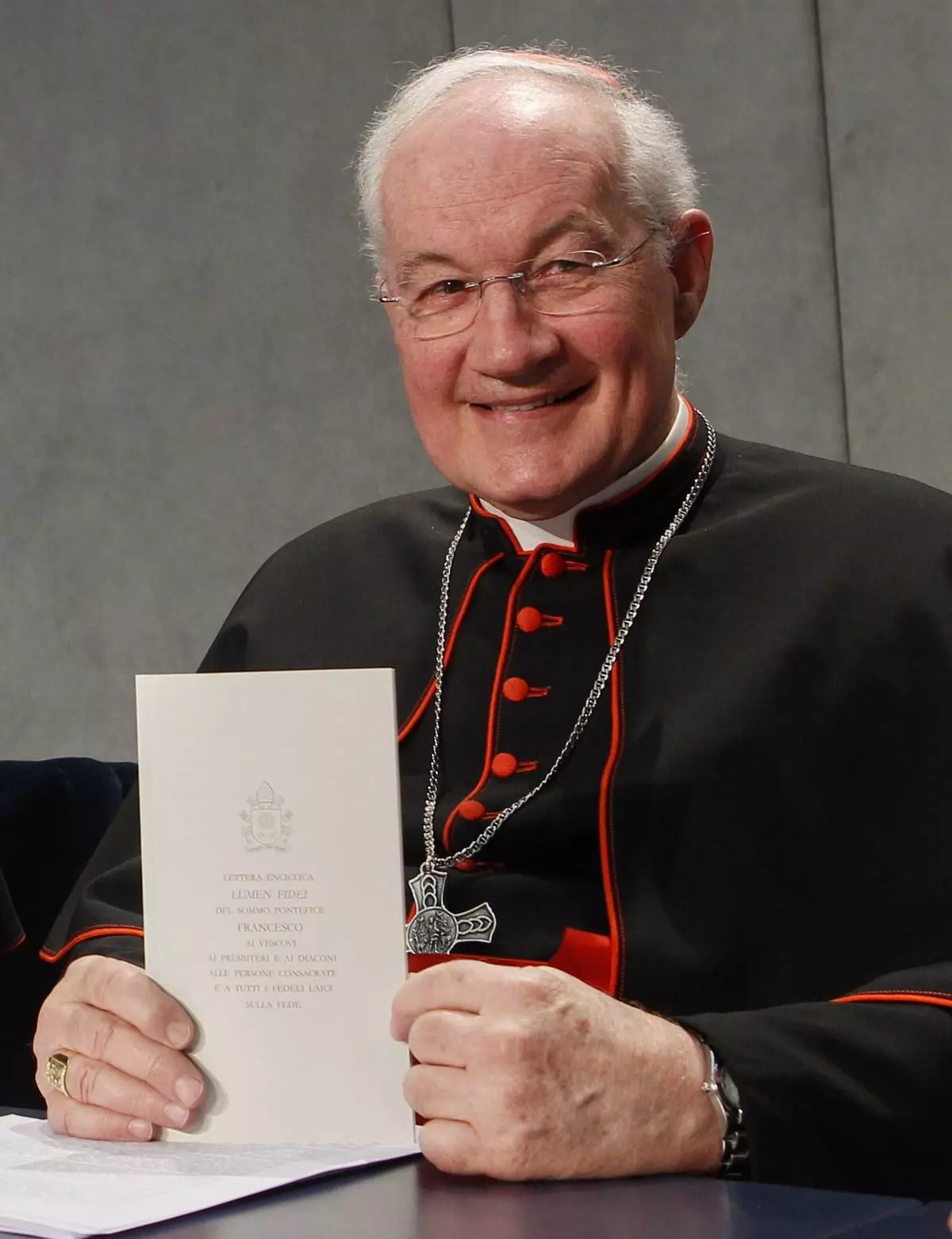
FILE - Cardinal Marc Ouellet shows a copy of the Pope Francis' Lumen Fidei encyclical letter prior to the start of a press conference for its presentation at the Vatican, Wednesday, July 3, 2013. (AP Photo/Riccardo De Luca, file)

FILE - Vatican Secretary of State Cardinal Pietro Parolin attends a meeting with Russian Foreign Minister Sergey Lavrov in Moscow, Russia, Tuesday, Aug. 22, 2017. (AP Photo/Pavel Golovkin, file)

FILE - Pope Francis greets Cardinal Luis Antonio Tagle, archbishop of Manila, second from right, and group of migrants, during his weekly general audience, at the Vatican, Wednesday, Sept. 27, 2017. (AP Photo/Andrew Medichini, File)

FILE - Cardinal Marc Ouellet, left, talks with Cardinal Vincent Nichols, before the start of an event to celebrate the Canonization of Cardinal John Henry Newman who will be named a Saint in a ceremony presided by Pope Francis on Sunday, at the Vatican, Saturday, Oct. 12, 2019. (AP Photo/Alessandra Tarantino, file)

FILE - Cardinal Luis Tagle smiles as he listens reporters questions during a press conference on the Synod at the Vatican, Tuesday, Oct. 23, 2018. (AP Photo/Alessandra Tarantino, File)

FILE - Black smoke emerges from the chimney on the Sistine Chapel as cardinals voted on the second day of the conclave to elect a pope in St. Peter's Square at the Vatican, Wednesday, March 13, 2013. (AP Photo/Michael Sohn, File)

FILE - White smoke is seen billowing out from the chimney of the Sistine Chapel and announcing that a new pope has been elected on Wednesday, March 13, 2013. (AP Photo/Gregorio Borgia, File)

FILE - A view of the Cardinals' tables in the Sistine Chapel in Vatican City, Aug. 25, 1978. The conclave will celebrate Mass here for prayers for inspiration to elect the successor of the late Pope Paul VI. (AP Photo, File)

FILE - Master of Liturgical Celebrations Archbishop Piero Marini closes the door of the Sistine Chapel at the Vatican, after proclaiming the "extra omnes", which is the Latin order for all those not taking part in the conclave to leave the chapel, at the beginning of the conclave, on April 18, 2005. (Osservatore Romano via AP, File)

FILE - A giant monitor in St. Peter's Square at the Vatican, Tuesday, March 12, 2013 shows the heavy wooden door to the Sistine Chapel being closed and locked, signaling the start of the conclave to elect a new pope to succeed Benedict XVI following his stunning resignation. (AP Photo/Gregorio Borgia, File)

FILE - Cardinal Camerlengo Kevin Farrell talks during an interview with The Associated Press in his office in Rome, Tuesday, July 31, 2018. (AP Photo/Paolo Santalucia, File)

FILE - Tables and chairs line the Sistine Chapel at the Vatican in preparation for the conclave, on April 16, 2005. (AP Photo/Pier Paolo Cito, File)