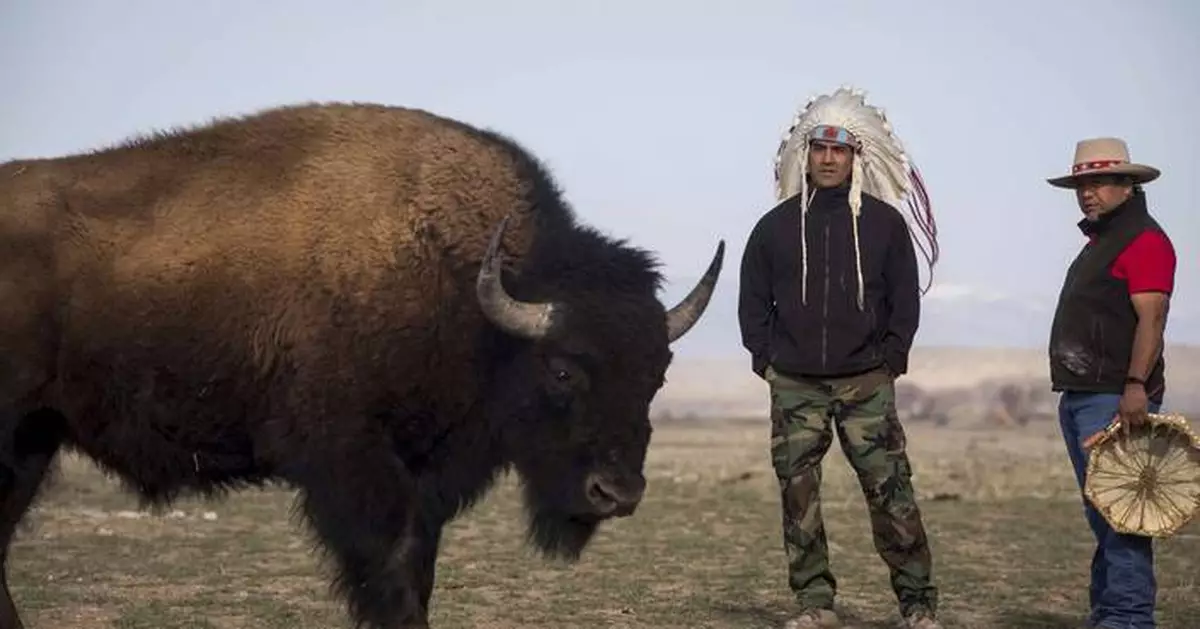
Jason Baldes drove down a dusty, sagebrush highway earlier this month, pulling 11 young buffalo in a trailer from Colorado to the Wind River Reservation in Wyoming. His blue truck has painted on the side a drawing of buffalo and a calf.
As the executive director of the Wind River Buffalo Initiative and Eastern Shoshone tribal member, Baldes has helped grow the number of buffalo on the reservation for the last decade. The latest count: the Northern Arapaho tribe have 97 and the Eastern Shoshone have 118.
Click to Gallery
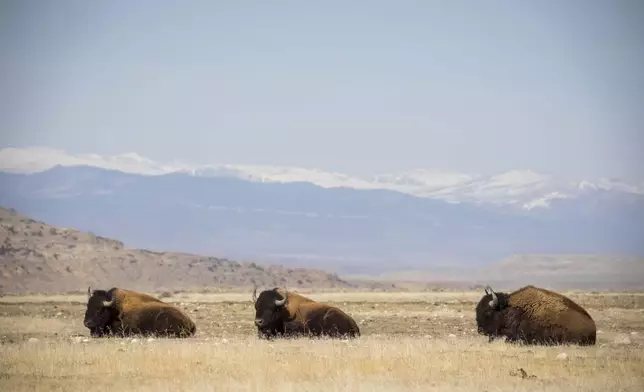
Three buffaloes rest in the the Eastern Shoshone Buffalo Enclosure on Friday, April 11, 2025, on the Wind River Reservation near Morton, Wyo. (AP Photo/Amber Baesler)
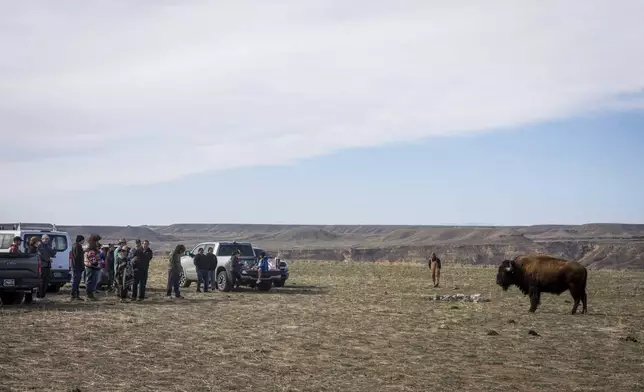
A newly released buffalo wanders in the Eastern Shoshone Buffalo Enclosure on Friday, April 11, 2025, on the Wind River Reservation near Morton, Wyo. (AP Photo/Amber Baesler)
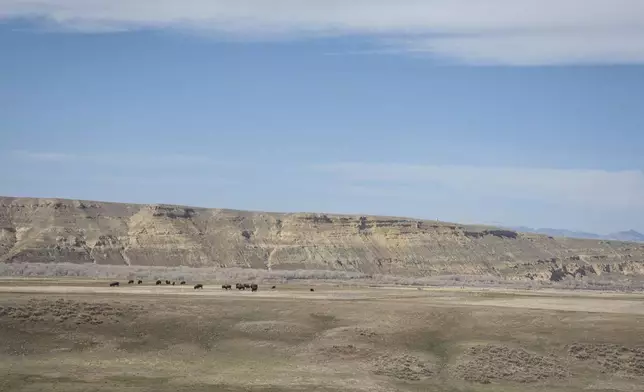
Newly relocated buffalo integrate with part of the herd during a buffalo release at the Eastern Shoshone Buffalo Enclosure on Friday, April 11, 2025, on the Wind River Reservation near Morton, Wyo. (AP Photo/Amber Baesler)
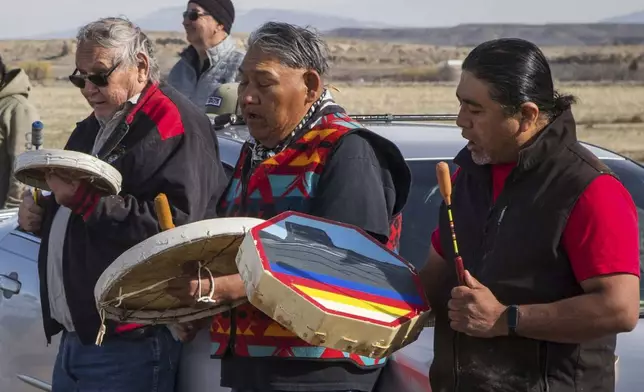
Big Wind Singers Lyle Oldman, from left, Wayland Bonatsie and Jake Hill perform a Sun Dance song during the buffalo release at the Eastern Shoshone Buffalo Enclosure on Friday, April 11, 2025, on the Wind River Reservation near Morton, Wyo. (AP Photo/Amber Baesler)
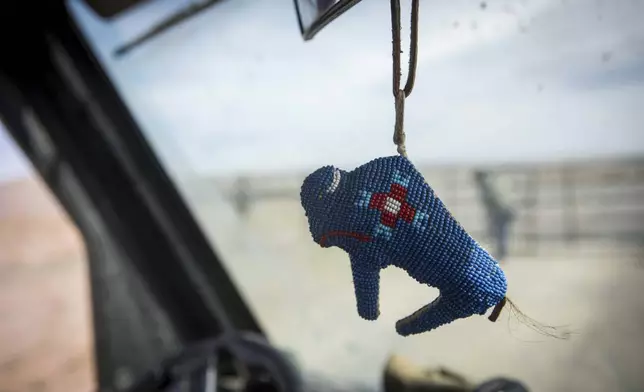
Beadwork, with the likeness of a buffalo, dangles from a rearview mirror in a vehicle used by the Wind River Tribal Buffalo Initiative during the buffalo release at the Eastern Shoshone Buffalo Enclosure on Friday, April 11, 2025, on the Wind River Reservation near Morton, Wyo. (AP Photo/Amber Baesler)
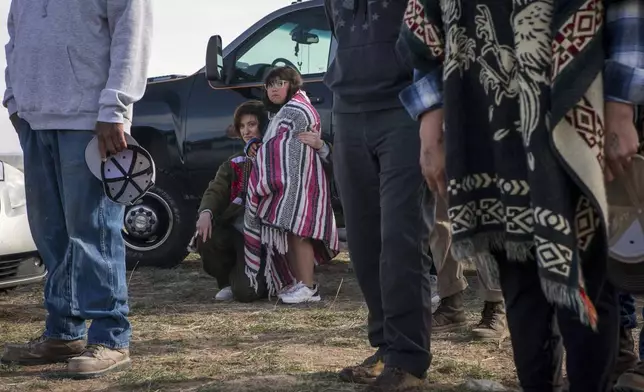
Oakley Boycott, left, embraces Ori Downer, 8, during the buffalo release at the Eastern Shoshone Buffalo Enclosure on Friday, April 11, 2025, on the Wind River Reservation near Morton, Wyo. (AP Photo/Amber Baesler)
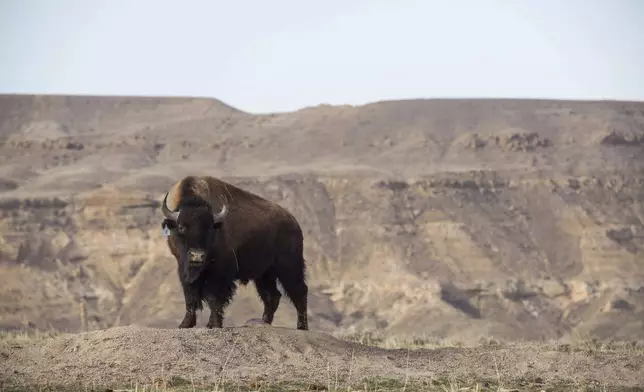
A buffalo, relocated from the Soapstone Prairie in Colorado, wanders in its new home at the Eastern Shoshone Buffalo Enclosure, Friday, April 11, 2025, on the Wind River Reservation near Morton, Wyo. (AP Photo/Amber Baesler)
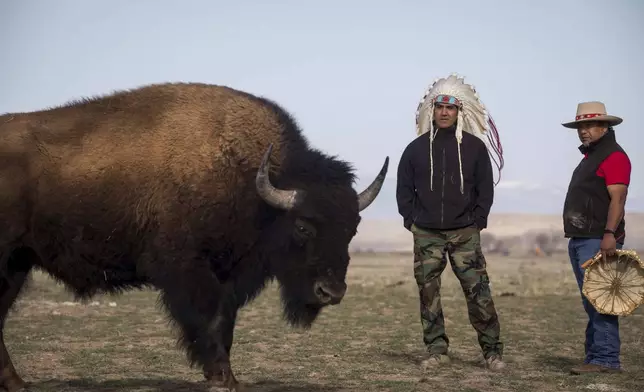
A buffalo approaches Wade LeBeau and Jake Hill, right, during the buffalo release at the Eastern Shoshone Buffalo Enclosure, Friday, April 11, 2025, on the Wind River Reservation near Morton, Wyo. (AP Photo/Amber Baesler)
“Tribes have an important role in restoring buffalo for food sovereignty, culture and nutrition, but also for overall bison recovery,” he said.
EDITOR'S NOTE: This story is a collaboration between The Associated Press and Grist.
The Eastern Shoshone this month voted to classify buffalo as wildlife instead of livestock as a way to treat them more like elk or deer rather than like cattle. Because the two tribes share the same land base, the Northern Arapaho are expected to vote on the distinction as well. The vote indicates a growing interest to both restore buffalo on the landscape and challenge the relationship between animal and product. Tribes tend to say buffalo while scientists use bison to describe the animal.
While climate change isn’t the main driver behind the push to restore buffalo's wildlife status, the move could bring positive effects to the fight against global warming. Climate change is shrinking Wyoming’s glaciers, contributing to drought, and increasing wildfires. Like cows, buffalo emit methane, a powerful greenhouse gas, by belching, though it’s not clear if buffalo give off the same levels.
Those emissions contribute to climate change, but what buffalo bring in increased biodiversity can promote drought resilience and some buffalo herds have been shown to help store carbon.
Baldes argues buffalo should be able to roam on the plains to bolster biodiversity and restore ecological health of the landscape — but that has to come with a change in relationship.
“Buffalo as wildlife allows the animals to exist on the landscape,” Baldes said. “Rather than livestock based on economic and Western paradigms.”
Wildlife is broadly defined as all living organisms, like plants and animals that exist outside the direct control of humans. When it comes to how different states define wildlife, it can vary. But in general, animals that are not domesticated — as in selectively bred for human consumption or companionship — are typically classified as wildlife.
“Bison have a complex history since their near extinction over 100 years ago,” said Lisa Shipley, a professor at Washington State University who studies management of wild ungulates, which are large mammals with hooves, including buffalo.
During the expansion of settlers, a combination of overhunting, habitat destruction, and government policy aimed at killing Indigenous peoples' food supplies eradicated the animal. Around 8 million buffalo were in the United States in 1870, and then in the span of 20 years there were less than 500.
Today, in North America there are roughly 20,000 wild plains bison — like the ones Baldes works to put on the Wind River. But most reside in privately owned operations, where many are raised for the growing bison meat industry. In 2023, around 85,000 bison were processed for meat consumption in the U.S., compared to the 36 million head of cattle. It’s not a lot compared to cattle, but some producers see buffalo as an interesting new addition to the global meat market.
The numbers are similar for other kinds of wildlife — there are typically more livestock on the land than wildlife. According to one study, if all the livestock of the world were weighed, the livestock would be 30 times heavier than the weight of all the wildlife.
Reducing the world’s collective reliance on cows — a popular variety of livestock — is seen by many as a path forward to combating climate change. Eating less beef and dairy products can be good for the planet; cows account for around 10% of greenhouse gas emissions. And having too many cows on a small patch of pasture can have negative effects on the environment, causing soil erosion and affecting the amount of carbon the land can absorb.
Buffalo are good to have on a landscape because they tend to move around if given enough room. One study found that cattle spent half their time grazing, while buffalo only around a quarter of the time — buffalo even moved faster and had an affinity for more varieties of grasses to munch on. Still, even buffalo can damage the landscape if they are managed like cattle.
“Too many animals on the landscape can lead to rangeland degradation and health concerns,” said Justin Binfet, wildlife management coordinator for Wyoming Game and Fish Department. The state has classified the buffalo as both livestock and wildlife, which means they can be privately owned or managed in conservation herds. However, different places in the state have different rules regarding the animal. Currently, Wyoming issues around 70 buffalo hunting tags a year.
The National Park Service manages the oldest untouched population of buffalo in Yellowstone National Park, which includes portions of Wyoming, Montana and Idaho. Montana has sued park officials over their buffalo management plan, citing potential negative effects as the park grows the herd and aims to let the buffalo push the boundaries in the park like other wildlife do.
The Montana Stockgrowers Association – a group that advocates for the sale of beef – said the Yellowstone management plan for buffalo “did not adequately represent all management options that should be considered” like more population control and increased tribal hunting.
Ranchers in Wyoming and Montana, including tribal members who raise cattle, often cite the disease brucellosis as a reason to keep buffalo and cattle strictly away from each other. The management plan for buffalo says that there has not been a recorded case of bison-to-cattle disease.
Wyoming has a history of contesting tribal hunting rights. In a 2019 U.S. Supreme Court case, Herrera vs. Wyoming, the court ruled in favor of treaty-protected hunting rights within the state. But how this history will intersect with buffalo’s classification as wildlife remains to be seen.
On the Wind River Reservation, the tribes have control of wildlife management and hunting regulations. The choice to designate buffalo as wildlife is a matter of tribal sovereignty.
For Baldes, he wants to eventually hunt buffalo like someone would any other wildlife. He’s in the process of buying property to allow buffalo to roam like they did before the arrival of settlers. He doesn’t like when people call the Wind River Buffalo Initiative a "ranch," because it has too much of an association with cows and cattle. He says buffalo should be treated as they were before settler contact.
“Bringing the buffalo back is about our relationship with them, not domination over them,” Baldes said.
The Associated Press’ climate and environmental coverage receives financial support from multiple private foundations. AP is solely responsible for all content. Find AP’s standards for working with philanthropies, a list of supporters and funded coverage areas at AP.org.
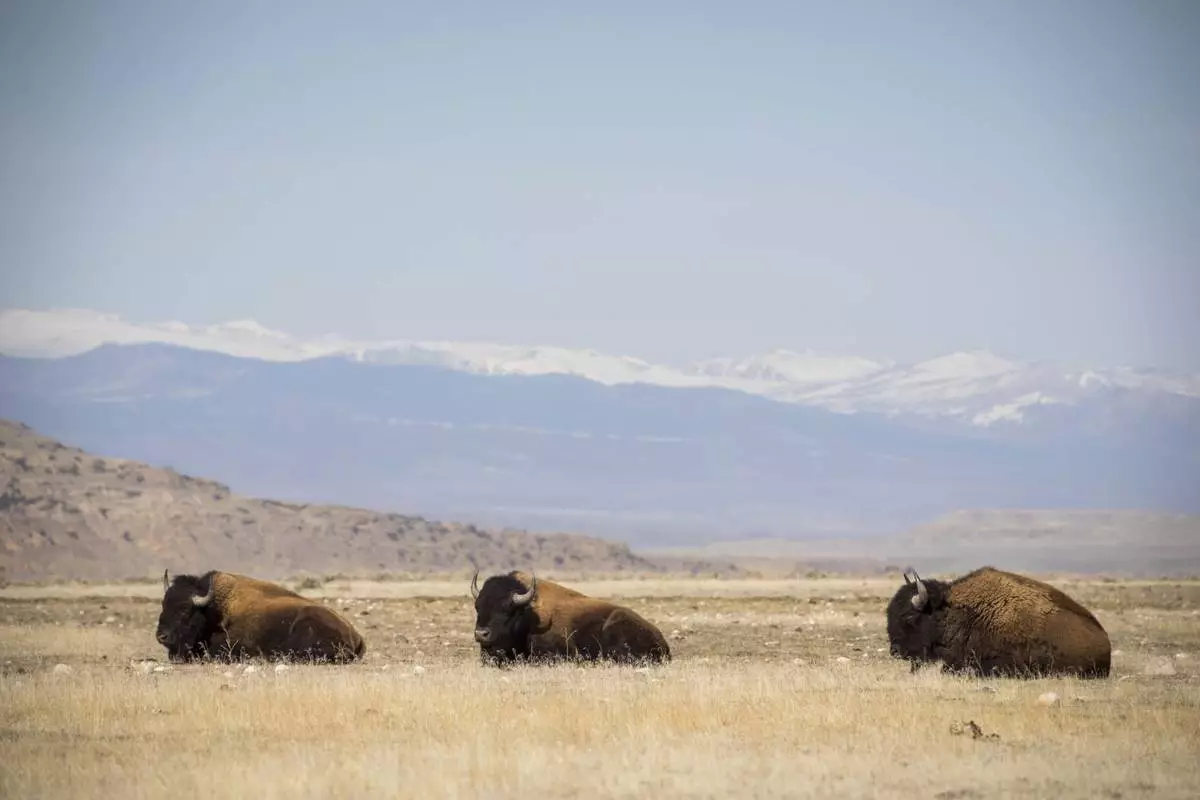
Three buffaloes rest in the the Eastern Shoshone Buffalo Enclosure on Friday, April 11, 2025, on the Wind River Reservation near Morton, Wyo. (AP Photo/Amber Baesler)
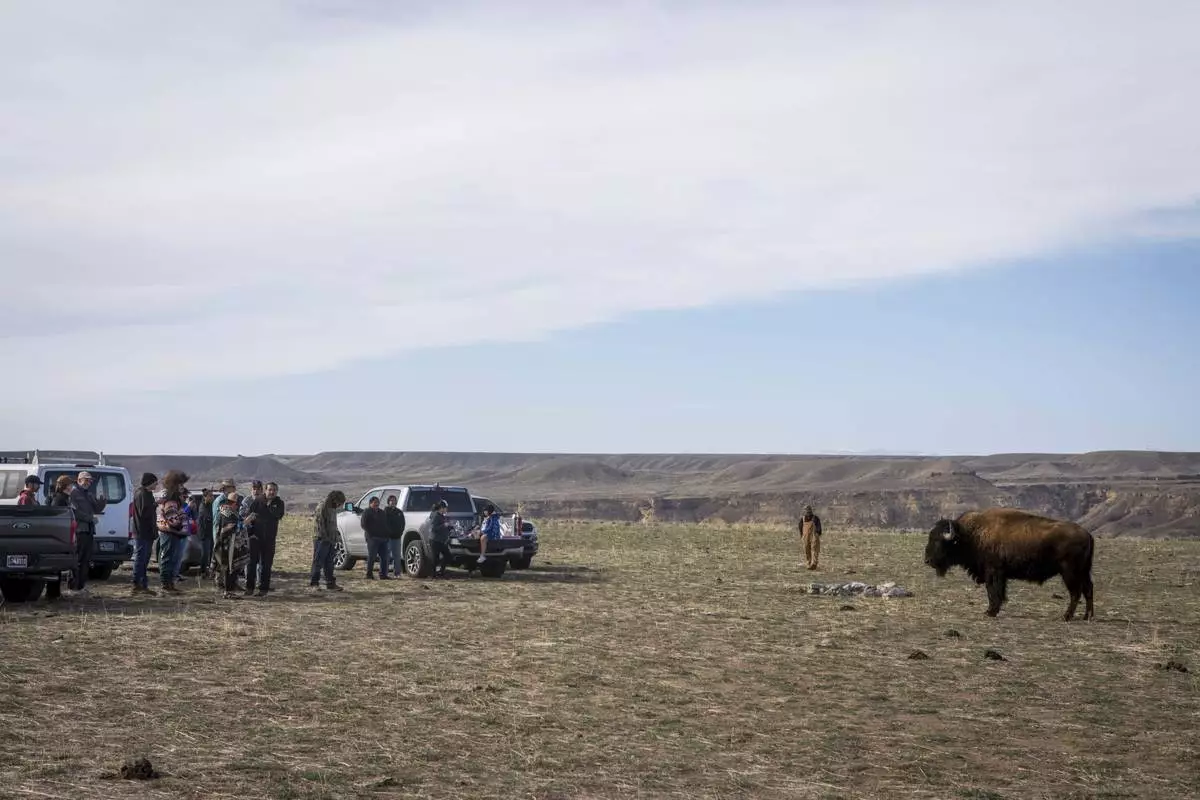
A newly released buffalo wanders in the Eastern Shoshone Buffalo Enclosure on Friday, April 11, 2025, on the Wind River Reservation near Morton, Wyo. (AP Photo/Amber Baesler)
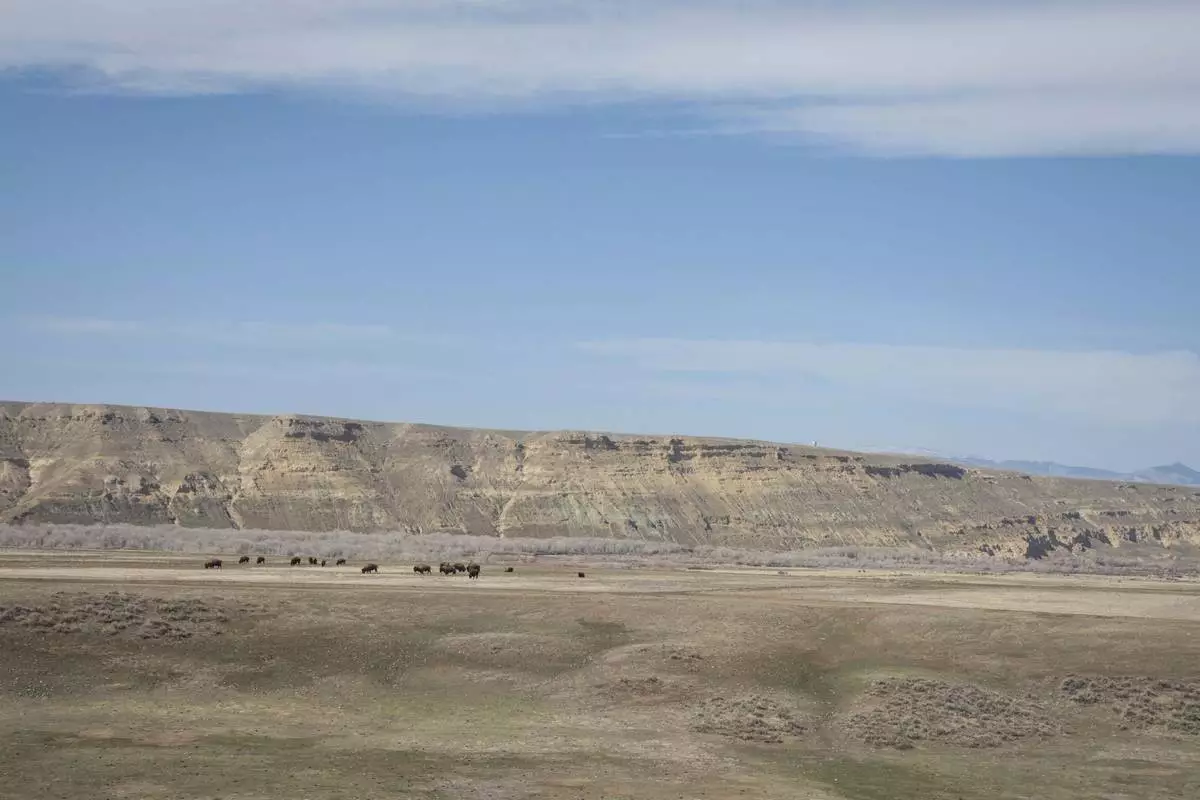
Newly relocated buffalo integrate with part of the herd during a buffalo release at the Eastern Shoshone Buffalo Enclosure on Friday, April 11, 2025, on the Wind River Reservation near Morton, Wyo. (AP Photo/Amber Baesler)
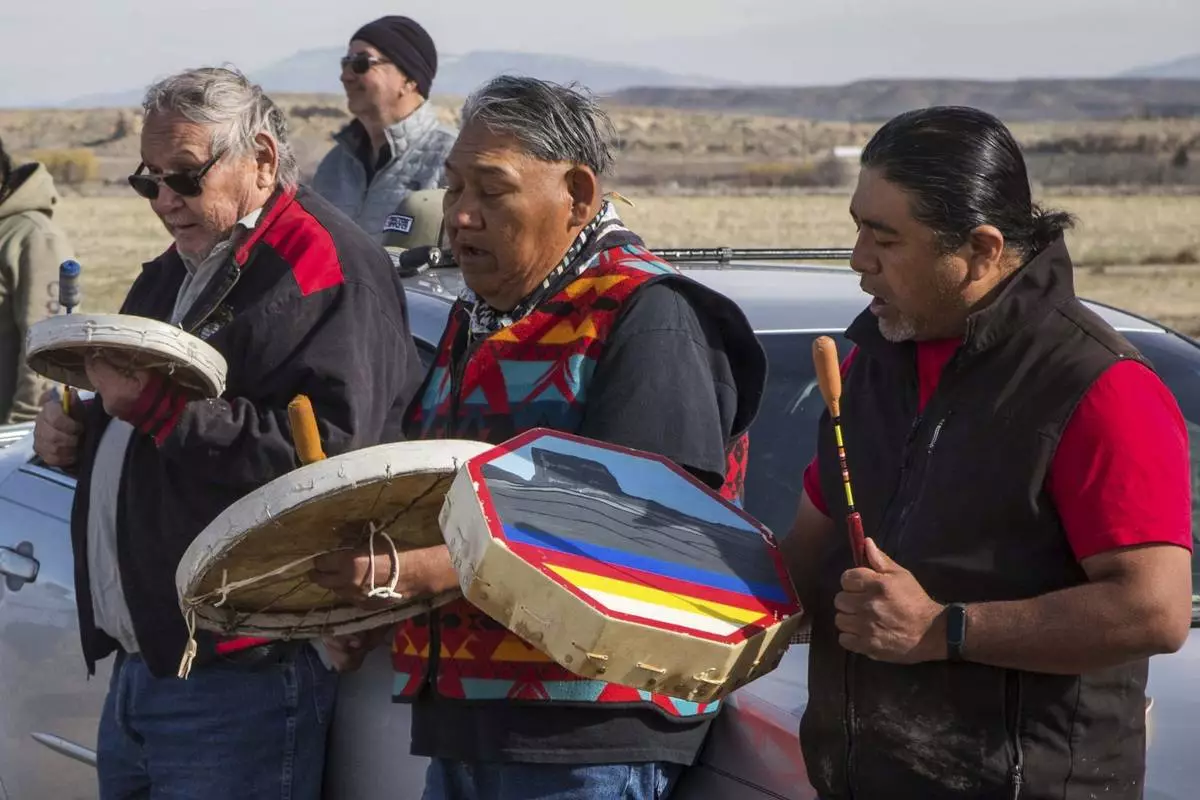
Big Wind Singers Lyle Oldman, from left, Wayland Bonatsie and Jake Hill perform a Sun Dance song during the buffalo release at the Eastern Shoshone Buffalo Enclosure on Friday, April 11, 2025, on the Wind River Reservation near Morton, Wyo. (AP Photo/Amber Baesler)
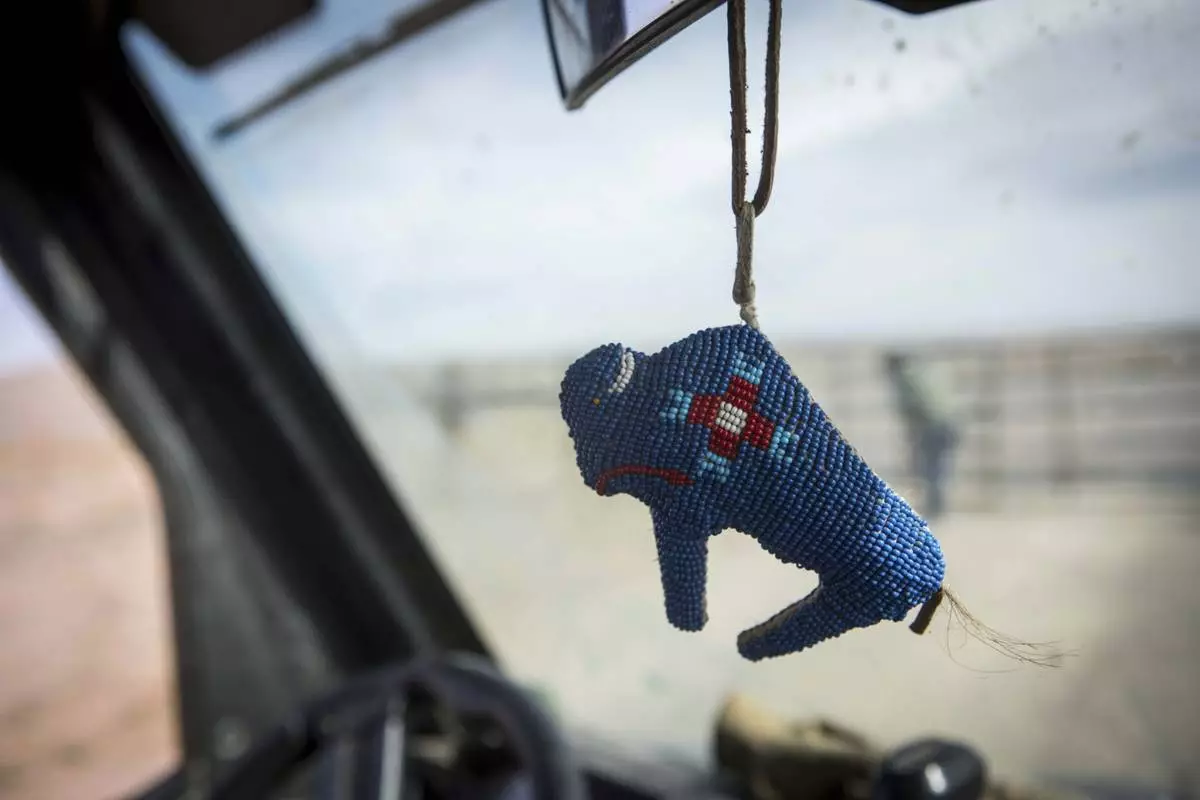
Beadwork, with the likeness of a buffalo, dangles from a rearview mirror in a vehicle used by the Wind River Tribal Buffalo Initiative during the buffalo release at the Eastern Shoshone Buffalo Enclosure on Friday, April 11, 2025, on the Wind River Reservation near Morton, Wyo. (AP Photo/Amber Baesler)
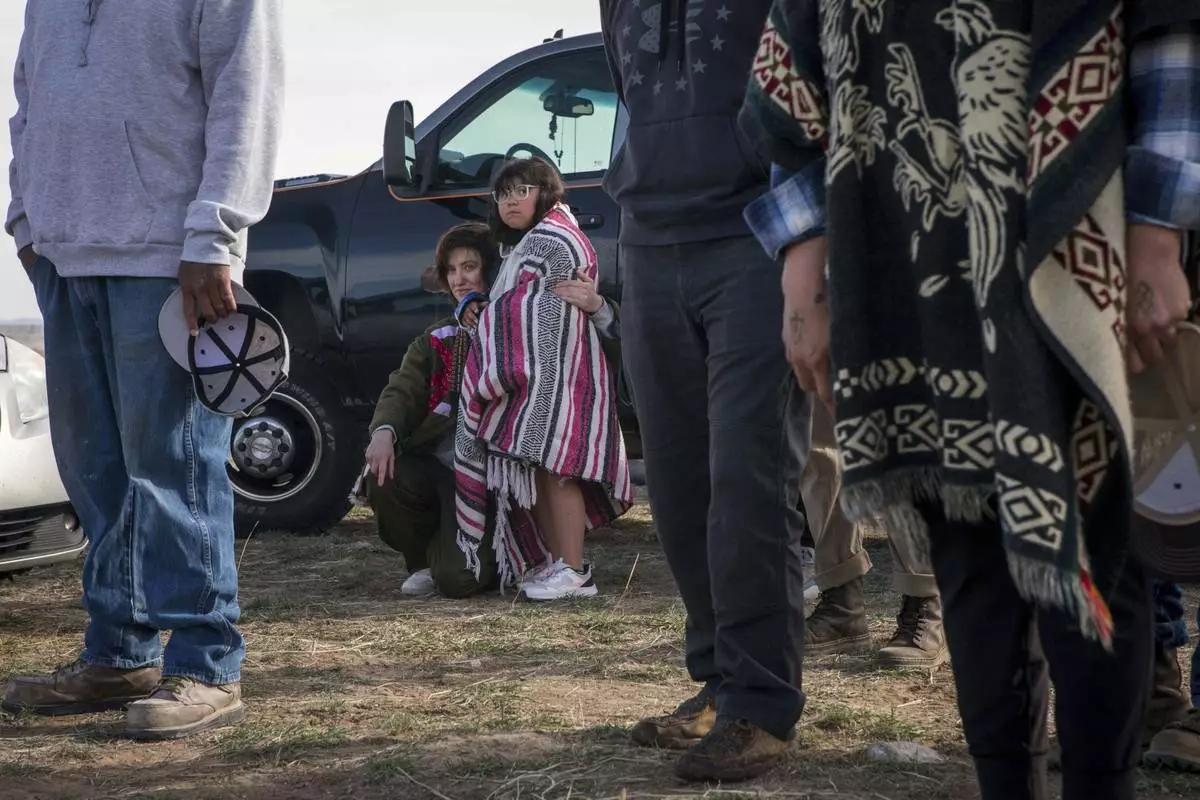
Oakley Boycott, left, embraces Ori Downer, 8, during the buffalo release at the Eastern Shoshone Buffalo Enclosure on Friday, April 11, 2025, on the Wind River Reservation near Morton, Wyo. (AP Photo/Amber Baesler)
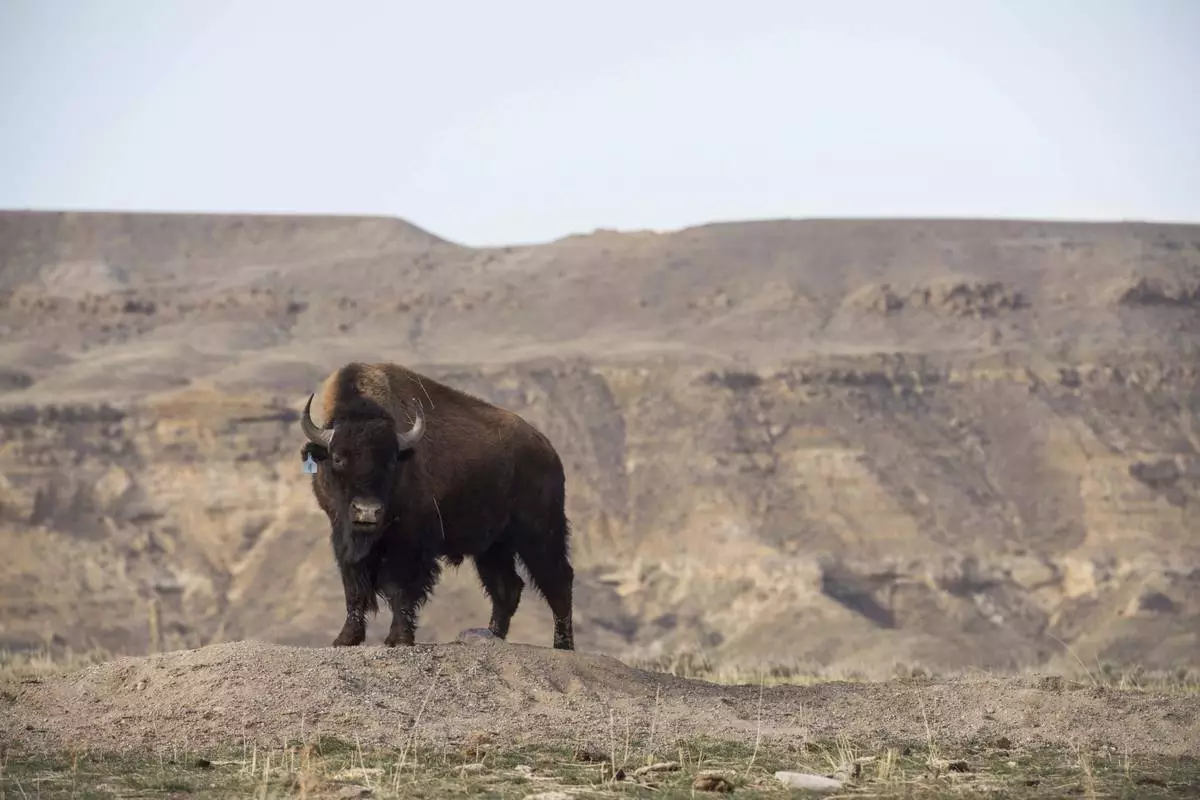
A buffalo, relocated from the Soapstone Prairie in Colorado, wanders in its new home at the Eastern Shoshone Buffalo Enclosure, Friday, April 11, 2025, on the Wind River Reservation near Morton, Wyo. (AP Photo/Amber Baesler)
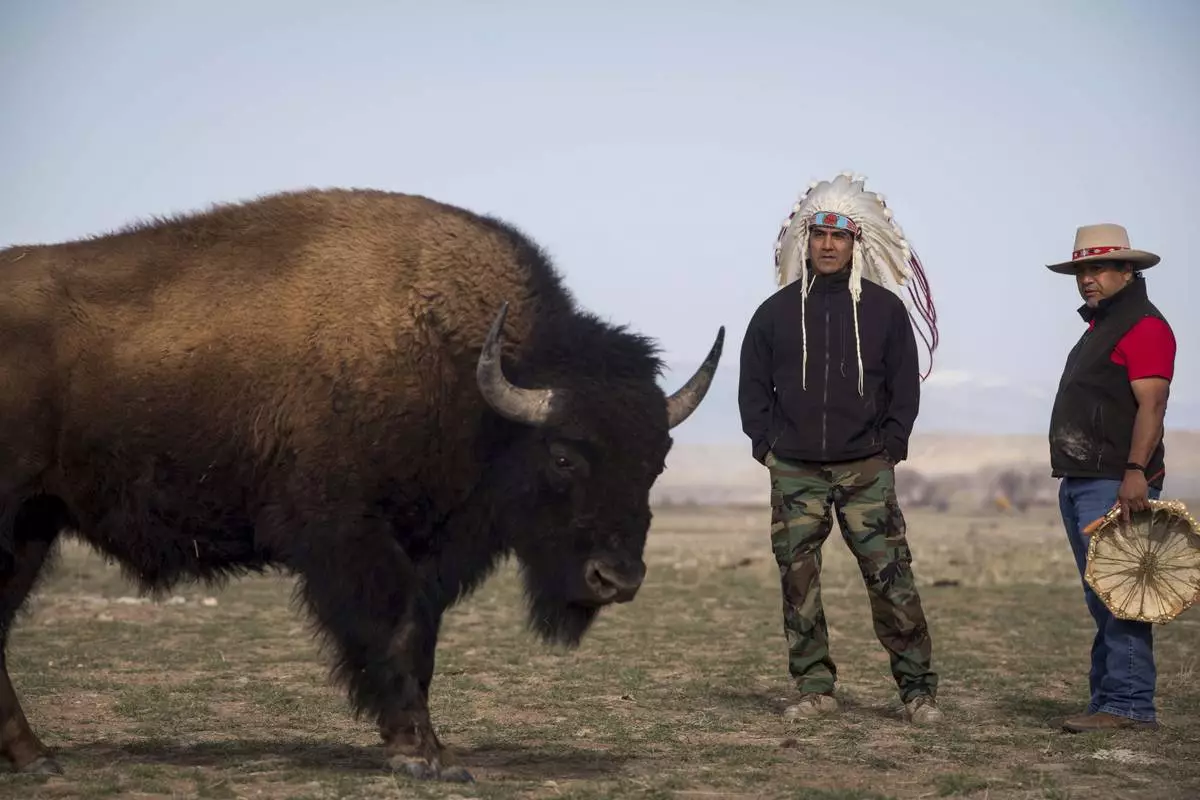
A buffalo approaches Wade LeBeau and Jake Hill, right, during the buffalo release at the Eastern Shoshone Buffalo Enclosure, Friday, April 11, 2025, on the Wind River Reservation near Morton, Wyo. (AP Photo/Amber Baesler)