WASHINGTON (AP) — President Donald Trump repeated his attacks Monday against the chair of the Federal Reserve, demanding that the central bank lower its key interest rate to boost the economy.
Trump called Powell “a major loser” and said that energy and grocery prices are “substantially lower” and “there is virtually No Inflation.” Yet Trump said the economy could slow without rate cuts.
Gas prices have fallen for the past two months, in part because oil costs have dropped on fears of slower growth, but food prices jumped in January and March and overall inflation remains above the Fed’s 2% target.
Trump's comments drove the stock market and the dollar lower as investors in the U.S. and overseas grow increasingly wary about the economic standing of the U.S. On Friday, a top White House adviser said the administration is studying whether it can fire Powell, a move that would undermine the Fed's independence and likely send shock waves through global financial markets.
The stock market, which fell immediately at the opening bell Monday, tumbled further after Trump’s post, with Dow dropping by more than 1,000 points and the broad S&P 500 stock index falling nearly 3% in mid-day trading. The dollar fell to a three-year low.
The Federal Reserve was established as an independent agency and most economists think central banks that are free of political interference do a better job at keeping inflation in check. Otherwise, it would be harder for the Fed to take unpopular steps to keep prices down, such as raising interest rates.
The interest rate on 10-year Treasuries has been rising as Trump rolled out aggressive tariff policies against trading partners and continues to attack Powell and the Federal Reserve. The interest rate ticked higher again on Monday to 4.37%.
The dollar losing value is unusual when stock prices fall and Treasury yields rise because investors typically buy U.S. government bonds during market turmoil, driving down the yield. Instead, investors appear to be avoiding U.S. markets due to the perception of rising risk.
Trump also criticized Powell for being “too late” to move on interest rates. Powell and other Fed officials have long acknowledged that they waited too long to raise rates when inflation was first ignited in 2021.
But right now, Powell has underscored that the Fed faces a potentially “challenging scenario.” Trump's tariffs could worsen inflation, and the Fed would typically respond to rising prices by keeping its rate elevated, or even raising it. Yet the economy could also slow because of the duties, which the Fed would normally seek to counter with rate cuts.
"Our tool only does one of those two things at the same time,” Powell said last week.
As a result, Powell has underscored that the Fed will stay on the sidelines as it waits to see how the tariff policies play out.
Trump lashed out at Powell on Friday and said he could fire him if he wanted, though it would likely touch off a legal battle that could go to the Supreme Court. Powell has said the president lacks the authority to fire him and has made clear he won't step down until his term ends in May 2026.
Kevin Hassett, director of the White House's National Economic Council, when asked Friday whether firing Powell is an option, said that Trump “and his team will continue to study that matter.” Hassett also accused Powell of acting politically.
Trump made a similar claim in his Truth Social post, accusing the Fed chair of cutting rates last year “in order to help Sleepy Joe Biden, later Kamala, get elected.” The Fed reduced its key rate three times in late 2024 as inflation cooled and out of concern that hiring was also slowing, though it later rebounded.
On Sunday, Republican Sen. John Kennedy from Louisiana defended Powell on NBC's “Meet the Press" and added that, “I don’t think the president, any president, has the right to remove the Federal Reserve chairman."
“The Federal Reserve ought to be independent,” he said.
Also Sunday, Austan Goolsbee, president of the Federal Reserve's Chicago branch, said on CBS' “Face the Nation” that undermining the Federal Reserve's independence could lead to higher inflation, slower economic growth, and less hiring.
And William English, an economist at the Yale School of Management and a former senior Fed staffer, said Trump's attacks on the Fed aren't “going to make the American people better off over time.”
“They’ll end up in all likelihood with higher inflation, and that is not something that people want,” he said.
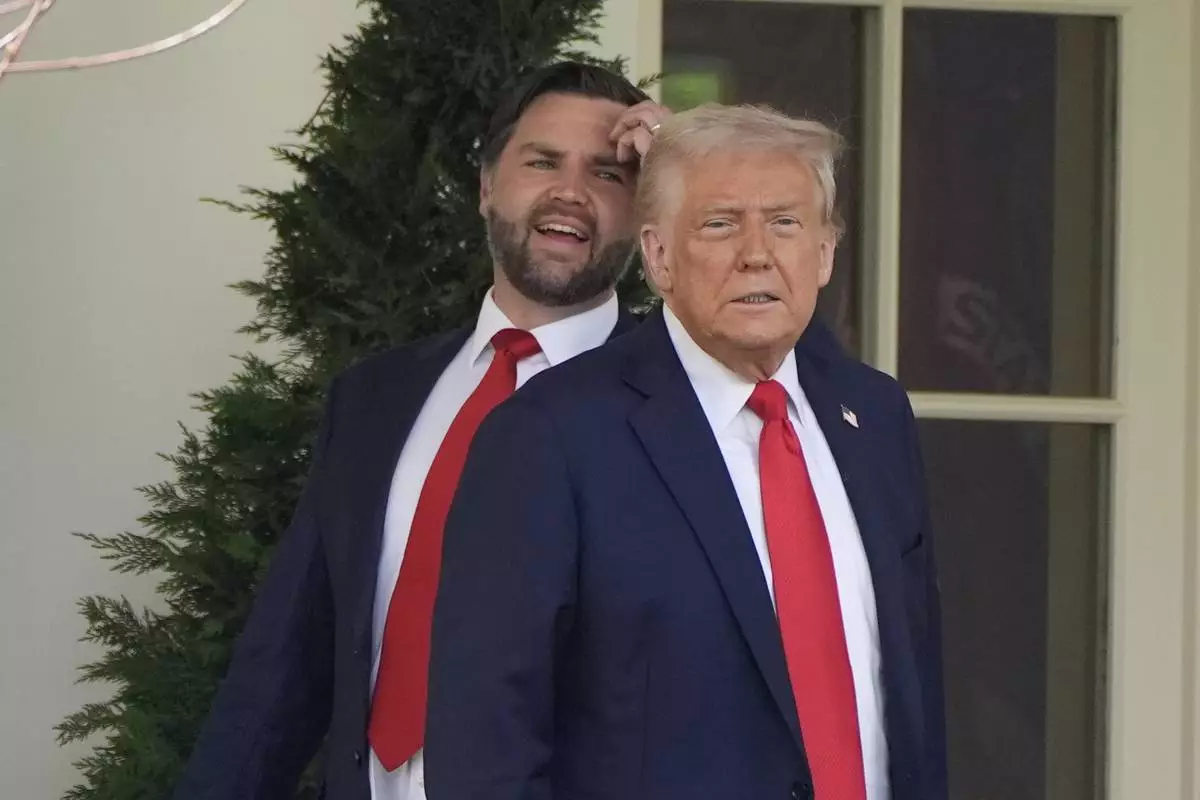
FILE - President Donald Trump and Vice President JD Vance pause near the Oval Office after and event to welcome the 2025 College Football National Champions, the Ohio State University football team on the South Lawn of the White House, April 14, 2025, in Washington. (AP Photo/Alex Brandon, File)
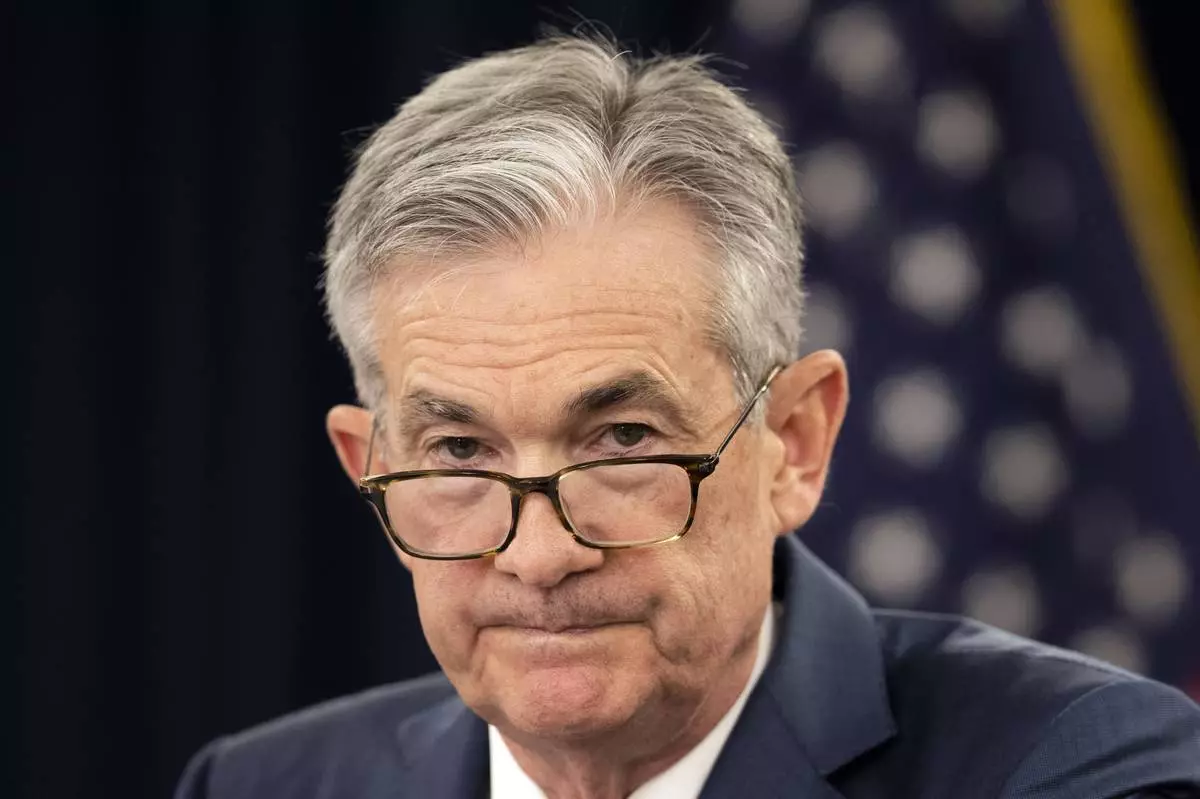
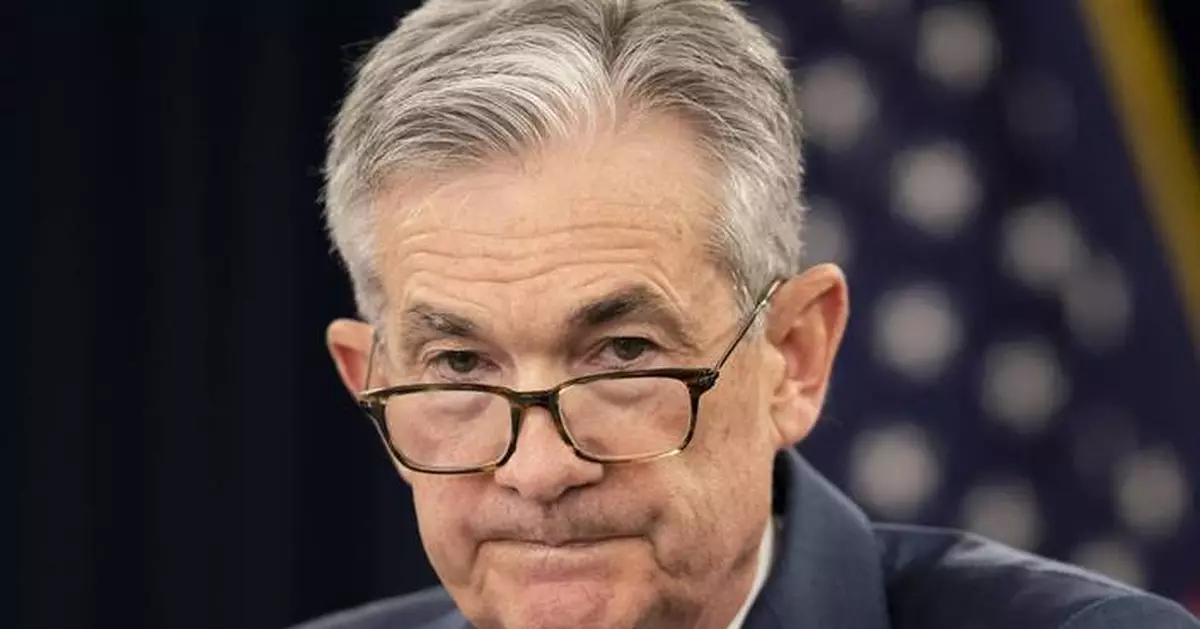
FILE - In this July 31, 2019, file photo, Federal Reserve Chairman Jerome Powell speaks during a news conference following a two-day Federal Open Market Committee meeting in Washington. (AP Photo/Manuel Balce Ceneta, File)
DUBAI, United Arab Emirates (AP) — U.S. President Donald Trump said Iran wants to negotiate with Washington after his threat to strike the Islamic Republic over its bloody crackdown on protesters, a move coming as activists said Monday the death toll in the nationwide demonstrations rose to at least 544.
Iran had no immediate reaction to the news, which came after the foreign minister of Oman — long an interlocutor between Washington and Tehran — traveled to Iran this weekend. It also remains unclear just what Iran could promise, particularly as Trump has set strict demands over its nuclear program and its ballistic missile arsenal, which Tehran insists is crucial for its national defense.
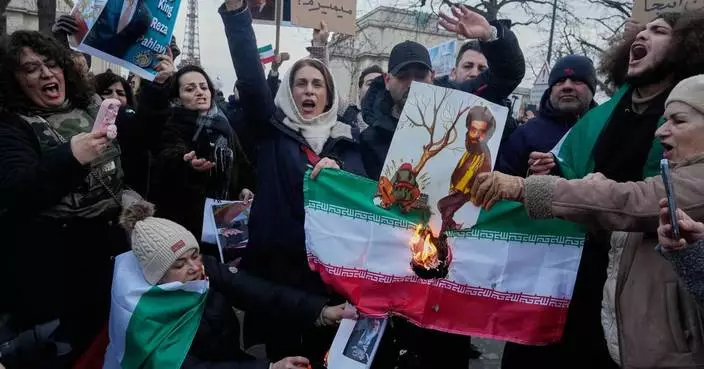
Meanwhile Monday, Iran called for pro-government demonstrators to head to the streets in support of the theocracy, a show of force after days of protests directly challenging the rule of 86-year-old Supreme Leader Ayatollah Ali Khamenei. Iranian state television aired chants from the crowd, who shouted “Death to America!” and “Death to Israel!”
Trump and his national security team have been weighing a range of potential responses against Iran including cyberattacks and direct strikes by the U.S. or Israel, according to two people familiar with internal White House discussions who were not authorized to comment publicly and spoke on condition of anonymity.
“The military is looking at it, and we’re looking at some very strong options,” Trump told reporters on Air Force One on Sunday night. Asked about Iran’s threats of retaliation, he said: “If they do that, we will hit them at levels that they’ve never been hit before.”
Trump said that his administration was in talks to set up a meeting with Tehran, but cautioned that he may have to act first as reports of the death toll in Iran mount and the government continues to arrest protesters.
“I think they’re tired of being beat up by the United States,” Trump said. “Iran wants to negotiate.”
He added: “The meeting is being set up, but we may have to act because of what’s happening before the meeting. But a meeting is being set up. Iran called, they want to negotiate.”
Iran through country's parliamentary speaker warned Sunday that the U.S. military and Israel would be “legitimate targets” if America uses force to protect demonstrators.
More than 10,600 people also have been detained over the two weeks of protests, said the U.S.-based Human Rights Activists News Agency, which has been accurate in previous unrest in recent years and gave the death toll. It relies on supporters in Iran crosschecking information. It said 496 of the dead were protesters and 48 were with security forces.
With the internet down in Iran and phone lines cut off, gauging the demonstrations from abroad has grown more difficult. The Associated Press has been unable to independently assess the toll. Iran’s government has not offered overall casualty figures.
Those abroad fear the information blackout is emboldening hard-liners within Iran’s security services to launch a bloody crackdown. Protesters flooded the streets in the country’s capital and its second-largest city on Saturday night into Sunday morning. Online videos purported to show more demonstrations Sunday night into Monday, with a Tehran official acknowledging them in state media.
In Tehran, a witness told the AP that the streets of the capital empty at the sunset call to prayers each night. By the Isha, or nighttime prayer, the streets are deserted.
Part of that stems from the fear of getting caught in the crackdown. Police sent the public a text message that warned: “Given the presence of terrorist groups and armed individuals in some gatherings last night and their plans to cause death, and the firm decision to not tolerate any appeasement and to deal decisively with the rioters, families are strongly advised to take care of their youth and teenagers.”
Another text, which claimed to come from the intelligence arm of the paramilitary Revolutionary Guard, also directly warned people not to take part in demonstrations.
“Dear parents, in view of the enemy’s plan to increase the level of naked violence and the decision to kill people, ... refrain from being on the streets and gathering in places involved in violence, and inform your children about the consequences of cooperating with terrorist mercenaries, which is an example of treason against the country,” the text warned.
The witness spoke to the AP on condition of anonymity due to the ongoing crackdown.
The demonstrations began Dec. 28 over the collapse of the Iranian rial currency, which trades at over 1.4 million to $1, as the country’s economy is squeezed by international sanctions in part levied over its nuclear program. The protests intensified and grew into calls directly challenging Iran’s theocracy.
Nikhinson reported from aboard Air Force One.
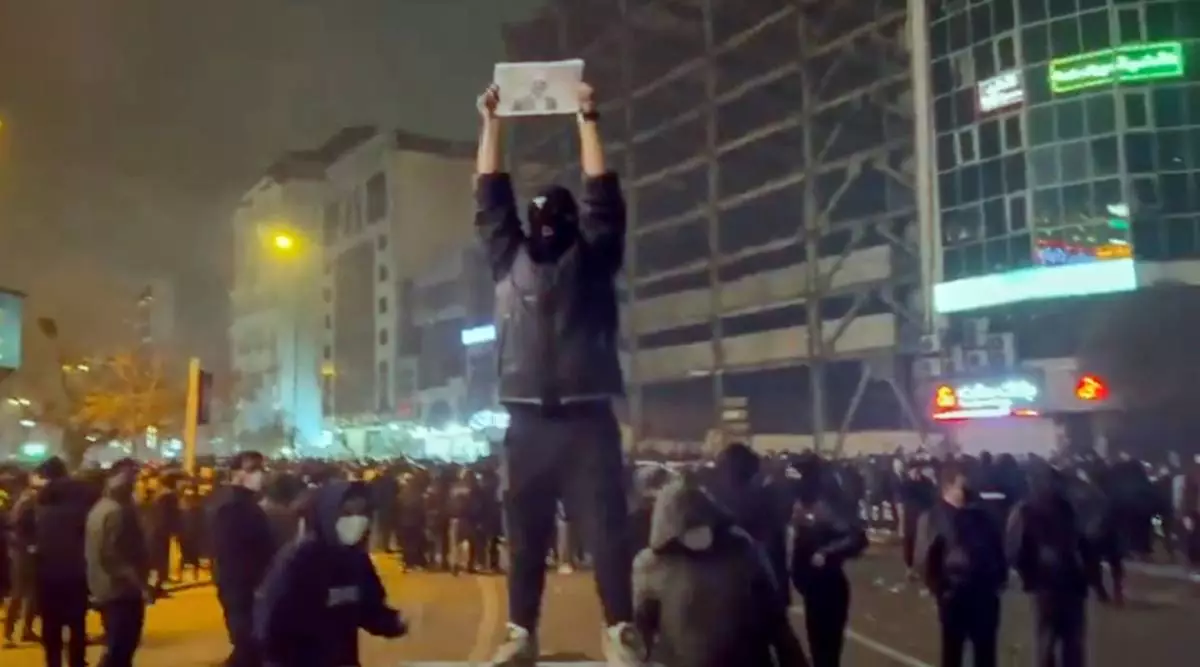
In this frame grab from video obtained by the AP outside Iran, a masked demonstrator holds a picture of Iran's Crown Prince Reza Pahlavi during a protest in Tehran, Iran, Friday, January. 9, 2026. (UGC via AP)
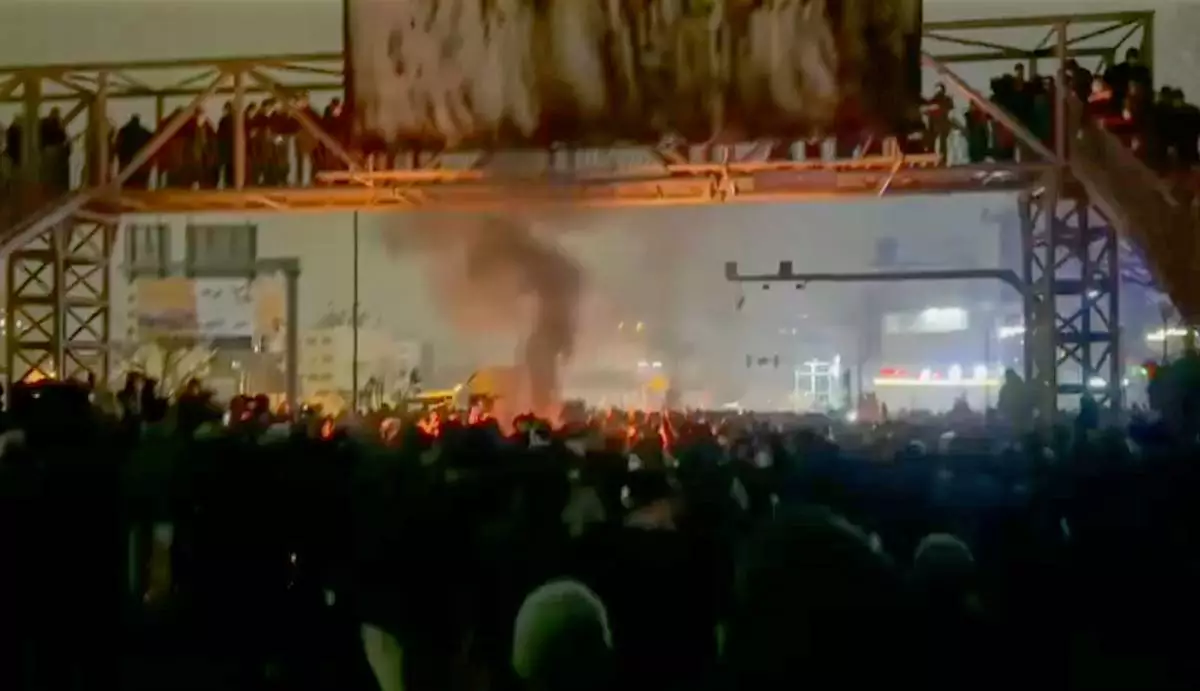
In this frame grab from footage circulating on social media from Iran shows protesters taking to the streets despite an intensifying crackdown as the Islamic Republic remains cut off from the rest of the world in Tehran, Iran, Friday, Jan. 9, 2026.(UGC via AP)
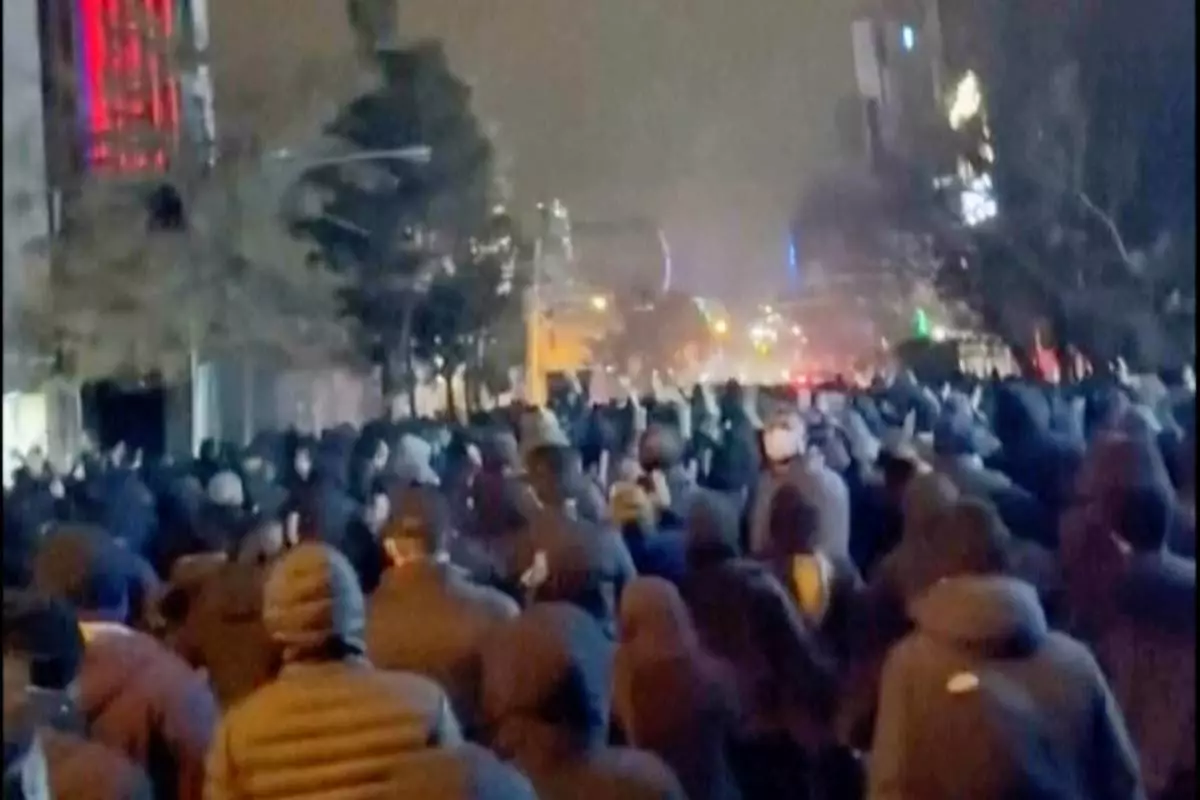
In this frame grab from footage circulating on social media from Iran showed protesters once again taking to the streets of Tehran despite an intensifying crackdown as the Islamic Republic remains cut off from the rest of the world in Tehran, Iran, Saturday Jan. 10, 2026. (UGC via AP)