BERLIN (AP) — Eighty years after the Holocaust, more than 200,000 Jewish survivors are still alive but 70% of them will be gone within the next 10 years — meaning time is running out to hear the voices of the last generation who suffered through one of the worst atrocities in history.
Currently, the survivors' median age is 87, and more than 1,400 of them are over 100 years old, a new report said Tuesday.
Click to Gallery
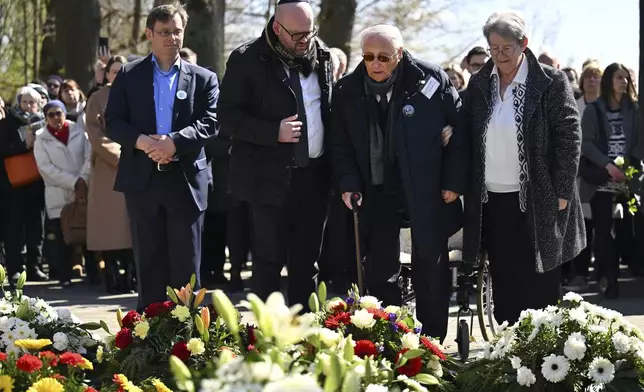
Albrecht Weinberg, second from right, attends a memorial service and wreath-laying ceremony marking the 80th anniversary of the liberation the Mittelbau-Dora concentration camp in Nordhausen, Germany, Monday, April 7, 2025. (Martin Schutt/dpa via AP)
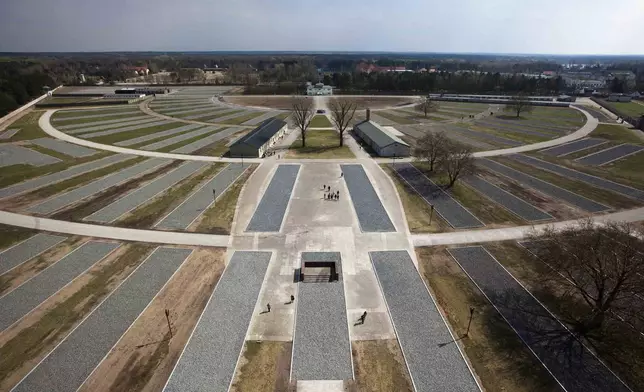
FILE — New stone fields mark the barracks of the Nazi death camp Sachsenhausen in Oranienburg, around 50 kilometres (31 miles) north of Berlin, April 20, 2012. (AP Photo/Markus Schreiber, File)
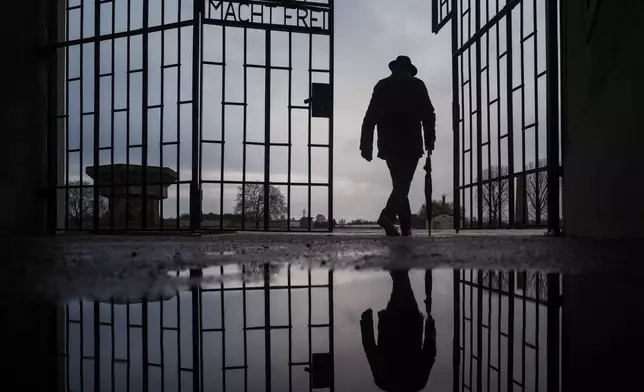
FILE - A man walks through the gate of the Sachsenhausen Nazi death camp with the phrase 'Arbeit macht frei' (work sets you free) at the International Holocaust Remembrance Day, in Oranienburg, about 30 kilometers, (18 miles) north of Berlin, Germany, Jan. 27, 2019. (AP Photo/Markus Schreiber, File)
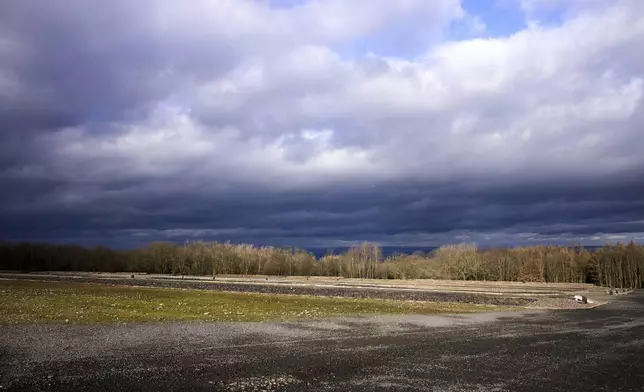
FILE — In this Friday, Jan. 10, 2020 taken photo clouds hang over the area of the Nazi death camp 'Buchenwald' in Weimar, Germany. (AP Photo/Markus Schreiber, File)
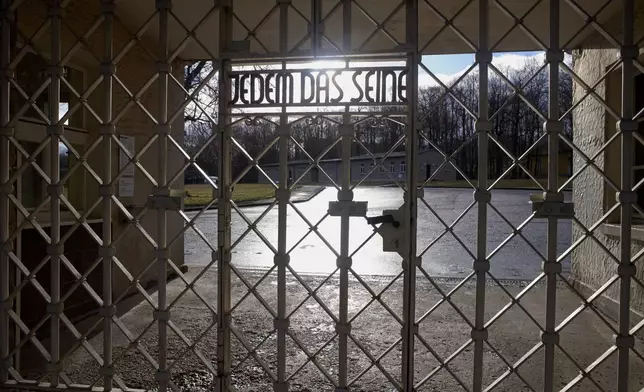
A view of the entrance gate of the Nazi death camp 'Buchenwald' with the inscription 'Jedem das Seine' (To Each His Own) in Weimar, Germany, on Jan. 10, 2020. (AP Photo/Markus Schreiber)
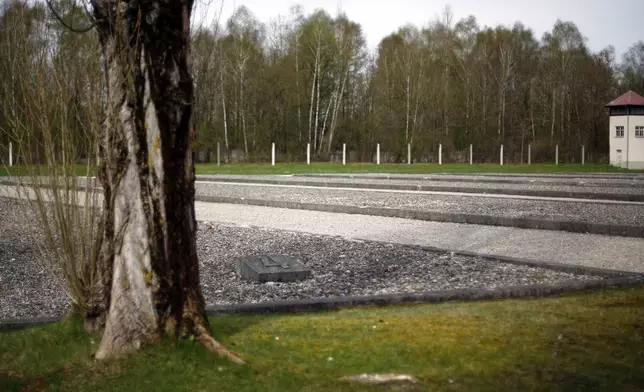
FILE — Stone fields mark the barracks of former concentration camp where more than 43,000 persons were murdered and over 200,000 were imprisoned during the Nazis' terror reign from 1933-1945 in Dachau, Germany, April 16, 2015. (AP Photo/Matthias Schrader, File)
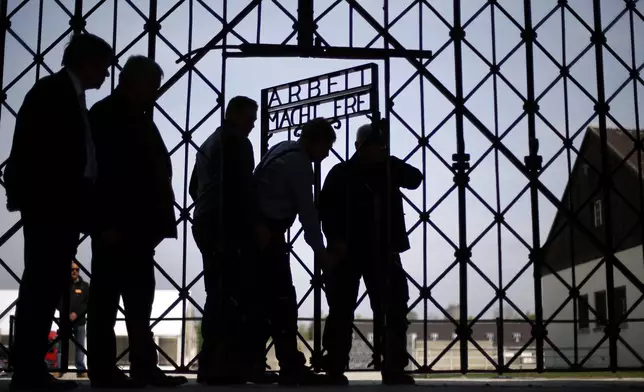
FILE - A Wednesday, April 29, 2015 file photo showing blacksmiths preparing a replica of the Dachau Nazi concentration camp gate, with the writing "Arbeit macht frei" (Work Sets you Free) at the main entrance of the memorial in Dachau, Germany. (AP Photo/Matthias Schrader, File)
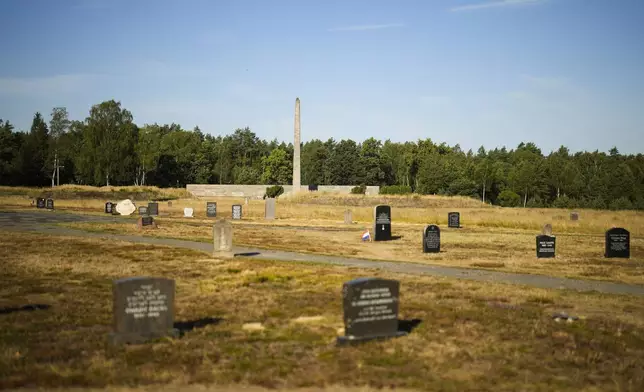
FILE — The sun lights memorial stones at the former Nazi concentration camp Bergen-Belsen in Bergen, Germany, Saturday, Sept. 3, 2022. (AP Photo/Markus Schreiber, File)
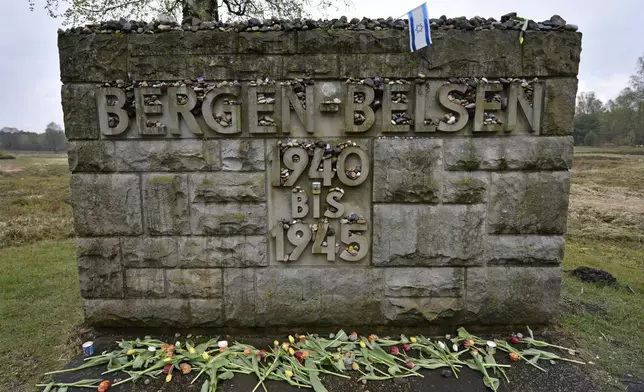
FILE — Flowers and stones are placed for the victims at a memorial stone at the Bergen-Belsen concentration camp in Bergen, northern Germany, April 26, 2015. (AP Photo/Martin Meissner, File)
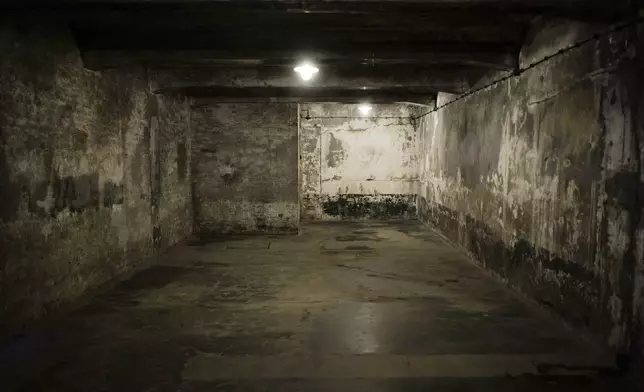
FILE - A view inside gas chamber one at the former Nazi death camp of Auschwitz I in Oswiecim, Poland, Dec. 8, 2019. (AP Photo/Markus Schreiber, File)
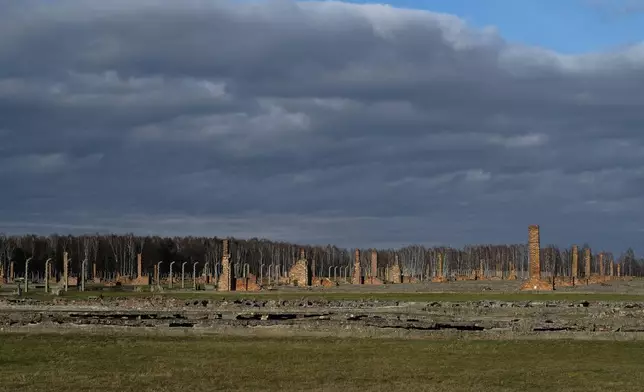
FILE — The remains of brick stone chimneys of prisoners barracks inside the former Nazi death camp of Auschwitz Birkenau or Auschwitz II. in Oswiecim, Poland, Dec. 8, 2019. (AP Photo/Markus Schreiber, File)
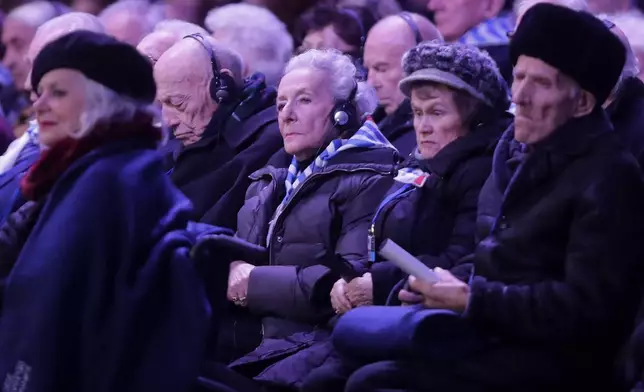
FILE — Holocaust survivors attend a ceremony at the Auschwitz-Birkenau Nazi death camp in Oswiecim, Poland, Jan. 27, 2020. (AP Photo/Markus Schreiber, File)
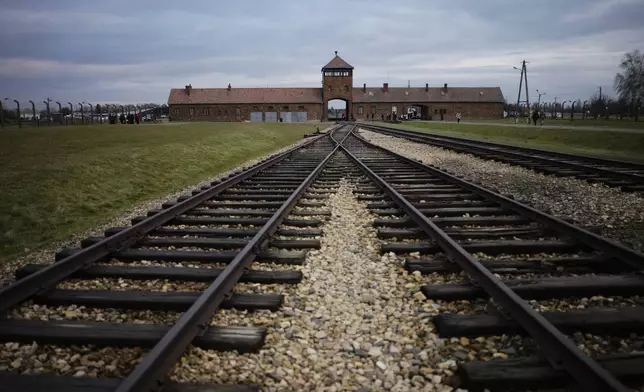
FILE - The railway tracks where hundred thousands of people arrived to be directed to the gas chambers inside the former Nazi death camp of Auschwitz Birkenau, or Auschwitz II, are pictured in Oswiecim, Poland, on Dec. 7, 2019. (AP Photo/Markus Schreiber, file)
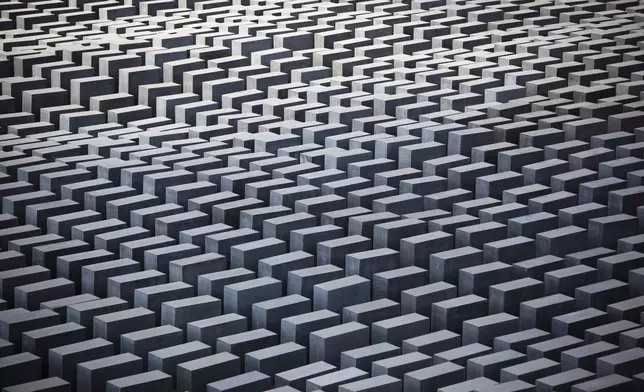
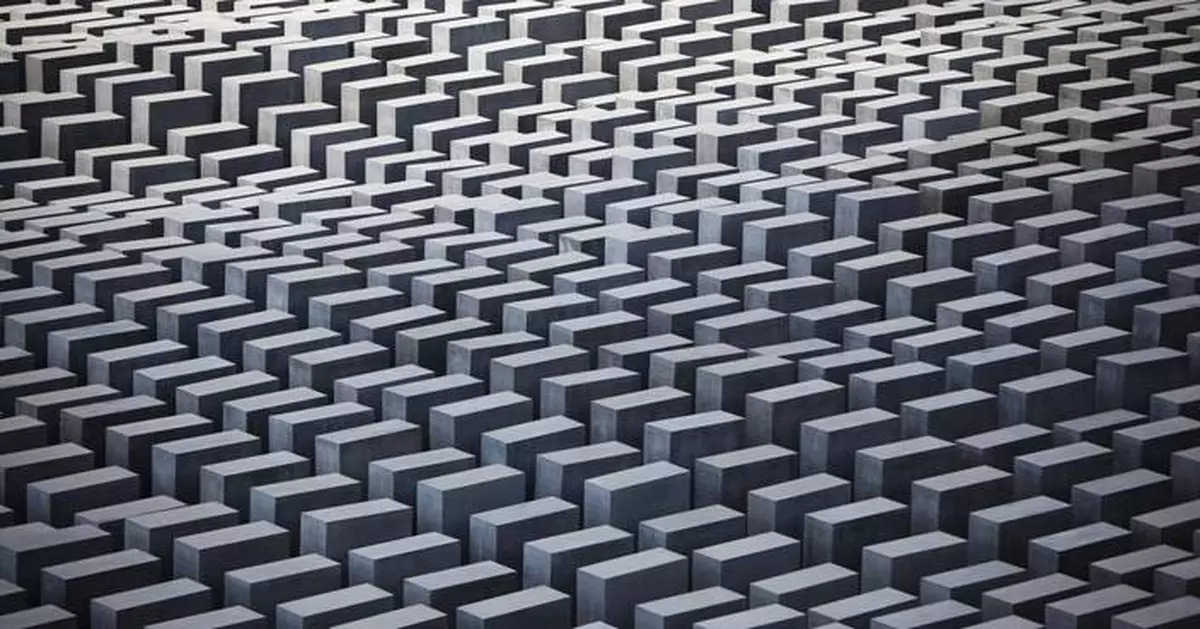
FILE - General view of the Memorial for the murdered Jews of Europe, the so called Holocaust Memorial in central Berlin, Germany, June 17, 2011. (AP Photo/Markus Schreiber, File)
“We have known that this population of survivors would be the last, our final opportunity to hear their first-hand testimonies, to spend time with them, our last chance to meet a survivor," said Greg Schneider, the executive vice president of the New York-based Conference on Jewish Material Claims Against Germany, also referred to as the Claims Conference, which published the study.
The report's analysis of population projections and mortality rates provides details through 2040. It is based on the extensive data collected since 1952 by the Claims Conference, which includes survivors who receive direct payments or social welfare services funded by the organization as a result of ongoing negotiations with Germany.
Notably, nearly 50% of all Holocaust survivors will pass away within the next six years, while 70% will die within 10 years and 90% within 15 years, according to the report titled “ Vanishing Witnesses."
Those still alive are often of frail health and suffer from ailments that come with age and have been amplified by traumas in their youth.
Six million European Jews were murdered by the Nazis and their collaborators during the Holocaust.
It is not clear exactly how many Jews survived the death camps, the ghettos or somewhere in hiding across Nazi-occupied Europe, but their numbers were a far cry from the pre-war Jewish population in Europe.
In Poland, of the 3.3 million Jews living there in 1939, only about 300,000 survived.
Around 560,000 Jews lived in Germany in 1933, the year Adolf Hitler came to power. After the Holocaust, their numbers had diminished to about 15,000 through emigration and extermination.
After the end of World War II, survivors settled all over the globe and even today they are still living in 90 different countries.
The “Vanishing Witnesses” report shows that mortality rates for survivors vary greatly across locations depending on access to health care and economic stability.
For example, Israel, which is home to about half of all Holocaust survivors, had 110,100 survivors as of October 2024 and is estimated to see their population decline to 62,900 by 2030, a drop of 43%.
The United States had 34,600 in the fall of 2024, but is projected to lose 39% over that same time, dropping to 21,100 survivors. Countries in the former Soviet Union had 25,500 survivors in October 2024, but are expected to be at 11,800 in five years, down 54 % by the start of 2030.
“This report is a stark reminder that our time is almost up, our survivors are leaving us and this is the moment to hear their voices,” said Gideon Taylor, the president of the Claims Conference.
Albrecht Weinberg, a 100-year-old survivor from Germany who lost almost his entire family in the Holocaust, said that even today the horrendous memories are haunting him. “I sleep with it, I wake up with it, I sweat, I have nightmares; that is my present.”
Weinberg survived the concentration and death camps Auschwitz, Mittelbau-Dora, Bergen-Belsen and three death marches at the end of the war. He spent many years teaching high school students and others about the atrocities he had to live through. Still, he worries what will happen when he is no longer around to bear witness.
"When my generation is not in this world anymore, when we disappear from the world, then the next generation can only read it out of the book.”
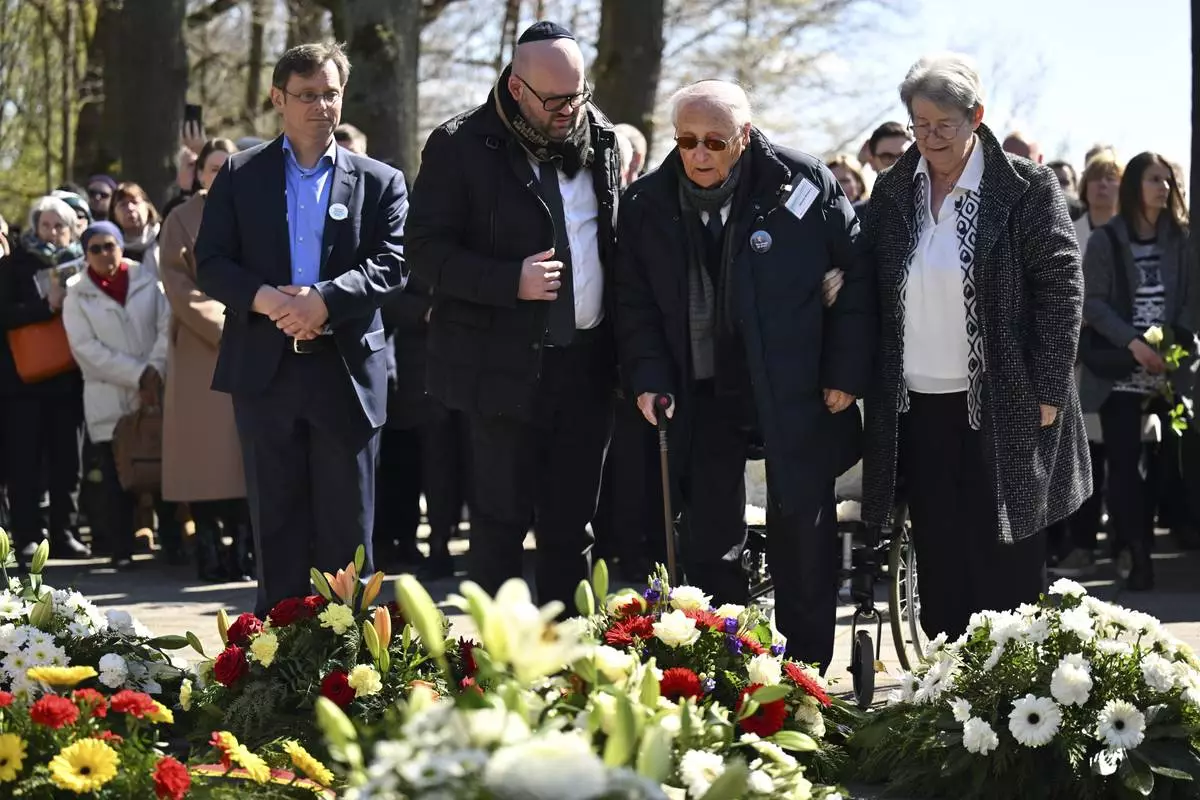
Albrecht Weinberg, second from right, attends a memorial service and wreath-laying ceremony marking the 80th anniversary of the liberation the Mittelbau-Dora concentration camp in Nordhausen, Germany, Monday, April 7, 2025. (Martin Schutt/dpa via AP)
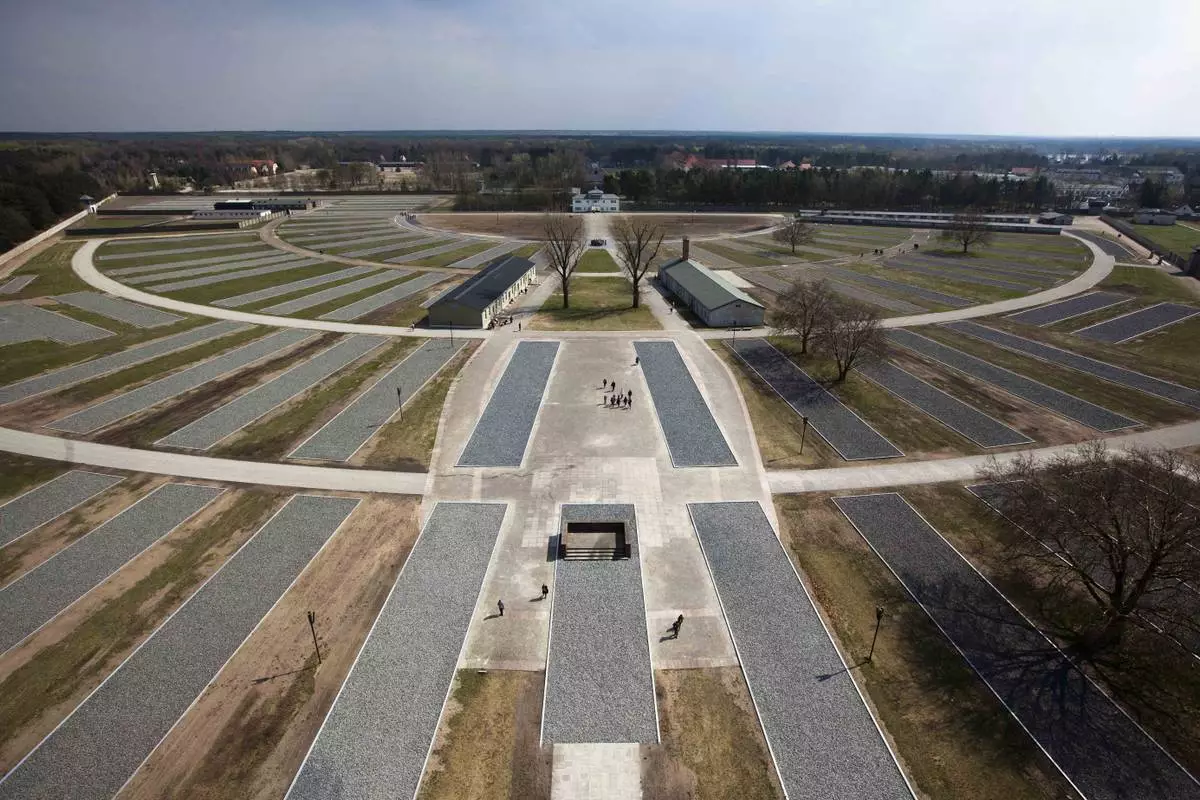
FILE — New stone fields mark the barracks of the Nazi death camp Sachsenhausen in Oranienburg, around 50 kilometres (31 miles) north of Berlin, April 20, 2012. (AP Photo/Markus Schreiber, File)
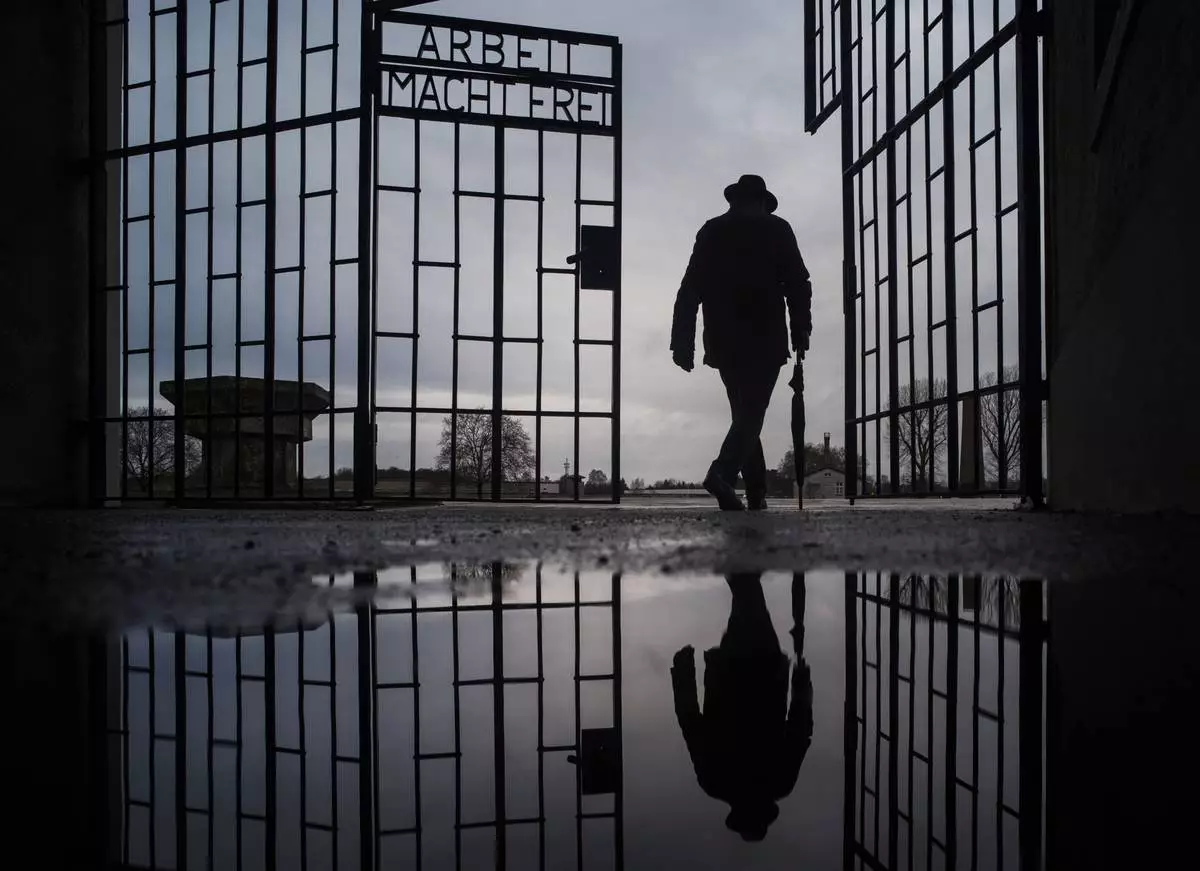
FILE - A man walks through the gate of the Sachsenhausen Nazi death camp with the phrase 'Arbeit macht frei' (work sets you free) at the International Holocaust Remembrance Day, in Oranienburg, about 30 kilometers, (18 miles) north of Berlin, Germany, Jan. 27, 2019. (AP Photo/Markus Schreiber, File)
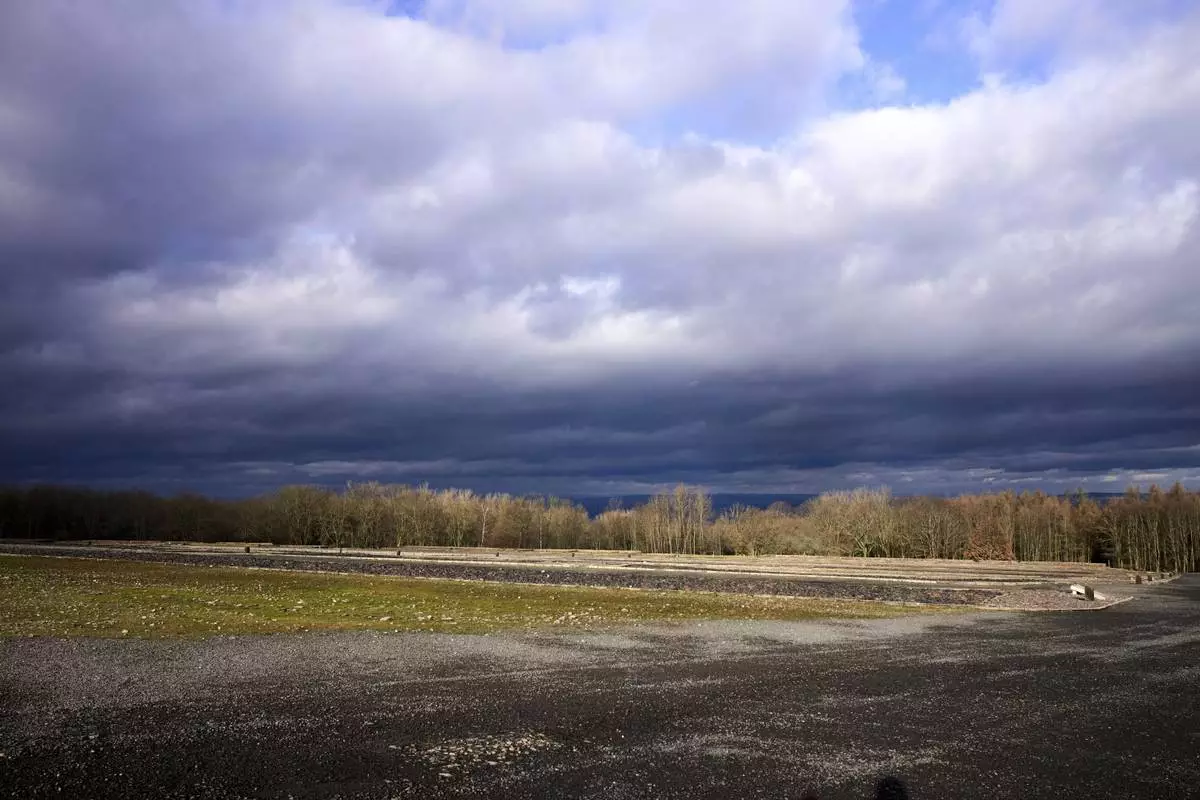
FILE — In this Friday, Jan. 10, 2020 taken photo clouds hang over the area of the Nazi death camp 'Buchenwald' in Weimar, Germany. (AP Photo/Markus Schreiber, File)
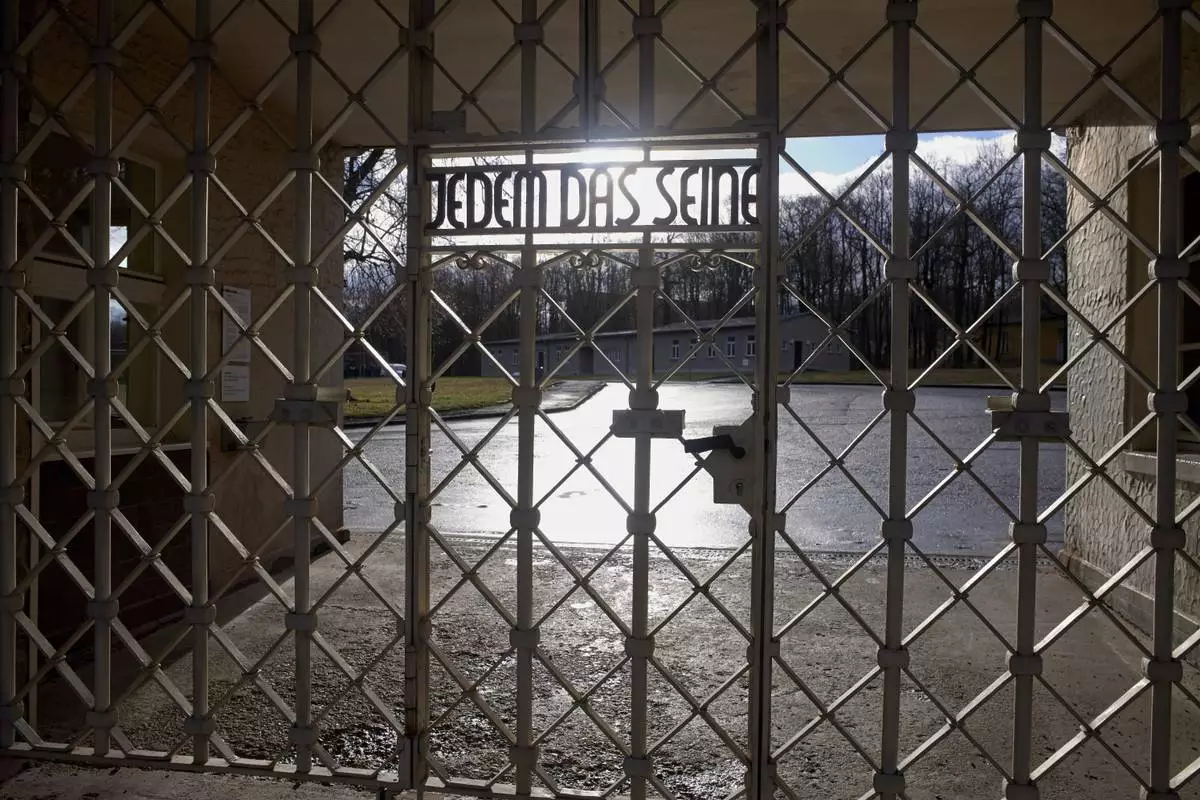
A view of the entrance gate of the Nazi death camp 'Buchenwald' with the inscription 'Jedem das Seine' (To Each His Own) in Weimar, Germany, on Jan. 10, 2020. (AP Photo/Markus Schreiber)
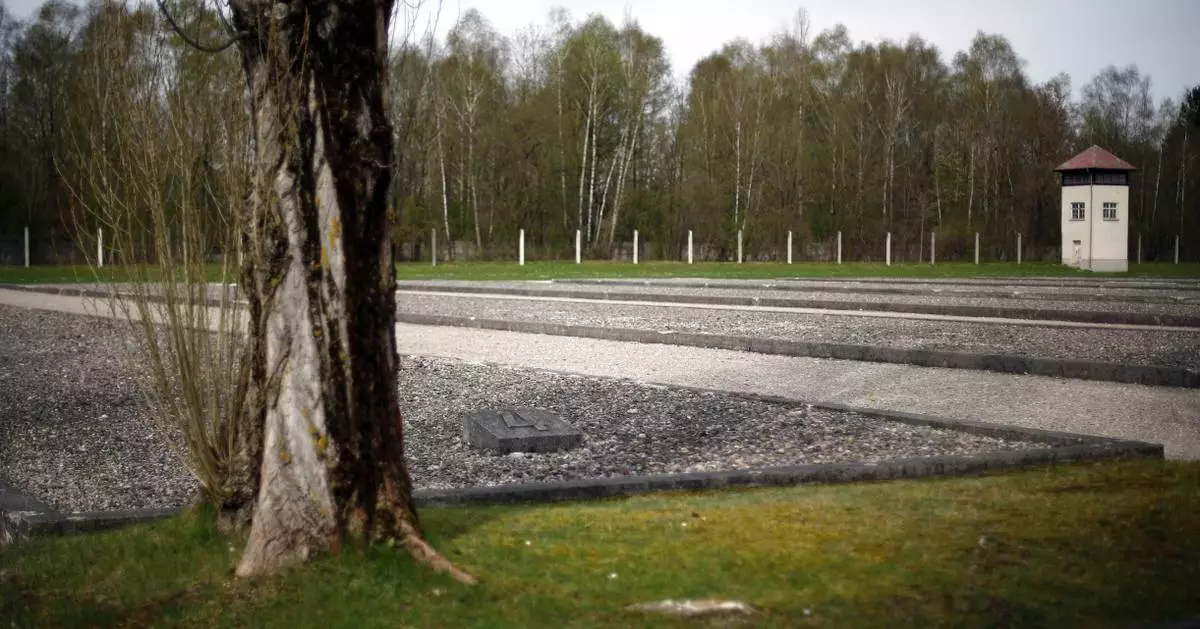
FILE — Stone fields mark the barracks of former concentration camp where more than 43,000 persons were murdered and over 200,000 were imprisoned during the Nazis' terror reign from 1933-1945 in Dachau, Germany, April 16, 2015. (AP Photo/Matthias Schrader, File)
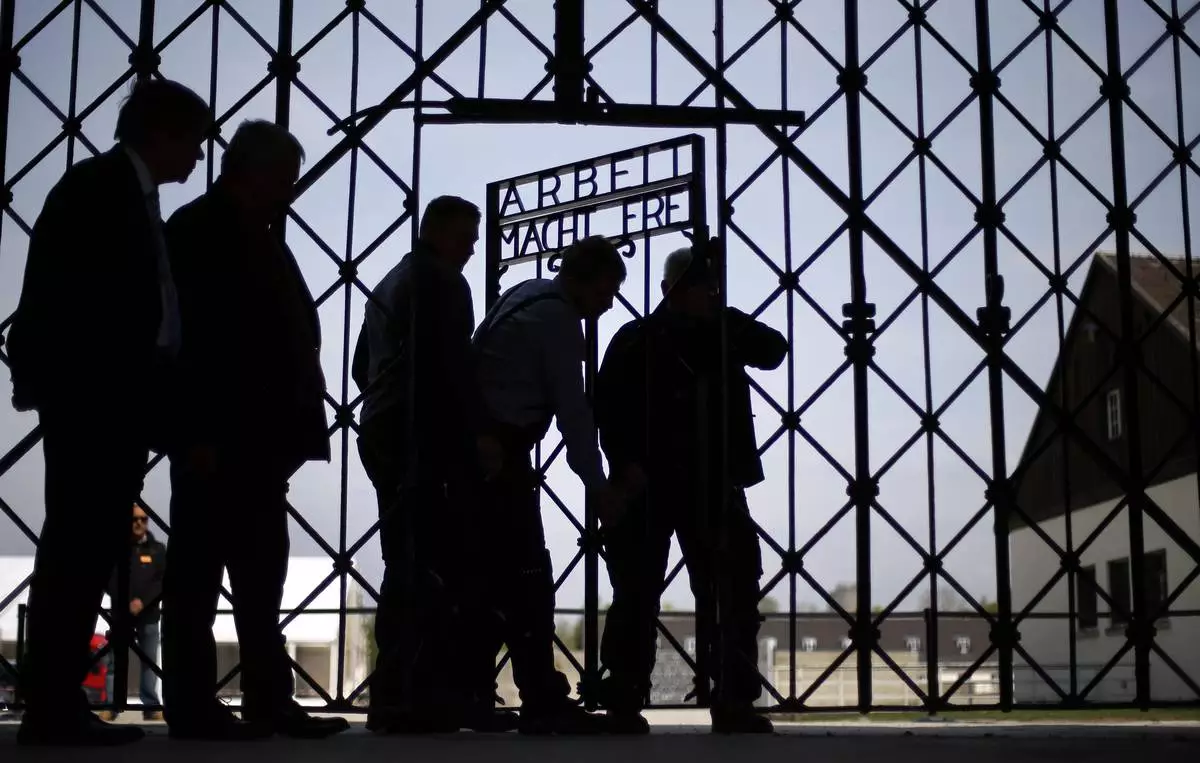
FILE - A Wednesday, April 29, 2015 file photo showing blacksmiths preparing a replica of the Dachau Nazi concentration camp gate, with the writing "Arbeit macht frei" (Work Sets you Free) at the main entrance of the memorial in Dachau, Germany. (AP Photo/Matthias Schrader, File)
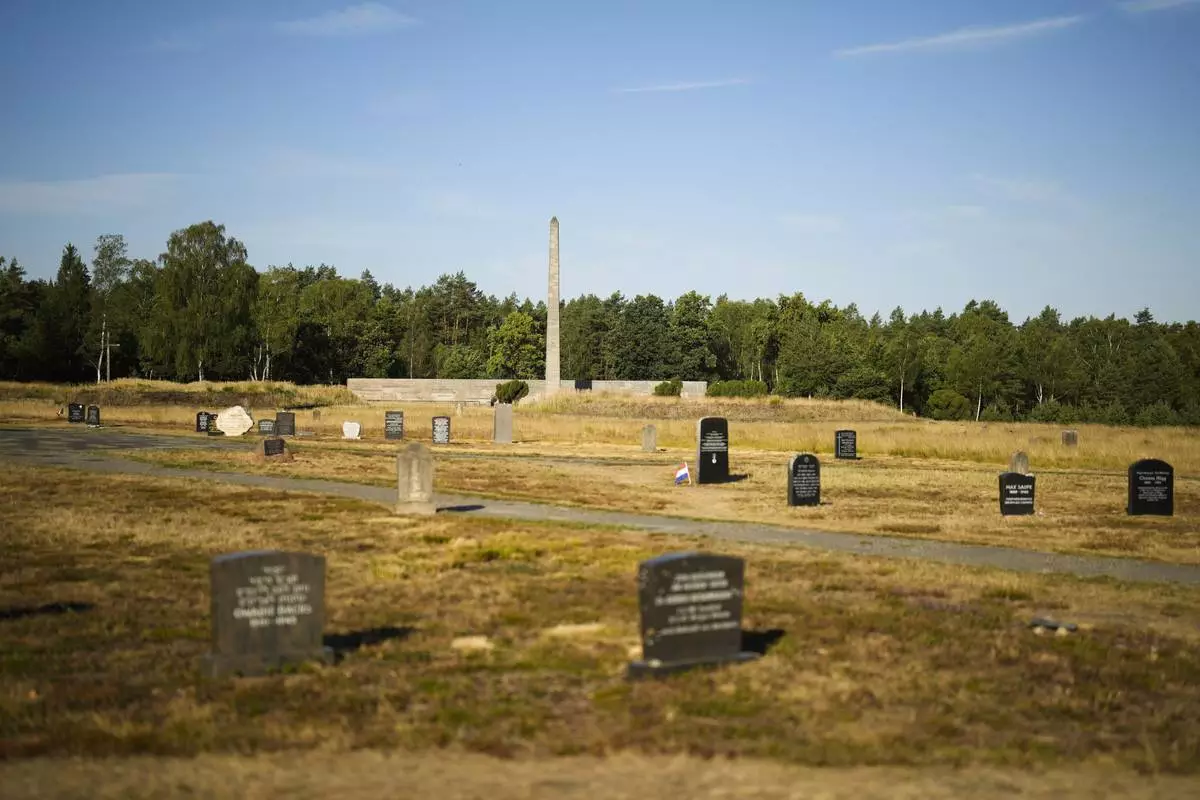
FILE — The sun lights memorial stones at the former Nazi concentration camp Bergen-Belsen in Bergen, Germany, Saturday, Sept. 3, 2022. (AP Photo/Markus Schreiber, File)
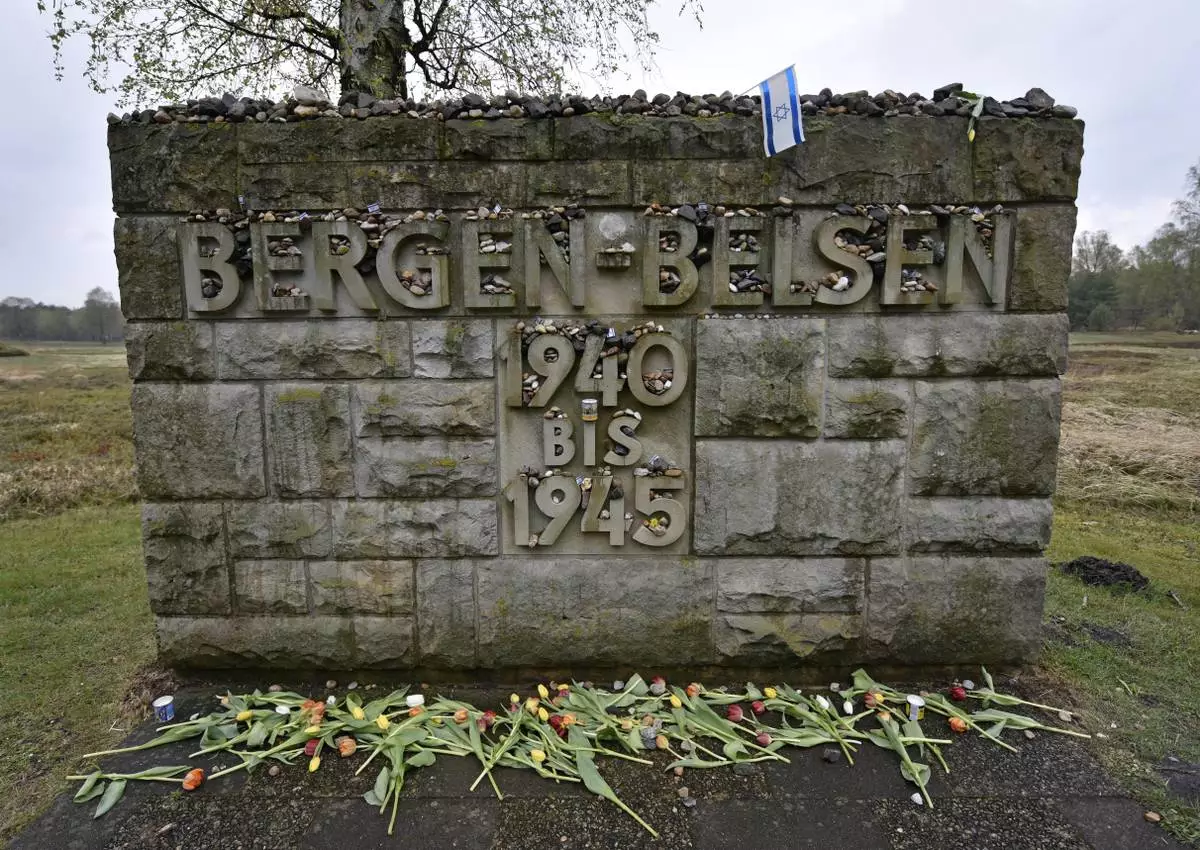
FILE — Flowers and stones are placed for the victims at a memorial stone at the Bergen-Belsen concentration camp in Bergen, northern Germany, April 26, 2015. (AP Photo/Martin Meissner, File)
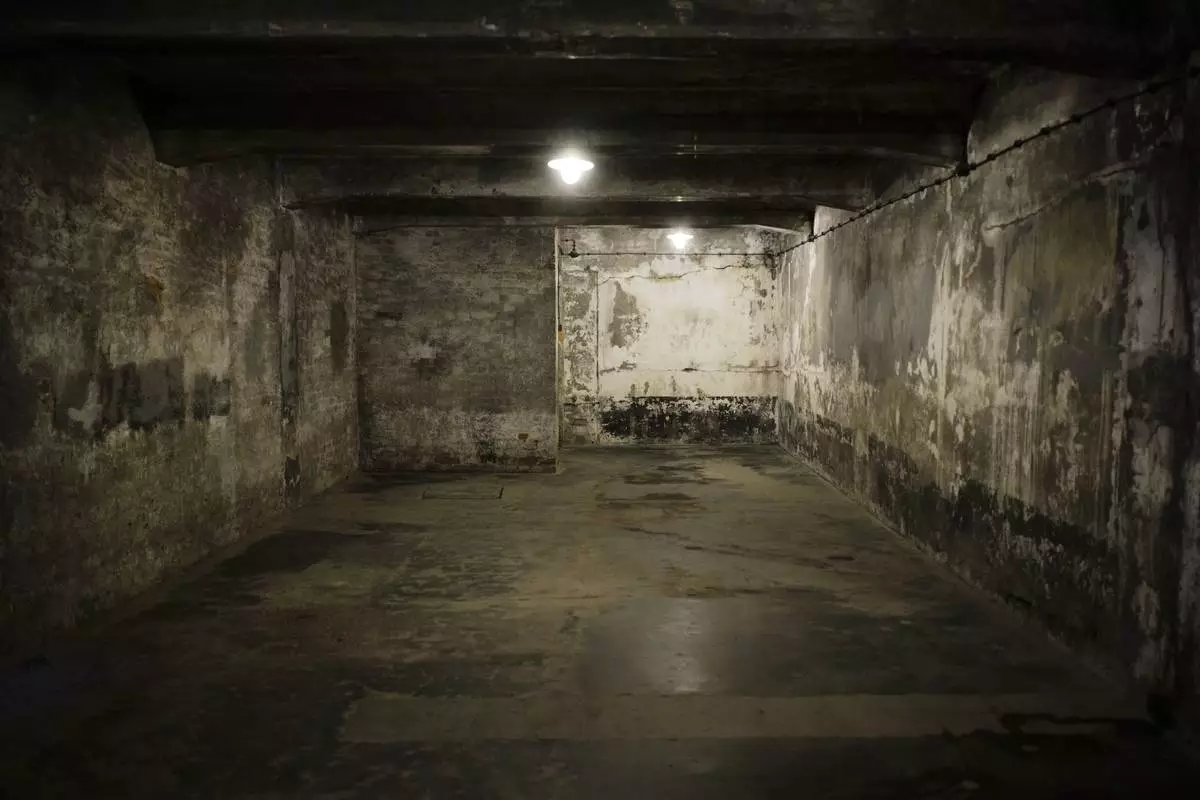
FILE - A view inside gas chamber one at the former Nazi death camp of Auschwitz I in Oswiecim, Poland, Dec. 8, 2019. (AP Photo/Markus Schreiber, File)
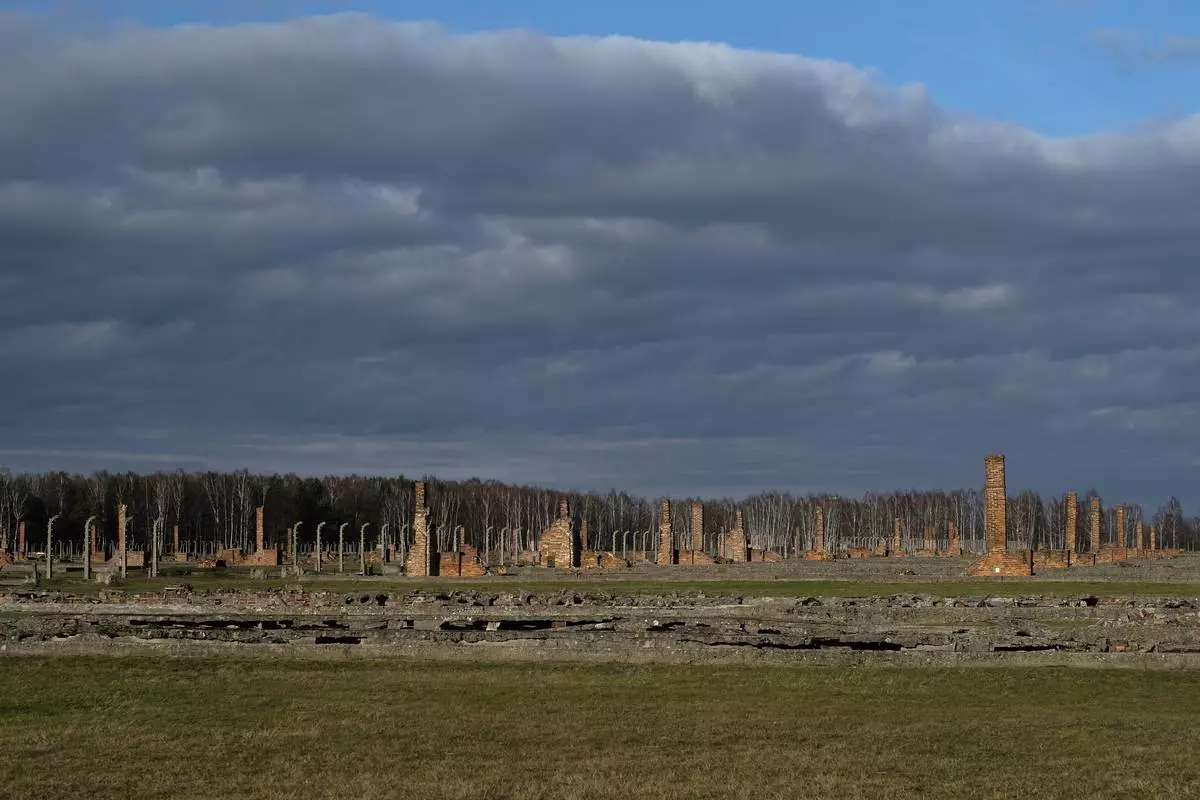
FILE — The remains of brick stone chimneys of prisoners barracks inside the former Nazi death camp of Auschwitz Birkenau or Auschwitz II. in Oswiecim, Poland, Dec. 8, 2019. (AP Photo/Markus Schreiber, File)
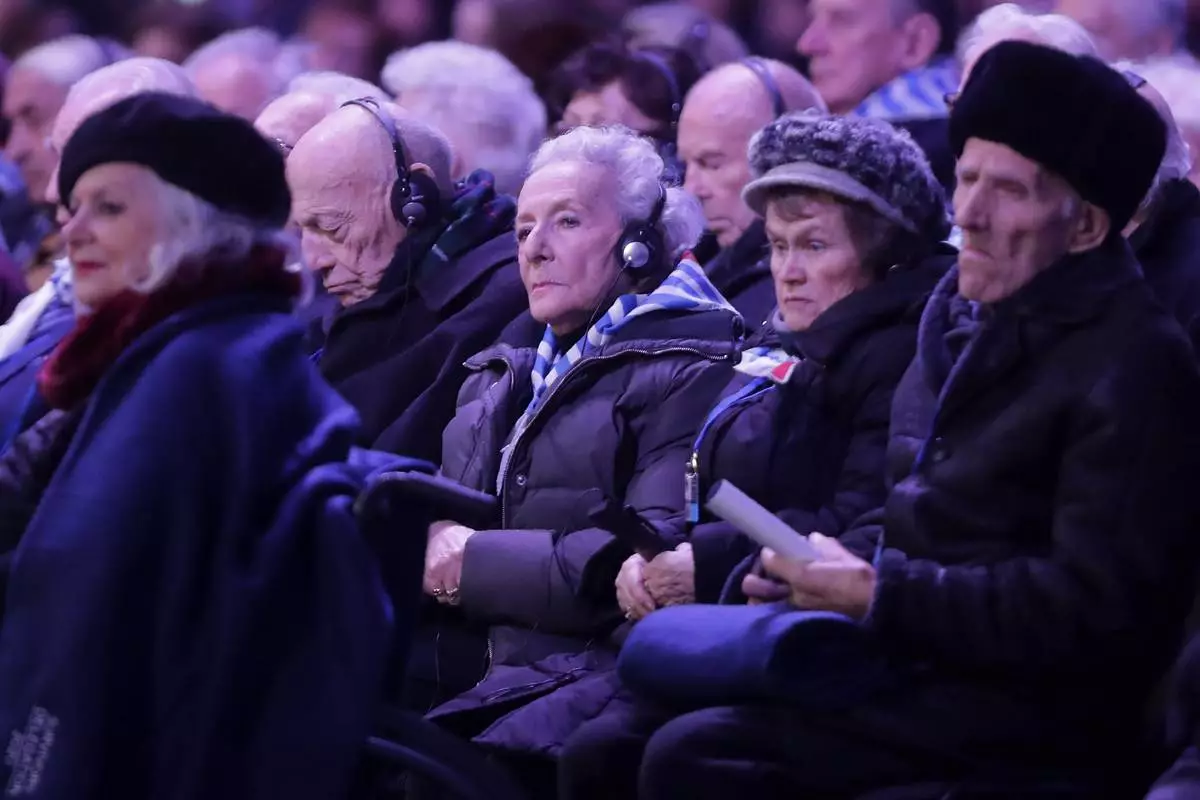
FILE — Holocaust survivors attend a ceremony at the Auschwitz-Birkenau Nazi death camp in Oswiecim, Poland, Jan. 27, 2020. (AP Photo/Markus Schreiber, File)
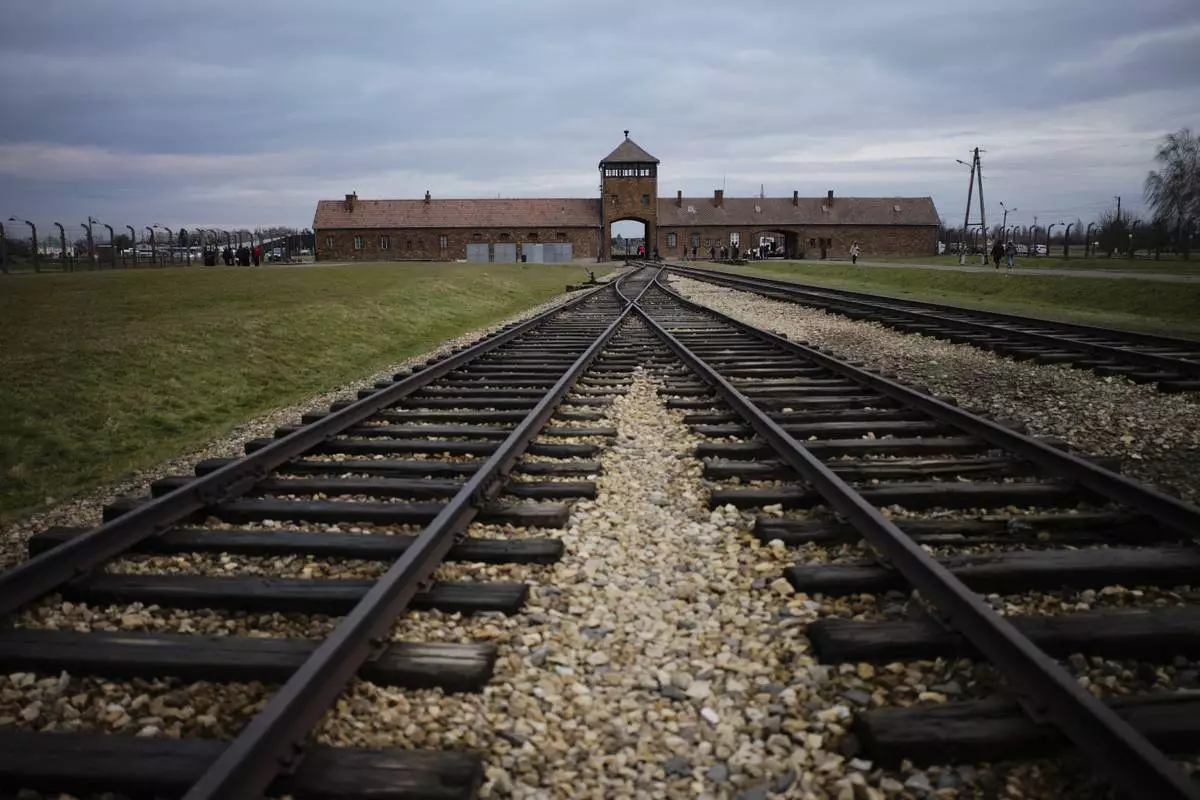
FILE - The railway tracks where hundred thousands of people arrived to be directed to the gas chambers inside the former Nazi death camp of Auschwitz Birkenau, or Auschwitz II, are pictured in Oswiecim, Poland, on Dec. 7, 2019. (AP Photo/Markus Schreiber, file)
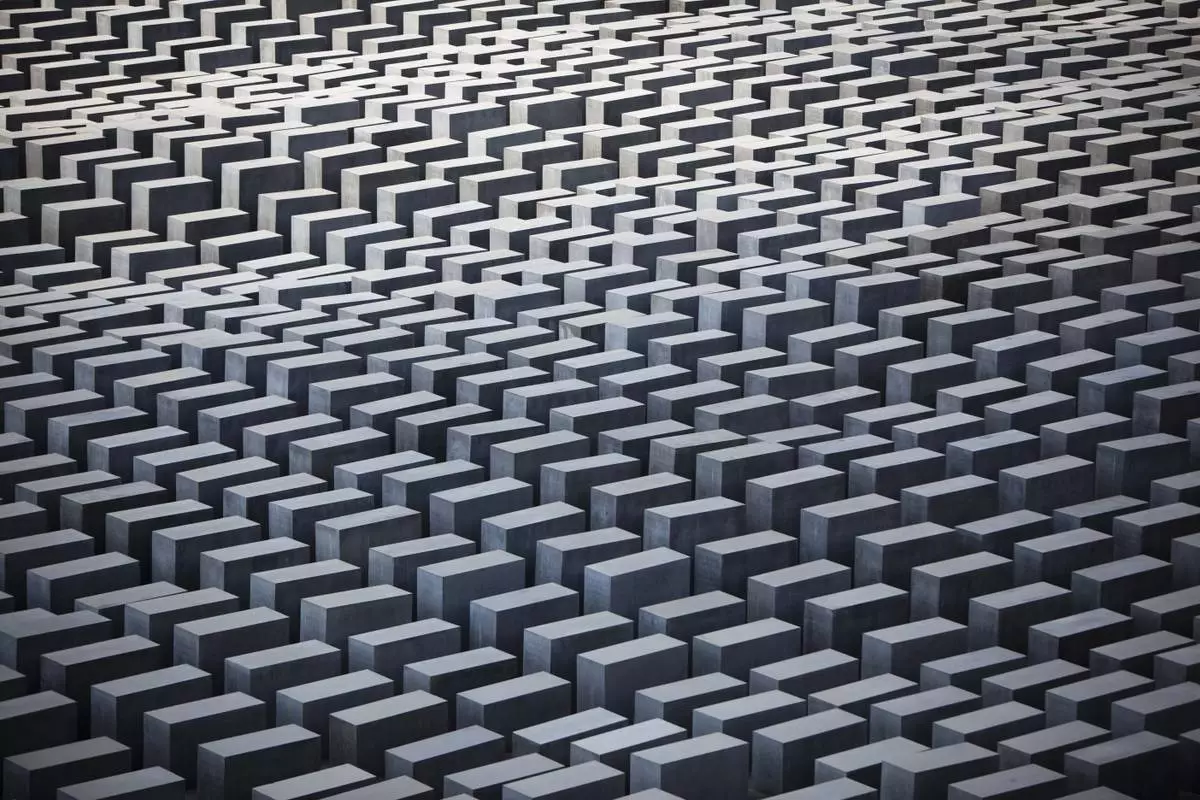
FILE - General view of the Memorial for the murdered Jews of Europe, the so called Holocaust Memorial in central Berlin, Germany, June 17, 2011. (AP Photo/Markus Schreiber, File)