Gold prices have hit an all-time high of 3,444 U.S. dollars per ounce in early Asian trading on Monday amid concerns over U.S. President Donald Trump's potential dismissal of Federal Reserve Chairman Jerome Powell, according to Bloomberg's report.
After Trump's vocal attacks on Powell, investors were prompted to sell off U.S. stocks, bonds, and the U.S. dollar which increases demand for the safe-haven asset.
Recently, Trump has pressured the Fed to cut interest rates. Throughout his first term, he frequently criticized the Fed and Chairman Powell publicly, urging for rate reductions.
Since the beginning of his second term, Trump has repeatedly applied pressure on Powell, demanding immediate rate cuts. On April 17, Trump once again urged Powell to lower rates without delay.
Trump also remarked that Powell's actions are always "too slow and wrong," noting that the Fed chief should have cut rates sooner, like the European Central Bank, and emphasized the need for immediate action.
Furthermore, Trump indicated that Powell should leave the post, and these vocal threats to dismiss Powell have unsettled the markets.
In response, Powell stated that the Fed will not yield to political pressure. In light of the complex economic situation arising from the recent tariff policies of the Trump administration, Powell emphasized that the Fed will focus on combating inflation.

Gold surges to record high as Trump threats to fire Fed chief

Gold surges to record high as Trump threats to fire Fed chief

Gold surges to record high as Trump threats to fire Fed chief
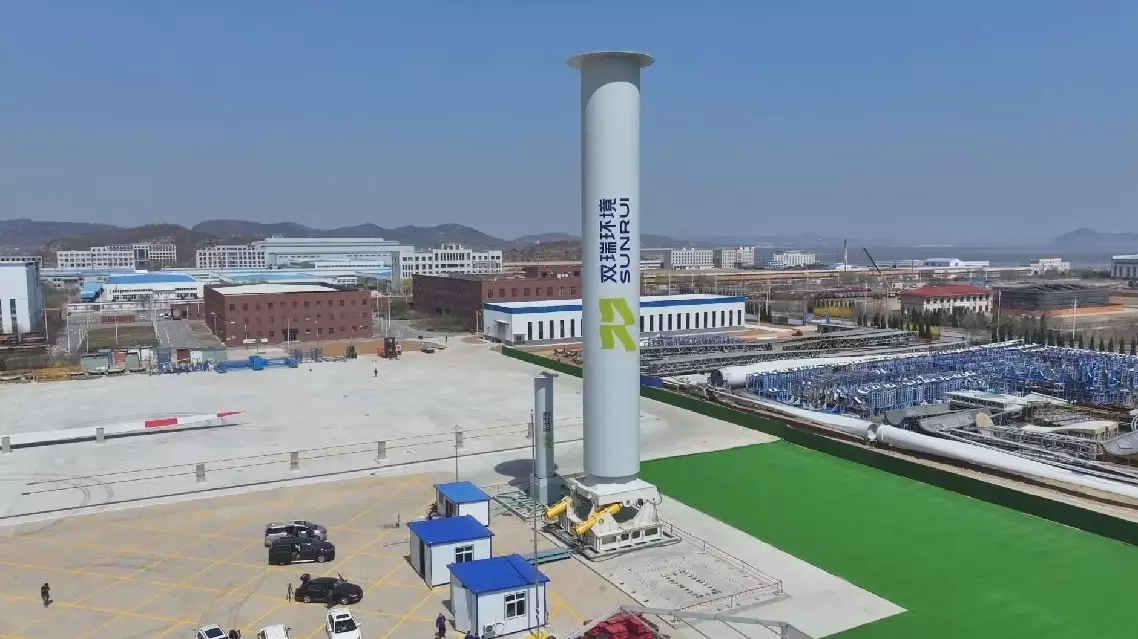
China unveiled a large wind-assisted propulsion system for ships in the coastal city of Dalian, northeast China's Liaoning Province, on Friday, marking a major leap forward for the country in the field of high-end vessel marine environmental protection equipment.
The wind-assisted propulsion system - rotating sail system (WAPS-RSS), is developed by Luoyang Ship Material Research Institute of China State Shipbuilding Corporation Limited (CSSC).
The system's rotor has diameter of 5 meters, is 35 meters high, and weighs 150 tons.
Experts say that the system can efficiently capture wind energy while the ship is sailing, providing additional thrust for the vessel.
On average, it can save fuel consumption by 5 to 25 percent for large ocean-going vessels, and lower carbon emissions accordingly.
It relies on the Magnus effect, which is much like a loop in table tennis, featuring a rapidly spinning sphere that causes the surrounding air to rotate. Pressure decreases on the side with faster airflow and increases on the side with slower airflow, creating a lateral pressure difference that generates lateral thrust.
"Standing on the deck, the powerful thrust generated by its rotation assists the ship's sailing. Our system - the world's largest rotary sail - reaches a maximum rotational speed of 180 revolutions per minute and can generate a maximum of 355 kilonewtons of thrust. Additionally, the system's intelligent control integrates multiple sensors to detect real-time wind and ship conditions. Through smart algorithms, it automatically adjusts to maintain optimal performance at all times, maximizing the utilization of wind energy," said Guo Yu, vice president of SunRui Marine Environment Engineering Company Limited under Luoyang Ship Material Research Institute.
Not only does the system's performance meet international advanced standards, but the project team has also overcome a series of engineering challenges, including the fabrication of giant composite structures, complex system integration, and intelligent coordinated control.
Compared with mainstream international technological approaches, it offers greater production efficiency and cost advantages.
Currently, the system has secured its first batch of orders and will complete actual vessel applications as scheduled.
China unveils large wind-assisted propulsion system for ships