Skip to Content Facebook Feature Image

Rubio unveils a massive overhaul of the State Department that would cut staff and bureaus

News

Rubio unveils a massive overhaul of the State Department that would cut staff and bureaus
News

News

Rubio unveils a massive overhaul of the State Department that would cut staff and bureaus

2025-04-23 05:01 Last Updated At:05:11

WASHINGTON (AP) — Secretary of State Marco Rubio unveiled a massive overhaul of the State Department on Tuesday, with plans to reduce staff in the U.S. by 15% while closing and consolidating more than 100 bureaus worldwide as part of the Trump administration's “America First” mandate.

The reorganization plan, announced by Rubio on social media and detailed in documents obtained by The Associated Press, is the latest effort by the White House to reimagine U.S. foreign policy and scale back the size of the federal government. The restructuring was driven in part by the need to find a new home for the remaining functions of the U.S. Agency for International Development, an agency that Trump administration officials and billionaire ally Elon Musk’s Department of Government Efficiency have dismantled.

“We cannot win the battle for the 21st century with bloated bureaucracy that stifles innovation and misallocates scarce resources,” Rubio said in a department-wide email obtained by AP. He said the reorganization aimed to “meet the immense challenges of the 21st Century and put America First.”

State Department spokeswoman Tammy Bruce echoed that sentiment, saying the “sweeping changes will empower our talented diplomats" but would not result in the immediate dismissal of personnel.

“It’s not something where people are being fired today," Bruce told reporters Tuesday. "They’re not going to be walking out of the building. It’s not that kind of a dynamic. It is a roadmap. It’s a plan.”

It includes consolidating 734 bureaus and offices down to 602, as well as transitioning 137 offices to another location within the department to "increase efficiency,” according to a fact sheet obtained by AP.

There will be a “reimagined” office focused on foreign and humanitarian affairs to coordinate the aid programs overseas that remain at the State Department.

Although the plan will implement major changes in the department’s bureaucracy and personnel, it is far less drastic than an alleged reorganization plan that was circulated by some officials over the weekend. Numerous senior State Department officials, including Rubio himself, denied that the plan was real.

Work that had been believed targeted in that alleged leaked document survived — at least as bureau names on a chart — in the plan that Rubio released Tuesday. That includes offices for Africa affairs, migration and refugee issues, and democracy efforts.

It was not immediately clear whether U.S. embassies were included in the installations slated for closing. The earlier reports of wholesale closings of embassies, especially in Africa, had triggered warnings about shrinking the U.S. diplomatic capacity and influence abroad.

Some of the bureaus that are indeed expected to be cut in the new plan include the Office of Global Women's Issues and the State Department’s diversity and inclusion efforts, which have been eliminated government-wide under Trump.

An office charged with surging expertise to war zones and other erupting crises will be eliminated, while other bureaus focused on human rights and justice will be scaled back or folded into other sections of the department.

Daryl Grisgraber, a policy lead with humanitarian organization Oxfam America, said this development only creates more “uncertainty” about the United States' ability to contribute to humanitarian conflicts and will “only make the world a more unstable, unequal place for us all.”

It is unclear if the reorganization would be implemented through an executive order or other means.

The plans came a week after the AP learned that the White House’s Office of Management and Budget proposed gutting the State Department’s budget by almost 50% and eliminating funding for the United Nations and NATO headquarters.

While the budget proposal was still in a highly preliminary phase and not expected to pass muster with Congress, the reorganization plan got an initial nod of approval from Republicans on Capitol Hill.

“Change is not easy, but President Trump and Secretary Rubio have proposed a vision to remake the State Department for this century and the fights that we face today, as well as those that lie ahead of us,” Idaho Sen. Jim Risch, Republican chair of the Senate Foreign Relations Committee, said in a statement.

Democrats, meanwhile, blasted the effort as the Trump administration's latest attempt to gut “vital components of American influence” on the world stage.

“On its face, this new reorganization plan raises grave concerns that the United States will no longer have either the capacity or capability to exert U.S. global leadership, achieve critical national security objectives, stand up to our adversaries, save lives, and promote democratic values,” Hawaii Democratic Sen. Brian Schatz said.

Some lawmakers said the move is a departure from the work Rubio supported as a senator.

"The vital work left on Secretary Rubio’s cutting-room floor represents significant pillars of our foreign policy long supported by Democrats and Republicans alike, including former Senator Rubio — not ‘radical ideologies’ as he now claims,” said New York Rep. Gregory Meeks, the top Democrat on the House Foreign Affairs Committee.

The proposed changes at the State Department come as the Trump administration has been slashing jobs and funding across agencies, from the Education Department to Health and Human Services.

On foreign policy, beyond the destruction of USAID, the administration also has moved to defund so-called other “soft power” institutions like media outlets delivering objective news, often to authoritarian countries, including the Voice of America, the Middle East Broadcasting Networks, Radio Free Asia and Radio/TV Marti, which broadcasts to Cuba.

Amiri reported from the United Nations and Lee from London.
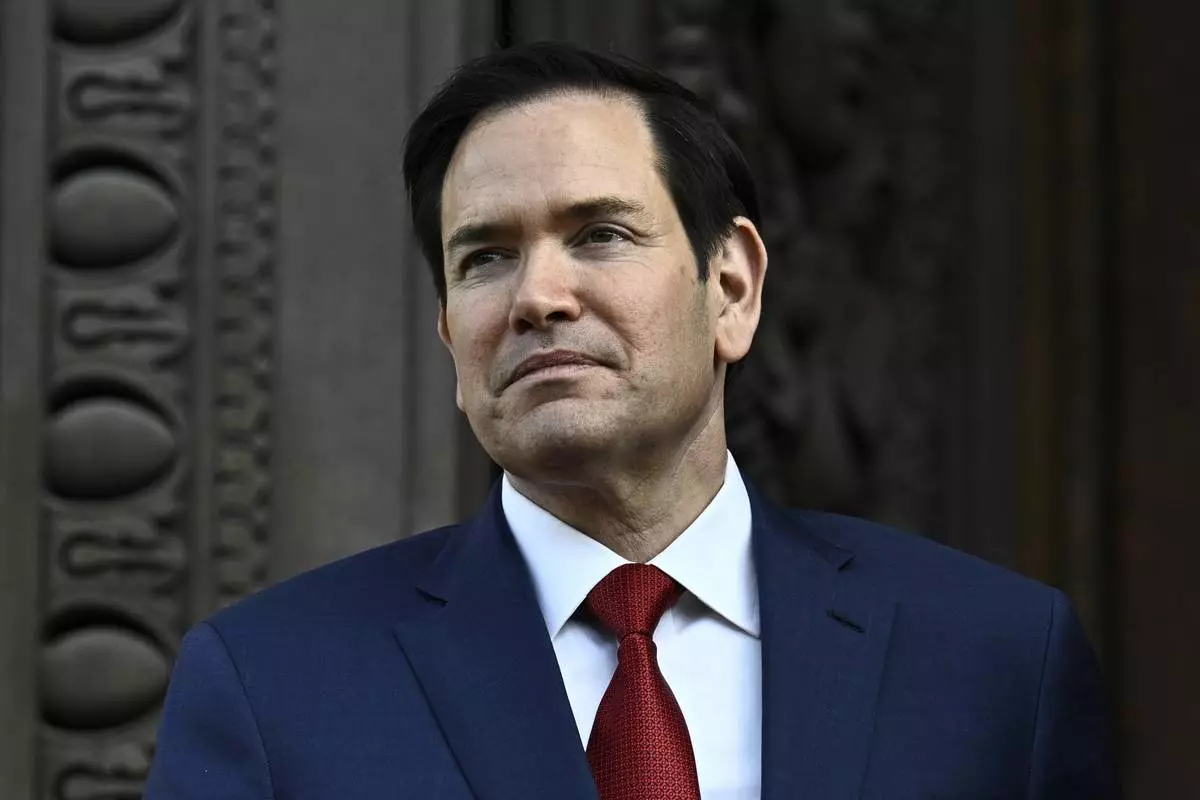
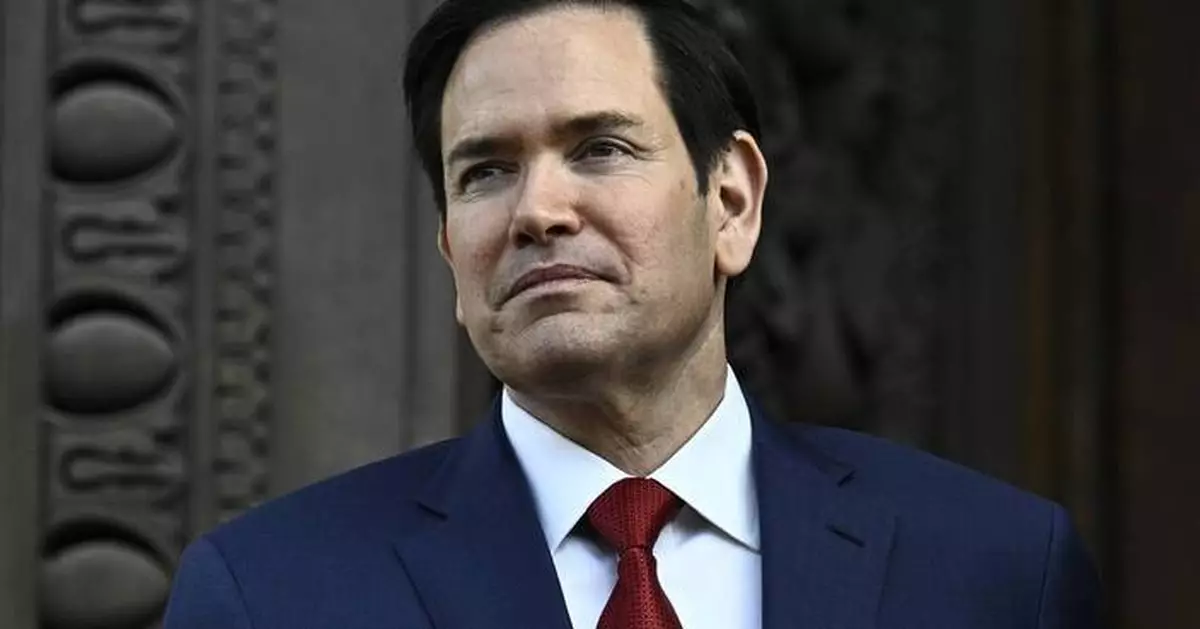
US Secretary of State Marco Rubio looks on upon his arrival at the Quai d'Orsay, France's Minister of Foreign Affairs before a bilateral meeting with his French counterpart Jean-Noel Barrot in Paris Thursday, April 17, 2025. (Julien de Rosa, Pool via AP)
US Secretary of State Marco Rubio looks on upon his arrival at the Quai d'Orsay, France's Minister of Foreign Affairs before a bilateral meeting with his French counterpart Jean-Noel Barrot in Paris Thursday, April 17, 2025. (Julien de Rosa, Pool via AP)
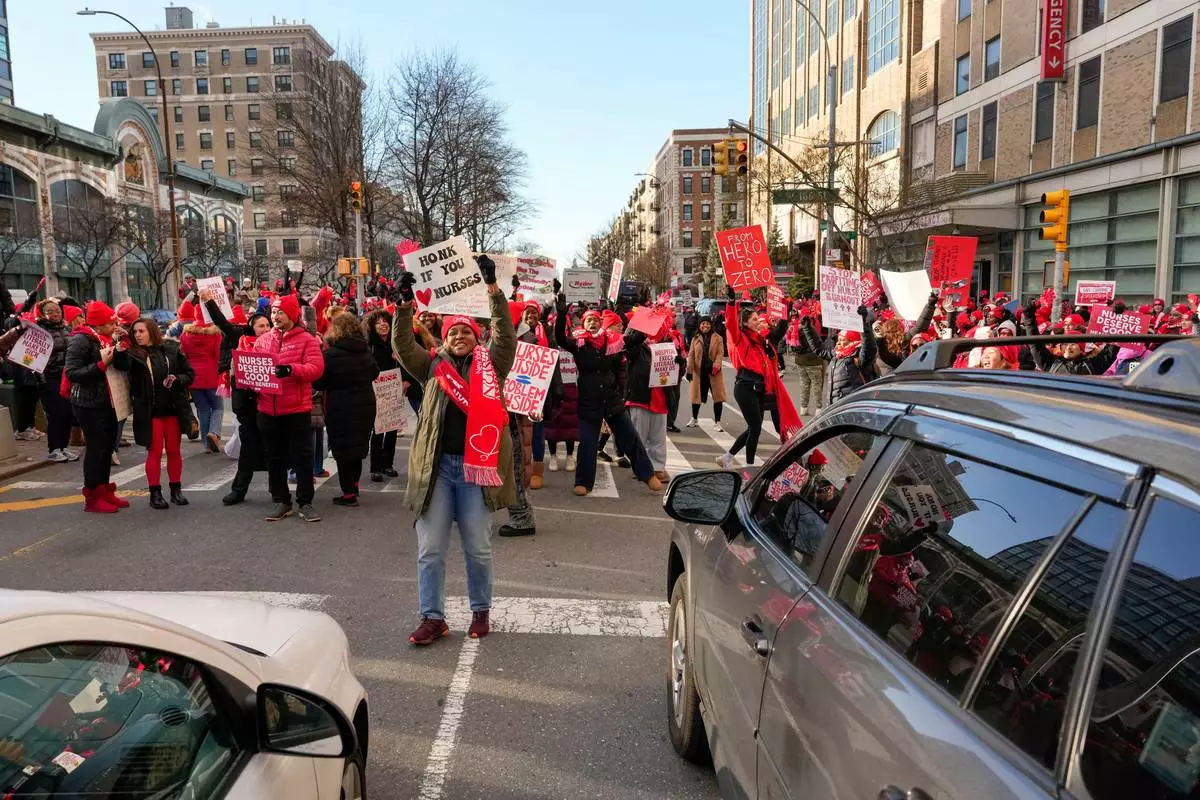
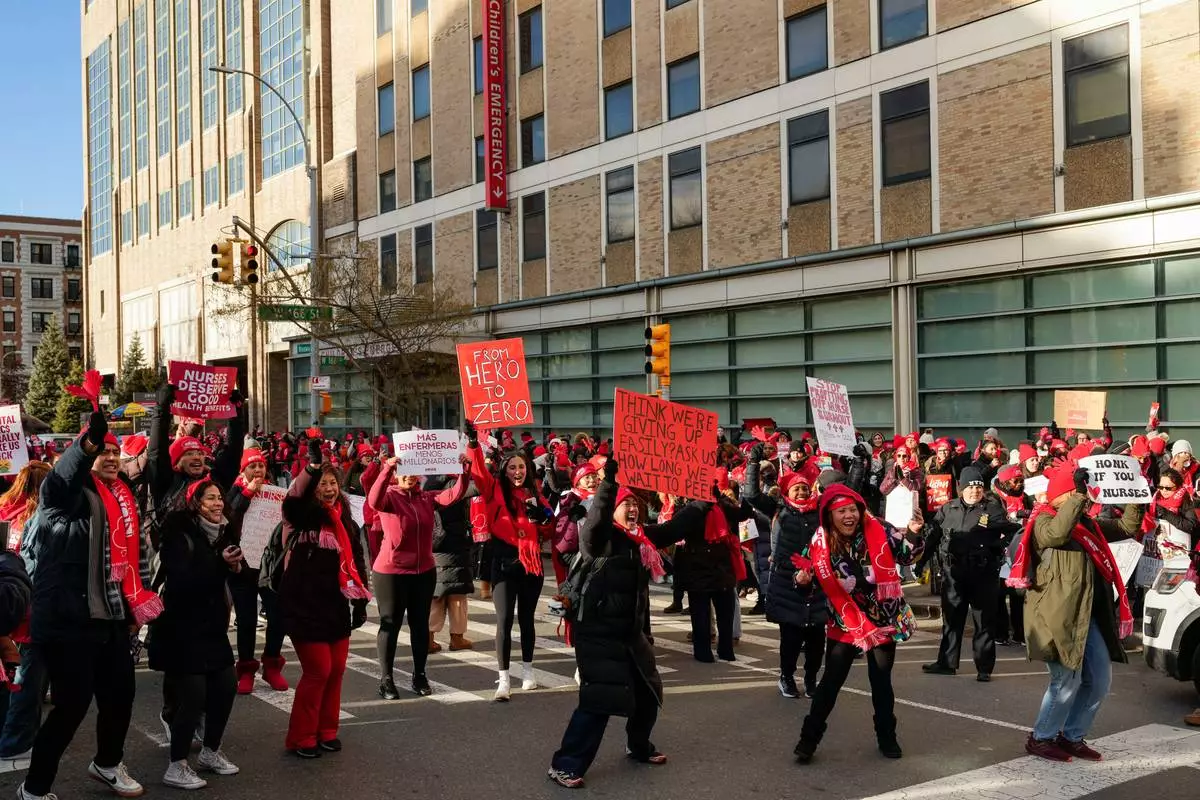
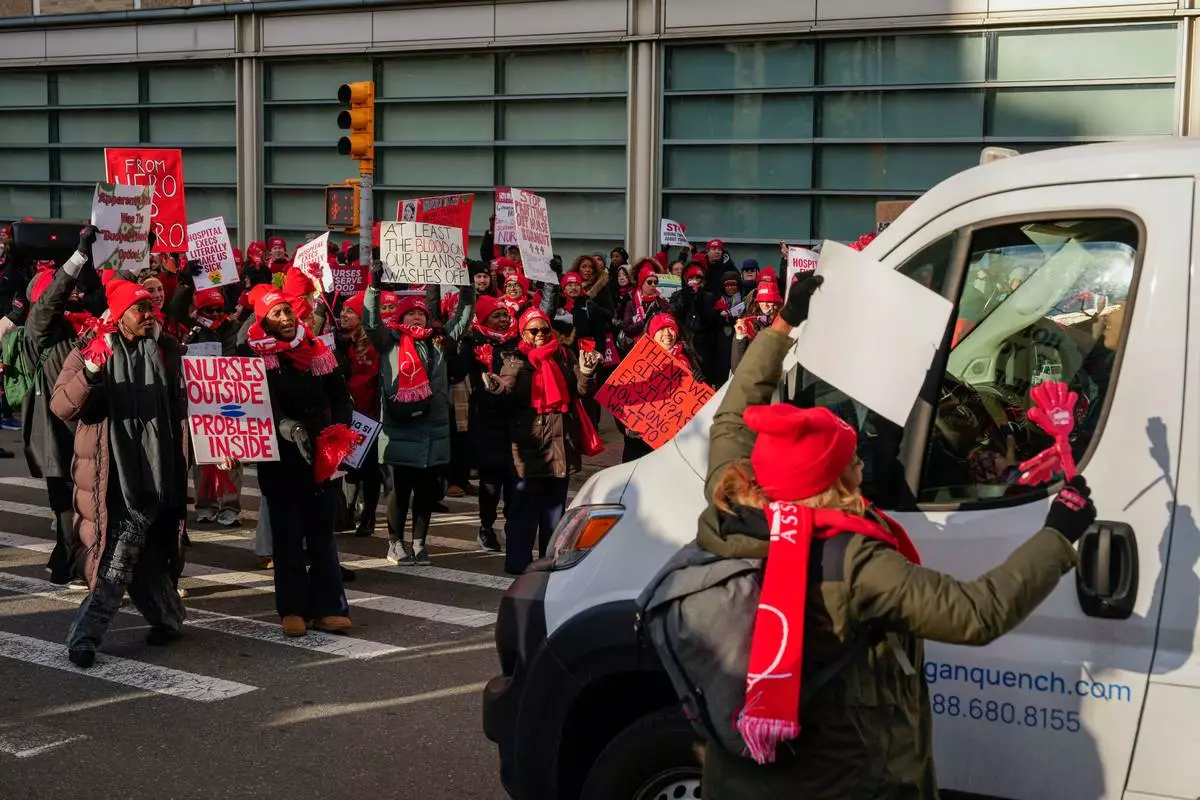
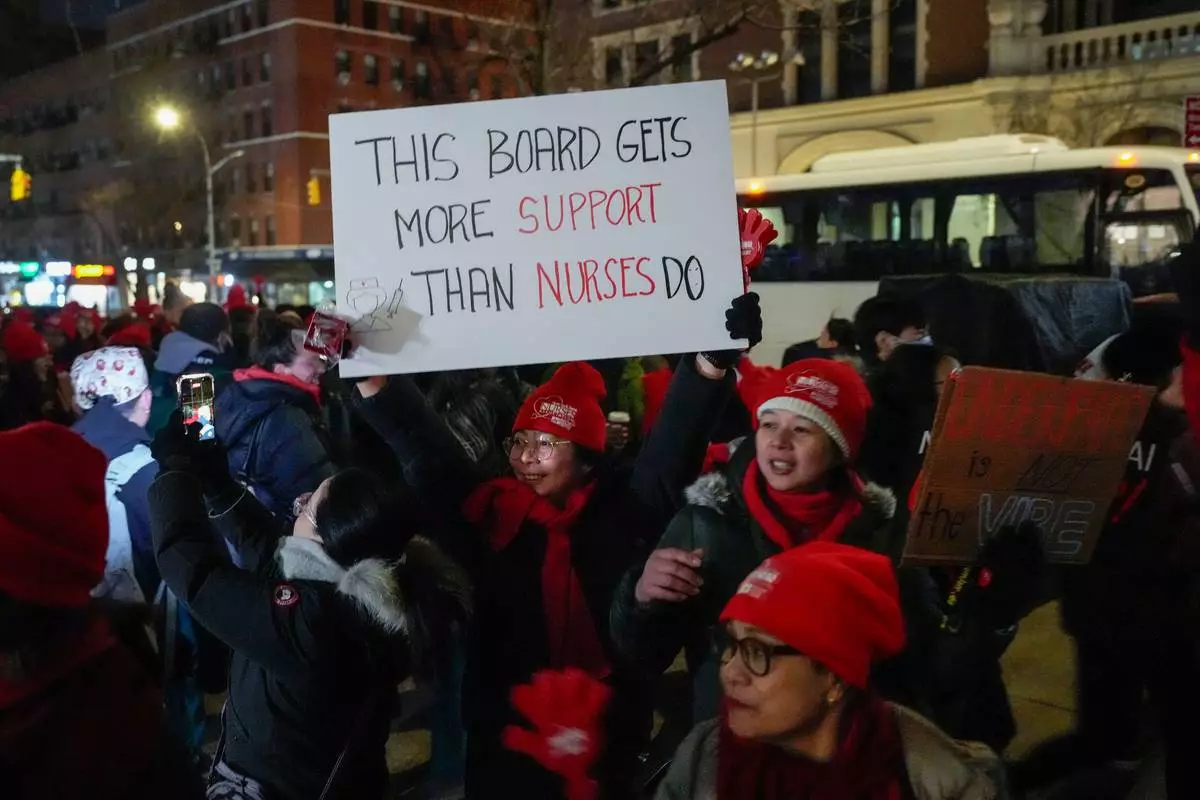
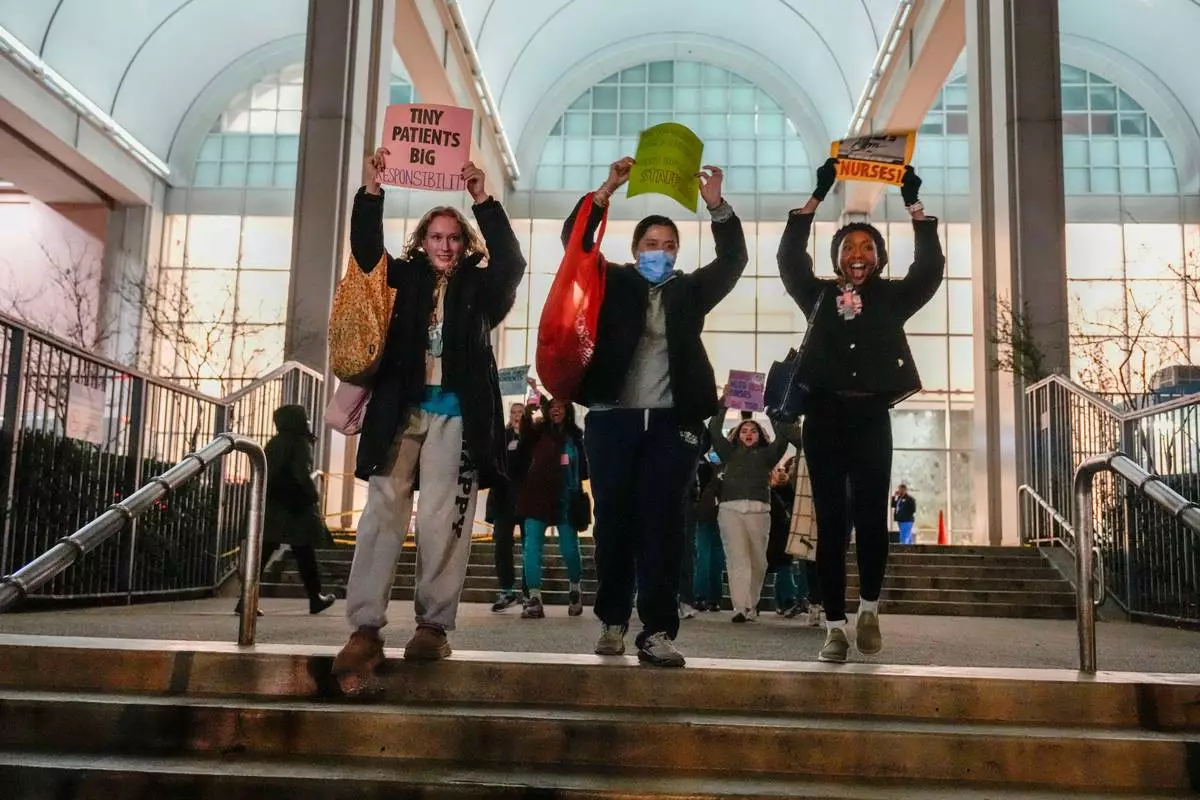
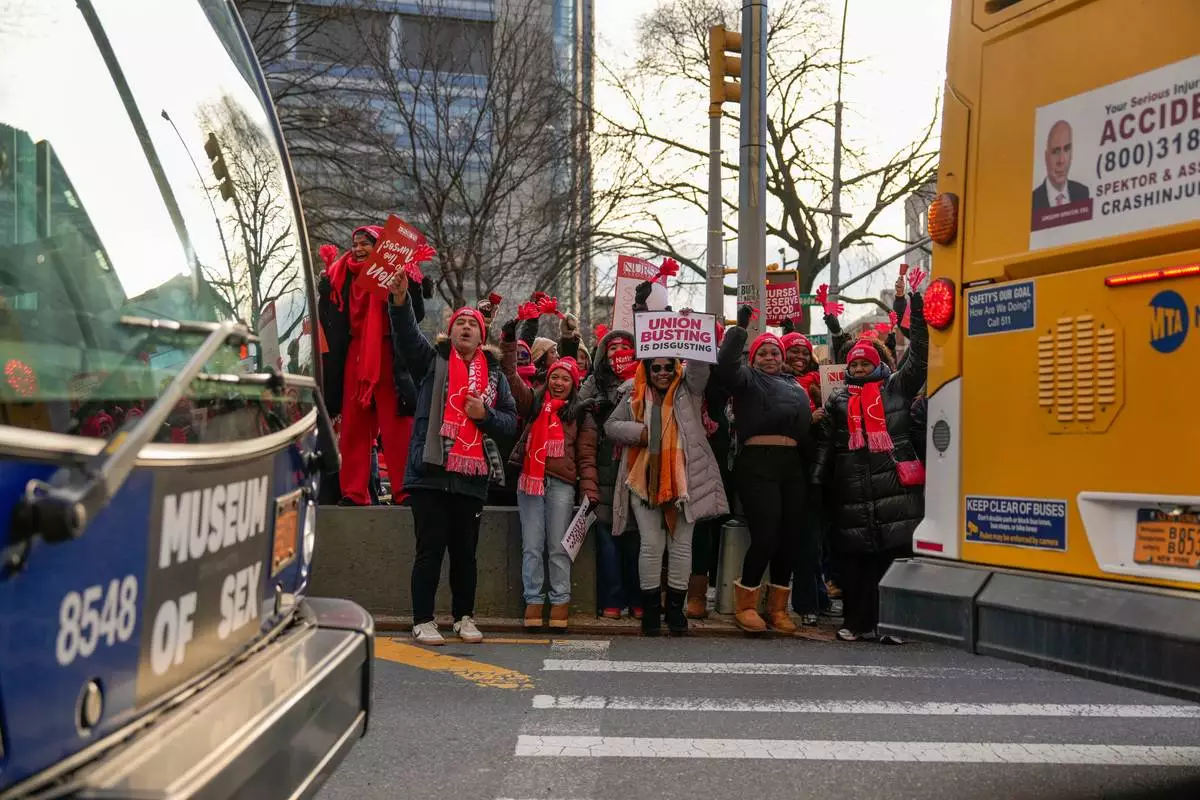
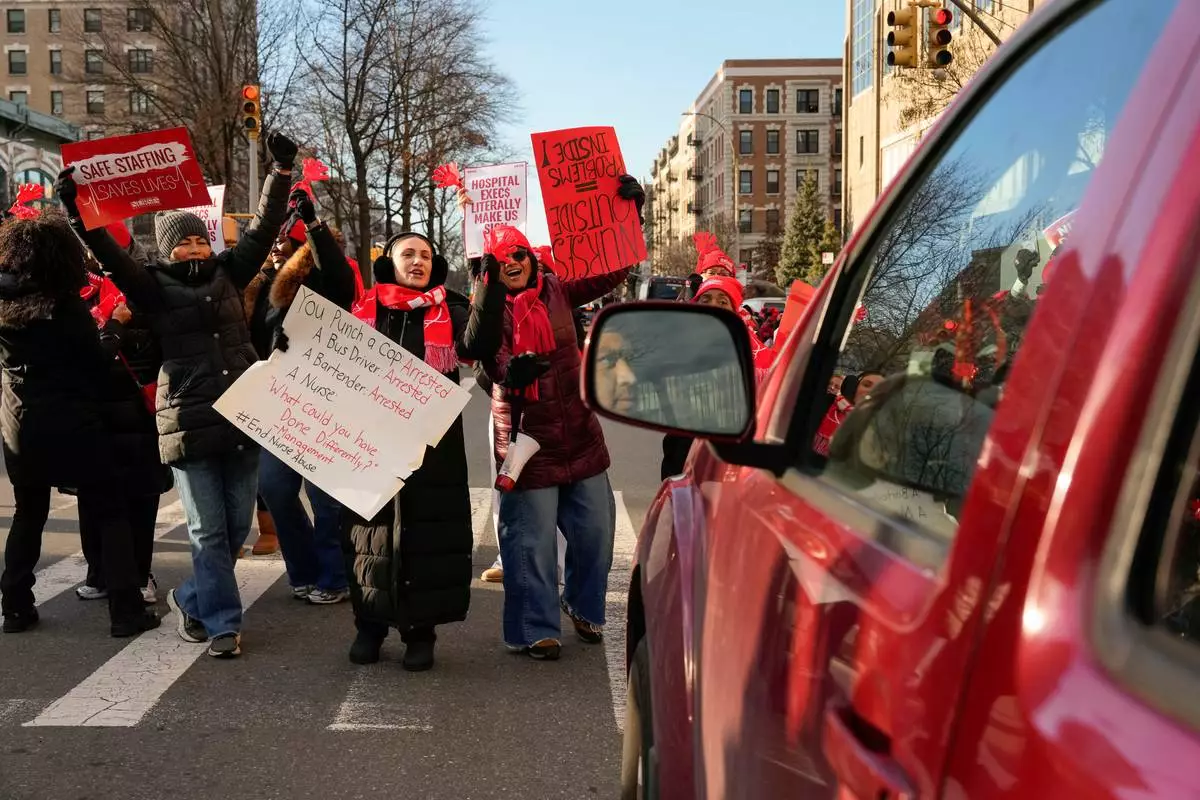
NEW YORK (AP) — Thousands of nurses in three hospital systems in New York City went on strike Monday after negotiations through the weekend failed to yield breakthroughs in their contract disputes.

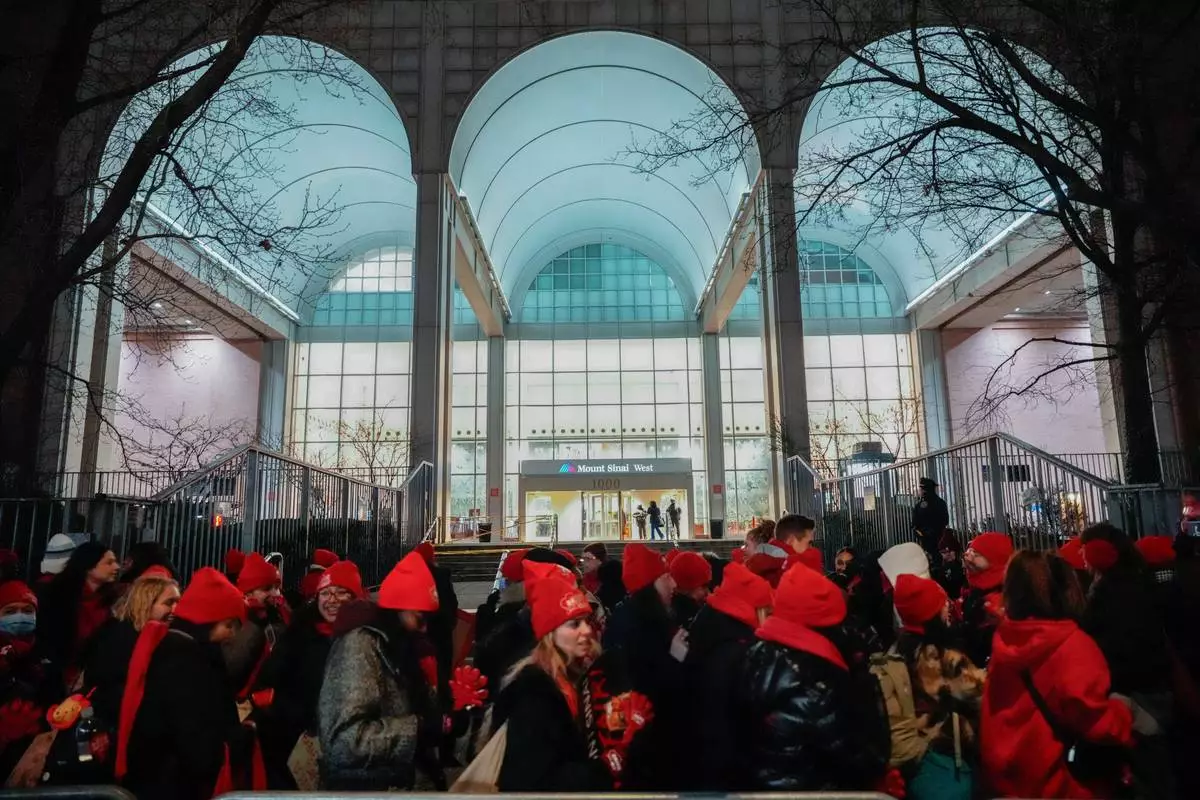
The strike was taking place at The Mount Sinai Hospital and two of its satellite campuses, with picket lines forming. The other affected hospitals are NewYork-Presbyterian and Montefiore Medical Center in the Bronx.

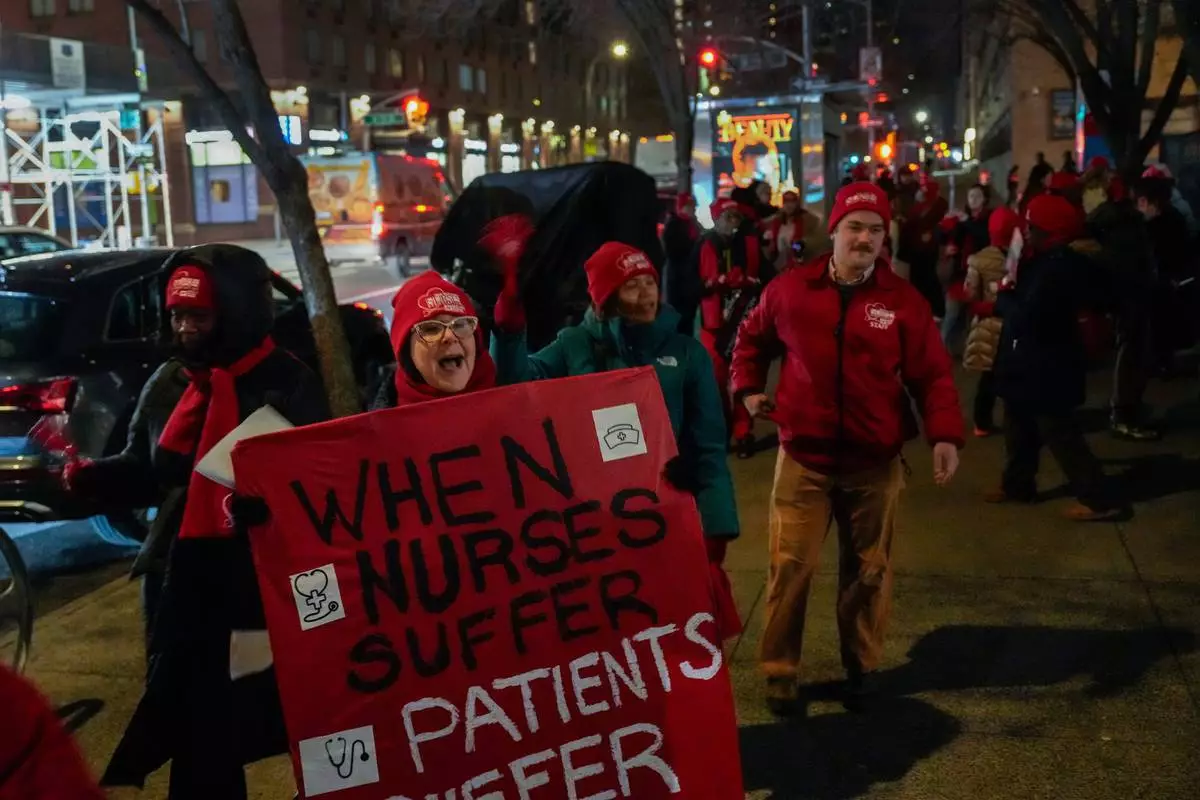
About 15,000 nurses are involved in the strike, according to New York State Nurses Association.

“After months of bargaining, management refused to make meaningful progress on core issues that nurses have been fighting for: safe staffing for patients, healthcare benefits for nurses, and workplace violence protections,” the union said in a statement issued Monday. “Management at the richest hospitals in New York City are threatening to discontinue or radically cut nurses’ health benefits.”

The strike, which comes during a severe flu season, could potentially force the hospitals to transfer patients, cancel procedures or divert ambulances. It could also put a strain on city hospitals not involved in the contract dispute, as patients avoid the medical centers hit by the strike.

The hospitals involved have been hiring temporary nurses to try and fill the labor gap during the walkout, and said in a statement during negotiations that they would “do whatever is necessary to minimize disruptions.” Montefiore posted a message assuring patients that appointments would be kept.

“NYSNA’s leaders continue to double down on their $3.6 billion in reckless demands, including nearly 40% wage increases, and their troubling proposals like demanding that a nurse not be terminated if found to be compromised by drugs or alcohol while on the job," Montefiore spokesperson Joe Solmonese said Monday after the strike had started. "We remain resolute in our commitment to providing safe and seamless care, regardless of how long the strike may last.”

New York-Presbyterian accused the union of staging a strike to “create disruption,” but said in a statement that it has taken steps to ensure patients receive the care they need.

"We’re ready to keep negotiating a fair and reasonable contract that reflects our respect for our nurses and the critical role they play, and also recognizes the challenging realities of today’s healthcare environment,” the statement said.

The work stoppage is occurring at multiple hospitals simultaneously, but each medical center is negotiating with the union independently. Several other hospitals across the city and in its suburbs reached deals in recent days to avert a possible strike.

The nurses’ demands vary by hospital, but the major issues include staffing levels and workplace safety. The union says hospitals have given nurses unmanageable workloads.

Nurses also want better security measures in the workplace, citing incidents like a an incident last week, when a man with a sharp object barricaded himself in a Brooklyn hospital room and was then killed by police.

The union also wants limitations on hospitals’ use of artificial intelligence.

The nonprofit hospitals involved in the negotiations say they’ve been working to improve staffing levels, but say the union’s demands overall are too costly.

Nurses voted to authorize the strike last month.

Both New York Gov. Kathy Hochul and Mayor Zohran Mamdani had expressed concern about the possibility of the strike. As the strike deadline neared, Mamdani urged both sides to keep negotiating and reach a deal that “both honors our nurses and keeps our hospitals open.”

“Our nurses kept this city alive through its hardest moments. Their value is not negotiable,” Mamdani said.

State Attorney General Letitia James voiced similar support, saying "nurses put their lives on the line every day to keep New Yorkers healthy. They should never be forced to choose between their own safety, their patients’ well-being, and a fair contract.”

The last major nursing strike in the city was only three years ago, in 2023. That work stoppage, at Mount Sinai and Montefiore, was short, lasting three days. It resulted in a deal raising pay 19% over three years at those hospitals.

It also led to promised staffing improvements, though the union and hospitals now disagree about how much progress has been made, or whether the hospitals are retreating from staffing guarantees.

Nurses strike outside New York-Presbyterian Hospital, Monday, Jan. 12, 2026, in New York. (AP Photo/Yuki Iwamura)

Nurses strike outside New York-Presbyterian Hospital, Monday, Jan. 12, 2026, in New York. (AP Photo/Yuki Iwamura)

Nurses strike outside New York-Presbyterian Hospital, Monday, Jan. 12, 2026, in New York. (AP Photo/Yuki Iwamura)

Nurses strike outside New York-Presbyterian Hospital, Monday, Jan. 12, 2026, in New York. (AP Photo/Yuki Iwamura)

Nurses strike outside New York-Presbyterian Hospital, Monday, Jan. 12, 2026, in New York. (AP Photo/Yuki Iwamura)

Nurses strike outside New York-Presbyterian Hospital, Monday, Jan. 12, 2026, in New York. (AP Photo/Yuki Iwamura)

Nurses strike outside New York-Presbyterian Hospital, Monday, Jan. 12, 2026, in New York. (AP Photo/Yuki Iwamura)

Nurses strike outside New York-Presbyterian Hospital, Monday, Jan. 12, 2026, in New York. (AP Photo/Yuki Iwamura)

Nurses strike outside New York-Presbyterian Hospital, Monday, Jan. 12, 2026, in New York. (AP Photo/Yuki Iwamura)

Nurses strike outside New York-Presbyterian Hospital, Monday, Jan. 12, 2026, in New York. (AP Photo/Yuki Iwamura)

Nurses strike outside Mount Sinai West Hospital, Monday, Jan. 12, 2026, in New York. (AP Photo/Yuki Iwamura)

Nurses strike outside Mount Sinai West Hospital, Monday, Jan. 12, 2026, in New York. (AP Photo/Yuki Iwamura)

Nurses strike outside Mount Sinai West Hospital, Monday, Jan. 12, 2026, in New York. (AP Photo/Yuki Iwamura)

Nurses strike outside Mount Sinai West Hospital, Monday, Jan. 12, 2026, in New York. (AP Photo/Yuki Iwamura)

Nurses strike outside Mount Sinai West Hospital, Monday, Jan. 12, 2026, in New York. (AP Photo/Yuki Iwamura)

Nurses strike outside Mount Sinai West Hospital, Monday, Jan. 12, 2026, in New York. (AP Photo/Yuki Iwamura)

Nurses strike outside Mount Sinai West Hospital, Monday, Jan. 12, 2026, in New York. (AP Photo/Yuki Iwamura)

Nurses strike outside Mount Sinai West Hospital, Monday, Jan. 12, 2026, in New York. (AP Photo/Yuki Iwamura)

FILE - A medical worker transports a patient at Mount Sinai Hospital, April 1, 2020, in New York. (AP Photo/Mary Altaffer, File)

FILE - A medical worker transports a patient at Mount Sinai Hospital, April 1, 2020, in New York. (AP Photo/Mary Altaffer, File)

Recommended Articles