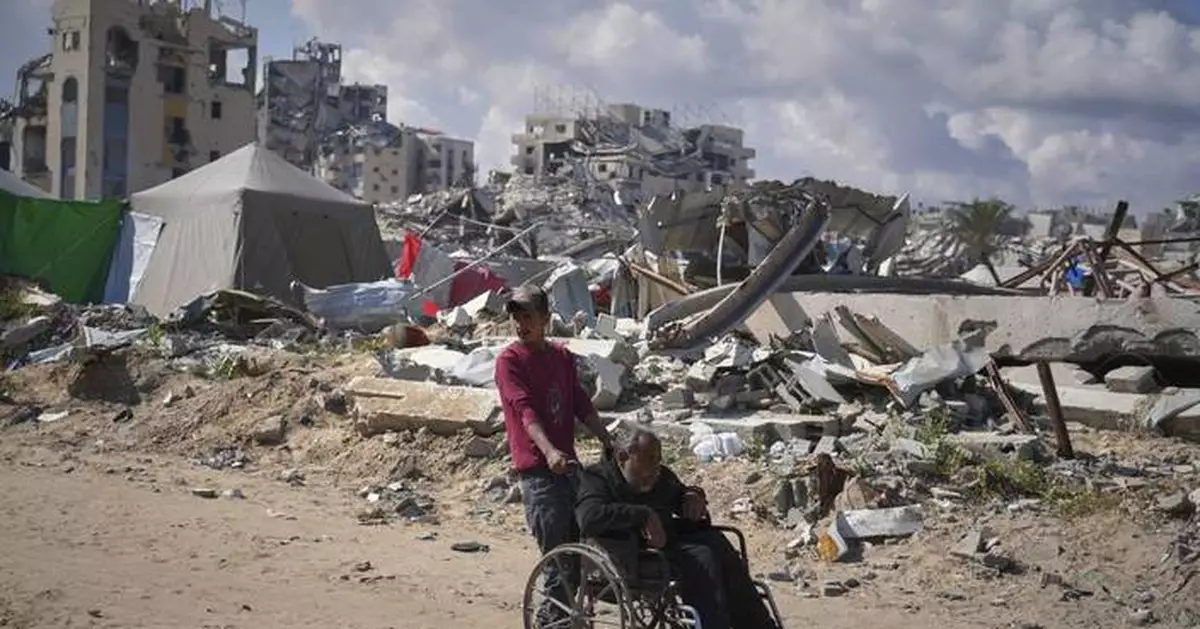
DEIR AL-BALAH, Gaza Strip (AP) — Twice a week, Mohamed Attiya’s wheelchair rattles over Gaza’s scarred roads so he can visit the machine that is keeping him alive.
The 54-year-old makes the journey from a temporary shelter west of Gaza City to Shifa Hospital in the city’s north. There, he receives dialysis for the kidney failure he was diagnosed with nearly 15 years ago. But the treatment, limited by the war's destruction and lack of supplies, is not enough to remove all the waste products from his blood.
Click to Gallery

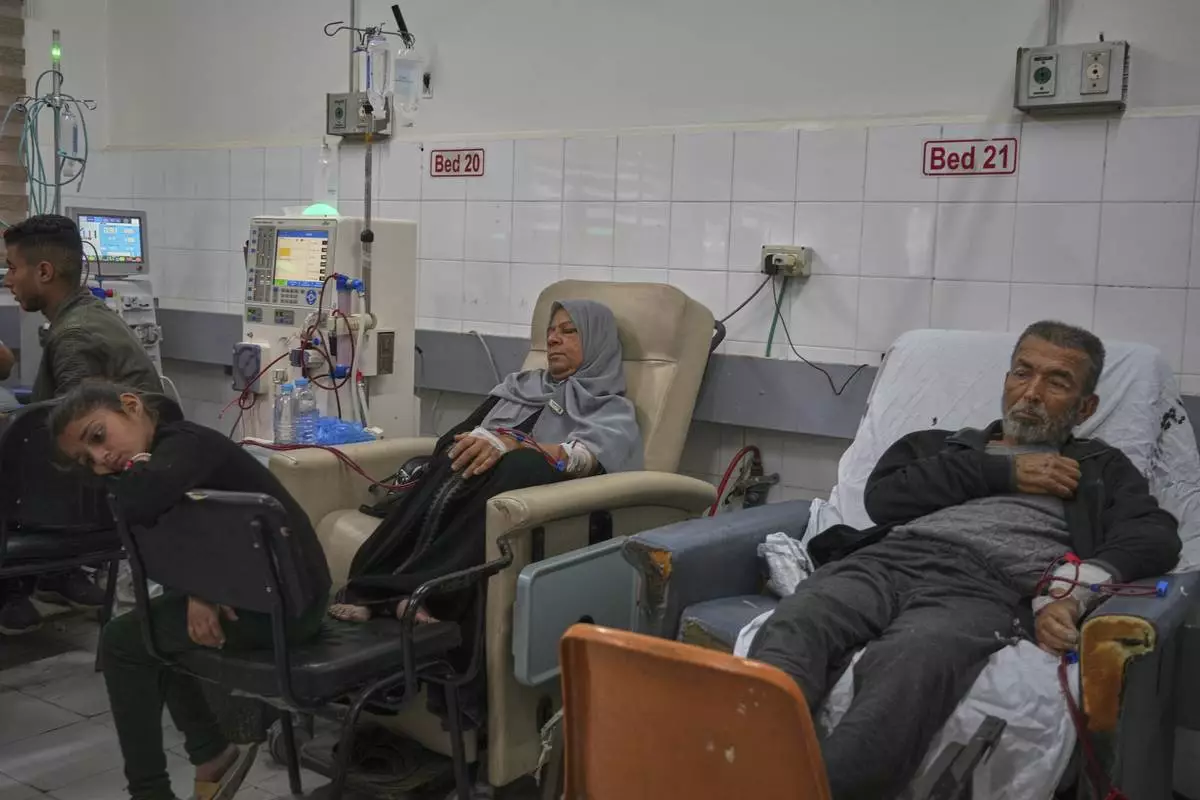
Fatima Radwan, 40, and Mohamed Attiya, 54, left, receive dialysis treatment at Shifa hospital in Gaza City, Monday, April 14, 2025.(AP Photo/(AP Photo/Jehad Alshrafi)
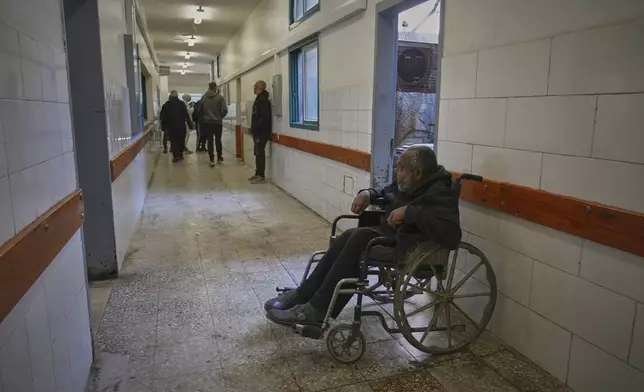
Mohamed Attiya, 54, waits for a dialysis session in a corridor at Shifa hospital in Gaza City, Monday, April 14, 2025.(AP Photo/(AP Photo/Jehad Alshrafi)
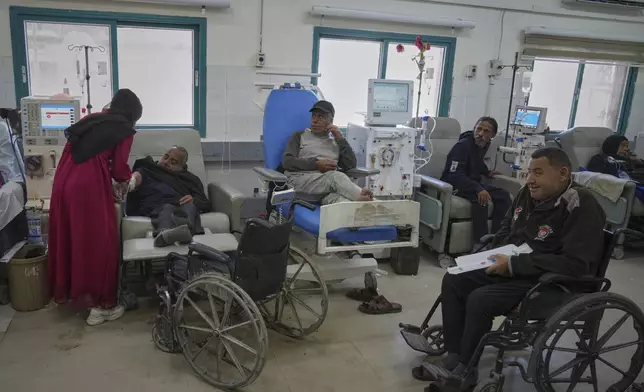
Mohamed Attiya, 54, second from left, receives dialysis treatment at Shifa hospital in Gaza City, Monday, April 14, 2025.(AP Photo/(AP Photo/Jehad Alshrafi)
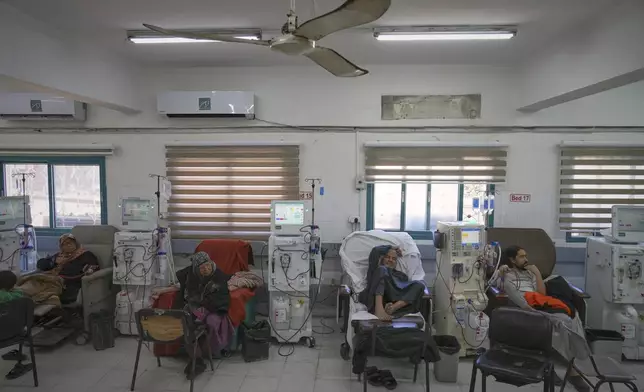
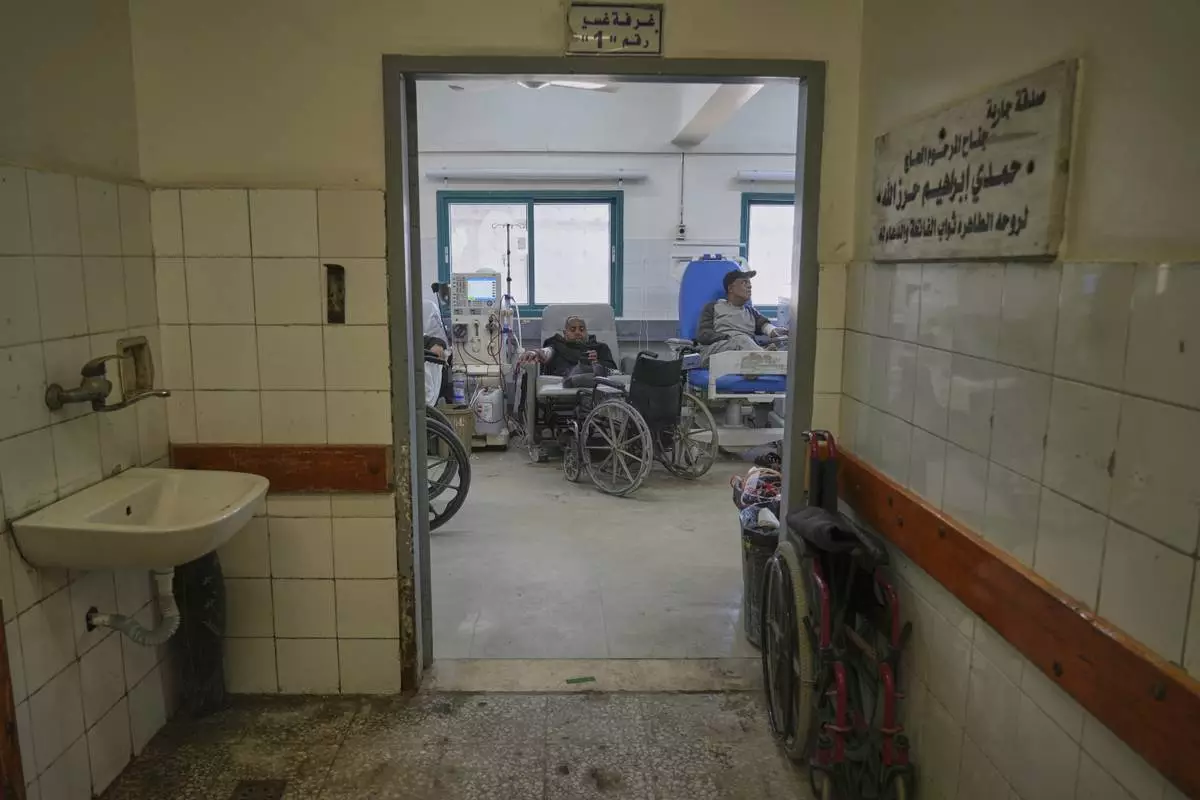
Patients receive dialysis treatment at Shifa hospital in Gaza City, Monday, April 14, 2025.(AP Photo/(AP Photo/Jehad Alshrafi)
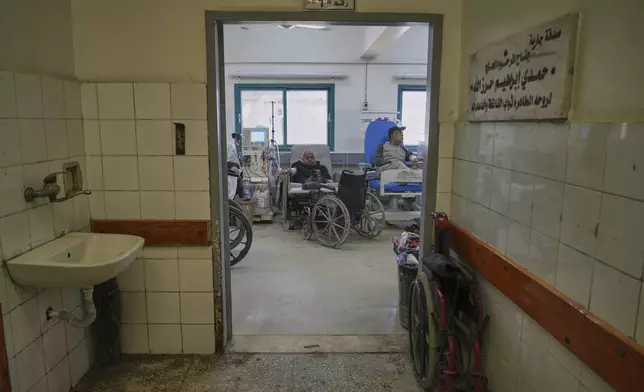
Mohamed Attiya, 54, receives dialysis treatment at Shifa hospital in Gaza City, Monday, April 14, 2025.(AP Photo/(AP Photo/Jehad Alshrafi)
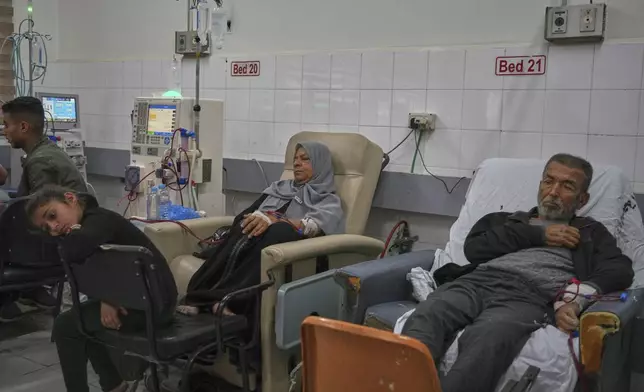
Patients receive dialysis treatment at Shifa hospital in Gaza City, Monday, April 14, 2025.(AP Photo/(AP Photo/Jehad Alshrafi)
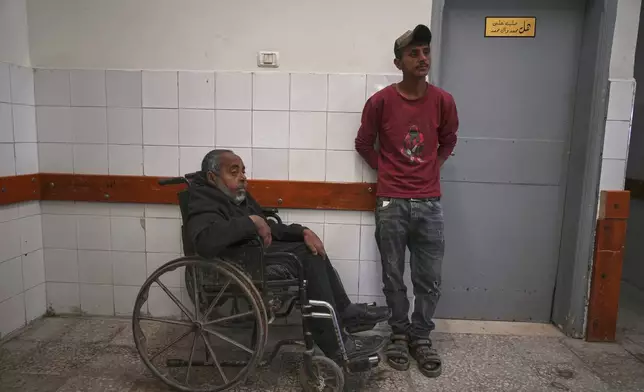
Mohamed Attiya, 54, waits for a dialysis session next to his son, Wasem, at Shifa hospital in Gaza City, Monday, April 14, 2025.(AP Photo/(AP Photo/Jehad Alshrafi)
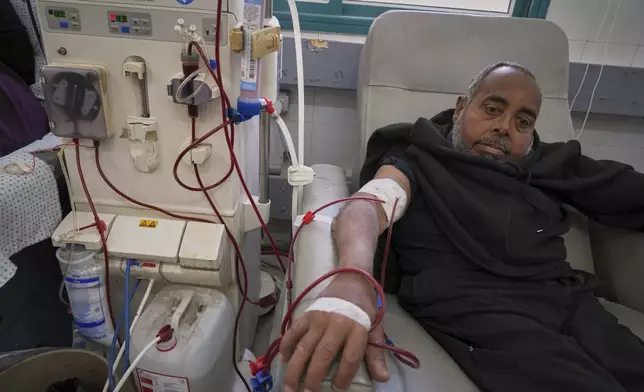
Mohamed Attiya, 54, receives dialysis treatment at Shifa hospital in Gaza City, Monday, April 14, 2025.(AP Photo/(AP Photo/Jehad Alshrafi)
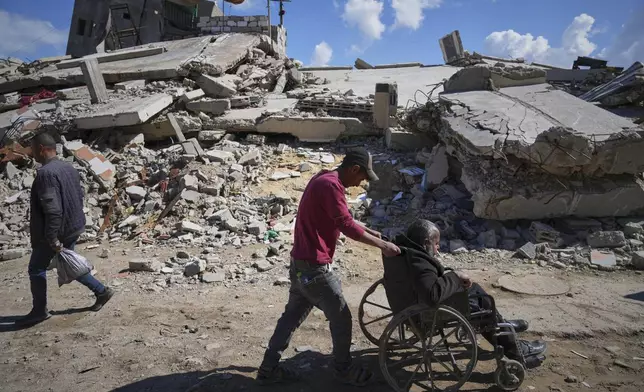
Wasem Attiya pushes his father, Mohamed, 54, in a wheelchair as they head to Shifa hospital in Gaza City for a dialysis session, Monday, April 14, 2025. (AP Photo/Jehad Alshrafi)
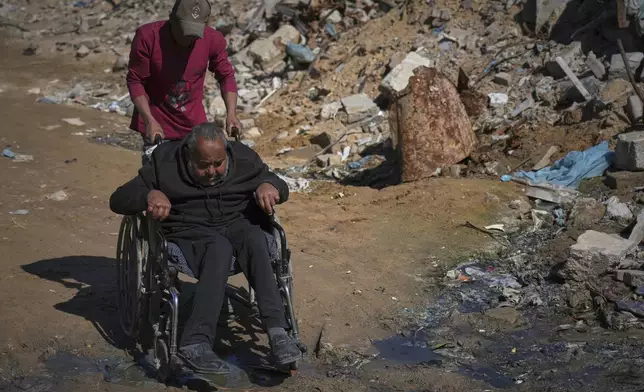
Wasem Attiya pushes his father, Mohamed, 54, in a wheelchair as they head to Shifa hospital in Gaza City for a dialysis session, Monday, April 14, 2025. (AP Photo/Jehad Alshrafi)
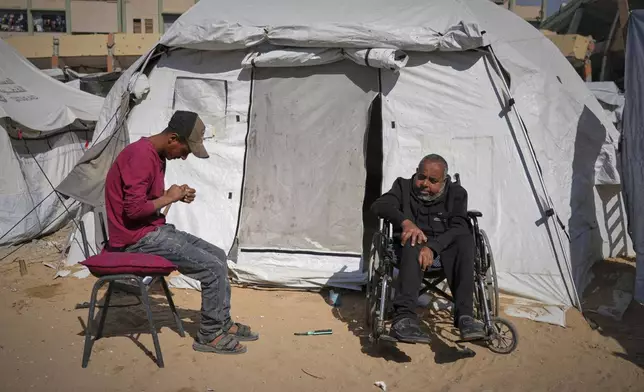
Mohamed Attiya, 54, right, and his son, Wasem, sit in front of their tent before heading to Shifa hospital for a dialysis session in Gaza City, Monday, April 14, 2025. (AP Photo/Jehad Alshrafi)
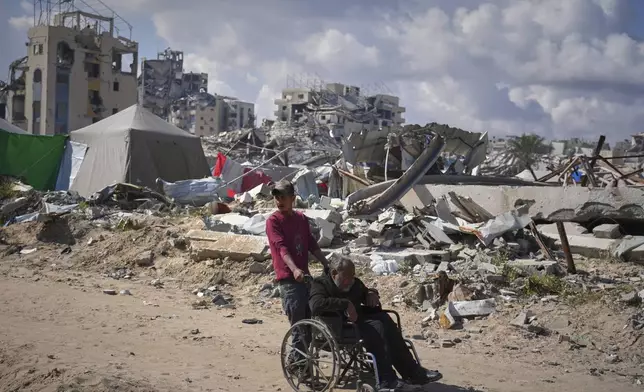
Wasem Attiya pushes his father, Mohamed, 54, in a wheelchair as they head to Shifa hospital in Gaza City for a dialysis session, Monday, April 14, 2025. (AP Photo/Jehad Alshrafi)
“It just brings you back from death,” the father of six said.
Many others like him have not made it. They are some of Gaza’s quieter deaths from the war, with no explosion, no debris. But the toll is striking: Over 400 patients, representing around 40% of all dialysis cases in the territory, have died during the 18-month conflict because of lack of proper treatment, according to Gaza's Health Ministry.
That includes 11 patients who have died since the beginning of March, when Israel sealed the territory's 2 million Palestinians off from all imports, including food, medical supplies and fuel. Israeli officials say the aim is to pressure Hamas to release more hostages after Israel ended their ceasefire.
COGAT, the Israeli military body in charge of coordinating aid, declined to comment on the current blockade. It has said in the past that all medical aid is approved for entry when the crossings are open, and that around 45,400 tons of medical equipment have entered Gaza since the start of the war.
Attiya said he needs at least three dialysis sessions every week, at least four hours each time. Now, his two sessions last two or three hours at most.
Israel’s blockade, and its numerous evacuation orders across much of the territory, have challenged his ability to reach regular care.
He has been displaced at least six times since fleeing his home near the northern town of Beit Hanoun in the first weeks of the war. He first stayed in Rafah in the south, then the central city of Deir al-Balah. When the latest ceasefire took effect in January, he moved again to another school in western Gaza City.
Until recently, Attiya walked to the hospital for dialysis. But he says the limited treatment, and soaring prices for the mineral water he should be drinking, have left him in a wheelchair.
His family wheels him through a Gaza that many find difficult to recognize. Much of the territory has been destroyed.
“There is no transportation. Streets are damaged,” Attiya said. “Life is difficult and expensive.”
He said he now has hallucinations because of the high levels of toxins in his blood.
“The occupation does not care about the suffering or the sick,” he said, referring to Israel and its soldiers.
Six of the seven dialysis centers in Gaza have been destroyed during the war, the World Health Organization said earlier this year, citing the territory’s Health Ministry. The territory had 182 dialysis machines before the war and now has 102. Twenty-seven of them are in northern Gaza, where hundreds of thousands of people rushed home during the two-month ceasefire.
“These equipment shortages are exacerbated by zero stock levels of kidney medications,” the WHO said.
Israel has raided hospitals on several occasions during the war, accusing Hamas of using them for military purposes. Hospital staff deny the allegations and say the raids have gutted the territory's health care system as it struggles to cope with mass casualties from the war.
The Health Ministry says over 51,000 Palestinians, mostly women and children, have been killed in Israel's offensive, without saying how many were civilians or combatants. Hamas-led militants killed some 1,200 people, mostly civilians, and abducted 251 in the Oct. 7, 2023 attack that triggered the war.
At Shifa Hospital, the head of the nephrology and dialysis department, Dr. Ghazi al-Yazigi, said at least 417 patients with kidney failure have died in Gaza during the war because of lack of proper treatment.
That’s from among the 1,100 patients when the war began.
Like Attiya, hundreds of dialysis patients across Gaza are now forced to settle for fewer and shorter sessions each week.
“This leads to complications such as increased levels of toxins and fluid accumulation … which could lead to death,” al-Yazigi said.
Mohamed Kamel of Gaza City is a new dialysis patient at the hospital after being diagnosed with kidney failure during the war and beginning treatment this year.
These days, “I feel no improvement after each session,” he said during one of his weekly visits.
The father of six children said he no longer has access to filtered water to drink, and even basic running water is scarce. Israel last month cut off the electricity supply to Gaza, affecting a desalination plant producing drinking water for part of the arid territory.
Kamel said he has missed many dialysis sessions. Last year, while sheltering in central Gaza, he missed one because of an Israeli bombing in the area. His condition deteriorated, and the next day he was taken by ambulance to Al-Aqsa Martyrs hospital.
“The displacement has had consequences,” Kamel said. “I am tired.”
Magdy reported from Cairo. Associated Press writer Cara Anna contributed.
Follow coverage of the war at https://apnews.com/hub/israel-hamas-war
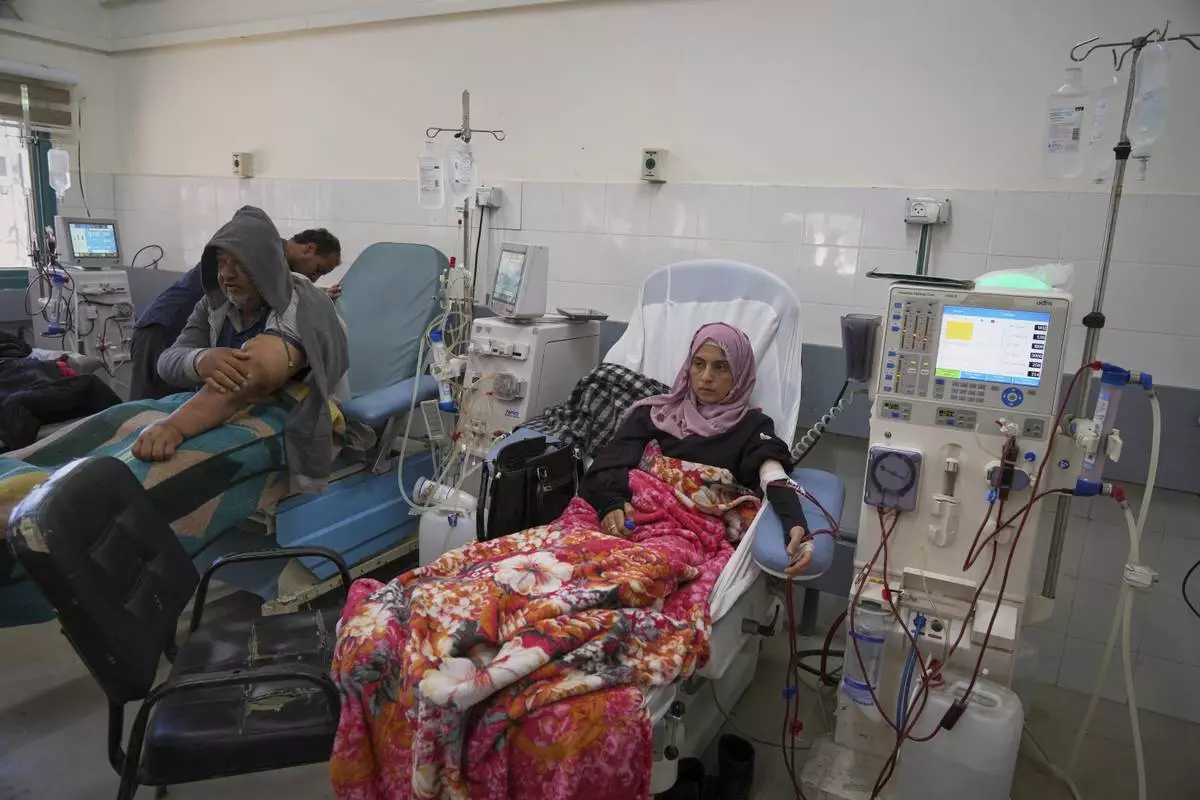
Fatima Radwan, 40, and Mohamed Attiya, 54, left, receive dialysis treatment at Shifa hospital in Gaza City, Monday, April 14, 2025.(AP Photo/(AP Photo/Jehad Alshrafi)
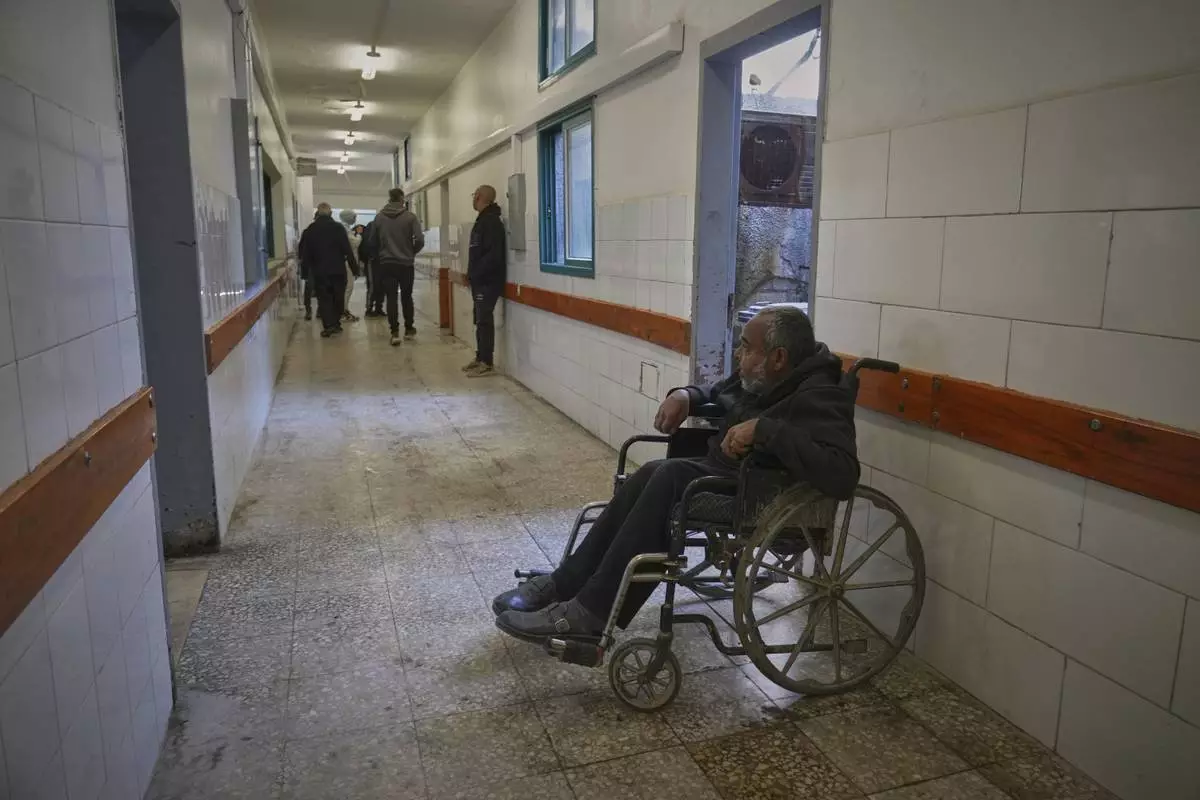
Mohamed Attiya, 54, waits for a dialysis session in a corridor at Shifa hospital in Gaza City, Monday, April 14, 2025.(AP Photo/(AP Photo/Jehad Alshrafi)
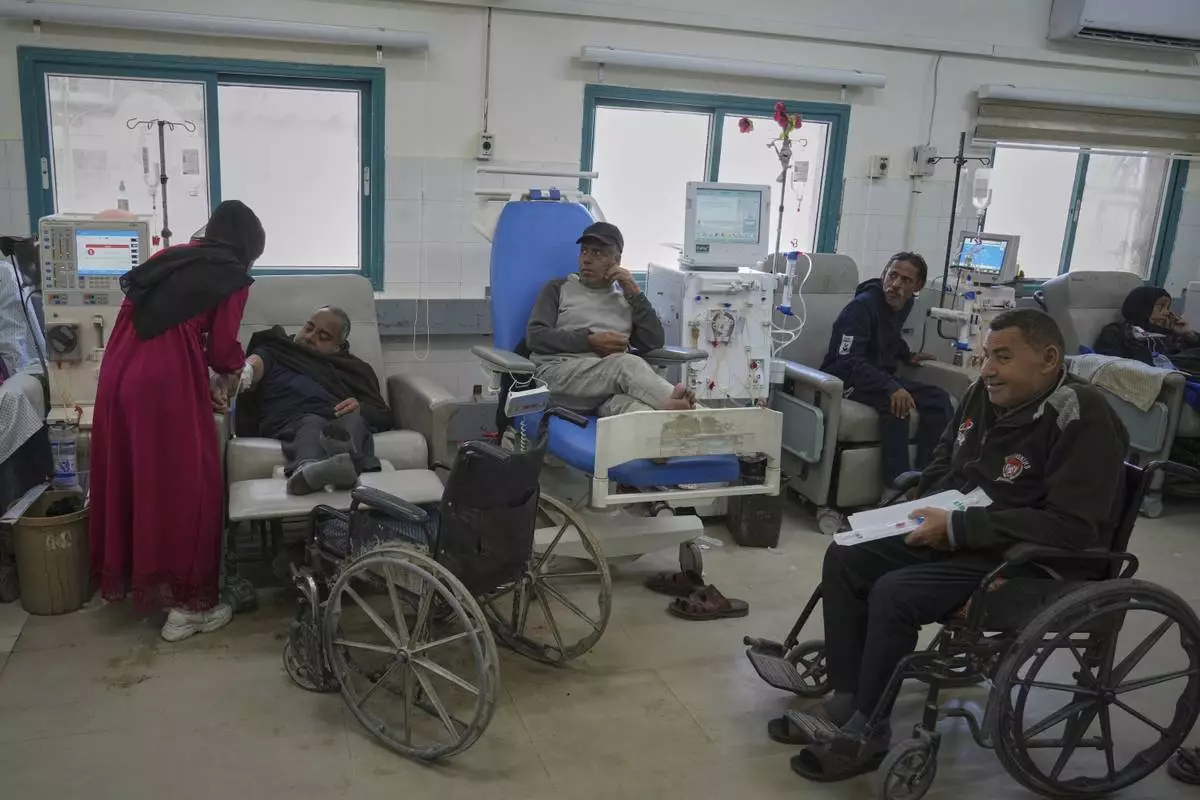
Mohamed Attiya, 54, second from left, receives dialysis treatment at Shifa hospital in Gaza City, Monday, April 14, 2025.(AP Photo/(AP Photo/Jehad Alshrafi)
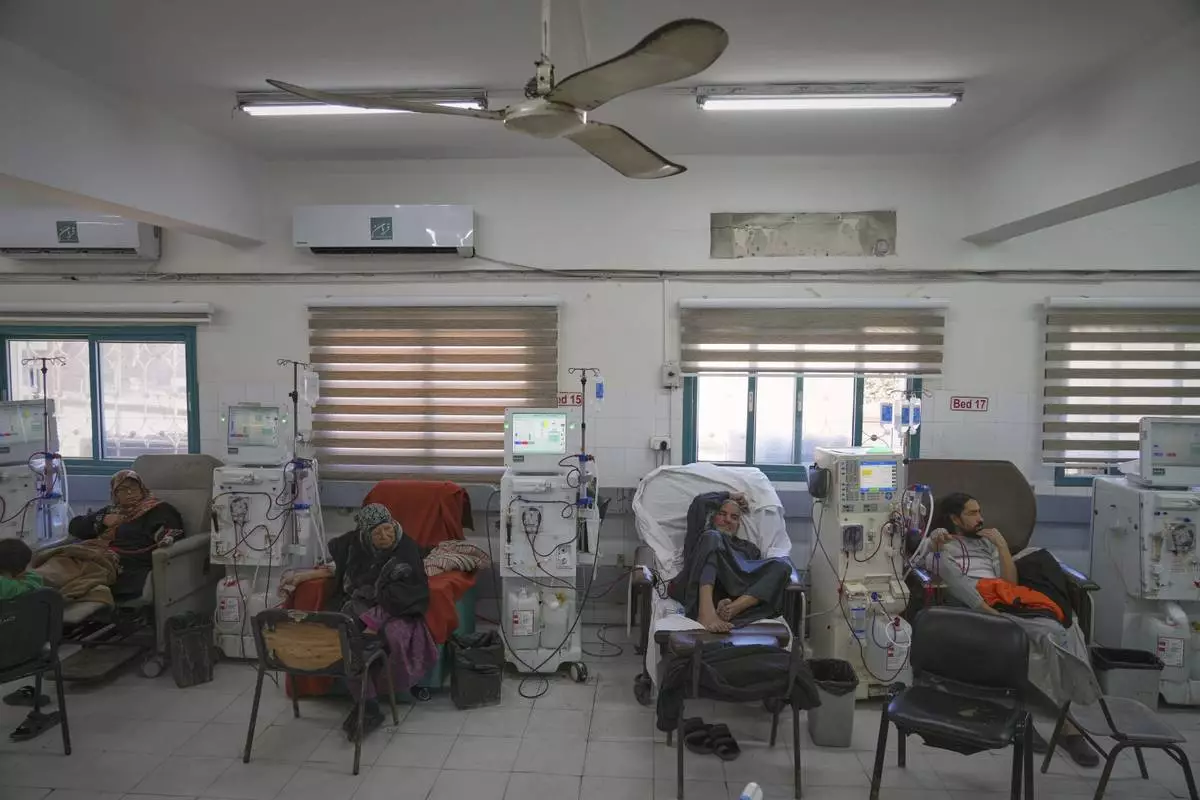
Patients receive dialysis treatment at Shifa hospital in Gaza City, Monday, April 14, 2025.(AP Photo/(AP Photo/Jehad Alshrafi)
Mohamed Attiya, 54, receives dialysis treatment at Shifa hospital in Gaza City, Monday, April 14, 2025.(AP Photo/(AP Photo/Jehad Alshrafi)
Patients receive dialysis treatment at Shifa hospital in Gaza City, Monday, April 14, 2025.(AP Photo/(AP Photo/Jehad Alshrafi)
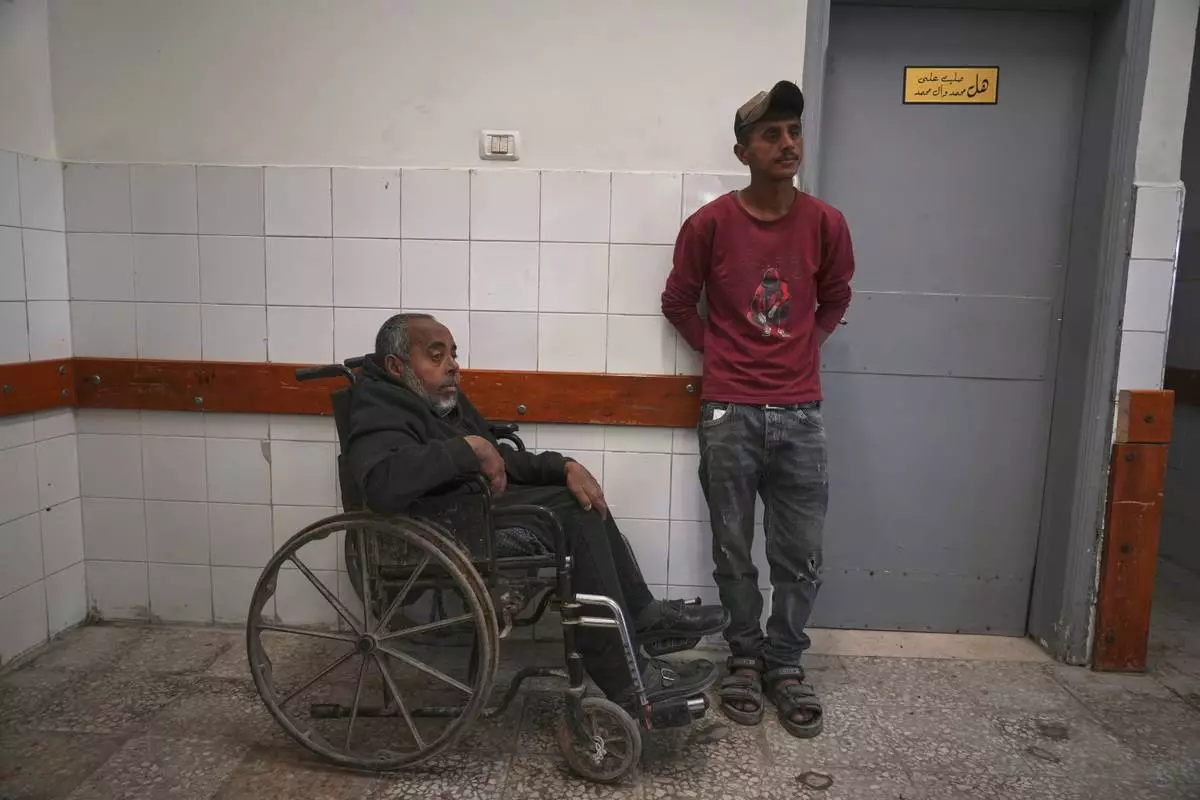
Mohamed Attiya, 54, waits for a dialysis session next to his son, Wasem, at Shifa hospital in Gaza City, Monday, April 14, 2025.(AP Photo/(AP Photo/Jehad Alshrafi)
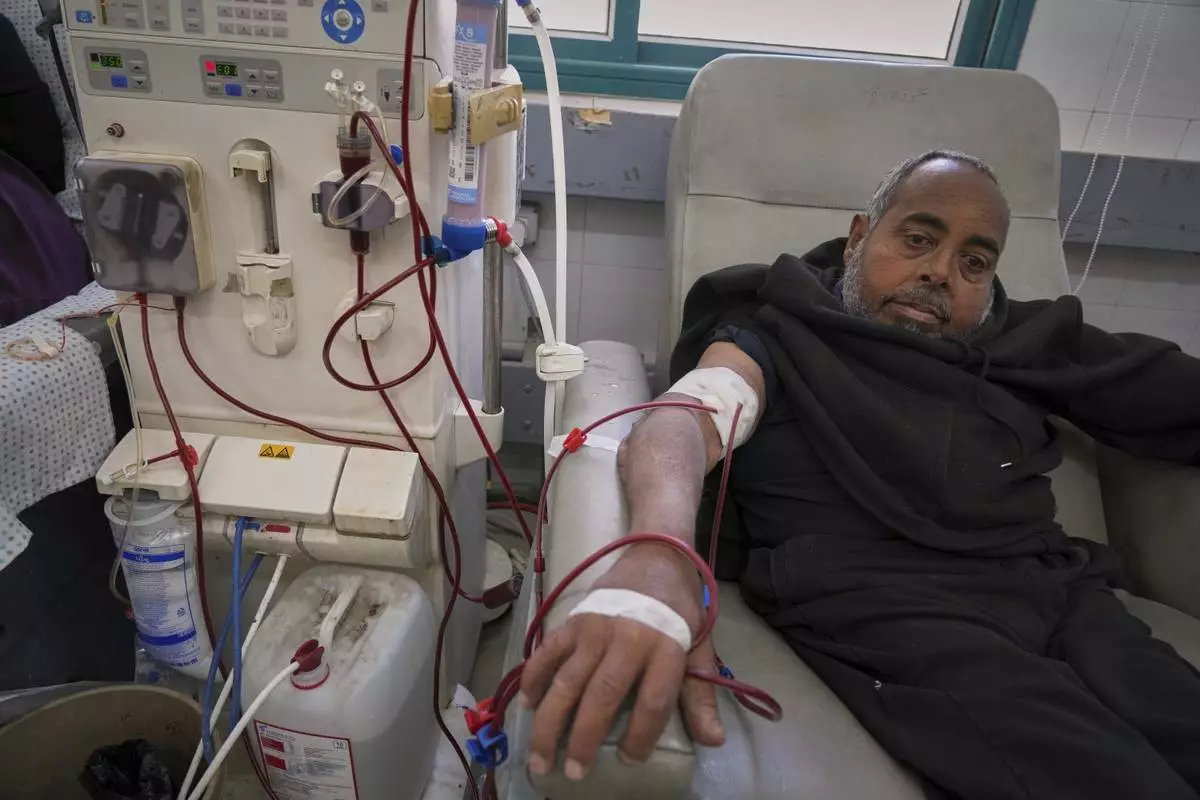
Mohamed Attiya, 54, receives dialysis treatment at Shifa hospital in Gaza City, Monday, April 14, 2025.(AP Photo/(AP Photo/Jehad Alshrafi)
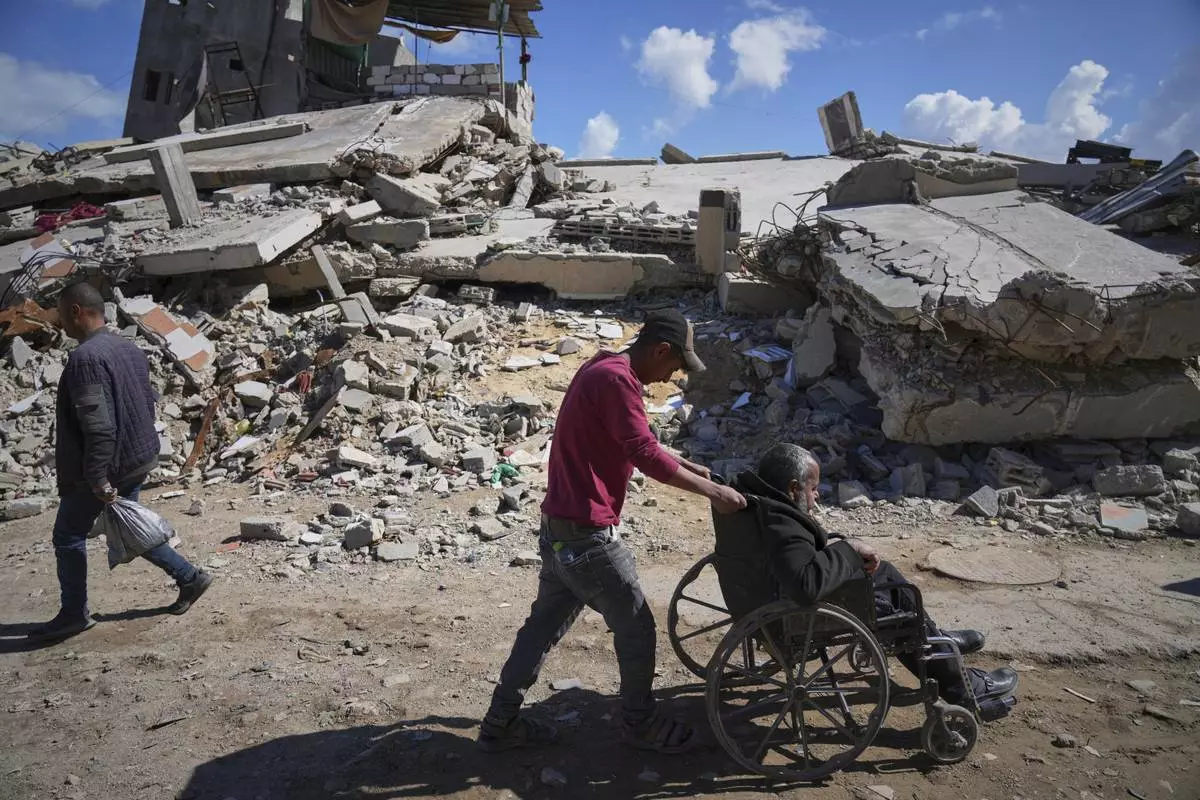
Wasem Attiya pushes his father, Mohamed, 54, in a wheelchair as they head to Shifa hospital in Gaza City for a dialysis session, Monday, April 14, 2025. (AP Photo/Jehad Alshrafi)
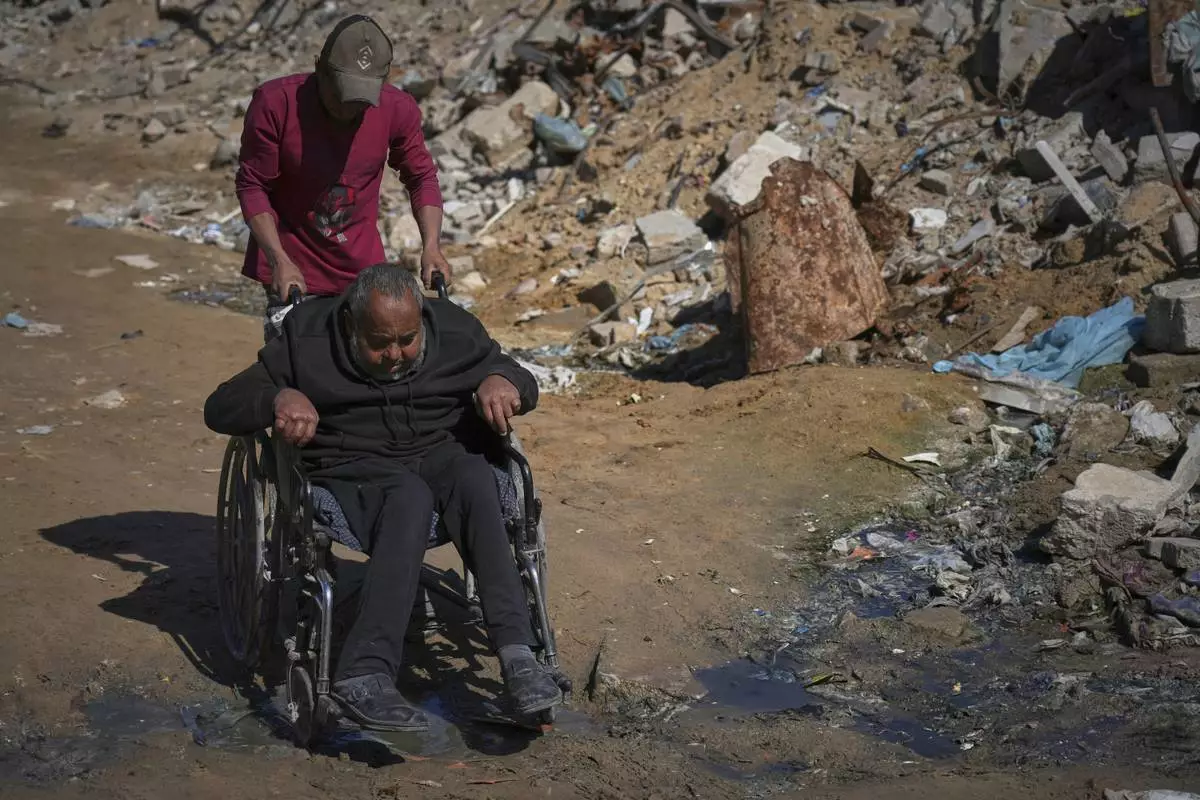
Wasem Attiya pushes his father, Mohamed, 54, in a wheelchair as they head to Shifa hospital in Gaza City for a dialysis session, Monday, April 14, 2025. (AP Photo/Jehad Alshrafi)
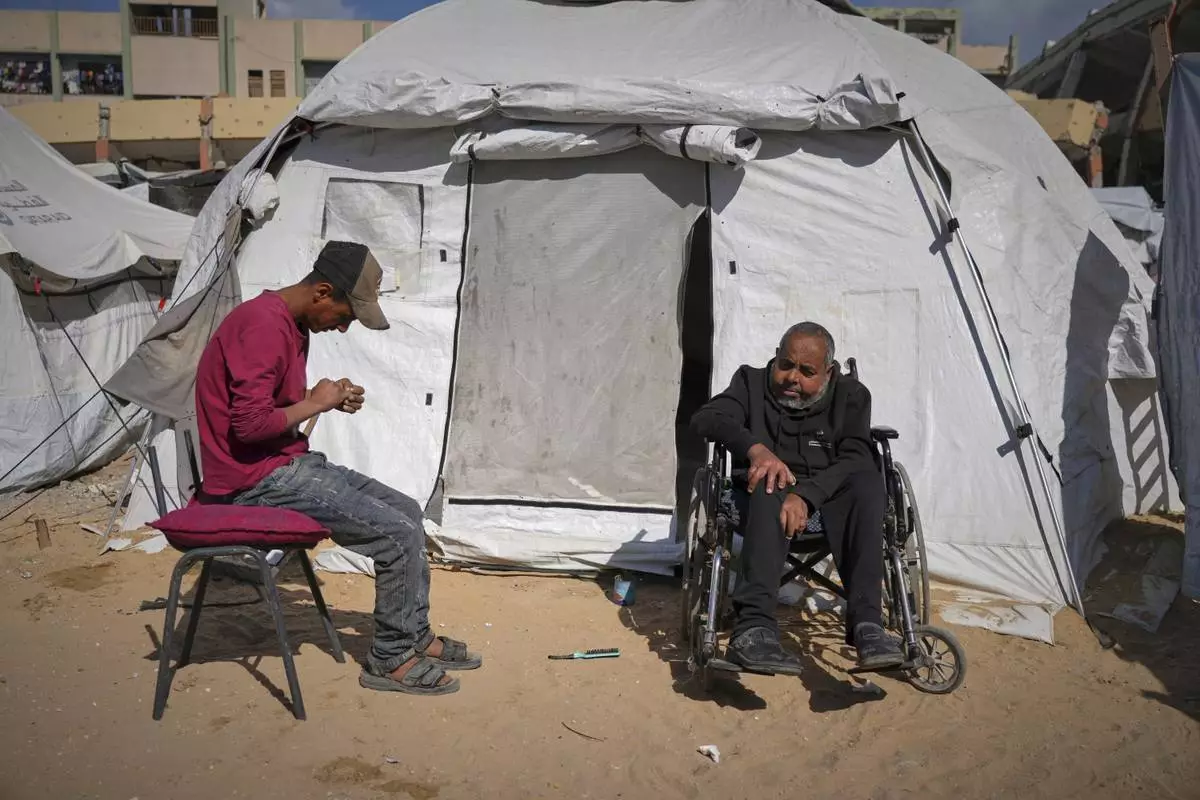
Mohamed Attiya, 54, right, and his son, Wasem, sit in front of their tent before heading to Shifa hospital for a dialysis session in Gaza City, Monday, April 14, 2025. (AP Photo/Jehad Alshrafi)
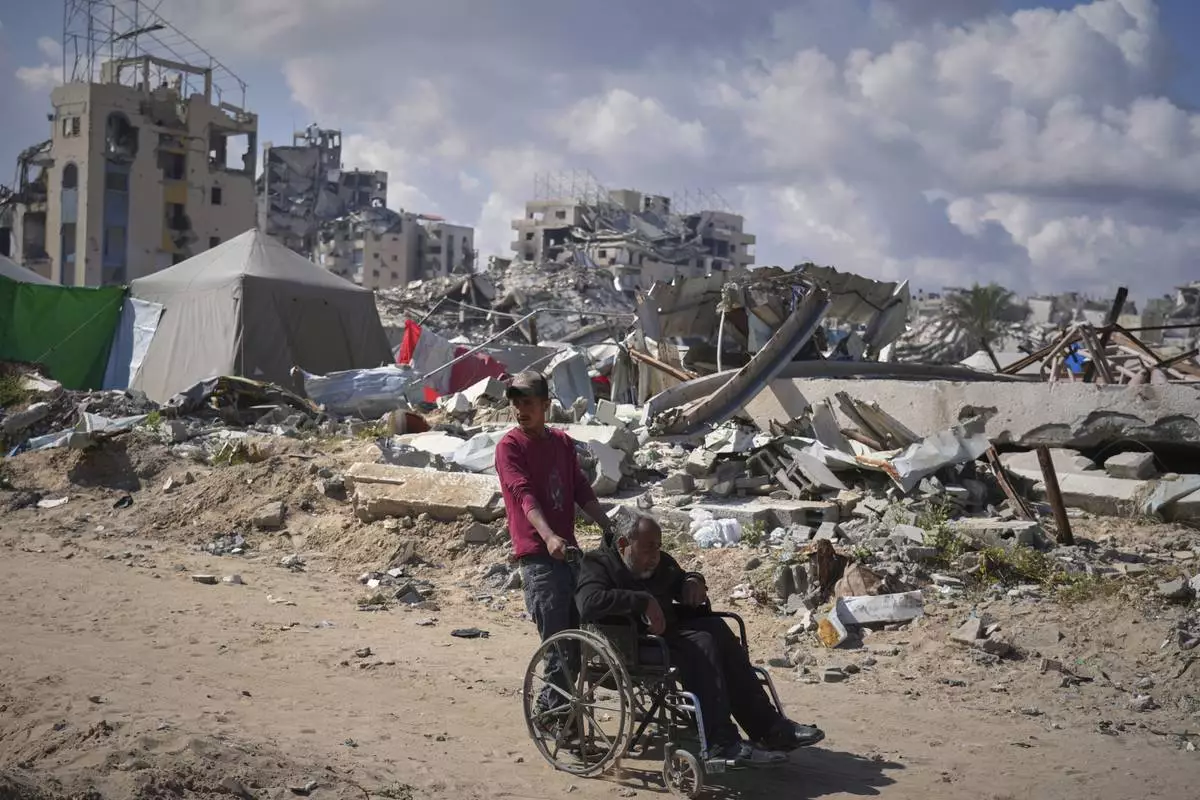
Wasem Attiya pushes his father, Mohamed, 54, in a wheelchair as they head to Shifa hospital in Gaza City for a dialysis session, Monday, April 14, 2025. (AP Photo/Jehad Alshrafi)