A federal judge on Wednesday temporarily halted her order requiring the Trump administration to provide information on its efforts so far, if any, to retrieve a man who was mistakenly deported to El Salvador.
Drew Ensign, a deputy assistant attorney general, filed a sealed motion requesting a seven-day stay of the judge’s directive for the U.S. to provide testimony and documents that involve plans to retrieve Kilmar Abrego Garcia. The administration is also seeking relief from having to file daily updates on its progress.
Lawyers for Abrego Garcia filed a response in opposition to the government’s motion to halt the order. It was also under seal in the Maryland federal court.
U.S. District Judge Paula Xinis granted the stay until April 30, but her order did not make any changes to the required daily status updates. She didn't explain her legal reasoning, but wrote that it was made “with the agreement of the parties.”
The administration expelled Abrego Garcia to El Salvador last month, and officials later described the mistake as “an administrative error” — but insisted that Abrego Garcia was in fact a member of the MS-13 gang.
The Wednesday evening order came just one day after Xinis castigated the administration's lawyers in a written filing Tuesday for ignoring her orders, obstructing the legal process and acting in “bad faith” by refusing to provide information.
The U.S. has claimed that much of the information is protected because it involves state secrets, government deliberations and attorney client privilege. But Xinis has rejected the argument and demanded that the Trump administration provide specific justifications for each claim of privileged information by 6 p.m. Wednesday.
Tom Homan, the Trump administration’s border czar, did not directly address the judge’s comments from Tuesday when asked by reporters at the White House on Wednesday. But he reiterated the administration's position that Abrego Garcia will be detained and deported again if he were to be returned to the U.S.
The U.S. Supreme Court ordered the Trump administration nearly two weeks ago to facilitate Abrego Garcia’s return to the U.S., rejecting the White House’s claim that it couldn’t retrieve him after mistakenly deporting him.
Trump administration officials have pushed back, arguing that it is up to El Salvador — though the president of El Salvador has also said he lacks the power to return Abrego Garcia. The administration has also argued that information about any steps it has taken or could take to return Abrego Garcia is protected by attorney-client privilege laws, state secret laws, general “government privilege” or other secrecy rules.
But Xinis said those claims, without any facts to back them up, reflected a “willful and bad faith refusal to comply with discovery obligations.”
“For weeks, Defendants have sought refuge behind vague and unsubstantiated assertions of privilege, using them as a shield to obstruct discovery and evade compliance with this Court’s orders,” Xinis wrote in the order Tuesday. “Defendants have known, at least since last week, that this Court requires specific legal and factual showings to support any claim of privilege. Yet they have continued to rely on boilerplate assertions. That ends now.”
Abrego Garcia, 29, lived in the United States for roughly 14 years, during which he worked in construction, got married and was raising three children with disabilities, according to court records.
A U.S. immigration judge had shielded Abrego Garcia from deportation to El Salvador in 2019, ruling that he would likely face persecution there by local gangs that had terrorized his family. He also was given a federal permit to work in the United States, where he was a metal worker and union member, according to Abrego Garcia’s lawyers.
But the Trump administration expelled Abrego Garcia to El Salvador last month anyway.
Abrego Garcia was never charged with a crime and has denied the allegations. His attorneys have pointed out that the criminal informant claimed he was a member of MS-13 in Long Island, New York, where he has never lived.
It’s not the first time the Trump administration has faced a scathing order from a federal judge over its approach to deportation cases.
A three-judge panel on the 4th U.S. Circuit Court of Appeals scolded the administration last week, saying its claim that it can’t do anything to free Abrego Garcia “should be shocking.” That ruling came one day after a federal judge in Washington, D.C., found probable cause to hold the Trump administration in criminal contempt for violating his orders to turn around planes carrying deportees to El Salvador. That was a different legal case.
Democrats and legal scholars say Trump is provoking a constitutional crisis in part by ignoring court rulings; the White House has said it’s the judges who are the problem.
Associated Press writers Darlene Superville in Washington and Rebecca Boone in Boise, Idaho, contributed to this report.
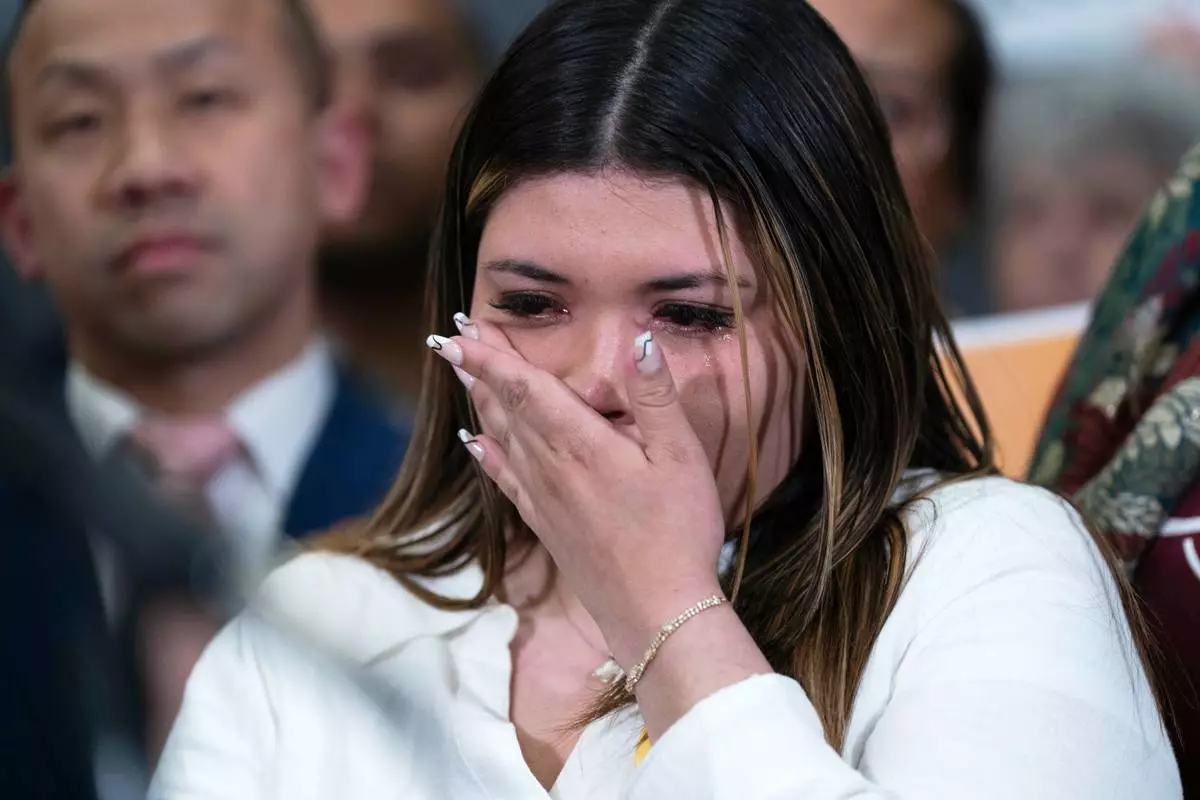
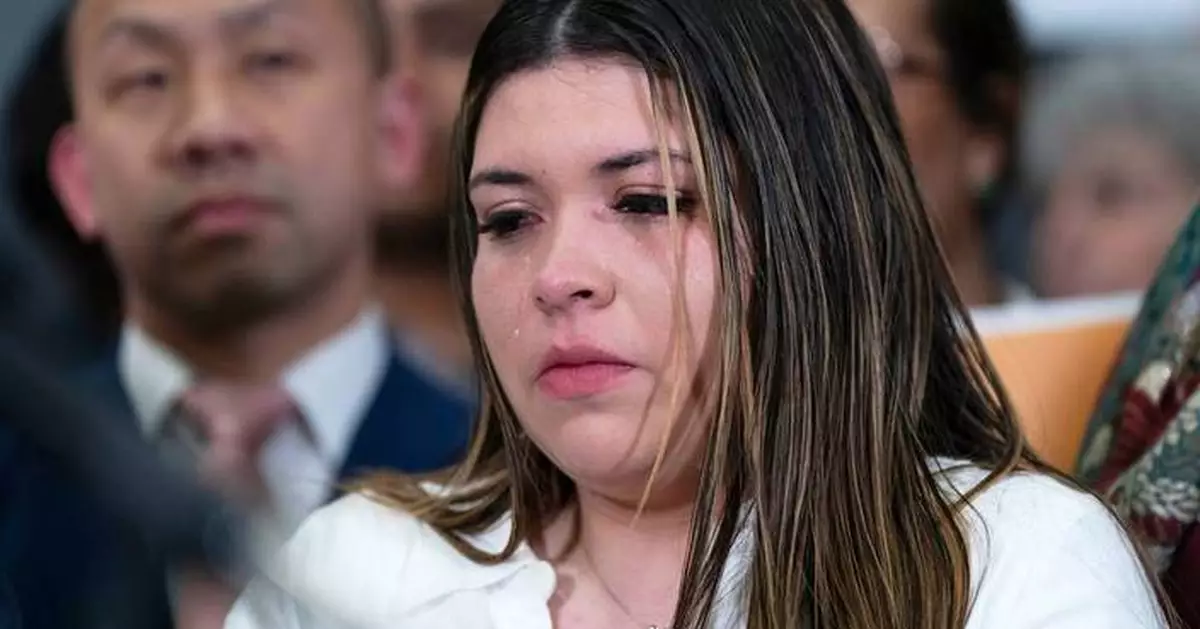
Jennifer Vasquez Sura wipes a tear from her face as Sen. Chris Van Hollen, D-Md., speaks during a news conference upon his arrival from meeting with her husband, Kilmar Abrego Garcia, in El Salvador, at Washington Dulles International Airport, in Chantilly, Va., Friday, April 18, 2025. (AP Photo/Jose Luis Magana)
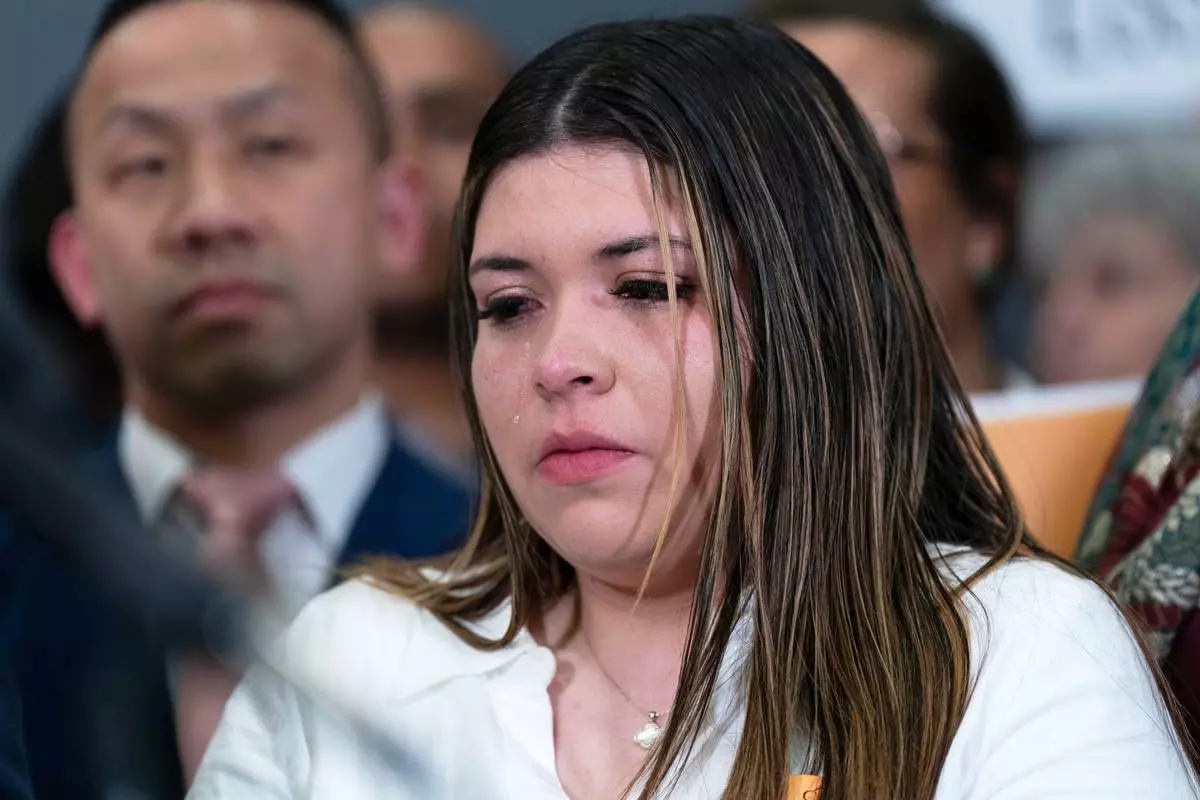
Jennifer Vasquez Sura cries as Sen. Chris Van Hollen, D-Md., speaks during a news conference upon his arrival from meeting with her husband Kilmar Abrego Garcia in El Salvador, at Washington Dulles International Airport, in Chantilly, Va., Friday, April 18, 2025. (AP Photo/Jose Luis Magana)