Chinese exporters are turning to the domestic market for growth to mitigate the impacts of U.S. President Donald Trump's chaotic and unpredictable tariffs policy. With support from e-commerce platforms, supermarkets, and local governments, businesses that used to focus on selling overseas are finding new opportunities in China's vast consumer market.
In early April, the U.S. government imposed a significant increase in tariffs on Chinese imports. In response, China adjusted its tariffs on U.S. imports. This escalation in trade tensions has posed challenges for Chinese foreign trade companies, particularly those previously reliant on the U.S. market.
In east China's Shandong Province, Linyi Hongtai Paper and Plastic Supplies Company, a major exporter of disposable paper cups and bowls, has had 75 percent of its export orders to the U.S. canceled due to tariffs.
"A large number of orders have been canceled by clients, and 18 containers of finished products are stuck in the warehouse. We are very anxious and are looking for ways to quickly clear the inventory," said Liu Yingxin, the company's general manager.
In response, e-commerce giant JD.com stepped in to help. JD.com's procurement team visited the company, selected three products with significant inventory, and worked with the company to adapt them to domestic consumer preferences.
With JD.com's support, the company launched its products online for Chinese buyers within just two days.
JD.com has also launched a 200 billion yuan initiative to support exporters by purchasing and promoting their products domestically.
"On April 11, a merchant in Linyi who mainly exports Bohemian plates had a large backlog of goods. Our Jingxi team quickly went to their factory and helped them. Within about six hours, they took photos, uploaded the products, and managed the product detail pages, and then entered our main promotion area. In just nine hours, they sold nearly 100,000 orders," said Luo Jia, secretary-general of JD.com's export-to-domestic-sales project.
JD.com has also collected over 8,000 pieces of useful information from exporters and is working on a wide range of product categories to help them break through domestic market barriers.
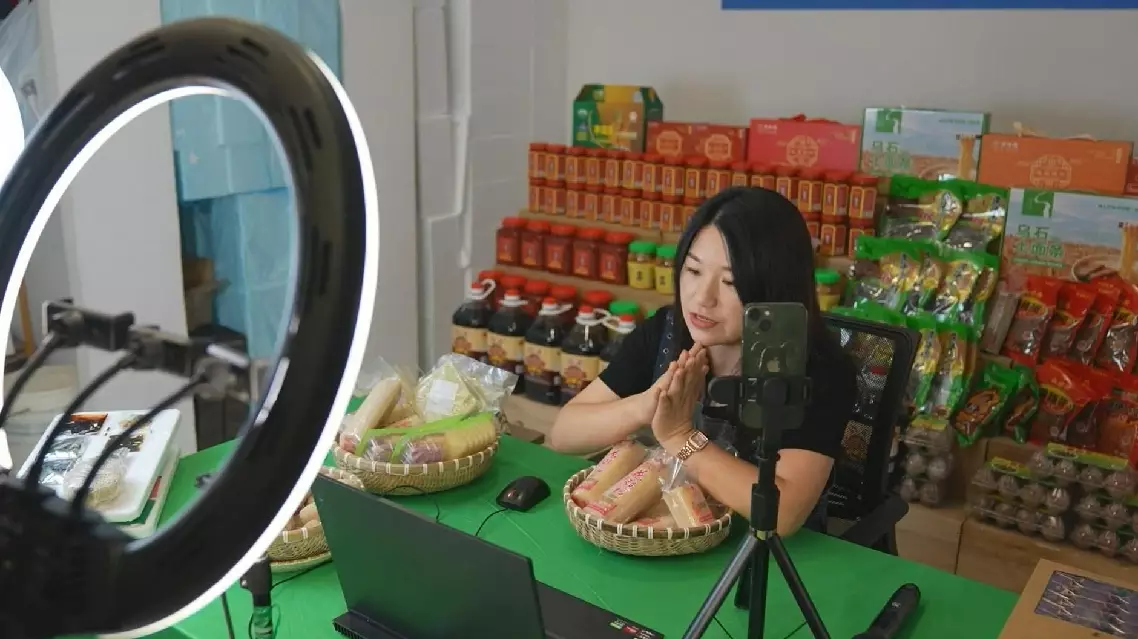
Other Chinese e-commerce platforms like Pinduoduo and Suning.com are also playing a crucial role in this transition. They have increased subsidies and optimized channels to assist companies in diversifying their business strategies and achieving a smooth transition.
"We will continue to invest substantial resources to help cross-border merchants build their own brands. We are also increasing our investment in projects like 'E-commerce to the West' to enable them to actively participate in the domestic consumption cycle," said Zhang Chao, manager of Pinduoduo's cross-border business.
"For foreign trade enterprises lacking independent operation experience, we offer one-stop agency operation services. Meanwhile, we will further open up the national warehousing and logistics system to provide integrated warehousing and distribution services for foreign trade enterprises," said Wang Kui, manager of the e-commerce Platform Division of Suning.com.
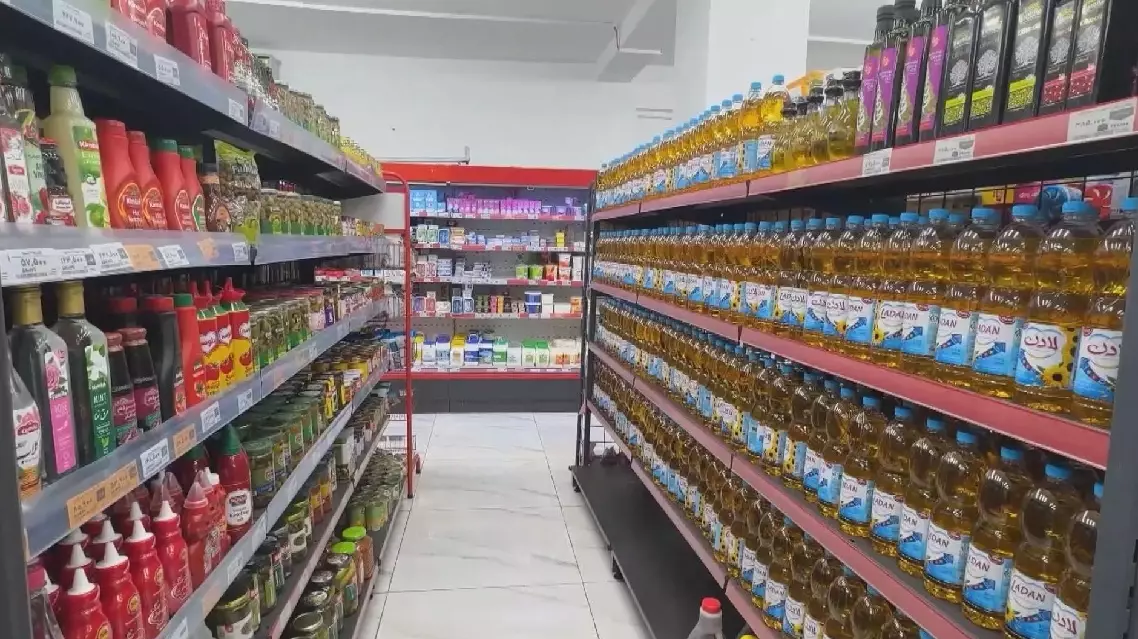
Supermarkets in China's towns and cities are also stepping up to support exporters by providing direct access to domestic consumers. Yonghui Superstores is now holding daily product selection meetings, looking to quickly stock products formerly destined for export in their stores.
"There are food products, textiles, and daily necessities. There are enterprises of different sizes. They hope that Yonghui, as an offline supermarket, can open a special fast-track for listing their products," said Lai Shuzhen, a Yonghui staff member.
So far, Yonghui has set up special sections in over 40 stores to highlight these products and is planning to expand to more locations.
Meanwhile, more than 300 supply chain companies have entered the procurement negotiation phase with Yonghui. For suppliers taking advantage of the new scheme, those with existing inventory can see their products displayed on shelves within 15 days.
On Tuesday, the first batch of products switching from export to domestic sales was already on display at Yonghui supermarkets.
Local governments are also taking action to support exporters. In Ningbo City in east China's Zhejiang Province, the commerce bureau is offering subsidies to companies participating in key trade fairs that can help them open up new markets.
"Companies participating in our key trade fairs organized by the commerce bureau will receive a subsidy of 15,000 yuan per fair, with a total subsidy of 100,000 yuan per company. Our program covers 60 key international fairs and 10 domestic outdoor exhibitions," said Zhang Rongyao, head of the Foreign Trade Division of the Commerce Bureau of Yuyao City, a county-level city of Ningbo.
In Shanghai's Jing'an District, the local government has built integrated platforms for domestic and foreign trade, both offline and online, to boost consumption domestically and overseas. These efforts are aimed at helping foreign trade companies smoothly transit from exporting to selling in the domestic market or finding new markets for their goods.
As the global economic landscape shifts, China's exporters are receiving significant support to sell their goods in the country's large domestic market to mitigate risks and find new growth opportunities.
Faced with tariff turmoil, Chinese exporters turn to domestic market