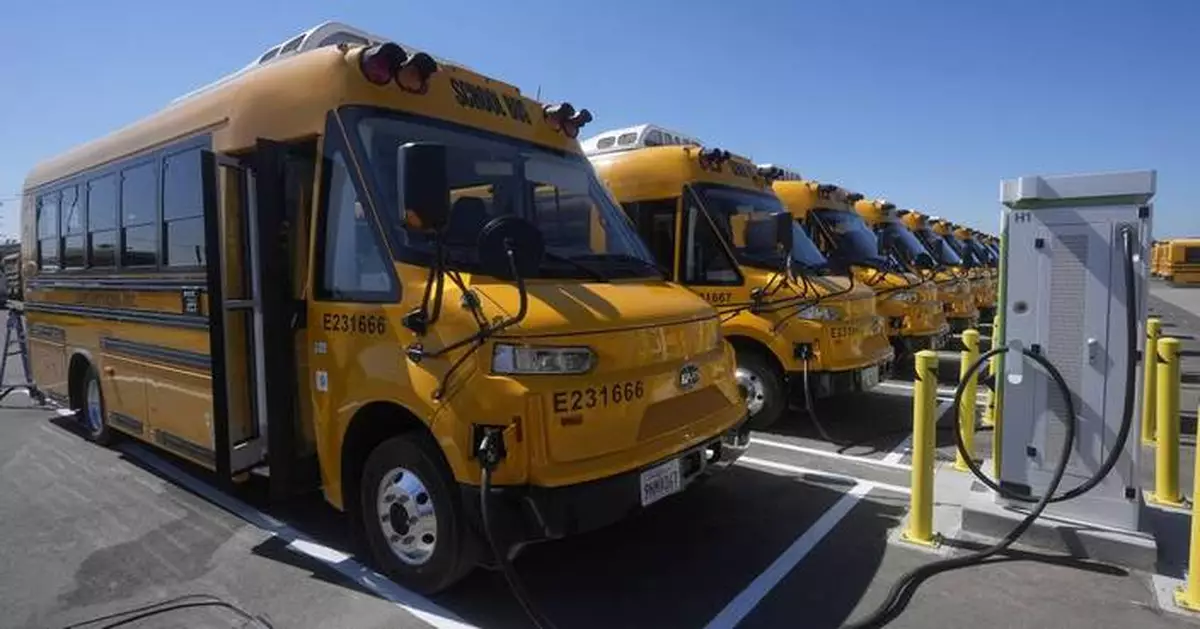
SACRAMENTO, Calif. (AP) — California is spending $500 million to put an additional 1,000 electric school buses on the road as federal cuts and freezes paused efforts in other states to replace aging diesel-fueled fleets that are more polluting.
Gov. Gavin Newsom's office announced Wednesday that 1,000 zero-emission school buses and related charging infrastructure will be provided to over 130 rural, low-income and disadvantaged school districts. The state grants add about 500 more charging stations for school buses to more than 200 stations already in operation in districts.
The expansion contrasts efforts in other states that were hampered by the uncertainty over federal funds. For months, over 500 districts nationwide waited on around $1 billion from the Environmental Protection Agency to cover more than 3,400 electric buses, sparking panic and confusion. Some districts delayed or canceled their purchases. The EPA said in an email Wednesday that this month the rebate money was being distributed to awardees who have passed quality assurance.
California has the largest fleet of electric school buses in the country after pumping more than $1.3 billion into such efforts and funding more than 2,300 of the buses. Of those, 1,100 are already in use and some districts are 100% electric.
“California is committed to continuing efforts to reduce children’s exposure to toxic diesel pollution through the deployment of zero-emission school buses,” Liane Randolph, chair of the California Air Resources Board, said in an email. The board helps lead the state’s efforts on climate change and oversees air pollution control efforts. “State funding is especially critical as schools grapple with the rollback of federal support.”
In California, the efforts are funded primarily by proceeds from its cap-and-trade program. The program caps carbon emissions and requires polluters to obtain permits for each ton of carbon they release.
The buses are key to California's climate goals to reach carbon neutrality by 2045. By 2035, nearly all new public school buses will be required to have zero emissions.
California, a U.S. trendsetter on climate policy, has approved policies over the years to limit emissions from cars, lawn mowers, trucks and trains. But some of those measures have faced threats.
A new executive order from President Donald Trump states his Department of Justice will go to court against state climate change laws aimed at reducing planet-warming greenhouse gas pollution from fossil fuels.
Newsom has accused Trump of ″turning back the clock″ on climate-friendly policies and said his state’s efforts to reduce pollution ″won’t be derailed.″
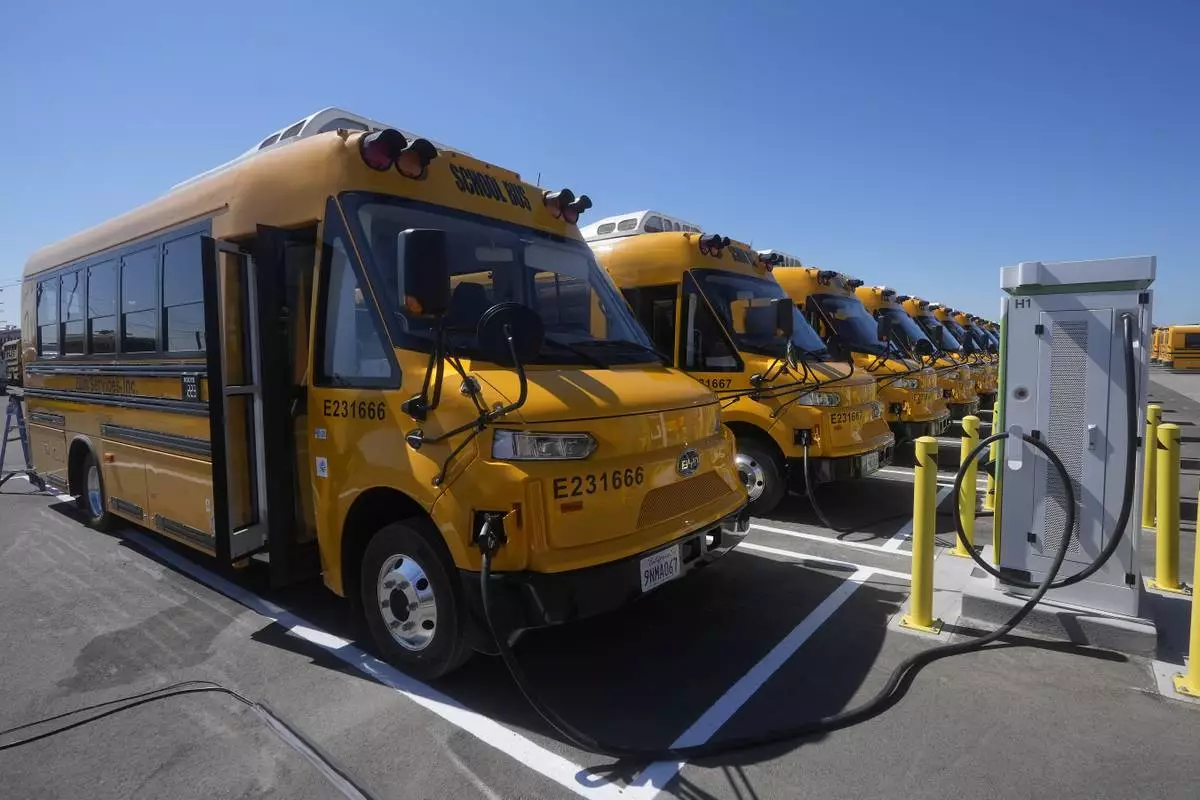
FILE - Zum electric buses are plugged into charging stations before a news conference announcing the Oakland Unified School District as being the first major school district in the country to use 100% electric school buses at the Zum/OUSD bus yard in Oakland, Calif., Tuesday, Aug. 27, 2024. (AP Photo/Jeff Chiu, File)
DUBAI, United Arab Emirates (AP) — U.S. President Donald Trump said Iran wants to negotiate with Washington after his threat to strike the Islamic Republic over its bloody crackdown on protesters, a move coming as activists said Monday the death toll in the nationwide demonstrations rose to at least 544.
Iran had no immediate reaction to the news, which came after the foreign minister of Oman — long an interlocutor between Washington and Tehran — traveled to Iran this weekend. It also remains unclear just what Iran could promise, particularly as Trump has set strict demands over its nuclear program and its ballistic missile arsenal, which Tehran insists is crucial for its national defense.
Meanwhile Monday, Iran called for pro-government demonstrators to head to the streets in support of the theocracy, a show of force after days of protests directly challenging the rule of 86-year-old Supreme Leader Ayatollah Ali Khamenei. Iranian state television aired chants from the crowd, who shouted “Death to America!” and “Death to Israel!”
Trump and his national security team have been weighing a range of potential responses against Iran including cyberattacks and direct strikes by the U.S. or Israel, according to two people familiar with internal White House discussions who were not authorized to comment publicly and spoke on condition of anonymity.
“The military is looking at it, and we’re looking at some very strong options,” Trump told reporters on Air Force One on Sunday night. Asked about Iran’s threats of retaliation, he said: “If they do that, we will hit them at levels that they’ve never been hit before.”
Trump said that his administration was in talks to set up a meeting with Tehran, but cautioned that he may have to act first as reports of the death toll in Iran mount and the government continues to arrest protesters.
“I think they’re tired of being beat up by the United States,” Trump said. “Iran wants to negotiate.”
He added: “The meeting is being set up, but we may have to act because of what’s happening before the meeting. But a meeting is being set up. Iran called, they want to negotiate.”
Iran through country's parliamentary speaker warned Sunday that the U.S. military and Israel would be “legitimate targets” if America uses force to protect demonstrators.
More than 10,600 people also have been detained over the two weeks of protests, said the U.S.-based Human Rights Activists News Agency, which has been accurate in previous unrest in recent years and gave the death toll. It relies on supporters in Iran crosschecking information. It said 496 of the dead were protesters and 48 were with security forces.
With the internet down in Iran and phone lines cut off, gauging the demonstrations from abroad has grown more difficult. The Associated Press has been unable to independently assess the toll. Iran’s government has not offered overall casualty figures.
Those abroad fear the information blackout is emboldening hard-liners within Iran’s security services to launch a bloody crackdown. Protesters flooded the streets in the country’s capital and its second-largest city on Saturday night into Sunday morning. Online videos purported to show more demonstrations Sunday night into Monday, with a Tehran official acknowledging them in state media.
In Tehran, a witness told the AP that the streets of the capital empty at the sunset call to prayers each night. By the Isha, or nighttime prayer, the streets are deserted.
Part of that stems from the fear of getting caught in the crackdown. Police sent the public a text message that warned: “Given the presence of terrorist groups and armed individuals in some gatherings last night and their plans to cause death, and the firm decision to not tolerate any appeasement and to deal decisively with the rioters, families are strongly advised to take care of their youth and teenagers.”
Another text, which claimed to come from the intelligence arm of the paramilitary Revolutionary Guard, also directly warned people not to take part in demonstrations.
“Dear parents, in view of the enemy’s plan to increase the level of naked violence and the decision to kill people, ... refrain from being on the streets and gathering in places involved in violence, and inform your children about the consequences of cooperating with terrorist mercenaries, which is an example of treason against the country,” the text warned.
The witness spoke to the AP on condition of anonymity due to the ongoing crackdown.
The demonstrations began Dec. 28 over the collapse of the Iranian rial currency, which trades at over 1.4 million to $1, as the country’s economy is squeezed by international sanctions in part levied over its nuclear program. The protests intensified and grew into calls directly challenging Iran’s theocracy.
Nikhinson reported from aboard Air Force One.
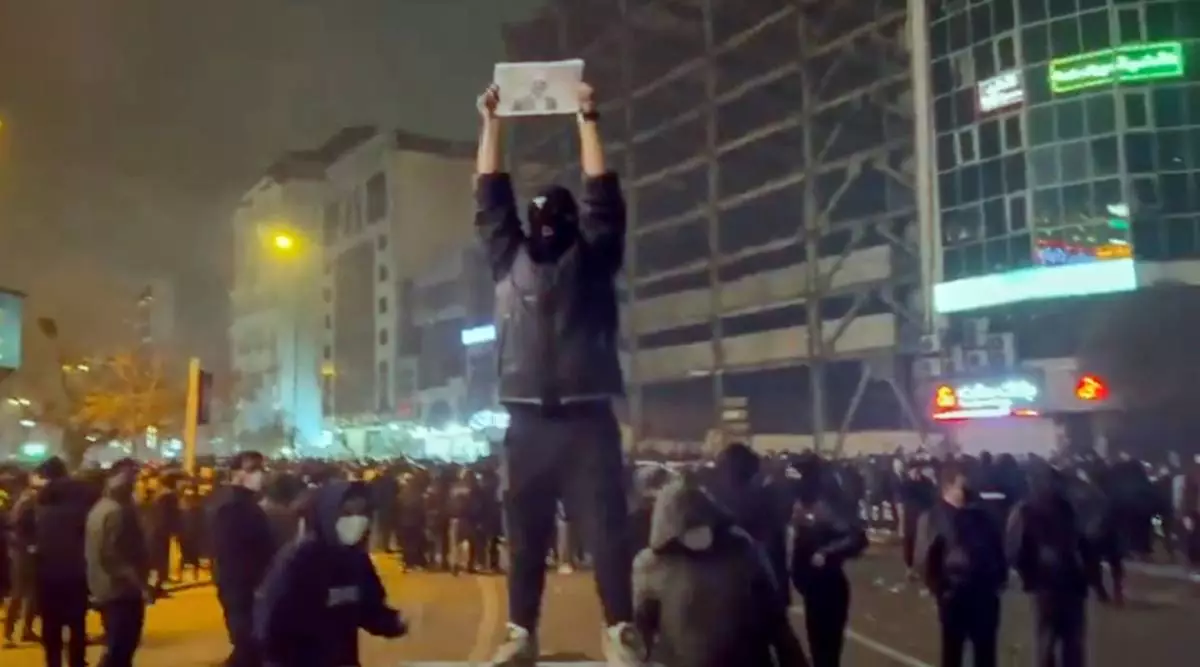
In this frame grab from video obtained by the AP outside Iran, a masked demonstrator holds a picture of Iran's Crown Prince Reza Pahlavi during a protest in Tehran, Iran, Friday, January. 9, 2026. (UGC via AP)
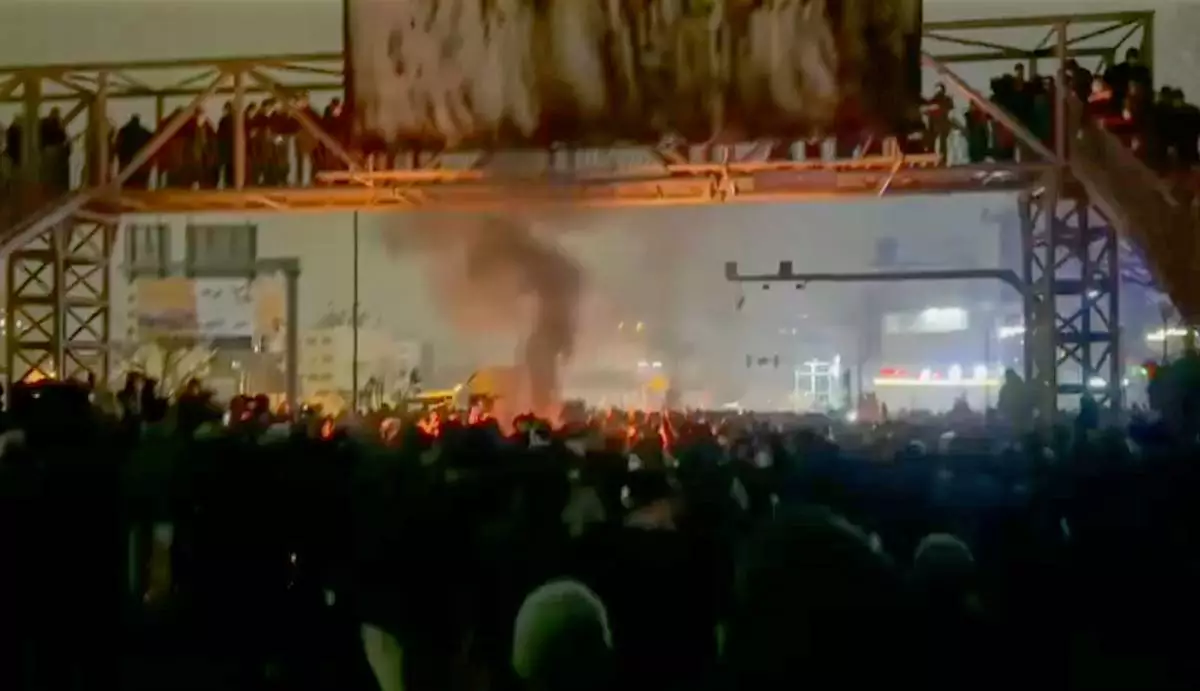
In this frame grab from footage circulating on social media from Iran shows protesters taking to the streets despite an intensifying crackdown as the Islamic Republic remains cut off from the rest of the world in Tehran, Iran, Friday, Jan. 9, 2026.(UGC via AP)
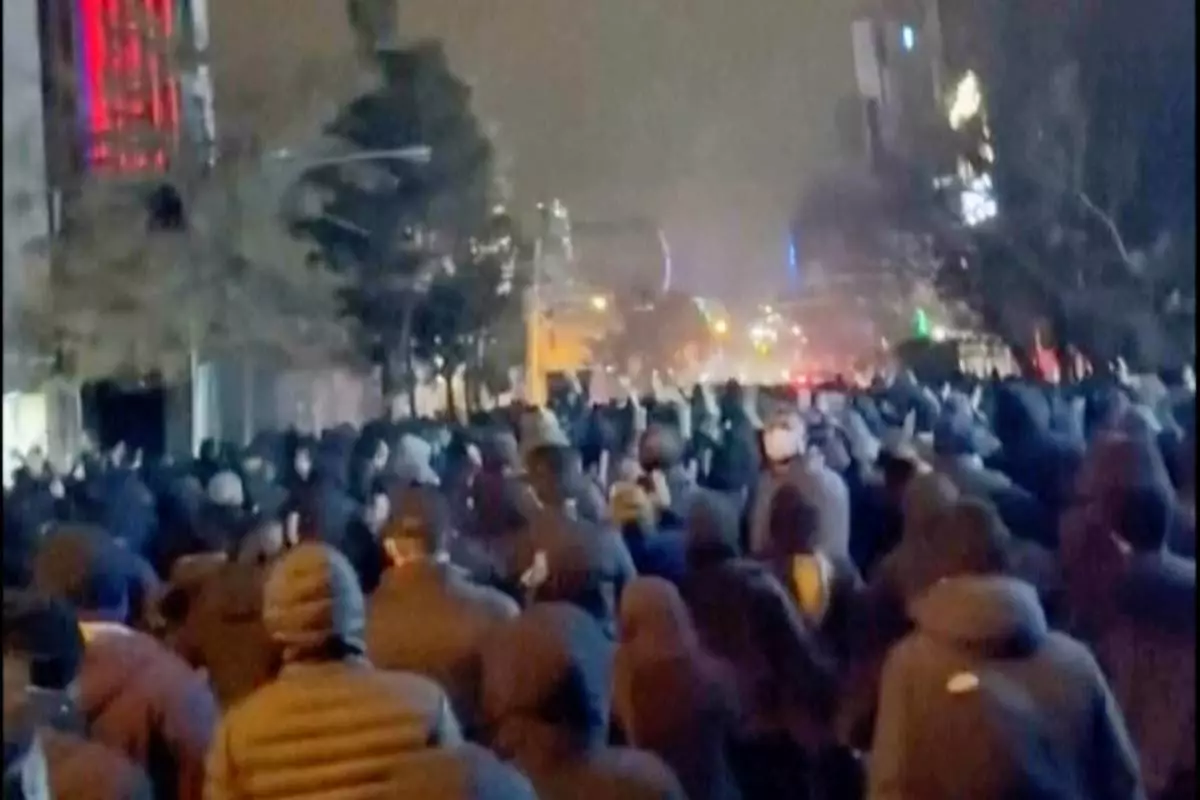
In this frame grab from footage circulating on social media from Iran showed protesters once again taking to the streets of Tehran despite an intensifying crackdown as the Islamic Republic remains cut off from the rest of the world in Tehran, Iran, Saturday Jan. 10, 2026. (UGC via AP)