Skip to Content Facebook Feature Image

Musk damaged Tesla's brand in just a few months. Fixing it will likely take longer

News

Musk damaged Tesla's brand in just a few months. Fixing it will likely take longer
News

News

Musk damaged Tesla's brand in just a few months. Fixing it will likely take longer

2025-04-24 05:56 Last Updated At:06:12

NEW YORK (AP) — Elon Musk has been called a Moonshot Master, the Edison of Our Age and the Architect of the Future, but he's got a big problem at his car company and it's not clear he can fix it: damage to its brand.

Sales have plunged for Tesla amid protests and boycotts over Musk's embrace of far right-wing views. Profits have been sliced by two-thirds so far this year, and rivals from China, Europe and the U.S. are pouncing.

On Tuesday came some relief as Musk announced in an earnings call with investors that he would be scaling back his government cost-cutting job in Washington to a “day or two per week" to focus more on his old job as Tesla's boss.

Investors pushed up Tesla's stock 5% Wednesday, though there are plenty of challenges ahead.

Musk seemed to downplay the role that brand damage played in the drop in first-quarter sales on the investor call. Instead, he emphasized something more fleeting — an upgrade to Tesla's best-selling Model Y that forced a shutdown of factories and pinched both supply and demand.

While financial analysts following the company have noted that potential buyers probably held back while waiting for the upgrade, hurting results, even the most bullish among them say the brand damage is real, and more worrisome.

“This is a full blown crisis,” said Wedbush Securities' normally upbeat Dan Ives earlier this month. In a note to its clients, JP Morgan warned of “unprecedented brand damage."

Musk dismissed the protests against Tesla on the call as the work of people angry at his leadership of the Department of Government Efficiency because “those who are receiving the waste and fraud wish it to continue.”

But the protests in Europe, thousands of miles from Washington, came after Musk supported far-right politicians there. Angry Europeans hung Musk in effigy in Milan, projected an image of him doing a straight-arm salute on a Tesla factory in Berlin and put up posters in London urging people not to buy “Swasticars” from him.

Sales in Europe have gone into a free fall in the first three months of this year — down 39%. In Germany, sales plunged 62%.

Another worrying sign: On Tuesday, Tesla backed off its earlier promise that sales would recover this year after dropping in 2024 for the first time a dozen years. Tesla said the global trade situation was too uncertain and declined to repeat the forecast.

Meanwhile, Tesla's competition is stealing its customers.

Among its fiercest rivals now is Chinese giant BYD. Earlier this year, the EV maker announced it had developed an electric battery that can charge within minutes. And Tesla’s European rivals have begun offering new models with advanced technology that is making them real Tesla alternatives just as popular opinion has turned against Musk.

Tesla's share of the EV market in the U.S. has dropped from two-thirds to less than half, according to Cox Automotive.

Another rival, Google parent Alphabet, is already ahead of Tesla in an area that Musk has promised will help remake his company: Cybercabs.

One of the highlights of Tesla’s call Tuesday was Musk sticking with his previous prediction that it will l aunch driverless cabs without steering wheels and pedals in Austin, Texas, in June, and in other cities soon after.

But Google’s service, called Waymo, already has logged millions of driverless cybercab trips in San Francisco, Phoenix, Los Angeles, and Austin as part of a partnership with ride-hailing leader Uber.

Musk also told analysts that this driverless capability will be available on the Tesla vehicles already on the road through software updates over the air, and put a timeline on it: “There will be millions of Teslas operating autonomously in the second half of the year."

But he has made similar promises before, only to miss his deadlines, such as in April 2019 when he vowed full automation by the end of the next year. He repeated the prediction, moving up the date, several more times, in following years.

A big problem is federal investigators have not given the all-clear that Tesla vehicles can drive completely on their own safely. Among other probes, safety regulators are looking into Tesla's so-called Full Self-Driving, which is only partial self-driving, for its tie to accidents in low-visibility conditions like when there is sun glare.

In competition with rivals in the U.S., Tesla currently has one clear advantage: It will get hurt by less by tariffs because most of its vehicles are built in the countries where they are sold, including those in its biggest market, the U.S.

“Tariffs are still tough on a company where margins are still low, but we do have localized supply chains,” Musk said Tuesday. “That puts us in a strong position.”

The company also reconfirmed that a cheaper version of its best-selling vehicle, the Model Y sport utility vehicle, will be ready for customers in the first half of this year. That could help boost sales.

Another plus: The company had a blow out first quarter in its energy storage business. And Musk has promised to be producing 5,000 Optimus robots, another Tesla business, by the end of the year.

Even after falling nearly 50% from its December highs, Tesla's stock is still very richly valued based on the one yardstick that really matters in the long run: its earnings.

At 110 times its expected per share earnings this year, the stock is valued more than 25 times higher than General Motors. The average stock on in the S&P 500 index trades at less than 20 times earnings.

That leaves Tesla little margin for error if something goes wrong.
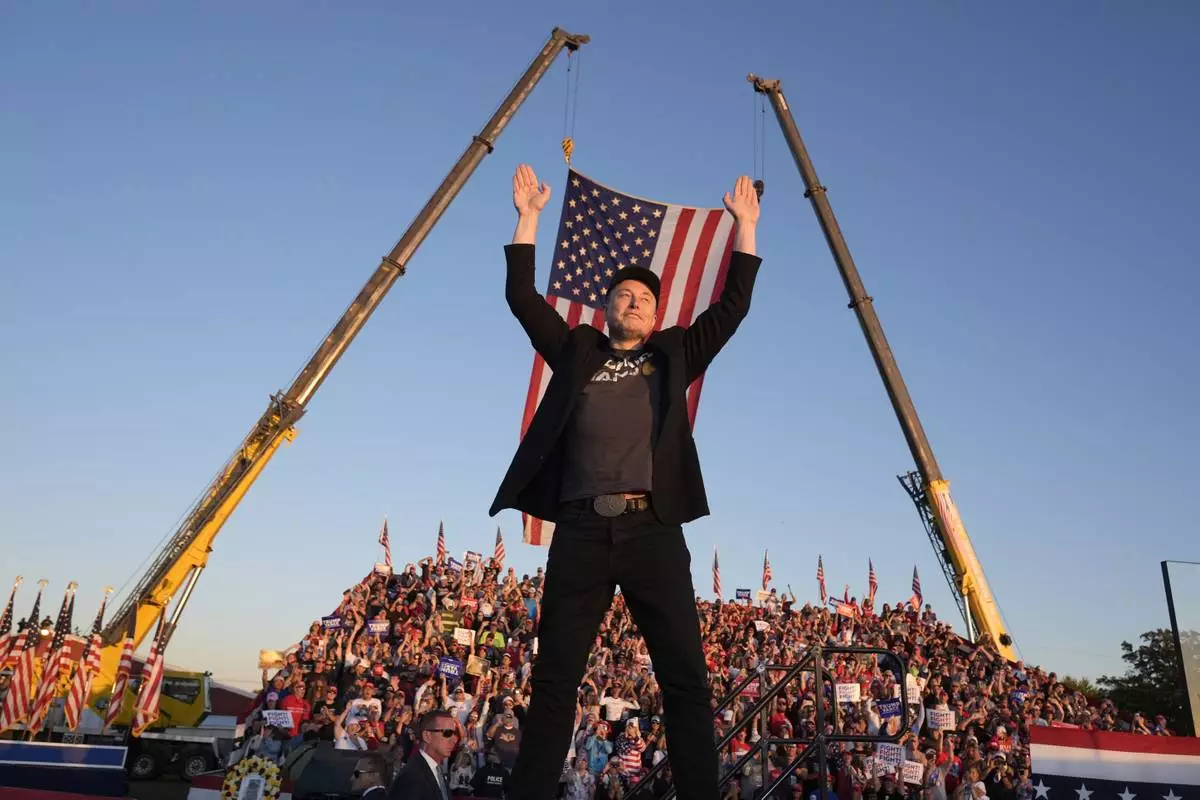
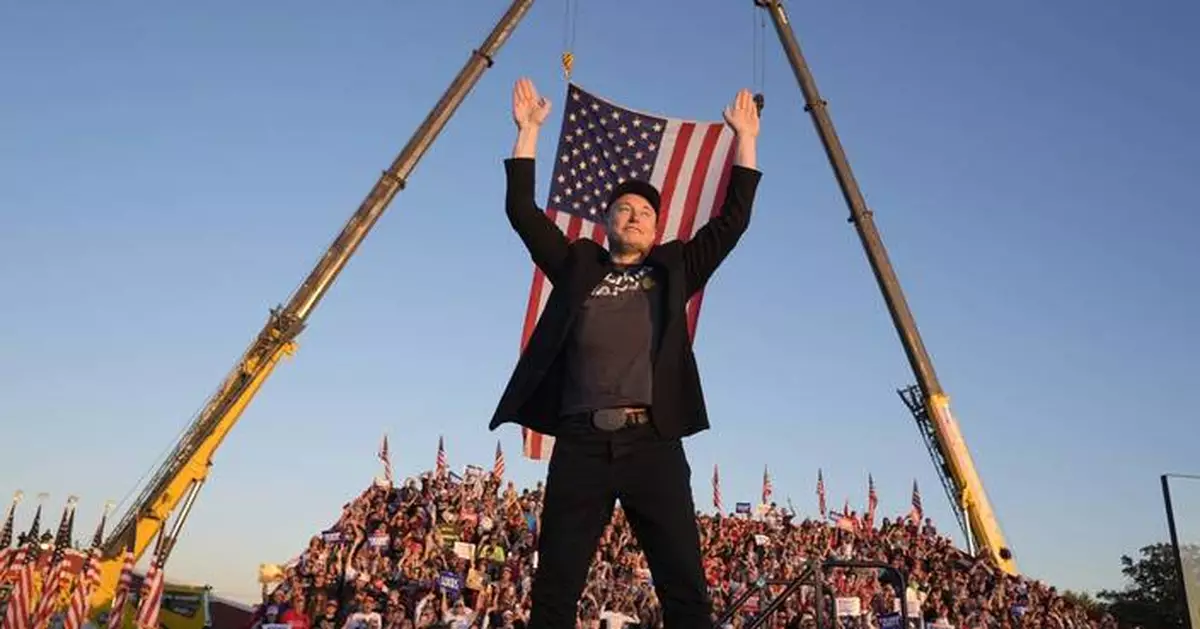
FILE - Tesla and SpaceX CEO Elon Musk walks to the stage to speak at the Butler Farm Show, Oct. 5, 2024, in Butler, Pa. (AP Photo/Alex Brandon, file)
FILE - Tesla and SpaceX CEO Elon Musk walks to the stage to speak at the Butler Farm Show, Oct. 5, 2024, in Butler, Pa. (AP Photo/Alex Brandon, file)
BRUSSELS (AP) — Italy on Friday gave crucial support to plans by the European Union to seal a huge free trade deal with five South American nations neighboring Venezuela that has been negotiated for over 25 years.

Italy's Prime Minister Giorgia Meloni was long seen as the key vote in the campaign by European Commission President Ursula von der Leyen to rally support for the trade deal with the Mercosur nations of Brazil, Argentina, Bolivia, Paraguay and Uruguay.

Von der Leyen could now potentially sign the deal next week during a meeting in Paraguay. European Parliament will vote on it before it enters into force.

Italy confirmed its support for the deal on Friday, with Foreign Minister Antonio Tajani hailing it as "good news for Italy.”

“This agreement is destined to boost our exports, with the goal of reaching 700 billion euros in exports," Tajani wrote in a post on X. He acknowledged the deal required a long negotiation, but added that Italy had secured protections for its farmers, "especially regarding production standards.”

Meloni said at a press conference on Friday she never had “any ideological objections” to the Mercosur agreement.

"We have always said we will be in favor of it when there are sufficient guarantees for our farmers,” she said. “The agreement’s potential is good, but not at the expense of the excellence of our products.”

German Chancellor Friedrich Merz said in a statement Friday that the agreement "is a milestone in European trade policy and an important signal of our strategic sovereignty and ability to act.”

He stressed that “with this agreement, we are strengthening our economy and trade relations with our partners in South America -- which is good for Germany and for Europe."

The deal would create one of the world's largest free trade zones, covering some 780 million people from Uruguay to Romania and a quarter of the globe’s gross domestic product.

It also gives Brussels a diplomatic win at a time of economic upheaval, providing a stark counterpoint to the gunboat diplomacy of Washington and the coercive export controls of Beijing.

“Given Trump’s policies of isolating the U.S. from the rest of the world, it is an imperative for the EU to lead trade integration policies at the global level and to look for partners elsewhere,” said Antonio Fatas, a macroeconomist at the French business school INSEAD.

In the wake of Trumps’ tariff wars, Brussels has sought to curtail its dependency on the U.S. market with trade deals forged across the world. The EU has struck deals with Japan and Indonesia, and are working on one with India.

A delay in December to the signing of the deal had infuriated Brazilian President Luiz Inácio Lula da Silva and led experts to worry a last-minute stumble would wreck the EU's credibility.

“For Europeans, the finalization of free-trade agreements with new partners stands among the best responses to US tariffs, growing protectionism and trade tensions with China,” said Agathe Demarais, a senior fellow at the European Council on Foreign Relations. She said the current EU reliance on China for some critical raw materials could be broken by tapping into Mercosur's deposits.

Opposition to the deal was led by France and Poland, with riled-up farmers flooding streets and blocking roads with tractors from Brussels to Athens. Austria, Hungary and Ireland also voted against it.

Ireland's Prime Minister Micheal Martin said on Thursday in Shanghai during a state visit to China that “we don't have confidence that (Irish farmers) wouldn't be undercut by that,” according to Irish public broadcaster RTE.

Both Martin and French President Emmanuel Macron said that internal negotiations sparked by the political furor surrounding the deal had led to reforms that better protect European farmers. But they acknowledged such reforms were not enough to overcome domestic political pressure.

Posting on X on Thursday, Macron said three of France's key demands were now being met: New safeguards to an “emergency brake” of imports if they are found to undercut EU prices by 5% or more; the mirroring of EU food safety regulations in the Mercosur bloc; and an increase of inspections of agrifood imports at EU ports and beyond.

Still, Macron said the potential economic gains of the Mercosur deal are limited and do not justify the risks it poses to EU agriculture. His office stated that the deal would only add 77 billion euros ($89.7 billion) by 2040 — half a percent of the EU's GDP.

Green members of European Parliament had vowed to take the Commission to court over the deal. They said the agreement would accelerate deforestation in the Amazon and weaken the EU's climate targets.

Frances Verkamp, trade campaigner at Friends of the Earth Europe, described the deal as “toxic." She said Brussels is "playing a game of imperial dominance in global trade with China and the US that wins nothing for workers or consumers — and even less for nature and climate.”

__

Zampano reported from Rome. Sylvie Corbet contributed from Paris.

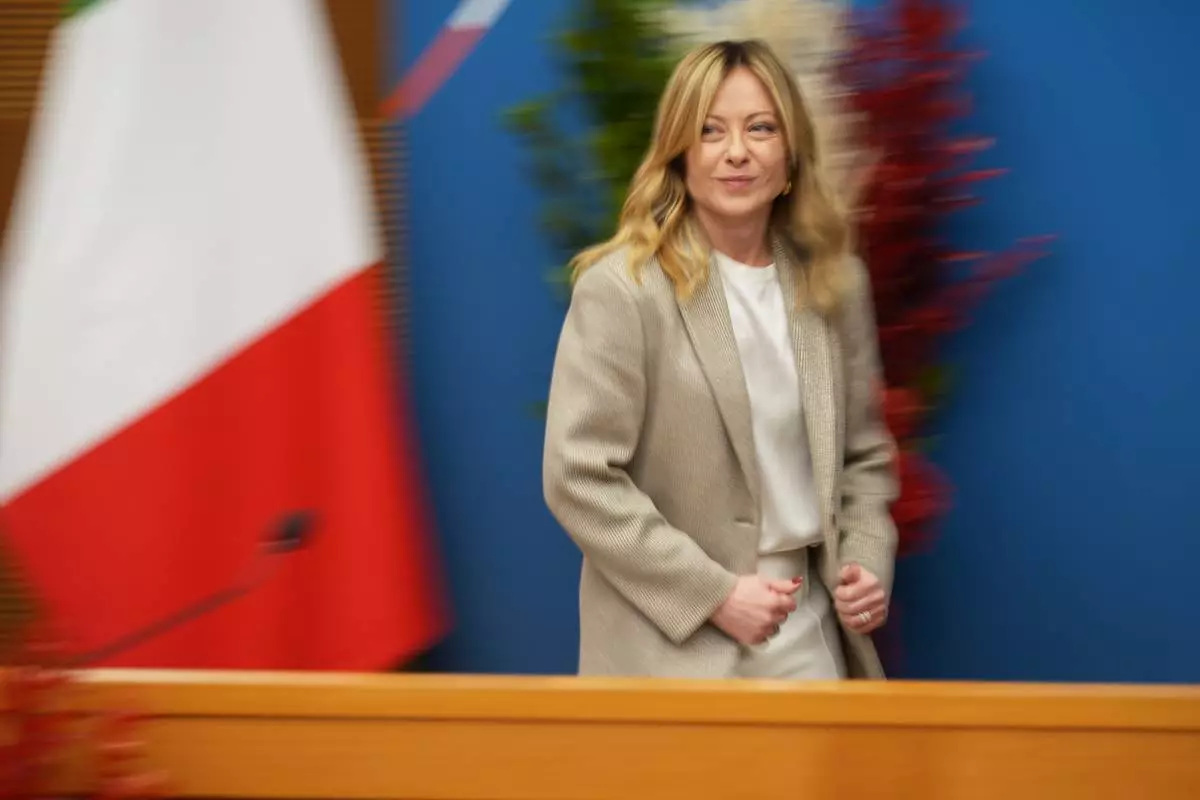
Italian Prime Minister Giorgia Meloni arrives at her annual start-of-the-year press conference in the press room at the Lower Chamber, in Rome, Friday, Jan. 9, 2026. (AP Photo/Andrew Medichini)

Italian Prime Minister Giorgia Meloni arrives at her annual start-of-the-year press conference in the press room at the Lower Chamber, in Rome, Friday, Jan. 9, 2026. (AP Photo/Andrew Medichini)

Recommended Articles