JIUQUAN, China (AP) — A spaceship carrying three astronauts docked Thursday with China’s space station in the latest crew rotation, marking a further step in the country’s ambitions for a crewed mission to the moon and explore Mars.
The Shenzhou 20 spaceship took off as planned atop China’s workhorse Long March 2F rocket at 5:17 p.m. local time (0917 GMT). It reached the Tiangong space station about 6.5 hours later, according to the China Manned Space Agency.
Click to Gallery
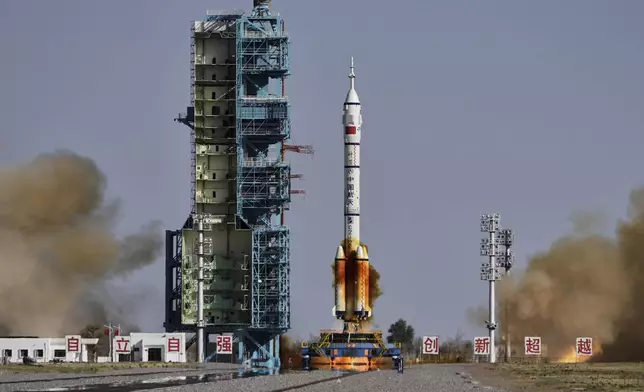
China's Long March 2F rocket, carrying three astronauts for the Shenzhou 20 manned space mission, blasts off at the Jiuquan Satellite Launch Center in Jiuquan, northwestern China, Thursday, April 24, 2025. (AP Photo/Andy Wong)
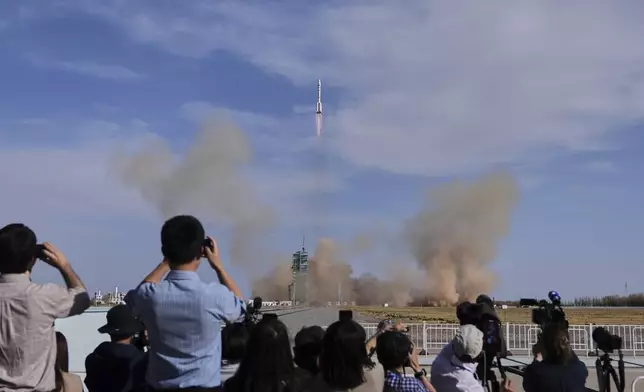
Journalists film China's Long March 2F rocket, carrying three astronauts for the Shenzhou 20 manned space mission, lifts off for a space station, at the Jiuquan Satellite Launch Center in Jiuquan, northwestern China, Thursday, April 24, 2025. (AP Photo/Andy Wong)
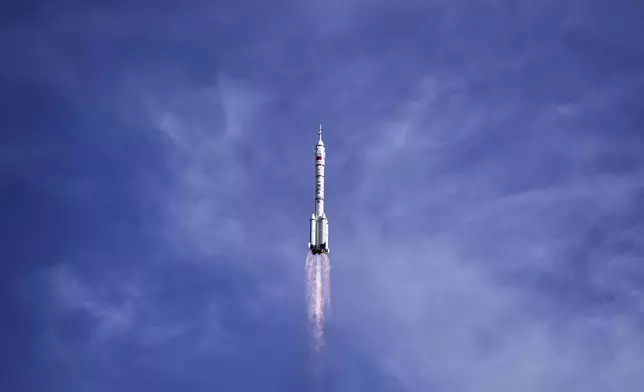
China's Long March 2F rocket, carrying three astronauts for the Shenzhou 20 manned space mission, lifts off for a space station, at the Jiuquan Satellite Launch Center in Jiuquan, northwestern China, Thursday, April 24, 2025. (AP Photo/Andy Wong)
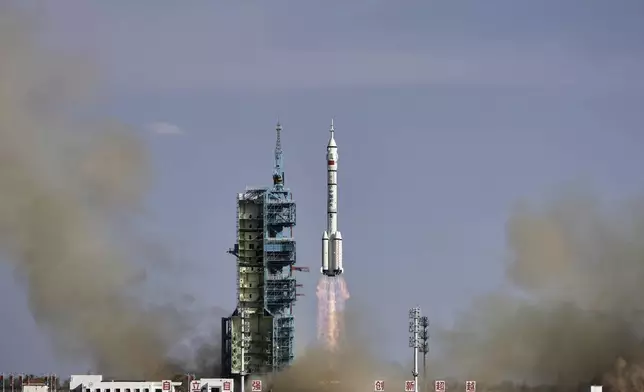
China's Long March 2F rocket, carrying three astronauts for the Shenzhou 20 manned space mission, lifts off for a space station, at the Jiuquan Satellite Launch Center in Jiuquan, northwestern China, Thursday, April 24, 2025. (AP Photo/Andy Wong)
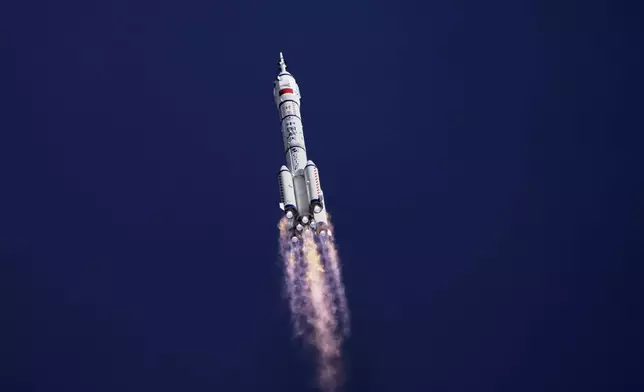
China's Long March 2F rocket, carrying three astronauts for the Shenzhou 20 manned space mission, heads for a space station, at the Jiuquan Satellite Launch Center in Jiuquan, northwestern China, Thursday, April 24, 2025. (AP Photo/Andy Wong)
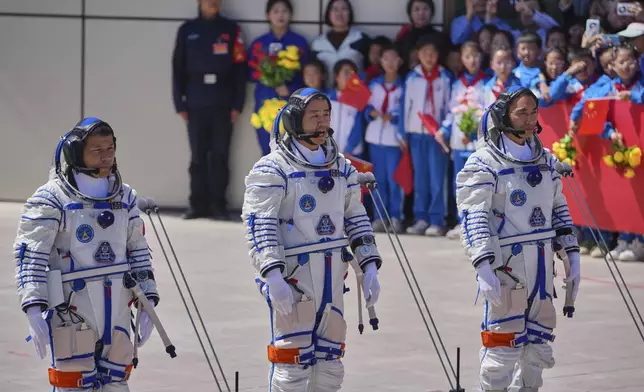
Chinese astronaut for the Shenzhou 20 mission, Chen Dong, center, speaks next to his comrades Chen Zhongrui, right, and Wang Jie as they attend a send-off ceremony for their manned space mission at the Jiuquan Satellite Launch Center in northwestern China, Thursday, April 24, 2025. (AP Photo/Andy Wong)
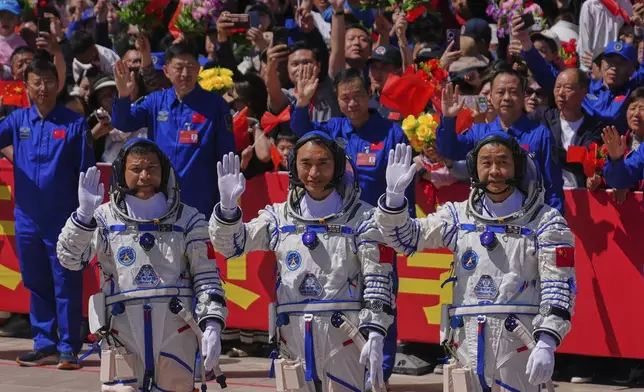
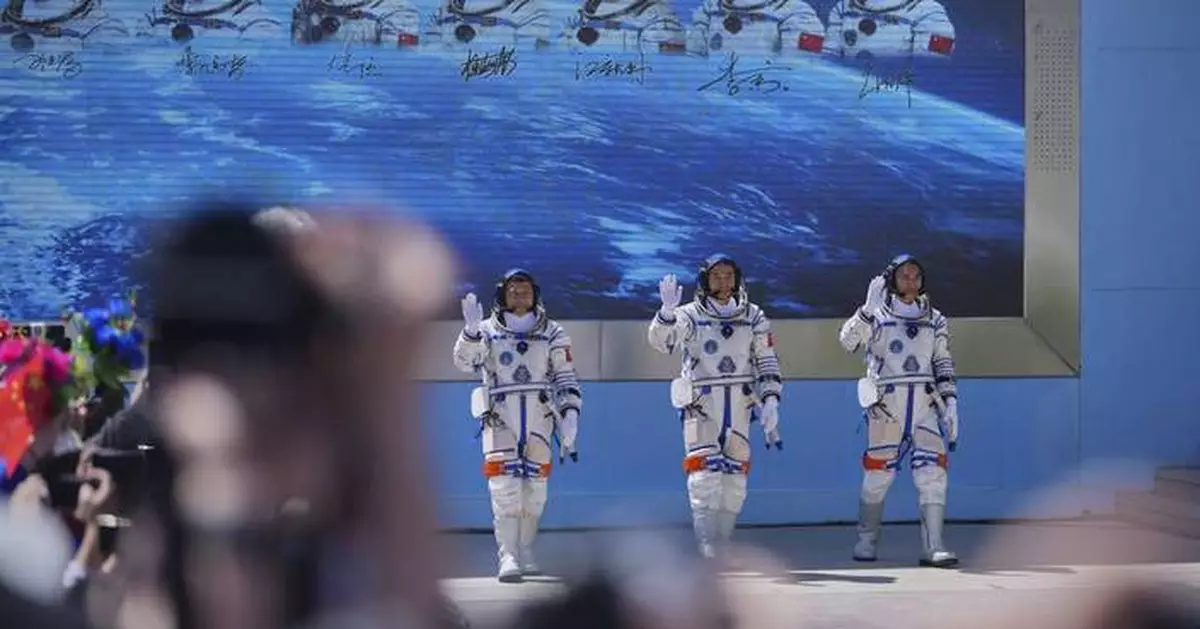
Chinese astronauts for the Shenzhou 20 mission, from right, Chen Zhongrui, Chen Dong and Wang Jie wave as they attend a send-off ceremony for their manned space mission at the Jiuquan Satellite Launch Center in northwestern China, Thursday, April 24, 2025. (AP Photo/Andy Wong)
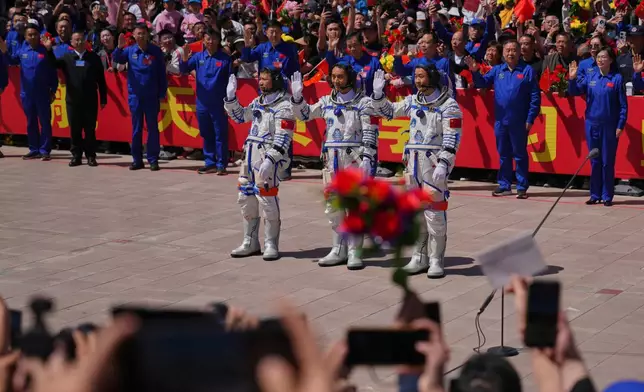
Chinese astronauts for the Shenzhou 20 mission, from right, Chen Zhongrui, Chen Dong and Wang Jie wave as they attend a send-off ceremony for their manned space mission at the Jiuquan Satellite Launch Center in northwestern China, Thursday, April 24, 2025. (AP Photo/Andy Wong)
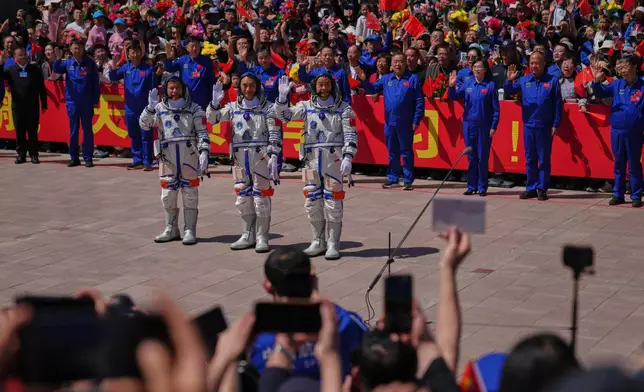
Chinese astronauts for the Shenzhou 20 mission, from right, Chen Zhongrui, Chen Dong and Wang Jie wave as they attend a send-off ceremony for their manned space mission at the Jiuquan Satellite Launch Center in northwestern China, Thursday, April 24, 2025. (AP Photo/Andy Wong)
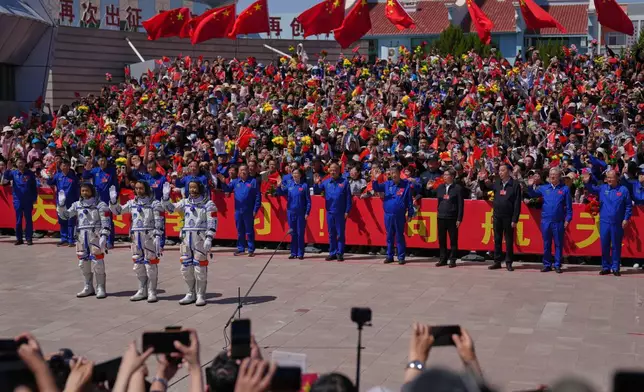
Chinese astronauts for the Shenzhou 20 mission, from right, Chen Zhongrui, Chen Dong and Wang Jie wave as they attend a send-off ceremony for their manned space mission at the Jiuquan Satellite Launch Center in northwestern China, Thursday, April 24, 2025. (AP Photo/Andy Wong)
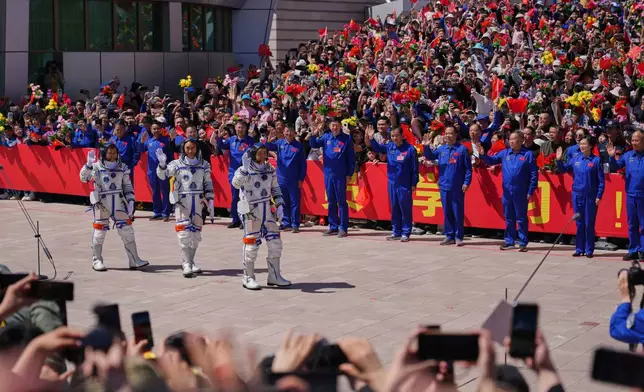
Chinese astronauts for the Shenzhou 20 mission, from right, Chen Zhongrui, Chen Dong and Wang Jie wave as they attend a send-off ceremony for their manned space mission at the Jiuquan Satellite Launch Center in northwestern China, Thursday, April 24, 2025. (AP Photo/Andy Wong)
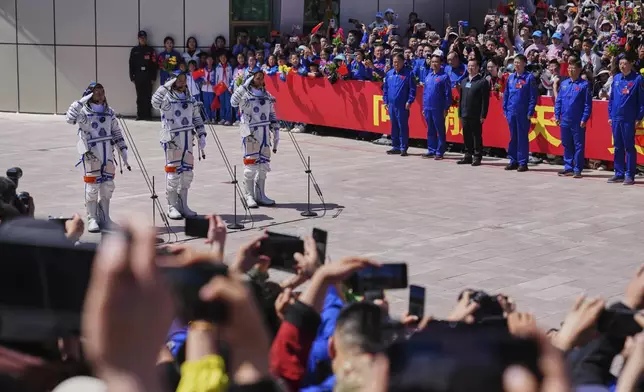
Chinese astronauts for the Shenzhou 20 mission, from right, Chen Zhongrui, Chen Dong and Wang Jie salute as they attend a send-off ceremony for their manned space mission at the Jiuquan Satellite Launch Center in northwestern China, Thursday, April 24, 2025. (AP Photo/Andy Wong)
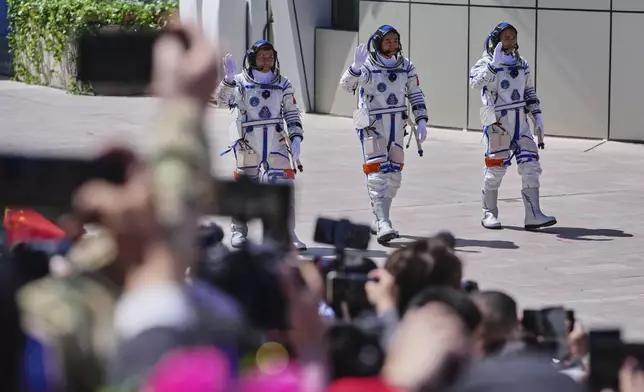
Chinese astronauts for the Shenzhou 20 mission, from right, Chen Zhongrui, Chen Dong and Wang Jie wave as they attend a send-off ceremony for their manned space mission at the Jiuquan Satellite Launch Center in northwestern China, Thursday, April 24, 2025. (AP Photo/Andy Wong)
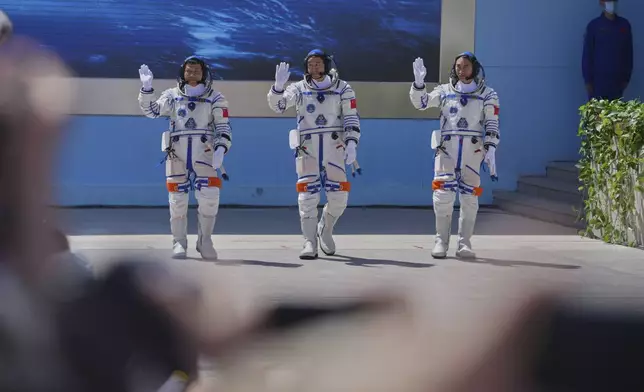
Chinese astronauts for the Shenzhou 20 mission, from right, Chen Zhongrui, Chen Dong and Wang Jie wave as they attend a send-off ceremony for their manned space mission at the Jiuquan Satellite Launch Center in northwestern China, Thursday, April 24, 2025. (AP Photo/Andy Wong)
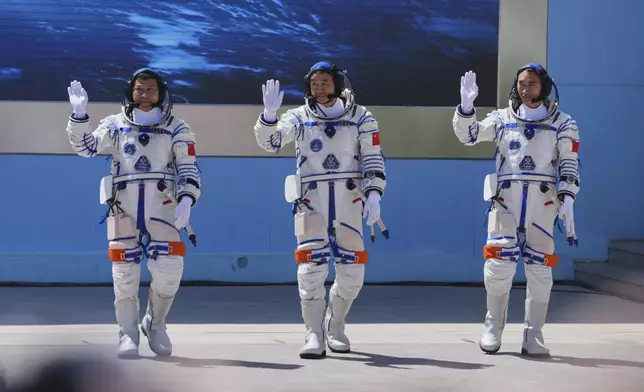
Chinese astronauts for the Shenzhou 20 mission, from right, Chen Zhongrui, Chen Dong and Wang Jie wave as they attend a send-off ceremony for their manned space mission at the Jiuquan Satellite Launch Center in northwestern China, Thursday, April 24, 2025. (AP Photo/Andy Wong)
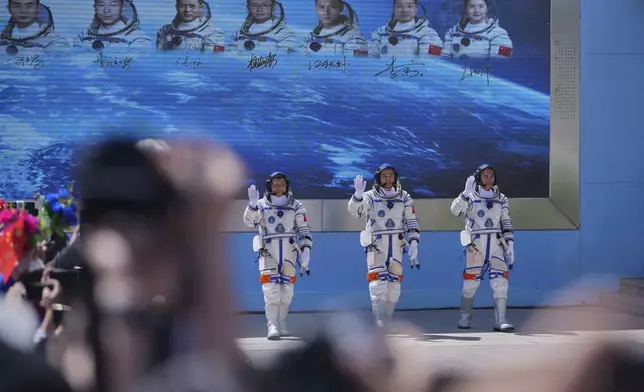
Chinese astronauts for the Shenzhou 20 mission, from right, Chen Zhongrui, Chen Dong and Wang Jie wave as they attend a send-off ceremony for their manned space mission at the Jiuquan Satellite Launch Center in northwestern China, Thursday, April 24, 2025. (AP Photo/Andy Wong)
The rocket lifted off from the launch center in Jiuquan, on the edge of the Gobi Desert in northwestern China. The spaceship will remain in space before returning with the current three-person crew.
The Tiangong, or “Heavenly Palace,” space station has made China a major contender in space, especially since it was entirely Chinese-built after the country was excluded from the International Space Station over U.S. national security concerns. China's space program is controlled by the People’s Liberation Army, the military branch of the ruling Communist Party.
The addition of mechanical arms to the three-module station has also raised concerns from some that China could use them to disable satellites or other space vehicles during a crisis.
Since first launching a man into space in 2003 — becoming only the third country to do so — China's space program has advanced at a steady pace. The space agency has also landed an explorer on Mars and a rover on the less-explored far side of the moon, and aims to put a person on the moon before 2030.
The Shenzhou, or “Celestial Vessel,” 20 mission will be commanded by Chen Dong, who is making his third flight. He will be accompanied by fighter pilot Chen Zhongrui and engineer Wang Jie, both making their maiden voyages, according to the Manned Space Agency. Unlike previous crews, Shenzhou 20 is entirely male.
They will replace three astronauts currently on the Chinese space station. Like those before them, they will stay on board for roughly six months.
The space ship is due to be launched into space atop China's workhorse Long March 2F rocket at 5:17 p.m. local time (0917 GMT) and reach the Tiangong about 6.5 hours later.
The three-person crew was sent in October last year and they have been in space for 175 days. They are due to return on April 29 after a brief overlap with their replacements. The Tiangong, fully assembled in October 2022, can accommodate up to six people at a time.
While in space, the astronauts will conduct experiments in medical science and new technologies and perform space walks to carry out maintenance and install new equipment, the Manned Space Agency said.
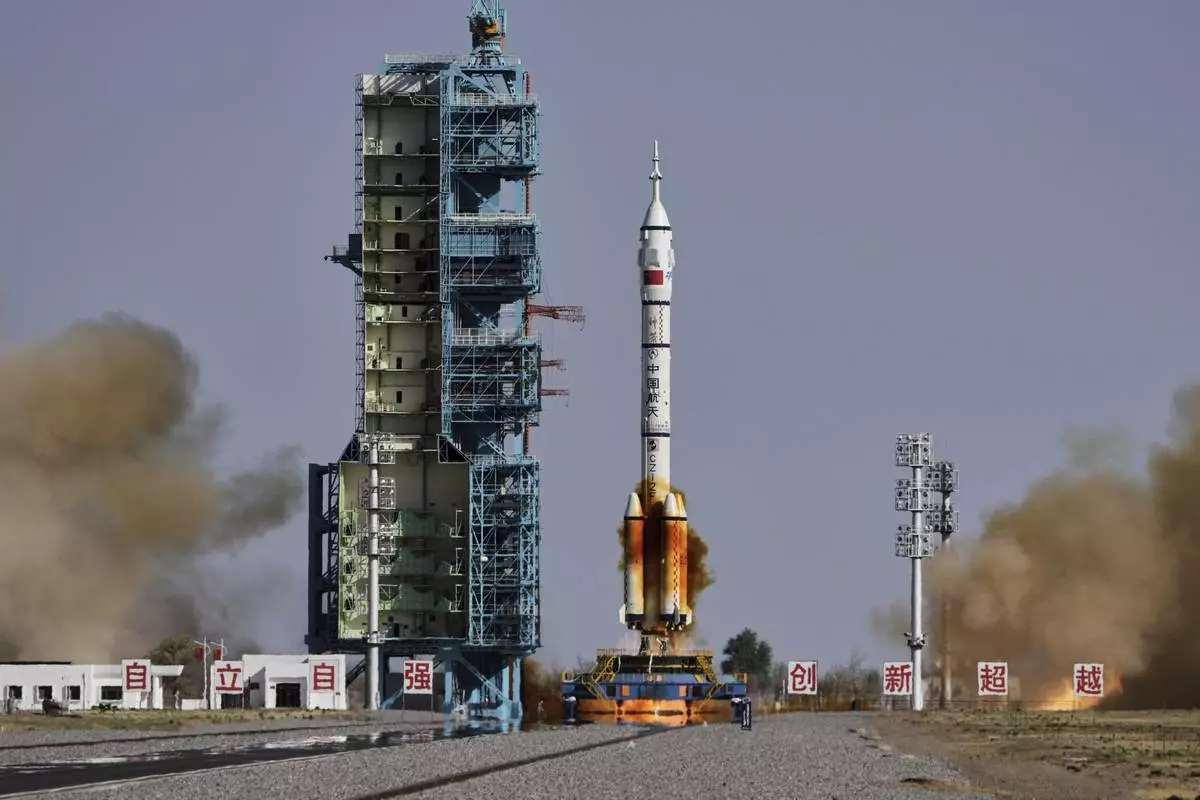
China's Long March 2F rocket, carrying three astronauts for the Shenzhou 20 manned space mission, blasts off at the Jiuquan Satellite Launch Center in Jiuquan, northwestern China, Thursday, April 24, 2025. (AP Photo/Andy Wong)
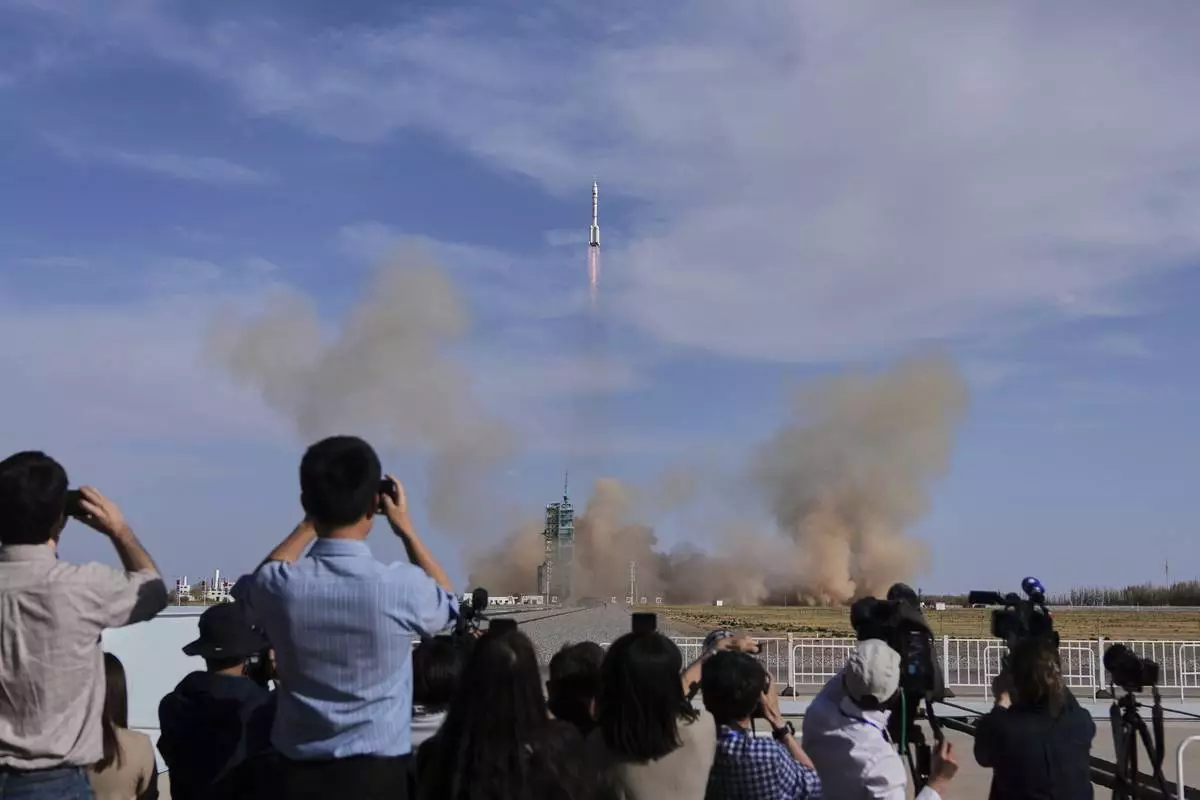
Journalists film China's Long March 2F rocket, carrying three astronauts for the Shenzhou 20 manned space mission, lifts off for a space station, at the Jiuquan Satellite Launch Center in Jiuquan, northwestern China, Thursday, April 24, 2025. (AP Photo/Andy Wong)
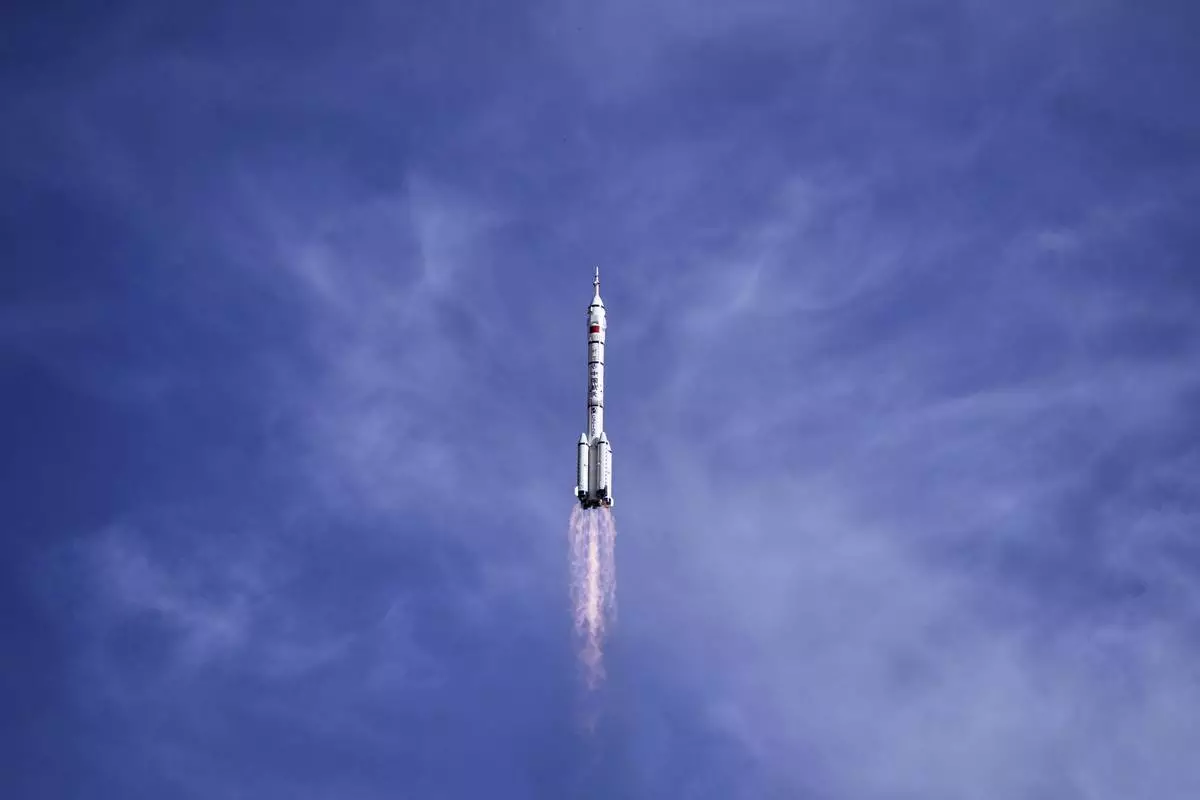
China's Long March 2F rocket, carrying three astronauts for the Shenzhou 20 manned space mission, lifts off for a space station, at the Jiuquan Satellite Launch Center in Jiuquan, northwestern China, Thursday, April 24, 2025. (AP Photo/Andy Wong)
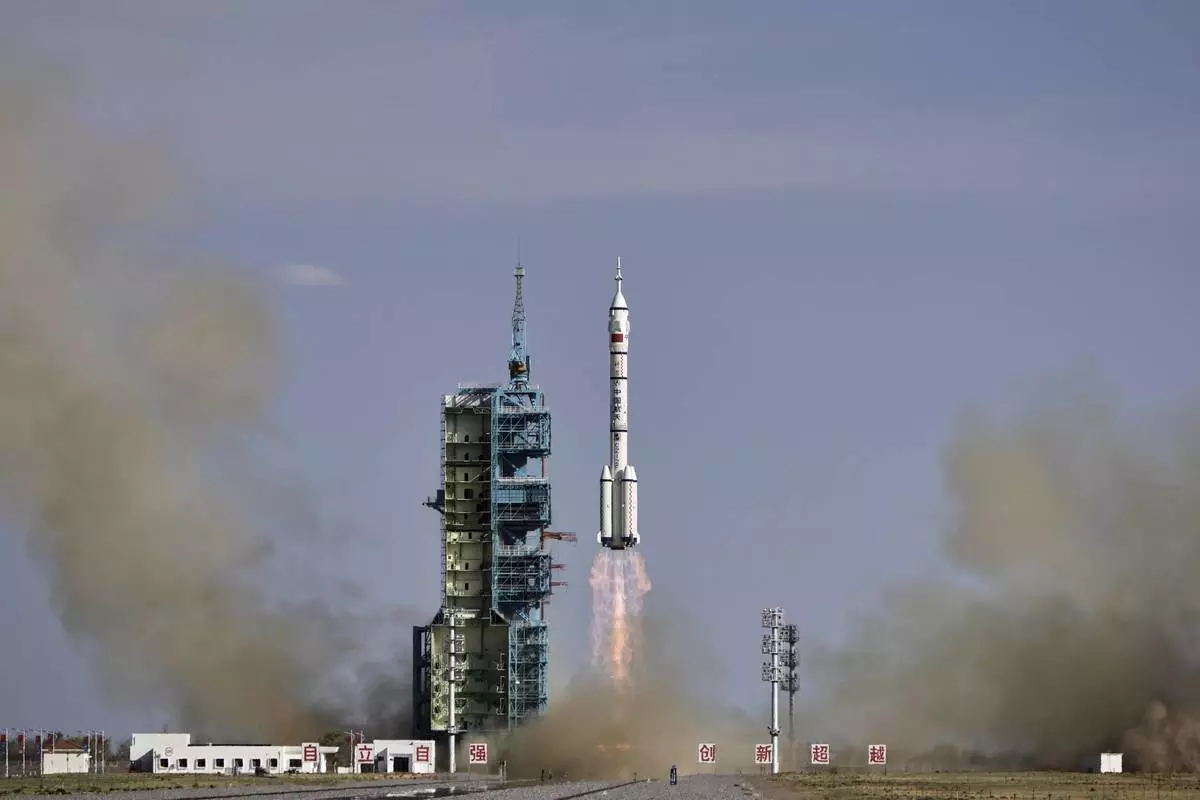
China's Long March 2F rocket, carrying three astronauts for the Shenzhou 20 manned space mission, lifts off for a space station, at the Jiuquan Satellite Launch Center in Jiuquan, northwestern China, Thursday, April 24, 2025. (AP Photo/Andy Wong)
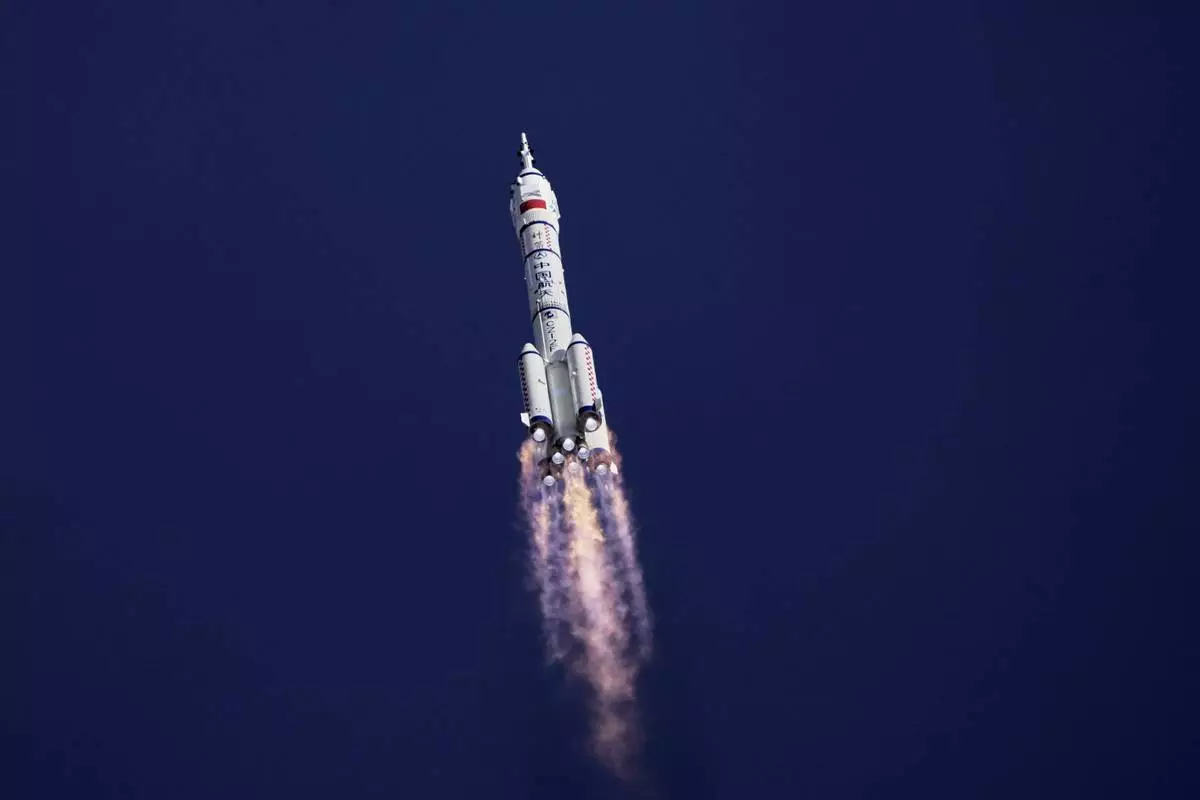
China's Long March 2F rocket, carrying three astronauts for the Shenzhou 20 manned space mission, heads for a space station, at the Jiuquan Satellite Launch Center in Jiuquan, northwestern China, Thursday, April 24, 2025. (AP Photo/Andy Wong)
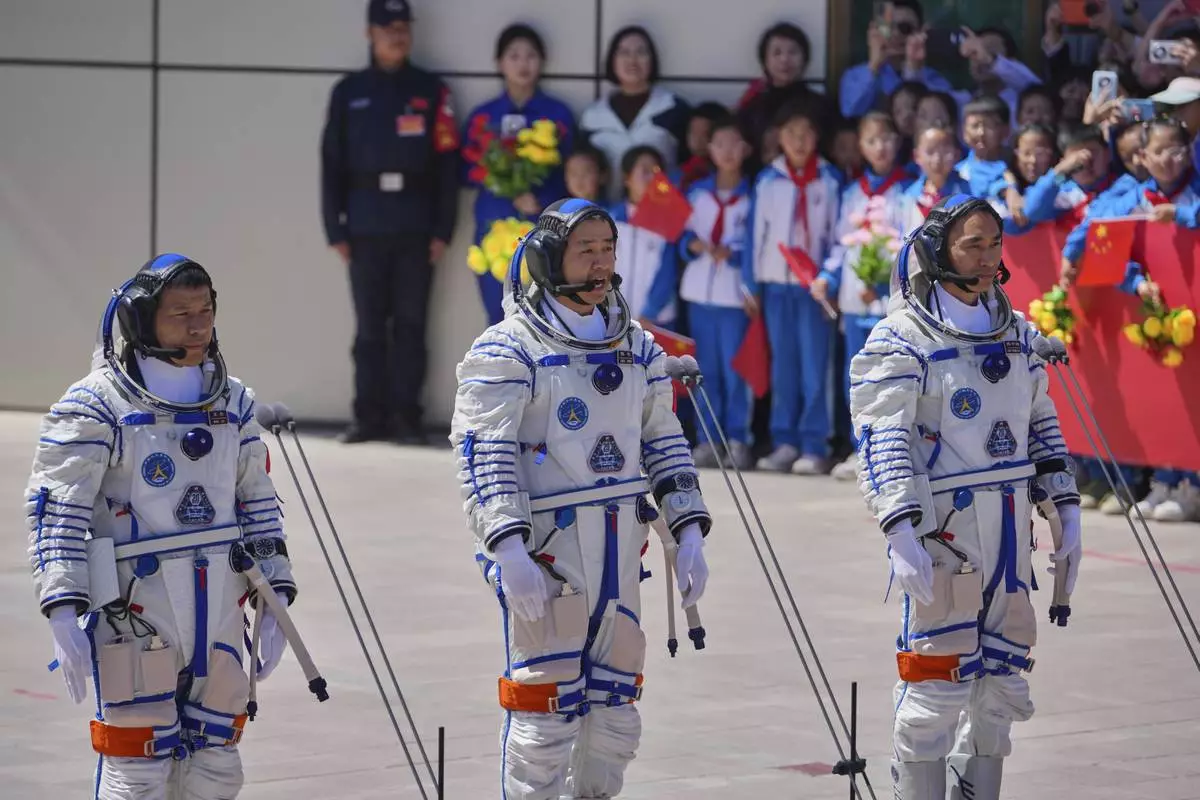
Chinese astronaut for the Shenzhou 20 mission, Chen Dong, center, speaks next to his comrades Chen Zhongrui, right, and Wang Jie as they attend a send-off ceremony for their manned space mission at the Jiuquan Satellite Launch Center in northwestern China, Thursday, April 24, 2025. (AP Photo/Andy Wong)
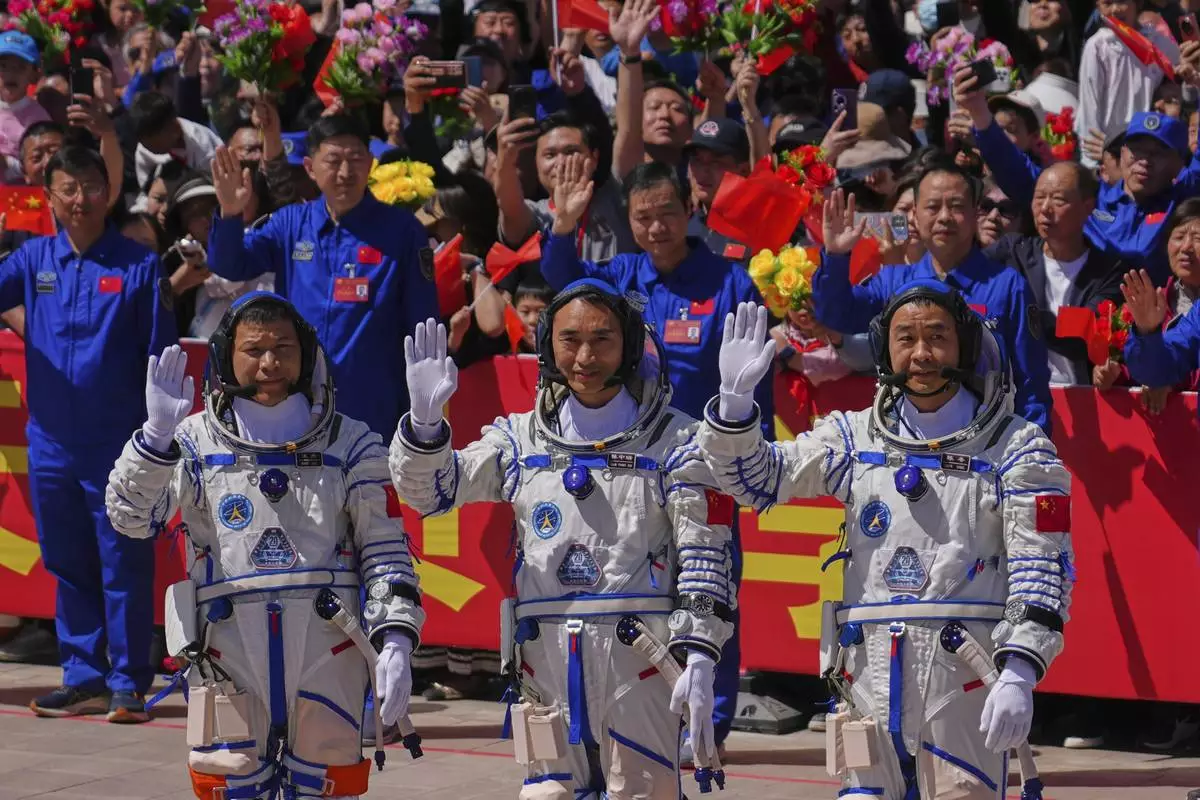
Chinese astronauts for the Shenzhou 20 mission, from right, Chen Zhongrui, Chen Dong and Wang Jie wave as they attend a send-off ceremony for their manned space mission at the Jiuquan Satellite Launch Center in northwestern China, Thursday, April 24, 2025. (AP Photo/Andy Wong)
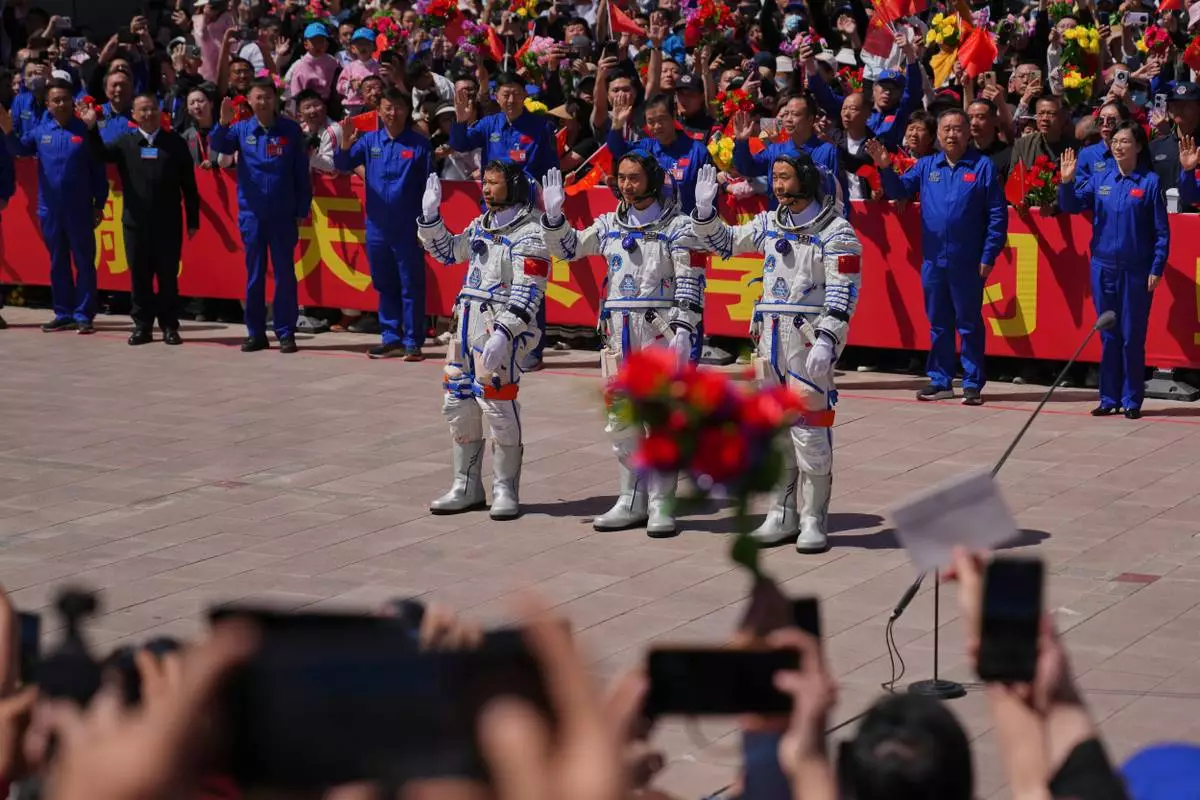
Chinese astronauts for the Shenzhou 20 mission, from right, Chen Zhongrui, Chen Dong and Wang Jie wave as they attend a send-off ceremony for their manned space mission at the Jiuquan Satellite Launch Center in northwestern China, Thursday, April 24, 2025. (AP Photo/Andy Wong)
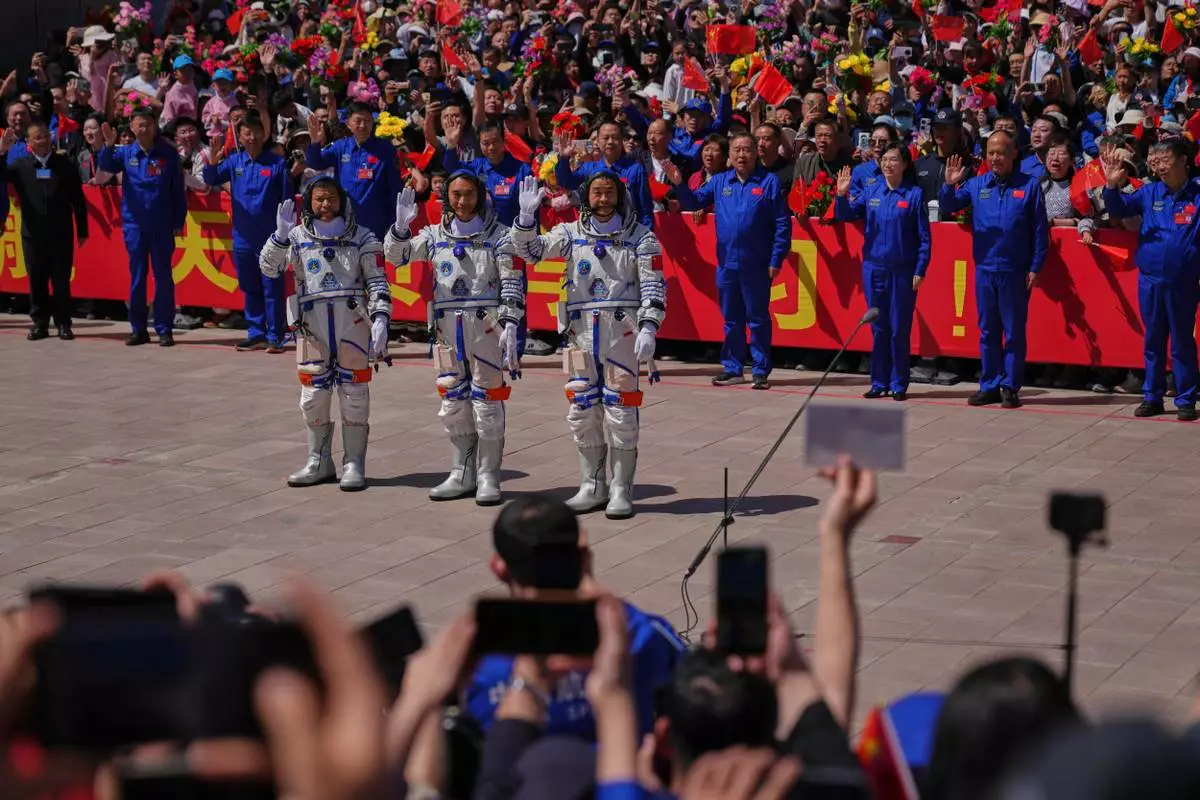
Chinese astronauts for the Shenzhou 20 mission, from right, Chen Zhongrui, Chen Dong and Wang Jie wave as they attend a send-off ceremony for their manned space mission at the Jiuquan Satellite Launch Center in northwestern China, Thursday, April 24, 2025. (AP Photo/Andy Wong)
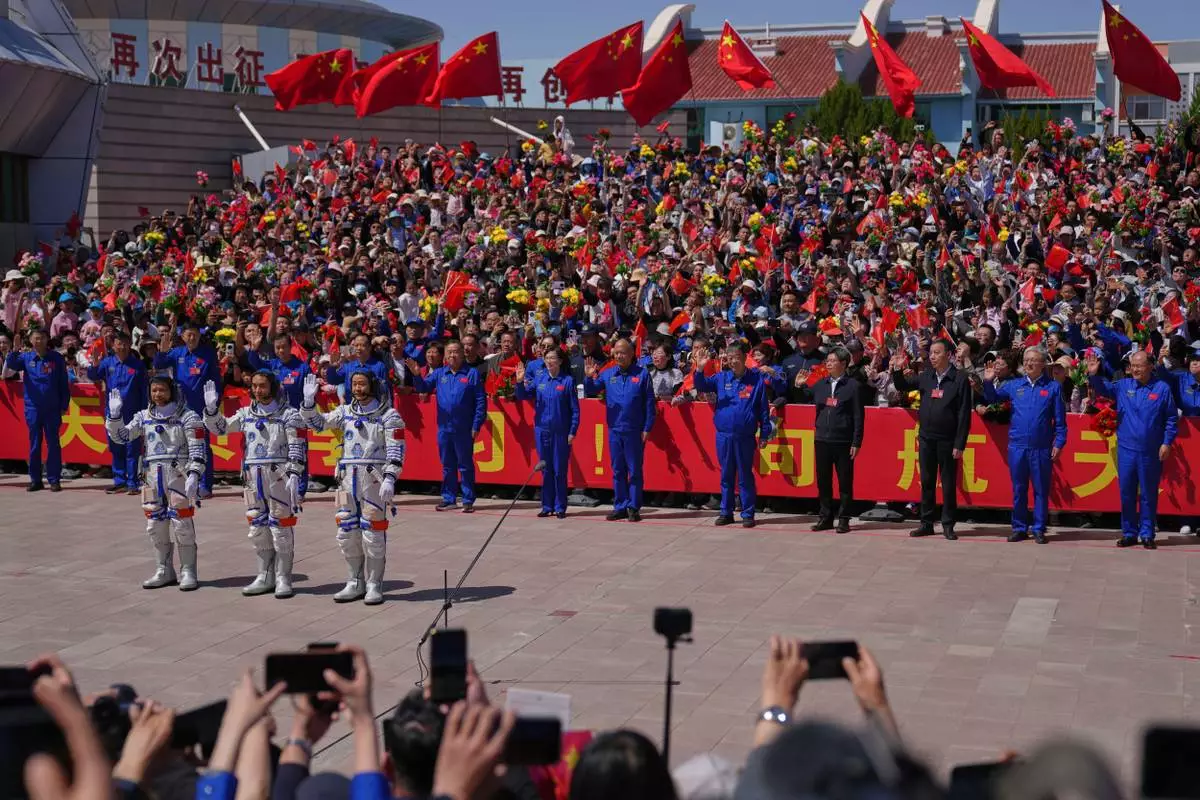
Chinese astronauts for the Shenzhou 20 mission, from right, Chen Zhongrui, Chen Dong and Wang Jie wave as they attend a send-off ceremony for their manned space mission at the Jiuquan Satellite Launch Center in northwestern China, Thursday, April 24, 2025. (AP Photo/Andy Wong)
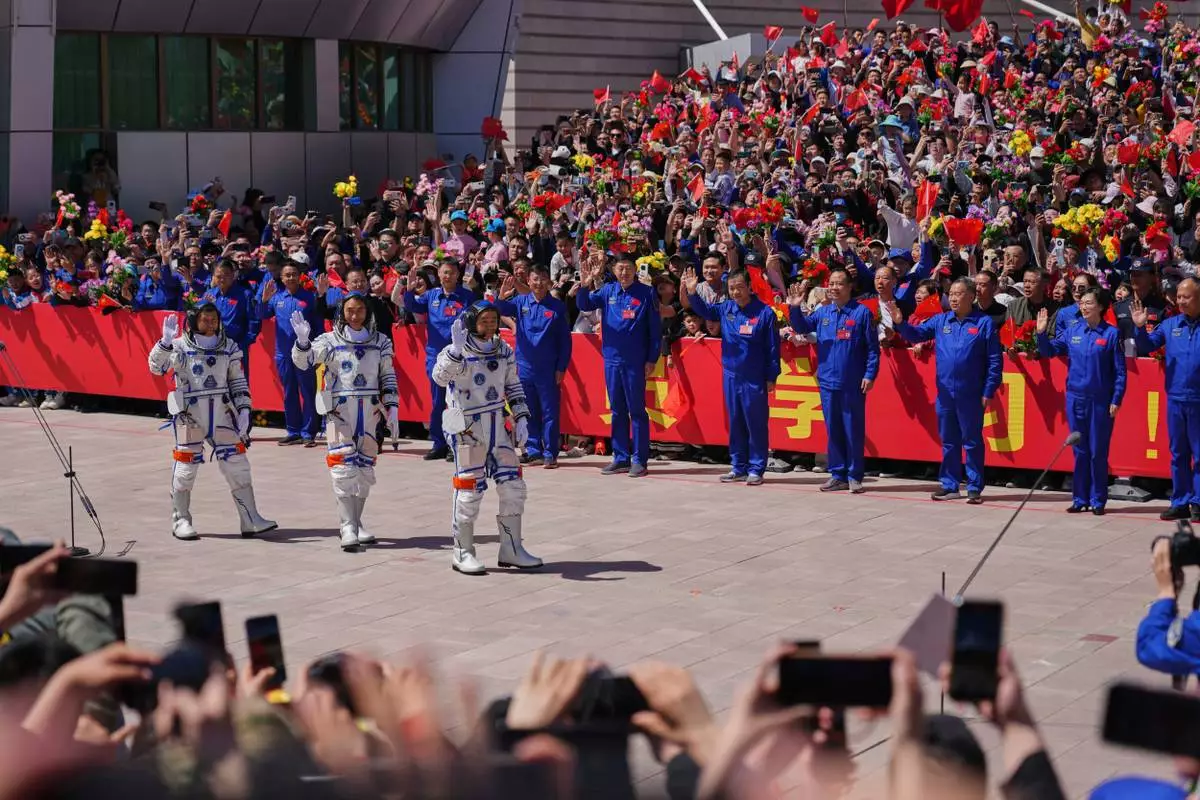
Chinese astronauts for the Shenzhou 20 mission, from right, Chen Zhongrui, Chen Dong and Wang Jie wave as they attend a send-off ceremony for their manned space mission at the Jiuquan Satellite Launch Center in northwestern China, Thursday, April 24, 2025. (AP Photo/Andy Wong)
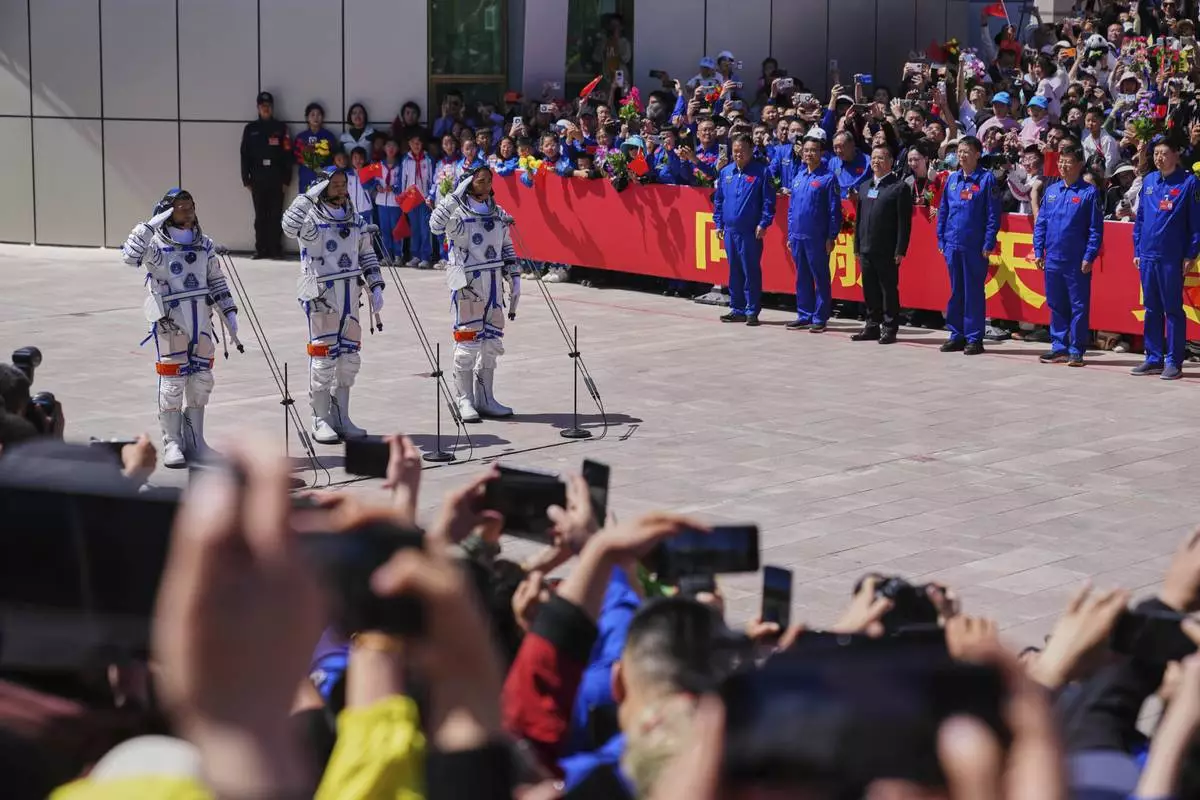
Chinese astronauts for the Shenzhou 20 mission, from right, Chen Zhongrui, Chen Dong and Wang Jie salute as they attend a send-off ceremony for their manned space mission at the Jiuquan Satellite Launch Center in northwestern China, Thursday, April 24, 2025. (AP Photo/Andy Wong)
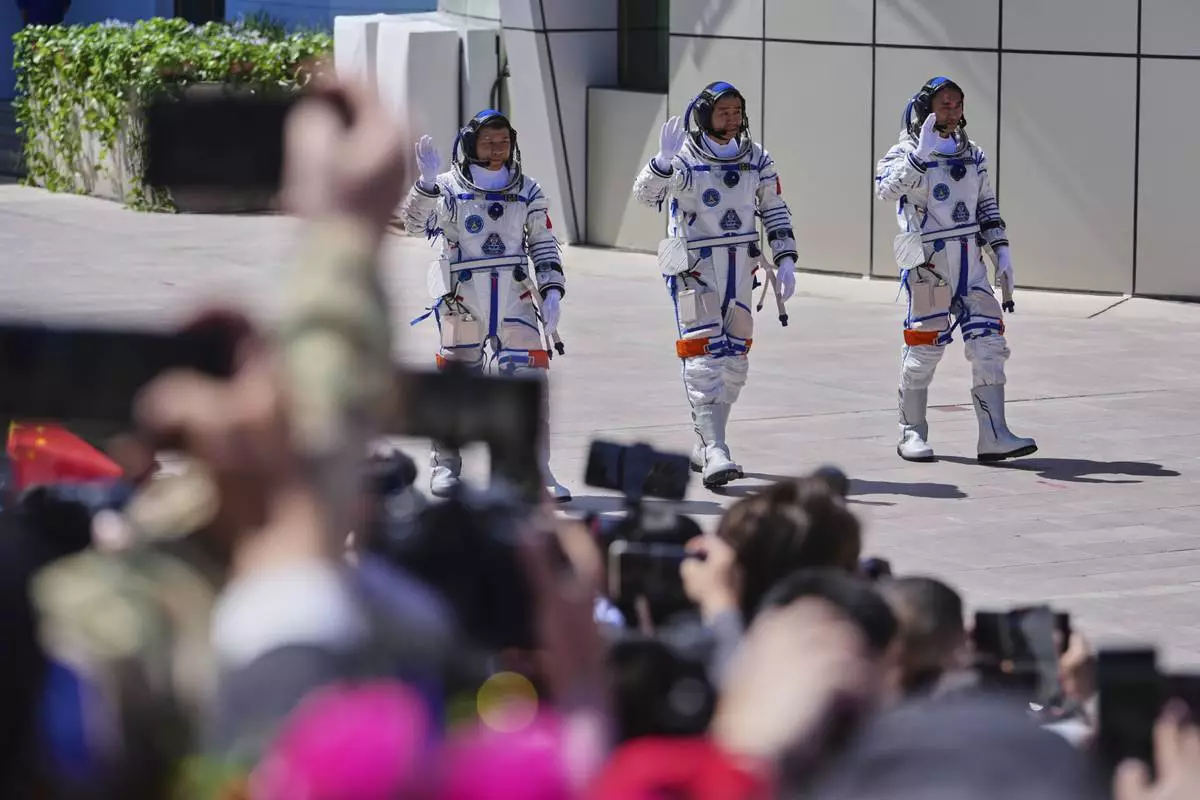
Chinese astronauts for the Shenzhou 20 mission, from right, Chen Zhongrui, Chen Dong and Wang Jie wave as they attend a send-off ceremony for their manned space mission at the Jiuquan Satellite Launch Center in northwestern China, Thursday, April 24, 2025. (AP Photo/Andy Wong)
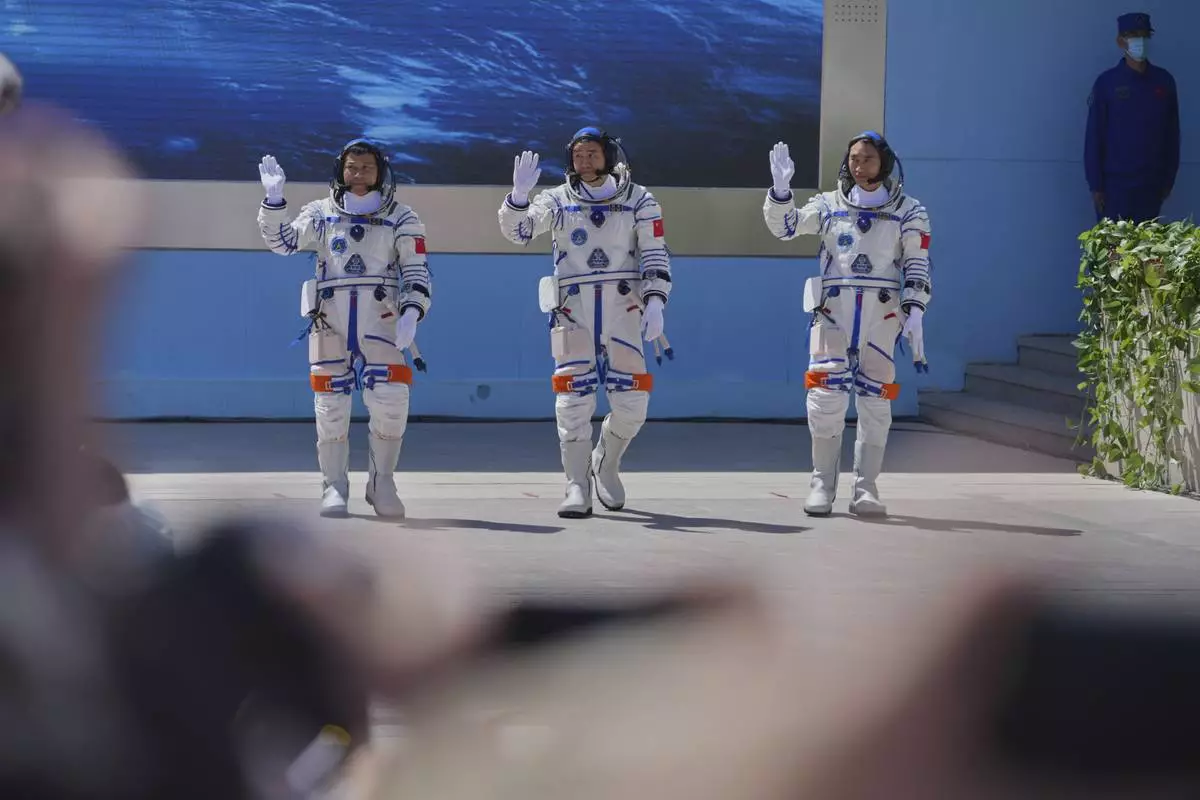
Chinese astronauts for the Shenzhou 20 mission, from right, Chen Zhongrui, Chen Dong and Wang Jie wave as they attend a send-off ceremony for their manned space mission at the Jiuquan Satellite Launch Center in northwestern China, Thursday, April 24, 2025. (AP Photo/Andy Wong)
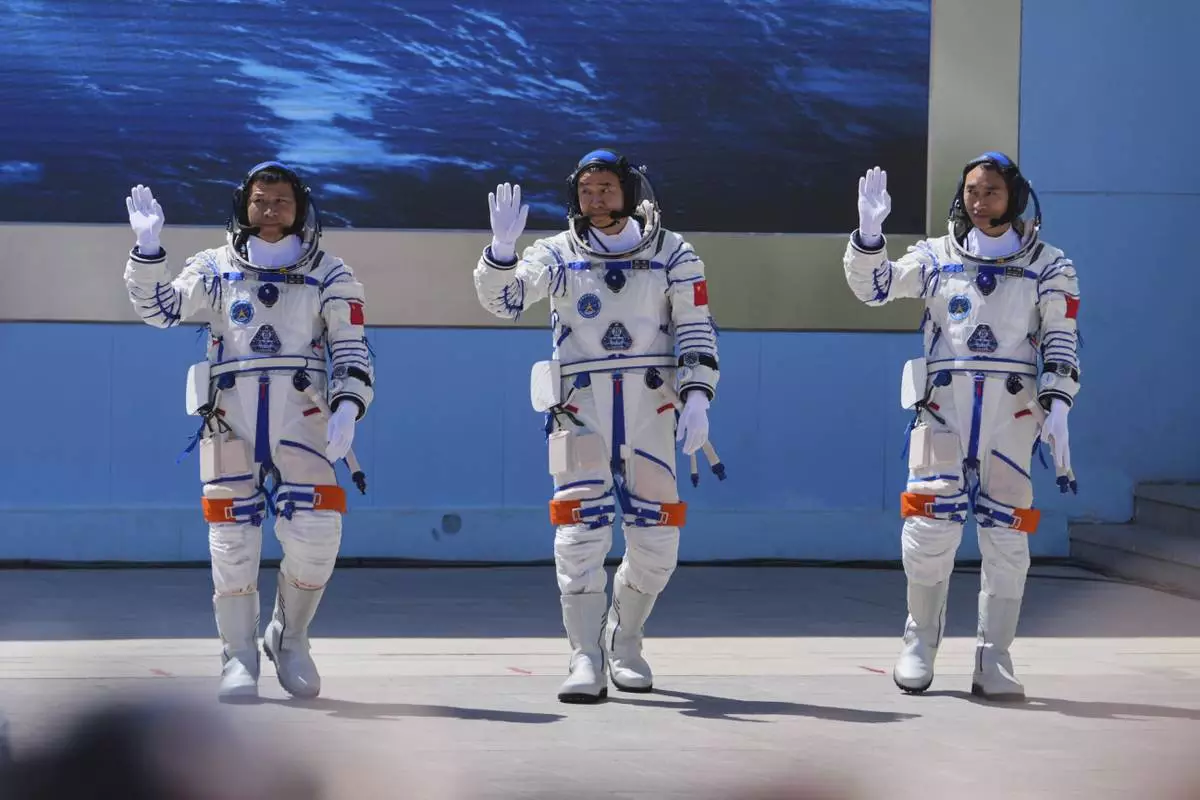
Chinese astronauts for the Shenzhou 20 mission, from right, Chen Zhongrui, Chen Dong and Wang Jie wave as they attend a send-off ceremony for their manned space mission at the Jiuquan Satellite Launch Center in northwestern China, Thursday, April 24, 2025. (AP Photo/Andy Wong)
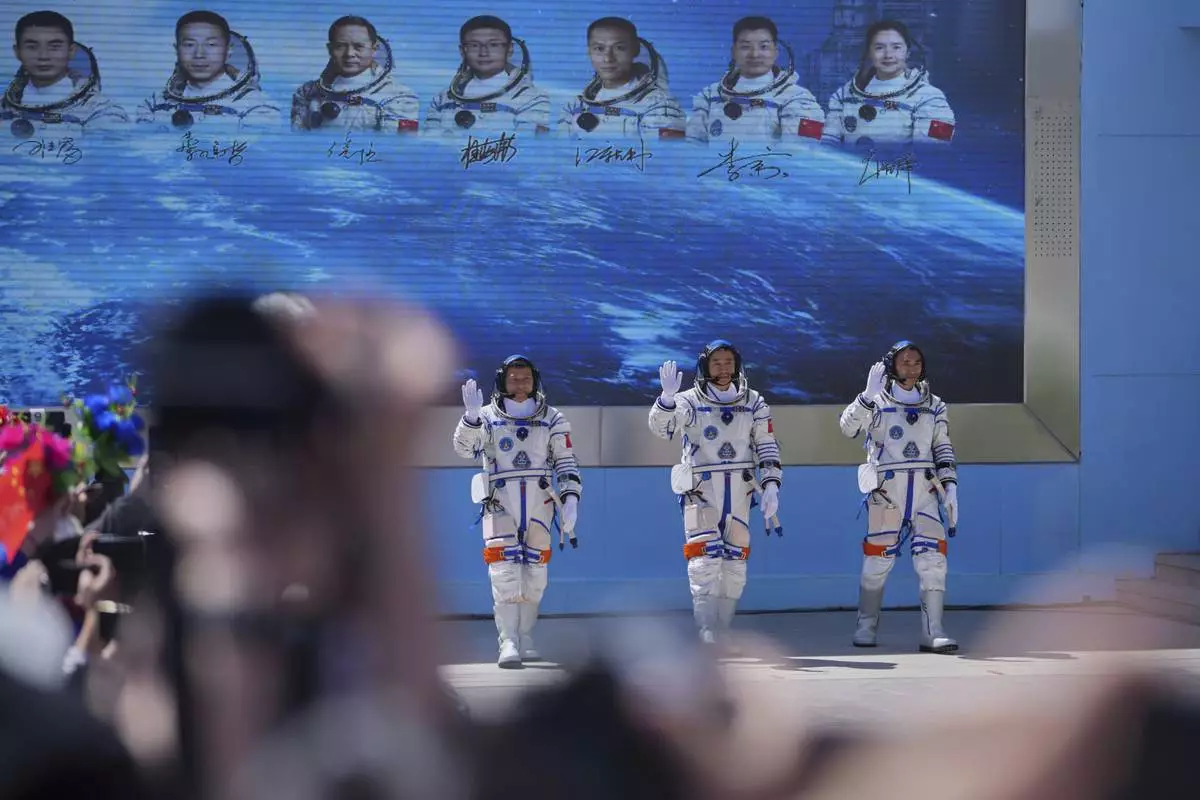
Chinese astronauts for the Shenzhou 20 mission, from right, Chen Zhongrui, Chen Dong and Wang Jie wave as they attend a send-off ceremony for their manned space mission at the Jiuquan Satellite Launch Center in northwestern China, Thursday, April 24, 2025. (AP Photo/Andy Wong)