Speech by Acting CE at World Intellectual Property Day Reception 2025
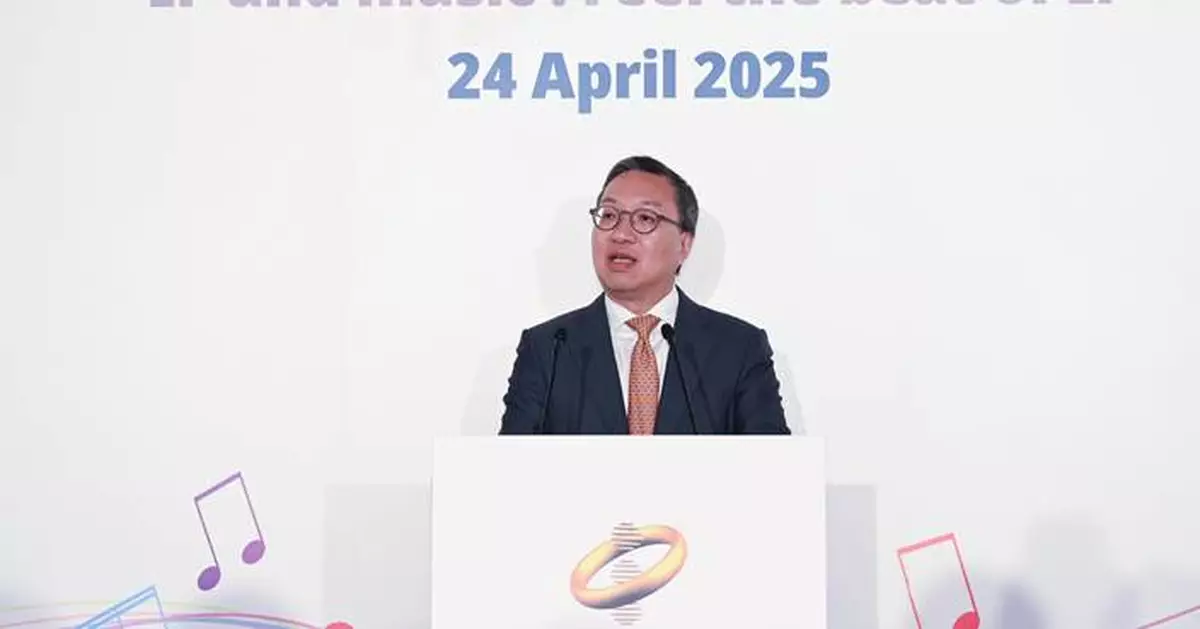
Following is the speech by the Acting Chief Executive, Mr Paul Lam, SC, at the World Intellectual Property (IP)Day Reception 2025 today (April 24):
Distinguished guests, ladies and gentlemen,
Good afternoon. It is my pleasure to join you today in celebrating the World Intellectual Property Day.
In 2000, WIPO (World Intellectual Property Organization)'s member states designated April 26 - the day on which the WIPO Convention came into force in 1970 - as the World IP Day with the aim of increasing the general understanding of IP.
The theme of this year's World IP Day is "IP and music: Feel the beat of IP". IP plays an important role in safeguarding the rights of musicians, composers, and producers. In addition, from film, entertainment, and technology, to fashion, video games, and consumer goods, IP rights empower cross-industry connections with music, enabling creative synergies and innovation across sectors that promote economic growth.
It is well known that Hong Kong is taking active steps to develop itself into an international innovation and technology centre. This objective must be considered in the wider context that China has become the global technological giant and powerhouse. In particular and most relevant to Hong Kong, according to the WIPO Global Innovation Index 2024, the Shenzhen-Hong Kong-Guangzhou cluster ranks second in the top 100 science and technology clusters.
It should be borne in mind that IP is a form of intangible property, entailing rights which must be protected and can be used or transferred. In order to become an international innovation and technology centre, it is essential to ensure that our legal system offers sufficient protection to IP rights, and regulation of the use and transfer thereof. This takes me to one of the unique advantages of Hong Kong under the principle of "one country, two systems". And that is Hong Kong is the only common law jurisdiction in China, which enjoys a high reputation for its strong rule of law.
In my view, there are two important roles that our reputable common law system may play in the present context. First, as an IP dispute resolution centre; and second, as an IP trading centre.
Let me explain why Hong Kong is well positioned to resolve IP disputes by litigation, arbitration or mediation.
In respect of litigation, on May 6, 2019, the Judiciary set up the Intellectual Property List in the Court of First Instance of the High Court. A specialist judge, the Honourable Mr Justice David Lok, has been assigned to take charge of the IP List. Management of cases under the IP List has been enhanced in order to reduce the costs and time needed for the resolution of IP disputes.
I would like to give one example to demonstrate how effective IP disputes can now be resolved by our courts. In Kung King Wing and another v Splendid Profit International Holdings Ltd and others [2020] HKCFI 894, the action was commenced on December 27, 2019. Despite the outbreak of the COVID-19 pandemic and the consequential operation of the general adjournment period (GAP) in court, the trial started on May 4, 2020, after the termination of the GAP. The trial was completed within a few days and the parties obtained judgment on May 12, 2020. In short, the whole proceedings were completed in less than five months. As Mr Justice David Lok emphasised at the end of his judgment, efficient disposal of IP cases would help to protect and strengthen IP rights and to promote Hong Kong as an IP hub in the region for the management of IP rights and the resolution of IP disputes.
Whether a judgment on IP disputes can be enforced outside Hong Kong is, of course, of great practical importance. In this respect, it is significant to note that, on January 29, 2024, the Mainland Judgments in Civil and Commercial Matters (Reciprocal Enforcement) Ordinance came into effect. This Ordinance gives effect to the 2019 Arrangement on Reciprocal Recognition and Enforcement of Judgments in Civil and Commercial Matters by the Courts of the Mainland and of the HKSAR (Hong Kong Special Administrative Region). One of the most distinguishing features relevant for the present purpose is that it covers judgments in IP cases unless they fall within certain exceptions as defined in section 7 of the Ordinance. This is a remarkable breakthrough because, in comparison, the 2019 Hague Convention on the Recognition and Enforcement of Foreign Judgments in Civil or Commercial Matters, which represents the international norm, expressly excludes all IP matters.
Turning to arbitration, Hong Kong's status as an international arbitration centre is beyond doubt. According to the 2025 International Arbitration Survey published recently by the White & Case and School of International Arbitration, Queen Mary University of London, Hong Kong and Singapore both rank as the second most preferred seat of arbitration in the world after London.
In respect of resolving IP disputes by arbitration, the Arbitration (Amendment) Ordinance 2017 amended the Arbitration Ordinance (Cap. 609) by, among other things, clarifying that all disputes over IP rights, whether arising within or outside Hong Kong, may be resolved by arbitration, and that IP arbitral awards are enforceable in Hong Kong as it is not contrary to the public policy of Hong Kong to do so.
Furthermore, IP arbitral awards are enforceable in countries which are parties to the New York Convention, and also in the Mainland pursuant to the mutual legal assistance arrangements between the Mainland and HKSAR in this respect. I wish to add that, in April 2019, the Arrangement Concerning Mutual Assistance in Court-ordered Interim Measures in Aid of Arbitral Proceedings by the Courts of the Mainland and of the HKSAR was concluded. As a ground breaking initiative, that arrangement allows parties in Hong Kong-seated arbitral proceedings that are administered by qualified arbitral institutions to apply for interim measures from Mainland Courts, whether before the commencement of the arbitration or during the arbitration proceedings; and vice versa. The scope of interim measures allowed are very wide, including the preservation of property, evidence and conduct. The availability of interim measures is plainly an attractive and important feature favouring the use of arbitration in Hong Kong to resolve cross-border IP disputes.
Moving on to mediation, we have been actively promoting mediation as a means of resolving IP disputes. During the Mediation Conference 2024 organised by the Department of Justice last year, our expert speakers highlighted the benefits of mediation in the context of resolving IP disputes. In addition to being relatively cost-effective, quicker and confidential, mediation is forward-looking and encourages creative solutions. This makes it particularly well suited for resolving IP disputes.
Turning to IP trading, it includes, in general, both the assignment and licensing of IP rights. Our user-friendly bilingual common law system and an abundant supply of high-quality legal professionals create an ideal environment for IP trading in any form. At the same time, there is a great and increasing demand on IP trading in view of the rapid development of different IP industries in both Hong Kong and the Mainland. For example, many Mainland companies have become licensors instead of licensees of standard essential patents. In The Chief Executive's 2024 Policy Address, the Government has reaffirmed its commitment to develop Hong Kong into a regional intellectual property trading centre by, among other things, enhancing the legislative framework for IP; and strengthening the training of IP talents.
As an example to show that we will spare no effort to ensure that our IP law will meet the changing needs and demands of society, I wish to point out that, since the enactment of the Copyright Ordinance (Cap. 528) in 1997, it has undergone no fewer than seven substantive revisions to adapt to the evolving social, economic and technological landscape. The latest review exercise focuses on addressing the copyright issues arising from the rapid advancements in artificial intelligence. The Government has already completed a public consultation and is now putting forward a legislative proposal for a new text and data mining exception in our copyright law. This exception will be subject to stringent conditions to ensure a careful balance between the interests of copyright owners in exploiting their works and the public interest in supporting innovation. Importantly, the rights reservation mechanism would be paramount for protecting copyright owners' legitimate interests. The Intellectual Property Department and the Department of Justice are now working together to draft the amendment bill for consideration by the Legislative Council.
For all these reasons, ladies and gentlemen, I am very confident that Hong Kong can and will play a more significant role in future in the area of IP protection and trading, which will in turn contribute to the innovation and technology development of not just Hong Kong but our country as a whole. I would like to take this opportunity to urge and encourage you and all relevant stakeholders to join hands together in working towards this important goal.
Last but not least, I wish all of you a very fruitful and enjoyable night. Thank you very much.
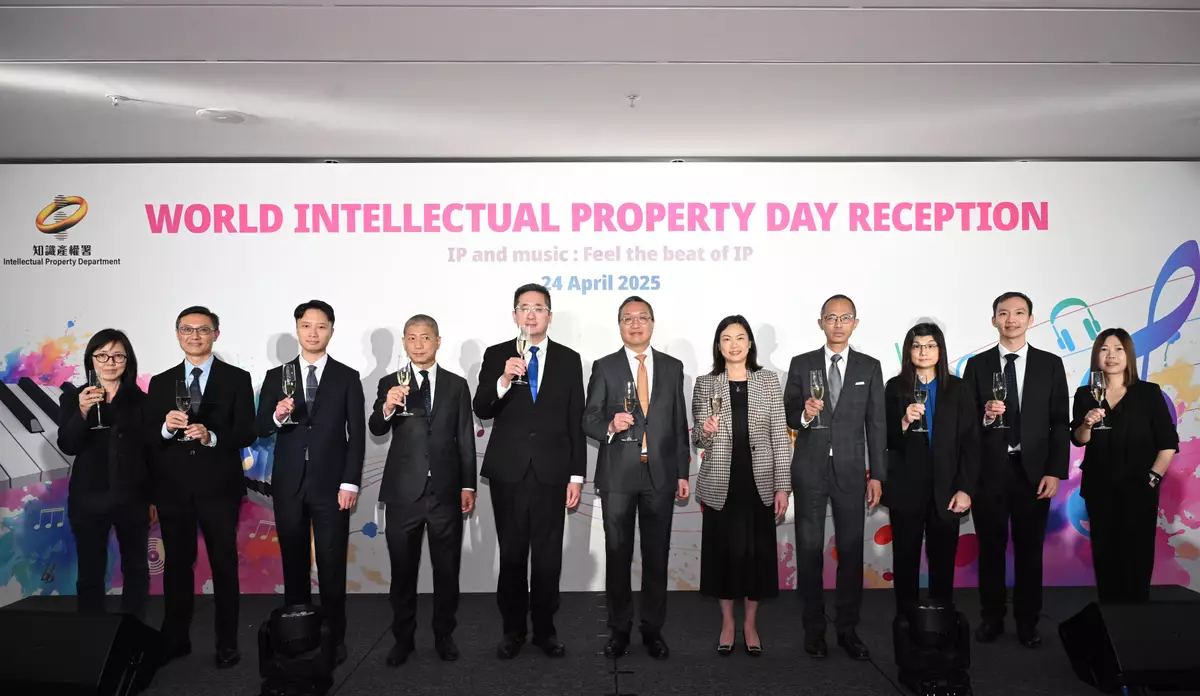
Speech by Acting CE at World Intellectual Property Day Reception 2025 Source: HKSAR Government Press Releases
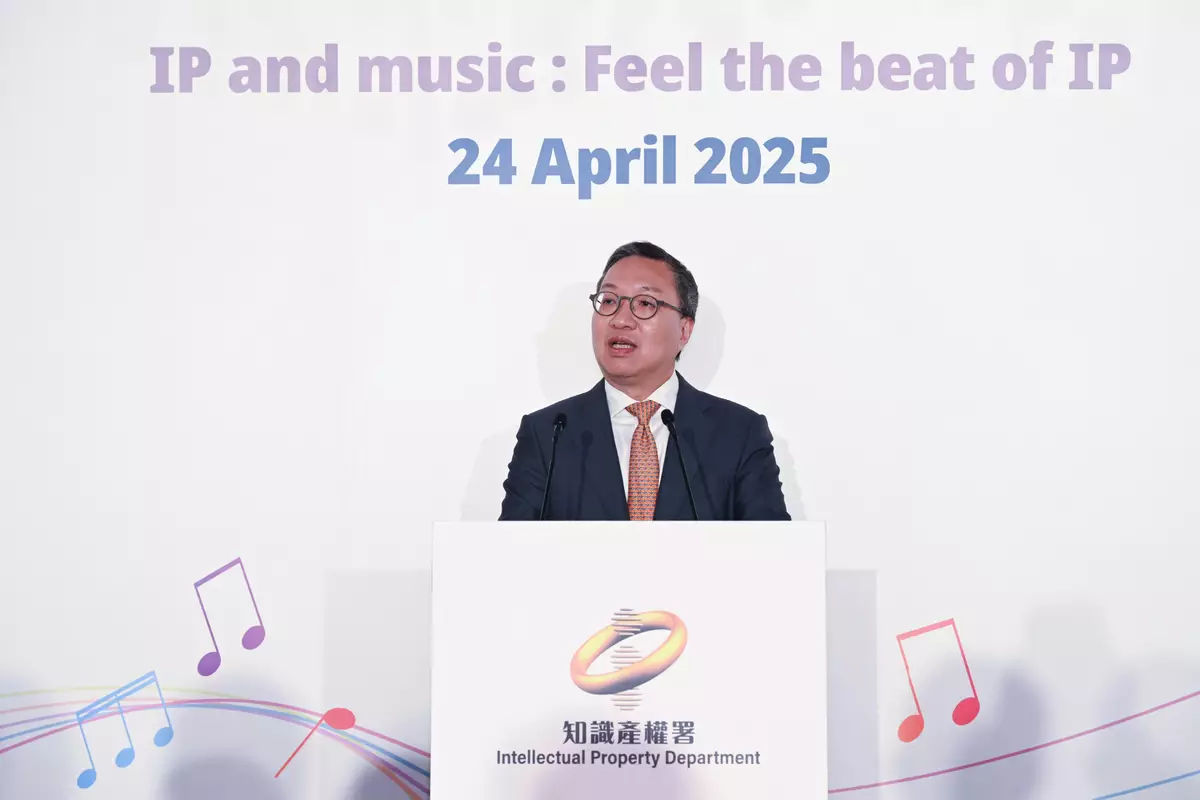
Speech by Acting CE at World Intellectual Property Day Reception 2025 Source: HKSAR Government Press Releases