CHARLOTTE, N.C. (AP) — State and local election officials from around the country on Thursday questioned the leaders of a federal agency directed by President Donald Trump to implement parts of his sweeping election overhaul executive order, with some expressing concerns about the consequences for voters and the people in charge of voting.
The U.S. Election Assistance Commission, an independent and bipartisan federal agency, is at the center of Trump’s March 25 order that directs the commission to update the national voter registration form to include a proof-of-citizenship requirement and revise guidelines for voting systems. Trump also wants it to withhold federal money from any state that continues to accept ballots after Election Day even if they are postmarked by then.
Click to Gallery
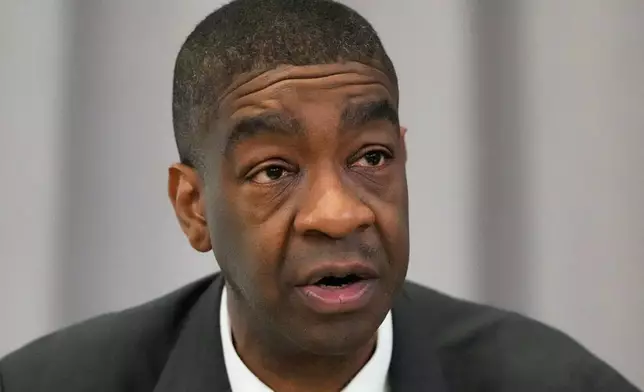
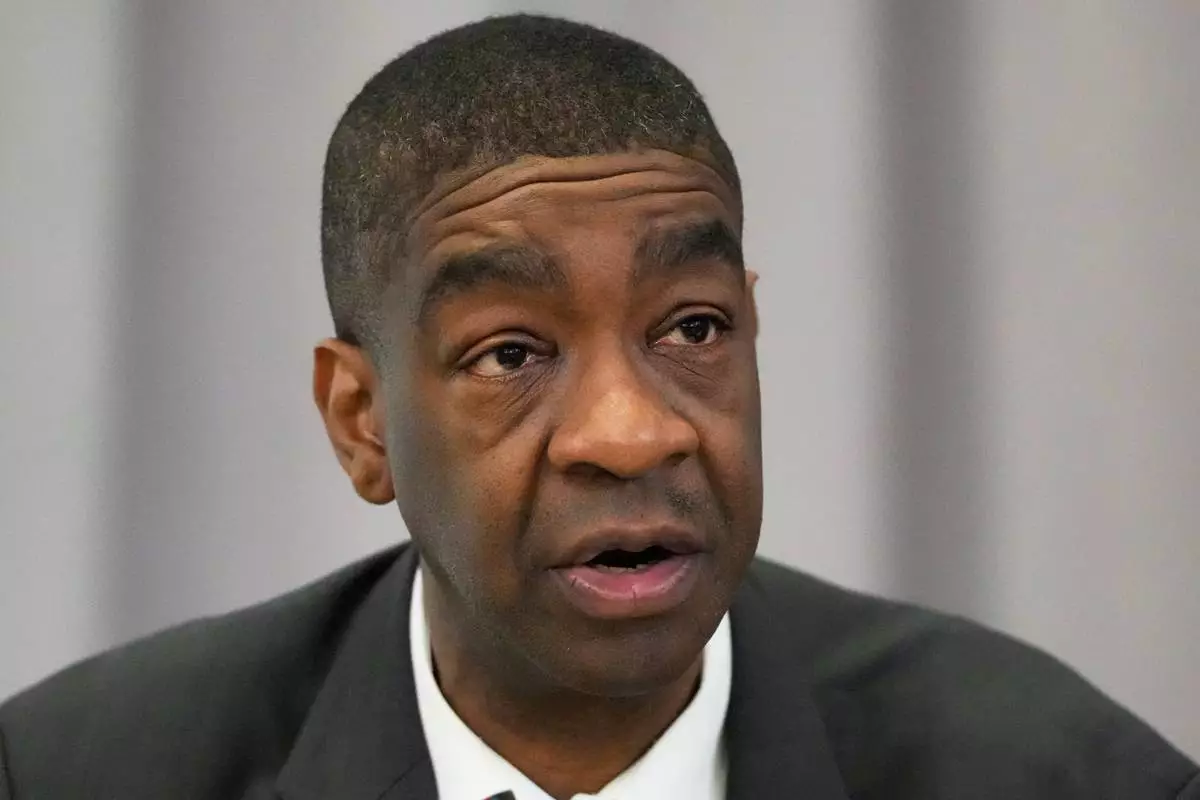
Commissioner Thomas Hicks speaks during the U.S. Election Assistance Commission Standards Board in-person public meeting, Thursday, April 24, 2025, in Charlotte, N.C. (AP Photo/Chris Carlson)
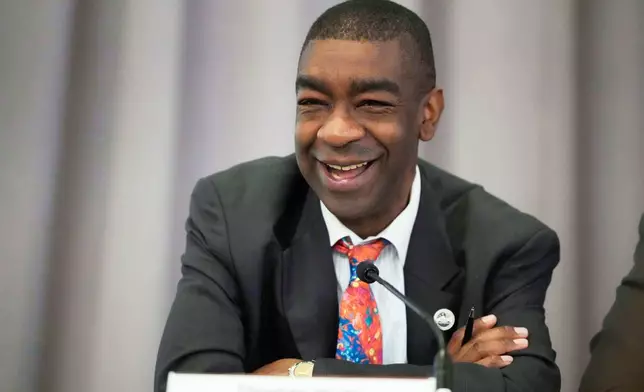
Commissioner Thomas Hicks speaks during the U.S. Election Assistance Commission Standards Board in-person public meeting, Thursday, April 24, 2025, in Charlotte, N.C. (AP Photo/Chris Carlson)
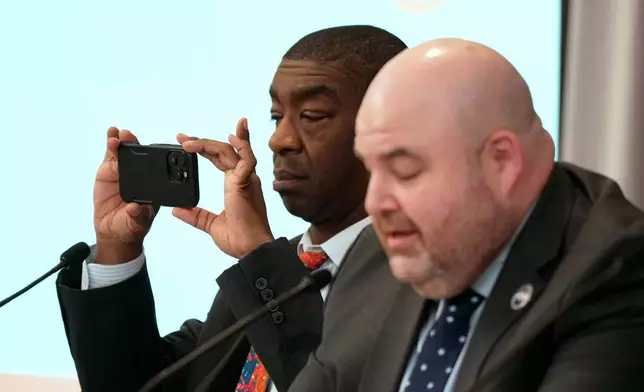
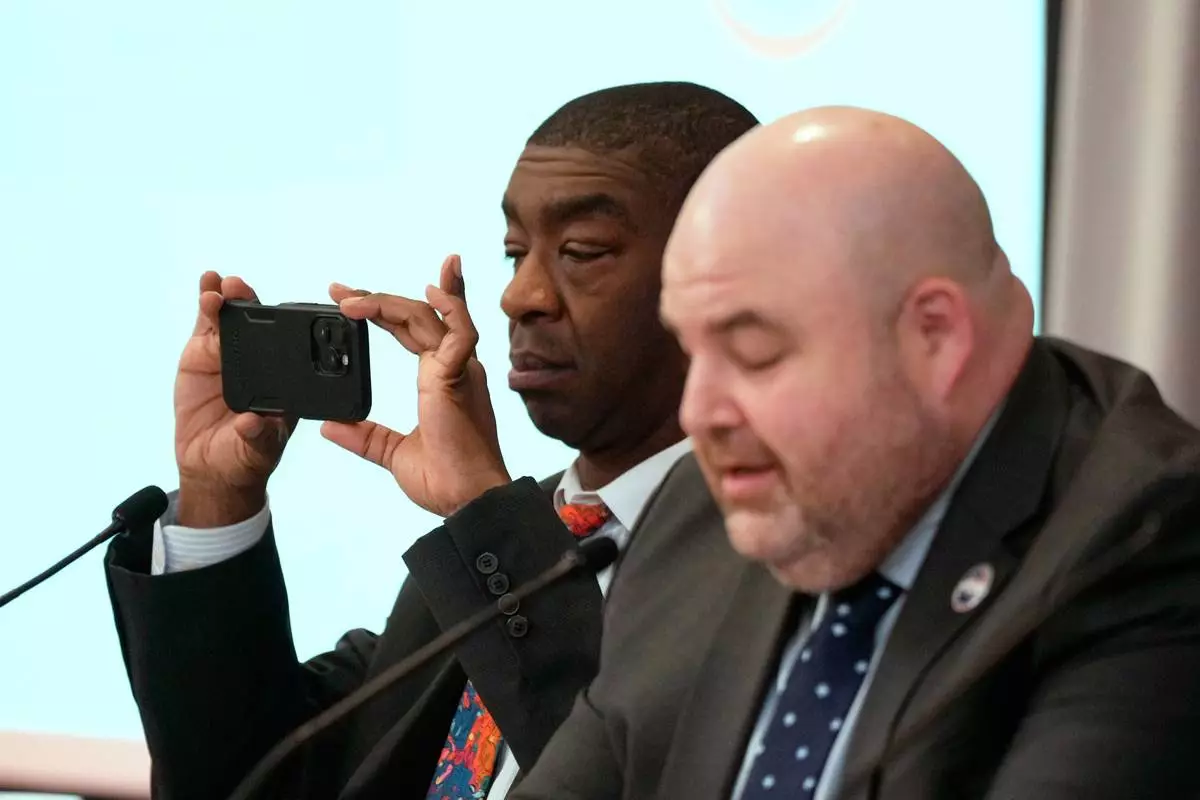
Commissioner Thomas Hicks takes a picture during the U.S. Election Assistance Commission Standards Board in-person public meeting, Thursday, April 24, 2025, in Charlotte, N.C. (AP Photo/Chris Carlson)
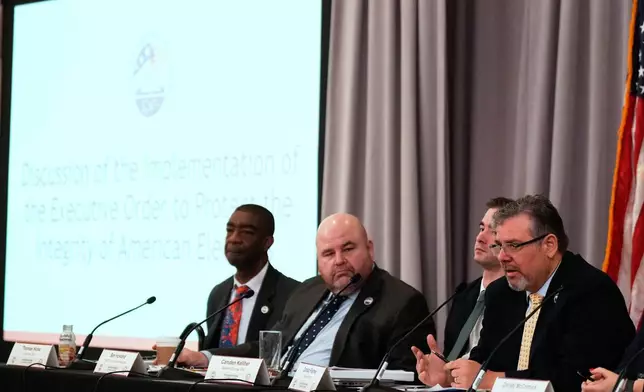
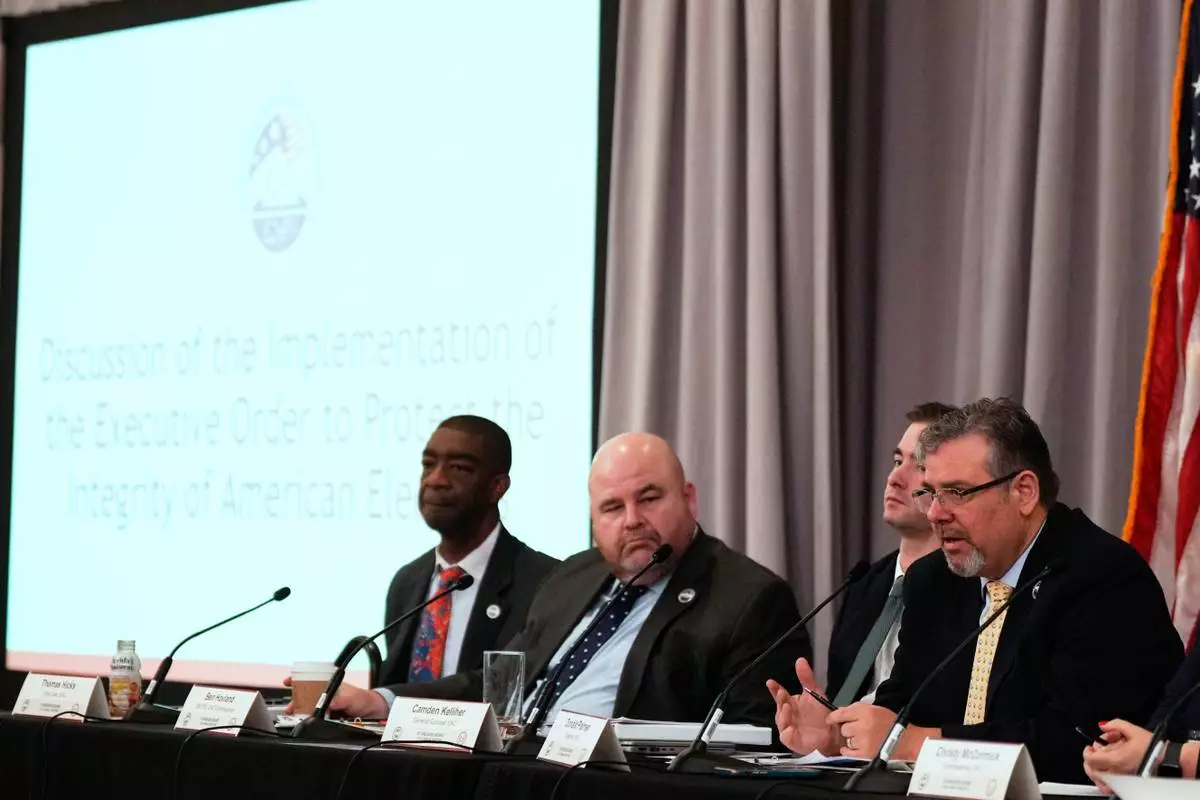
Commissioner Donald Palmer speaks during a U.S. Election Assistance Commission Standards Board in-person public meeting, Thursday, April 24, 2025, in Charlotte, N.C. (AP Photo/Chris Carlson)
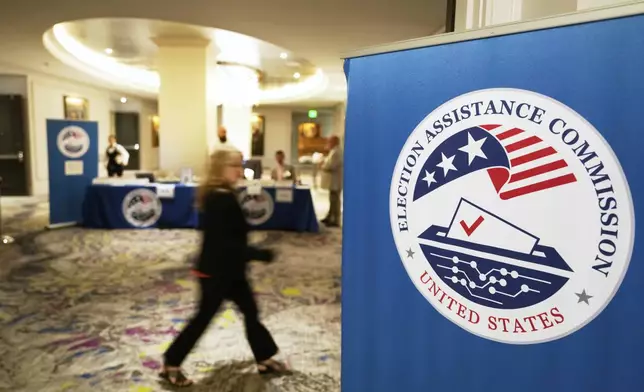
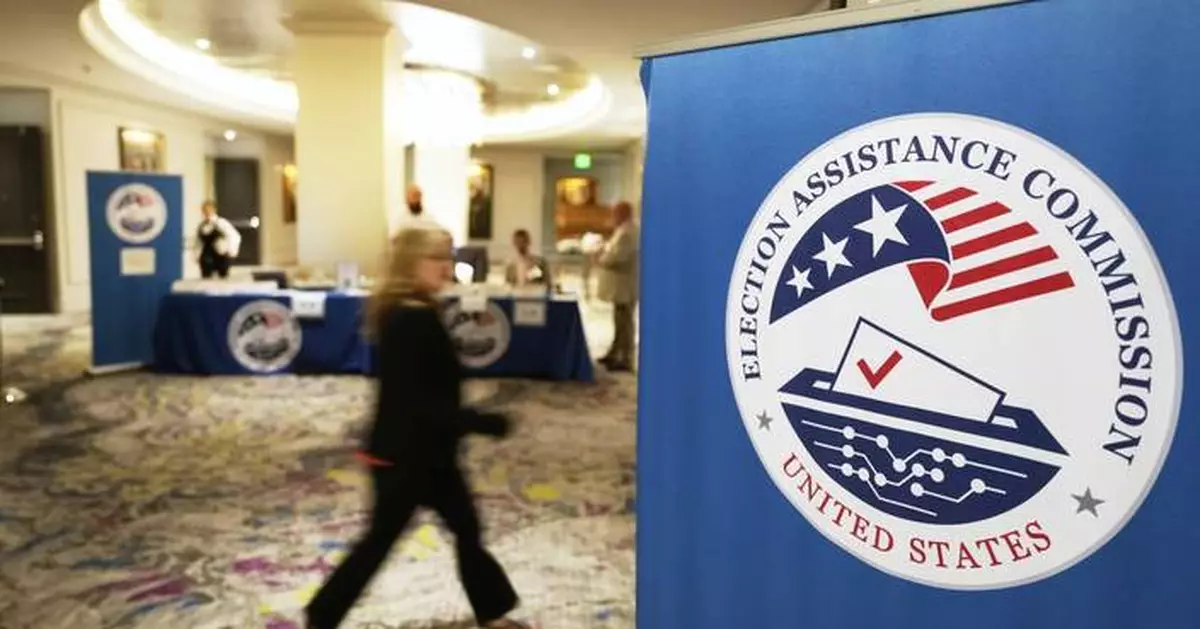
A meeting goer arrives for a U.S. Election Assistance Commission Standards Board in-person public meeting, Thursday, April 24, 2025, in Charlotte, N.C. (AP Photo/Chris Carlson)
Whether the Republican president can order an independent agency to act and whether the commission has the authority to do what Trump wants will likely be settled in court.
A federal judge on Thursday issued a preliminary injunction blocking the proof-of-citizenship requirement from moving forward while the legal challenges over Trump’s executive order play out.
Meanwhile, members of the commission’s Standards Board – a bipartisan advisory group of election officials from every state – met in North Carolina for its annual meeting. It was among the first conversations held by those who oversee the nation’s voting on the implications of Trump’s executive order.
The meeting was an opportunity for election officials to ask the four EAC commissioners about Trump’s executive order and share their concerns about its effects on election administration and voting.
“I can see on your faces there’s a lot of concern in this room for this process and other aspects of it,” Commissioner Thomas Hicks said. “And I would highly encourage you to send comments to us on that.”
An election official from Utah raised concern about how Native American communities might be affected under a proof-of-citizenship requirement, while an election official from Florida asked how voting machine companies could be expected to respond when a voting system has yet to be certified to meet the latest guidelines, which were updated in 2021.
“And they’re going to what — ramp up production and provide voting equipment for all 50 states and five territories?” asked Paul Lux, elections supervisor in Okaloosa County.
Donald Palmer, chair of the Election Assistance Commission, sought to reassure election officials that the commission would weigh their concerns and encouraged them to continue sharing their thoughts.
“Wherever we end up in this process, my goal is to provide the least disruption to the states, to mitigate any impact on you and your voting systems,” Palmer told the group.
The court ruling temporarily blocking the commission from taking steps to implement the proof-of-citizenship requirement came in a consolidated group of lawsuits filed by voting rights groups and Democrats that challenged Trump's authority to order election changes.
“Our Constitution entrusts Congress and the States—not the President—with the authority to regulate federal elections,” wrote U.S. District Judge Colleen Kollar-Kotelly in the opinion.
The judge noted Congress was currently debating legislation on a proof-of-citizenship requirement when registering to vote in federal elections and “no statutory delegation of authority to the Executive Branch permits the President to short-circuit Congress’s deliberative process by executive order.”
In response to the court ruling, Palmer said the agency would comply and was “committed to serving election officials and voters."
Maine's chief election official, Secretary of State Shenna Bellows, was at Thursday's meeting in North Carolina and welcomed the judge's decision.
“Everyone agrees that only citizens should vote in federal elections," said Bellows, a Democrat. "And the Trump executive order was an unworkable and unconstitutional attempt to limit voting rights.”
Two separate groups of Democratic state officials have also filed lawsuits, and those cases are pending.
The Constitution says it’s up to states to determine the “times, places and manner” of how elections are run, while Congress has the power to “make or alter” regulations for presidential and congressional elections. It does not grant the president any authority over how elections are administered.
Congress created the Election Assistance Commission after the 2000 presidential election, which included a contested outcome in Florida, to help states update their voting equipment.
Under the 2002 law, the commission was charged with distributing federal money for new voting equipment, creating voluntary guidelines for voting systems, establishing a federal testing and certification program for them, and overseeing the national voter registration form. It also has worked closely with the states to gather an array of data and share ideas on how to run elections more efficiently.
Trump, who continues to make false claims about the 2020 presidential election, instructed the commission to “take appropriate action” within 30 days to require documentary proof of citizenship on the national voter registration form. The order outlines acceptable documents as a U.S. passport, a REAL ID-compliant driver’s license or official military ID that “indicates the applicant is a citizen,” or a government-issued photo ID accompanied by proof of citizenship.
Both the process for updating the national voter registration form and making changes to the nation’s voluntary voting system guidelines are outlined in federal law. For the form, that involves getting feedback from state election officials and from the agency’s advisory boards. The process for the voting system guidelines also includes a period for public comment and a hearing.
The requirement has caused widespread concern that it will disenfranchise millions of voters who don’t have a passport or ready access to their birth certificate or other documents that will prove their citizenship. Similar laws at the state level have caused disruptions, including during town elections last month in New Hampshire and in Kansas, where a since overturned law ended up blocking the voter registrations of 31,000 people who were citizens and otherwise eligible to vote.
Trump’s order also directed the Election Assistance Commission to “take all appropriate action to cease” federal money for any state that fails to use the form that includes the proof-of-citizenship requirement, though a handful of states are exempt under federal law from using the national form.
Some states would have to halt their practice of counting late-arriving mail ballots that are postmarked by Election Day. If they don’t, Trump’s executive order directs the commission to withhold election-related funding. Oregon and Washington have filed a separate lawsuit against the executive order, saying it would upend their elections because they rely entirely on mail voting.
Commissioner Thomas Hicks speaks during the U.S. Election Assistance Commission Standards Board in-person public meeting, Thursday, April 24, 2025, in Charlotte, N.C. (AP Photo/Chris Carlson)

Commissioner Thomas Hicks speaks during the U.S. Election Assistance Commission Standards Board in-person public meeting, Thursday, April 24, 2025, in Charlotte, N.C. (AP Photo/Chris Carlson)
Commissioner Thomas Hicks takes a picture during the U.S. Election Assistance Commission Standards Board in-person public meeting, Thursday, April 24, 2025, in Charlotte, N.C. (AP Photo/Chris Carlson)
Commissioner Donald Palmer speaks during a U.S. Election Assistance Commission Standards Board in-person public meeting, Thursday, April 24, 2025, in Charlotte, N.C. (AP Photo/Chris Carlson)
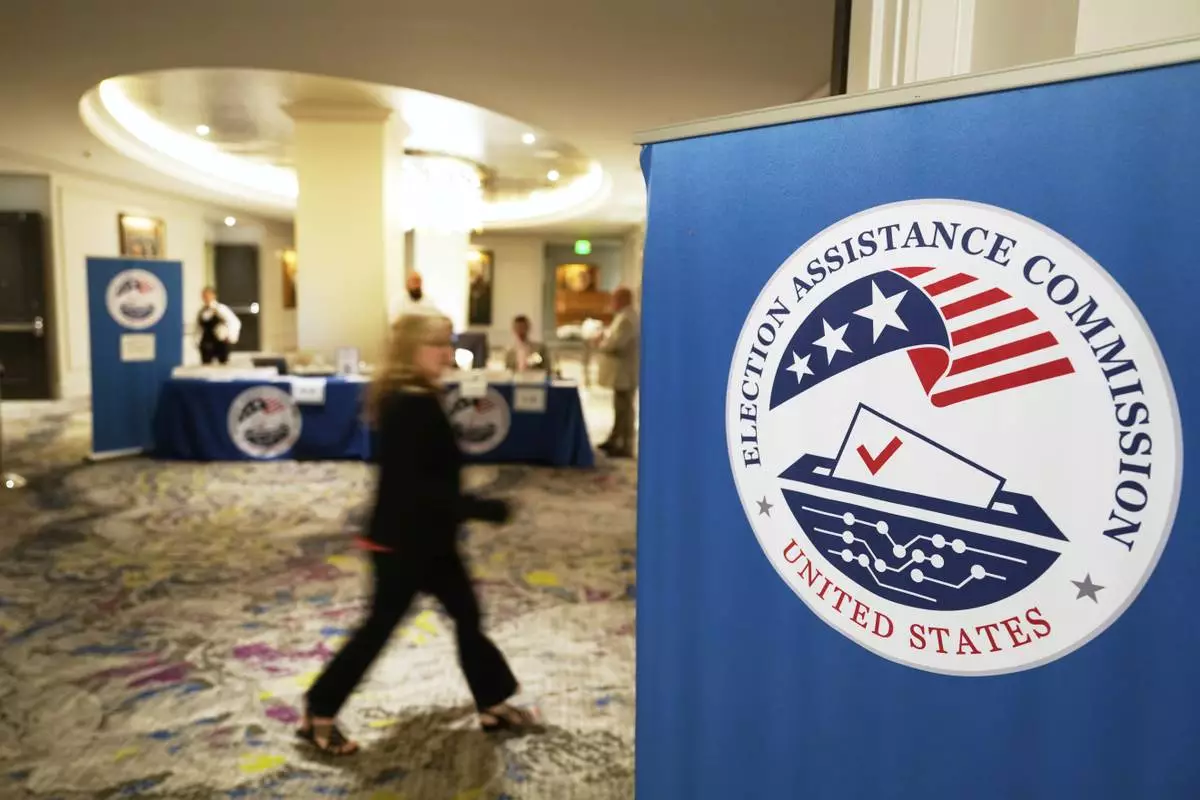
A meeting goer arrives for a U.S. Election Assistance Commission Standards Board in-person public meeting, Thursday, April 24, 2025, in Charlotte, N.C. (AP Photo/Chris Carlson)