SEATTLE--(BUSINESS WIRE)--Apr 24, 2025--
Automate attendees entering Olis Robotics’ booth #3748 in Detroit, May 12-15, will be the first to experience a future in which their mobile device becomes the gateway to remotely managing an automation cell.
This press release features multimedia. View the full release here: https://www.businesswire.com/news/home/20250424486876/en/
“We’re incredibly excited to show visitors how easy it is now to safely, inexpensively and securely connect their mobile phone or tablet directly to an industrial controller (PLC) without any additional hardware required,” says CEO of Olis Robotics, Fredrik Ryden.
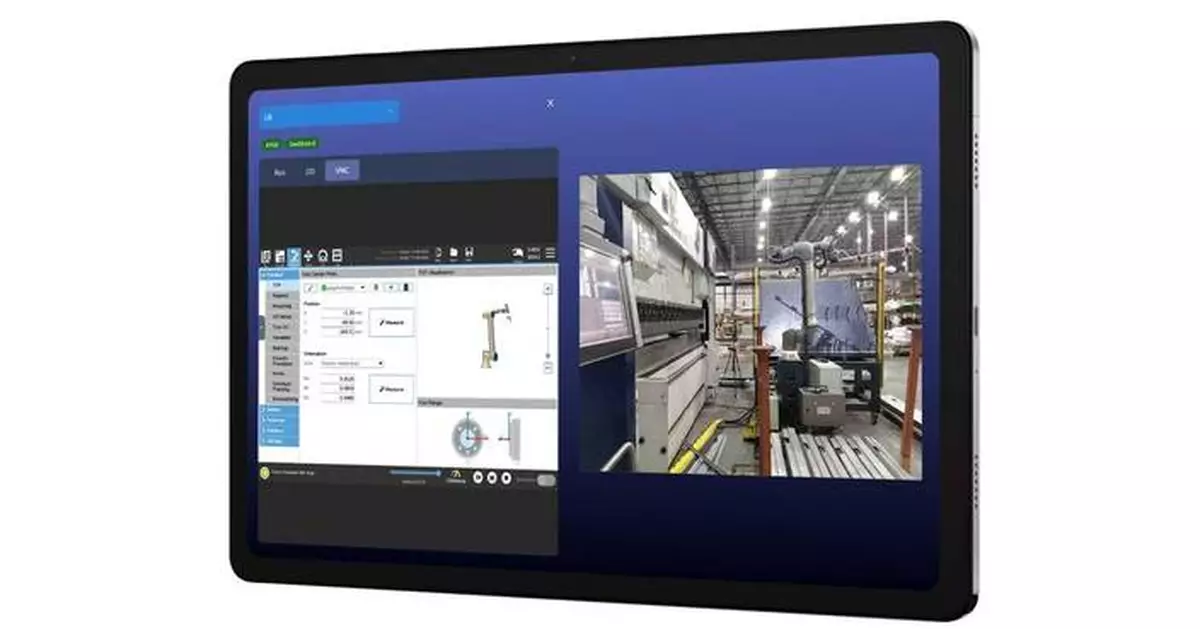
By connecting their mobile device to a PLC through the new Olis app, attendees can experience how easy it is to get going with Olis. They will also be able to remotely control a robot arm and view live video of a remote robot with PLC/telemetry data overlaid, enabling users to diagnose automation issues instantly from anywhere in the world.
Complete picture of what went wrong
The Olis app synchronizes real-time video with system logs, providing a complete picture of what went wrong. “With remote access to the automation cell, engineers can resolve problems faster and keep production running smoothly without unnecessary guesswork and travel,” says Ryden.
Full set-up takes less than five minutes - including a simple online purchase - making it an efficient retrofit for legacy automation systems. Users simply download the Olis app onto an Android tablet or phone and connect an ethernet connection to the controller. From there, they can configure IP addresses and start collecting diagnostic data.
In addition to receiving synchronized telemetry and video in parallel, engineers can set up alerts regarding irregular activity before it escalates into a costly hard stop. The Olis app also supports screen-sharing functionality, enabling troubleshooting teams to collaborate in real-time.
Mid Atlantic Machinery among early adopters
Mid Atlantic Machinery Automation is one of the companies already benefiting from using the Olis app. “Deploying the Olis app on an Android tablet is the easiest way to add diagnostics capabilities to our machines,” says Josh Mayse, VP and Co-founder of Mid Atlantic. “This helps our service team manage our rapidly growing install base. At Mid Atlantic, the app is being used in press brake tending applications, where it continuously monitors performance and operational data. What's more, customers no longer need to invest in industrial PCs — they can now access the entire automation cell directly through a mobile device, making setup and support significantly more streamlined.”
For customized workflows, users can set up special tags and filters to customize Olis to their operational needs enabling system integrators to assess situations remotely, minimize travel and troubleshoot more efficiently.
“Instead of reactive maintenance and lengthy troubleshooting cycles, the Olis app enables businesses to take a proactive, predictive approach to maintenance and tackle troubleshooting issues quickly, ensuring minimal disruption to production following unexpected downtime,” says the Olis CEO.
Download imageshere.
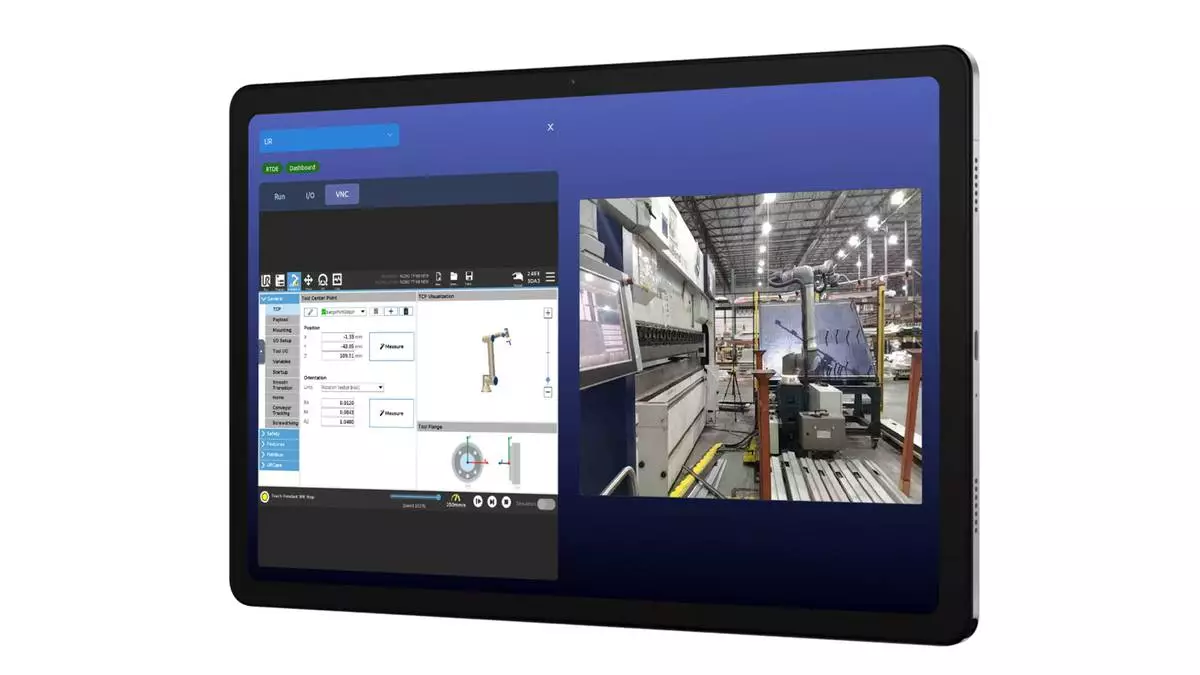
After setting up an Android device with the Olis app in a robotic cell in Texas, Mid Atlantic Machinery Automation can now assist their customer faster by remotely monitor, diagnose and troubleshoot from their headquarters in Pennsylvania.
VILNIUS, Lithuania (AP) — Nobel Peace Prize laureate Ales Bialiatski arrived for an interview with The Associated Press on Sunday in the Lithuanian capital, Vilnius, direct from a dentist appointment.
The 63-year-old veteran human rights advocate was experiencing a return to daily life after more than four years behind bars in Belarus. He was suddenly released on Saturday.
Medical assistance in the penal colony where he served his 10-year sentence was very limited, he said in his first sit-down interview after release. There was only one option of treating dental problems behind bars — pulling teeth out, he said.
Bialiatski recalled how in the early hours of Saturday he was in an overcrowded prison cell in the Penal Colony no. 9 in eastern Belarus when suddenly he was ordered to pack his things. Blindfolded, he was driven somewhere: “They put a blindfold over my eyes. I was looking occasionally where we were headed, but only understood that we’re heading toward west.”
In Vilnius, he hugged his wife for the first time in years.
“When I crossed the border, it was as if I emerged from the bottom of the sea and onto the surface of the water. You have lots of air, sun, and back there you were in a completely different situation — under pressure,” he told the AP.
Bialiatski was one of 123 prisoners released by Belarus in exchange for the U.S. lifting sanctions imposed on the Belarusian potash sector, crucial for the country’s economy.
A close ally of Russia, Belarus has faced Western isolation and sanctions for years. Its authoritarian President Alexander Lukashenko has ruled the nation of 9.5 million with an iron fist for more than three decades, and the country has been repeatedly sanctioned by the West for its crackdown on human rights and for allowing Moscow to use its territory in the 2022 invasion of Ukraine.
In an effort at a rapprochement with the West, Belarus has released hundreds of prisoners since July 2024.
Bialiatski won the Nobel Peace Prize in 2022 along with the prominent Russian rights group Memorial and Ukraine’s Center for Civil Liberties. Awarded the prize while in jail awaiting trial, he was later convicted of smuggling and financing actions that violated the public order — charges widely denounced as politically motivated — and sentenced to 10 years in prison.
The veteran advocate, who founded Belarus’ oldest and most prominent human rights group, Viasna, was imprisoned at a penal colony in Gorki in a facility notorious for beatings and hard labor.
He told AP that he wasn’t beaten behind bars — his status as a Nobel Peace Prize laureate, perhaps, protected him from physical violence, he said.
But he said he went through much of what all political prisoners in Belarus go through: solitary confinement, arbitrary punishment for minor infractions, not being able to see your loved ones, rarely being able to receive letters.
“We can definitely talk about inhumane treatment, about creating conditions that violate your integrity and some kind of human dignity,” he said.
Bialiatski is concerned about two of his Viasna colleagues, Marfa Rabkova and Valiantsin Stefanovic, who remain imprisoned, and about all 1,110 political prisoners still behind bars, according to Viasna.
“Despite the fact that prisoners are being freed right now, new people regularly end up behind bars. Some kind of schizofrenia is taking place: with one hand, the authorities release Belarusian political prisoners, and with the other they take in more prisoners to trade, to maintain this abnormal situation in Belarus,” he said.
The advocate vows to continue to fight for the release of all political prisoners, adding: “There is no point in freeing old ones if you're taking in new ones.”
He intends to use his status as a Nobel Peace Prize laureate — of which he learned in prison and couldn't initially believe it — to help Belarusians “who chose freedom.”
“This prize was given not to me as a person, but to me as a representative of the Belarusian civil society, of the millions of Belarusians who expressed will and desire for democracy, for freedom, for human rights, for changing this stale situation in Belarus,” he told AP.
“And it was a signal to the Belarusian authorities, too, that it's time to change something in the life of the Belarusians.”
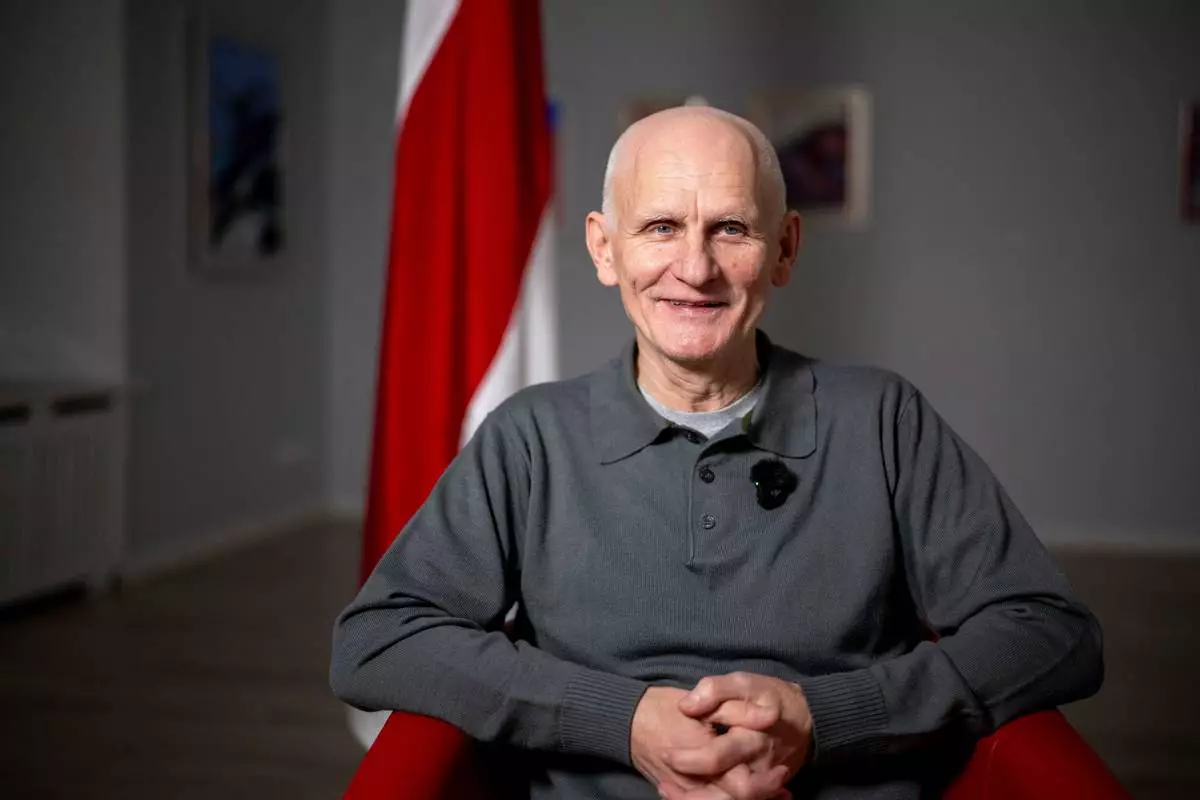
Nobel Peace Prize laureate Ales Bialiatski, one of the Belarusian prisoners released on Saturday, smiles during an interview with the Associated Press in Vilnius, Lithuania, on Sunday, Dec. 14, 2025. (AP Photo/Mindaugas Kulbis)
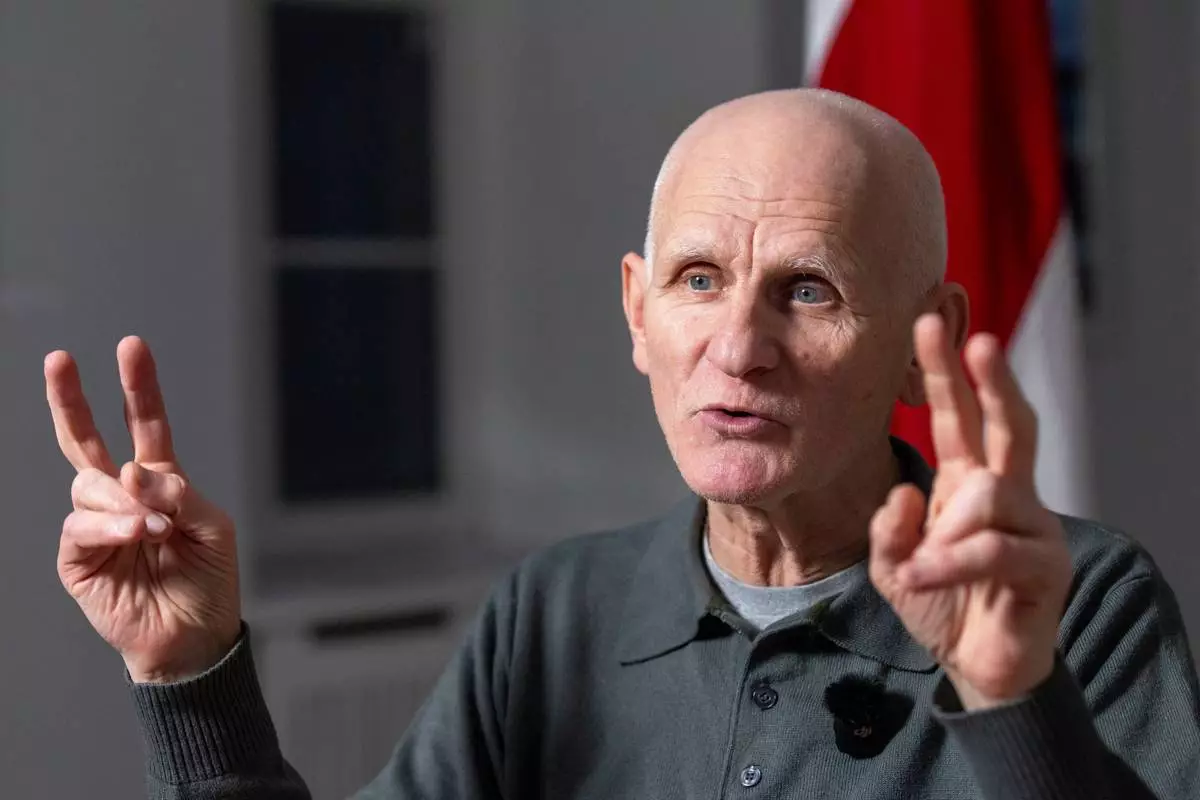
Nobel Peace Prize laureate Ales Bialiatski, one of the Belarusian prisoners released on Saturday, gestures during an interview with the Associated Press in Vilnius, Lithuania, on Sunday, Dec. 14, 2025. (AP Photo/Mindaugas Kulbis)
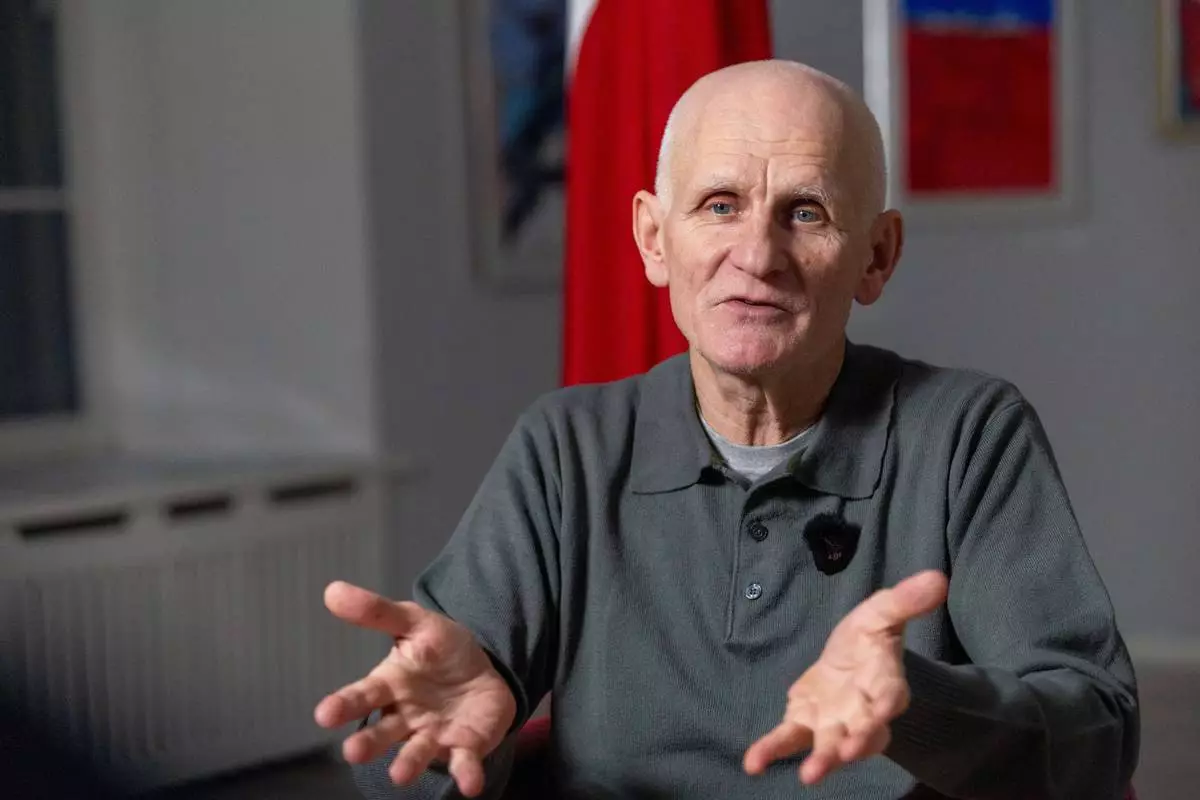
Nobel Peace Prize laureate Ales Bialiatski, one of the Belarusian prisoners released on Saturday, gestures during an interview with the Associated Press in Vilnius, Lithuania, on Sunday, Dec. 14, 2025. (AP Photo/Mindaugas Kulbis)
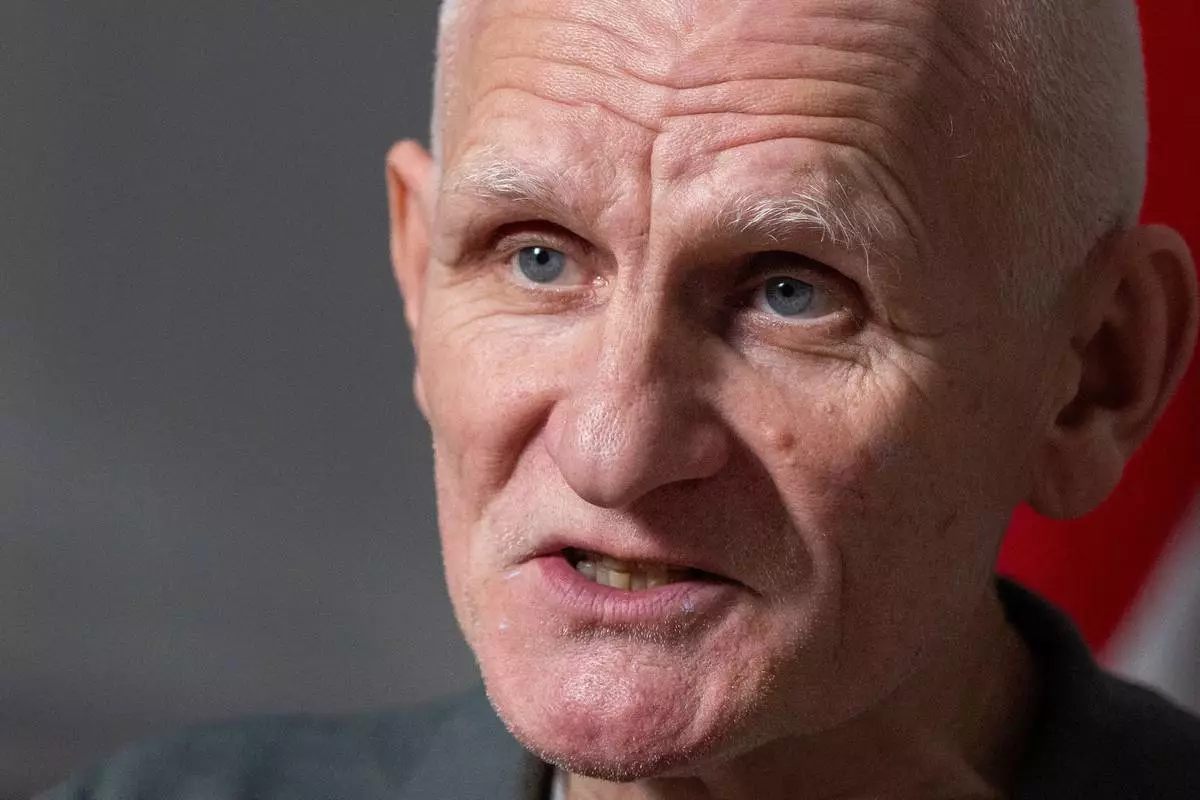
Nobel Peace Prize laureate Ales Bialiatski, one of the Belarusian prisoners released on Saturday, speaks during an interview with the Associated Press in Vilnius, Lithuania, on Sunday, Dec. 14, 2025. (AP Photo/Mindaugas Kulbis)