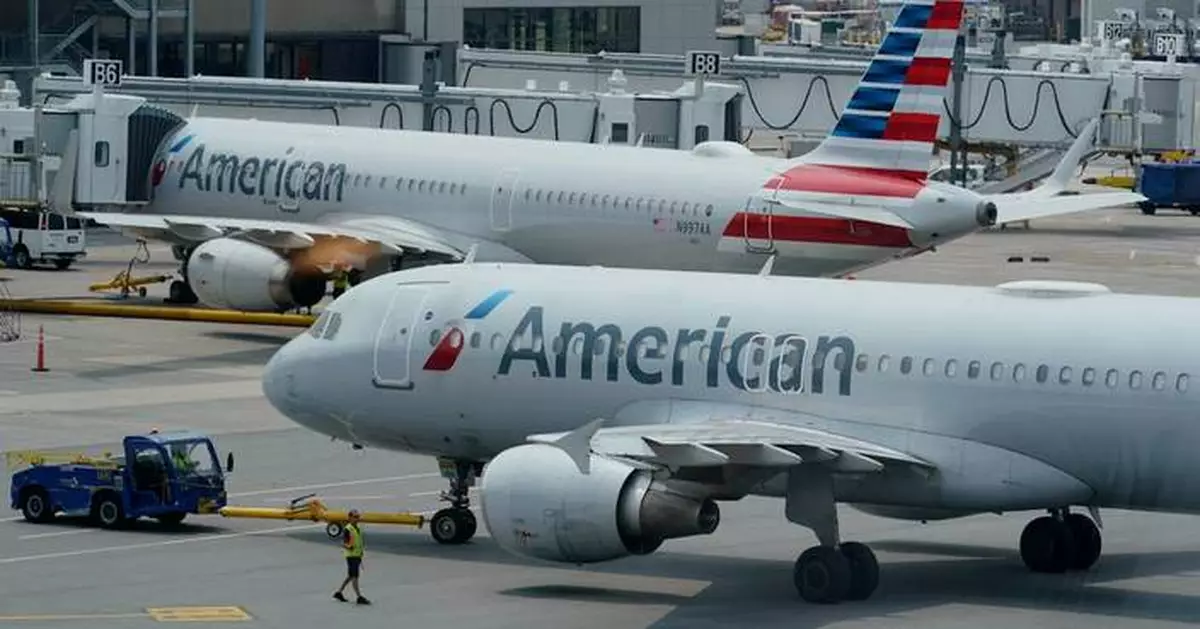
Major U.S. airlines are reducing their flight schedules and revising or withdrawing their profit outlooks for the year due to less domestic travel demand as sentiment about the national and global economies sours.
American Airlines pulled its financial guidance for 2025 on Thursday, joining rivals Southwest and Delta in declaring the economic outlook too uncertain to provide full-year forecasts. All three airlines cited weakening sales among economy class leisure travelers.
“We came off a strong fourth quarter, saw decent business in January, and really domestic leisure travel fell off considerably as we went into the February time frame,” American Airlines CEO Robert Isom told CNBC.
Consumer reluctance to book vacations would correspond with a new poll that showed many people fear the U.S. is being steered into a recession and that President Donald Trump's broad and haphazardly enforced tariffs will cause prices to rise.
There's also increasing concerns about international travelers. Michael Feroli, chief U.S. economist at J.P. Morgan, said in a client note that anti-American sentiment could be spurring a travel dropoff, with data showing that international visitors to the U.S. are running about 5% lower than a year ago.
“In recent weeks there have been numerous news stories about tourists canceling trips to the U.S. in protest of the perceived heavy-handedness of recent trade policies,” he wrote. “This points to potentially another channel to consider in assessing the effects of tariffs on economic activity.”
Some economic indicators point to expectations of a slowdown. Sales of previously occupied U.S. homes slowed in March, and U.S. consumer sentiment plunged in April, the fourth consecutive month of declines. However, fears of a downturn have not translated into layoffs.
Trump announced sweeping tariffs on April 2 that triggered panic in financial markets and generated recession fears, leading consumers and businesses to start pulling back on spending, which includes travel. The president put a partial 90-day hold on the import taxes but increased his already steep tariffs against China.
Beijing increased its import tax on American goods to 125% in retaliation. On Thursday China denied Trump’s assertion that the two sides were involved in active negotiations to end or mitigate their trade war.
American Airlines said it would give an update on its full-year guidance “as the economic outlook becomes clearer.” Airline executives said sales among business travelers and for premium seats on long-haul international flights remained solid.
Southwest Airlines reported late Wednesday that it would trim its flight schedule for the second half of the year due to lower demand. The company also said it could not reaffirm its 2025 and 2026 outlooks for earnings before interest and taxes, given “current macroeconomic uncertainty.”
United Airlines last week gave two different financial forecasts for how it may perform this year, one if there’s a recession and one if not. The airline said it planned to reduce its scheduled domestic flights by 4% starting in July in response to lower-than-expected demand for economy fare tickets.
“We think there is a reasonable chance things can weaken from here,” United CEO Scott Kirby said.
Delta Air Lines, the nation’s most profitable carrier, predicted as recently as January that the company was on track for the best financial year in its history. Earlier this month, the airline scratched its performance expectations for 2025 and said it was putting a planned flight schedule expansion on hold.
“With broad economic uncertainty around global trade, growth has largely stalled,” Delta CEO Ed Bastian said at the time. “In this slower-growth environment, we are protecting margins and cash flow by focusing on what we can control. This includes reducing planned capacity growth in the second half of the year.”
The parent companies of Frontier Airlines and Alaska Airlines also pulled their 2025 guidance.
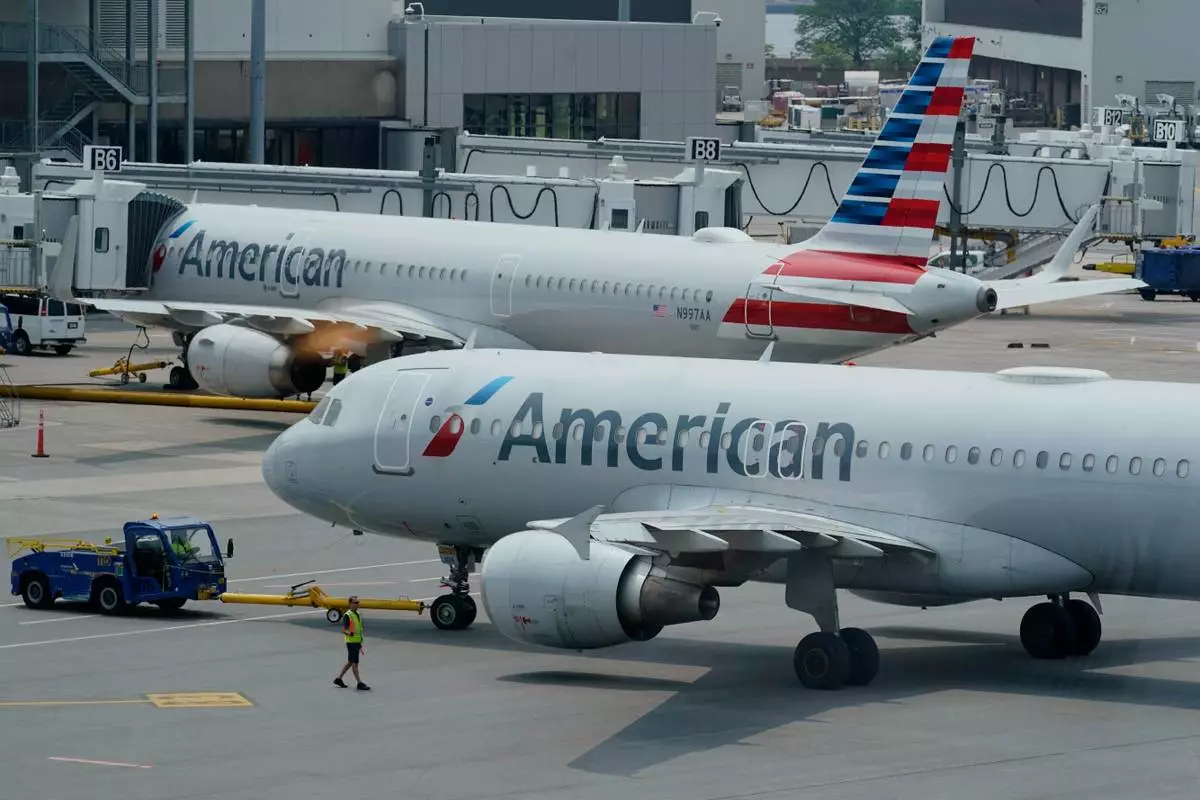
FILE - American Airlines passenger jets prepare for departure, Wednesday, July 21, 2021, near a terminal at Boston Logan International Airport, in Boston. (AP Photo/Steven Senne, File)
NEW YORK (AP) — Thousands of nurses in three hospital systems in New York City went on strike Monday after negotiations through the weekend failed to yield breakthroughs in their contract disputes.
The strike was taking place at The Mount Sinai Hospital and two of its satellite campuses, with picket lines forming. The other affected hospitals are NewYork-Presbyterian and Montefiore Medical Center in the Bronx.
About 15,000 nurses are involved in the strike, according to New York State Nurses Association.
“After months of bargaining, management refused to make meaningful progress on core issues that nurses have been fighting for: safe staffing for patients, healthcare benefits for nurses, and workplace violence protections,” the union said in a statement issued Monday. “Management at the richest hospitals in New York City are threatening to discontinue or radically cut nurses’ health benefits.”
The strike, which comes during a severe flu season, could potentially force the hospitals to transfer patients, cancel procedures or divert ambulances. It could also put a strain on city hospitals not involved in the contract dispute, as patients avoid the medical centers hit by the strike.
The hospitals involved have been hiring temporary nurses to try and fill the labor gap during the walkout, and said in a statement during negotiations that they would “do whatever is necessary to minimize disruptions.” Montefiore posted a message assuring patients that appointments would be kept.
“NYSNA’s leaders continue to double down on their $3.6 billion in reckless demands, including nearly 40% wage increases, and their troubling proposals like demanding that a nurse not be terminated if found to be compromised by drugs or alcohol while on the job," Montefiore spokesperson Joe Solmonese said Monday after the strike had started. "We remain resolute in our commitment to providing safe and seamless care, regardless of how long the strike may last.”
New York-Presbyterian accused the union of staging a strike to “create disruption,” but said in a statement that it has taken steps to ensure patients receive the care they need.
"We’re ready to keep negotiating a fair and reasonable contract that reflects our respect for our nurses and the critical role they play, and also recognizes the challenging realities of today’s healthcare environment,” the statement said.
The work stoppage is occurring at multiple hospitals simultaneously, but each medical center is negotiating with the union independently. Several other hospitals across the city and in its suburbs reached deals in recent days to avert a possible strike.
The nurses’ demands vary by hospital, but the major issues include staffing levels and workplace safety. The union says hospitals have given nurses unmanageable workloads.
Nurses also want better security measures in the workplace, citing incidents like a an incident last week, when a man with a sharp object barricaded himself in a Brooklyn hospital room and was then killed by police.
The union also wants limitations on hospitals’ use of artificial intelligence.
The nonprofit hospitals involved in the negotiations say they’ve been working to improve staffing levels, but say the union’s demands overall are too costly.
Nurses voted to authorize the strike last month.
Both New York Gov. Kathy Hochul and Mayor Zohran Mamdani had expressed concern about the possibility of the strike. As the strike deadline neared, Mamdani urged both sides to keep negotiating and reach a deal that “both honors our nurses and keeps our hospitals open.”
“Our nurses kept this city alive through its hardest moments. Their value is not negotiable,” Mamdani said.
State Attorney General Letitia James voiced similar support, saying "nurses put their lives on the line every day to keep New Yorkers healthy. They should never be forced to choose between their own safety, their patients’ well-being, and a fair contract.”
The last major nursing strike in the city was only three years ago, in 2023. That work stoppage, at Mount Sinai and Montefiore, was short, lasting three days. It resulted in a deal raising pay 19% over three years at those hospitals.
It also led to promised staffing improvements, though the union and hospitals now disagree about how much progress has been made, or whether the hospitals are retreating from staffing guarantees.
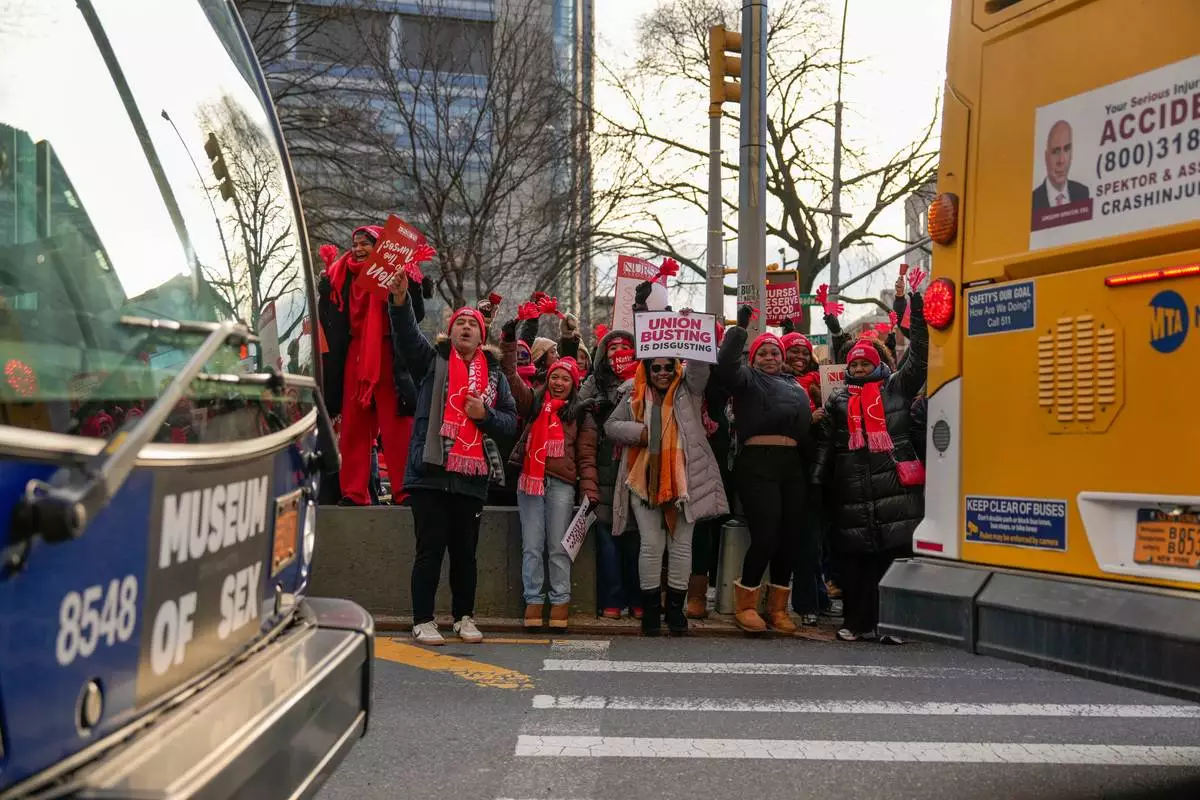
Nurses strike outside New York-Presbyterian Hospital, Monday, Jan. 12, 2026, in New York. (AP Photo/Yuki Iwamura)
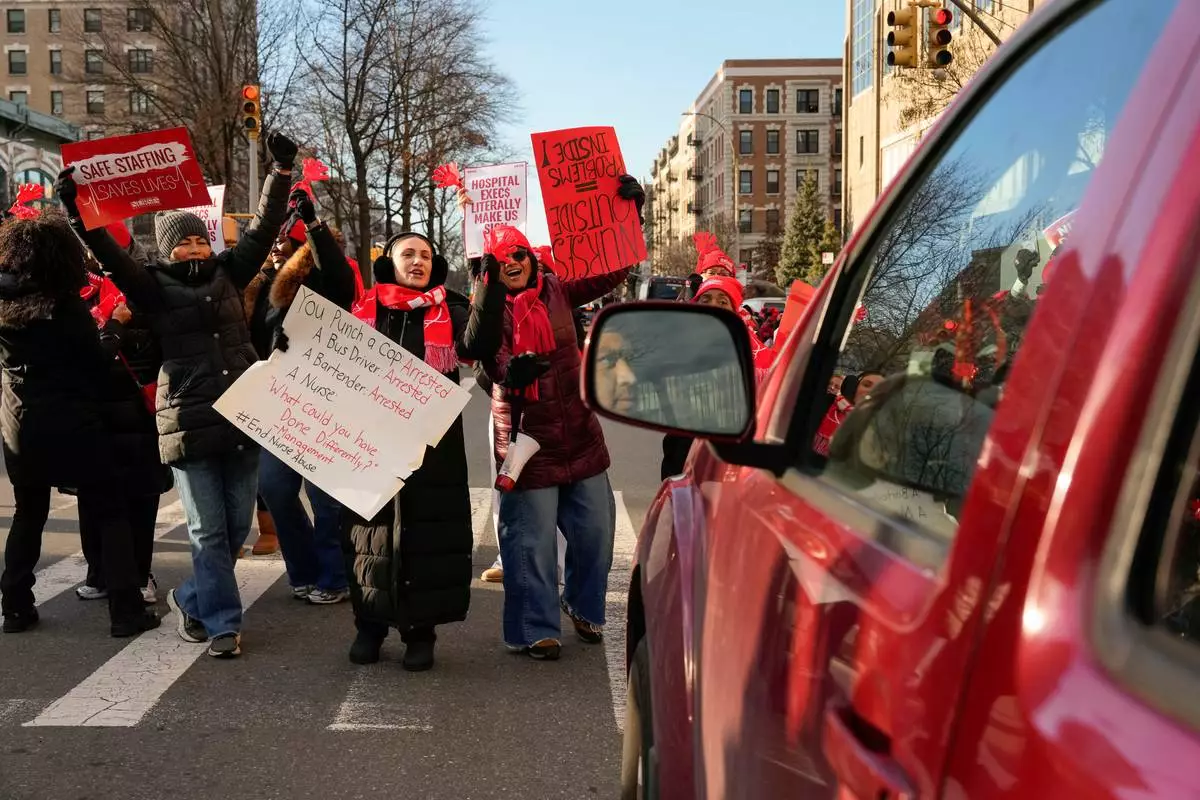
Nurses strike outside New York-Presbyterian Hospital, Monday, Jan. 12, 2026, in New York. (AP Photo/Yuki Iwamura)
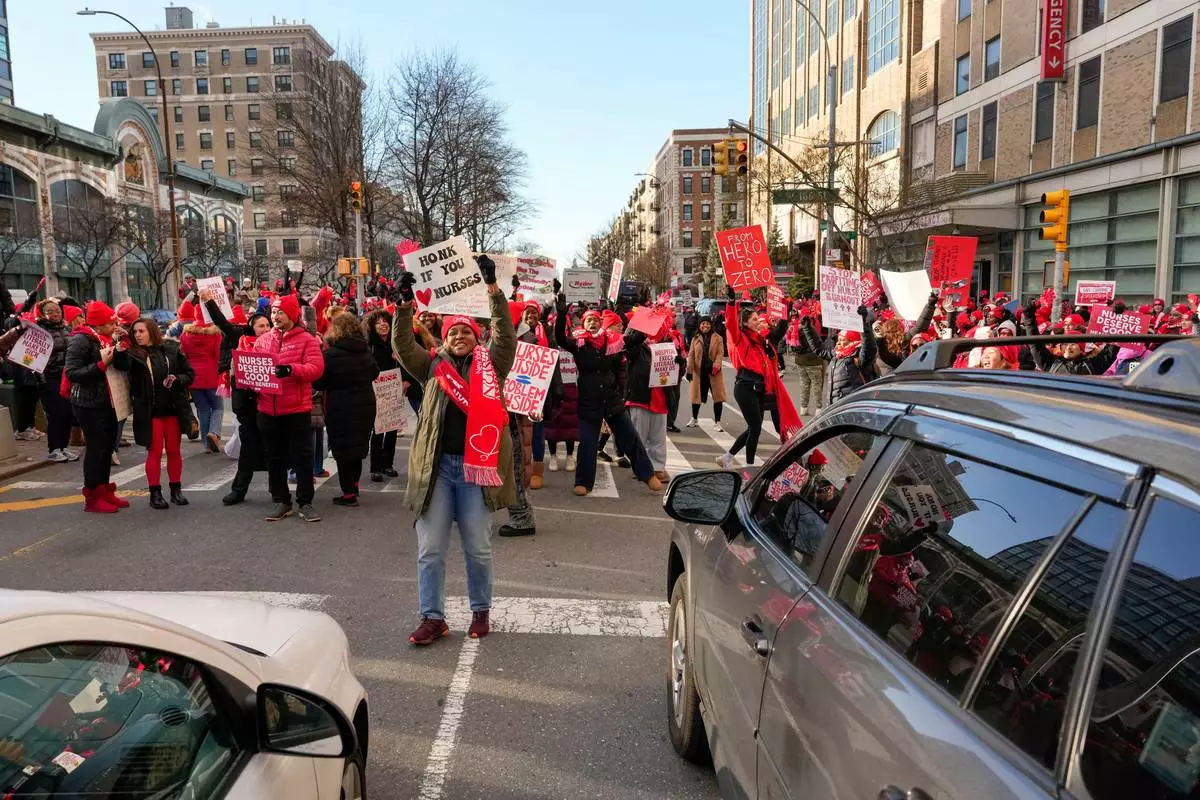
Nurses strike outside New York-Presbyterian Hospital, Monday, Jan. 12, 2026, in New York. (AP Photo/Yuki Iwamura)
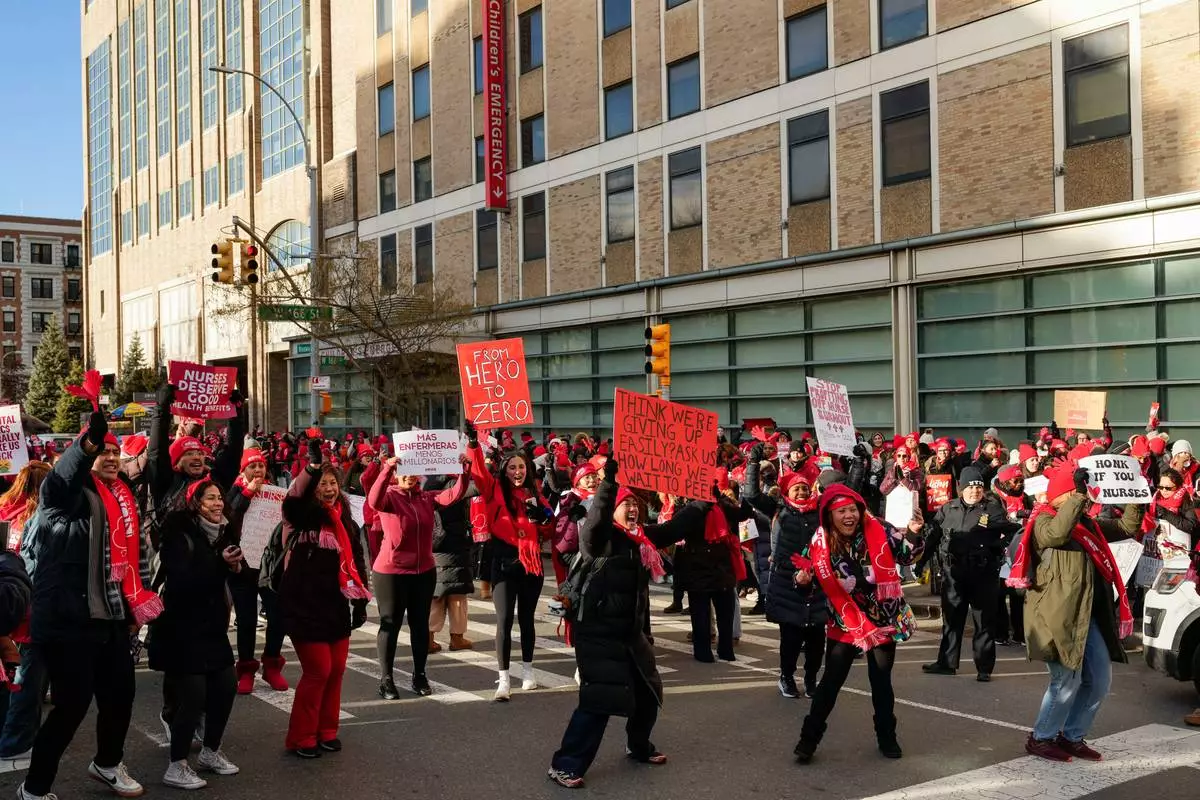
Nurses strike outside New York-Presbyterian Hospital, Monday, Jan. 12, 2026, in New York. (AP Photo/Yuki Iwamura)
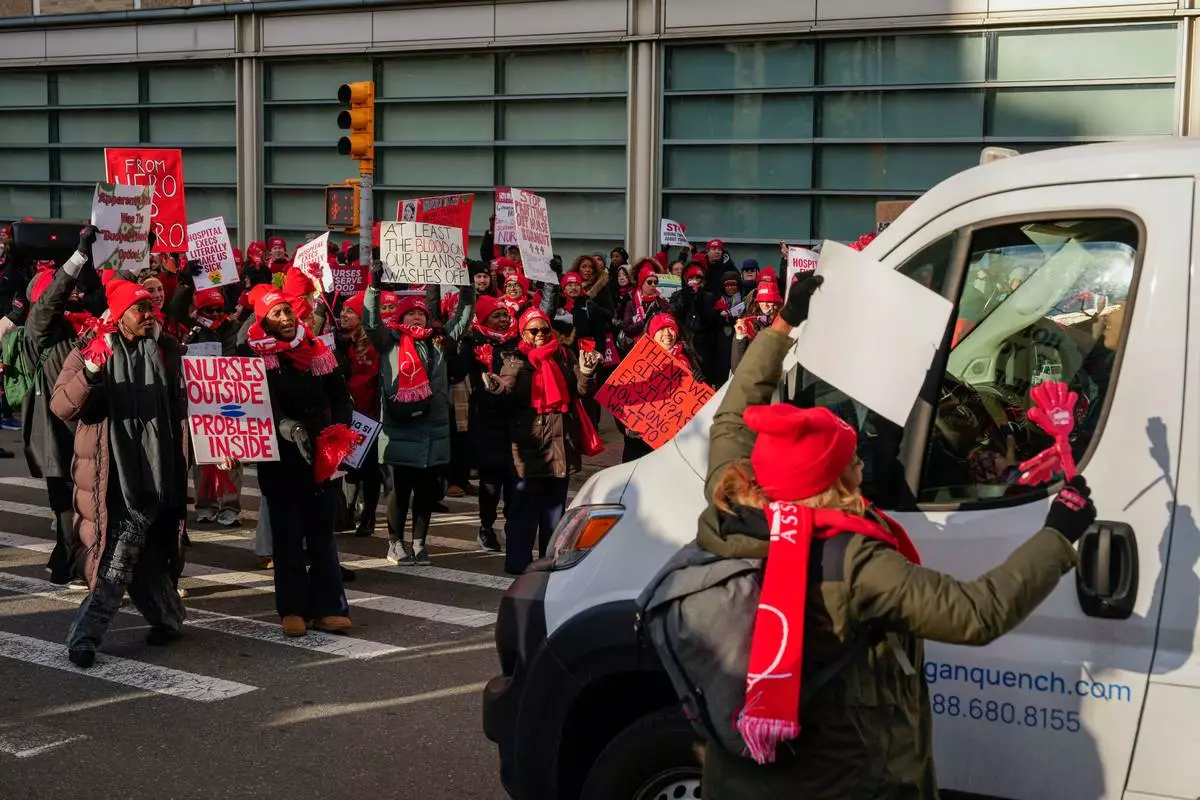
Nurses strike outside New York-Presbyterian Hospital, Monday, Jan. 12, 2026, in New York. (AP Photo/Yuki Iwamura)
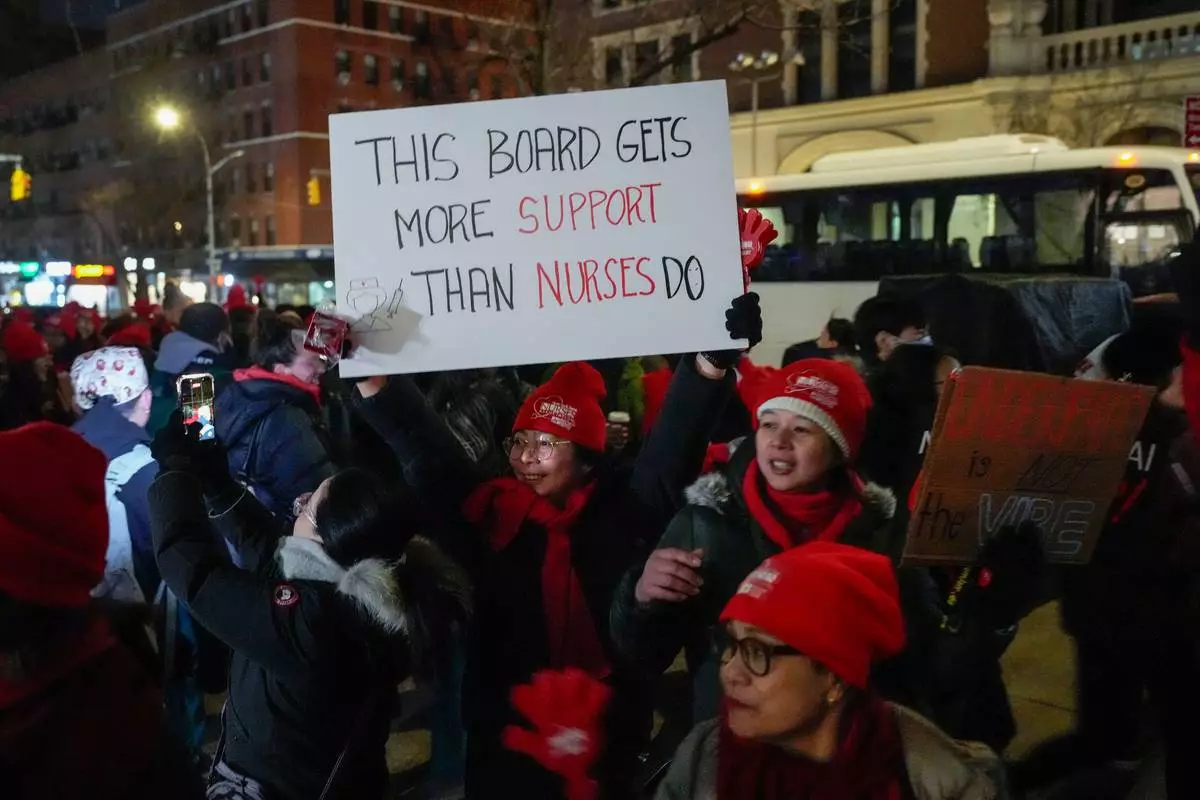
Nurses strike outside Mount Sinai West Hospital, Monday, Jan. 12, 2026, in New York. (AP Photo/Yuki Iwamura)
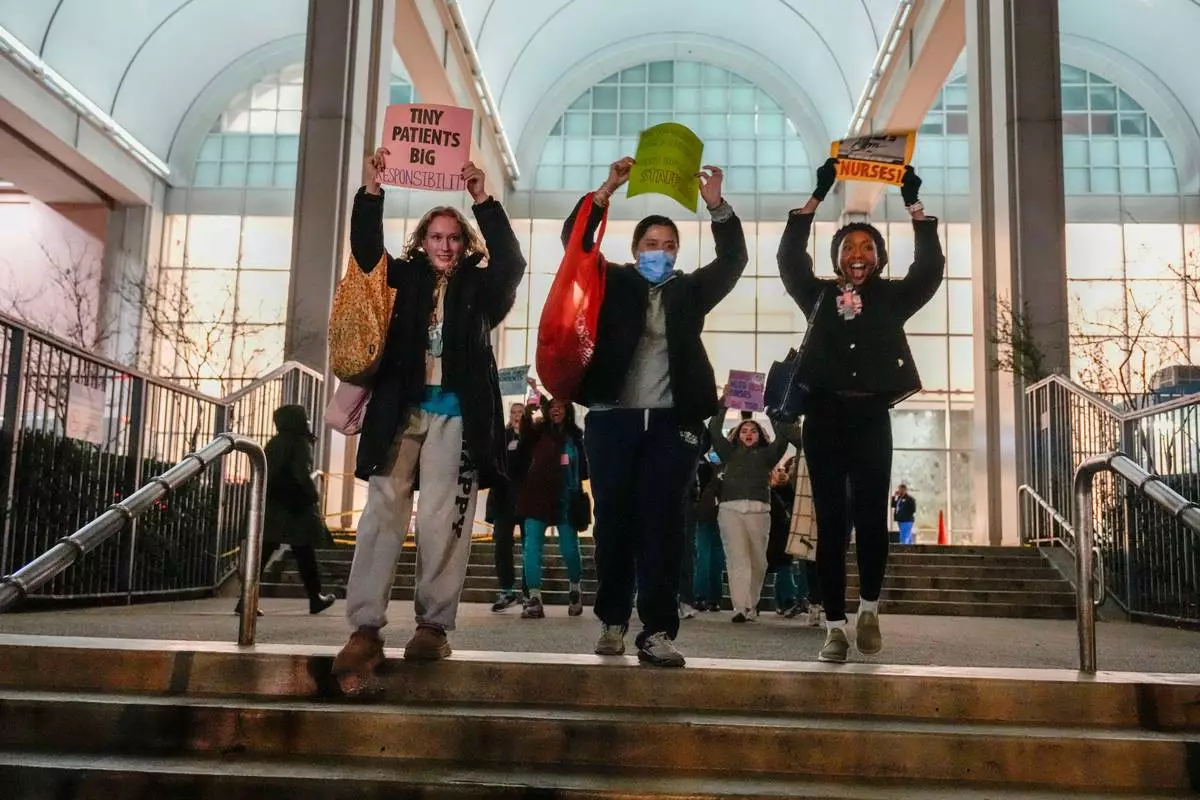
Nurses strike outside Mount Sinai West Hospital, Monday, Jan. 12, 2026, in New York. (AP Photo/Yuki Iwamura)
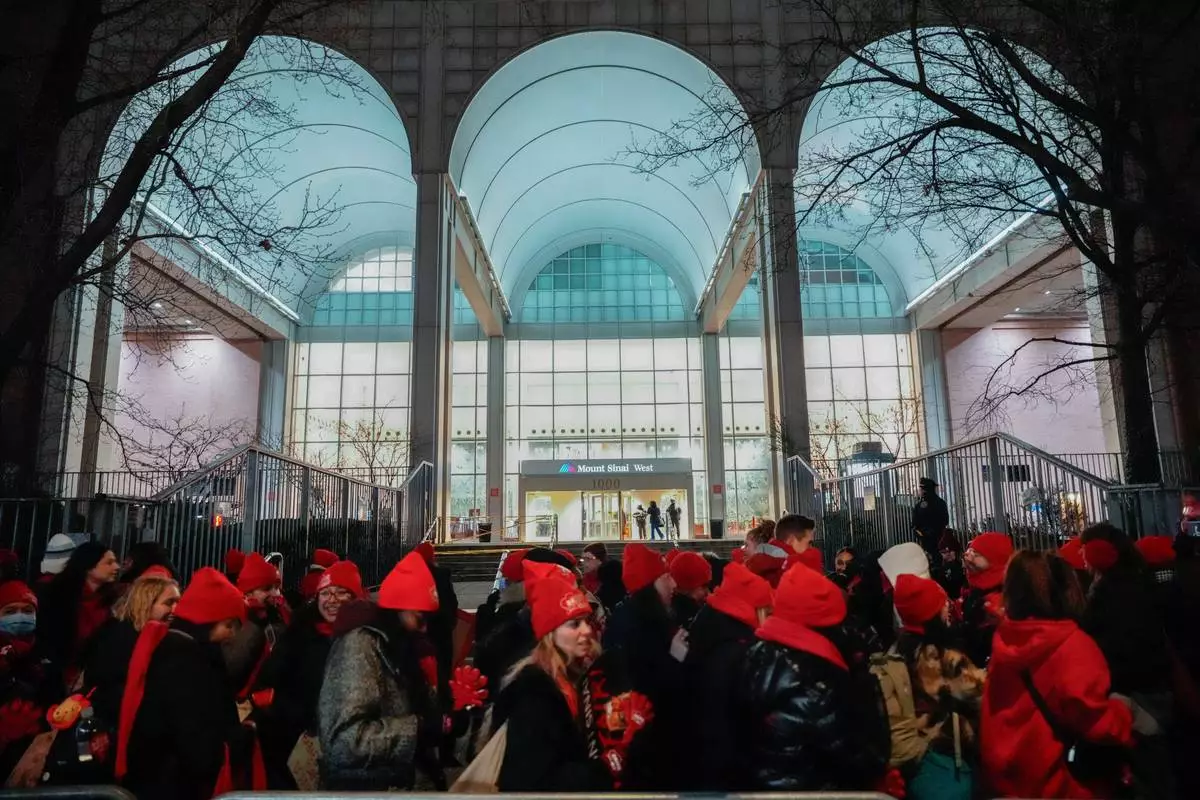
Nurses strike outside Mount Sinai West Hospital, Monday, Jan. 12, 2026, in New York. (AP Photo/Yuki Iwamura)
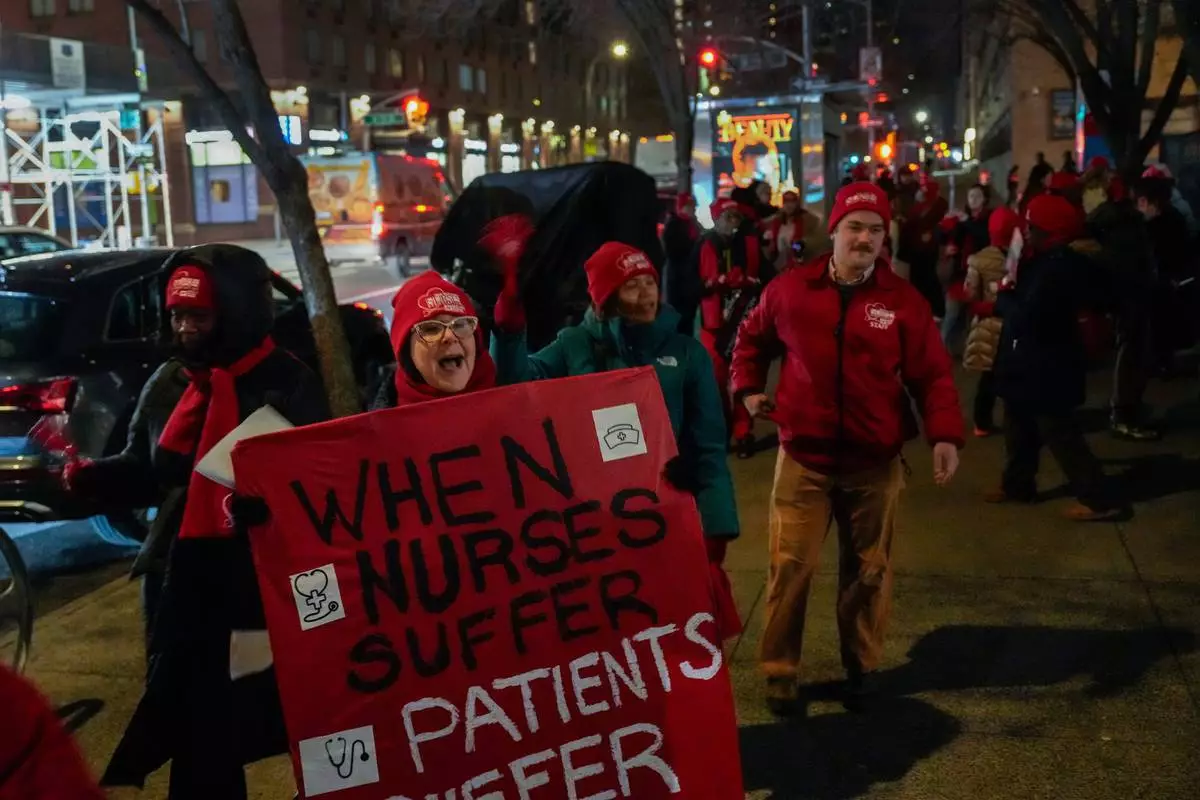
Nurses strike outside Mount Sinai West Hospital, Monday, Jan. 12, 2026, in New York. (AP Photo/Yuki Iwamura)

FILE - A medical worker transports a patient at Mount Sinai Hospital, April 1, 2020, in New York. (AP Photo/Mary Altaffer, File)