Skip to Content Facebook Feature Image

'Vladimir, STOP!': Trump makes an all-caps callout but will Putin hear it?

News

'Vladimir, STOP!': Trump makes an all-caps callout but will Putin hear it?
News

News

'Vladimir, STOP!': Trump makes an all-caps callout but will Putin hear it?

2025-04-25 04:59 Last Updated At:05:00

WASHINGTON (AP) — Even in the realm of Donald Trump's long-preferred style of punch-through-the-static communication, this was quite something.

On Thursday morning, a post on his Truth Social account exhorted Russian leader Vladimir Putin to end military strikes on the Ukrainian capital of Kyiv.

“Vladimir, STOP!”

Or, as the entire post went: “I am not happy with the Russian strikes on KYIV. Not necessary, and very bad timing. Vladimir, STOP! 5000 soldiers a week are dying. Lets get the Peace Deal DONE!”

The Republican president was reacting to Russia attacking Kyiv with an hourslong barrage of missiles and drones. At least 12 people were killed and 90 were injured in the deadliest assault on the city since last July. For Trump, trying to propel a U.S-led effort at a peace agreement, frustration is growing. He upbraided Ukrainian President Volodymyr Zelenskyy this week as well, though that was not on Truth Social.

Immediate analysis of Trump's social post focused on the geopolitical implications of the moment and the notion that Trump was talking tough to Putin, a leader to whom he has been accused of being overly deferential.

Other dynamics are at play as well.

Heads of state and government are typically called Mr. President or Madam Prime Minister — even, in public, even often by their equals. Trump's callout to simply “Vladimir” in a public forum stands out, although it is not uncommon for Trump to use first names when talking with world leaders. What Putin would think of such an approach is not clear.

Diplomacy's language has evolved over time into a mannered, workshopped machine. Part of Trump's brand and appeal has been to break out of such conventions.

Diplomacy was once conducted through formal letters and rare visits. No longer. But have we gotten to the point where social media — which on its face tends to feel more personal, more immediate, less like a diplomatic apparatus doing its work — is a legitimate tool for one leader to reach out to another? For Trump, it's often the opening move.

For years, Trump has used social media platforms — Twitter, X, Truth Social — to amplify his opinions, often through capital letters for emphasis. He has been banned, then reinstated from at least two platforms. He persists.

Finally, there's this: Odds are that not too many people in the world are telling Vladimir Putin to, simply, “STOP!” in such a casual way. But much of the world has been shouting versions of that message, without success, for the three-plus years since he sent Russian troops into Ukraine. Will this time be different?
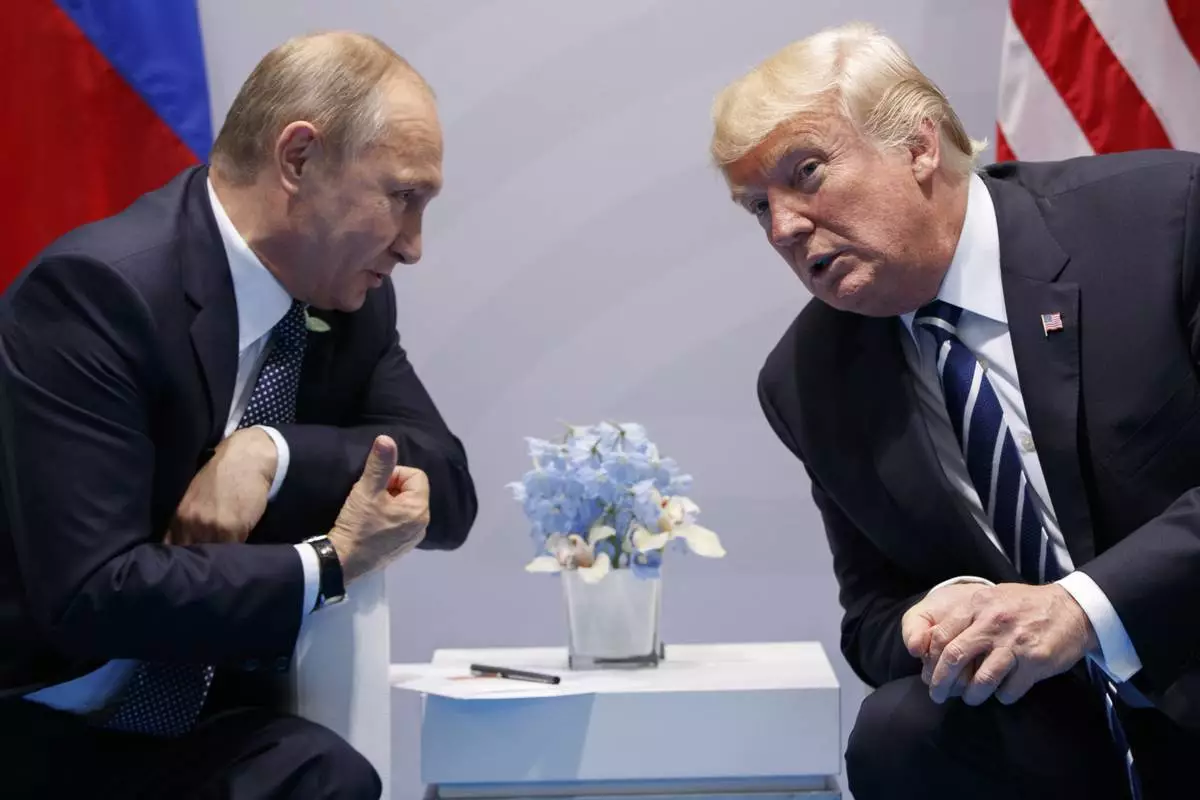
FILE - President Donald Trump, right, meets with Russian President Vladimir Putin at the G-20 Summit in Hamburg, July 7, 2017. (AP Photo/Evan Vucci, File)
FILE - President Donald Trump, right, meets with Russian President Vladimir Putin at the G-20 Summit in Hamburg, July 7, 2017. (AP Photo/Evan Vucci, File)

A Ukrainian drone strike killed one person and wounded three others in the Russian city of Voronezh, local officials said Sunday.

A young woman died overnight in a hospital intensive care unit after debris from a drone fell on a house during the attack on Saturday, regional Gov. Alexander Gusev said on Telegram.

Three other people were wounded and more than 10 apartment buildings, private houses and a high school were damaged, he said, adding that air defenses shot down 17 drones over Voronezh. The city is home to just over 1 million people and lies some 250 kilometers (155 miles) from the Ukrainian border.

The attack came the day after Russia bombarded Ukraine with hundreds of drones and dozens of missiles overnight into Friday, killing at least four people in the capital Kyiv, according to Ukrainian officials.

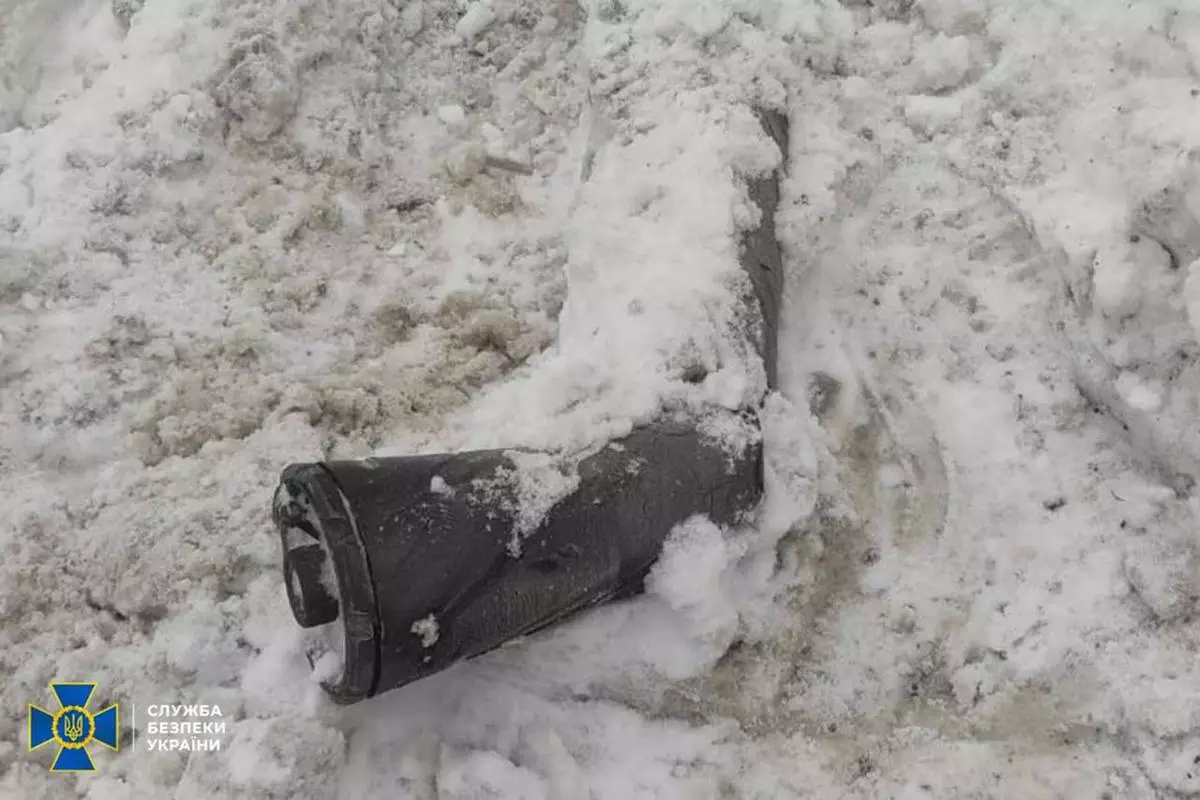
For only the second time in the nearly four-year war, Russia used a powerful new hypersonic missile that struck western Ukraine in a clear warning to Kyiv and NATO.

The intense barrage and the launch of the nuclear-capable Oreshnik missile followed reports of major progress in talks between Ukraine and its allies on how to defend the country from further aggression by Moscow if a U.S.-led peace deal is struck.

Ukrainian President Volodymyr Zelenskyy said Saturday in his nightly address that Ukrainian negotiators “continue to communicate with the American side.”

Chief negotiator Rustem Umerov was in contact with U.S. partners Saturday, he said.

Separately, Ukraine’s General Staff said Russia targeted Ukraine with 154 drones overnight into Sunday and 125 were shot down.

Follow the AP’s coverage of the war in Ukraine at https://apnews.com/hub/russia-ukraine

This photo provided by the Ukrainian Security Service on Friday, Jan. 9, 2026, shows a fragment believed to be a part of a Russian Oreshnik intermediate range hypersonic ballistic missile that hit the Lviv region. (Ukrainian Security Service via AP)

This photo provided by the Ukrainian Security Service on Friday, Jan. 9, 2026, shows a fragment believed to be a part of a Russian Oreshnik intermediate range hypersonic ballistic missile that hit the Lviv region. (Ukrainian Security Service via AP)

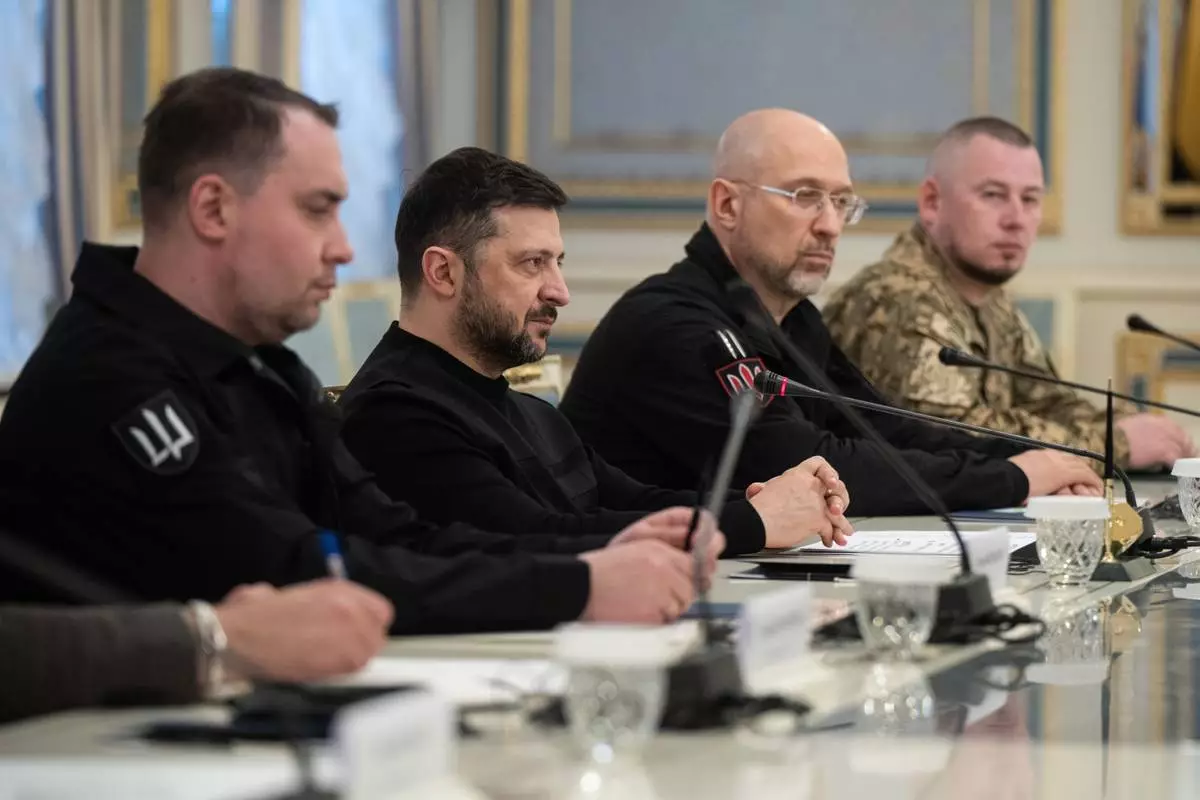
President of Ukraine Volodymyr Zelenskyy, second left, listens to British Defense Secretary John Healey during their meeting in Kyiv, Ukraine, Friday, Jan. 9, 2026. (AP Photo/Danylo Antoniuk)

President of Ukraine Volodymyr Zelenskyy, second left, listens to British Defense Secretary John Healey during their meeting in Kyiv, Ukraine, Friday, Jan. 9, 2026. (AP Photo/Danylo Antoniuk)

Recommended Articles