Skip to Content Facebook Feature Image

RFK Jr. recounts heroin addiction and spiritual awakening, urges focus on prevention and community

News

RFK Jr. recounts heroin addiction and spiritual awakening, urges focus on prevention and community
News

News

RFK Jr. recounts heroin addiction and spiritual awakening, urges focus on prevention and community

2025-04-25 04:37 Last Updated At:04:41

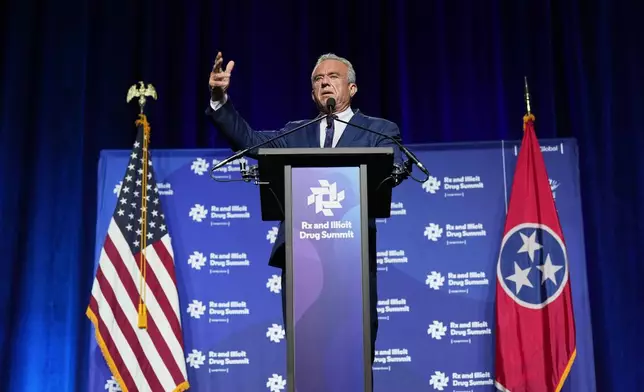
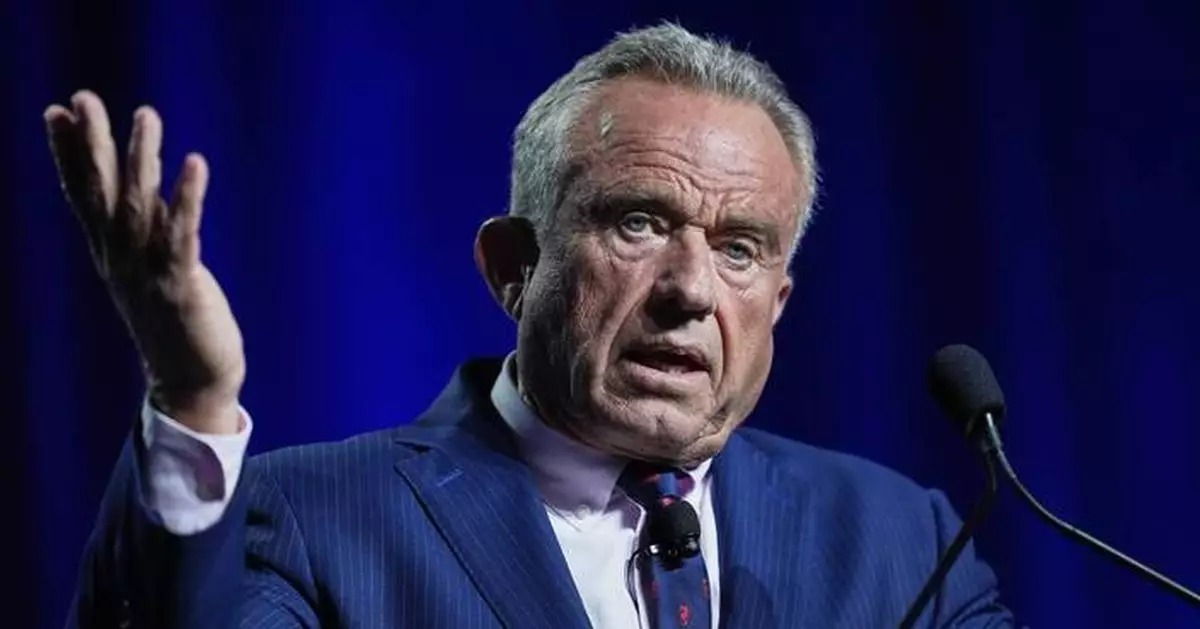
NASHVILLE, Tenn. (AP) — U.S. Health Secretary Robert F. Kennedy Jr. told a personal story of his own heroin addiction, spiritual awakening and recovery at a conference on drug addiction Thursday and emphasized that young people need a sense of purpose in their lives to prevent them from turning to drugs.

Kennedy called addiction “a source of misery, but also a symptom of misery." In a speech that mentioned God more than 20 times, he pointed to his own experience feeling as though he had been born with a hole inside of himself that he needed to fill.

More Images
Health and Human Services Secretary Robert F. Kennedy Jr. speaks at the Rx and Illicit drug Summit, Thursday, April 24, 2025, in Nashville, Tenn. (AP Photo/George Walker IV)

Health and Human Services Secretary Robert F. Kennedy Jr. speaks at the Rx and Illicit drug Summit, Thursday, April 24, 2025, in Nashville, Tenn. (AP Photo/George Walker IV)
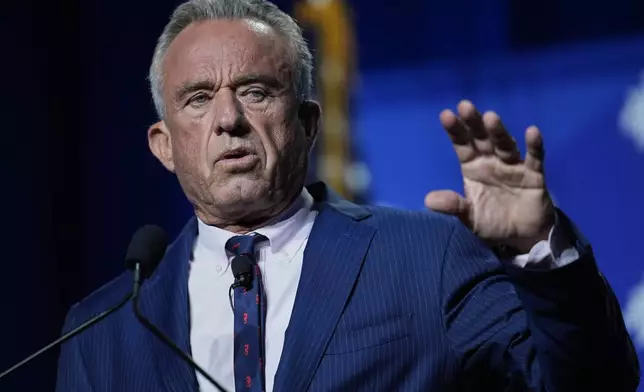
Health and Human Services Secretary Robert F. Kennedy Jr. speaks at the Rx and Illicit drug Summit, Thursday, April 24, 2025, in Nashville, Tenn. (AP Photo/George Walker IV)

Health and Human Services Secretary Robert F. Kennedy Jr. speaks at the Rx and Illicit drug Summit, Thursday, April 24, 2025, in Nashville, Tenn. (AP Photo/George Walker IV)
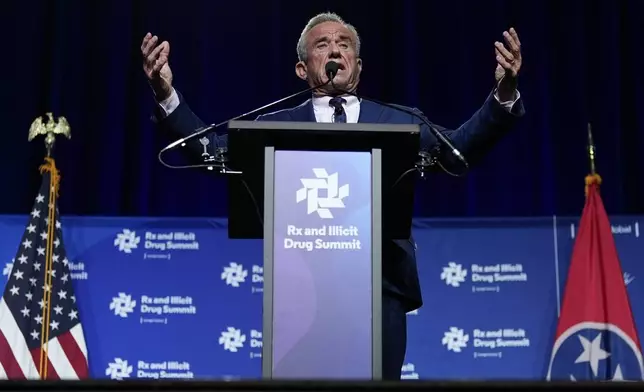
Health and Human Services Secretary Robert F. Kennedy Jr. speaks at the Rx and Illicit drug Summit, Thursday, April 24, 2025, in Nashville, Tenn. (AP Photo/George Walker IV)
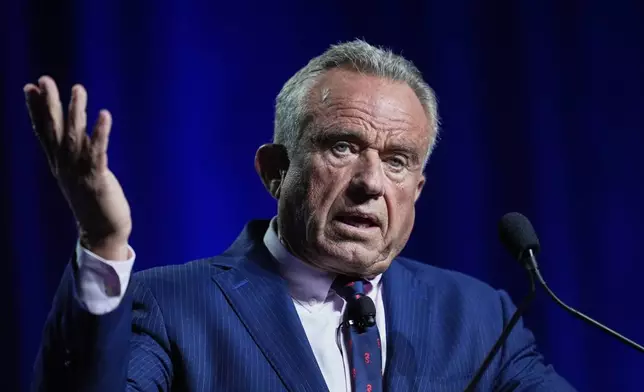
Health and Human Services Secretary Robert F. Kennedy Jr. speaks at the Rx and Illicit drug Summit, Thursday, April 24, 2025, in Nashville, Tenn. (AP Photo/George Walker IV)

A protester, right, is escorted out of the room as Health and Human Services Secretary Robert F. Kennedy Jr. speaks at the Rx and Illicit drug Summit, Thursday, April 24, 2025, in Nashville, Tenn. (AP Photo/George Walker IV)

A protester, right, is escorted out of the room as Health and Human Services Secretary Robert F. Kennedy Jr. speaks at the Rx and Illicit drug Summit, Thursday, April 24, 2025, in Nashville, Tenn. (AP Photo/George Walker IV)

Health and Human Services Secretary Robert F. Kennedy Jr. speaks at the Rx and Illicit drug Summit, Thursday, April 24, 2025, in Nashville, Tenn. (AP Photo/George Walker IV)

Health and Human Services Secretary Robert F. Kennedy Jr. speaks at the Rx and Illicit drug Summit, Thursday, April 24, 2025, in Nashville, Tenn. (AP Photo/George Walker IV)

Health and Human Services Secretary Robert F. Kennedy Jr. speaks at the Rx and Illicit drug Summit, Thursday, April 24, 2025, in Nashville, Tenn. (AP Photo/George Walker IV)

Health and Human Services Secretary Robert F. Kennedy Jr. speaks at the Rx and Illicit drug Summit, Thursday, April 24, 2025, in Nashville, Tenn. (AP Photo/George Walker IV)

“Every addict feels that way in one way or another — that they have to fix what's wrong with them, and the only thing that works are drugs. And so threats that you might die, that you're going to ruin your life are completely meaningless,” he said.

Speaking to about 3,000 people at the Rx and Illicit Drug Summit in Nashville, Tennessee, Kennedy did not address recent budget and personnel cuts or agency reorganizations that many experts believe could jeopardize public health, including recent progress on overdose deaths.

Kennedy drew cheers when he said that we need to do “practical things” to help people with addictions, like providing them with Suboxone and methadone. He also said there should be rehabilitation facilities available for anyone who is ready to seek help. But he focused on the idea of prevention, signaling his view of addiction as a problem fueled by deteriorating family, community and spiritual life.

“We have this whole generation of kids who’ve lost hope in their future,” he said. “They’ve lost their ties to the community.”

Kennedy said policy changes could help reestablish both of those things. Though Kennedy offered few concrete ideas, he recommended educating parents on the value of having meals without cellphones and providing opportunities for service for their children.

The best way to overcome depression and hopelessness, he said, is to wake up each morning and pray “please make me useful to another human being today. ”

He suggested that cellphones are a pernicious influence on young people and that banning them in schools could help decrease drug addiction. He cited a recent visit to a Virginia school that had banned cellphones, saying that grades were up, violence was down and kids were talking to one another in the cafeteria.

Kennedy told attendees that he was addicted to heroin for 14 years, beginning when he was a teenager. During those years, he was constantly making promises to quit, both to himself and to his family.

“I didn’t want to be someone who woke up every morning thinking about drugs," he said, noting that one of the worst parts of addiction was his total “incapacity to keep contracts with myself."

Kennedy said he eventually stumbled upon a book by Swiss psychiatrist Carl Jung that claimed people who believed in God got better faster and had more enduring recoveries, so he worked to rekindle his faith and started attending 12-step meetings.

Kennedy was interrupted several times by hecklers shouting things like, “Believe science!” He has been heavily criticized by scientists and public health experts for pushing fringe theories about diet, vaccines, measles and autism, among other things.

One heckler was escorted out of the ballroom with a raised middle finger. Without responding directly to the hecklers, Kennedy said that he tries to learn from every interaction, even with people who give him the finger because they don't like his driving.

“God talks to me most through those people,” he told the group.

University of Washington researcher Caleb Banta-Green was among those escorted out after he stood up and shouted, "Believe science! Respect spirituality! Respect choice! Respect government workers!”

“Spirituality is an essential part of recovery for some people; 12 step works great for the people it works for, however, it should never be mandated,” Banta-Green said in an email after the program.

He added, “We have decades of science-based interventions that are proven effective for supporting recovery and reducing death from substance use disorder. The problem we have is massive underfunding."

The Associated Press Health and Science Department receives support from the Howard Hughes Medical Institute’s Science and Educational Media Group and the Robert Wood Johnson Foundation. The AP is solely responsible for all content.
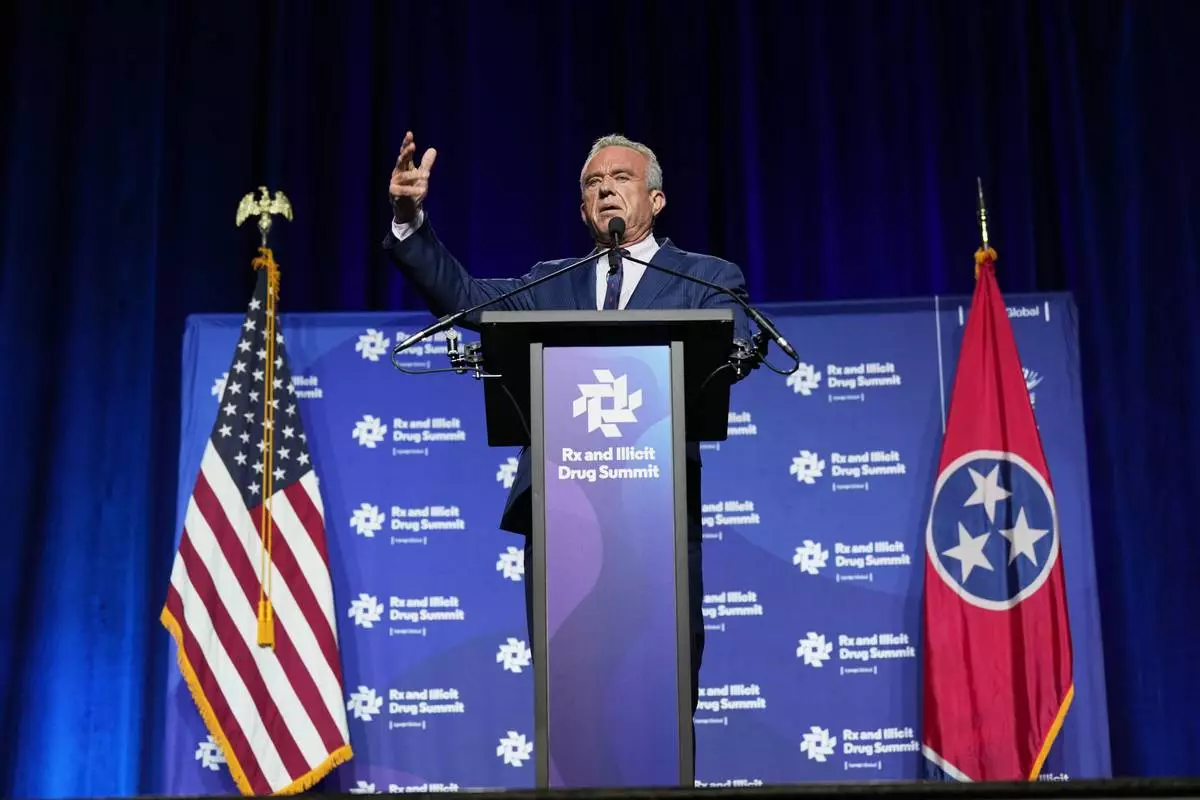
Health and Human Services Secretary Robert F. Kennedy Jr. speaks at the Rx and Illicit drug Summit, Thursday, April 24, 2025, in Nashville, Tenn. (AP Photo/George Walker IV)
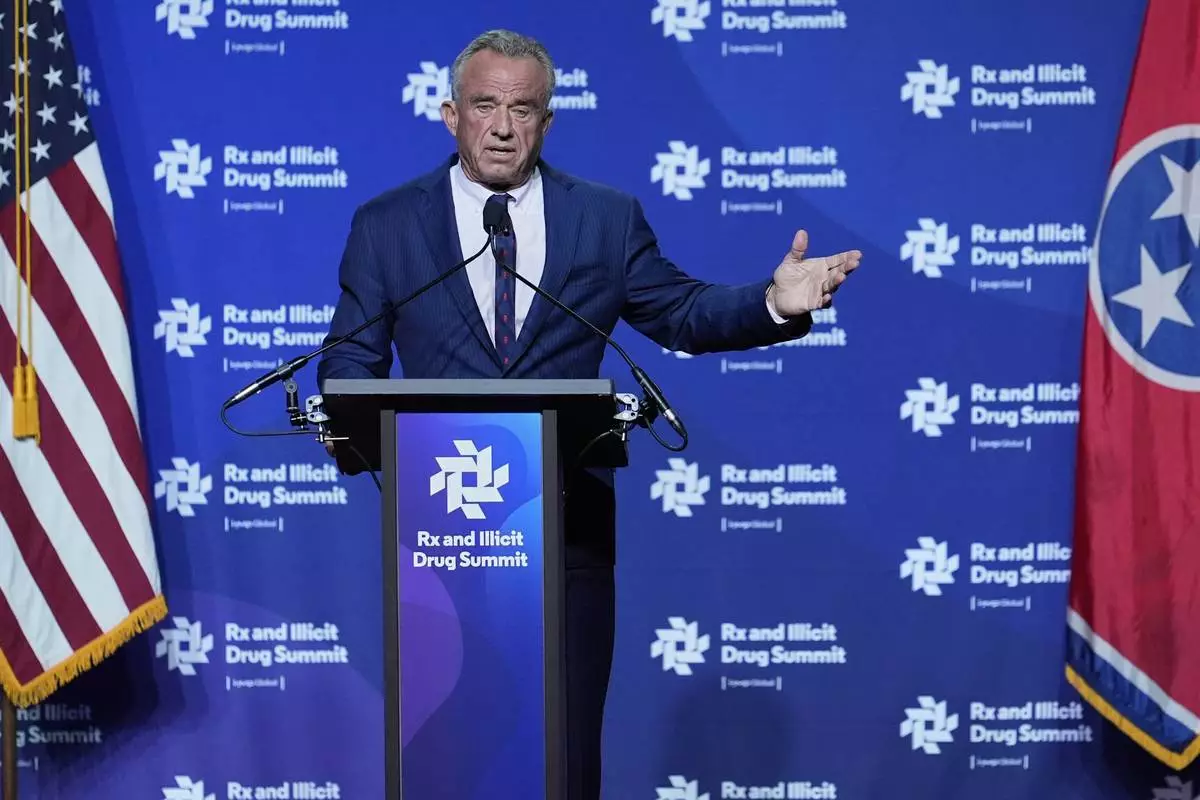
Health and Human Services Secretary Robert F. Kennedy Jr. speaks at the Rx and Illicit drug Summit, Thursday, April 24, 2025, in Nashville, Tenn. (AP Photo/George Walker IV)
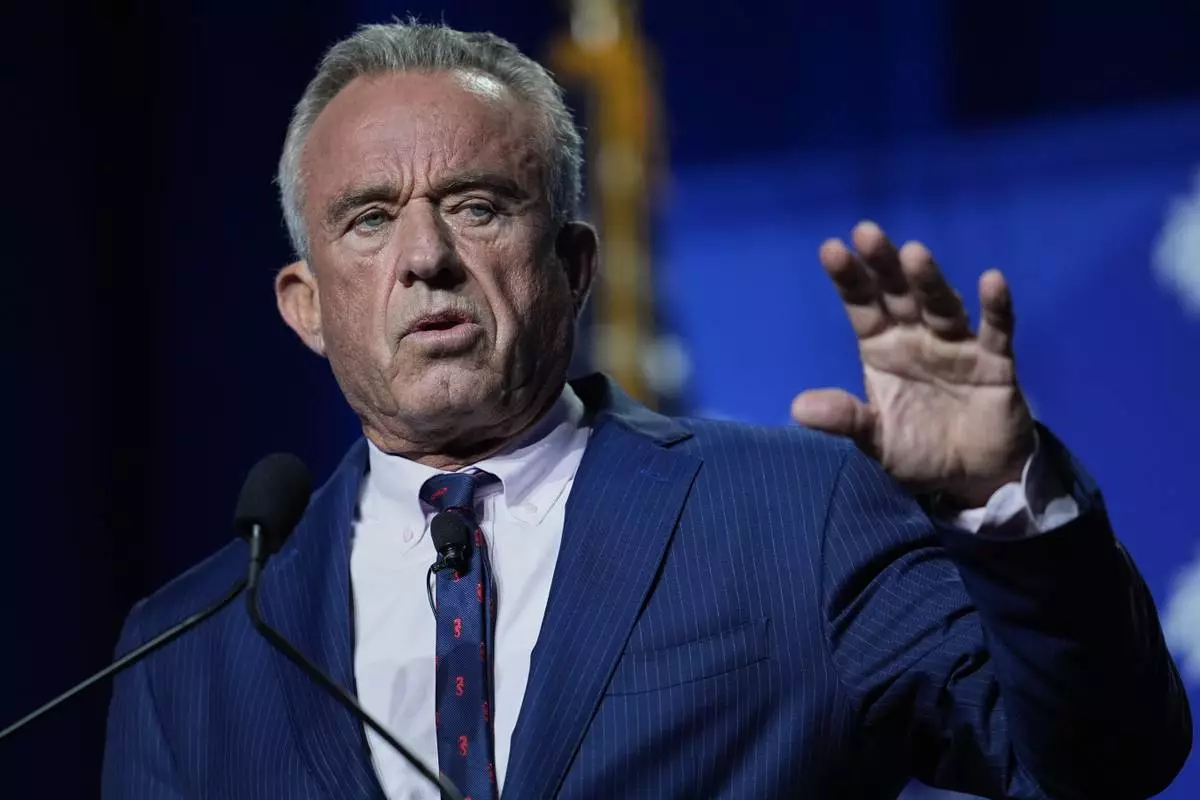
Health and Human Services Secretary Robert F. Kennedy Jr. speaks at the Rx and Illicit drug Summit, Thursday, April 24, 2025, in Nashville, Tenn. (AP Photo/George Walker IV)
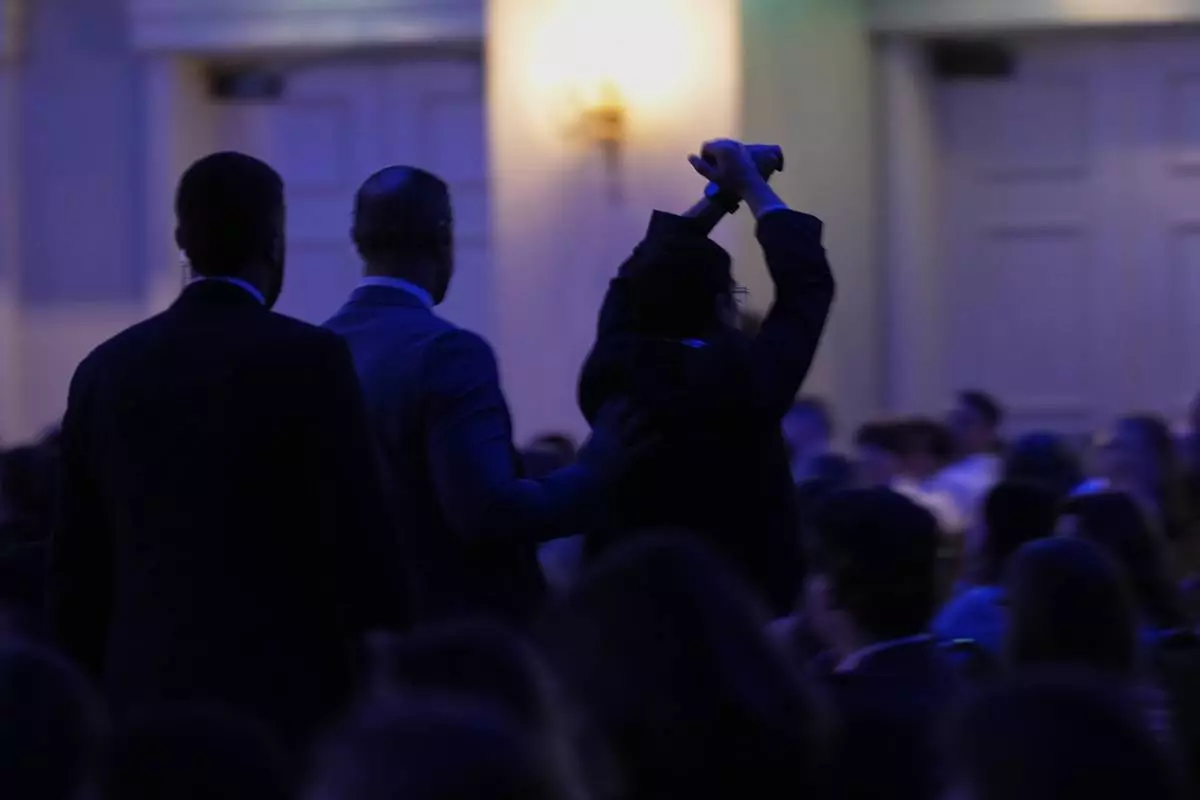
Health and Human Services Secretary Robert F. Kennedy Jr. speaks at the Rx and Illicit drug Summit, Thursday, April 24, 2025, in Nashville, Tenn. (AP Photo/George Walker IV)
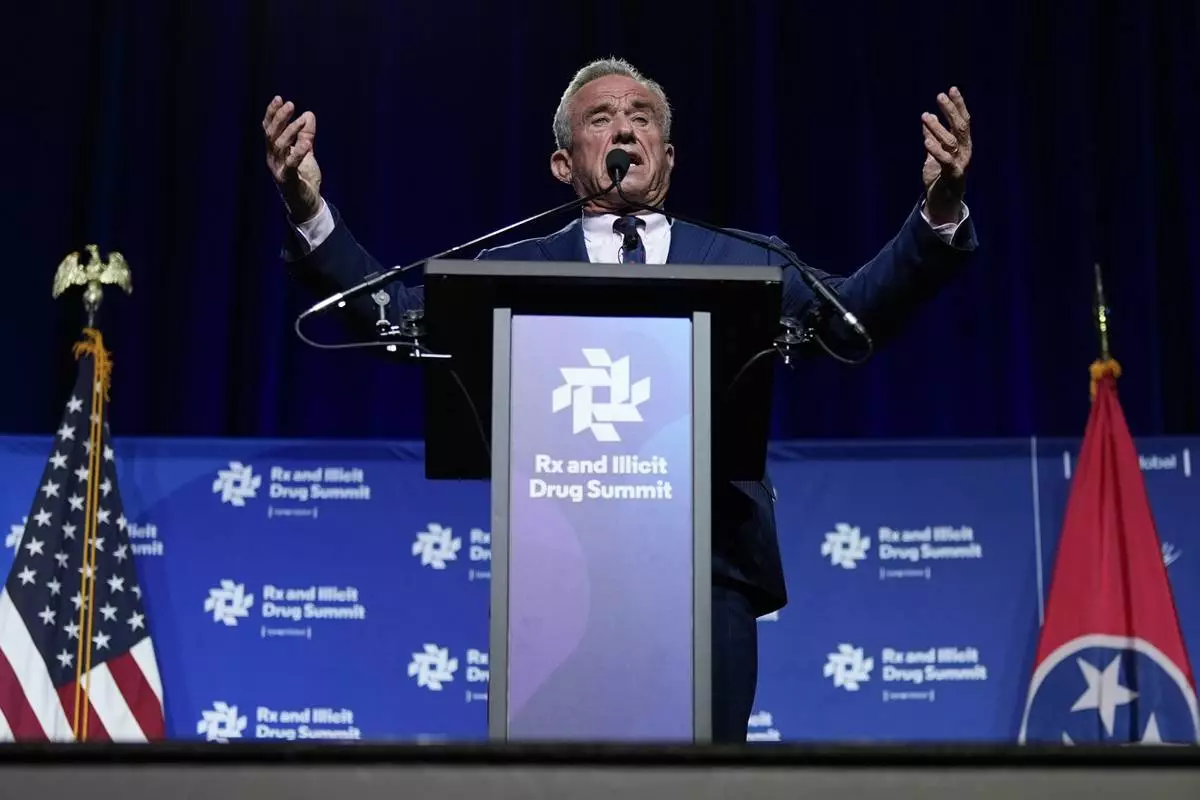
Health and Human Services Secretary Robert F. Kennedy Jr. speaks at the Rx and Illicit drug Summit, Thursday, April 24, 2025, in Nashville, Tenn. (AP Photo/George Walker IV)
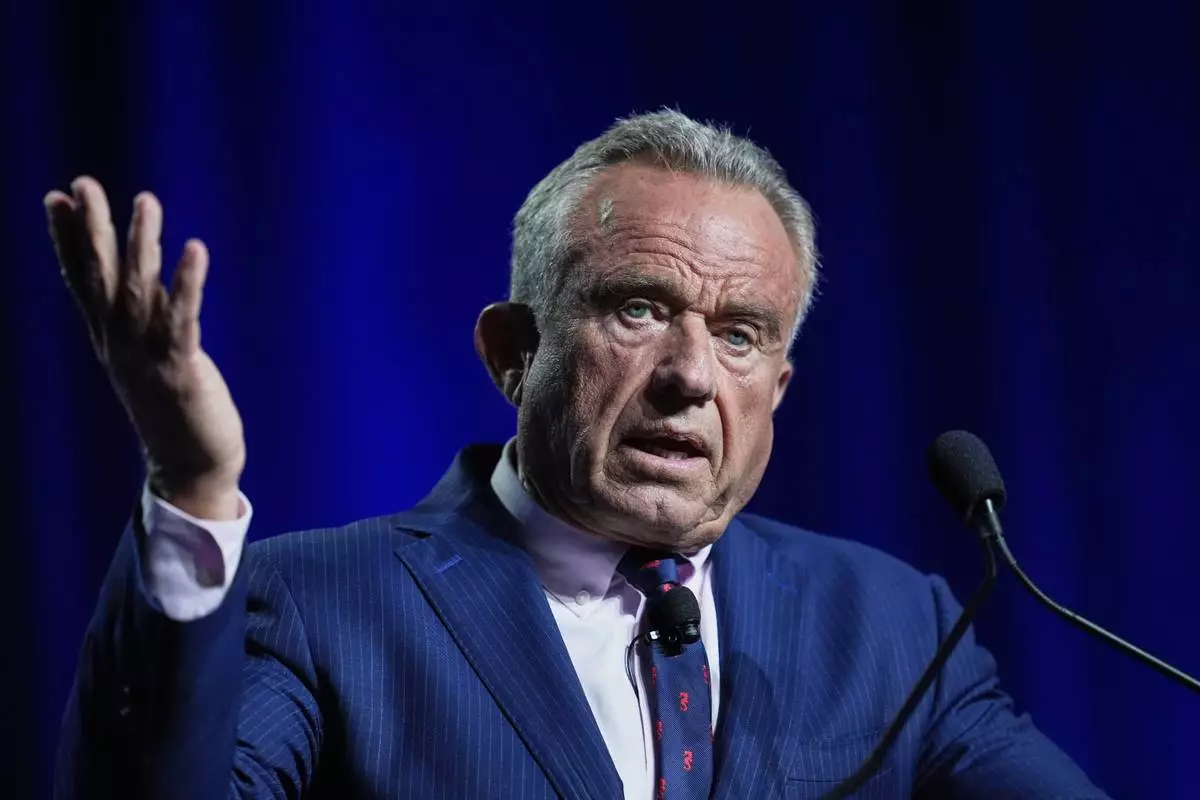
Health and Human Services Secretary Robert F. Kennedy Jr. speaks at the Rx and Illicit drug Summit, Thursday, April 24, 2025, in Nashville, Tenn. (AP Photo/George Walker IV)
A protester, right, is escorted out of the room as Health and Human Services Secretary Robert F. Kennedy Jr. speaks at the Rx and Illicit drug Summit, Thursday, April 24, 2025, in Nashville, Tenn. (AP Photo/George Walker IV)
A protester, right, is escorted out of the room as Health and Human Services Secretary Robert F. Kennedy Jr. speaks at the Rx and Illicit drug Summit, Thursday, April 24, 2025, in Nashville, Tenn. (AP Photo/George Walker IV)

Health and Human Services Secretary Robert F. Kennedy Jr. speaks at the Rx and Illicit drug Summit, Thursday, April 24, 2025, in Nashville, Tenn. (AP Photo/George Walker IV)
Health and Human Services Secretary Robert F. Kennedy Jr. speaks at the Rx and Illicit drug Summit, Thursday, April 24, 2025, in Nashville, Tenn. (AP Photo/George Walker IV)
Health and Human Services Secretary Robert F. Kennedy Jr. speaks at the Rx and Illicit drug Summit, Thursday, April 24, 2025, in Nashville, Tenn. (AP Photo/George Walker IV)

Health and Human Services Secretary Robert F. Kennedy Jr. speaks at the Rx and Illicit drug Summit, Thursday, April 24, 2025, in Nashville, Tenn. (AP Photo/George Walker IV)
DUBAI, United Arab Emirates (AP) — U.S. President Donald Trump said Iran wants to negotiate with Washington after his threat to strike the Islamic Republic over its bloody crackdown on protesters, a move coming as activists said Monday the death toll in the nationwide demonstrations rose to at least 544.

Iran had no immediate reaction to the news, which came after the foreign minister of Oman — long an interlocutor between Washington and Tehran — traveled to Iran this weekend. It also remains unclear just what Iran could promise, particularly as Trump has set strict demands over its nuclear program and its ballistic missile arsenal, which Tehran insists is crucial for its national defense.

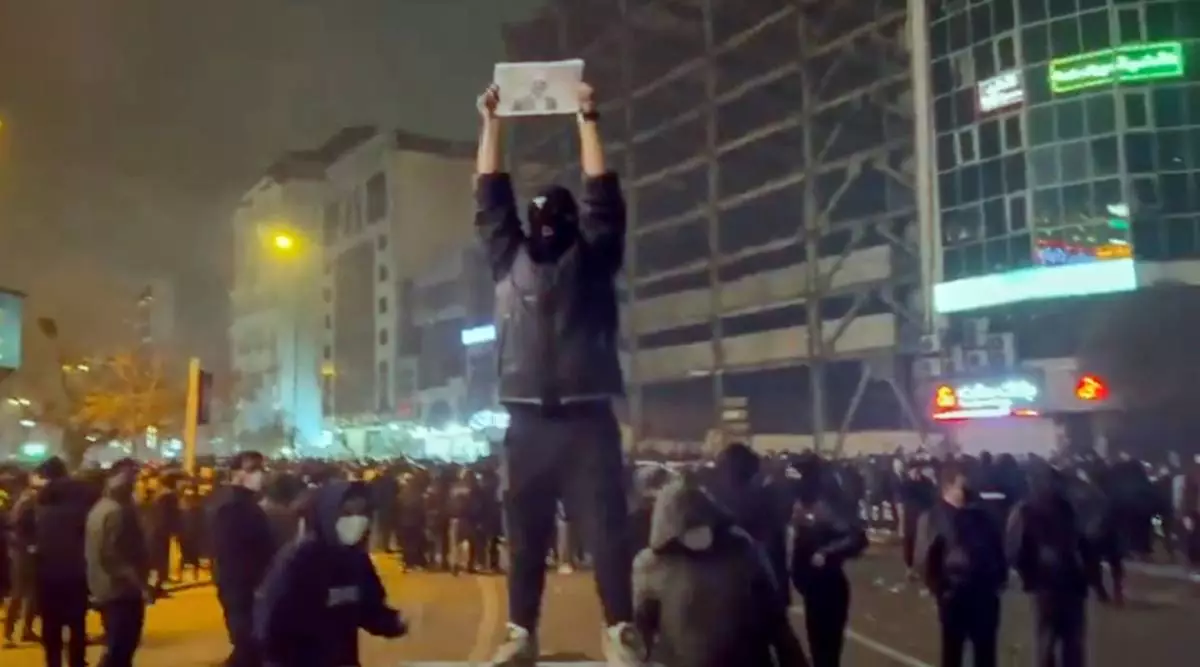
Meanwhile Monday, Iran called for pro-government demonstrators to head to the streets in support of the theocracy, a show of force after days of protests directly challenging the rule of 86-year-old Supreme Leader Ayatollah Ali Khamenei. Iranian state television aired chants from the crowd, who shouted “Death to America!” and “Death to Israel!”

Trump and his national security team have been weighing a range of potential responses against Iran including cyberattacks and direct strikes by the U.S. or Israel, according to two people familiar with internal White House discussions who were not authorized to comment publicly and spoke on condition of anonymity.

“The military is looking at it, and we’re looking at some very strong options,” Trump told reporters on Air Force One on Sunday night. Asked about Iran’s threats of retaliation, he said: “If they do that, we will hit them at levels that they’ve never been hit before.”

Trump said that his administration was in talks to set up a meeting with Tehran, but cautioned that he may have to act first as reports of the death toll in Iran mount and the government continues to arrest protesters.

“I think they’re tired of being beat up by the United States,” Trump said. “Iran wants to negotiate.”

He added: “The meeting is being set up, but we may have to act because of what’s happening before the meeting. But a meeting is being set up. Iran called, they want to negotiate.”

Iran through country's parliamentary speaker warned Sunday that the U.S. military and Israel would be “legitimate targets” if America uses force to protect demonstrators.

More than 10,600 people also have been detained over the two weeks of protests, said the U.S.-based Human Rights Activists News Agency, which has been accurate in previous unrest in recent years and gave the death toll. It relies on supporters in Iran crosschecking information. It said 496 of the dead were protesters and 48 were with security forces.

With the internet down in Iran and phone lines cut off, gauging the demonstrations from abroad has grown more difficult. The Associated Press has been unable to independently assess the toll. Iran’s government has not offered overall casualty figures.

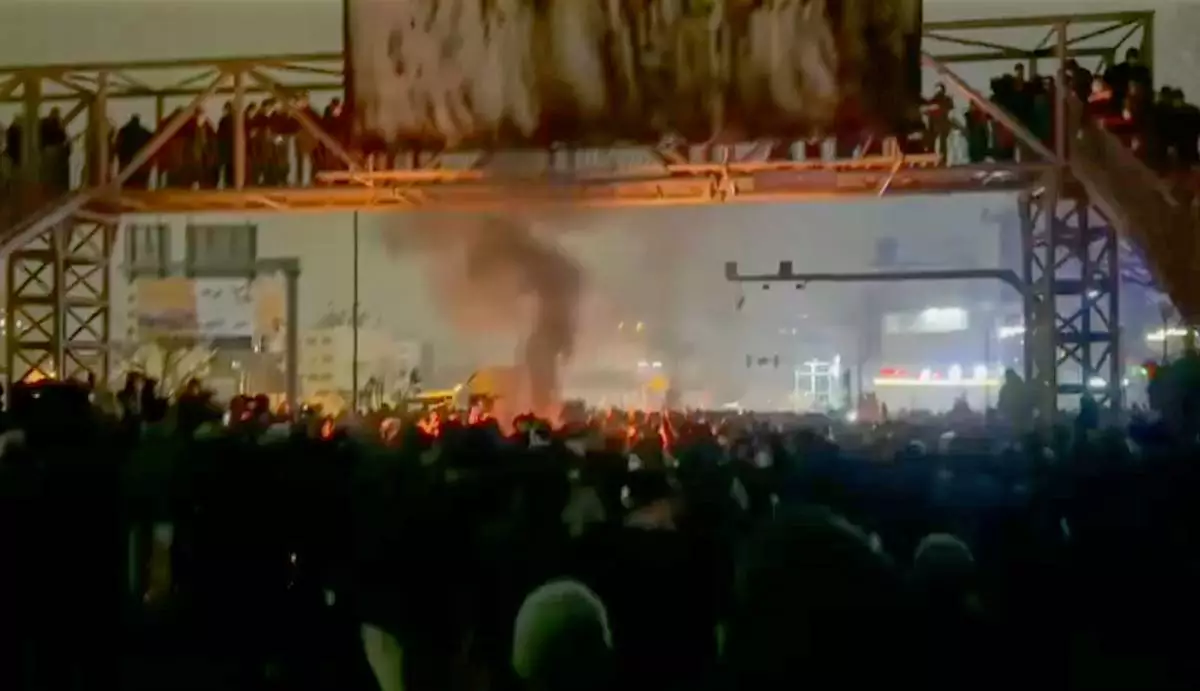
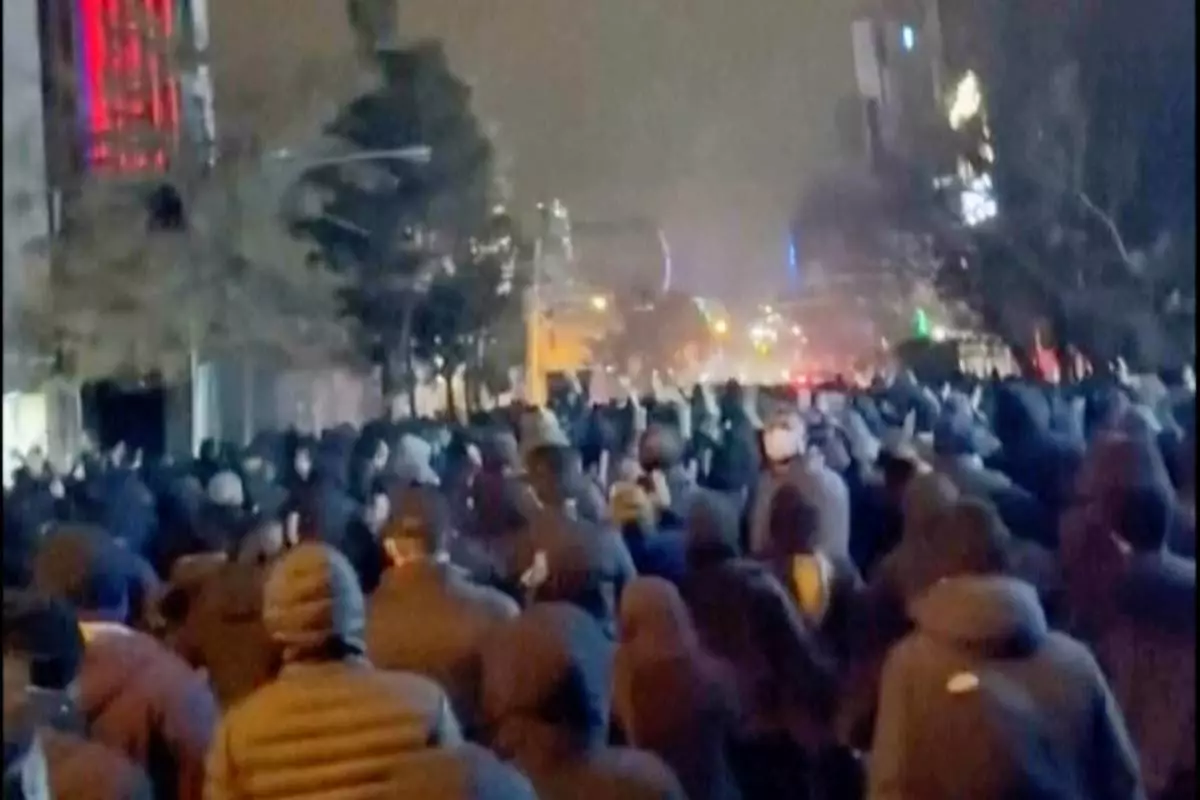
Those abroad fear the information blackout is emboldening hard-liners within Iran’s security services to launch a bloody crackdown. Protesters flooded the streets in the country’s capital and its second-largest city on Saturday night into Sunday morning. Online videos purported to show more demonstrations Sunday night into Monday, with a Tehran official acknowledging them in state media.

In Tehran, a witness told the AP that the streets of the capital empty at the sunset call to prayers each night. By the Isha, or nighttime prayer, the streets are deserted.

Part of that stems from the fear of getting caught in the crackdown. Police sent the public a text message that warned: “Given the presence of terrorist groups and armed individuals in some gatherings last night and their plans to cause death, and the firm decision to not tolerate any appeasement and to deal decisively with the rioters, families are strongly advised to take care of their youth and teenagers.”

Another text, which claimed to come from the intelligence arm of the paramilitary Revolutionary Guard, also directly warned people not to take part in demonstrations.

“Dear parents, in view of the enemy’s plan to increase the level of naked violence and the decision to kill people, ... refrain from being on the streets and gathering in places involved in violence, and inform your children about the consequences of cooperating with terrorist mercenaries, which is an example of treason against the country,” the text warned.

The witness spoke to the AP on condition of anonymity due to the ongoing crackdown.

The demonstrations began Dec. 28 over the collapse of the Iranian rial currency, which trades at over 1.4 million to $1, as the country’s economy is squeezed by international sanctions in part levied over its nuclear program. The protests intensified and grew into calls directly challenging Iran’s theocracy.

Nikhinson reported from aboard Air Force One.

In this frame grab from video obtained by the AP outside Iran, a masked demonstrator holds a picture of Iran's Crown Prince Reza Pahlavi during a protest in Tehran, Iran, Friday, January. 9, 2026. (UGC via AP)

In this frame grab from video obtained by the AP outside Iran, a masked demonstrator holds a picture of Iran's Crown Prince Reza Pahlavi during a protest in Tehran, Iran, Friday, January. 9, 2026. (UGC via AP)

In this frame grab from footage circulating on social media from Iran shows protesters taking to the streets despite an intensifying crackdown as the Islamic Republic remains cut off from the rest of the world in Tehran, Iran, Friday, Jan. 9, 2026.(UGC via AP)

In this frame grab from footage circulating on social media from Iran shows protesters taking to the streets despite an intensifying crackdown as the Islamic Republic remains cut off from the rest of the world in Tehran, Iran, Friday, Jan. 9, 2026.(UGC via AP)

In this frame grab from footage circulating on social media from Iran showed protesters once again taking to the streets of Tehran despite an intensifying crackdown as the Islamic Republic remains cut off from the rest of the world in Tehran, Iran, Saturday Jan. 10, 2026. (UGC via AP)

In this frame grab from footage circulating on social media from Iran showed protesters once again taking to the streets of Tehran despite an intensifying crackdown as the Islamic Republic remains cut off from the rest of the world in Tehran, Iran, Saturday Jan. 10, 2026. (UGC via AP)

Recommended Articles