Skip to Content Facebook Feature Image

Alabama executes a man who said he was guilty of rape and murder and deserved to die

News

Alabama executes a man who said he was guilty of rape and murder and deserved to die
News

News

Alabama executes a man who said he was guilty of rape and murder and deserved to die

2025-04-25 09:05 Last Updated At:09:12

ATMORE, Ala. (AP) — An Alabama man who dropped his appeals and said he deserved to die for a 2010 rape and murder was executed Thursday evening, using his final words to apologize to the woman he killed.

James Osgood, 55, was pronounced dead at 6:35 p.m. following a three-drug injection at a south Alabama prison, authorities said.

A jury in 2014 convicted Osgood of capital murder in the death of Tracy Lynn Brown in Chilton County. Prosecutors said Osgood cut her throat after he and his girlfriend sexually assaulted her.

Strapped to a gurney and wearing a tan prison uniform, Osgood used his last moments to speak about his victim.

“I haven’t said her name since that day,” Osgood said, adding that was because he was unsure if he should say it. “Tracy, I apologize.”

The curtains opened to the witness room at 6:09 p.m. It was unclear what time the injection began. As the execution got underway, Osgood looked toward family members seated in a witness room. Family and friends cried quietly as he lost consciousness.

His breathing became deep and labored and his head fell back on the gurney at about 6:15 p.m. His breathing was no longer visible by about 6:18 p.m. Several minutes later, he was pronounced dead.

Brown, 44, was found dead in her home on Oct. 23, 2010, after her employer became concerned when she did not show up for work.

Prosecutors said Osgood admitted to police that he and his girlfriend sexually assaulted Brown after discussing how they had shared fantasies about kidnapping and torturing someone. The pair forced their victim to perform sex acts at gunpoint. They said Osgood then killed Brown by cutting her throat. His girlfriend, who was Brown’s cousin, was sentenced to life in prison.

The jury in 2014 took 40 minutes to convict him and unanimously recommended a death sentence. His initial death sentence was thrown out by an appeals court. At resentencing in 2018, Osgood asked for another death sentence, saying he didn’t want the families to endure another hearing.

Alabama Corrections Commissioner John Hamm said the victim's family members witnessed the execution in a separate viewing room. They chose not to make a statement to the media, he said.

Gov. Kay Ivey issued a statement, calling the killing “premeditated, gruesome and disturbing.”

“I pray that her loved ones can feel some sense of closure today," the governor said.

Alabama Attorney General Steve Marshall said “my heart and prayers are with Tracy’s family.”

“No one should have to endure the pain they’ve carried or relive the horror of her tragic and senseless death,” Marshall added.

Osgood told AP last week he had dropped his appeals because he was guilty and thought his execution should go forward.

“I’m a firm believer in — like I said in court — an eye for an eye, a tooth for a tooth. I took a life, so mine was forfeited. I don’t believe in sitting here and wasting everybody’s time and everybody’s money,” Osgood said.

The Death Penalty Information Center reported last year that 165 of the 1,650 people executed since 1977 had asked to be put to death. A moratorium on the death penalty ended that year, and the center said the overwhelming majority of the execution volunteers since had histories of mental illness, substance abuse or suicidal ideation.

Alison Mollman, who represented Osgood for the last decade, said in a statement that Osgood — called “Taz” by his friends — was “more than his worst actions.”

“He made mistakes, terrible ones that he regretted until his dying day, but he didn’t make excuses for his actions. He was accountable and he was sincere,” said Mollman, legal director for the ACLU of Alabama.

The execution was the second in Alabama this year and the 14th in the nation overall.

On Feb. 6, Alabama used nitrogen gas to execute Demetrius Frazier, 52, for his conviction in the 1991 rape and killing of a 41-year-old woman. Alabama in 2024 became the first state to conduct nitrogen gas executions, putting three people to death by that method last year. It involves replacing breathable air with pure nitrogen gas through a respirator mask, causing death by lack of oxygen.

For decades, lethal injection was the preferred way to execute death row prisoners in the U.S. But recent problems procuring and administering the drugs led some states to consider alternative methods. Condemned prisoners in Alabama can choose execution by injection, the electric chair or nitrogen gas.

Osgood picked lethal injection. Hamm said it took a total of five attempts to get the two required IV lines connected to Osgood.
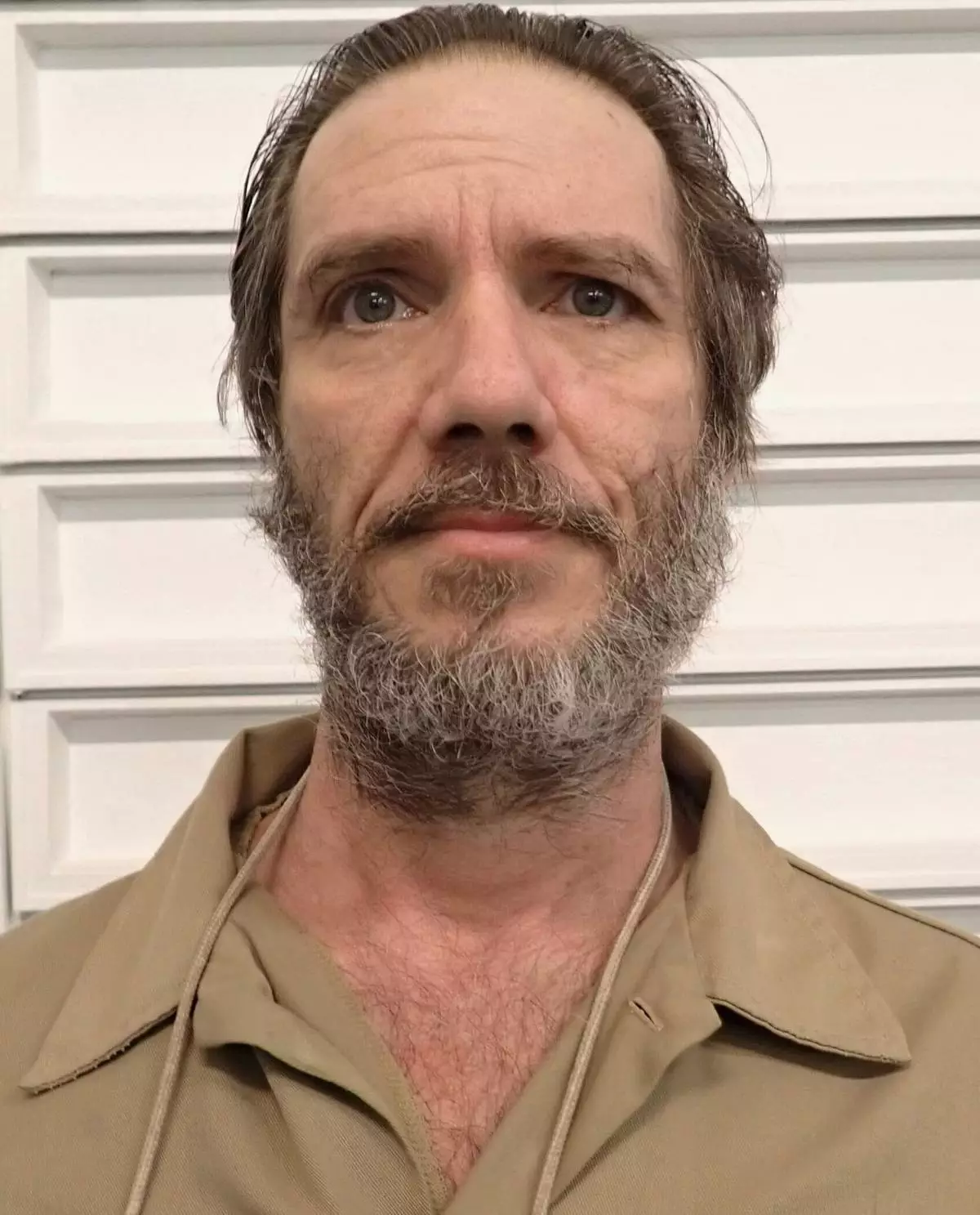
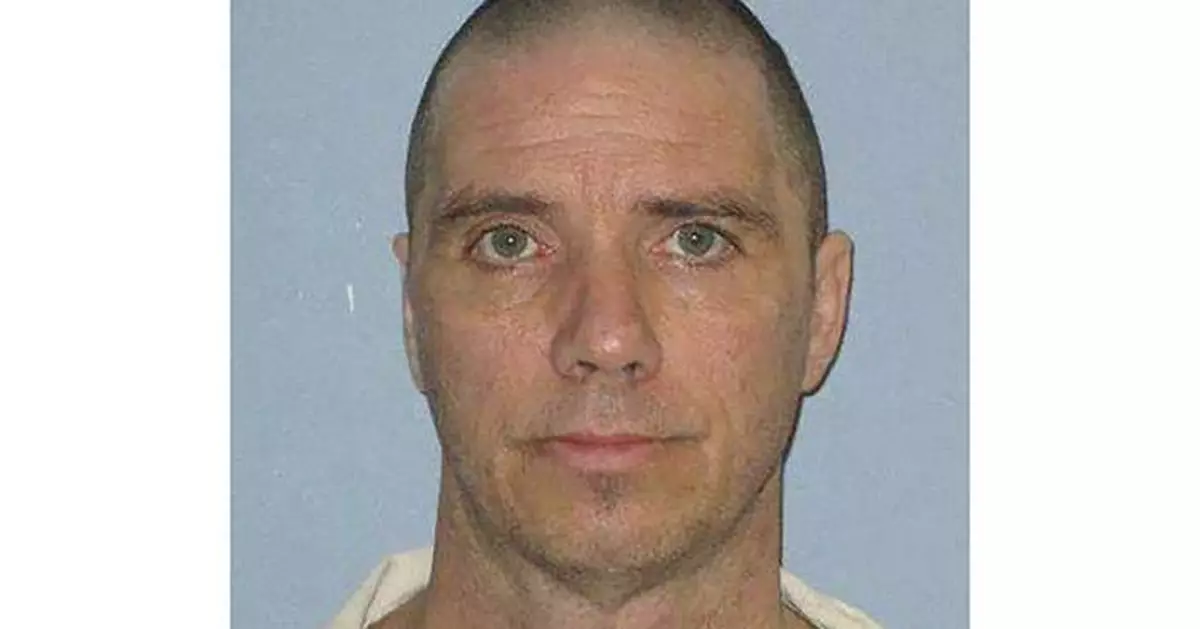
This undated photo provided by Alabama Department of Corrections, shows James Osgood, who was convicted of capital murder for the 2010 rape and murder of Tracy Lynn Brown, in Chilton County, and is scheduled to be executed by lethal injection, Thursday, April 24, 2025. (Alabama Department of Corrections via AP)
This undated photo provided by Alabama Department of Corrections, shows James Osgood, who was convicted of capital murder for the 2010 rape and murder of Tracy Lynn Brown, in Chilton County, and is scheduled to be executed by lethal injection, Thursday, April 24, 2025. (Alabama Department of Corrections via AP)

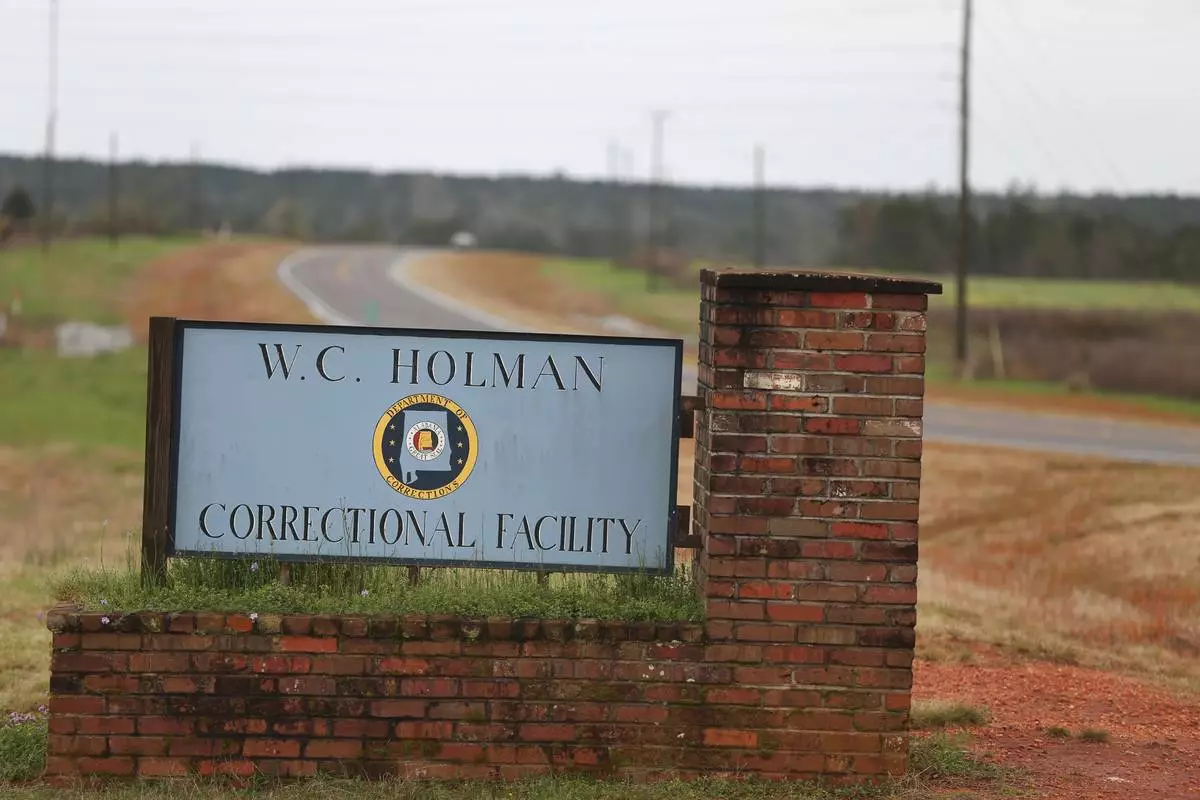
FILE -In this March 12, 2016 file photo, the sign to The William C. Holman Correctional Facility in Atmore, Ala., is displayed. (Sharon Steinmann/AL.com via AP, File)
FILE -In this March 12, 2016 file photo, the sign to The William C. Holman Correctional Facility in Atmore, Ala., is displayed. (Sharon Steinmann/AL.com via AP, File)

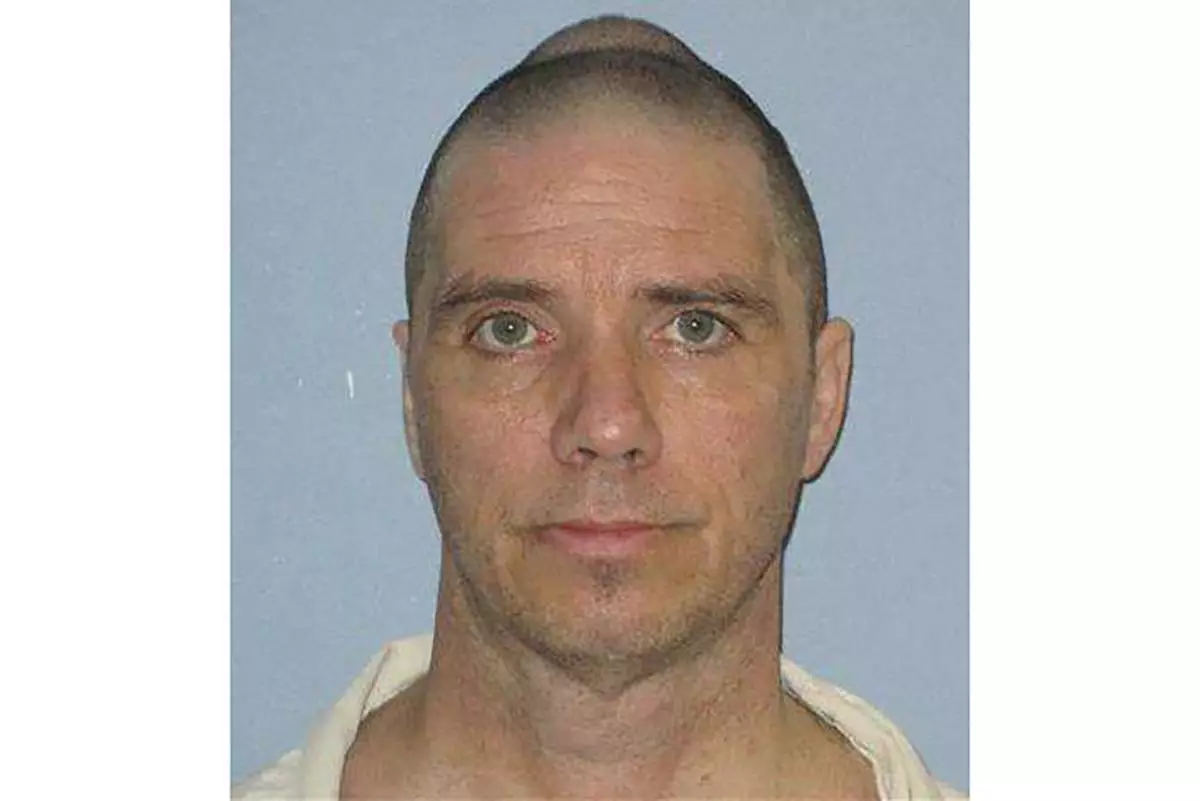
FILE - This undated image provided by the Alabama Department of Corrections shows inmate James Osgood, who was sentenced to death for the 2010 rape and murder of Tracy Lynn Brown. (Alabama Department of Corrections via AP, File)


FILE - This undated image provided by the Alabama Department of Corrections shows inmate James Osgood, who was sentenced to death for the 2010 rape and murder of Tracy Lynn Brown. (Alabama Department of Corrections via AP, File)

CARACAS, Venezuela (AP) — Venezuela’s government accused the United States of attacking civilian and military installations in multiple states after at least seven explosions and low-flying aircraft were heard around 2 a.m. local time Saturday in the capital, Caracas.

The Pentagon and White House did not immediately respond to requests for comment.

Smoke could be seen rising from the hangar of a military base in Caracas. Another military installation in the capital was without power.

People in various neighborhoods rushed to the streets. Some could be seen in the distance from various areas of Caracas.

“The whole ground shook. This is horrible. We heard explosions and planes,” said Carmen Hidalgo, a 21-year-old office worker, her voice trembling. She was walking briskly with two relatives, returning from a birthday party. “We felt like the air was hitting us.”

Venezuela’s government, in the statement, called on its supporters to take to the streets.

“People to the streets!” the statement said. “The Bolivarian Government calls on all social and political forces in the country to activate mobilization plans and repudiate this imperialist attack.”

The statement added that President Nicolás Maduro had “ordered all national defense plans to be implemented” and declared “a state of external disturbance.”

This comes as the U.S. military has been targeting, in recent days, alleged drug-smuggling boats. On Friday, Venezuela said it was open to negotiating an agreement with the U.S. to combat drug trafficking.

Maduro also said in a pretaped interview aired Thursday that the U.S. wants to force a government change in Venezuela and gain access to its vast oil reserves through the monthslong pressure campaign that began with a massive military deployment to the Caribbean Sea in August.

Maduro has been charged with narco-terrorism in the U.S. The CIA was behind a drone strike last week at a docking area believed to have been used by Venezuelan drug cartels in what was the first known direct operation on Venezuelan soil since the U.S. began strikes on boats in September.

U.S. President Donald Trump for months had threatened that he could soon order strikes on targets on Venezuelan land. The U.S. has also seized sanctioned oil tankers off the coast of Venezuela, and Trump ordered a blockade of others in a move that seemed designed to put a tighter chokehold on the South American country’s economy.

The U.S. military has been attacking boats in the Caribbean Sea and the eastern Pacific Ocean since early September. As of Friday, the number of known boat strikes is 35 and the number of people killed is at least 115, according to numbers announced by the Trump administration.

They followed a major buildup of American forces in the waters off South America, including the arrival in November of the nation’s most advanced aircraft carrier, which added thousands more troops to what was already the largest military presence in the region in generations.

Trump has justified the boat strikes as a necessary escalation to stem the flow of drugs into the U.S. and asserted that the U.S. is engaged in an “armed conflict” with drug cartels.

Meanwhile, Iranian state television reported on the explosions in Caracas on Saturday, showing images of the Venezuelan capital. Iran has been close to Venezuela for years, in part due to their shared enmity of the U.S.

Pedestrians walk past the Miraflores presidential palace after explosions and low-flying aircraft were heard in Caracas, Venezuela, Saturday, Jan. 3, 2026. (AP Photo/Cristian Hernandez)

Pedestrians walk past the Miraflores presidential palace after explosions and low-flying aircraft were heard in Caracas, Venezuela, Saturday, Jan. 3, 2026. (AP Photo/Cristian Hernandez)

Residents evacuate a building near the Miraflores presidential palace after explosions and low-flying aircraft were heard in Caracas, Venezuela, Saturday, Jan. 3, 2026. (AP Photo/Cristian Hernandez)

Residents evacuate a building near the Miraflores presidential palace after explosions and low-flying aircraft were heard in Caracas, Venezuela, Saturday, Jan. 3, 2026. (AP Photo/Cristian Hernandez)

Smoke raises at La Carlota airport after explosions and low-flying aircraft were heard in Caracas, Venezuela, Saturday, Jan. 3, 2026. (AP Photo/Matias Delacroix)

Smoke raises at La Carlota airport after explosions and low-flying aircraft were heard in Caracas, Venezuela, Saturday, Jan. 3, 2026. (AP Photo/Matias Delacroix)

Pedestrians run after explosions and low-flying aircraft were heard in Caracas, Venezuela, Saturday, Jan. 3, 2026. (AP Photo/Matias Delacroix)

Pedestrians run after explosions and low-flying aircraft were heard in Caracas, Venezuela, Saturday, Jan. 3, 2026. (AP Photo/Matias Delacroix)

Smoke raises at La Carlota airport after explosions and low-flying aircraft were heard in Caracas, Venezuela, Saturday, Jan. 3, 2026. (AP Photo/Matias Delacroix)

Smoke raises at La Carlota airport after explosions and low-flying aircraft were heard in Caracas, Venezuela, Saturday, Jan. 3, 2026. (AP Photo/Matias Delacroix)

Smoke raises at La Carlota airport after explosions and low-flying aircraft were heard in Caracas, Venezuela, Saturday, Jan. 3, 2026. (AP Photo/Matias Delacroix)

Smoke raises at La Carlota airport after explosions and low-flying aircraft were heard in Caracas, Venezuela, Saturday, Jan. 3, 2026. (AP Photo/Matias Delacroix)

Pedestrians run after explosions and low-flying aircraft were heard in Caracas, Venezuela, Saturday, Jan. 3, 2026. (AP Photo/Matias Delacroix)

Pedestrians run after explosions and low-flying aircraft were heard in Caracas, Venezuela, Saturday, Jan. 3, 2026. (AP Photo/Matias Delacroix)

Recommended Articles