Young tech professionals from Hong Kong Special Administrative Region are meeting the challenges posed by U.S. tariffs in a bustling startup hub in Shenzhen City of south China's Guangdong Province.
Shenzhen is placing significant bets on these innovators and a breakthrough innovation in the Qianhai Shenzhen-Hong Kong Youth Innovation and Entrepreneur Hub could lead to securing grants worth up to 5 million yuan (about 686,220 U.S. dollars).
For graduates from Hong Kong, the math is straightforward -- cross the bay and accelerate development.
"After graduating in Hong Kong, I moved straight to Shenzhen. Here, by integrating resources related to the industrial chain, advanced manufacturing and intelligent manufacturing, it has been of great help to the implementation of our entire project," said Rajah, deputy director of the research and development department of Shenzhen Yaoguo Intelligent Innovation Technology.
"Our incentives is targeting Hong Kong, Macao and Taiwan youth right now. Starting from the second half of the year, we are going global to invite overseas talent here," said Mo Weixuan, general manager of the Qianhai DreamWorks Operation Company, the operator of the hub.
Mo characterizes the U.S. tariffs as both a challenge and a driver of change.
Ren Qingyuan, business vice president of the RiVAI Technologies and also a chip engineer in the hub, said that in response to the escalating costs of U.S. components, they opted to develop their own solutions.
"As a Chinese company, we are in the R&D research going on here. So, what we want to do is that we want to develop the best overall product to serve not only China but also worldwide," said Ren.
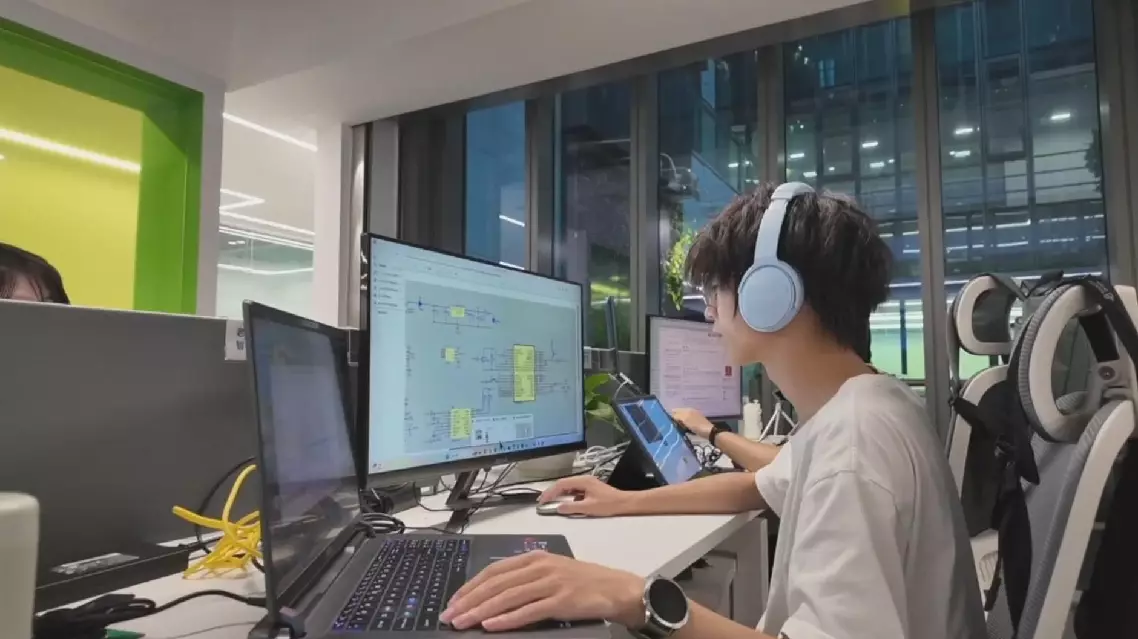
Hong Kong tech workers embrace Shenzhen's innovation hub in response to US tariffs
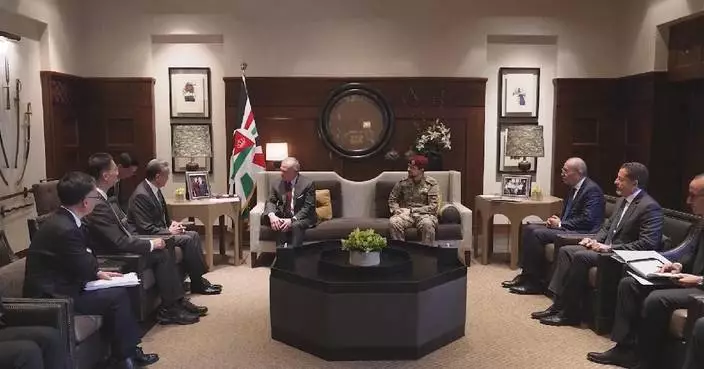
Chinese Foreign Minister Wang Yi met in Amman on Monday with Jordanian Deputy Prime Minister and Foreign Minister Ayman Safadi, for discussions on bilateral ties and the situation in the Middle East.
Noting that this year marks the 10th anniversary of the establishment of the China-Jordan strategic partnership, Wang, also a member of the Political Bureau of the Communist Party of China Central Committee, said that under the strategic guidance of Chinese President Xi Jinping and Jordanian King Abdullah II, bilateral ties have developed healthily and steadily, bilateral cooperation in various fields has achieved fruitful results, and the connotation of the strategic partnership has been continuously enriched.
China supports Jordan in safeguarding its national sovereignty, territorial integrity and national dignity, in playing a unique and important role in regional and global affairs, and in pursuing a path of national revitalization that brings prosperity to the country and well-being to its people, Wang said.
China will remain a trustworthy and reliable friend and partner of Jordan, Wang said, noting that under the new circumstances, both sides should jointly implement the important consensus reached by the two heads of state and elevate bilateral relations to new levels.
Wang said China is willing to maintain close, high-level exchanges with the Jordanian side, enhance communication between the diplomatic departments of the two countries, and jointly plan exchanges and cooperation in various fields.
The Chinese side welcomed Jordanian leaders to attend the second China-Arab States Summit to be held in China in 2026, Wang said.
Highlighting the smooth progress of bilateral practical cooperation, Wang said China is willing to continue its support for Jordan's economic and social development, import more high-quality Jordanian products, and encourage Chinese enterprises to invest and start businesses in Jordan.
The two sides should also explore cooperation in emerging fields such as photovoltaics, science and technology, and artificial intelligence, further deepen exchanges in culture, tourism, education, and civil aviation, and promote mutual understanding among peoples from both countries, Wang said.
Wang noted that the current situation in the Middle East is complex and severe, with various conflicts intertwined.
Whether the region escalates into further confrontation or moves toward peaceful negotiations tests the choices and responsibilities of all parties, he said, adding that achieving regional peace and stability is in the interests of all countries in the region and is what the people genuinely hope for.
Jordan is a stabilizing force in the Middle East, and plays a positive and constructive role on hot-spot issues such as the Palestinian issue, Wang said, noting that China is willing to enhance communication and coordination with Jordan to jointly maintain regional peace, stability and development.
For his part, Safadi said Jordan has always regarded China as a great friend and strategic partner, and highly appreciates China's increasingly important role as a major country in international and regional affairs.
Jordan firmly adheres to the one-China principle, which is a solemn political commitment that will never change, he said.
Jordan attaches great importance to developing ties with China, and is willing to strengthen exchanges with China at all levels, formulate a roadmap for bilateral cooperation, vigorously promote economic and trade cooperation, expand cooperation in emerging fields such as green energy and scientific and technological innovation, achieve more substantive results, and promote the continuous and in-depth development of the strategic partnership between the two countries, Safadi said.
Underlining the instability in Gaza, Safadi said Jordan highly commends China for upholding justice on the Palestinian issue and making a just voice heard in the international community.
Jordan looks forward to continuing communication and coordination with China to make greater efforts in promoting a comprehensive and lasting solution to the Palestinian issue, and achieving regional peace and stability, he added.
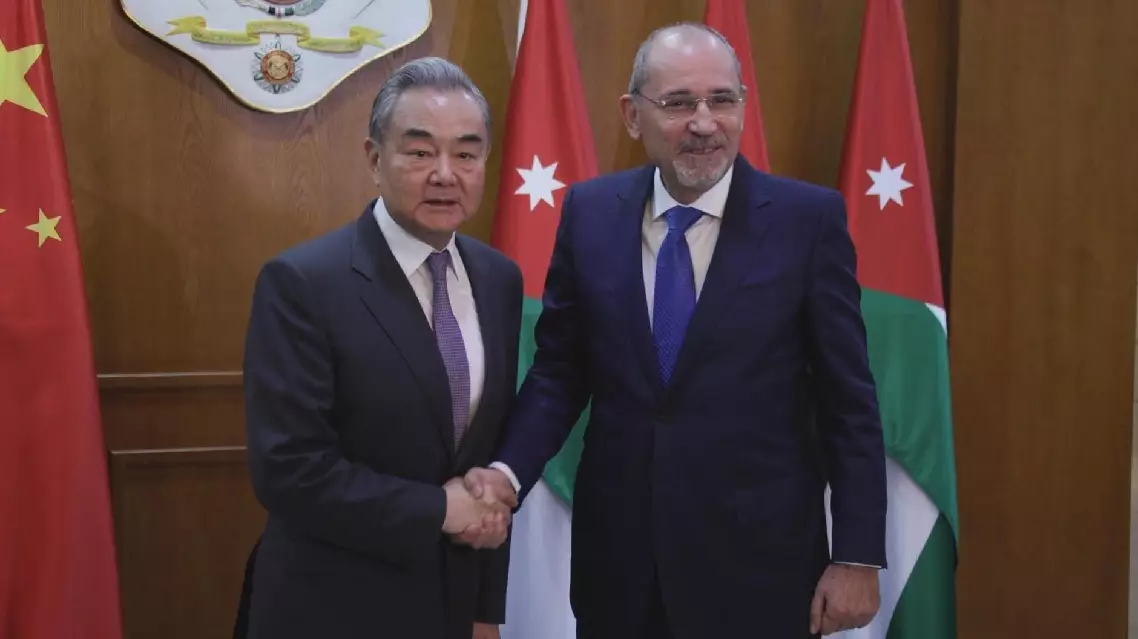
Chinese, Jordanian FMs meet to discuss bilateral, Middle East issues