China's extensive consumer goods trade-in program has generated over 120 million subsidy redemptions, providing tangible benefits to the country's consumers and economy, said a Ministry of Commerce official on Friday.
Li Gang, director of the ministry's Consumption Promotion Department, released a series of related figures at a press briefing in Beijing.
He said the consumer goods trade-in program contributed 1.6 percentage points to the growth rate of the total retail sales of consumer goods in the first quarter of this year. These have vigorously promoted the sustained Chinese economic recovery and growth.
"A total of 2.705 million vehicles and 47.466 million home appliances included in 12 categories have been replaced under the trade-in program. Additionally, 36.61 million digital products, including mobile phones, 37.123 million home furnishing products and kitchenware, as well as 4.2 million electric bicycles have been traded in. Since its implementation, the policy has generated over 120 million instances of subsidy redemption, providing tangible benefits to consumers. It also drove more than 720 billion yuan (about 99 billion U.S. dollars) in sales," said Li.
China kicked off large-scale equipment upgrade and consumer goods trade-in programs in March 2024, revamped these programs earlier this year, amid efforts to boost domestic demand and spur economic growth.

China's consumer goods trade-program generates over 120 million subsidy redemptions: official
China's stock market demonstrated robust performance in 2025 with new records in various sectors.
Against the backdrop of global liquidity easing and evolving industrial policies, the A-share market experienced a landmark year. Multiple key metrics - including total market capitalization, trading volume, as well as margin trading and short selling balances - achieved historic breakthroughs, demonstrating remarkable vitality and resilience.
In terms of overall performance, as of Dec. 31, 2025, the total market capitalization of A-shares reached approximately 118.91 trillion yuan, marking a net increase of 25.30 trillion yuan from the year's opening level of 93.61 trillion yuan. This represents a growth rate of 27.03 percent, according to data from financial information provider Wind.
In 2025, major A-share indices extended their annual gains compared to 2024.
On Dec. 31, 2025, the Shanghai Composite Index stood at 3,968.84 points, marking an annual increase of 18.41 percent - the largest annual gain since 2020. The Shenzhen Component Index rose 29.87 percent for the year, while the ChiNext Index surged 49.57 percent. The Beijing Stock Exchange 50 Index recorded an annual gain of 38.80 percent, while the STAR Market 50 Index rose 35.92 percent for the year.
As major indices rose, market trading activity intensified. Throughout 2025, the A-share market recorded a total trading value of approximately 420 trillion yuan, marking a growth of over 60 percent compared to the previous year and nearly doubling the 2023 annual value. It also marked the first time in history that the annual trading value surpassed the 400 trillion yuan threshold.
The margin trading and short selling scale in the A-share market expanded rapidly in 2025. As of the year end, the outstanding margin trading and short selling balance in the A-share market increased by 690.7 billion yuan during the year to reach 2.5 trillion yuan, setting a new historical high.
Notably, the growth in the balance was primarily driven by the increase in the financing balance. Although the short selling balance also increased in 2025, its cumulative growth for the year was less than 10 billion yuan, with the absolute value of the short selling balance remaining at a low level in recent years.
As market sentiment continued to heat up, major sectors in the A-share market saw increases. Key industry sectors rose to varying degrees, with over half posting annual increases exceeding 30 percent.
Boosted by sharp rises in precious metal prices, the nonferrous metals sector delivered standout performance throughout 2025. Defense and military, telecommunications, machinery and equipment, automotive, power equipment, and electronics sectors also ranked among the top annual gainers. Sectors like food and beverages, coal, and banking showed relatively weaker annual performance but still managed modest gains.
Against the backdrop of a broad market rally, individual stocks also rose, with many delivering standout performances. Data indicates that over 4,200 A-shares saw price increases in 2025, accounting for more than three-quarters of the total. Specifically, after excluding newly listed stocks, over 500 A-shares still doubled in value, with more than 100 stocks achieving annual gains exceeding 200 percent.
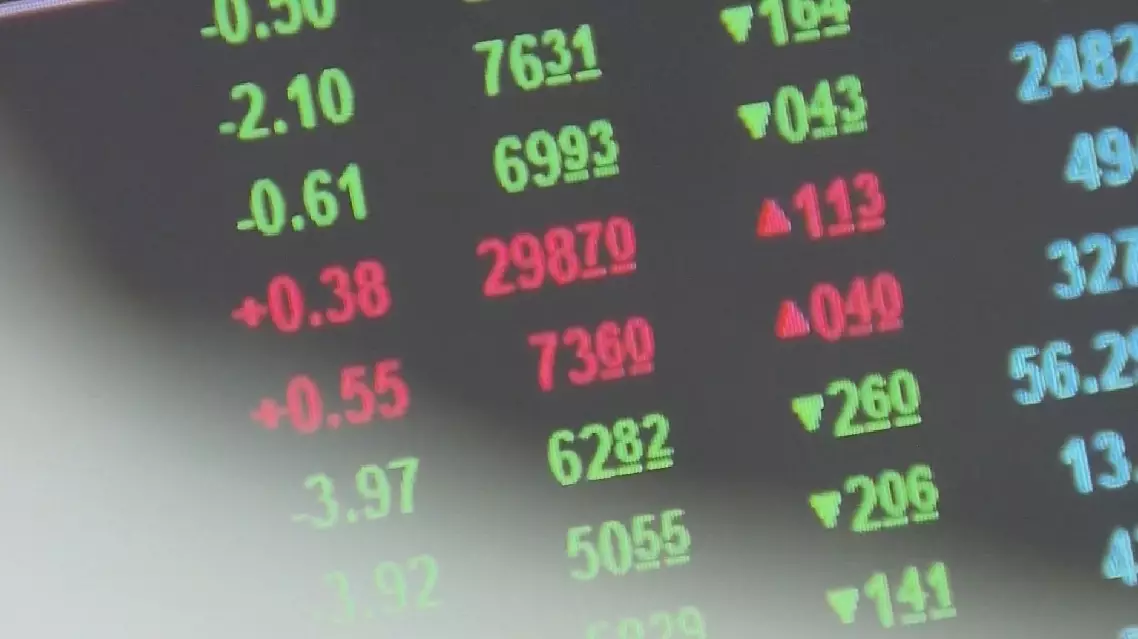
China's stock market demonstrates strong performance with multiple new records in 2025