BOSTON (AP) — As a Black teenager growing up in Boston, Wayne Lucas vividly remembers joining about 20,000 people to hear the Rev. Martin Luther King Jr. speak out against the city's segregated school system and the entrenched poverty in poor communities.
Sixty years on, Lucas was back on the Boston Common on Saturday to celebrate the anniversary of what became known as the 1965 Freedom Rally. He joined others in calling for continued activism against many of the same injustices and inequities that King fought against, and in criticizing President Donald Trump and his administration for current divisions and fears about race and immigration across the country.
Click to Gallery
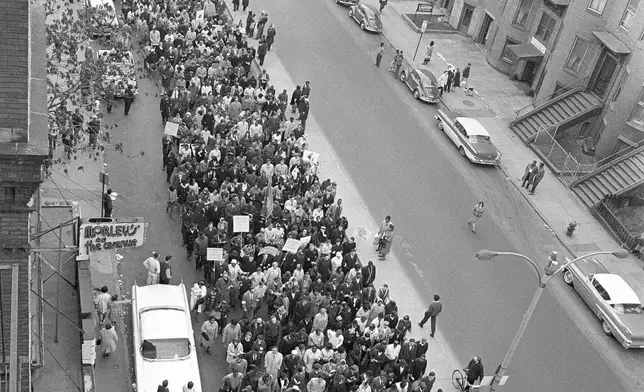
FILE - Civil rights marchers parade down Columbus Ave. in Boston led by Dr. Martin Luther King Jr., en route to historic Boston Common, April 25, 1965. (AP Photo, file)
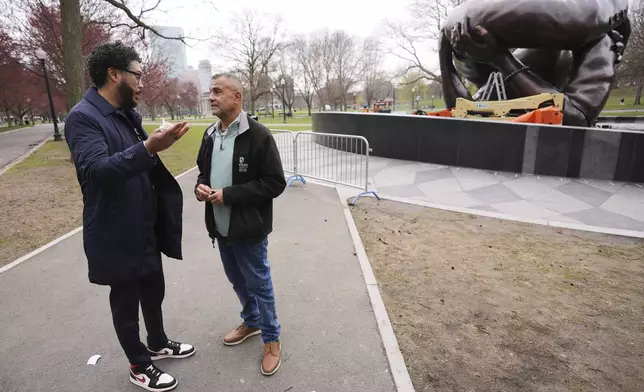
Wayne Lucas, right, who sixty years ago participated at the Freedom Rally on Boston Common, talks with Imari Paris Jeffries, the president and CEO of Embrace Boston, at the "The Embrace" sculpture on the common, Tuesday, April 15, 2025, in Boston. (AP Photo/Charles Krupa)
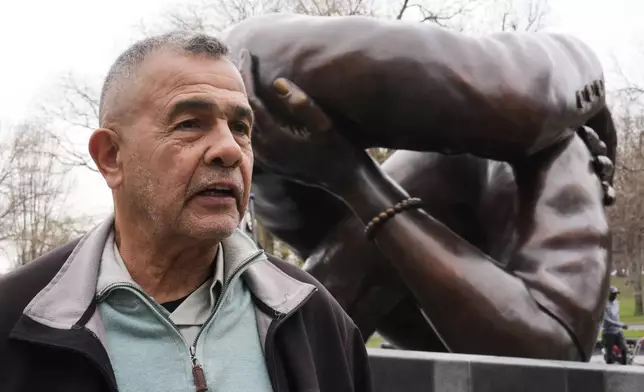
Wayne Lucas, who sixty years ago participated at the Freedom Rally on Boston Common, is interviewed at the "The Embrace" sculpture on the common, Tuesday, April 15, 2025, in Boston. (AP Photo/Charles Krupa)
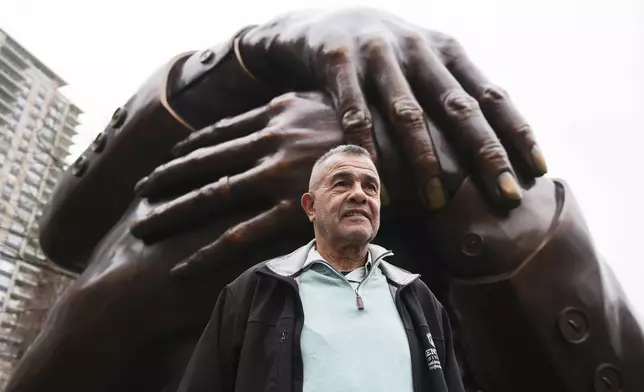
Wayne Lucas, who sixty years ago participated at the Freedom Rally on Boston Common, poses at the "The Embrace" sculpture on the common, Tuesday, April 15, 2025, in Boston. (AP Photo/Charles Krupa)
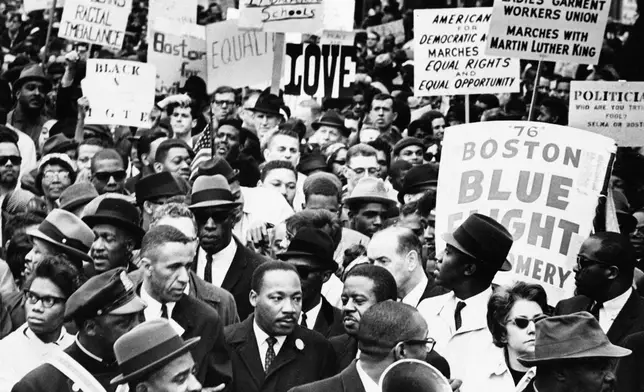
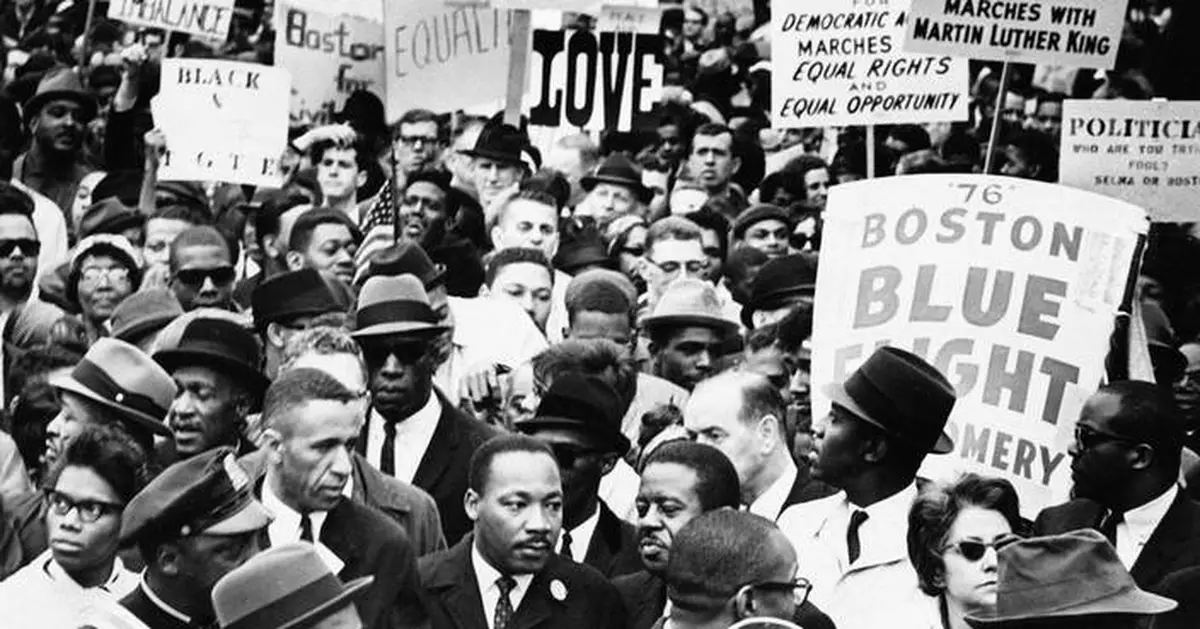
Dr. Martin Luther King Jr., is completely surrounded as he leads a civil rights march in Boston, April 23, 1965, en route to historic Boston Common where he will address a crowd. (AP Photo, file)
“The message was ... that we still have work to do,” said Lucas, 75. “It was a lot of inspiration by every speaker out there.”
The gathering drew several hundred people on a rainy and windy day, conditions similar to those during the 1965 event. It was preceded by a march by a smaller group of people, mostly along the route taken to the Boston Common 60 years earlier. Up to 125 different organizations took part.
King's son, Martin Luther King III, gave a keynote speech, saying he never thought racism would still be around and on the rise like it is today.
“We must quadruple our efforts to create a more just and humane society,” he told the crowd. “We used to exhibit humanity and civility, but we have chosen temporarily to allow civility to be moved aside. And that is not sustainable, my friends.”
He added, “Today, we’ve got to find a way to move forward, when everything appears to be being dismantled, it seems to be attempting to break things up. Now, you do have to retreat sometimes. But dad showed us how to stay on the battlefield, and mom, throughout their lives. They showed us how to build community.”
The gathering was near the site of a 20-foot-high (6-meter-high) memorial to racial equity, which shows Martin Luther King Jr. embracing his wife, Coretta Scott King.
U.S. Rep. Ayanna Pressley, a Massachusetts Democrat, said the work of 1960s civil rights leaders remains unfinished, with too many people still experiencing racism, poverty and injustice.
“We are living through perilous times,” she said. "Across the country, we are witnessing ... a dangerous resurgence of white supremacy, of state-sanctioned violence, of economic exploitation, of authoritarian rhetoric."
The original protest rally in 1965 brought the civil rights movement to the Northeast, a place Martin Luther King Jr. knew well from his time earning a doctorate in theology from Boston University and serving as assistant minister at the city’s Twelfth Baptist Church. It was also the place where he met his wife, who earned a degree in music education from the New England Conservatory.
In his speech, King told the crowd that he returned to Boston not to condemn the city but to encourage its leaders to do better at a time when Black leaders were fighting to desegregate the schools and housing and working to improve economic opportunities for Black residents. King also implored Boston to become a leader that other cities like New York and Chicago could follow in conducting “the creative experiments in the abolition of ghettos.”
“It would be demagogic and dishonest for me to say that Boston is a Birmingham, or to equate Massachusetts with Mississippi,” he said. “But it would be morally irresponsible were I to remain blind to the threat to liberty, the denial of opportunity, and the crippling poverty that we face in some sections of this community.”
The Boston rally happened after President Lyndon Johnson signed the Civil Rights Act of 1964 and months ahead of the enactment of the Voting Rights Act of 1965 signed in August.
King and other civil rights movement leaders had just come off the Selma to Montgomery march in Alabama, also referred to as Bloody Sunday, weeks before the Boston rally. The civil rights icon also was successful in the 1963 Birmingham campaign prompting the end of legalized racial segregation in the Alabama city, and eventually throughout the nation.
Saturday's rally came as the Trump administration is waging war on diversity, equity and inclusion initiatives in government, schools and businesses around the country, including in Massachusetts.
Since his Jan. 20 inauguration, Trump has banned diversity initiatives across the federal government. The administration has launched investigations of colleges — public and private — that it accuses of discriminating against white and Asian students with race-conscious admissions programs intended to address historic inequities in access for Black students.
The Defense Department at one point temporarily removed training videos recognizing the Tuskegee Airmen and an online biography of Jackie Robinson. In February, Trump fired Air Force Gen. CQ Brown Jr., a champion of racial diversity in the military, as chairman of the Joint Chiefs of Staff. Brown, in the wake of Floyd’s killing, had spoken publicly about his experiences as a Black man, and was only the second Black general to serve as chairman.
The administration has fired diversity officers across government, curtailed some agencies’ celebrations of Black History Month and terminated grants and contracts for projects ranging from planting trees in disadvantaged communities to studying achievement gaps in American schools.
Martin Luther King III told The Associated Press that the attacks on diversity make little sense, noting, “We cannot move forward without understanding what happened in the past."
“It doesn’t mean that it’s about blaming people. It’s not about collective guilt. It’s about collective responsibility,” he continued. “How do we become better? Well, we appreciate everything that helped us to get to where we are. Diversity hasn't hurt the country.”
King said opponents of diversity have floated an uninformed narrative that unqualified people of color are taking jobs from white people, when the reality is they have long been denied the opportunities they deserve.
“I don’t know if white people understand this, but Black people are tolerant,” he said. “From knee-high to a grasshopper, you have to be five times better than your white colleague. And that’s how we prepare ourselves. So it’s never a matter of unqualified. It’s a matter of being excluded.”
Imari Paris Jeffries, the president and CEO of Embrace Boston, which along with the city put on the rally, said the event was a chance to remind people that elements of the “promissory note” King referred to in his “I Have A Dream” speech remain "out of reach” for many people.
“We’re having a conversation about democracy. This is the promissory note — public education, public housing, public health, access to public art,” Paris Jeffries said. "All of these things are a part of democracy. Those are the things that are actually being threatened right now.”
Associated Press writer Dave Collins in Hartford, Connecticut, contributed to this report.
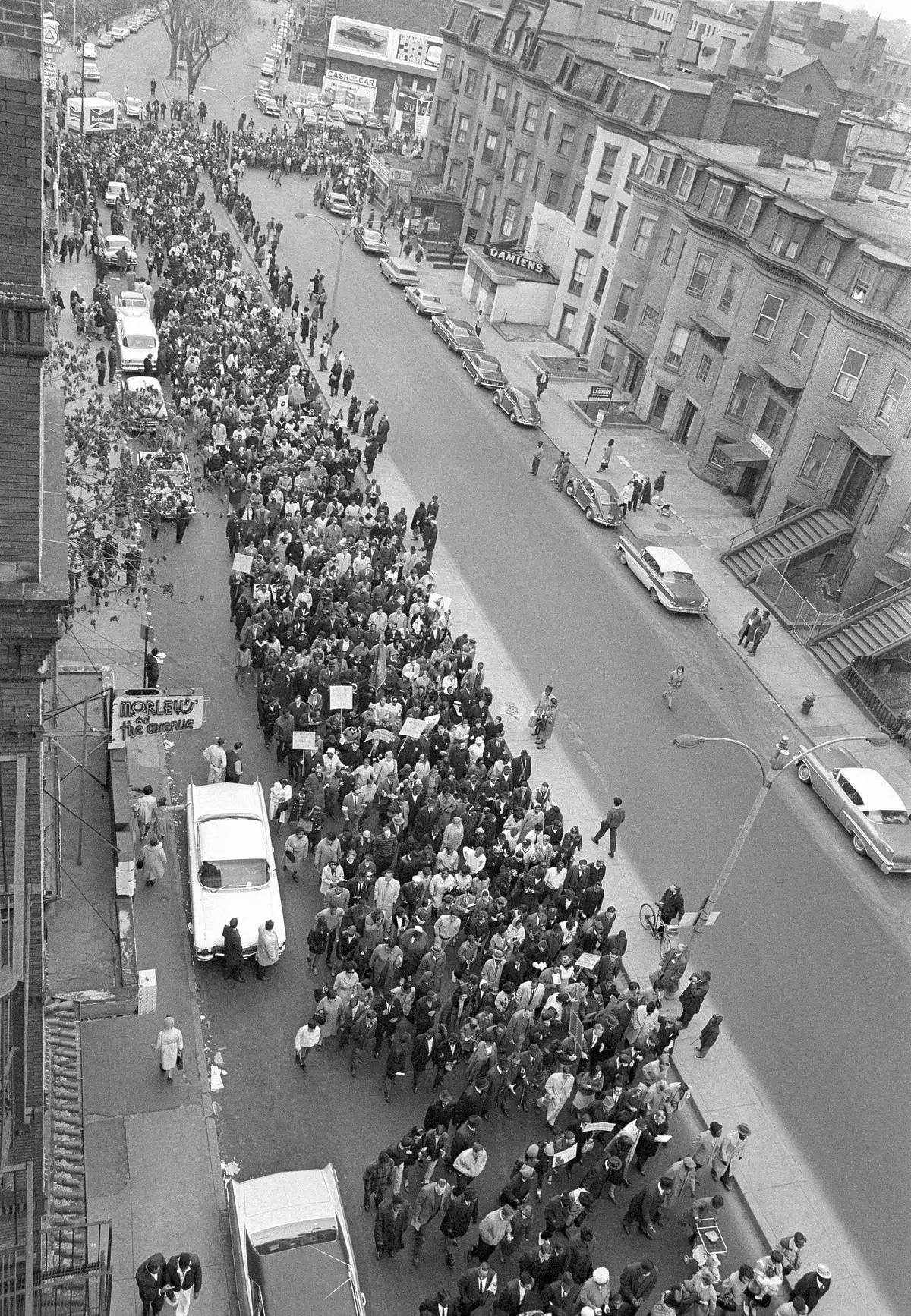
FILE - Civil rights marchers parade down Columbus Ave. in Boston led by Dr. Martin Luther King Jr., en route to historic Boston Common, April 25, 1965. (AP Photo, file)
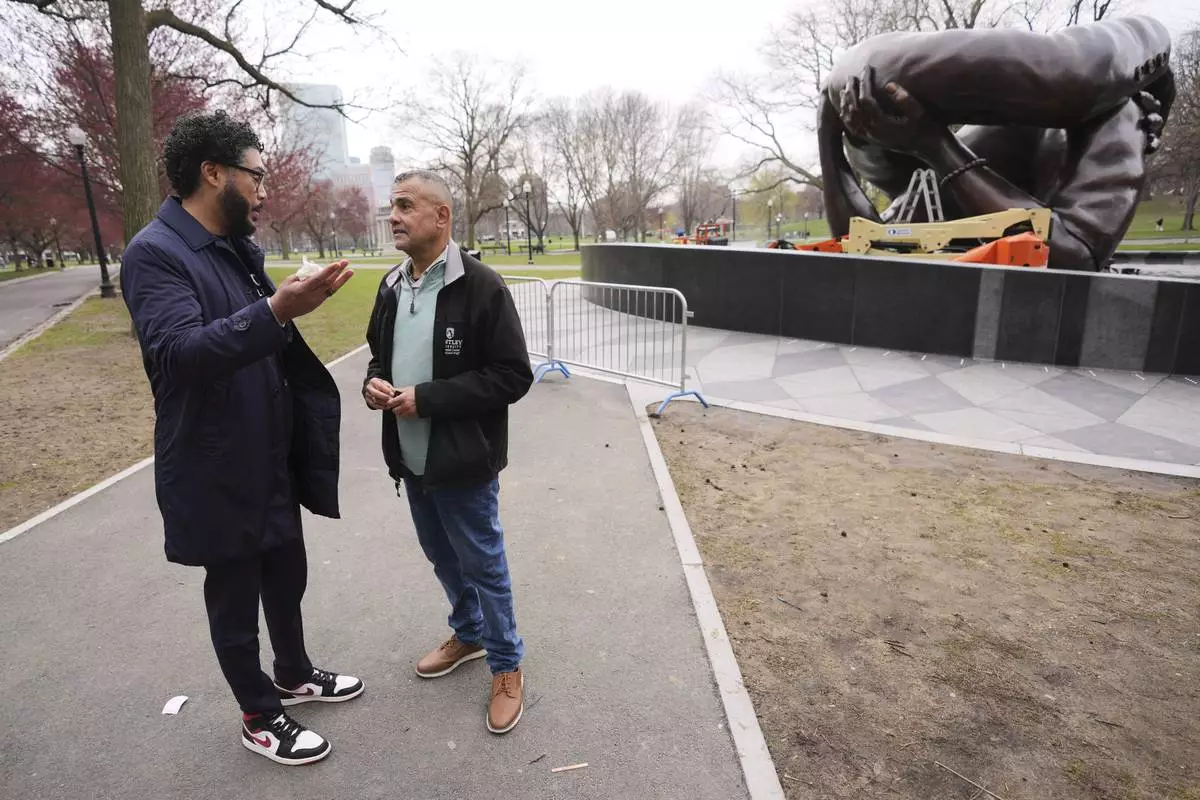
Wayne Lucas, right, who sixty years ago participated at the Freedom Rally on Boston Common, talks with Imari Paris Jeffries, the president and CEO of Embrace Boston, at the "The Embrace" sculpture on the common, Tuesday, April 15, 2025, in Boston. (AP Photo/Charles Krupa)
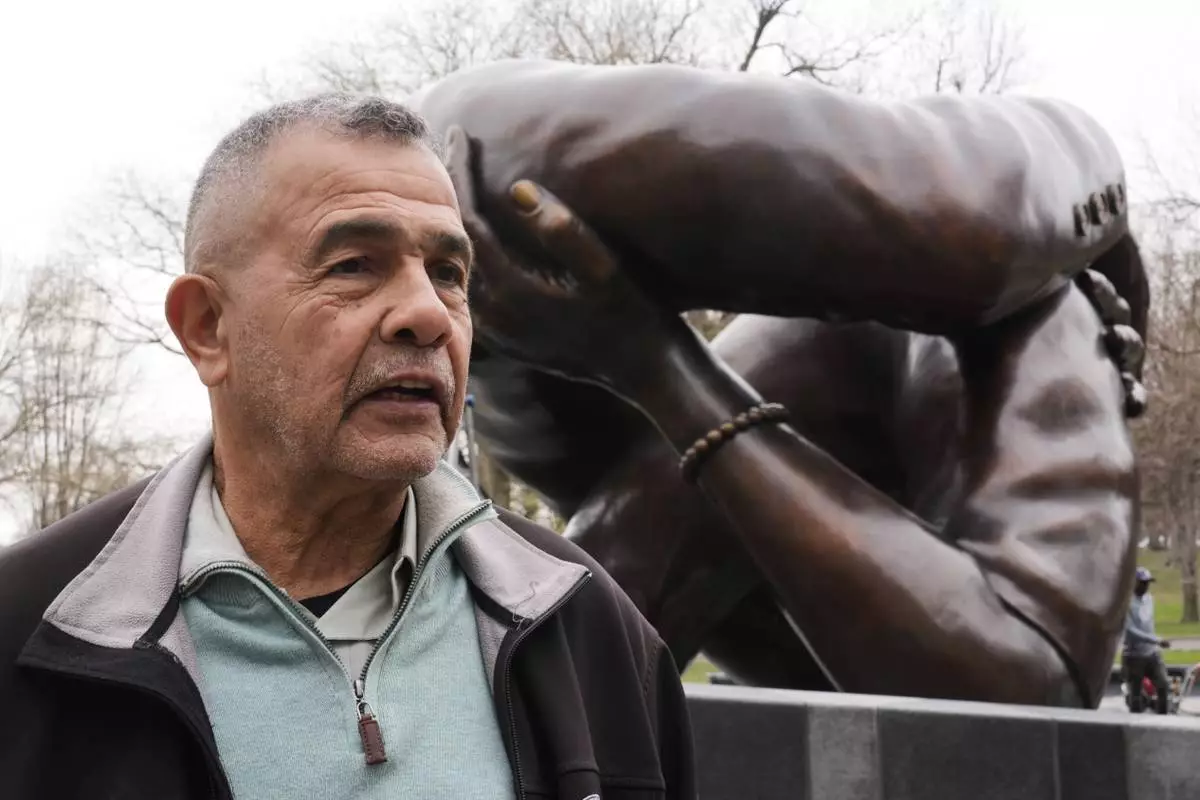
Wayne Lucas, who sixty years ago participated at the Freedom Rally on Boston Common, is interviewed at the "The Embrace" sculpture on the common, Tuesday, April 15, 2025, in Boston. (AP Photo/Charles Krupa)
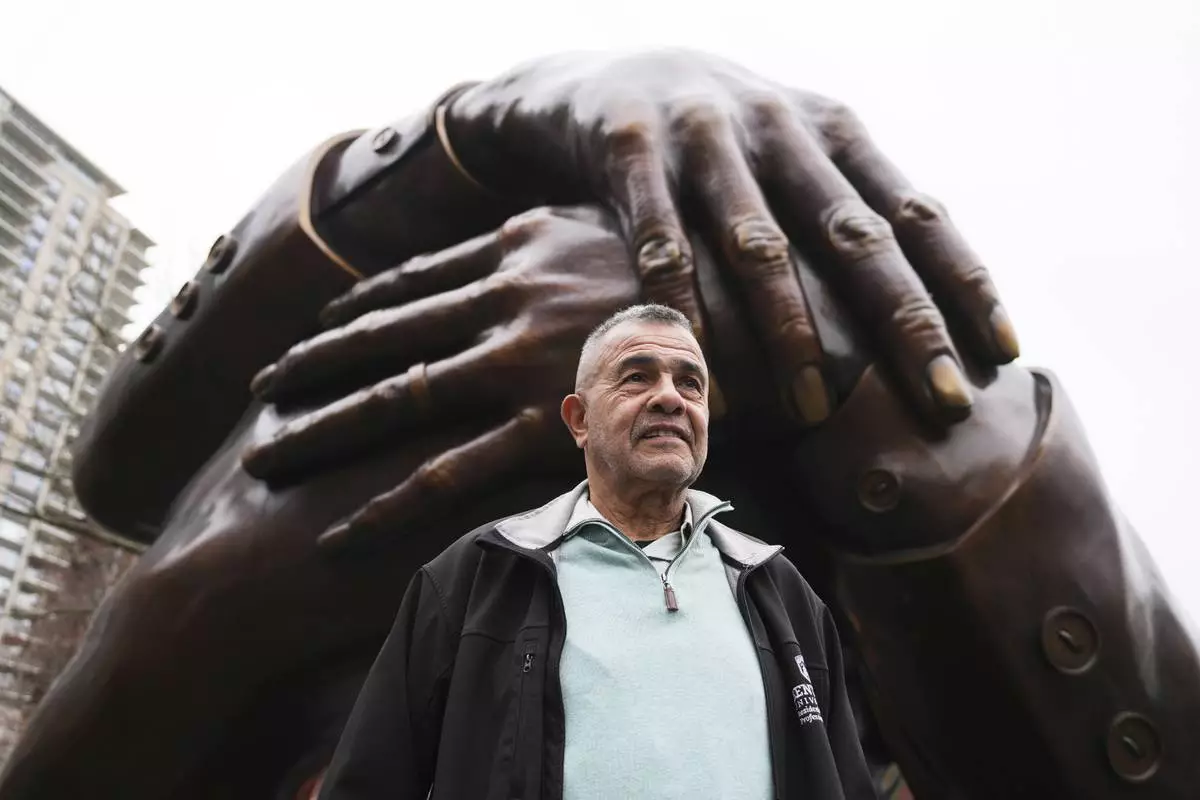
Wayne Lucas, who sixty years ago participated at the Freedom Rally on Boston Common, poses at the "The Embrace" sculpture on the common, Tuesday, April 15, 2025, in Boston. (AP Photo/Charles Krupa)
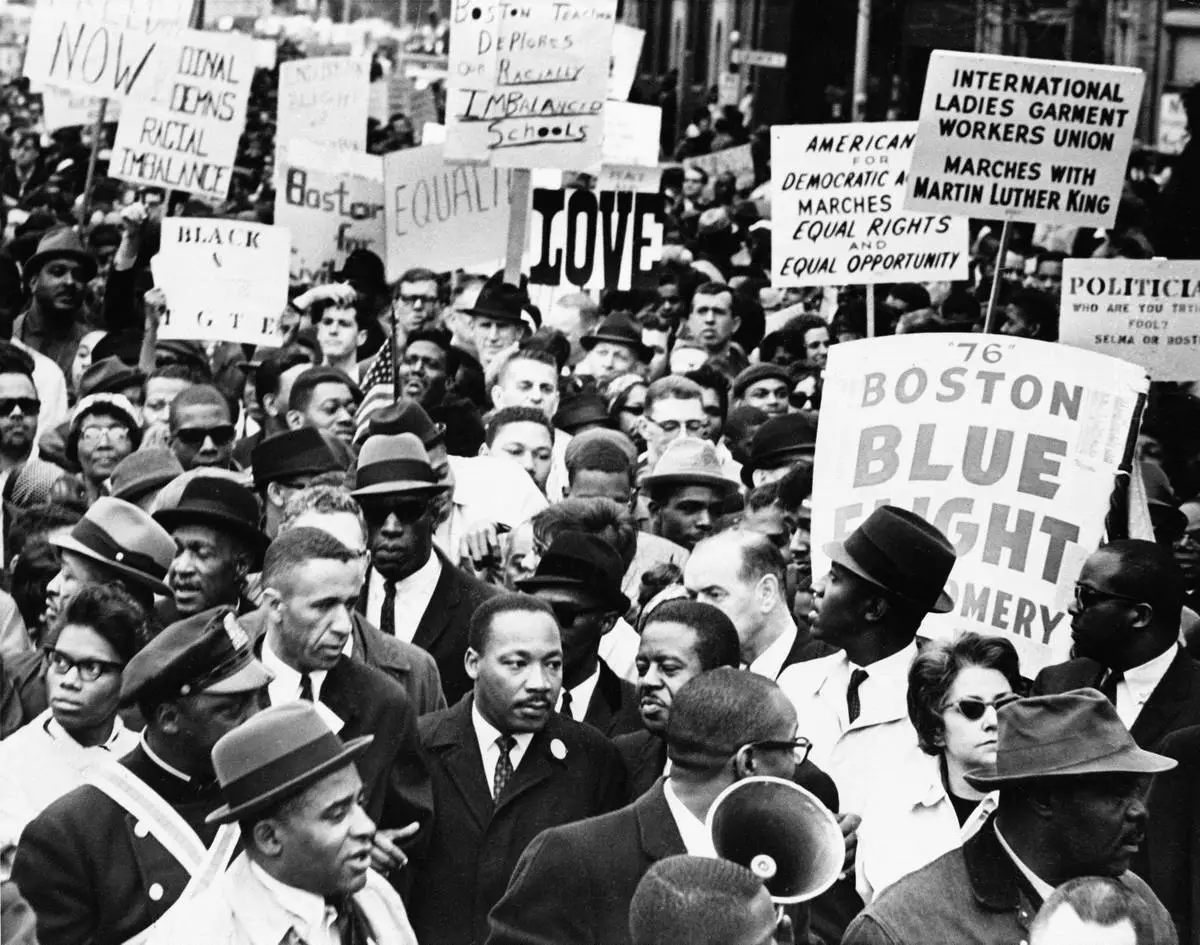
Dr. Martin Luther King Jr., is completely surrounded as he leads a civil rights march in Boston, April 23, 1965, en route to historic Boston Common where he will address a crowd. (AP Photo, file)