KHAN YOUNIS, Gaza Strip (AP) — Nearly seven months pregnant, Yasmine Siam couldn’t sleep, living in a crowded tent camp in Gaza and shaken often by Israeli bombardment. She couldn’t find proper food and hadn’t eaten meat for more than a month. Weak and losing weight, she saw doctors every day. There was little they could do.
One night this month, pain shot through her. She worried labor was starting but was too terrified of gunfire to leave her tent. Siam waited till daybreak to walk to the nearest mobile clinic. The medics told her to go to Nasser Hospital, miles away.
Click to Gallery
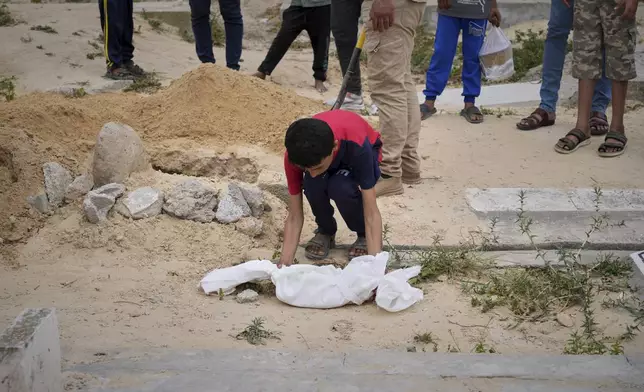
A boy carries the body of 15-day-old premature infant Sila Zidane, who died from sepsis a few days after her twin sister, following their premature birth to mother Yasmine Zakout, to be buried at the cemetery in Deir al-Balah, central Gaza Strip, Wednesday, April 23, 2025. (AP Photo/Abdel Kareem Hana)
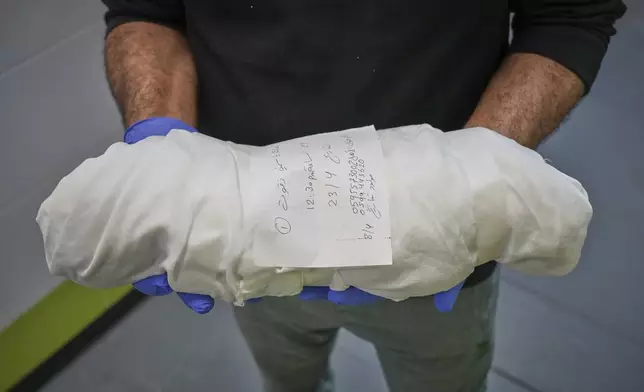
A hospital health worker carries the body of 15-day-old premature infant Sila Zidane, who died from sepsis a few days after her twin sister, following the premature birth of the twins to their mother, Yasmine Zakout, at Nasser Hospital in Khan Younis, southern Gaza Strip, on Wednesday, April 23, 2025. (AP Photo/Abdel Kareem Hana)
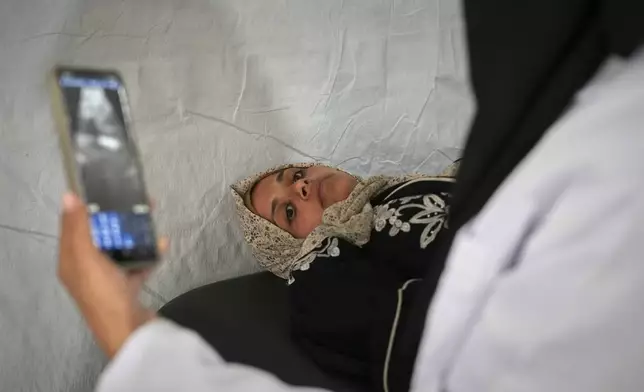
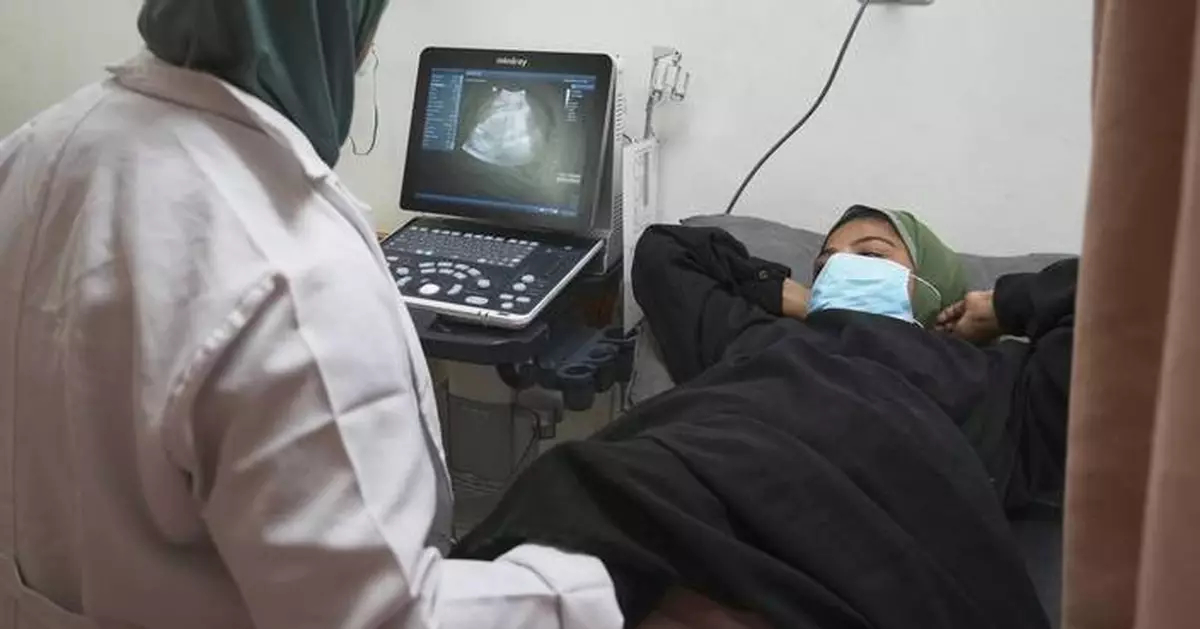
Islam Sheih Al-Eid, 27, who is six months pregnant, undergoes an ultrasound scan at the Médecins Sans Frontières (MSF) clinic in Muwasi, near Khan Younis in the southern Gaza Strip, Wednesday, April 9, 2025. (AP Photo/Abdel Kareem Hana)
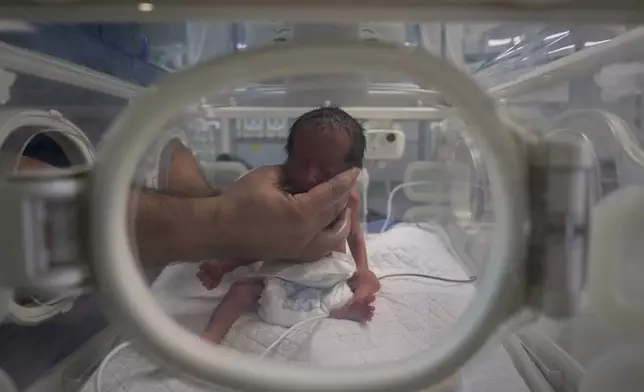
A nurse holds a prematurely born baby suffering from respiratory problems inside an incubator at Nasser Hospital in Khan Younis, southern Gaza Strip, Wednesday, April 23, 2025. (AP Photo/Abdel Kareem Hana)
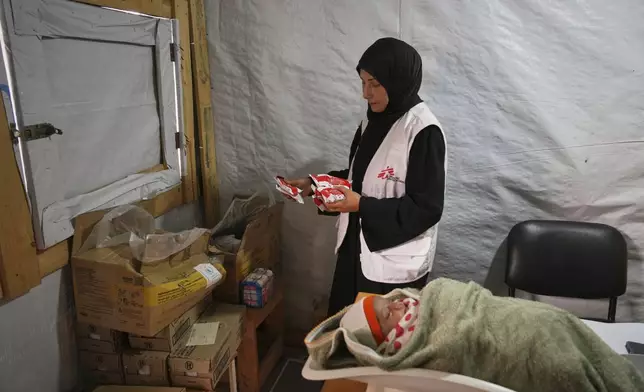
Doctors weigh a Palestinian baby at the Médecins Sans Frontières (MSF) clinic in Muwasi, near Khan Younis in the southern Gaza Strip, Wednesday, April 9, 2025. (AP Photo/Abdel Kareem Hana)
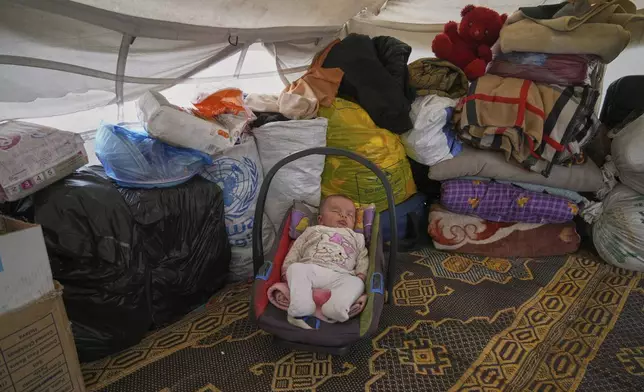
3-month-old, Jilan Zarrouk sleeps at a makeshift tent camp for displaced Palestinians in Muwasi, outskirts of Khan Younis in the southern Gaza Strip, Wednesday, April 9, 2025. (AP Photo/Abdel Kareem Hana)
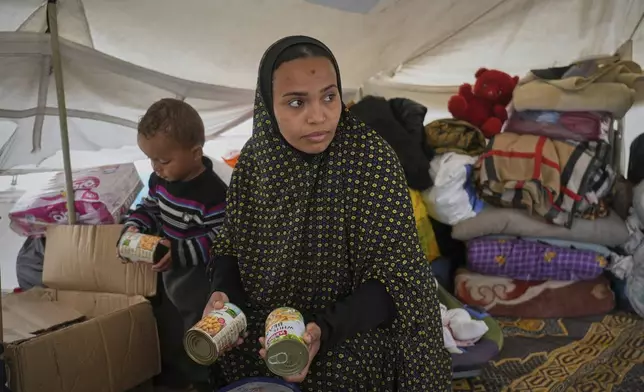
Shaima Al-Louh, 24, stores canned food for her children at her tent a makeshift camp for displaced Palestinians in Muwasi, on the outskirts of Khan Younis in the southern Gaza Strip, Wednesday, April 9, 2025. (AP Photo/Abdel Kareem Hana)
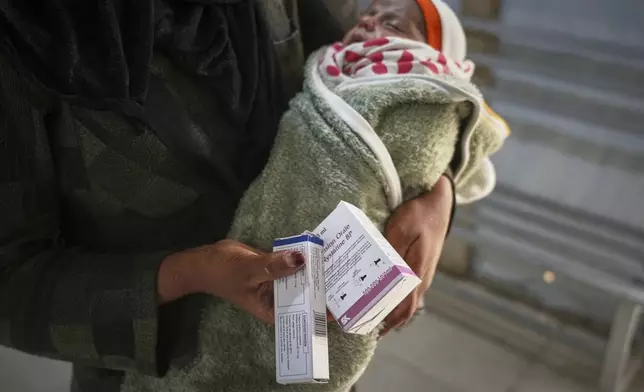
Huda Kabaja, 26, holds her 3-week-old daughter while receiving medication for malnutrition at the Médecins Sans Frontières (MSF) clinic in Muwasi, near Khan Younis in the southern Gaza Strip, Wednesday, April 9, 2025. (AP Photo/Abdel Kareem Hana)
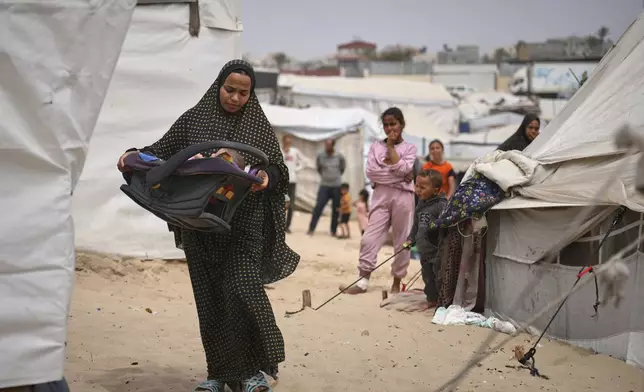
Shaima Al-Louh, 24, carries her 3-month-old daughter, Jilan Zarrouk, at a makeshift tent camp for displaced Palestinians in Muwasi, on the outskirts of Khan Younis in the southern Gaza Strip, on Wednesday, April 9, 2025. (AP Photo/Abdel Kareem Hana)
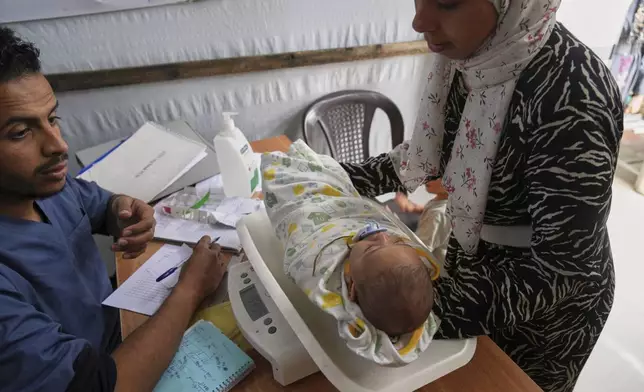
Doctors weigh a Palestinian baby at the Médecins Sans Frontières (MSF) clinic in Muwasi, near Khan Younis in the southern Gaza Strip, Tuesday, April 8, 2025. (AP Photo/Abdel Kareem Hana)
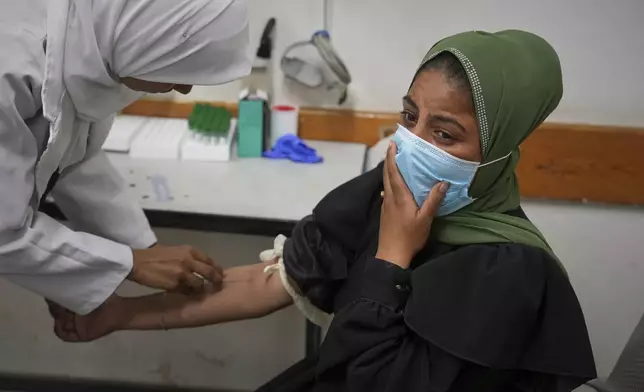
Palestinian woman Yasmine Siam, who was pregnant but suffered a miscarriage a few days later, undergoes a prenatal checkup at Nasser Hospital in Khan Younis, in the southern Gaza Strip, Wednesday, April 9, 2025. (AP Photo/Abdel Kareem Hana)

Palestinian woman Yasmine Siam, who was pregnant but suffered a miscarriage a few days later, poses for a photo in her tent in Khan Younis, southern Gaza Strip, Wednesday, April 9, 2025. (AP Photo/Abdel Kareem Hana)
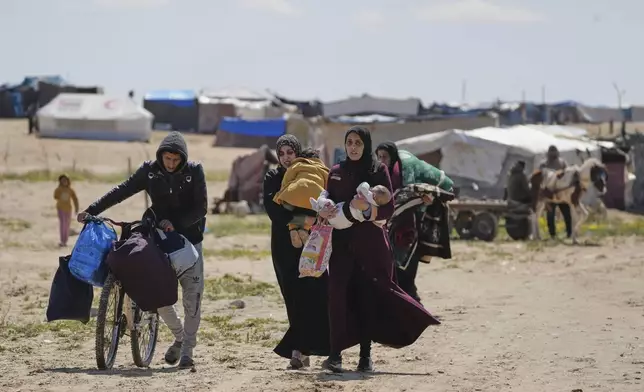
FILE – Displaced Palestinians fleeing Rafah amid ongoing Israeli military operations arrive in Khan Younis, in the southern Gaza Strip, Sunday, March 23, 2025. (AP Photo/Abdel Kareem Hana, File)
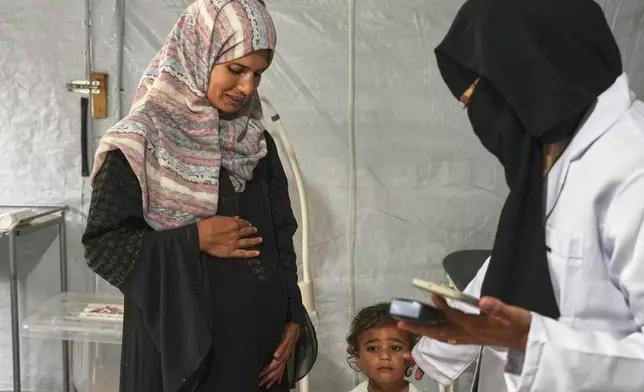
Islam Qeshta, a 30-year-old pregnant Palestinian woman, arrives for a prenatal checkup at the MSF clinic in Muwasi, near Khan Younis, in the southern Gaza Strip, on Wednesday, April 9, 2025. (AP Photo/Abdel Kareem Hana)
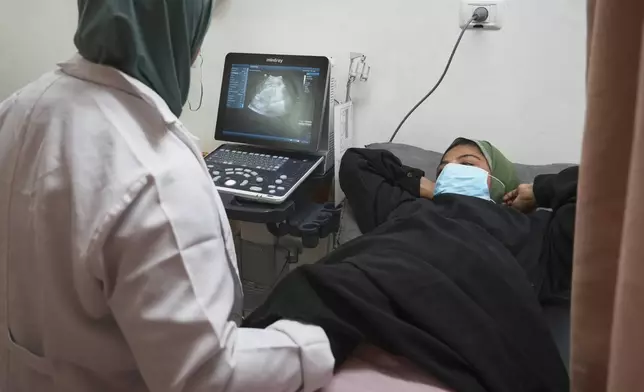
Pregnant Palestinian woman Yasmine Siam undergoes an ultrasound scan at Nasser Hospital in Khan Younis, in the southern Gaza Strip, Wednesday, April 9, 2025. She suffered a miscarriage a few days later. (AP Photo/Abdel Kareem Hana)
She had to take a donkey cart, jolted by every bump in the bombed-out roads. Exhausted, the 24-year-old found a wall to lean on for the hourslong wait for a doctor.
An ultrasound showed her baby was fine. Siam had a urinary tract infection and was underweight: 57 kilos (125 pounds), down 6 kilos (13 pounds) from weeks earlier. The doctor prescribed medicine and told her what every other doctor did: Eat better.
“Where do I get the food?” Siam said, out of breath as she spoke to The Associated Press on April 9 after returning to her tent outside the southern city of Khan Younis.
“I am not worried about me. I am worried about my son,” she said. “It would be terrible if I lose him.”
Siam’s troubled pregnancy has become the norm in Gaza. Israel’s 18-month-old military campaign decimating the territory has made pregnancy and childbirth more dangerous, even fatal, for Palestinian women and their babies.
It has become worse since March 2, when Israel cut off all food, medicine and supplies for Gaza’s more than 2 million people.
Meat, fresh fruits and vegetables are practically nonexistent. Clean water is difficult to find. Pregnant women are among the hundreds of thousands who trudge for miles to find new shelters after repeated Israeli evacuation orders. Many live in tents or overcrowded schools amid sewage and garbage.
Up to 20% of Gaza’s estimated 55,000 pregnant women are malnourished, and half face high-risk pregnancies, according to the United Nations Population Fund, or UNFPA. In February and March, at least 20% of newborns were born prematurely or suffering from complications or malnutrition.
With the population displaced and under bombardment, comprehensive miscarriage and stillbirth figures are impossible to obtain. Records at Khan Younis’ Nasser Hospital show miscarriages in January and February were double the same period in 2023.
Dr. Yasmine Shnina, a Doctors Without Borders supervisor of midwives at Nasser Hospital, documented 40 miscarriages a week in recent weeks. She has recorded five women a month dying in childbirth, compared with around two a year before the war.
“We don’t need to wait for future impact. The risks are emerging now,” she said.
For Siam and her family, her pregnancy — after a whirlwind, wartime marriage — was a rare joy.
Driven from Gaza City, they had moved three times before settling in the tent city sprawling across the barren coastal region of Muwasi.
Late last summer, they shared a meal with neighbors. A young man from the tent across the way was smitten.
The next day, Hossam Siam asked for Yasmine’s hand in marriage.
She refused initially. “I didn’t expect marriage in war,” she said. “I wasn’t ready to meet someone.”
Hossam didn’t give up. He took her for a walk by the sea. They told each other about their lives. “I accepted,” she said.
On Sept. 15, the groom’s family decorated their tent. Her best friends from Gaza City, dispersed around the territory, watched the wedding online
Within a month, Yasmine Siam was pregnant.
Her family cherished the coming baby. Her mother had grandsons from her two sons but longed for a child from her daughters. Siam’s older sister had been trying for 15 years to conceive. Her mother and sister — now back in Gaza City — sent baby essentials.
From the start, Siam struggled to get proper nutrition, relying on canned food.
After a ceasefire began in January, she and Hossam moved to Rafah. On Feb. 28, she had a rare treat: a chicken, shared with her in-laws. It was her last time eating meat.
A week later, Hossam walked for miles searching for chicken. He returned empty-handed.
Israel has leveled much of Gaza with its air and ground campaign, vowing to destroy Hamas after its Oct. 7, 2023, attack on southern Israel. It has killed over 51,000 Palestinians, mostly women and children, according to Gaza’s Health Ministry, whose count does not distinguish between civilians and combatants.
In the Oct. 7 attack, militants killed about 1,200 people, mostly civilians, and abducted 251. They still hold 59 hostages after most were released in ceasefire deals.
In Gaza's ruins, being pregnant is a formidable struggle.
It’s not just about quantity of food, said Rosalie Bollen, of UNICEF, “it’s also about nutritional diversity, the fact that they have been living in very dire, unsanitary conditions, sleeping on the ground, sleeping in the cold and just being stuck in this permanent state of very toxic stress.”
Nine of the 14 hospitals providing maternal health services before the war still function, though only partially, according to UNFPA.
Because many medical facilities are dislocated by Israeli military operations or must prioritize critical patients, women often can’t get screenings that catch problems early in pregnancy, said Katy Brown, of Doctors Without Borders-Spain.
That leads to complications. A quarter of the nearly 130 births a day in February and March required surgical deliveries, UNFPA says.
“Even the basics are impossible,” Brown said.
Under the blockade, over half the medicines for maternal and newborn care have run out, including ones that control bleeding and induce labor, the Health Ministry says. Diapers are scarce. Some women reuse them, turning them inside out, leading to severe skin infections, aid workers say.
Israel says the blockade aims to pressure Hamas into releasing the remaining hostages. Rights groups call it a “starvation tactic” endangering the entire population and a potential war crime.
At Nasser Hospital’s maternity ward, Dr. Ahmad al-Farra witnessed things go from bad to worse.
Israeli forces raided the hospital in early 2024, claiming it housed Hamas fighters. Incubators in a warehouse were wrecked. The maternity ward was rebuilt into Gaza’s largest and best equipped for emergencies.
Since Israel broke the two-month ceasefire on March 18, the hospital has been flooded with wounded.
Up to 15 premature babies at a time need respirators, but the hospital has only two CPAP machines to keep preemies breathing. Some are put on adult respirators, often leading to death, al-Farra said.
Twenty CPAP machines languish outside Gaza, unable to enter because of the blockade, along with 54 ultrasounds, nine incubators and midwifery kits, according to the U.N.
A lack of cleaning supplies makes hygiene nearly impossible. After giving birth, women and newborns weakened by hunger frequently suffer infections causing long-term complications, or even death, said al-Farra.
Yasmine Zakout was rushed to Nasser Hospital in early April after giving birth prematurely to twin girls. One girl died within days, and her sister died last week, both from sepsis.
Before the war, al-Farra said he would maybe see one child a year with necrotizing pneumonia, a severe infection that kills lung tissue.
“In this war, I treated 50 cases,” al-Farra said. He removed parts of the lungs in nearly half those babies. At least four died.
Pregnant women are regularly among the wounded.
Khaled Alserr, a surgeon at Nasser Hospital, told of treating a four months pregnant woman after an April 16 strike. Shrapnel had torn through her uterus. The fetus couldn’t be saved, he said, and pregnancy will be risky the rest of her life. Two of her children were among 10 children killed in the strike, he said.
In her sixth month of pregnancy, Siam walked and rode a donkey cart for miles back to a tent in Muwasi after Israel ordered Rafah evacuated.
With food even scarcer, she turned to charity kitchens distributing meals of plain rice or pasta.
Weakened, she fell down a lot. Stress was mounting — the misery of tent life, the separation from her mother, the terror of airstrikes, the fruitless visits to clinics.
“I just wish a doctor would tell me, ‘Your weight is good.’ I’m always malnourished,” she told the AP, almost pleading.
Hours after her scare on April 9, Siam was still in pain. She made her fifth visit to the mobile clinic in two days. They told her to go to her tent and rest.
She started spotting. Her mother-in-law held her up as they walked to a field hospital in the dead of night.
At 3 a.m., the doctors said there was nothing she could do but wait. Her mother arrived from Gaza City.
Eight hours later, the fetus was stillborn. Her mother told her not to look at the baby. Her mother-in-law said he was beautiful.
Her husband took their boy to a grave.
Days later, she told the AP she breaks down when she sees photos of herself pregnant. She can’t bear to see anyone and refuses her husband’s suggestions to take walks by the sea, where they sealed their marriage.
She wishes she could turn back time, even for just a week.
“I would take him into my heart, hide him and hold on to him.”
She plans to try for another baby.
El Deeb reported from Beirut. Keath reported from Cairo.
Follow AP’s war coverage at https://apnews.com/hub/israel-hamas-war
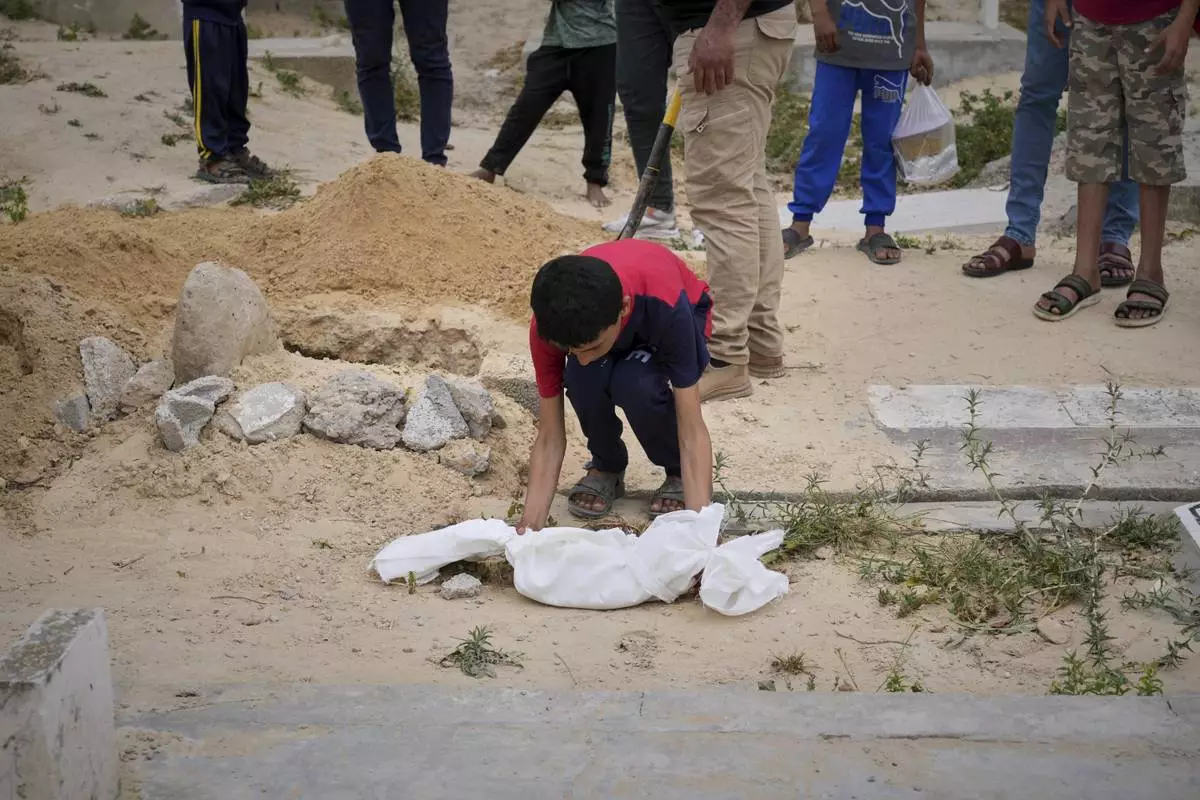
A boy carries the body of 15-day-old premature infant Sila Zidane, who died from sepsis a few days after her twin sister, following their premature birth to mother Yasmine Zakout, to be buried at the cemetery in Deir al-Balah, central Gaza Strip, Wednesday, April 23, 2025. (AP Photo/Abdel Kareem Hana)
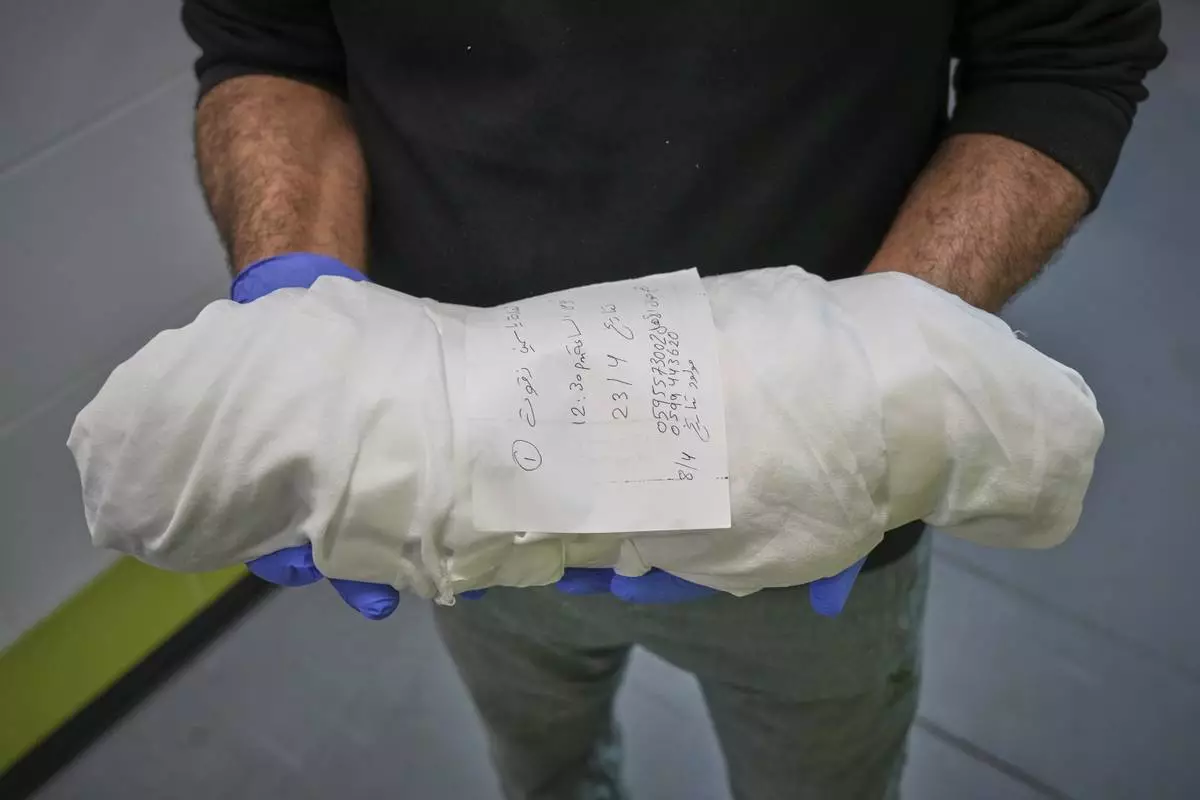
A hospital health worker carries the body of 15-day-old premature infant Sila Zidane, who died from sepsis a few days after her twin sister, following the premature birth of the twins to their mother, Yasmine Zakout, at Nasser Hospital in Khan Younis, southern Gaza Strip, on Wednesday, April 23, 2025. (AP Photo/Abdel Kareem Hana)
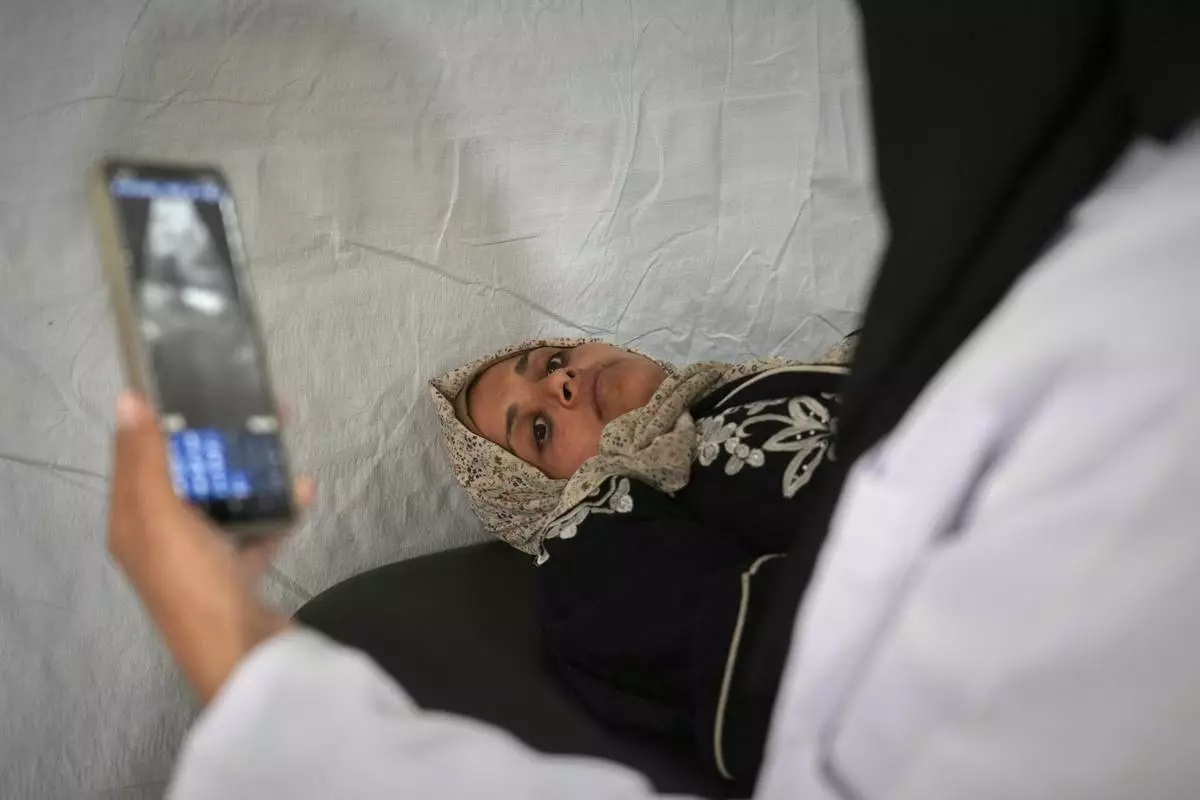
Islam Sheih Al-Eid, 27, who is six months pregnant, undergoes an ultrasound scan at the Médecins Sans Frontières (MSF) clinic in Muwasi, near Khan Younis in the southern Gaza Strip, Wednesday, April 9, 2025. (AP Photo/Abdel Kareem Hana)
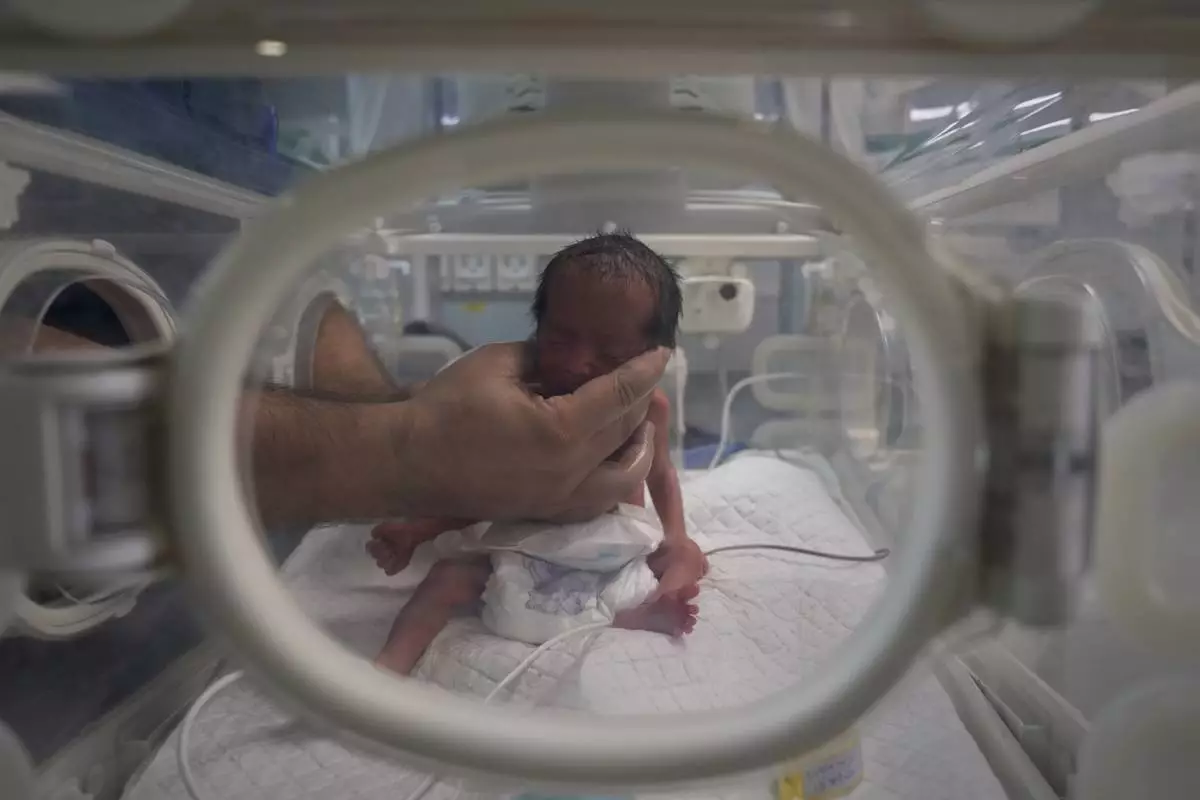
A nurse holds a prematurely born baby suffering from respiratory problems inside an incubator at Nasser Hospital in Khan Younis, southern Gaza Strip, Wednesday, April 23, 2025. (AP Photo/Abdel Kareem Hana)
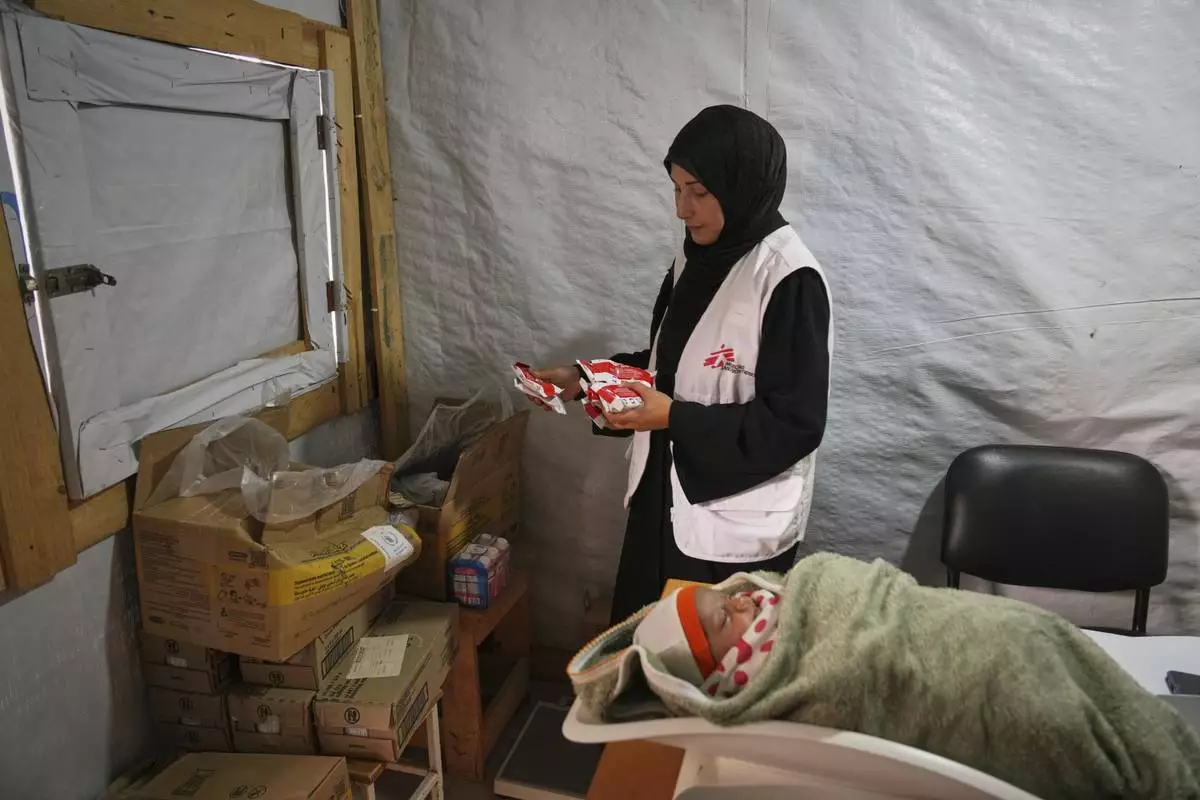
Doctors weigh a Palestinian baby at the Médecins Sans Frontières (MSF) clinic in Muwasi, near Khan Younis in the southern Gaza Strip, Wednesday, April 9, 2025. (AP Photo/Abdel Kareem Hana)
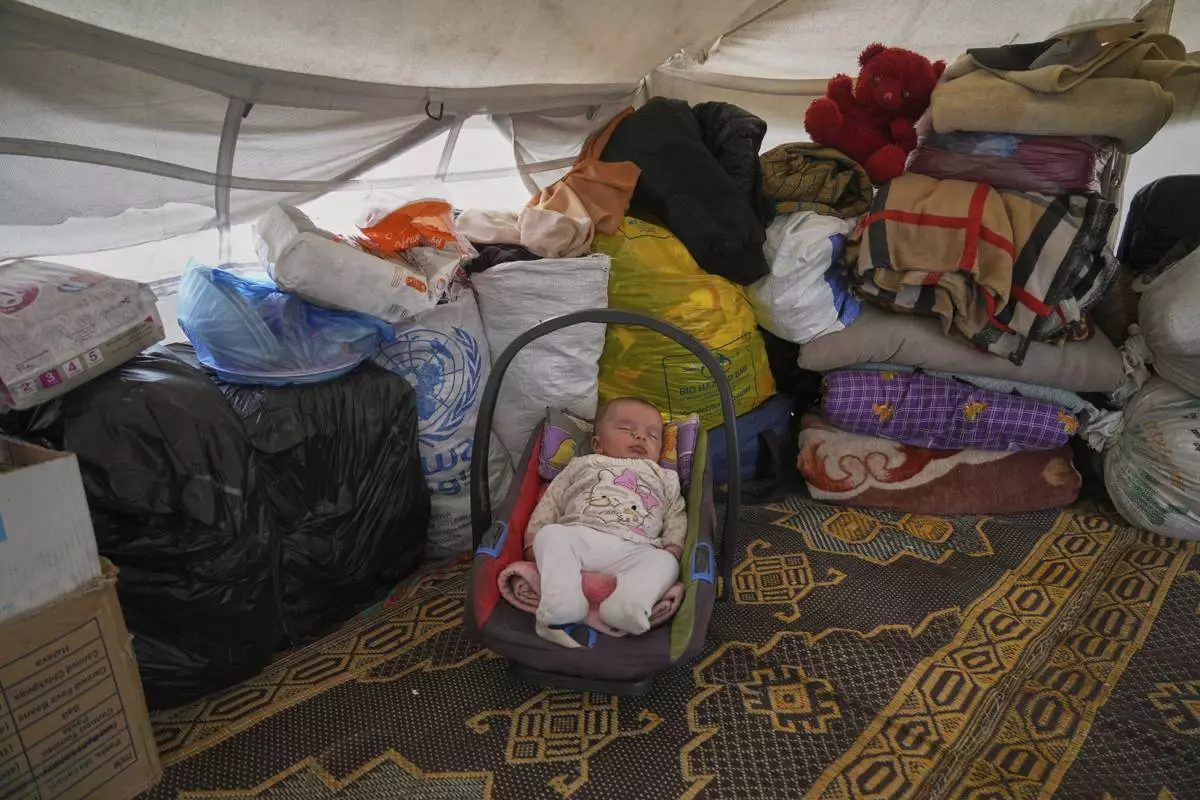
3-month-old, Jilan Zarrouk sleeps at a makeshift tent camp for displaced Palestinians in Muwasi, outskirts of Khan Younis in the southern Gaza Strip, Wednesday, April 9, 2025. (AP Photo/Abdel Kareem Hana)
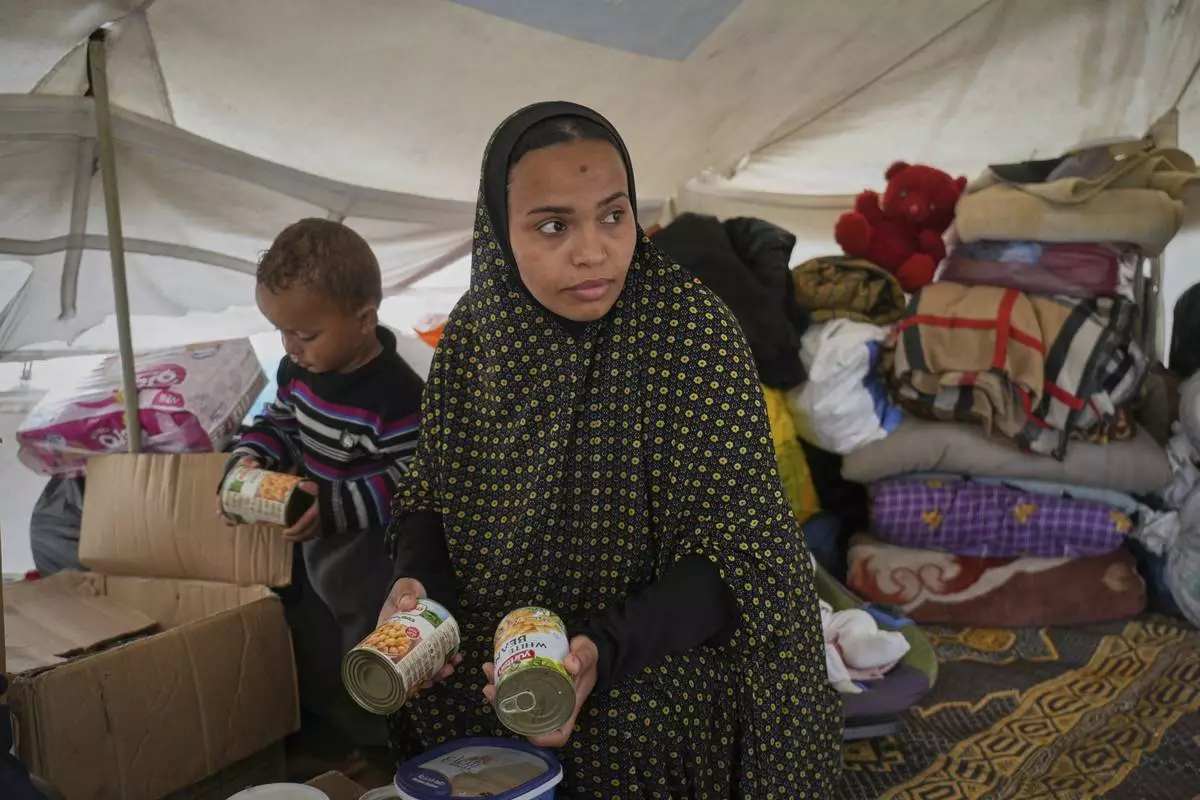
Shaima Al-Louh, 24, stores canned food for her children at her tent a makeshift camp for displaced Palestinians in Muwasi, on the outskirts of Khan Younis in the southern Gaza Strip, Wednesday, April 9, 2025. (AP Photo/Abdel Kareem Hana)
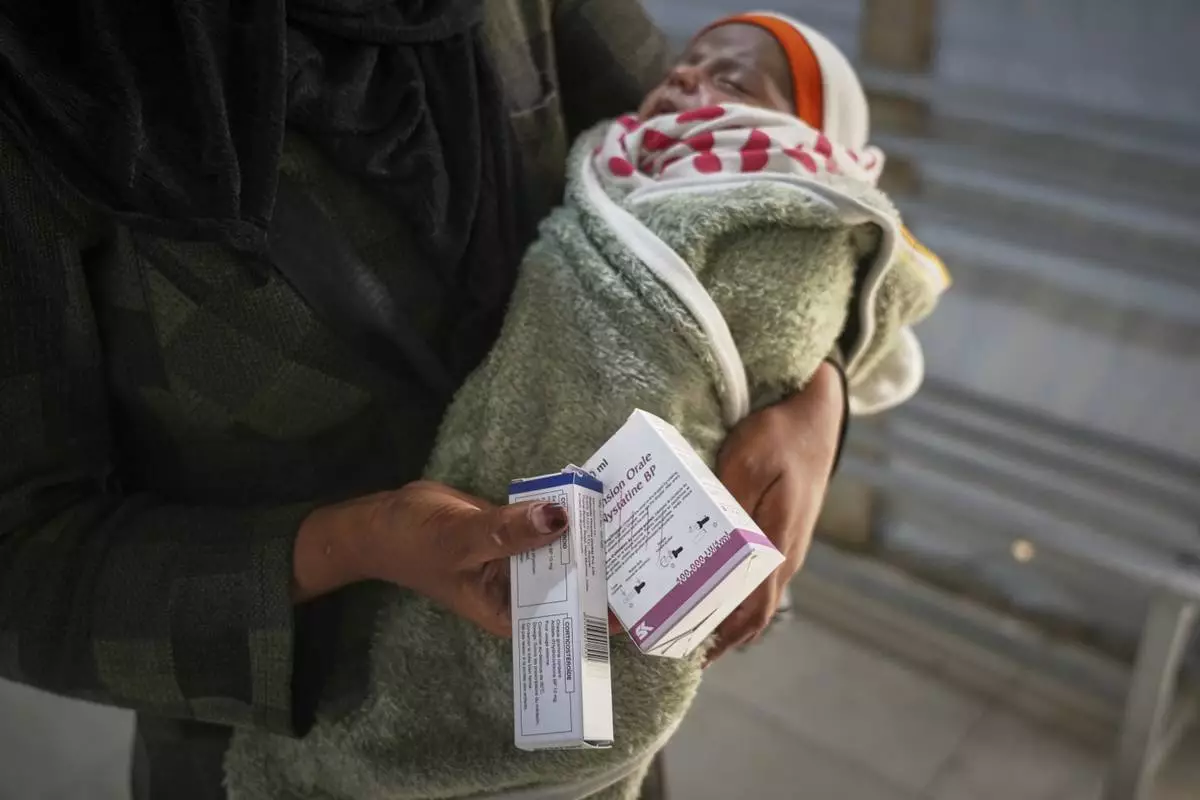
Huda Kabaja, 26, holds her 3-week-old daughter while receiving medication for malnutrition at the Médecins Sans Frontières (MSF) clinic in Muwasi, near Khan Younis in the southern Gaza Strip, Wednesday, April 9, 2025. (AP Photo/Abdel Kareem Hana)
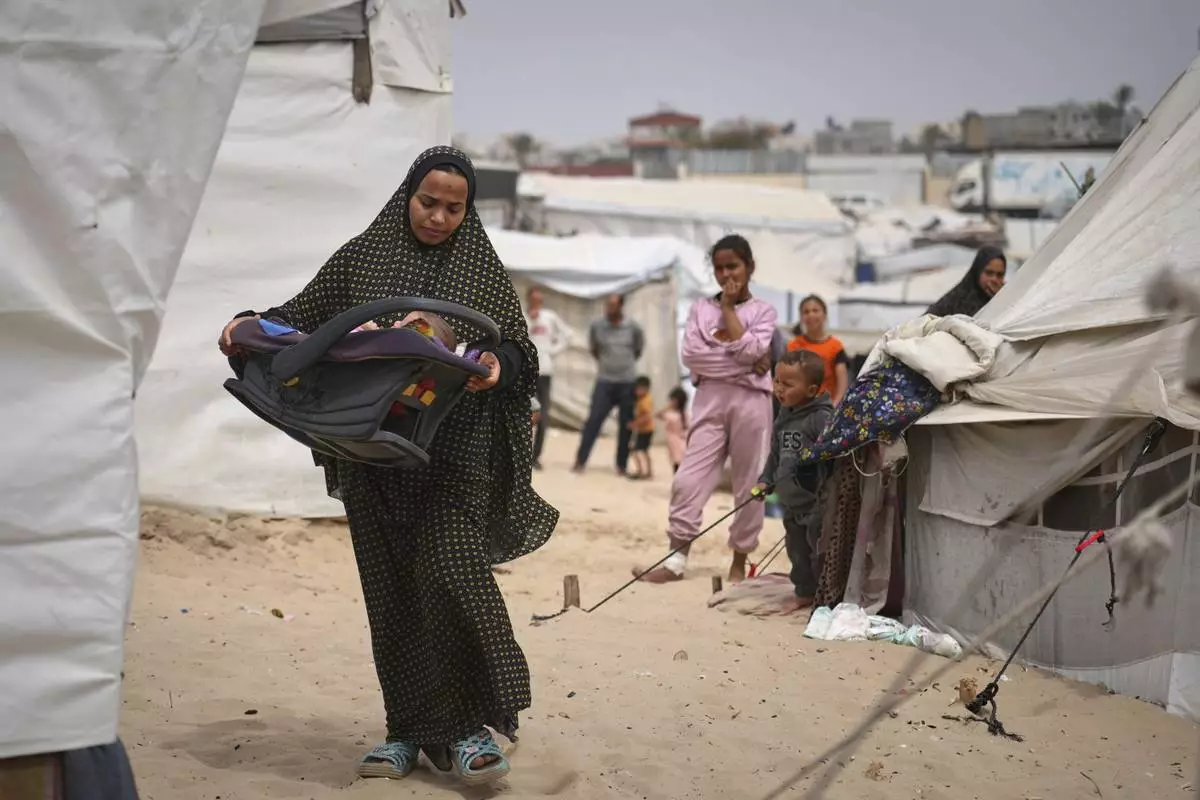
Shaima Al-Louh, 24, carries her 3-month-old daughter, Jilan Zarrouk, at a makeshift tent camp for displaced Palestinians in Muwasi, on the outskirts of Khan Younis in the southern Gaza Strip, on Wednesday, April 9, 2025. (AP Photo/Abdel Kareem Hana)
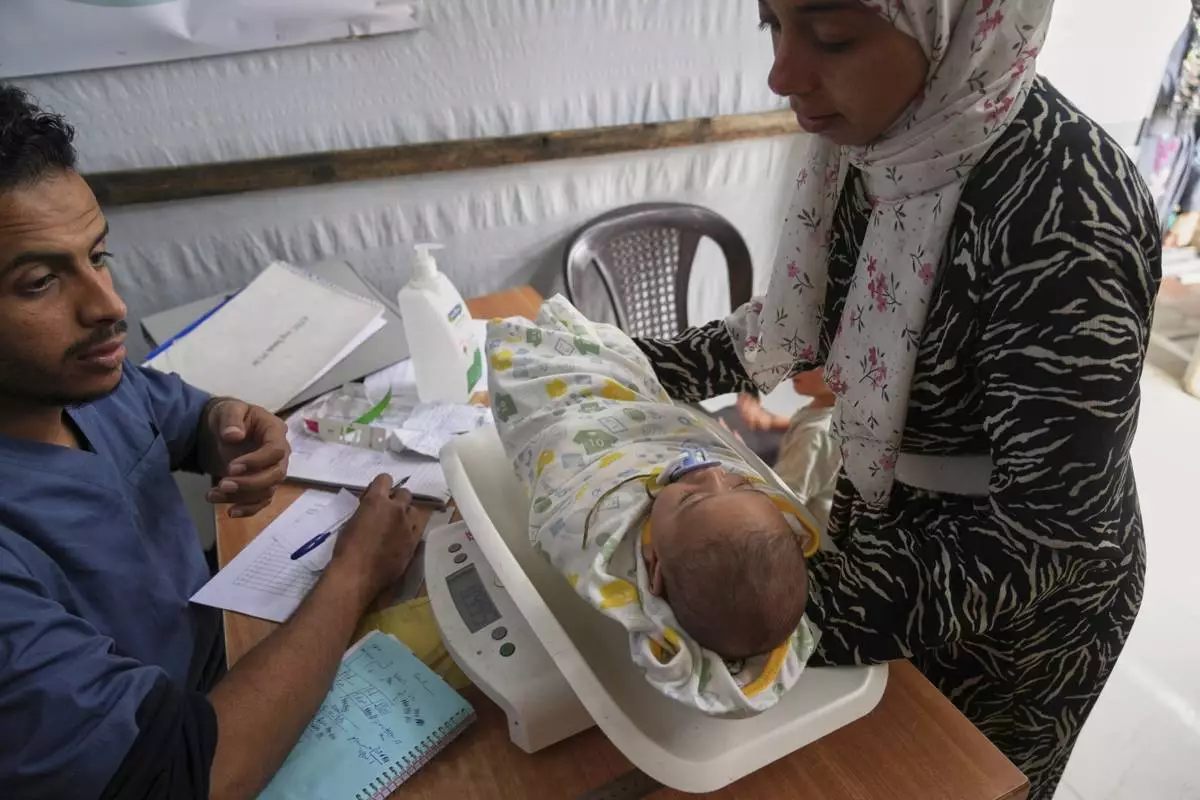
Doctors weigh a Palestinian baby at the Médecins Sans Frontières (MSF) clinic in Muwasi, near Khan Younis in the southern Gaza Strip, Tuesday, April 8, 2025. (AP Photo/Abdel Kareem Hana)
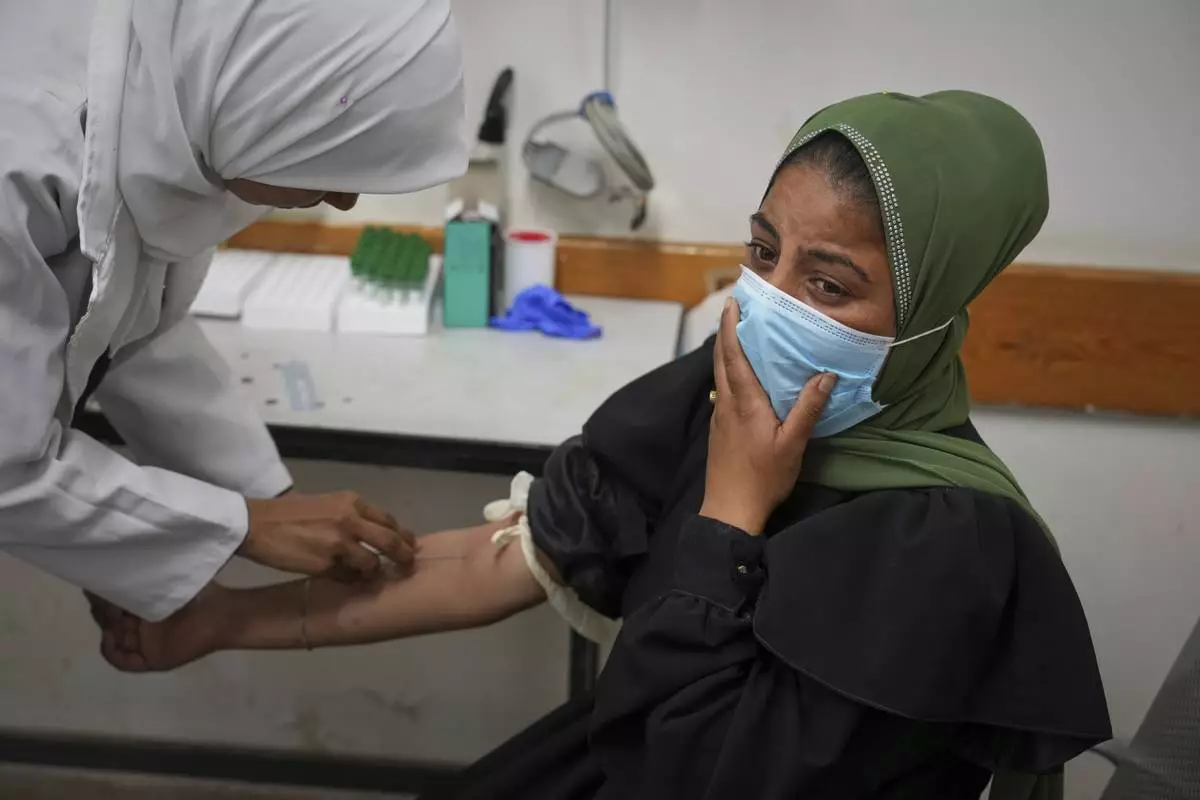
Palestinian woman Yasmine Siam, who was pregnant but suffered a miscarriage a few days later, undergoes a prenatal checkup at Nasser Hospital in Khan Younis, in the southern Gaza Strip, Wednesday, April 9, 2025. (AP Photo/Abdel Kareem Hana)
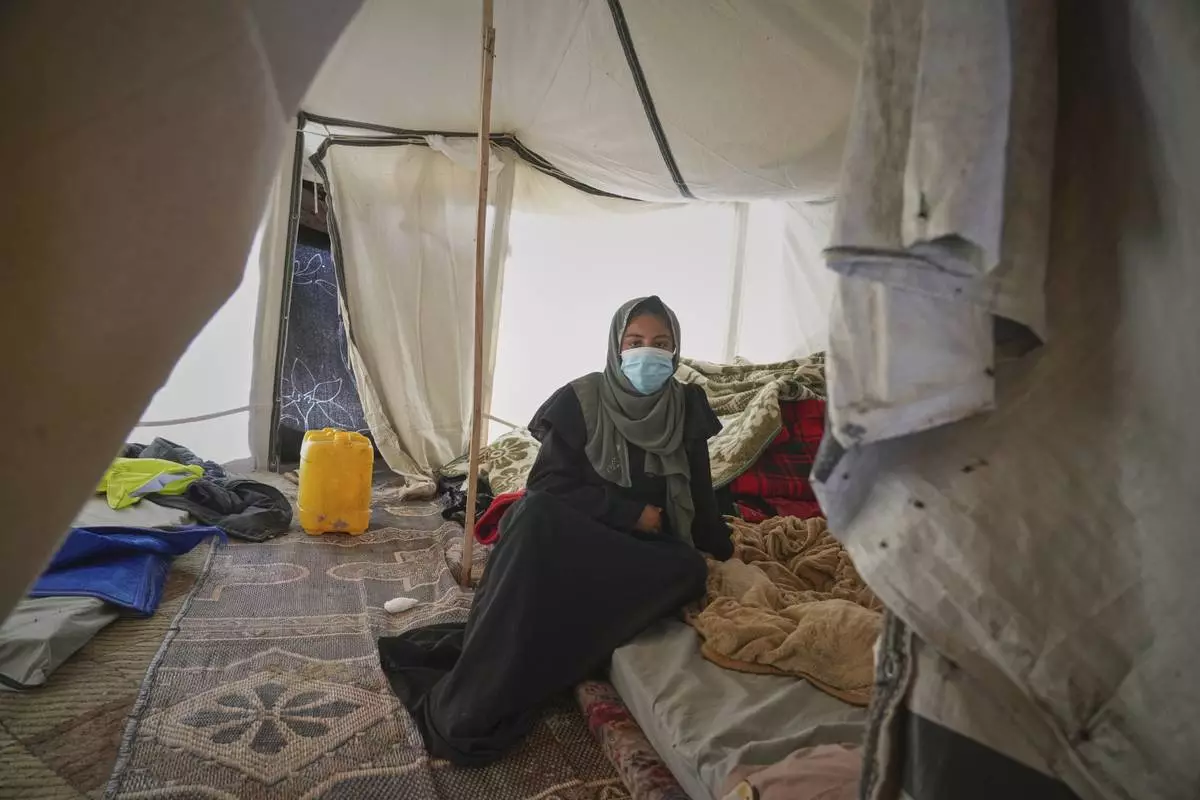
Palestinian woman Yasmine Siam, who was pregnant but suffered a miscarriage a few days later, poses for a photo in her tent in Khan Younis, southern Gaza Strip, Wednesday, April 9, 2025. (AP Photo/Abdel Kareem Hana)
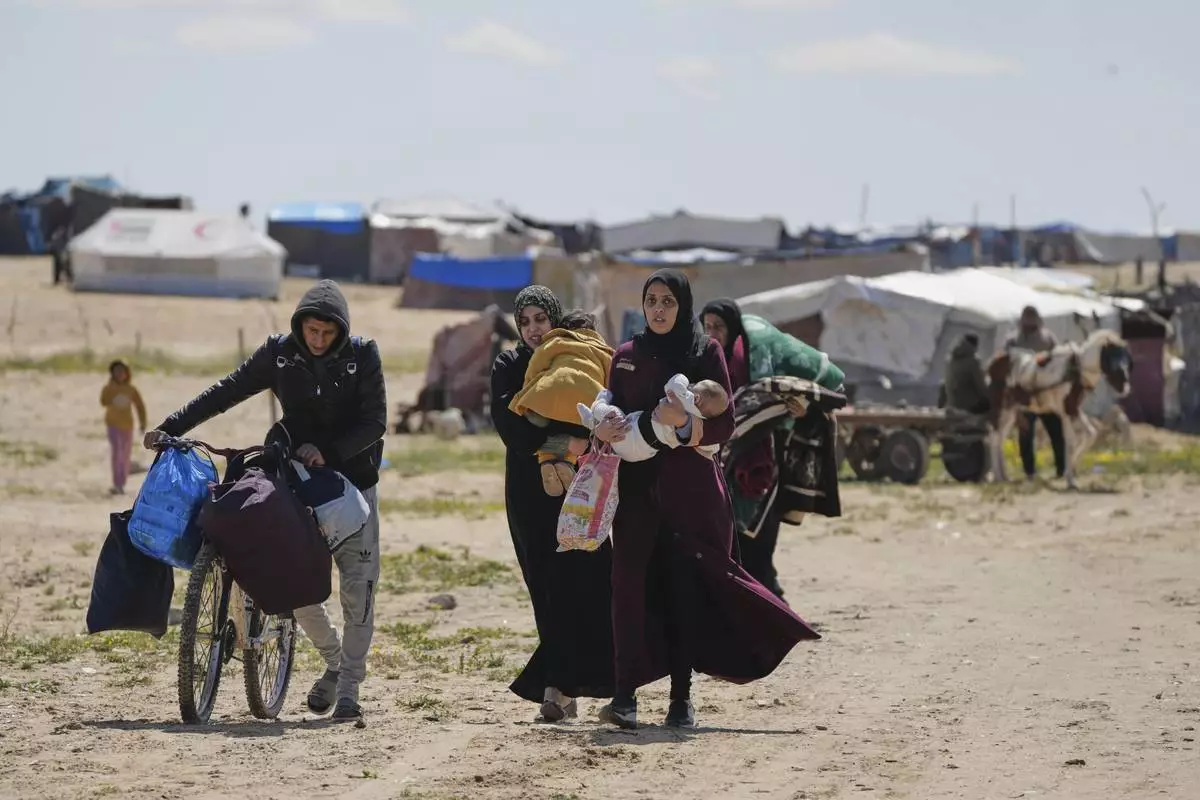
FILE – Displaced Palestinians fleeing Rafah amid ongoing Israeli military operations arrive in Khan Younis, in the southern Gaza Strip, Sunday, March 23, 2025. (AP Photo/Abdel Kareem Hana, File)
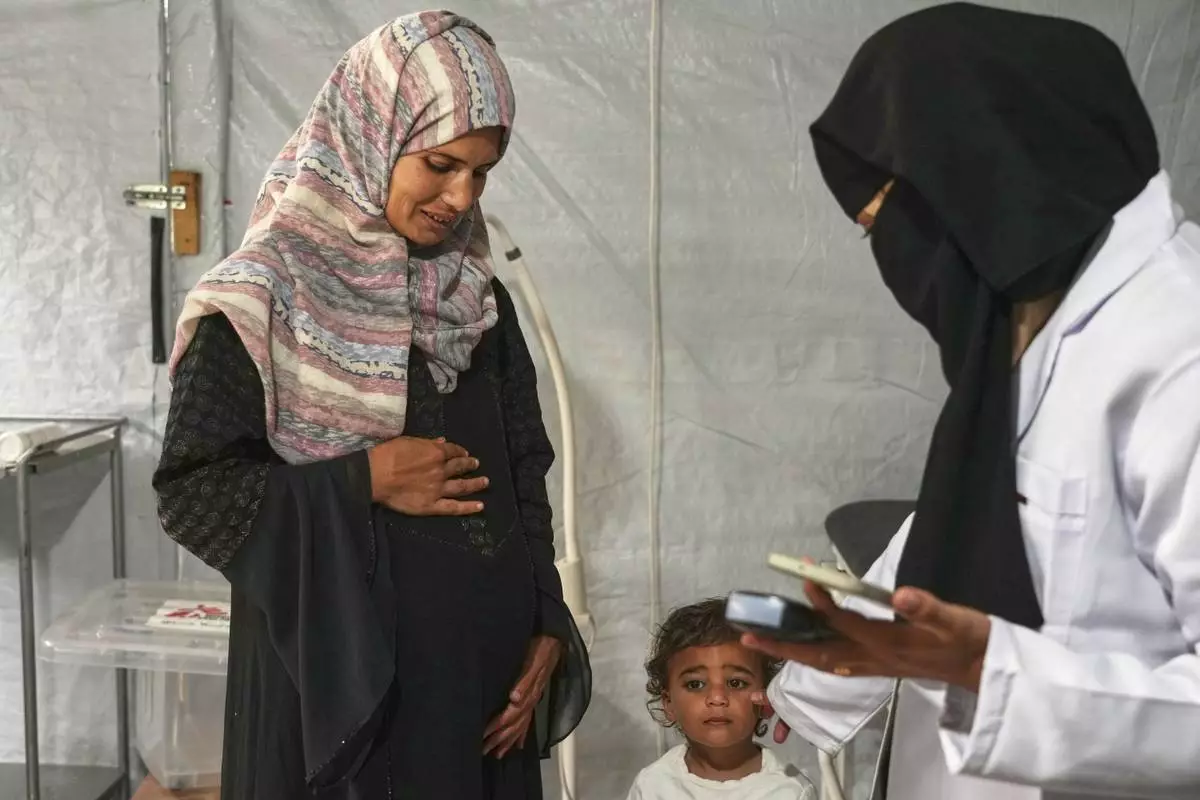
Islam Qeshta, a 30-year-old pregnant Palestinian woman, arrives for a prenatal checkup at the MSF clinic in Muwasi, near Khan Younis, in the southern Gaza Strip, on Wednesday, April 9, 2025. (AP Photo/Abdel Kareem Hana)
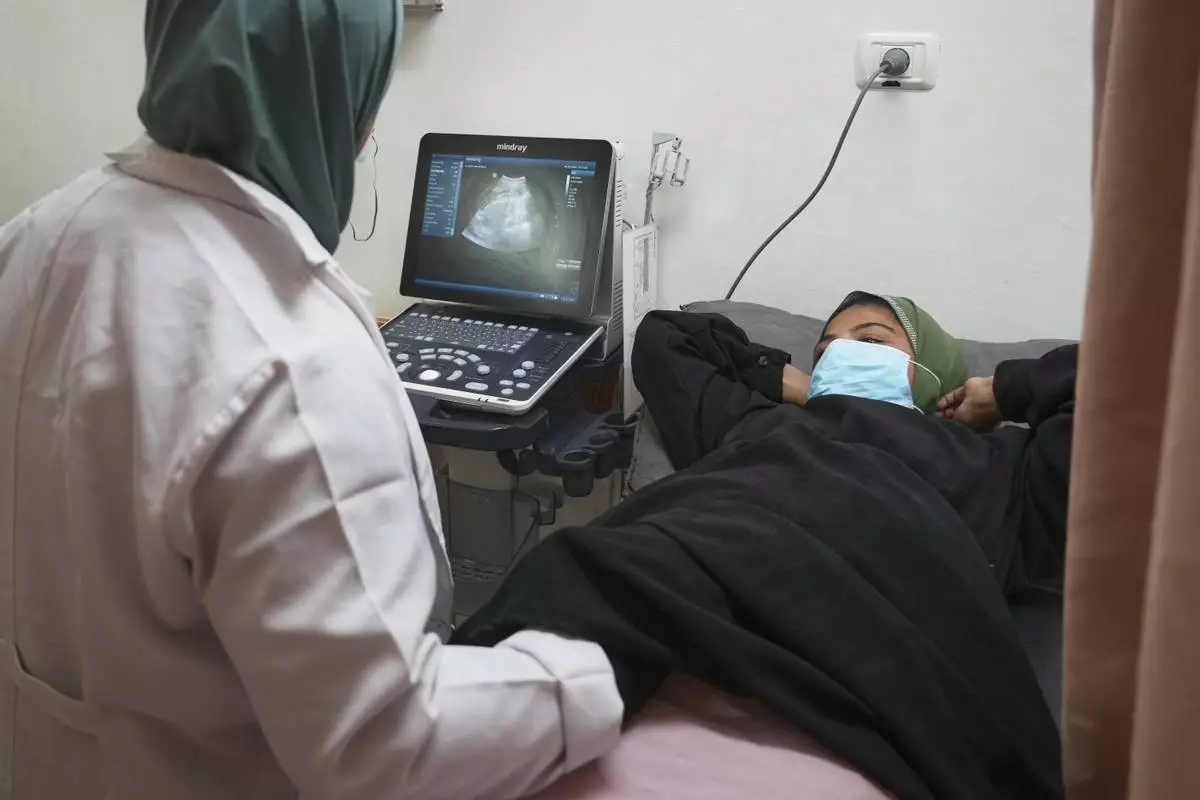
Pregnant Palestinian woman Yasmine Siam undergoes an ultrasound scan at Nasser Hospital in Khan Younis, in the southern Gaza Strip, Wednesday, April 9, 2025. She suffered a miscarriage a few days later. (AP Photo/Abdel Kareem Hana)