WASHINGTON (AP) — Harvard University is promising to review its academic offerings and admissions policies in response to a pair of internal reports on antisemitism and anti-Arab prejudice at the Ivy League campus commissioned in the aftermath of last spring's pro-Palestinian protests.
Harvard released the reports on Tuesday while the university simultaneously battles the Trump administration over demands to limit campus activism — reforms the government says are necessary to root out campus antisemitism. The administration has frozen $2.2 billion in federal funding and Harvard responded with a lawsuit in a clash that is being watched closely across higher education.
In a campus message, Harvard President Alan Garber said Harvard has made “necessary changes and essential progress” over the last year but promised further action.
“We will redouble our efforts to ensure that the University is a place where ideas are welcomed, entertained and contested in the spirit of seeking truth,” Garber wrote.
Garber convened two panels to study campus antisemitism and anti-Muslim bias last year, with an initial round of recommendations released last June. The final reports total more than 500 pages and include dozens of recommended changes.
Harvard said it will begin implementing at least some of the recommendations, with potential updates to admissions, hiring and discipline systems.
U.S. Rep. Tim Walberg, chairman of the Education and Workforce Committee, said Harvard’s internal reports suggest it tolerated antisemitism.
"Harvard’s president said the school will not abide bigotry, yet that’s exactly what the school’s feckless leadership did,” said Walberg, a Michigan Republican.
In a list of “actions and commitments,” Harvard said it will review admissions processes to make sure applicants are evaluated based on their ability to “engage constructively with different perspectives, show empathy and participate in civil discourse.”
It pointed to a recently added application question asking students about a time they strongly disagreed with someone. The antisemitism task force called for that kind of questioning, saying Harvard should reject anyone with a history of bias and look unfavorably on “exhibitions of hostility, derision or dismissiveness.”
Still, it appears to fall short of the Trump administration’s demands around admissions, which called on Harvard to end all preferences “based on race, color, national origin, or proxies thereof” and implement “merit-based” policies by August. The Supreme Court has rejected the use of race in college admissions, but many colleges look at factors including students' family income and geography to bring a diverse class to campus.
Responding to complaints that Harvard's instruction had become too politicized and anti-Israel, the university said it will work to hold professors to new standards of “excellence.” Deans will make sure faculty promote intellectual openness and refrain from endorsing political positions “that may cause students to feel pressure to demonstrate allegiance,” the university said.
Courses and curriculum will also be reviewed to reflect those standards.
Other changes include required antisemitism training for students and staff, along with expanded academic offerings on Hebrew, Judaic, Arab and Islamic studies. Harvard will put money toward a research project on antisemitism along with a historical overview on Muslims, Arabs and Palestinians at the university.
In his message, Garber said Harvard will accelerate a campus-wide effort to promote viewpoint diversity, though he didn’t elaborate. Viewpoint diversity is among the top concerns of the White House, which demanded that Harvard hire an external auditor to make sure the student body and every academic department represent diverse views.
Harvard is the first university to openly defy the Trump administration as it uses its hold on colleges' federal funding to press its political agenda.
The administration has argued that universities did not do enough to check antisemitism at campus protests last year. Garber has said Harvard will not bend to the demands, calling it a threat to academic freedom and the autonomy of all universities.
The Associated Press’ education coverage receives financial support from multiple private foundations. AP is solely responsible for all content. Find AP’s standards for working with philanthropies, a list of supporters and funded coverage areas at AP.org.
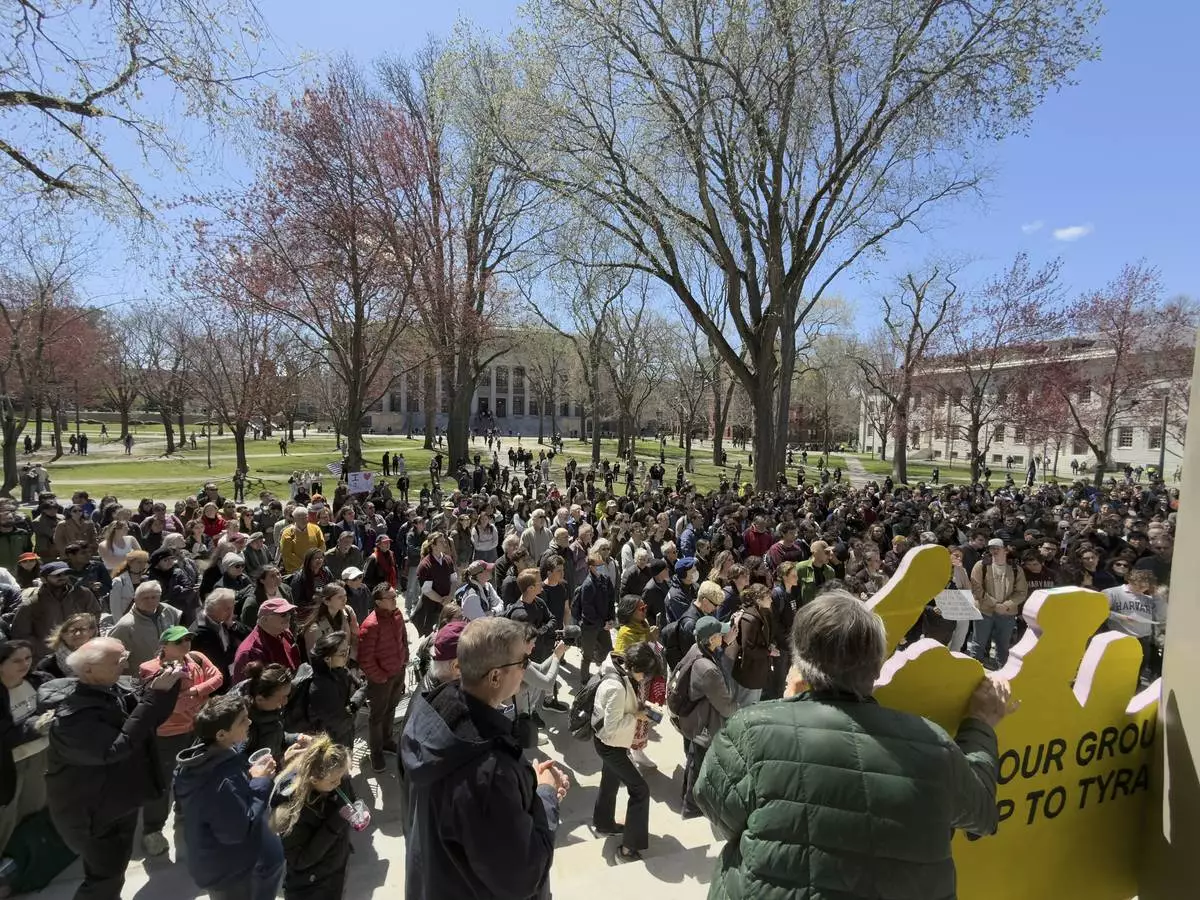
Students, faculty and members of the Harvard University community rally, Thursday, April 17, 2025, in Cambridge, Mass. (AP Photo)
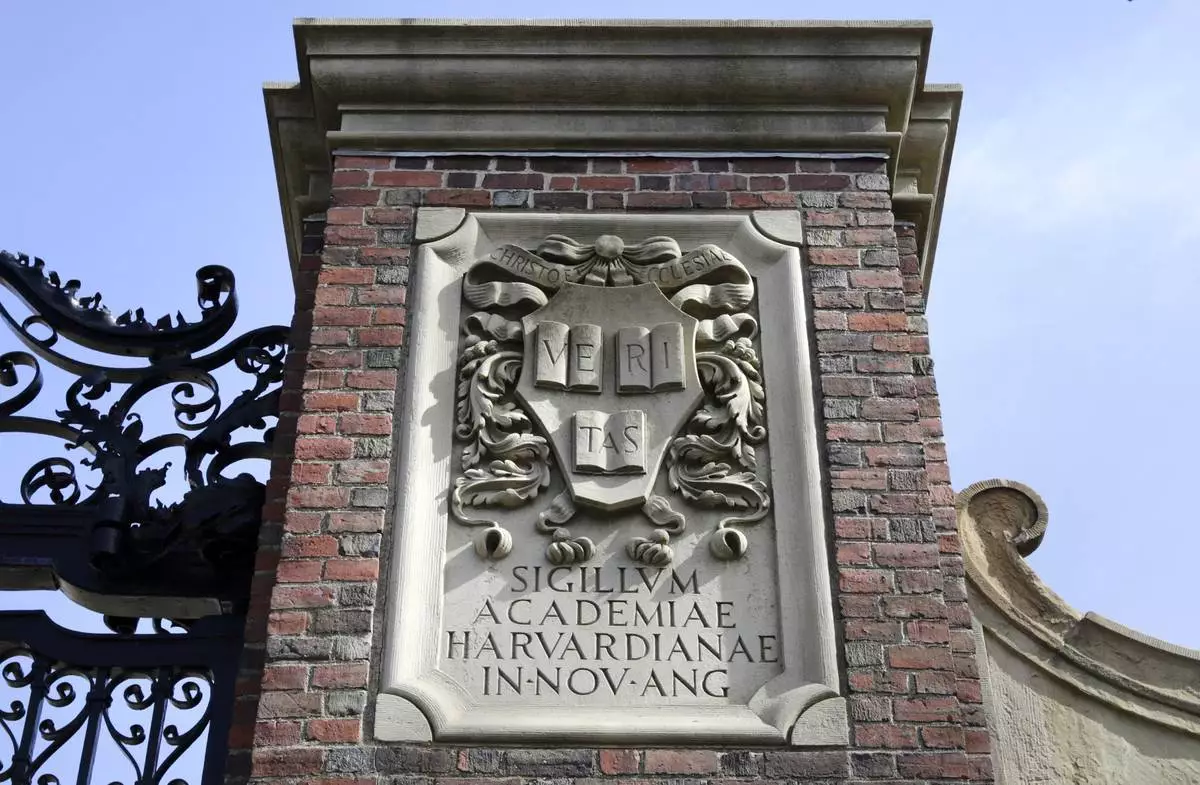
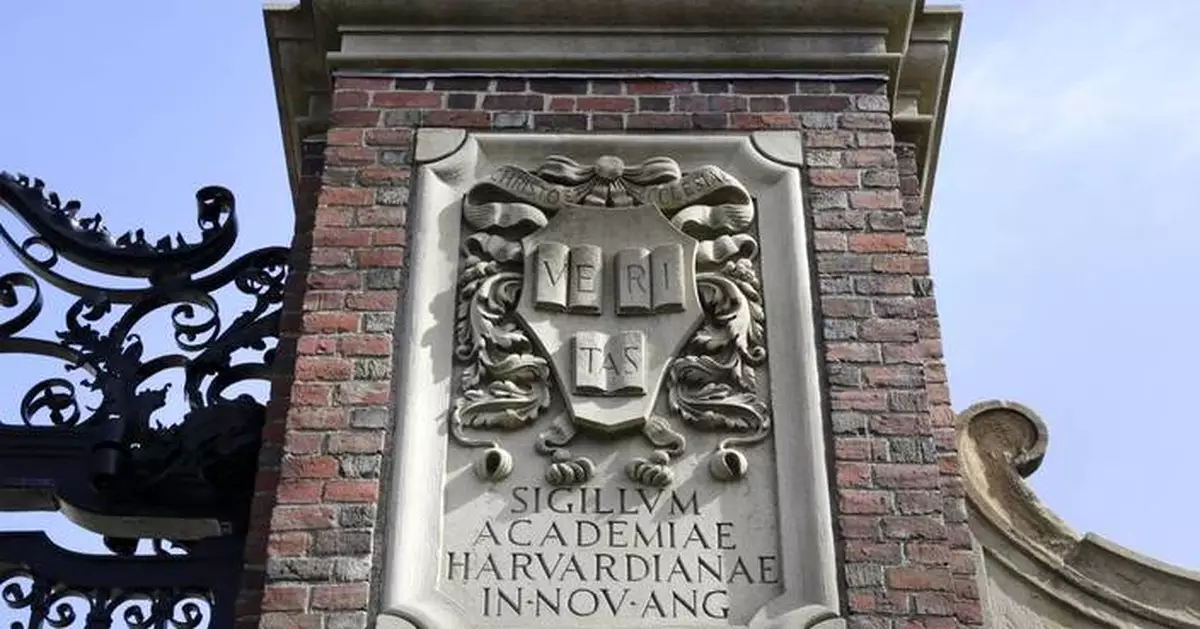
FILE - In this Sunday, March 13, 2016 photo, a relief sculpture rests on a gate to the entrance of Harvard University, in Cambridge, Mass. (AP Photo/Steven Senne, File)
WASHINGTON (AP) — A day after the audacious U.S. military operation in Venezuela, President Donald Trump on Sunday renewed his calls for an American takeover of the Danish territory of Greenland for the sake of U.S. security interests, while his top diplomat declared the communist government in Cuba is “in a lot of trouble.”
The comments from Trump and Secretary of State Marco Rubio after the ouster of Venezuela's Nicolás Maduro underscore that the U.S. administration is serious about taking a more expansive role in the Western Hemisphere.
With thinly veiled threats, Trump is rattling hemispheric friends and foes alike, spurring a pointed question around the globe: Who's next?
“It’s so strategic right now. Greenland is covered with Russian and Chinese ships all over the place," Trump told reporters as he flew back to Washington from his home in Florida. "We need Greenland from the standpoint of national security, and Denmark is not going to be able to do it.”
Asked during an interview with The Atlantic earlier on Sunday what the U.S.-military action in Venezuela could portend for Greenland, Trump replied: “They are going to have to view it themselves. I really don’t know.”
Trump, in his administration's National Security Strategy published last month, laid out restoring “American preeminence in the Western Hemisphere” as a central guidepost for his second go-around in the White House.
Trump has also pointed to the 19th century Monroe Doctrine, which rejects European colonialism, as well as the Roosevelt Corollary — a justification invoked by the U.S. in supporting Panama’s secession from Colombia, which helped secure the Panama Canal Zone for the U.S. — as he's made his case for an assertive approach to American neighbors and beyond.
Trump has even quipped that some now refer to the fifth U.S. president's foundational document as the “Don-roe Doctrine.”
Saturday's dead-of-night operation by U.S. forces in Caracas and Trump’s comments on Sunday heightened concerns in Denmark, which has jurisdiction over the vast mineral-rich island of Greenland.
Danish Prime Minister Mette Frederiksen in a statement that Trump has "no right to annex" the territory. She also reminded Trump that Denmark already provides the United States, a fellow member of NATO, broad access to Greenland through existing security agreements.
“I would therefore strongly urge the U.S. to stop threatening a historically close ally and another country and people who have made it very clear that they are not for sale,” Frederiksen said.
Denmark on Sunday also signed onto a European Union statement underscoring that “the right of the Venezuelan people to determine their future must be respected” as Trump has vowed to “run” Venezuela and pressed the acting president, Delcy Rodriguez, to get in line.
Trump on Sunday mocked Denmark’s efforts at boosting Greenland’s national security posture, saying the Danes have added “one more dog sled” to the Arctic territory’s arsenal.
Greenlanders and Danes were further rankled by a social media post following the raid by a former Trump administration official turned podcaster, Katie Miller. The post shows an illustrated map of Greenland in the colors of the Stars and Stripes accompanied by the caption: “SOON."
“And yes, we expect full respect for the territorial integrity of the Kingdom of Denmark,” Amb. Jesper Møller Sørensen, Denmark's chief envoy to Washington, said in a post responding to Miller, who is married to Trump's influential deputy chief of staff Stephen Miller.
During his presidential transition and in the early months of his return to the White House, Trump repeatedly called for U.S. jurisdiction over Greenland, and has pointedly not ruled out military force to take control of the mineral-rich, strategically located Arctic island that belongs to an ally.
The issue had largely drifted out of the headlines in recent months. Then Trump put the spotlight back on Greenland less than two weeks ago when he said he would appoint Republican Gov. Jeff Landry as his special envoy to Greenland.
The Louisiana governor said in his volunteer position he would help Trump “make Greenland a part of the U.S.”
Meanwhile, concern simmered in Cuba, one of Venezuela’s most important allies and trading partners, as Rubio issued a new stern warning to the Cuban government. U.S.-Cuba relations have been hostile since the 1959 Cuban revolution.
Rubio, in an appearance on NBC's “Meet the Press,” said Cuban officials were with Maduro in Venezuela ahead of his capture.
“It was Cubans that guarded Maduro,” Rubio said. “He was not guarded by Venezuelan bodyguards. He had Cuban bodyguards.” The secretary of state added that Cuban bodyguards were also in charge of “internal intelligence” in Maduro’s government, including “who spies on who inside, to make sure there are no traitors.”
Trump said that “a lot” of Cuban guards tasked with protecting Maduro were killed in the operation. The Cuban government said in a statement read on state television on Sunday evening that 32 officers were killed in the U.S. military operation.
Trump also said that the Cuban economy, battered by years of a U.S. embargo, is in tatters and will slide further now with the ouster of Maduro, who provided the Caribbean island subsidized oil.
“It's going down,” Trump said of Cuba. “It's going down for the count.”
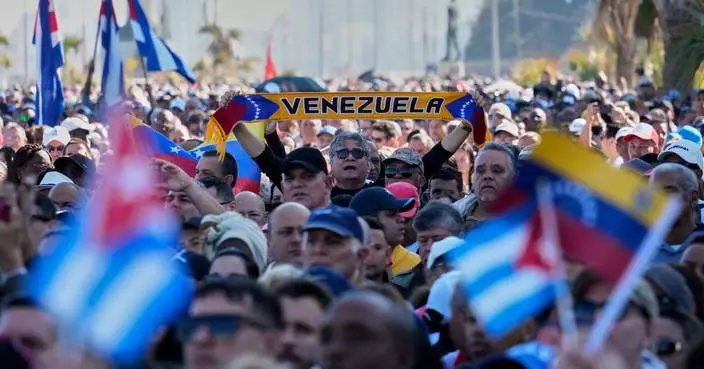
Cuban authorities called a rally in support of Venezuela’s government and railed against the U.S. military operation, writing in a statement: “All the nations of the region must remain alert, because the threat hangs over all of us.”
Rubio, a former Florida senator and son of Cuban immigrants, has long maintained Cuba is a dictatorship repressing its people.
“This is the Western Hemisphere. This is where we live — and we’re not going to allow the Western Hemisphere to be a base of operation for adversaries, competitors, and rivals of the United States," Rubio said.
Cubans like 55-year-old biochemical laboratory worker Bárbara Rodríguez were following developments in Venezuela. She said she worried about what she described as an “aggression against a sovereign state.”
“It can happen in any country, it can happen right here. We have always been in the crosshairs,” Rodríguez said.
AP writers Andrea Rodriguez in Havana, Cuba, and Darlene Superville traveling aboard Air Force One contributed reporting.
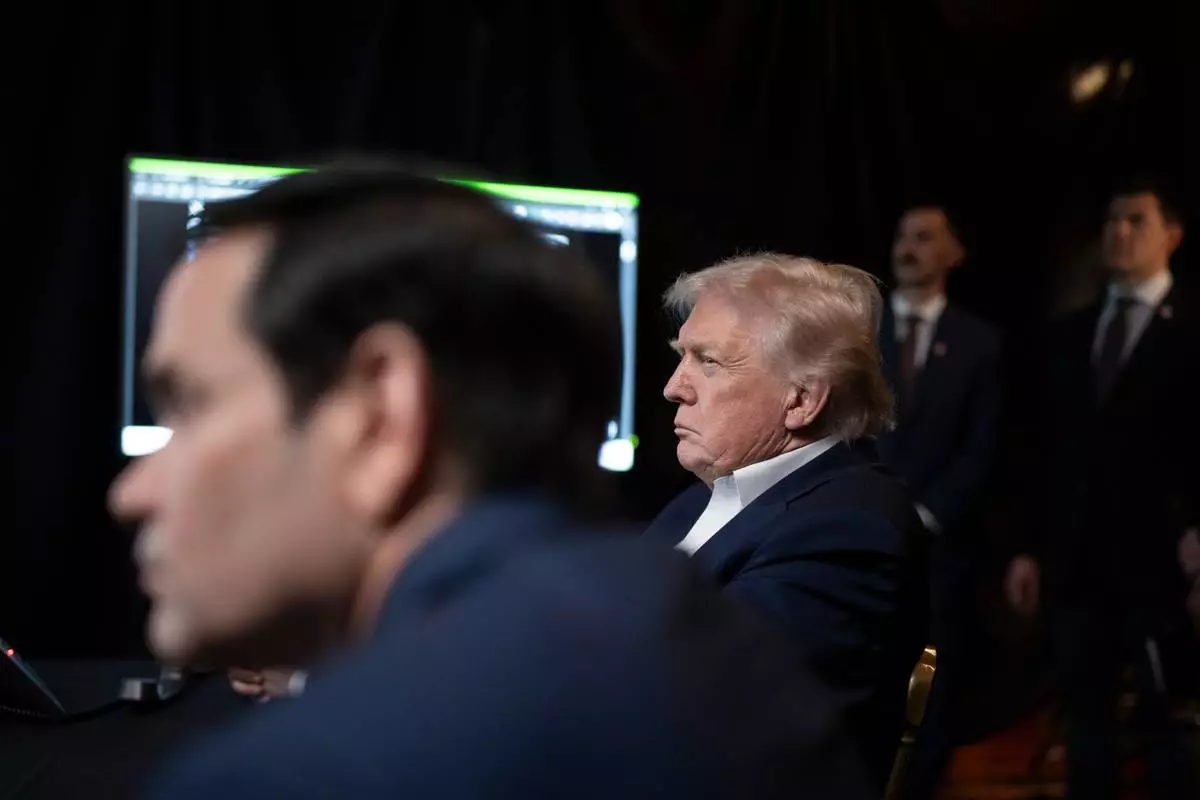
In this photo released by the White House, President Donald Trump monitors U.S. military operations in Venezuela, with Secretary of State Marco Rubio at Mar-a-Lago in Palm Beach, Fla., Saturday, Jan. 3, 2026. (Molly Riley/The White House via AP)