NEW YORK (AP) — Much like its wild month of April, a scary Wednesday for Wall Street found a gentler ending as U.S. stocks stormed back from steep early losses to continue their manic swings amid uncertainty about what President Donald Trump’s trade war will do to the economy.
The S&P 500 rose 0.1% to extend its winning streak to a seventh day. The Dow Jones Industrial Average added 141 points, or 0.3%, while the Nasdaq composite edged down by 0.1%.
Click to Gallery
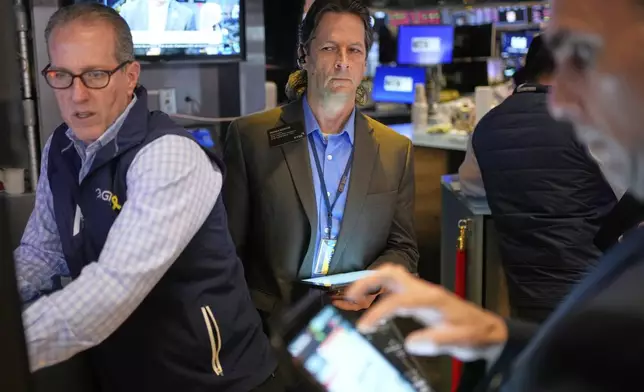
Patrick McKeon, center, works on the floor at the New York Stock Exchange in New York, Wednesday, April 30, 2025. (AP Photo/Seth Wenig)
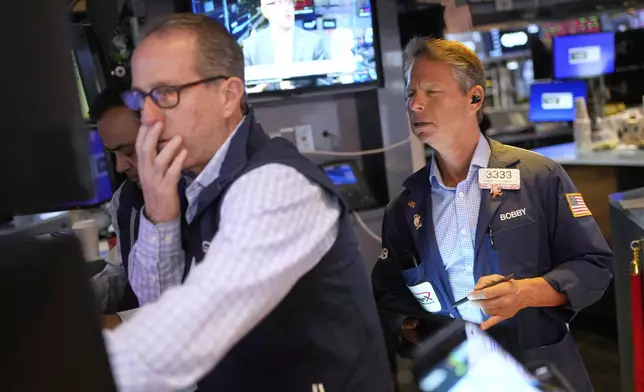
Bobby Charmak, right, works on the floor at the New York Stock Exchange in New York, Wednesday, April 30, 2025. (AP Photo/Seth Wenig)
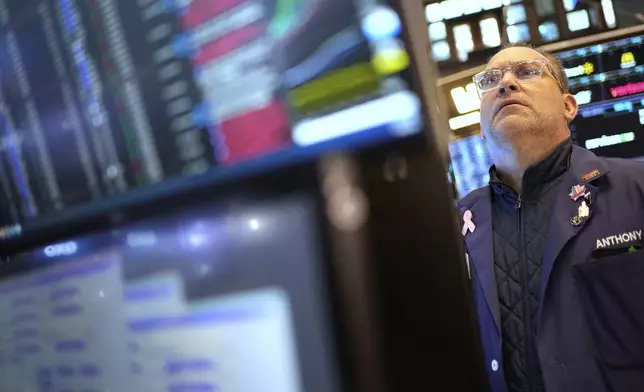
Anthony Matesic works on the floor at the New York Stock Exchange in New York, Wednesday, April 30, 2025. (AP Photo/Seth Wenig)
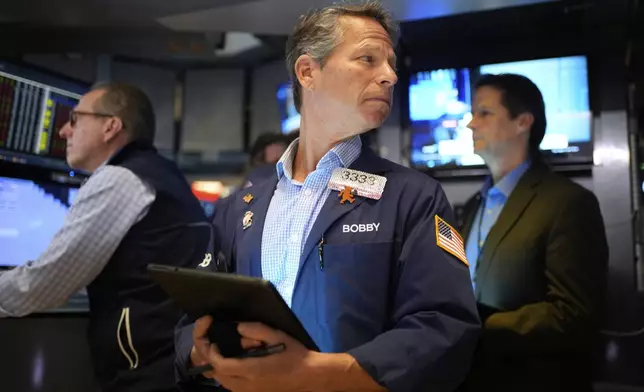
Bobby Charmak, center, works on the floor at the New York Stock Exchange in New York, Wednesday, April 30, 2025. (AP Photo/Seth Wenig)

Stephen Naughton works on the floor at the New York Stock Exchange in New York, Wednesday, April 30, 2025. (AP Photo/Seth Wenig)
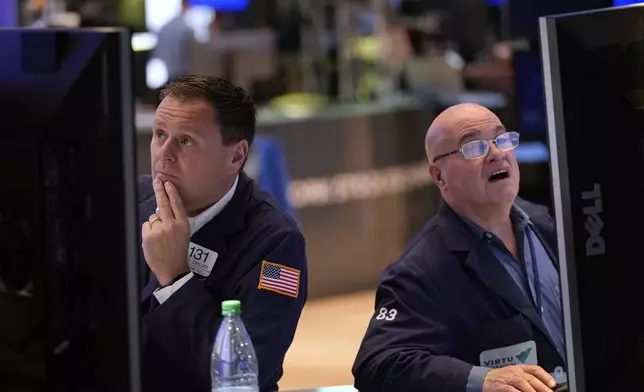
Matthew Cheslock, left, and Anthony Confusione work on the floor at the New York Stock Exchange in New York, Wednesday, April 30, 2025. (AP Photo/Seth Wenig)
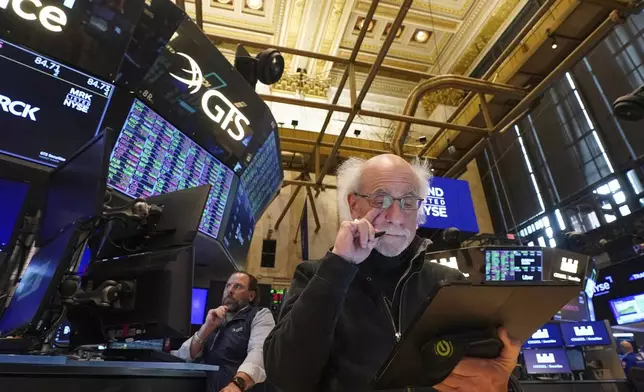
Trader Peter Tuchman, foreground, works on the floor of the New York Stock Exchange, Tuesday, April 29, 2025. (AP Photo/Richard Drew)

A board above the trading floor of the New York Stock Exchange displays the closing number for the Dow Jones industrial average, Tuesday, April 29, 2025. (AP Photo/Richard Drew)
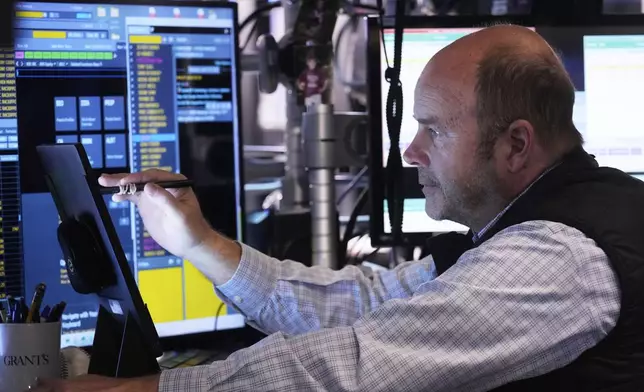
Trader Peter Mancuso works on the floor of the New York Stock Exchange, Tuesday, April 29, 2025. (AP Photo/Richard Drew)

Trader William William Lawrence works on the floor of the New York Stock Exchange, Tuesday, April 29, 2025. (AP Photo/Richard Drew)

Currency traders work near a screen showing the Korea Composite Stock Price Index (KOSPI), top left, and the foreign exchange rate between U.S. dollar and South Korean won, top center, at the foreign exchange dealing room of the KEB Hana Bank headquarters in Seoul, South Korea, Wednesday, April 30, 2025. (AP Photo/Ahn Young-joon)

Currency traders work near a screen showing the Korea Composite Stock Price Index (KOSPI) and the foreign exchange rate between U.S. dollar and South Korean won, top right, at the foreign exchange dealing room of the KEB Hana Bank headquarters in Seoul, South Korea, Wednesday, April 30, 2025. (AP Photo/Ahn Young-joon)

A currency trader works near a screen showing the Korea Composite Stock Price Index (KOSPI), top center, and the foreign exchange rate between U.S. dollar and South Korean won, top center right, at the foreign exchange dealing room of the KEB Hana Bank headquarters in Seoul, South Korea, Wednesday, April 30, 2025. (AP Photo/Ahn Young-joon)
It was a stunning reversal after the S&P 500 dropped as much as 2.3% and the Dow fell 780 points in early trading. Stocks initially tumbled after a report suggested the U.S. economy may have shrunk at the start of the year, falling well short of economists’ expectations, in a sharp turnaround from the economy’s solid growth at the end of last year.
Importers rushed to bring products into the country before tariffs could raise their prices, which helped drag on the country’s overall gross domestic product.
Such data raised the threat of a worst-case scenario called “stagflation,” one where the economy stagnates yet inflation remains high. Economists fear it because the Federal Reserve has no good tools to fix both problems at the same time. If the Fed were to try to help one problem by adjusting interest rates, it would likely make the other worse.
“Even if today’s weak GDP may have partially reflected companies trying to get ahead of tariffs, it was still a stagflation warning shot over the bow of the economy,” according to Ellen Zentner, chief economic strategist for Morgan Stanley Wealth Management.
But some better news came later in the day when a report said the measure of inflation that the Fed likes to use slowed in March. Inflation decelerated to 2.3%, closer to the Fed’s goal of 2%, from February’s reading of 2.7%. Stocks began paring their losses almost immediately after the report.
If inflation keeps trending lower, it would give the Fed more leeway to cut interest rates in order to juice the economy. Expectations are building for the Fed to cut its main interest rate at least four times by the end of this year, according to data from CME Group, though it likely won’t begin at its next meeting next week.
Much of Wednesday’s economic data raised concerns about a weakening economy. A report on the job market from ADP suggested employers outside the government may have hired far fewer workers in April than economists expected, less than half.
It’s discouraging because a relatively solid job market has been one of the linchpins keeping the U.S. economy stable. A more comprehensive report on the job market from the U.S. government will arrive on Friday.
Wednesday’s reports add to worries that Trump’s trade war may drag the U.S. economy into a recession. The president’s on-again-off-again rollout of tariffs has created deep uncertainty about what’s to come, which could cause damage by itself.
“I’m not taking a credit or discredit for the stock market,” Trump said Wednesday. “I’m just saying we inherited a mess.”
Uncertainty around Trump’s tariffs has already triggered historic swings for financial markets, from stocks to bonds to the value of the U.S. dollar, that battered investors through April. The S&P 500 briefly dropped nearly 20% below its all-time high set earlier this year, with scary headlines at one point warning of the potential for the worst April since the Great Depression.
But the uncertainty has been two-sided, and hopes that Trump may relent on some of his tariffs helped the S&P 500 claw back a chunk of its losses. It ended April with a decline of just 0.8%, much milder than March’s, and it’s only 9.4% below its record.
Stronger-than-expected profit reports from big U.S. companies have helped support the market, and Seagate Technology jumped 11.6% for one of Wednesday’s biggest gains after the maker of data storage joined the parade.
Gains for other storage makers also helped to offset drops for stocks within the artificial-intelligence industry, which have been pulling back on worries their prices shot too high in prior years.
Super Micro Computer warned that some customers delayed purchases in the latest quarter, which caused the maker of servers used in AI and other computing to slash its forecast for sales and profit. Its stock tumbled 11.5% for the largest loss in the S&P 500.
Starbucks sank 5.7% after the coffee chain fell short of analysts’ forecasts for revenue and profit in the latest quarter. Starbucks did log its first quarterly sales increase in more than a year, but acknowledged that its turnaround effort is far from complete.
All told, the S&P 500 rose 8.23 points to 5,569.06. The Dow Jones Industrial Average rose 141.74 to 40,669.36, and the Nasdaq composite fell 14.98 to 17,446.34.
It still marked the close of a third straight losing month for the S&P 500. Stocks in the energy industry took some of the hardest hits, dropping over three times more than any of the other 11 sectors that make up the index.
Halliburton, an oil services company, lost nearly 22% in April as the price of crude slid on worries that tariffs will weaken the global economy.
In the bond market, Treasury yields fell as investors ratcheted up their expectations for cuts to interest rates by the Fed. The yield on the 10-year Treasury eased to 4.17% from 4.19% late Tuesday.
Lower interest rates in general give boosts to prices for stocks and other investments.
Yields have largely been sinking since an unsettling, unusual spurt higher earlier this month rattled both Wall Street and the U.S. government. That rise had suggested investors worldwide may have been losing faith in the U.S. bond market’s reputation as a safe place to park cash.
In stock markets abroad, indexes rose across much of Europe after finishing mixed in Asia.
AP Business Writers Matt Ott and Elaine Kurtenbach contributed.
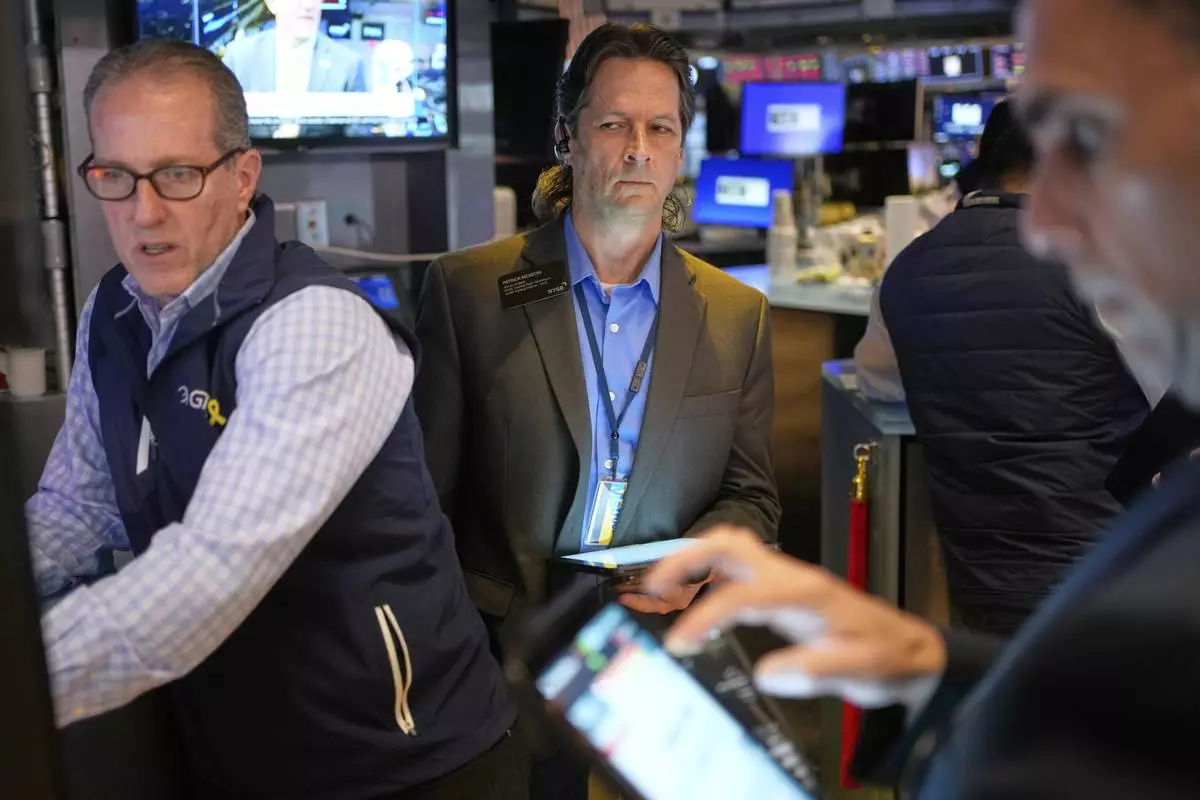
Patrick McKeon, center, works on the floor at the New York Stock Exchange in New York, Wednesday, April 30, 2025. (AP Photo/Seth Wenig)

Bobby Charmak, right, works on the floor at the New York Stock Exchange in New York, Wednesday, April 30, 2025. (AP Photo/Seth Wenig)
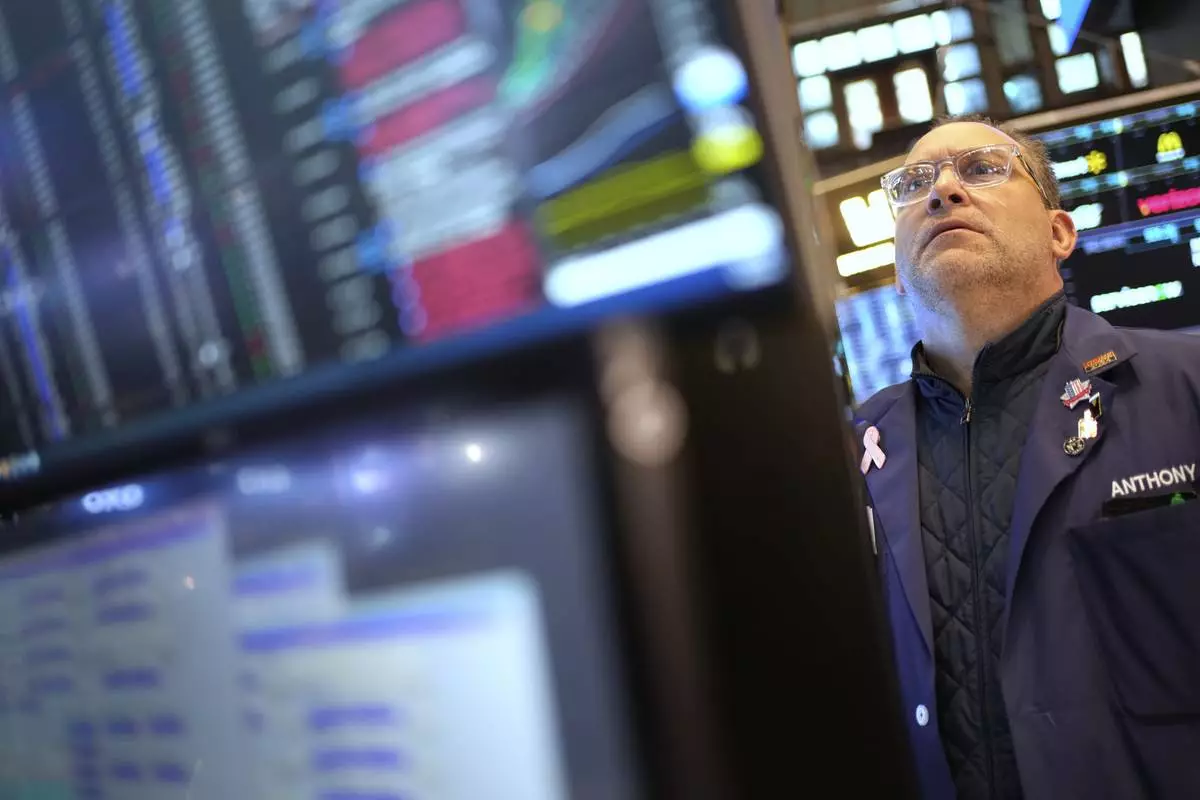
Anthony Matesic works on the floor at the New York Stock Exchange in New York, Wednesday, April 30, 2025. (AP Photo/Seth Wenig)
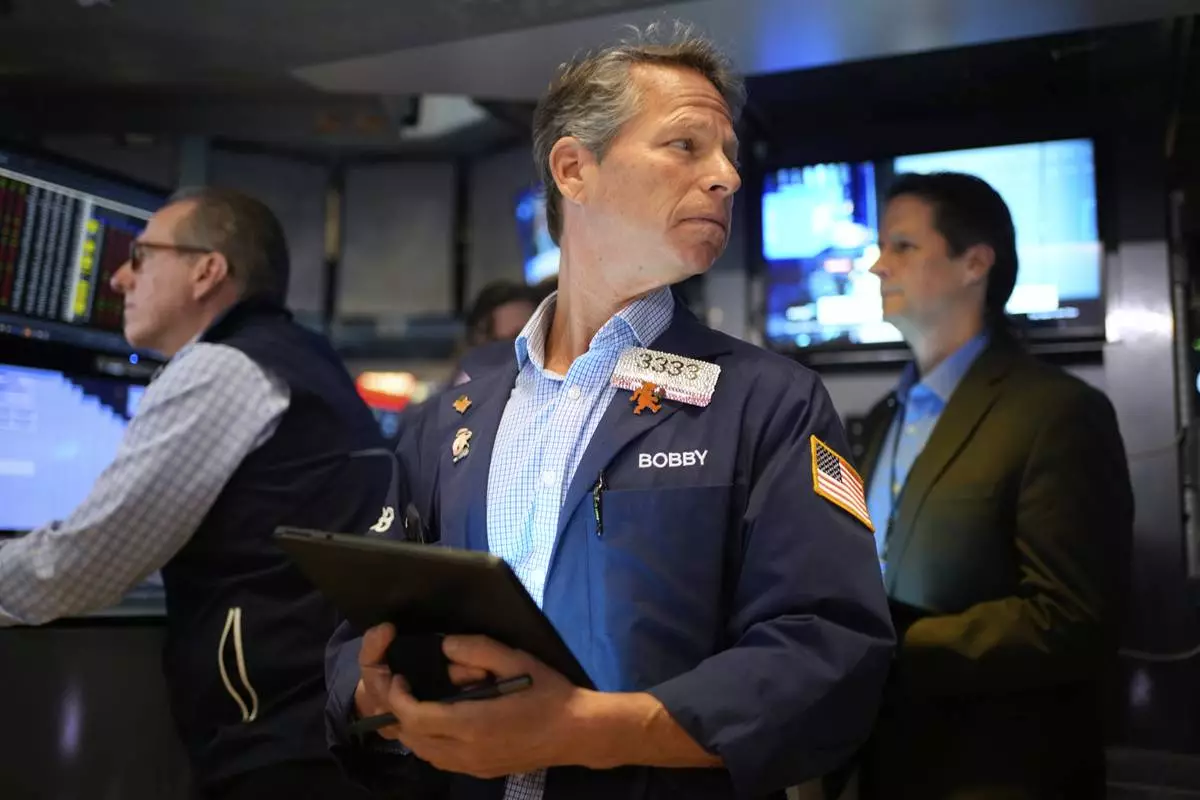
Bobby Charmak, center, works on the floor at the New York Stock Exchange in New York, Wednesday, April 30, 2025. (AP Photo/Seth Wenig)
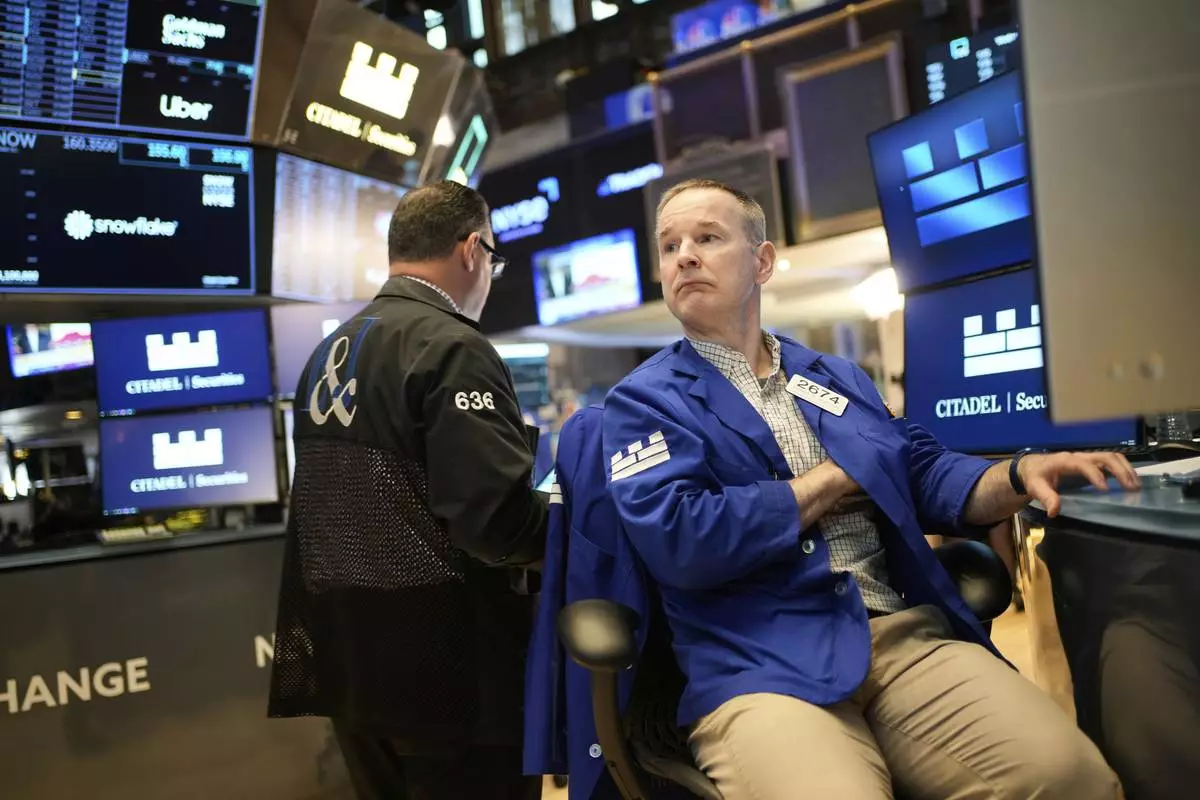
Stephen Naughton works on the floor at the New York Stock Exchange in New York, Wednesday, April 30, 2025. (AP Photo/Seth Wenig)
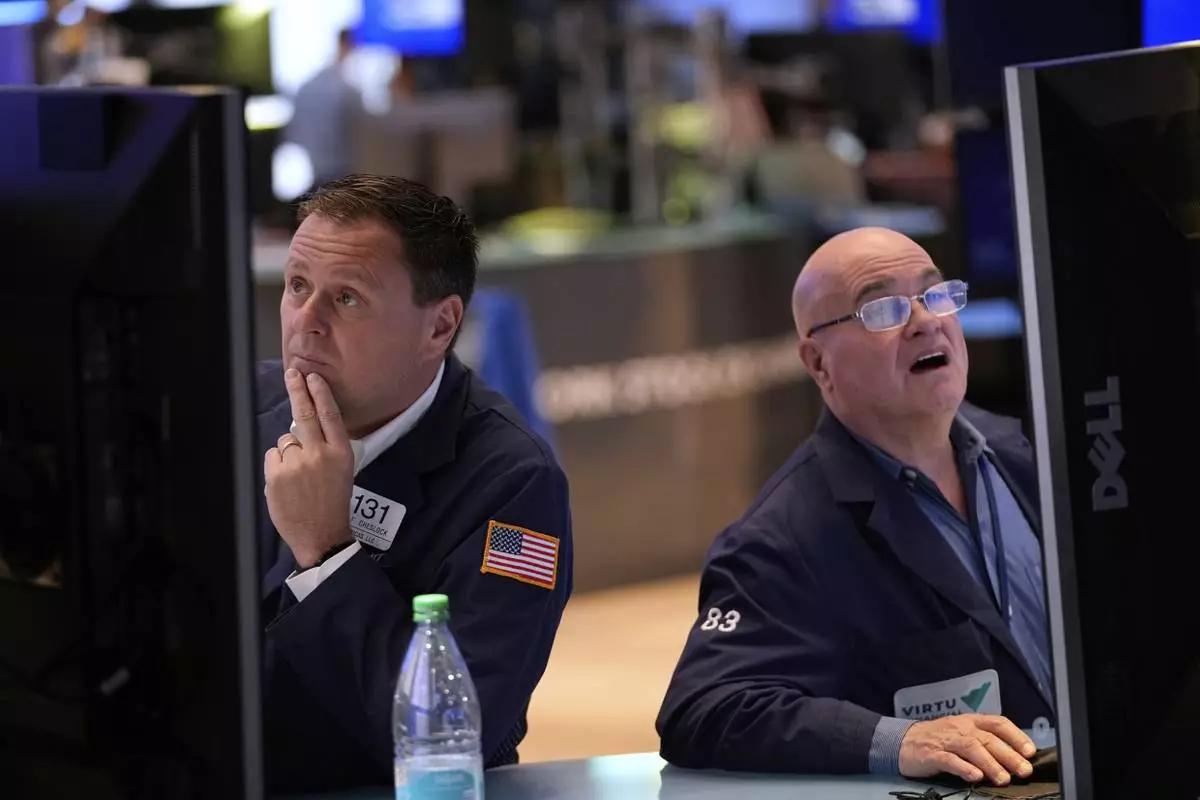
Matthew Cheslock, left, and Anthony Confusione work on the floor at the New York Stock Exchange in New York, Wednesday, April 30, 2025. (AP Photo/Seth Wenig)
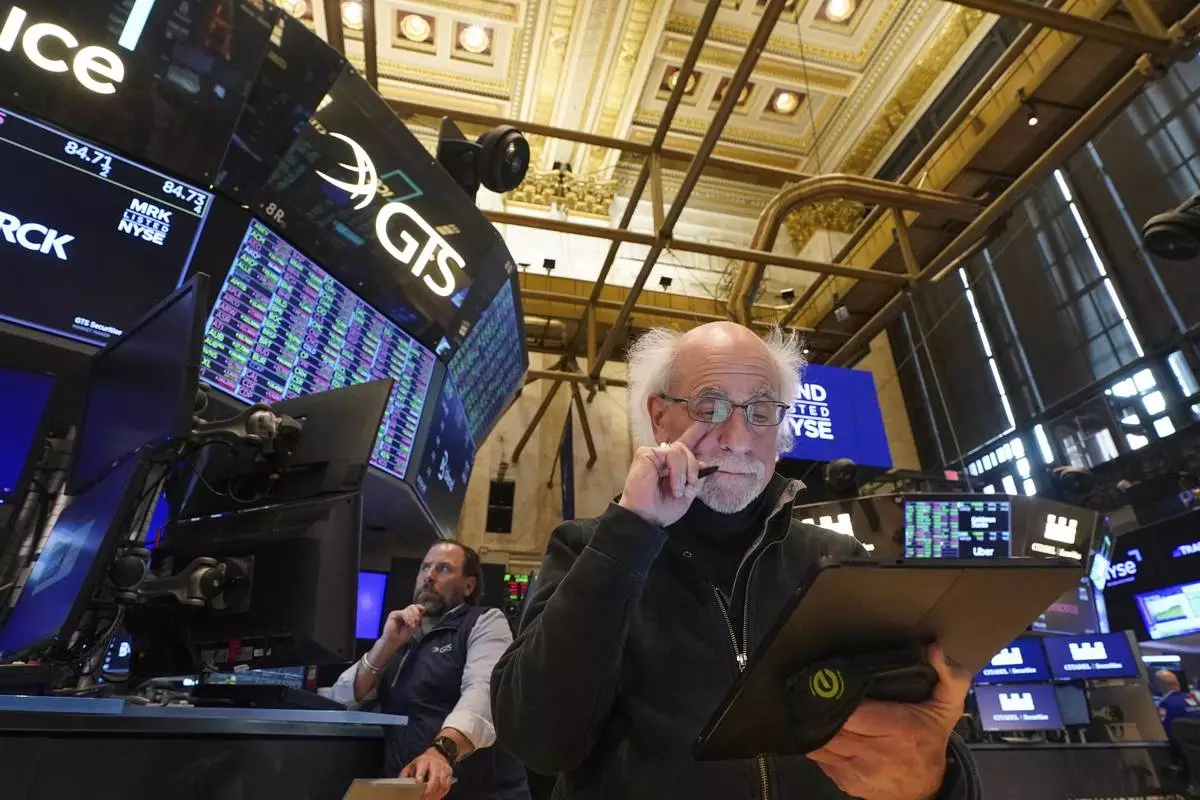
Trader Peter Tuchman, foreground, works on the floor of the New York Stock Exchange, Tuesday, April 29, 2025. (AP Photo/Richard Drew)
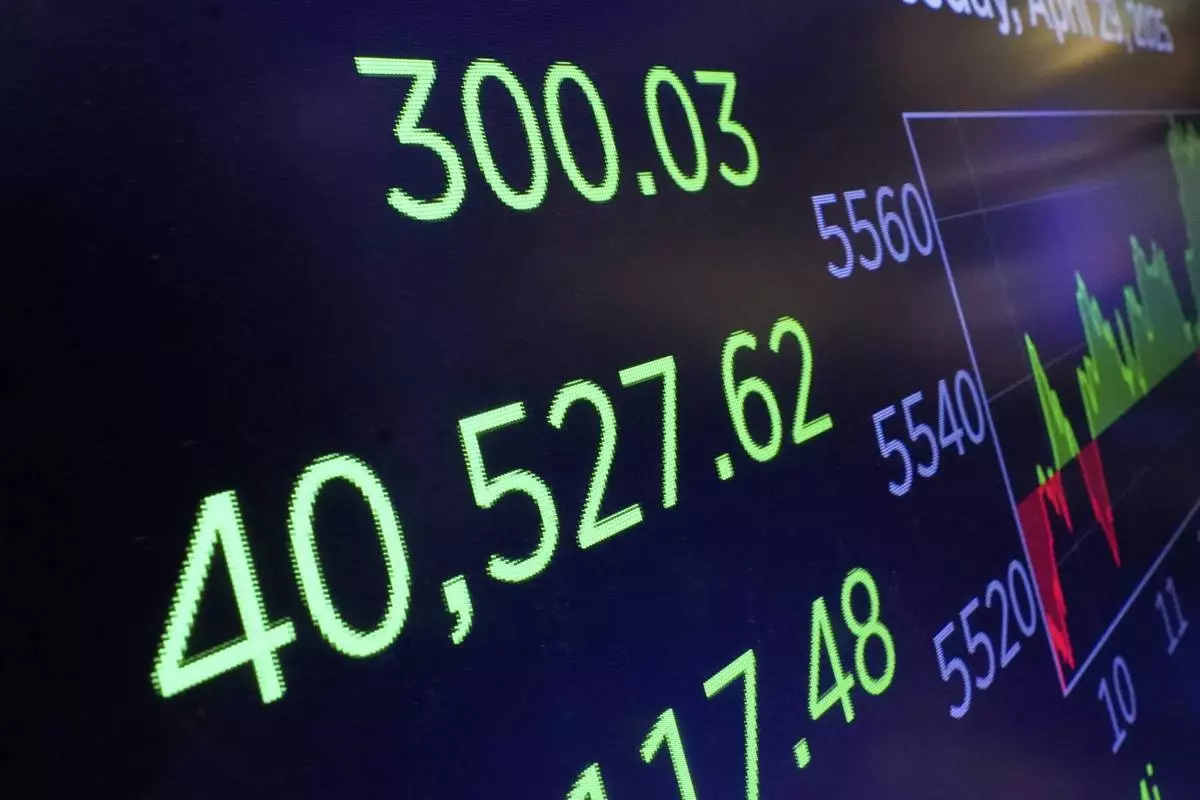
A board above the trading floor of the New York Stock Exchange displays the closing number for the Dow Jones industrial average, Tuesday, April 29, 2025. (AP Photo/Richard Drew)
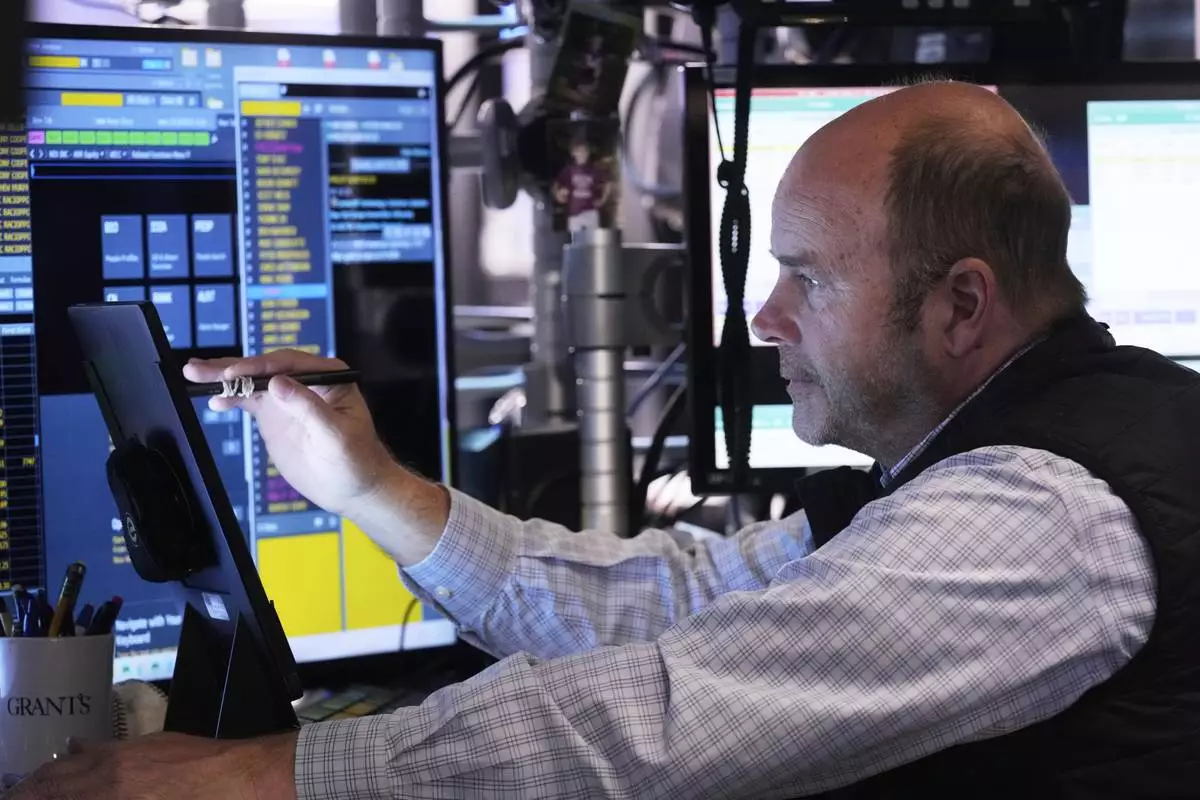
Trader Peter Mancuso works on the floor of the New York Stock Exchange, Tuesday, April 29, 2025. (AP Photo/Richard Drew)
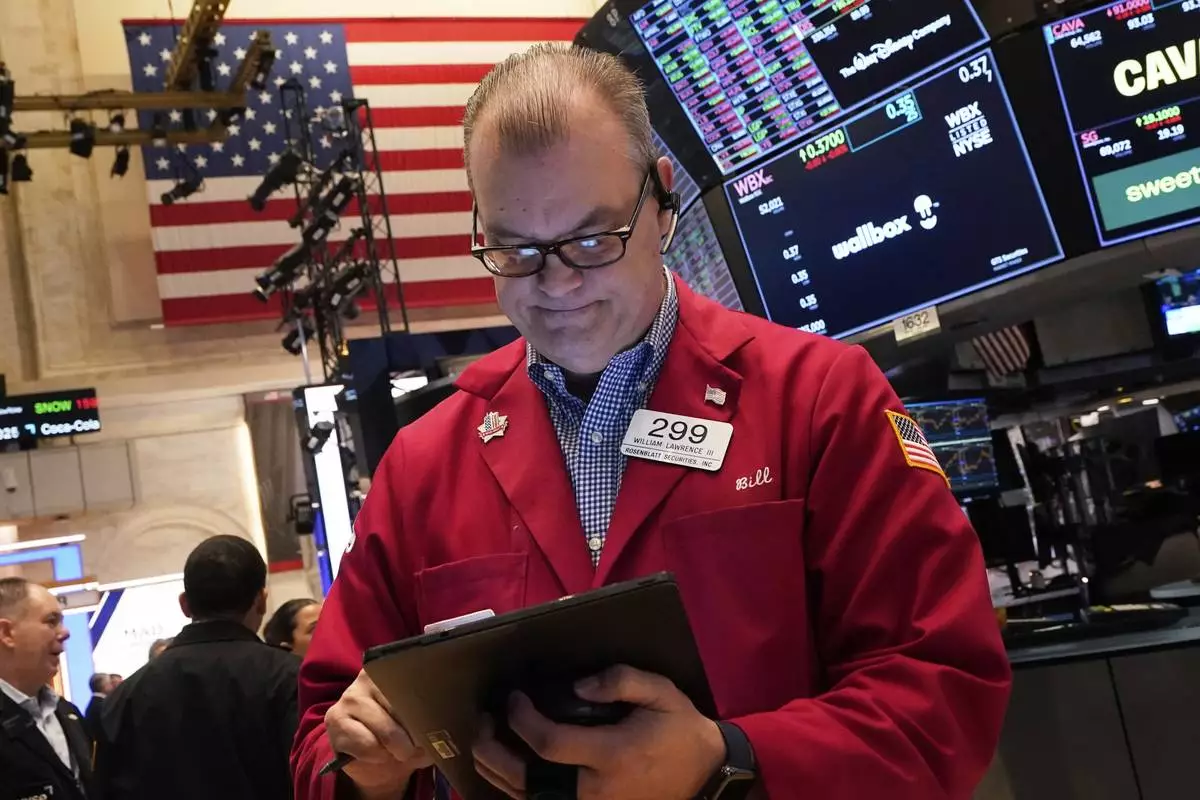
Trader William William Lawrence works on the floor of the New York Stock Exchange, Tuesday, April 29, 2025. (AP Photo/Richard Drew)

Currency traders work near a screen showing the Korea Composite Stock Price Index (KOSPI), top left, and the foreign exchange rate between U.S. dollar and South Korean won, top center, at the foreign exchange dealing room of the KEB Hana Bank headquarters in Seoul, South Korea, Wednesday, April 30, 2025. (AP Photo/Ahn Young-joon)

Currency traders work near a screen showing the Korea Composite Stock Price Index (KOSPI) and the foreign exchange rate between U.S. dollar and South Korean won, top right, at the foreign exchange dealing room of the KEB Hana Bank headquarters in Seoul, South Korea, Wednesday, April 30, 2025. (AP Photo/Ahn Young-joon)

A currency trader works near a screen showing the Korea Composite Stock Price Index (KOSPI), top center, and the foreign exchange rate between U.S. dollar and South Korean won, top center right, at the foreign exchange dealing room of the KEB Hana Bank headquarters in Seoul, South Korea, Wednesday, April 30, 2025. (AP Photo/Ahn Young-joon)