BOGOTA, Colombia (AP) — Rebel groups in Colombia are using apps like Facebook and Tik Tok to recruit children and young adults, and social media companies must do more to moderate content, the United Nations says.
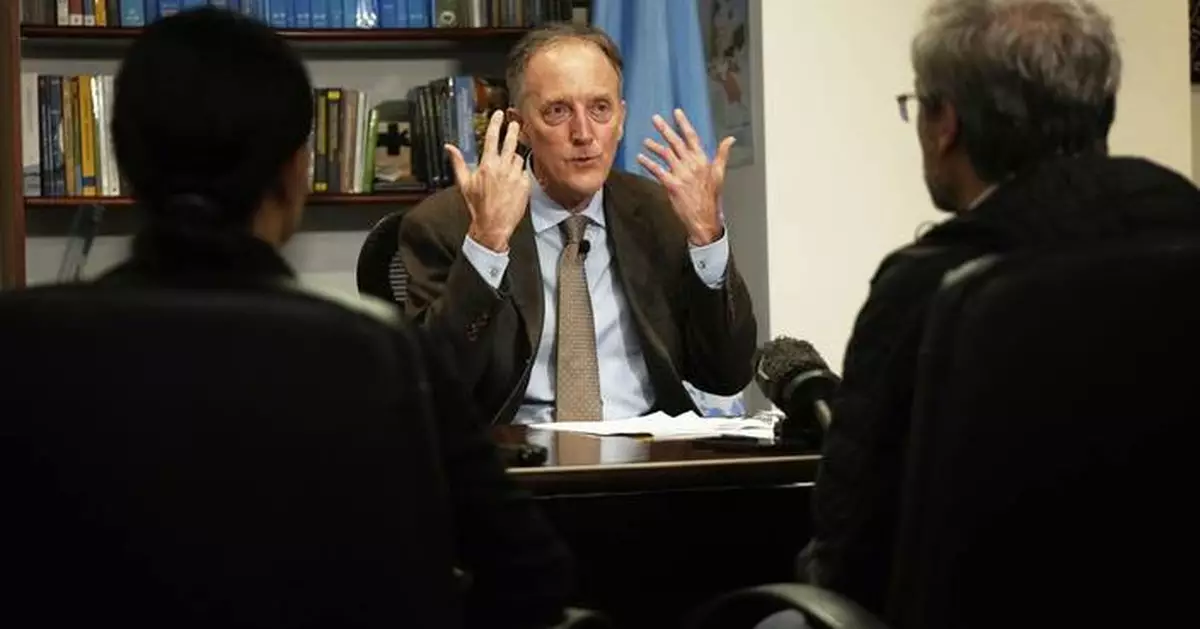
The U.N.'s top human rights official in Colombia, Scott Campbell, in an interview with The Associated Press said more investment is needed in both automated tools and human moderators to take down videos posted by gangs and rebel groups that are targeting youth from marginalized communities.
Colombian rebel groups such as the FARC-EMC are increasingly posting videos that glamorize life in their ranks and urge youth to enlist.
“These companies are not putting enough resources into online content moderation in the global south,” Campbell said, calling Colombia an example of how “grave” the threat can be for children and Indigenous communities. He said companies take more action in the global north, where they feel the most political pressure.
Campbell, who previously served as a human rights and technology specialist at the U.N.’s Geneva office, said he recently met with representatives from Meta, which owns Facebook, to discuss how rebel groups and gangs can be stopped from using the company’s platforms to recruit young people.
He said the company pledged to work on the problem, and added that he is also seeking a meeting with TikTok representatives.
In an email, a TikTok spokesperson said the company has developed community guidelines that include not allowing hateful or violent organizations on its platform. The company said if it notices that these organizations are using its platform, or if suspicious accounts are flagged by users who contact its help center, it will review accounts and delete them. TikTok also said it has been working closely with police in Colombia and with the army to identify and shut down accounts that violate community guidelines.
In a separate email, Meta said the company has a policy of banning terrorist organizations from using its platforms and that it is collaborating with law enforcement to fight efforts to recruit children.
“We also collaborate with other companies to share information and take actions against these evolving threats across the internet,” Meta said.
The recruitment of children has become a major problem in rural areas of Colombia that are disputed by the military, drug gangs and rebel groups.
According to Colombia’s Human Rights Ombudsman, 409 children under 18 were recruited into rebel groups in the South American nation last year, twice as many as in 2023.
The U.N. recorded 216 cases of forced recruitment of minors in Colombia last year.
The problem has been particularly striking in Cauca province in the southwest, where fighting has intensified as rebel groups try to fill a power vacuum left by the Revolutionary Armed Forces of Colombia, the guerrilla group that made peace with the government in 2016.
Anyi Zapata, a humans rights specialist with ACIN, an Indigenous association in Cauca, said rebel groups there have long targeted vulnerable children, offering them money to do small favors and gifts like cellphones.
Now they are posting videos on social media that show members with motorcycles, SUVs and adventurous lifestyles. One TikTok account recently featured a video of a man on a motorcycle wearing camouflage, with the caption: "Join me and you will know friendship without hypocrisy.”
The images often show logos of rebel groups.
Campbell said that even when accounts are taken down, they can be replaced by others. He said social media companies need to share their information on such accounts with Colombian prosecutors, who can file charges against people posting the content.
“It’s difficult to get the balance right between freedom of expression and legitimate speech, while pulling down content that is clearly illegal and can cause harm,” Campbell said.
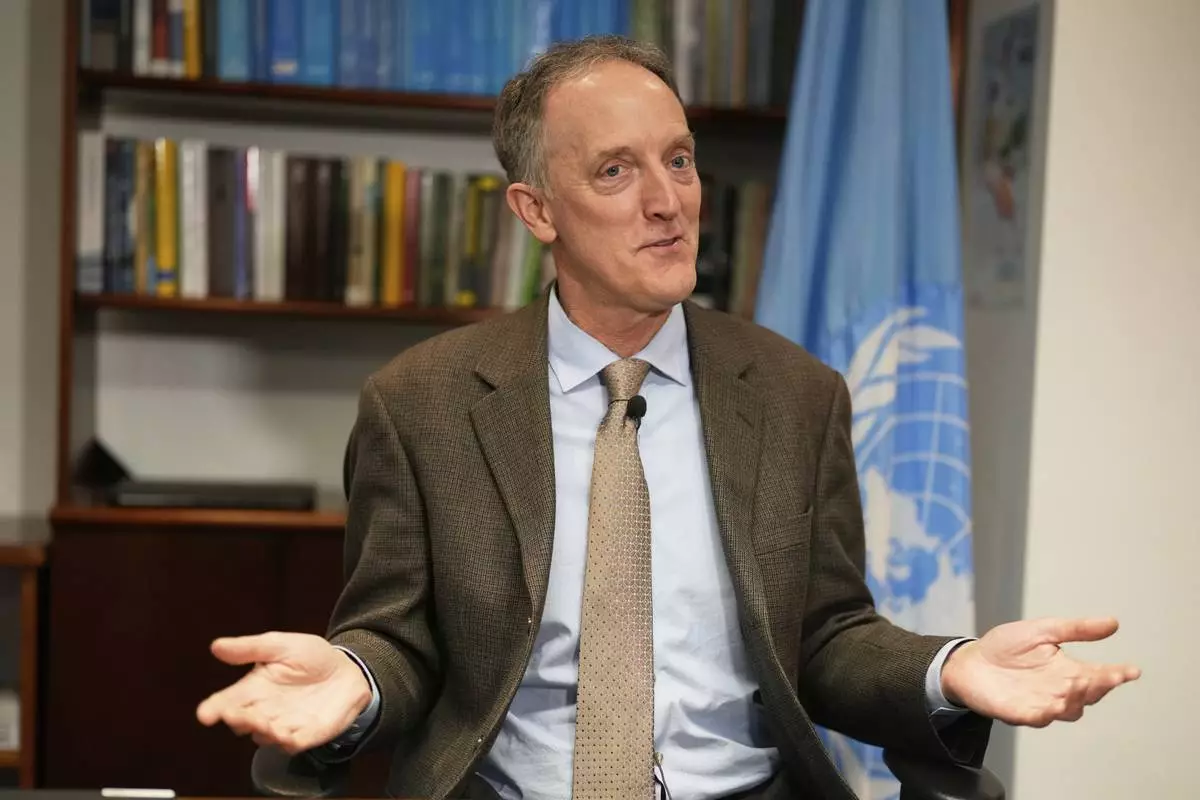
UN High Commissioner for Human Rights in Colombia Scott Campbell gives an interview in Bogota, Colombia, Tuesday, April 29, 2025. (AP Photo/Fernando Vergara)
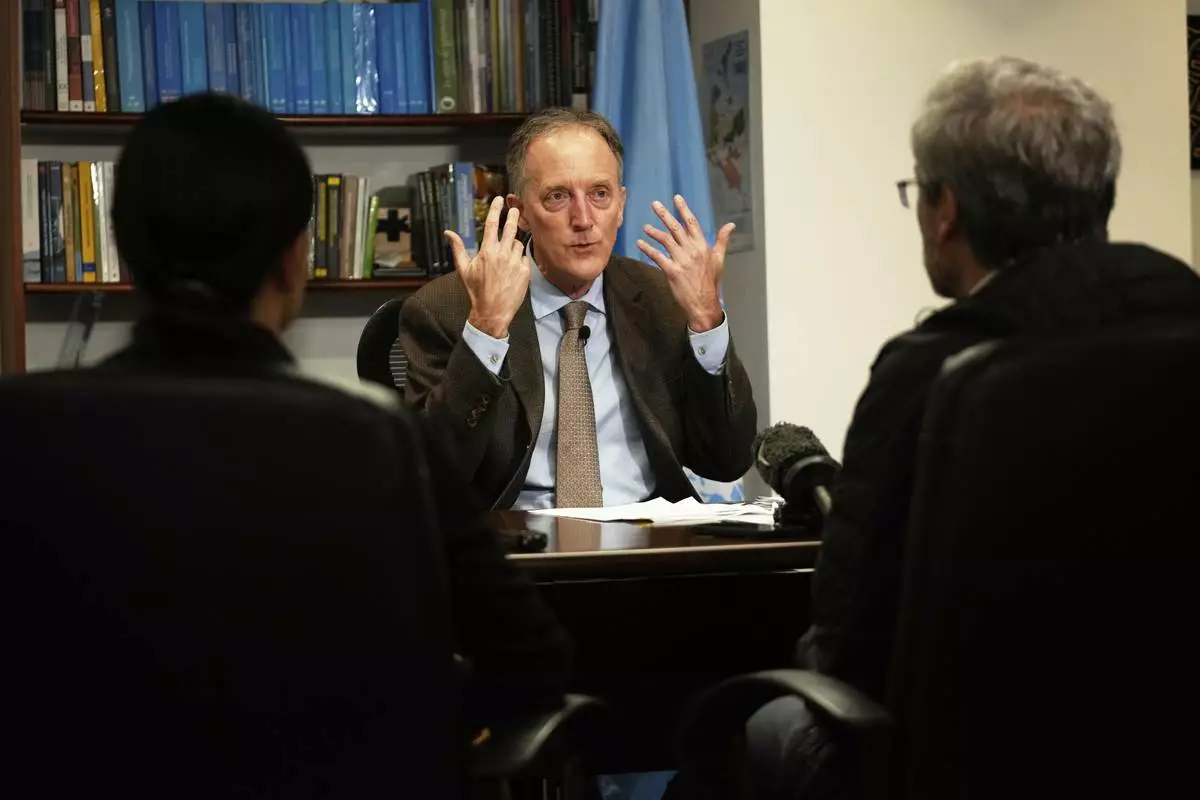
UN High Commissioner for Human Rights in Colombia Scott Campbell gives an interview in Bogota, Colombia, Tuesday, April 29, 2025. (AP Photo/Fernando Vergara)
MINNEAPOLIS (AP) — Days of demonstrations against immigration agents left Minnesota tense on Tuesday, a day after federal authorities used tear gas to break up crowds of whistle-blowing activists and state and local leaders sued to fight the enforcement surge that led to the fatal shooting of a Minneapolis woman.
Confrontations between federal agents and protesters stretched throughout the day and across multiple cities on Monday. Agents fired tear gas in Minneapolis as a crowd gathered around immigration officers questioning a man, while to the northwest in St. Cloud hundreds of people protested outside a strip of Somali-run businesses after ICE officers arrived.
Later that night, confrontations erupted between protesters and officers guarding the federal building being used as a base for the Twin Cities crackdown.
With the Department of Homeland Security pledging to send more than 2,000 immigration officers into Minnesota in what Immigration and Customs Enforcement has called its largest enforcement operation ever, the state, joined by Minneapolis and St. Paul, sued the Trump administration Monday to try to halt or limit the surge.
The lawsuit says the Department of Homeland Security operation violates the First Amendment and other constitutional protections and accuses the Republican Trump administration of violating free speech rights by focusing on a progressive state that favors Democrats and welcomes immigrants.
“This is, in essence, a federal invasion of the Twin Cities in Minnesota, and it must stop,” state Attorney General Keith Ellison said at a news conference.
Homeland Security says it has made more than 2,000 arrests in the state since early December.
Dozens of protests or vigils have taken place across the U.S. to honor Renee Good since the 37-year-old mother of three was shot in the head by an ICE officer in Minneapolis.
In response to Monday's lawsuit, Homeland Security spokesperson Tricia McLaughlin accused Minnesota officials of ignoring public safety.
“President Trump’s job is to protect the American people and enforce the law — no matter who your mayor, governor, or state attorney general is," McLaughlin said.
The Trump administration has repeatedly defended the immigration agent who shot Good, saying she and her vehicle presented a threat. But that explanation has been widely panned by Minnesota Gov. Tim Walz, Minneapolis Mayor Jacob Frey and others based on videos of the confrontation.
Two Democratic lawmakers from Massachusetts announced Tuesday they are sponsoring a bill to make it easier for people to sue and overcome immunity protections for federal law enforcement officers who are accused of violating civil rights. The bill stands little chance of passage in the Republican-controlled Congress.
Besides litigation in Minnesota, the government also faces a new lawsuit over a similar immigration crackdown in Illinois. More than 4,300 people were arrested last year in “Operation Midway Blitz” as masked agents swept the Chicago area. The lawsuit by the city and state says the campaign had a chilling effect, making residents afraid to leave home.
The lawsuit seeks restrictions on certain tactics, among other remedies. McLaughlin called it “baseless.”
Meanwhile, in Portland, Oregon, federal authorities filed charges against a Venezuelan national who was one of two people shot there by U.S. Border Patrol on Thursday. The U.S. Justice Department said the man used his pickup truck to strike a Border Patrol vehicle and escape the scene with a woman.
They were shot and eventually arrested. Their wounds were not life-threatening. The FBI said there was no video of the incident, unlike the Good shooting.
Associated Press reporters Ed White in Detroit; Sarah Raza in Sioux Falls, South Dakota; and Sophia Tareen in Chicago contributed.
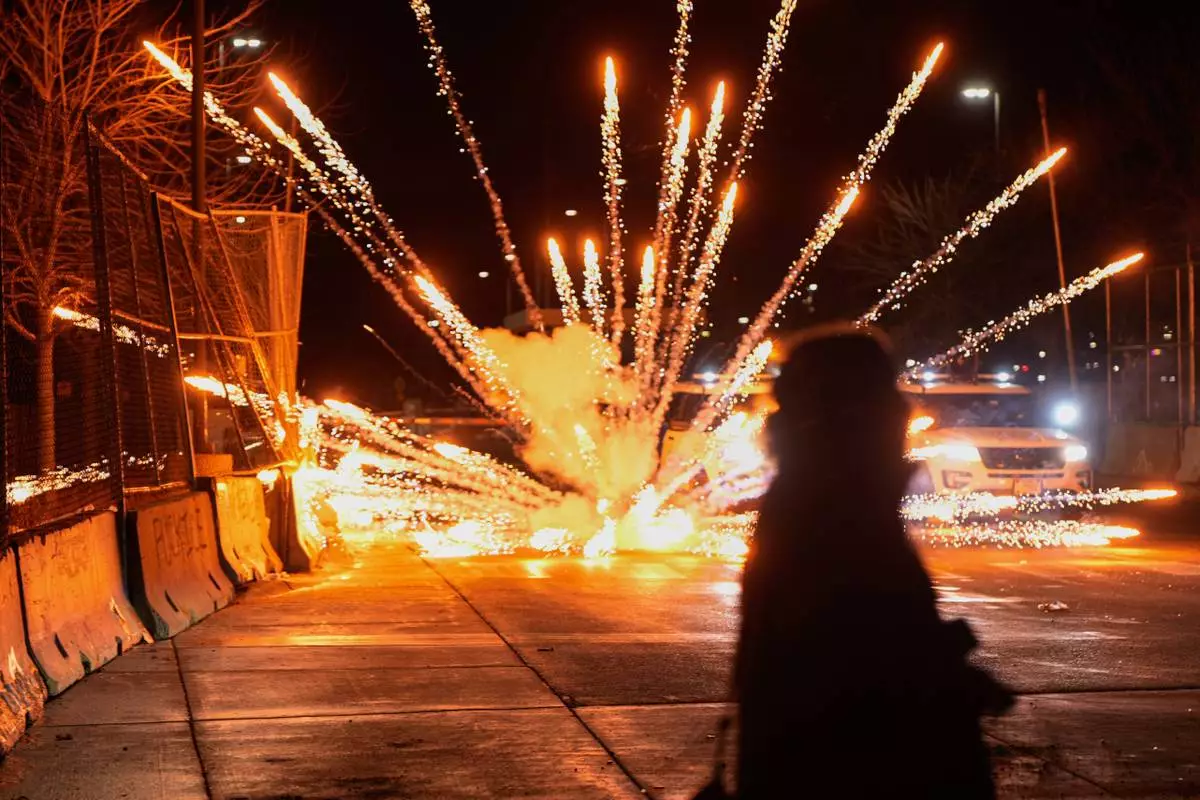
Fireworks are set off by protesters outside the Bishop Henry Whipple Federal Building, Monday, Jan. 12, 2026, in Minneapolis. (AP Photo/Jen Golbeck)
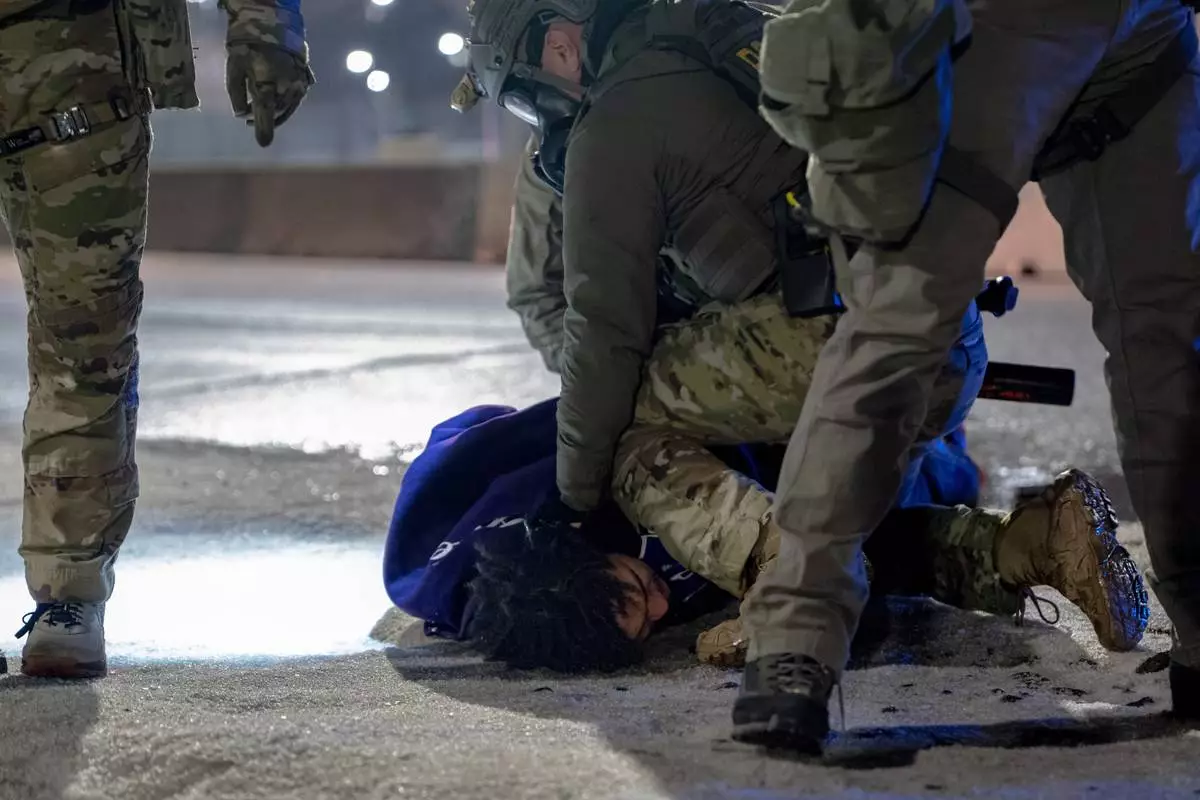
Federal immigration officers detain a demonstrator outside Bishop Whipple Federal Building after tear gas was deployed Monday, Jan. 12, 2026, in Minneapolis. (AP Photo/Jen Golbeck)
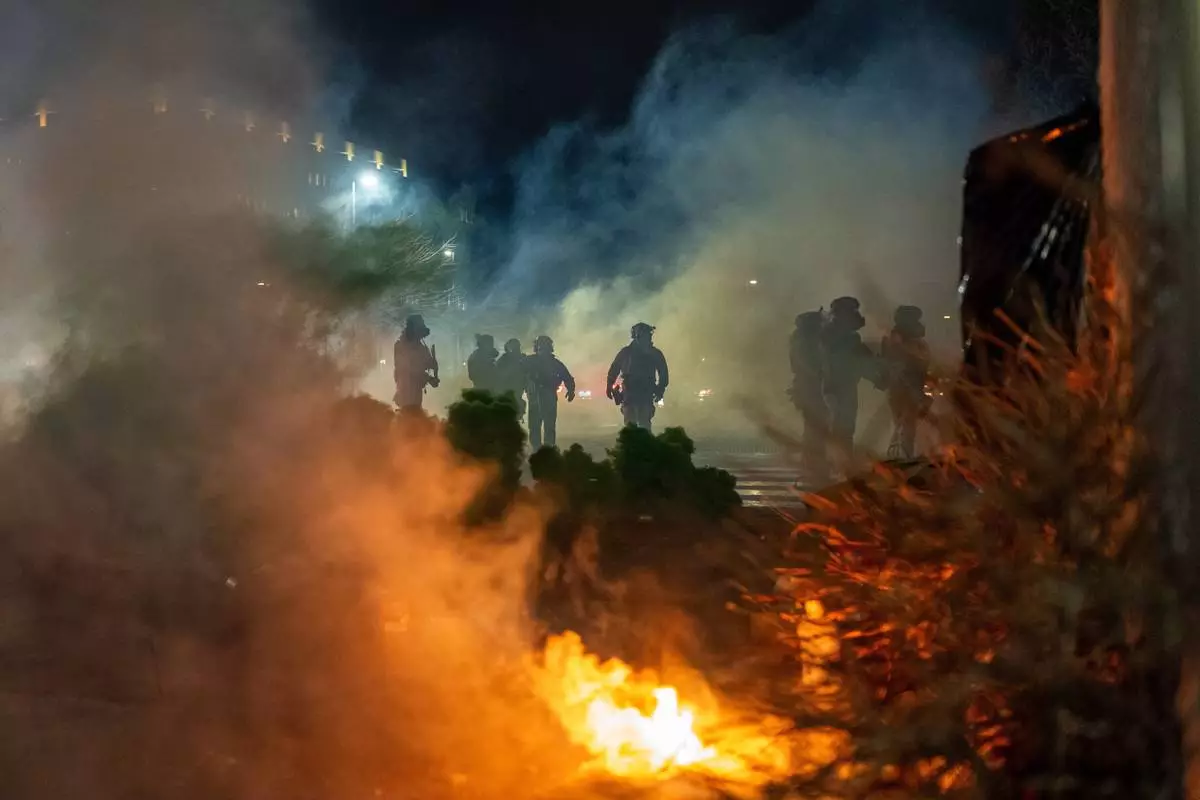
Federal immigration officers are seen outside Bishop Whipple Federal Building after tear gas was deployed Monday, Jan. 12, 2026, in Minneapolis. (AP Photo/Jen Golbeck)
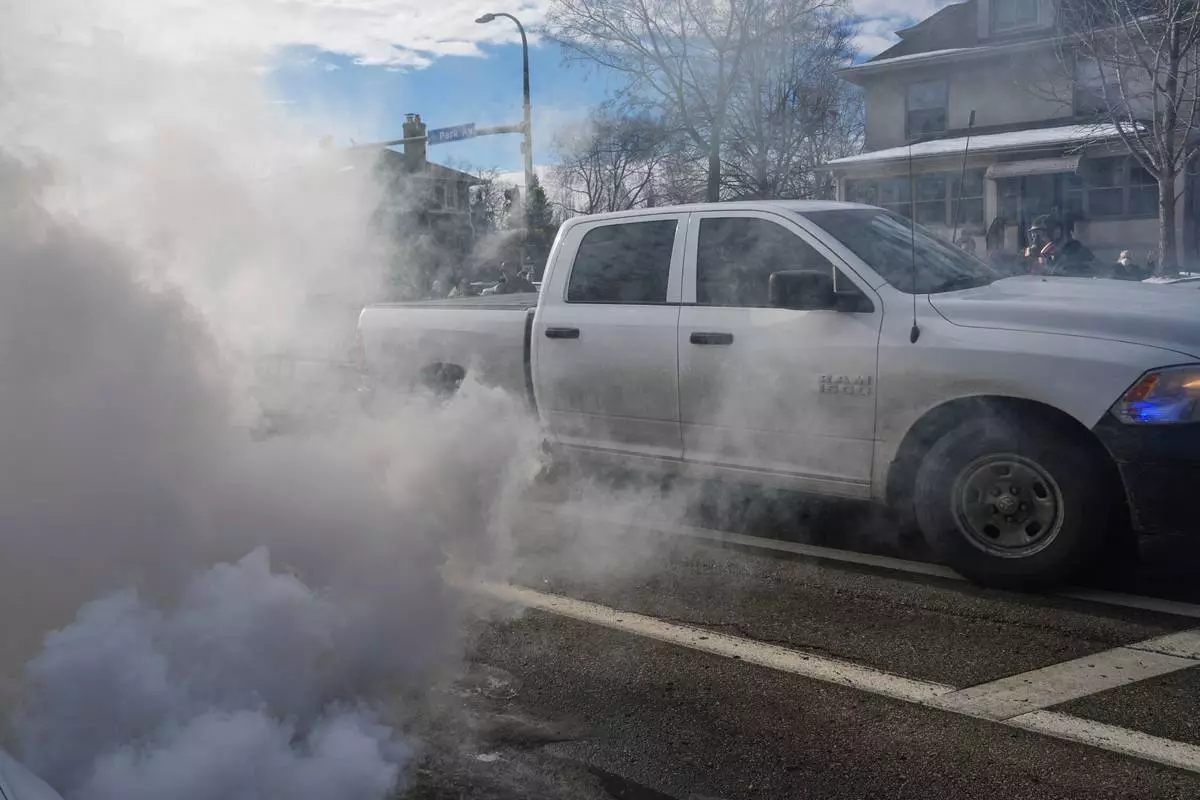
Federal agents drive through smoke from tear gas dispersed during a protest, Monday, Jan. 12, 2026 in Minneapolis (AP Photo/Adam Gray)
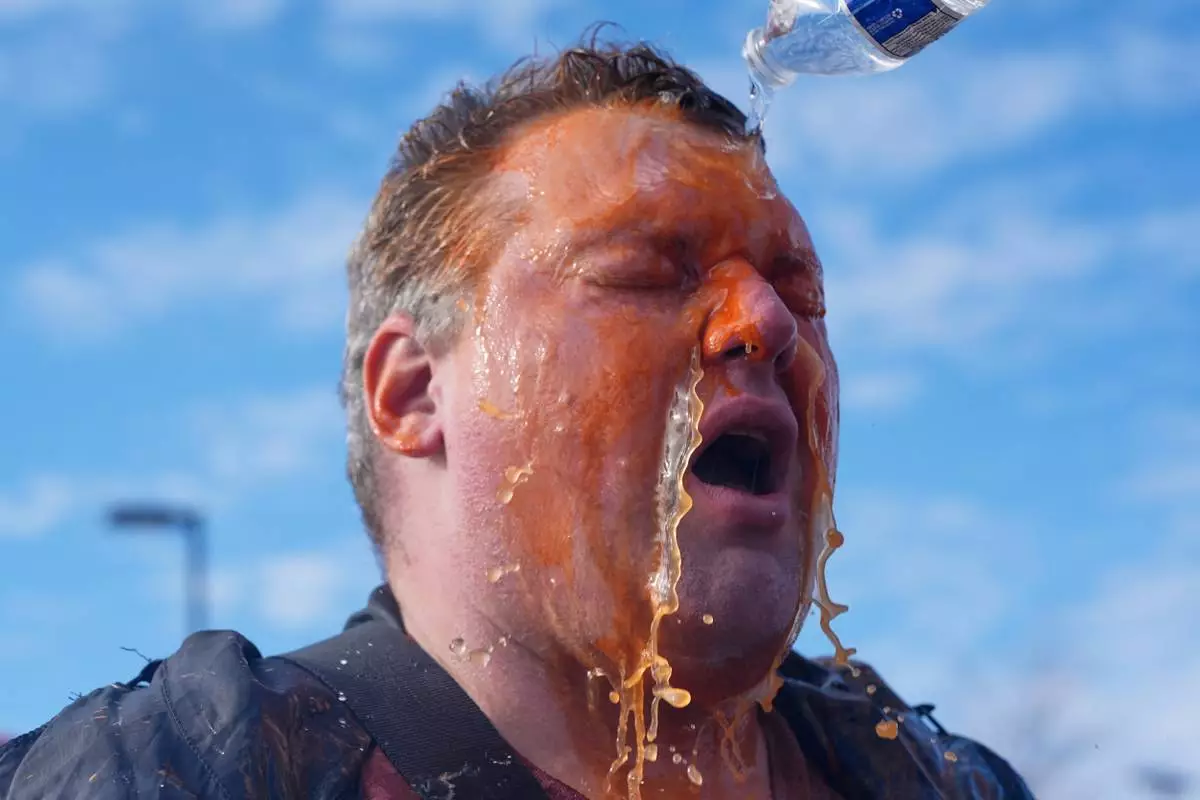
A protester's face is doused in water after he was pepper sprayed outside of the Bishop Whipple Federal Building, Monday, Jan. 12, 2026, in Minneapolis. (AP Photo/Jen Golbeck)
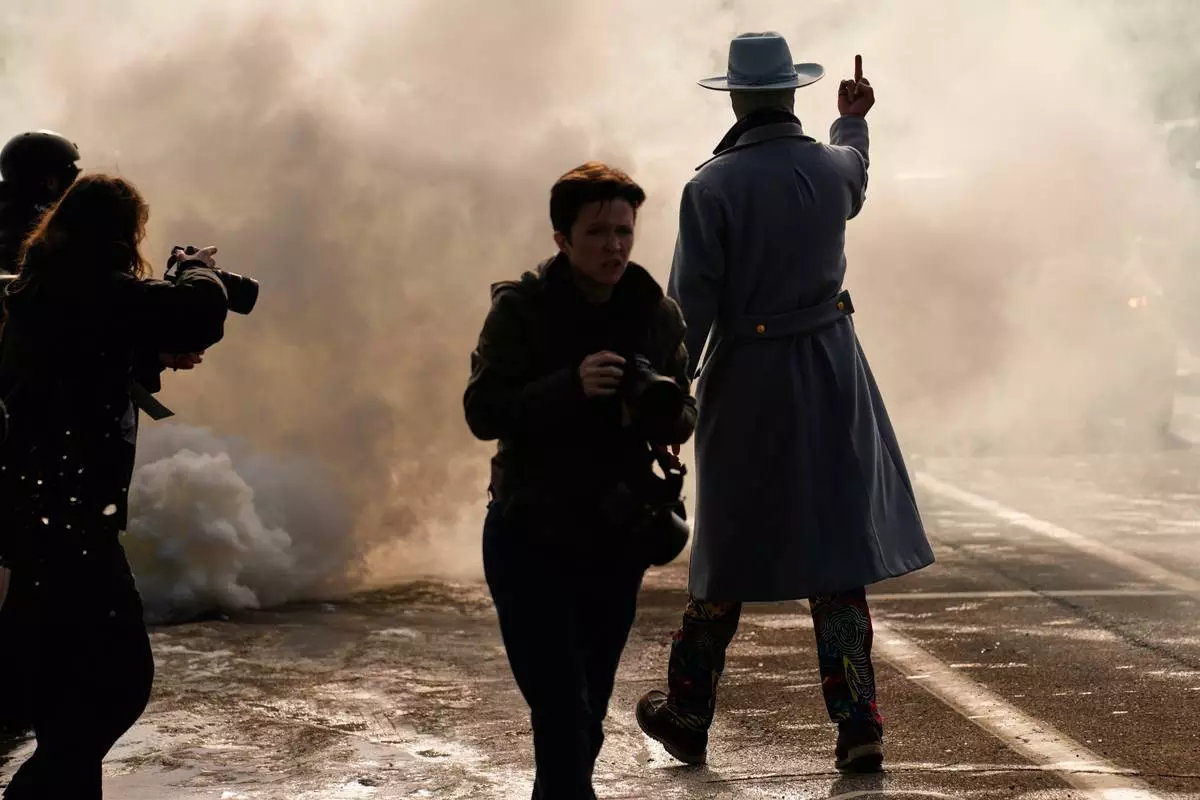
EDS NOTE: OBSCENITY - A man gestures as he walks toward a cloud of tear gas that was deployed by federal immigration officers Monday, Jan. 12, 2026, in Minneapolis. (AP Photo/John Locher)
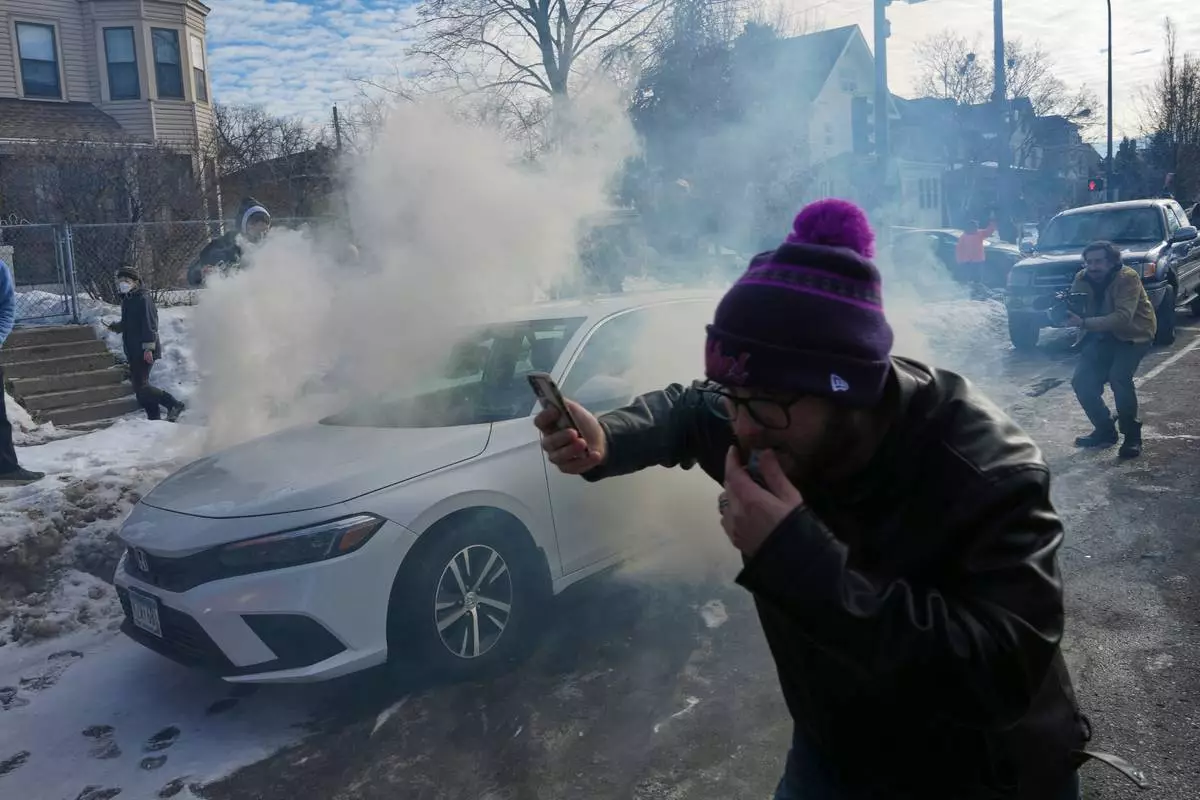
Protesters try to avoid tear gas dispersed by federal agents, Monday, Jan. 12, 2026 in Minneapolis (AP Photo/Adam Gray)
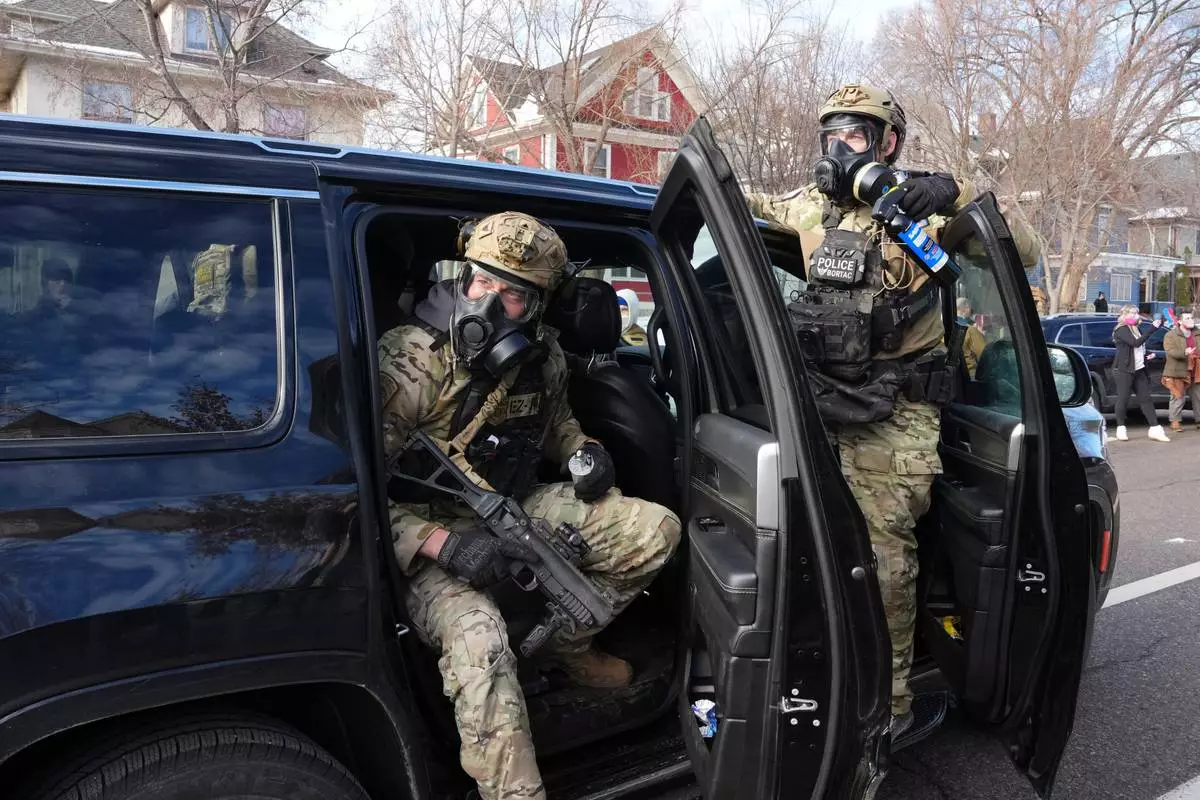
Federal agents get ready to disperse tear gas into a crowd at a protest, Monday, Jan. 12, 2026 in Minneapolis (AP Photo/Adam Gray)