Skip to Content Facebook Feature Image

'Buena Vista Social Club,' 'Death Becomes Her' and 'Maybe Happy Ending' lead Tony Award nominations

ENT

'Buena Vista Social Club,' 'Death Becomes Her' and 'Maybe Happy Ending' lead Tony Award nominations
ENT

ENT

'Buena Vista Social Club,' 'Death Becomes Her' and 'Maybe Happy Ending' lead Tony Award nominations

2025-05-02 03:20 Last Updated At:03:30

NEW YORK (AP) — Three Broadway shows — “Buena Vista Social Club,” “Death Becomes Her” and “Maybe Happy Ending” — each earned a leading 10 Tony Award nominations Thursday, as nominators spread out the joy and gave nods to George Clooney,Sarah Snook and Bob Odenkirk in their debuts.

Twenty-nine shows got at least one nomination across the 26 Tony categories, even long-closed shows like “A Wonderful World: The Louis Armstrong Musical” and “Swept Away.”

James Monroe Iglehart, who played Armstrong in his musical, wasn't expecting the nomination and woke to his phone blowing up. “I was like, ‘What’s going on? Is everything OK?’ And then I was, 'OK! How cool is that?” he said. “I’m just really excited to be a part of this crop of amazing performers.”

“Buena Vista Social Club,” which takes its inspiration from Wim Wenders’ 1999 Oscar-nominated documentary on the making of the album “Buena Vista Social Club,” will face off for best musical crown with “Death Becomes Her,” based on the 1992 cult classic film of the same name about frenemeies who seek a magic eternal youth and beauty potion.

The category also includes “Maybe Happy Ending,” a rom-com musical about a pair of androids that crackles with humanity and “ Dead Outlaw,” a musical about a real life alcoholic drifter who was shot dead in 1911 and whose afterlife proved to be stranger than fiction as he was displayed at carnivals and sideshows for decades.

A second show with a corpse, the British import “Operation Mincemeat,” also made it, the improbably true story about a British deception operation designed to mislead Nazi Germany about the location of the Allied landing at Sicily.

“What I think is so cool about this year is that the shows are so widely different and I love that for Broadway,” says Christopher Gattelli, the choreographer and first-time director of “Death Becomes Her,” who earned nods for both jobs.

“We have chamber pieces and really small intimate shows and these wildly funny black box shows, and so, I love that it’s been such a great scope of a year. I love that we get to add to that mix.”

“Dead Outlaw” — conceived by David Yazbek, who wrote the music and lyrics with Erik Della Penna — reunites Yazbek with book writer Itamar Moses and the director David Cromer, who collaborated so winningly on the Tony-winning “The Band’s Visit.” Yazbek said Thursday that the team learned a lesson with that show that they applied to “Dead Outlaw.”

“If you make the thing you want to make and make it true to itself and leave the rest of it up to the fates, then you might actually get the reception that you want. And so we sort of stuck to that approach,” he said.

In the best play category, “English,” Pulitzer Prize-winning playwright Sanaz Toossi’s look at four Iranian students preparing for an English language exam, made the cut. As did “The Hills of California,” Jez Butterworth’s look at a family gathering for the impending death of its matriarch set in a hotel in the summer of 1976 in England.

They'll compete with “John Proctor Is the Villain,” Kimberly Belflower’s examination of girlhood, feminism, the #MeToo movement and a compelling rebuttal to “The Crucible,” and “Purpose,” Branden Jacobs-Jenkins’ drawing-room drama about an accomplished Black family destroying itself from within.

The category is completed with “Oh, Mary!,” an irreverent, raunchy, gleefully deranged revisionist history by Cole Escola centered on Mary Todd Lincoln, portrayed as a boozy, narcissistic, potty-mouthed first lady determined to strike out of the subordinate role into which history has placed her.

Jacobs-Jenkins, whose “Appropriate,” won best play revival last year, said Thursday morning that his category was filled with plays that started regionally or off-Broadway, showing the art’s strength.

“I hope people kind of see the diversity of what’s happening in terms of writing for the American stages right now. It’s really an amazing time,” he said. “I think that’s just the testament to how fruitful the form is.”

Audra McDonald, as expected, heard her name called for her turn as Rose in a hailed revival of “Gypsy,” a role that led to previous Tonys for the likes of Angela Lansbury, Tyne Daly and Patti LuPone. McDonald, already a holder for the most Tonys by a performer — with six — now vies for a seventh.

She will face off against Nicole Scherzinger in “Sunset Blvd.,” Megan Hilty and Jennifer Simard in “Death Becomes Her,” and Jasmine Amy Rogers from “Boop! The Musical,” which follows the Depression-era cartoon character as she goes on a journey of transformation.

McDonald credits the late Broadway star Gavin Creel for suggesting she lead “Gypsy” some eight years ago during a dinner party at her house. It wasn't on her radar, and she didn't think a Black-led “Gypsy” would fly. Creel insisted. He died the first day of “Gypsy” rehearsals. “We have another reason to thank him,” she said.

Clooney got a nod as a leading actor in a play for his retelling the story of legendary reporter Edward R. Murrow in an adaptation of his 2005 film “Good Night, and Good Luck.” Another hot ticket — a revival of David Mamet's “Glengarry Glen Ross” earned Odenkirk a nod, but not for his co-stars Kieran Culkin or comedian Bill Burr. (The snub derails Culkin possibly winning an Oscar, an Emmy and a Tony in less than 18 months.)

Snook, Culkin's “Succession” co-star, earned a nomination for playing all 26 parts in “The Picture of Dorian Gray” and “Stranger Things” star Sadie Sink earned one for leading “John Proctor is the Villain.” “Stranger Things: The First Shadow,” an effects-driven prequel to her old Netflix hit show, earned five nods, including for lead actor Louis McCartney.

The news was less good for Kit Connor and Rachel Zegler, both in their Broadway debuts. Neither got nominations for their “Romeo + Juliet” pitched to Generation X and millennials. Robert Downey Jr., who also made his Broadway debut in the play “McNeal,” also wasn't recognized. Mia Farrow earned a nomination for “The Roommate” but her co-star, the Broadway diva Patti LuPone, did not.

And, in a shock, an edgy “Othello” with Denzel Washington and Jake Gyllenhaal that producers are charging north of $900 for orchestra seats, got not a single nomination. Idina Menzel's return to Broadway in “Redwood,” a contemporary fable about trees, grief and the quest for healing, also got no nominations, nor did “The Last Five Years,” with Nick Jonas and Tony-winner Adrienne Warren

Thornton Wilder’s “Our Town,” starring Jim Parsons and Katie Holmes, earned a best play revival Tony nomination, but nothing for its actors. Elton John's musical about 1980s televangelist Tammy Faye Bakker and the Stephen Sondheim revue starring Tony Award-winners Bernadette Peters and Lea Salonga both came up blank.

The Tony Awards will be handed out June 8 at Radio City Music Hall during a telecast hosted by “Wicked” star and Tony winner Cynthia Erivo.
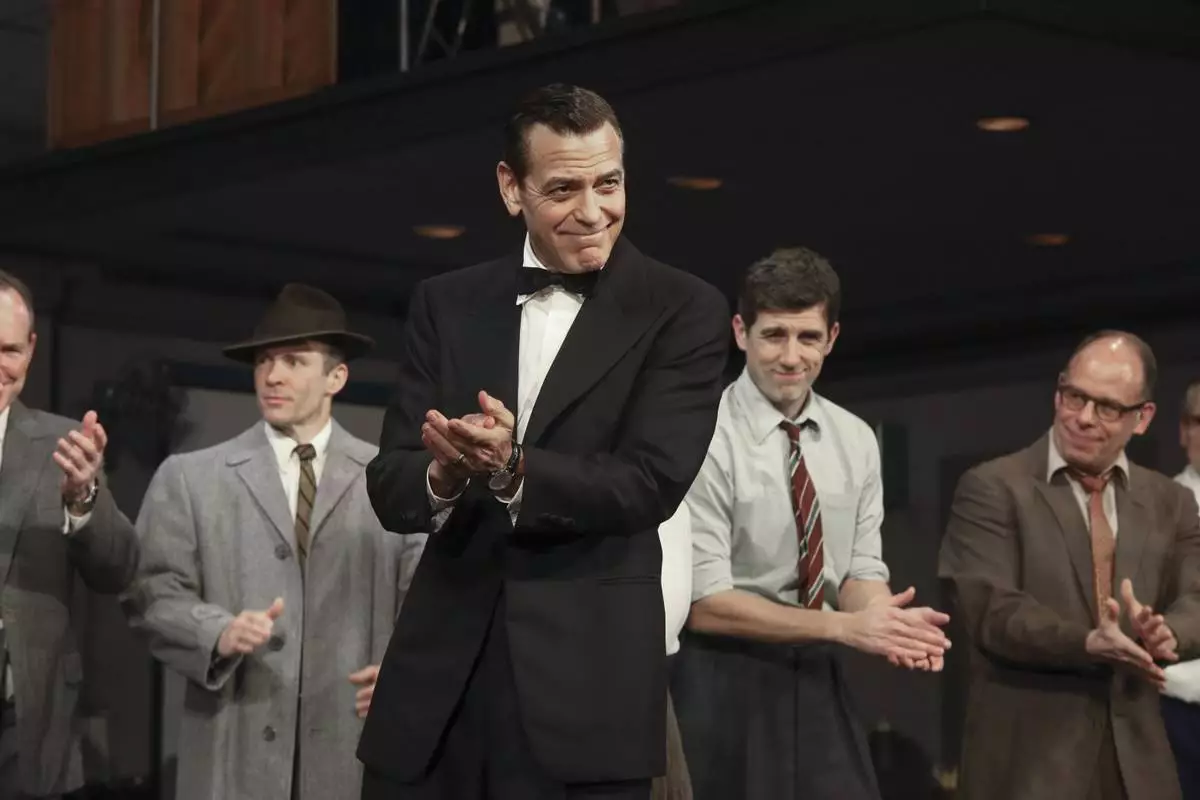
FILE - George Clooney appears at the "Good Night, and Good Luck" Broadway opening night on April 3, 2025, in New York. (Photo by Andy Kropa/Invision/AP, File)
FILE - George Clooney appears at the "Good Night, and Good Luck" Broadway opening night on April 3, 2025, in New York. (Photo by Andy Kropa/Invision/AP, File)

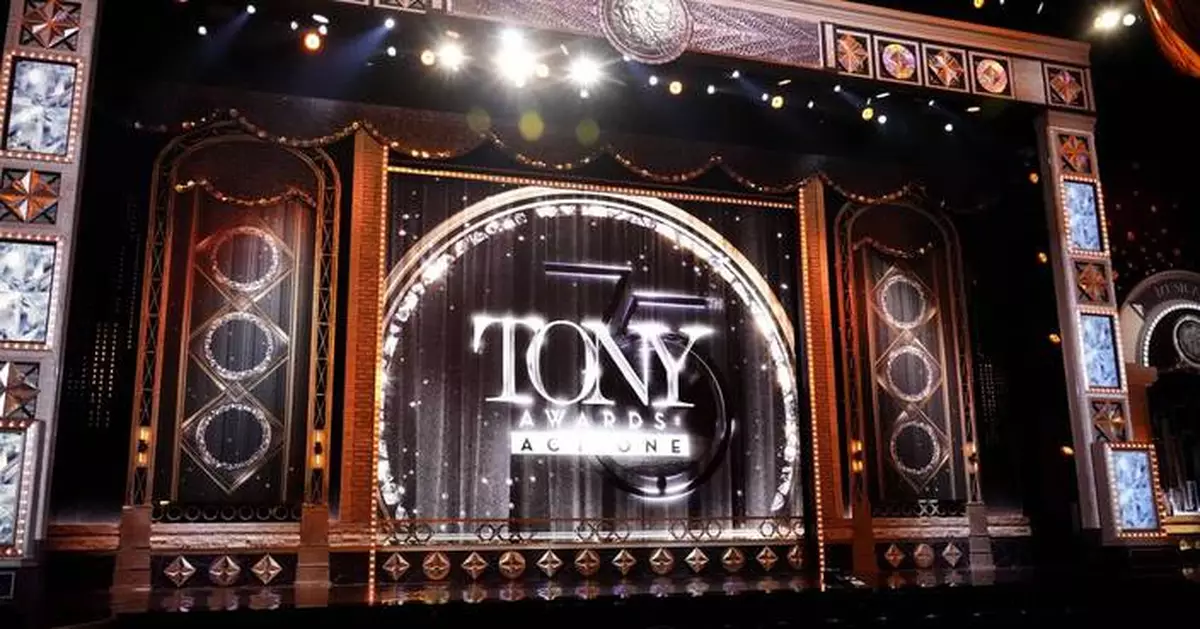
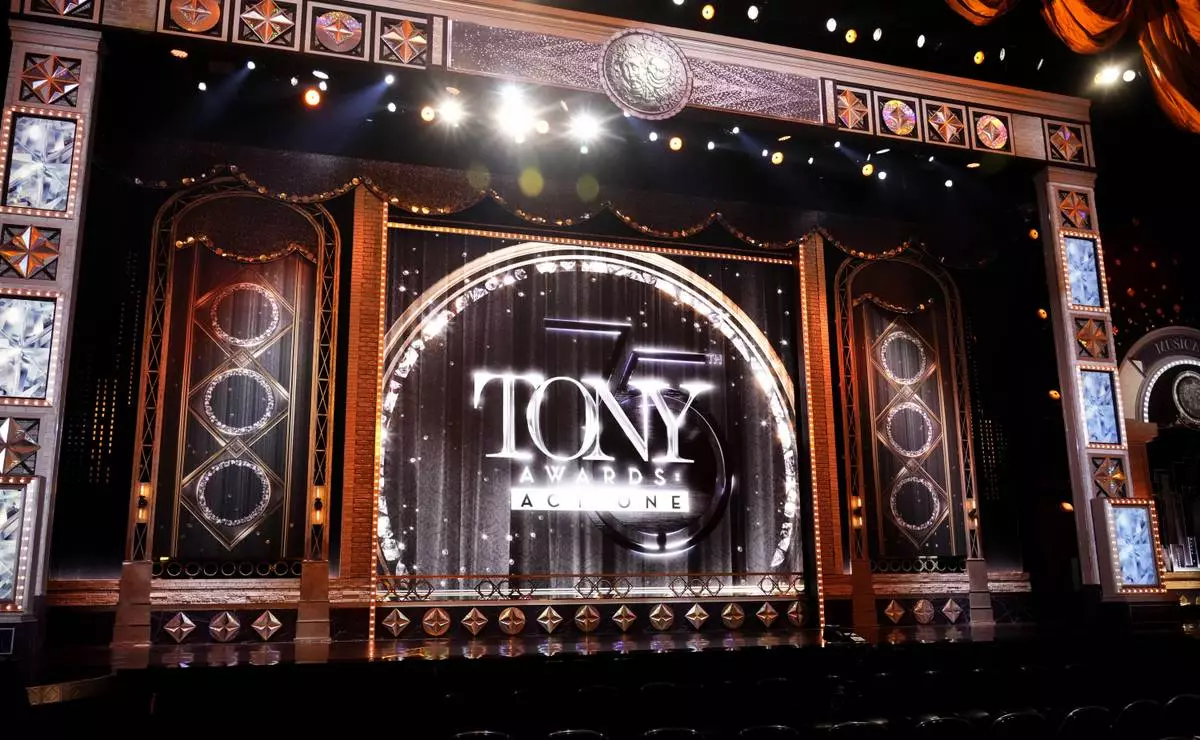
FILE - A view of the stage appears before the start of the 75th annual Tony Awards on Sunday, June 12, 2022, at Radio City Music Hall in New York. (Photo by Charles Sykes/Invision/AP, File)
FILE - A view of the stage appears before the start of the 75th annual Tony Awards on Sunday, June 12, 2022, at Radio City Music Hall in New York. (Photo by Charles Sykes/Invision/AP, File)
NEW YORK (AP) — Reviving a campaign pledge, President Donald Trump wants a one-year, 10% cap on credit card interest rates, a move that could save Americans tens of billions of dollars but drew immediate opposition from an industry that has been in his corner.

Trump was not clear in his social media post Friday night whether a cap might take effect through executive action or legislation, though one Republican senator said he had spoken with the president and would work on a bill with his “full support.” Trump said he hoped it would be in place Jan. 20, one year after he took office.

Strong opposition is certain from Wall Street in addition to the credit card companies, which donated heavily to his 2024 campaign and have supported Trump's second-term agenda. Banks are making the argument that such a plan would most hurt poor people, at a time of economic concern, by curtailing or eliminating credit lines, driving them to high-cost alternatives like payday loans or pawnshops.

“We will no longer let the American Public be ripped off by Credit Card Companies that are charging Interest Rates of 20 to 30%,” Trump wrote on his Truth Social platform.

Researchers who studied Trump’s campaign pledge after it was first announced found that Americans would save roughly $100 billion in interest a year if credit card rates were capped at 10%. The same researchers found that while the credit card industry would take a major hit, it would still be profitable, although credit card rewards and other perks might be scaled back.

About 195 million people in the United States had credit cards in 2024 and were assessed $160 billion in interest charges, the Consumer Financial Protection Bureau says. Americans are now carrying more credit card debt than ever, to the tune of about $1.23 trillion, according to figures from the New York Federal Reserve for the third quarter last year.

Further, Americans are paying, on average, between 19.65% and 21.5% in interest on credit cards according to the Federal Reserve and other industry tracking sources. That has come down in the past year as the central bank lowered benchmark rates, but is near the highs since federal regulators started tracking credit card rates in the mid-1990s. That’s significantly higher than a decade ago, when the average credit card interest rate was roughly 12%.

The Republican administration has proved particularly friendly until now to the credit card industry.

Capital One got little resistance from the White House when it finalized its purchase and merger with Discover Financial in early 2025, a deal that created the nation’s largest credit card company. The Consumer Financial Protection Bureau, which is largely tasked with going after credit card companies for alleged wrongdoing, has been largely nonfunctional since Trump took office.

In a joint statement, the banking industry was opposed to Trump's proposal.

“If enacted, this cap would only drive consumers toward less regulated, more costly alternatives," the American Bankers Association and allied groups said.

Bank lobbyists have long argued that lowering interest rates on their credit card products would require the banks to lend less to high-risk borrowers. When Congress enacted a cap on the fee that stores pay large banks when customers use a debit card, banks responded by removing all rewards and perks from those cards. Debit card rewards only recently have trickled back into consumers' hands. For example, United Airlines now has a debit card that gives miles with purchases.

The U.S. already places interest rate caps on some financial products and for some demographics. The Military Lending Act makes it illegal to charge active-duty service members more than 36% for any financial product. The national regulator for credit unions has capped interest rates on credit union credit cards at 18%.

Credit card companies earn three streams of revenue from their products: fees charged to merchants, fees charged to customers and the interest charged on balances. The argument from some researchers and left-leaning policymakers is that the banks earn enough revenue from merchants to keep them profitable if interest rates were capped.

"A 10% credit card interest cap would save Americans $100 billion a year without causing massive account closures, as banks claim. That’s because the few large banks that dominate the credit card market are making absolutely massive profits on customers at all income levels," said Brian Shearer, director of competition and regulatory policy at the Vanderbilt Policy Accelerator, who wrote the research on the industry's impact of Trump's proposal last year.

There are some historic examples that interest rate caps do cut off the less creditworthy to financial products because banks are not able to price risk correctly. Arkansas has a strictly enforced interest rate cap of 17% and evidence points to the poor and less creditworthy being cut out of consumer credit markets in the state. Shearer's research showed that an interest rate cap of 10% would likely result in banks lending less to those with credit scores below 600.

The White House did not respond to questions about how the president seeks to cap the rate or whether he has spoken with credit card companies about the idea.

Sen. Roger Marshall, R-Kan., who said he talked with Trump on Friday night, said the effort is meant to “lower costs for American families and to reign in greedy credit card companies who have been ripping off hardworking Americans for too long."

Legislation in both the House and the Senate would do what Trump is seeking.

Sens. Bernie Sanders, I-Vt., and Josh Hawley, R-Mo., released a plan in February that would immediately cap interest rates at 10% for five years, hoping to use Trump’s campaign promise to build momentum for their measure.

Hours before Trump's post, Sanders said that the president, rather than working to cap interest rates, had taken steps to deregulate big banks that allowed them to charge much higher credit card fees.

Reps. Alexandria Ocasio-Cortez, D-N.Y., and Anna Paulina Luna, R-Fla., have proposed similar legislation. Ocasio-Cortez is a frequent political target of Trump, while Luna is a close ally of the president.

Seung Min Kim reported from West Palm Beach, Fla.

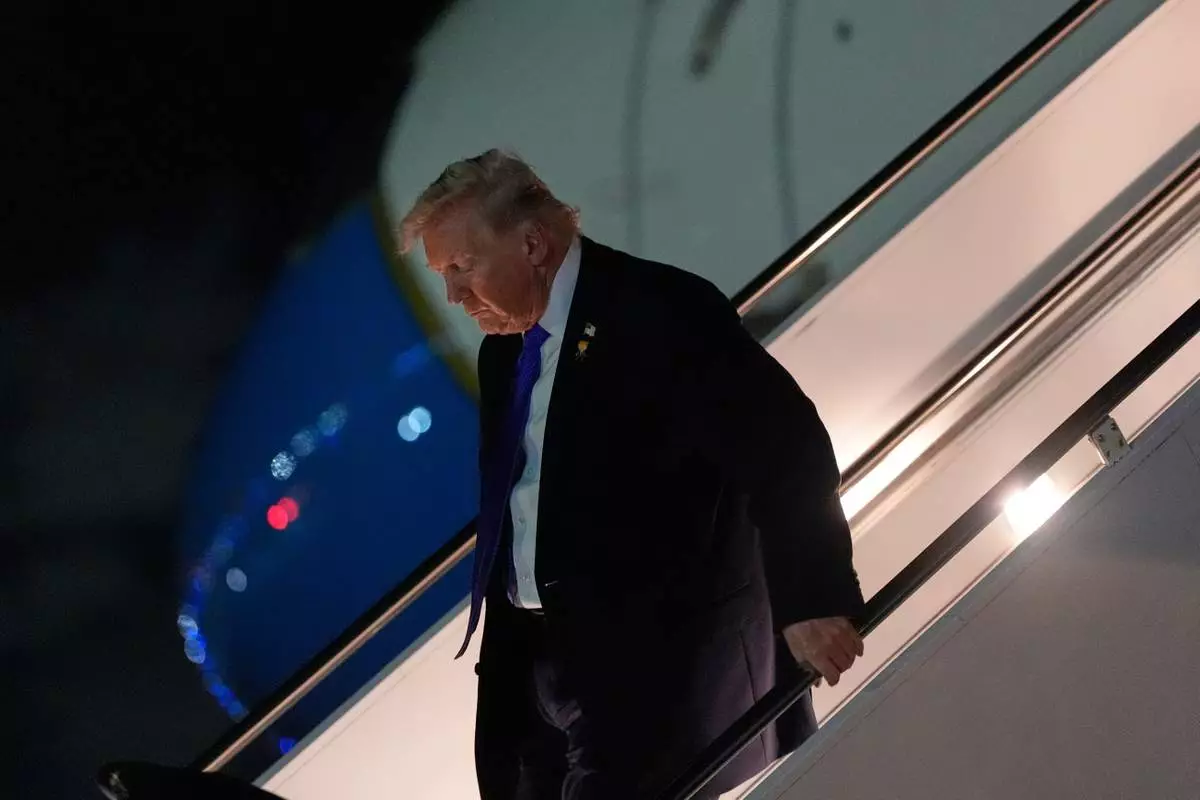
President Donald Trump arrives on Air Force One at Palm Beach International Airport, Friday, Jan. 9, 2025, in West Palm Beach, Fla. (AP Photo/Julia Demaree Nikhinson)

President Donald Trump arrives on Air Force One at Palm Beach International Airport, Friday, Jan. 9, 2025, in West Palm Beach, Fla. (AP Photo/Julia Demaree Nikhinson)

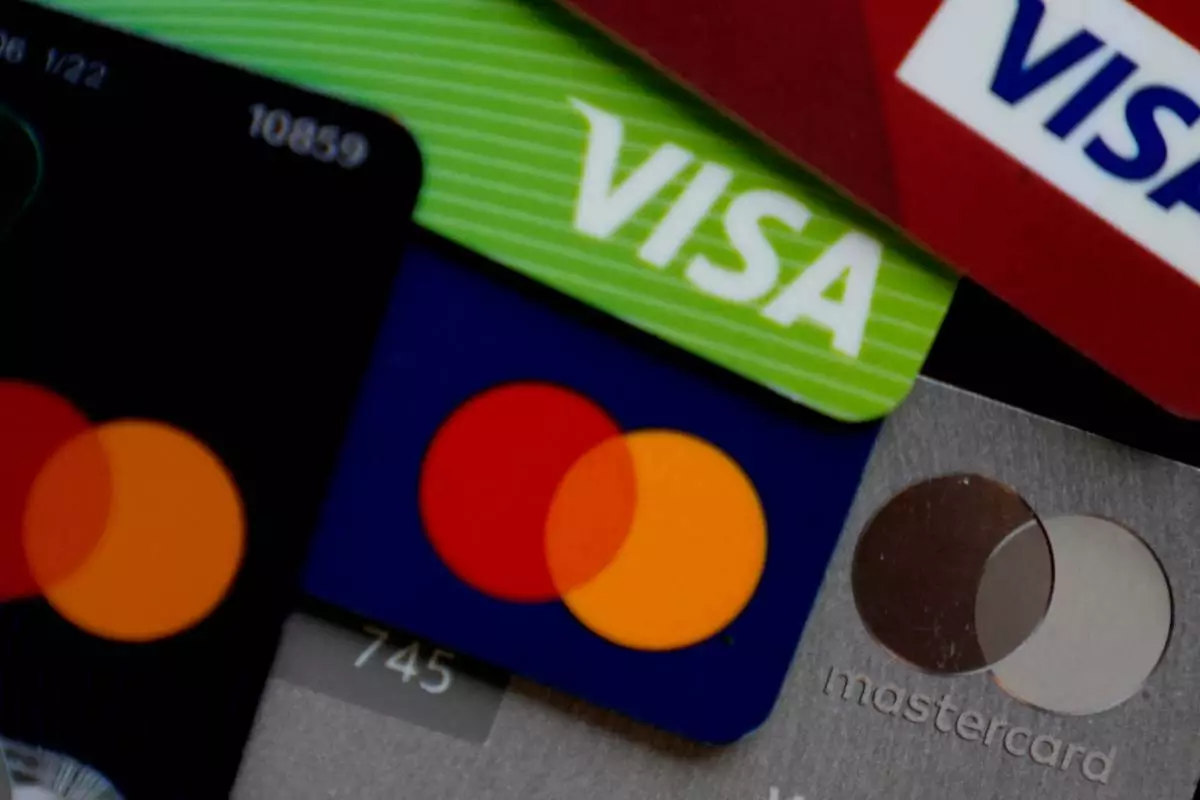
FILE - Visa and Mastercard credit cards are shown in Buffalo Grove, Ill., Feb. 8, 2024. (AP Photo/Nam Y. Huh, File)

FILE - Visa and Mastercard credit cards are shown in Buffalo Grove, Ill., Feb. 8, 2024. (AP Photo/Nam Y. Huh, File)

Recommended Articles