KAMPALA, Uganda (AP) — If the next pope is from sub-Saharan Africa, he would be the first in Catholic Church history. Catholic Africans think it is a long shot, though some are cautiously optimistic that Pope Francis’ successor could be a Black cardinal from their continent.
The answer will come soon, as the cardinals eligible to elect the new pope open their conclave next Wednesday at the Sistine Chapel.
Click to Gallery
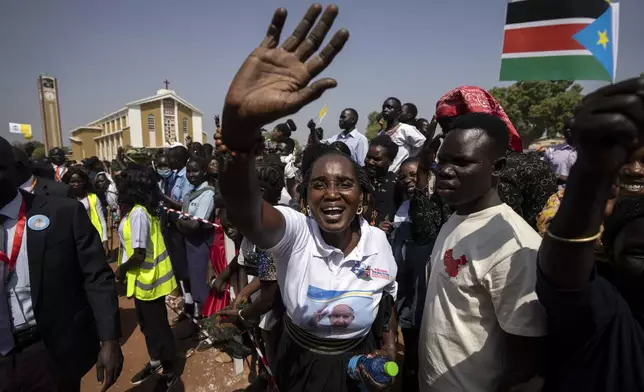
FILE - People in the crowd cheer and wave as Pope Francis is wheeled past after addressing clergy at the St. Theresa Cathedral in Juba, South Sudan, Saturday, Feb. 4, 2023. (AP Photo/Ben Curtis, File)
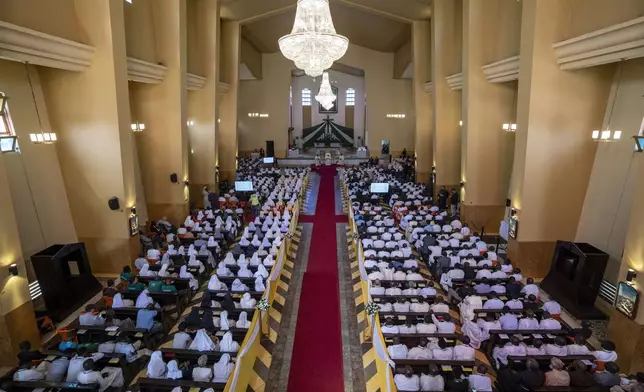
FILE - Pope Francis addresses clergy at the St. Theresa Cathedral in Juba, South Sudan, Saturday, Feb. 4, 2023. (AP Photo/Ben Curtis, File)
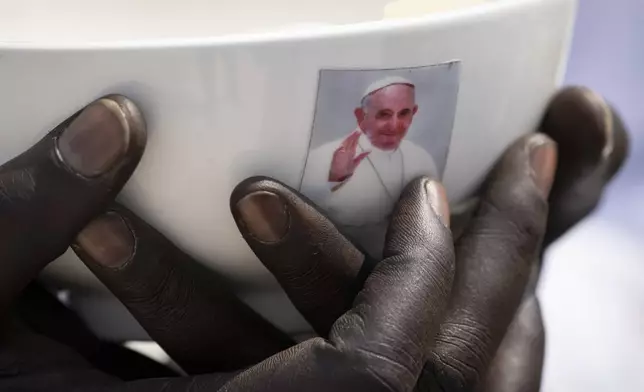
FILE - A priest holds a sacrament bowl showing a photograph of Pope Francis during a Holy Mass at the John Garang Mausoleum in Juba, South Sudan, Feb. 5, 2023. (AP Photo/Ben Curtis, File)
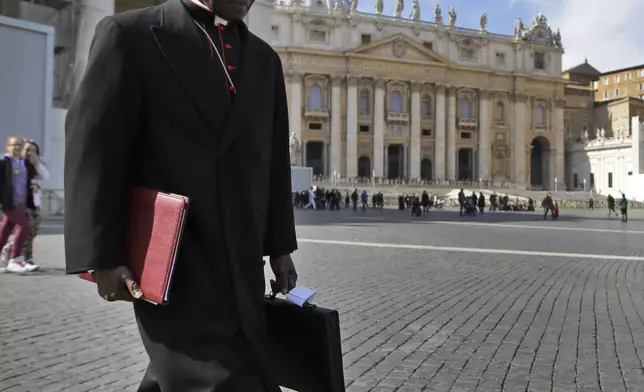
FILE - In this March 4, 2013 file photo, Cardinal Robert Sarah, of Guinea, walks in St. Peter's Square after attending a cardinals' meeting, at the Vatican. (AP Photo/Andrew Medichini, File)
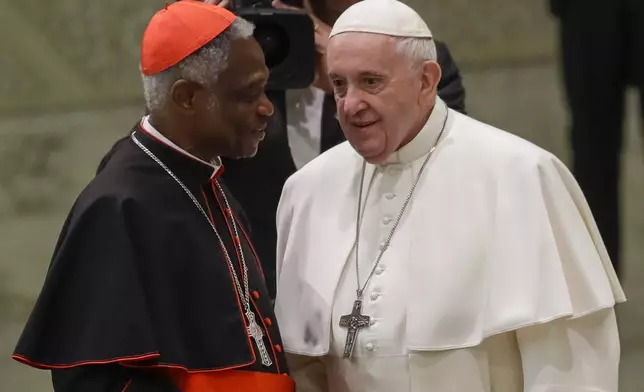
FILE - Pope Francis talks with Cardinal Peter Kodwo Appiah Turkson during his weekly general audience, in Paul VI Hall at the Vatican, Wednesday, Jan. 15, 2020. (AP Photo/Alessandra Tarantino, File)
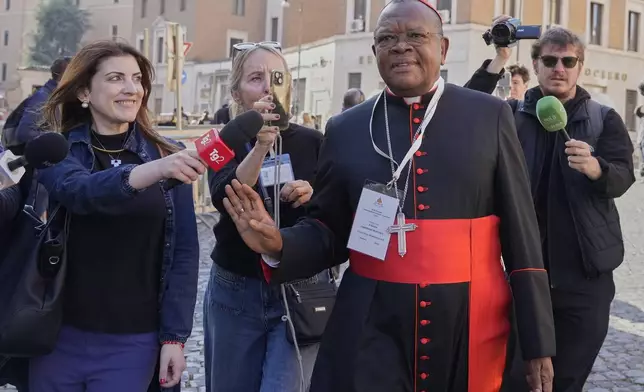
FILE - Cardinal Fridolin Ambongo Besungu is approached by reporters as he arrives for a college of cardinals' meeting, at the Vatican, Wednesday, April 30, 2025. (AP Photo/Gregorio Borgia, File)
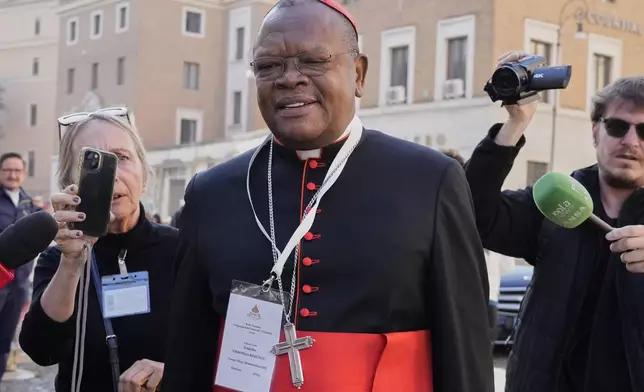
FILE - Cardinal Fridolin Ambongo Besungu arrives for a college of cardinals' meeting, at the Vatican, Wednesday, April 30, 2025. (AP Photo/Gregorio Borgia, File)
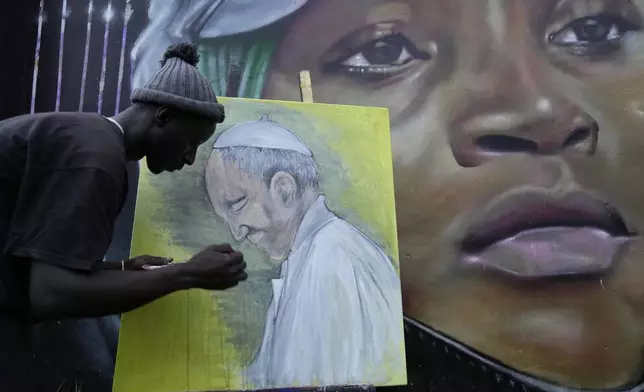
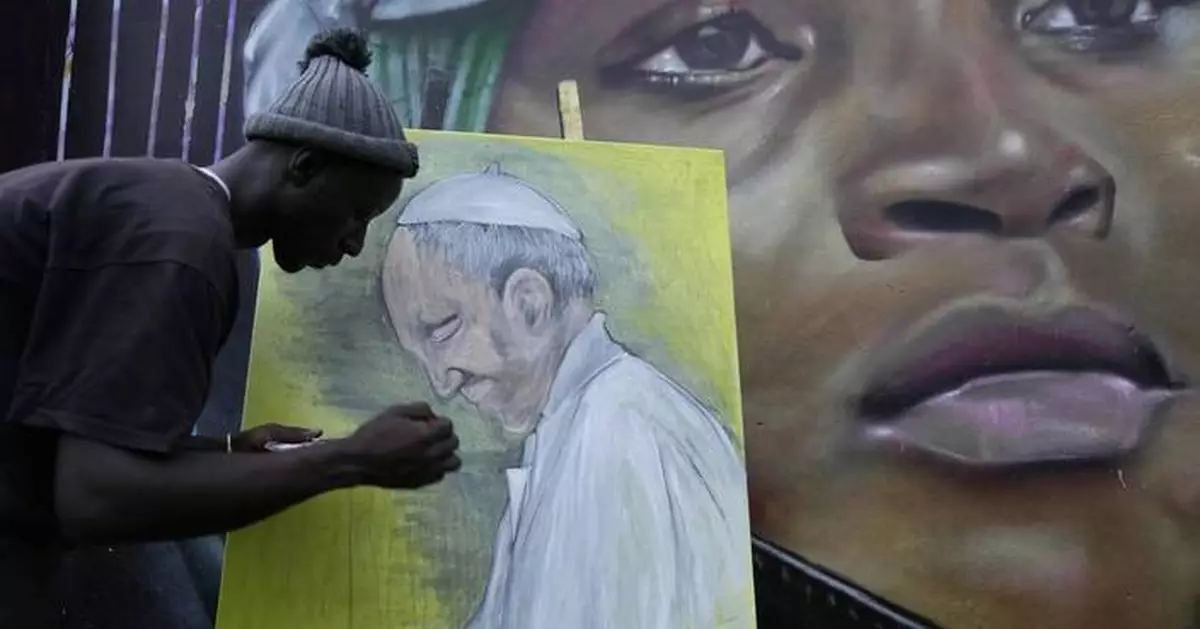
FILE - Graffiti artist Alexander Ikawah, paints Pope Francis on a canvas in Nairobi, Kenya Monday, April 21, 2025. (AP Photo/Brian Inganga, File)
At least three African cardinals are among those currently cited as “papabile," the term used by Vatican observers to describe possible contenders to lead the Catholic Church.
They are Cardinals Robert Sarah of Guinea, Peter Turkson of Ghana and Fridolin Ambongo of Congo.
If any of them is selected, he would be the first African pope in more than 1,500 years and the first ever from sub-Saharan Africa. That historical record makes many in Africa eager for change — but not overly hopeful.
Before the 2005 conclave that elected Pope Benedict XVI, there was much media attention around Francis Arinze, a highly respected cardinal born in Nigeria, raising questions even then about whether the world was ready for a Black pope from Africa.
Two decades later, Catholicism continues to decline in Europe while it grows in the developing world. The number of Catholics is growing faster in Africa than anywhere else.
At least 20% of global Catholic community is in Africa, which “is characterized by a highly dynamic spread of the Catholic Church,” according to a recent Vatican report.
Some say having a pope from Africa, or Asia — which is also seeing strong Catholic growth — would signal a powerful message of inclusion. But as Francis' papacy showed, inclusive efforts can alienate many others and even breed dissent.
The three possible papal candidates from Africa — Sarah, Ambongo, and Turkson — are seen as holding orthodox views on some of the hot-button issues that the Catholic Church is grappling with, reflecting wider social conservatism on the continent of 1.3 billion people. Catholic orthodoxy in Africa was at odds with Pope Francis’ pastoral vision of mercy and understanding for all marginalized groups, including LGBTQ+ Catholics.
The real-life situation was reflected in the fictional Oscar-nominated film “Conclave,” in which one of the four contenders vying for the papacy was a socially conservative cardinal from Nigeria.
Congo has the highest number of baptized Catholics in Africa.
Ambongo — the archbishop of Congolese capital, Kinshasa, since 2018 — last year signed a statement by the conference of African bishops rejecting a Vatican declaration to allow priests to offer spontaneous, non-liturgical blessings to same-sex couples seeking God’s grace.
That statement, seen as a rebuke of Francis, asserted that same-sex unions were “contrary to the will of God." It cited biblical teaching condemning homosexuality and asserted that same-sex relations are “contradictory to cultural norms” in Africa.
But it is Sarah, the Guinean cardinal who is the Vatican’s former liturgy chief, who posed a more public challenge to Francis.
A favorite of traditionalists, Sarah prefers silent prayer and is an adherent of the old Latin Mass. He is a staunch defender of longstanding doctrinal faith.
After Francis in 2021 reimposed restrictions on celebrating the Latin Mass that Benedict had relaxed, Sarah responded with tweets quoting Benedict’s original 2007 law to relax the restrictions. His posts were accompanied by a photo of Benedict wearing the red cape that Francis had eschewed the night of his election.
A year earlier, Sarah had orchestrated a media firestorm by persuading Benedict to co-author a book reaffirming priestly celibacy at a time when Francis was considering ordaining married men to address a clergy shortage in the Amazon. As the scandal grew, Benedict removed himself as a co-author.
Sarah, 79, officially retired in 2021 but remains eligible to attend the conclave. Since the death of Francis on April 21, he has emerged as a favorite of European traditionalists who want to see a reversal of Francis’ progressive policies.
But in Africa, where Francis was widely loved for his engagement with the continent's crises, many Catholics simply want a pope who will be a faithful leader for everyone.
“For us, it does not matter whether he is African, white, or Black. What matters is having a good, holy pope who can unite Catholics across the world,” said Luka Lawrence Ndenge, an emergency officer with the Catholic charity Caritas in the remote town of Wau in South Sudan.
The father of two said he believes an African can rise to the papacy, especially as “we already have African cardinals who are fully capable.”
Bishop Tesfaselassie Medhin, primate of Adigrat in the Ethiopian region of Tigray, said he hopes the next pope will be as compassionate as Francis, who repeatedly called attention to war in Tigray in 2021 and 2022.
But the prospect of having a Black African pope is exciting, he said.
“For me, having a passionate, dedicated and competent African leading the Catholic Church is very important to me as an African and to see it in my lifetime is my absolute wish,” he said.
Emily Mwaka doesn’t like speculating about the next pope, especially on the color of his skin. So when the head of the Catholic laity in Kampala, Uganda, recently came upon a small group of Christians discussing a newspaper article about possible papal contenders — including some from Africa — she asked them to stop it.
Even if the next pontiff is “green,” she said, he “will be for all of us.”
Associated Press reporters Samuel Getachew in Tigray, Ethiopia, and Michael Atit in Wau, South Sudan, contributed to this report.
Associated Press religion coverage receives support through the AP’s collaboration with The Conversation US, with funding from Lilly Endowment Inc. The AP is solely responsible for this content.
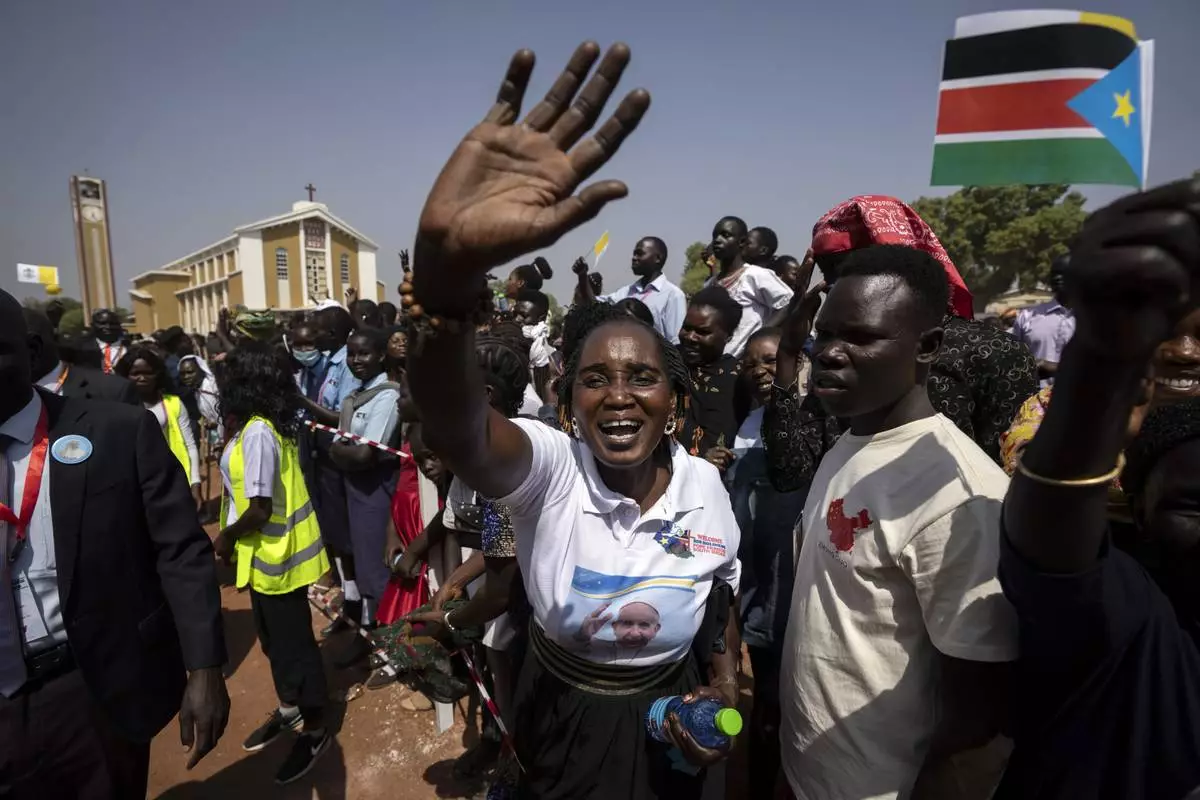
FILE - People in the crowd cheer and wave as Pope Francis is wheeled past after addressing clergy at the St. Theresa Cathedral in Juba, South Sudan, Saturday, Feb. 4, 2023. (AP Photo/Ben Curtis, File)
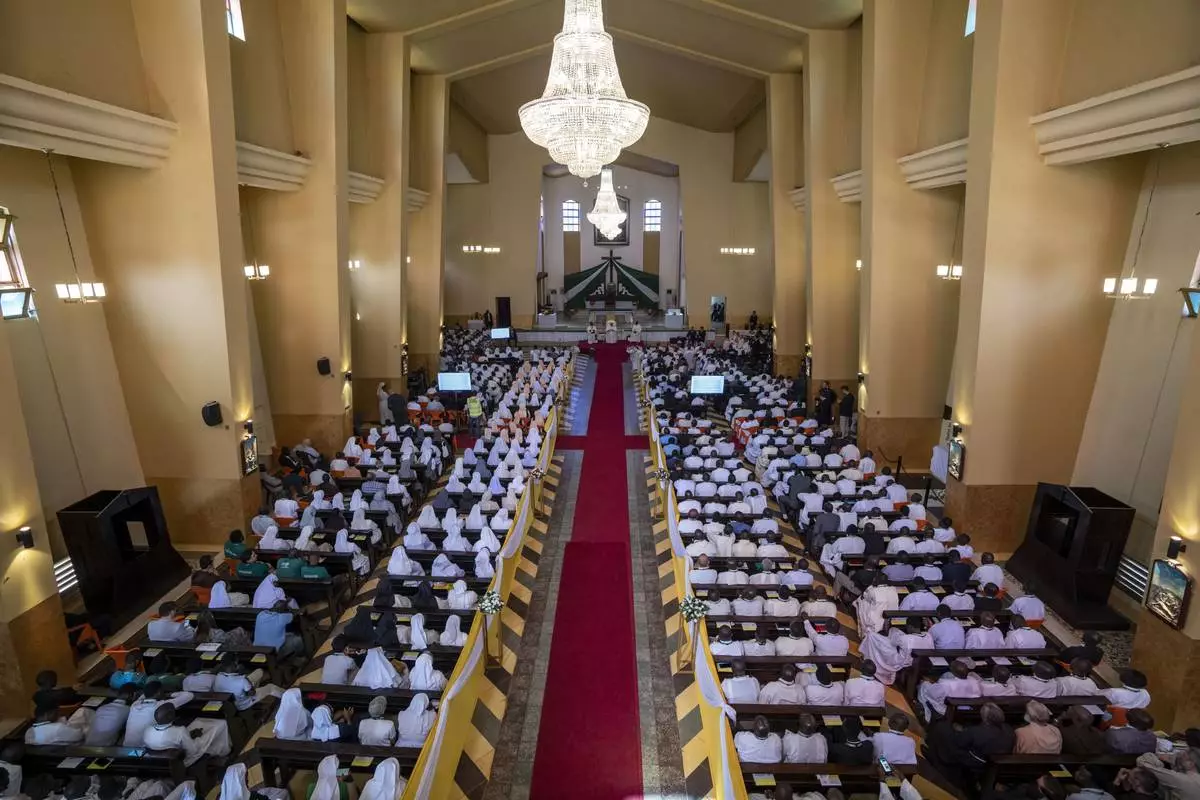
FILE - Pope Francis addresses clergy at the St. Theresa Cathedral in Juba, South Sudan, Saturday, Feb. 4, 2023. (AP Photo/Ben Curtis, File)
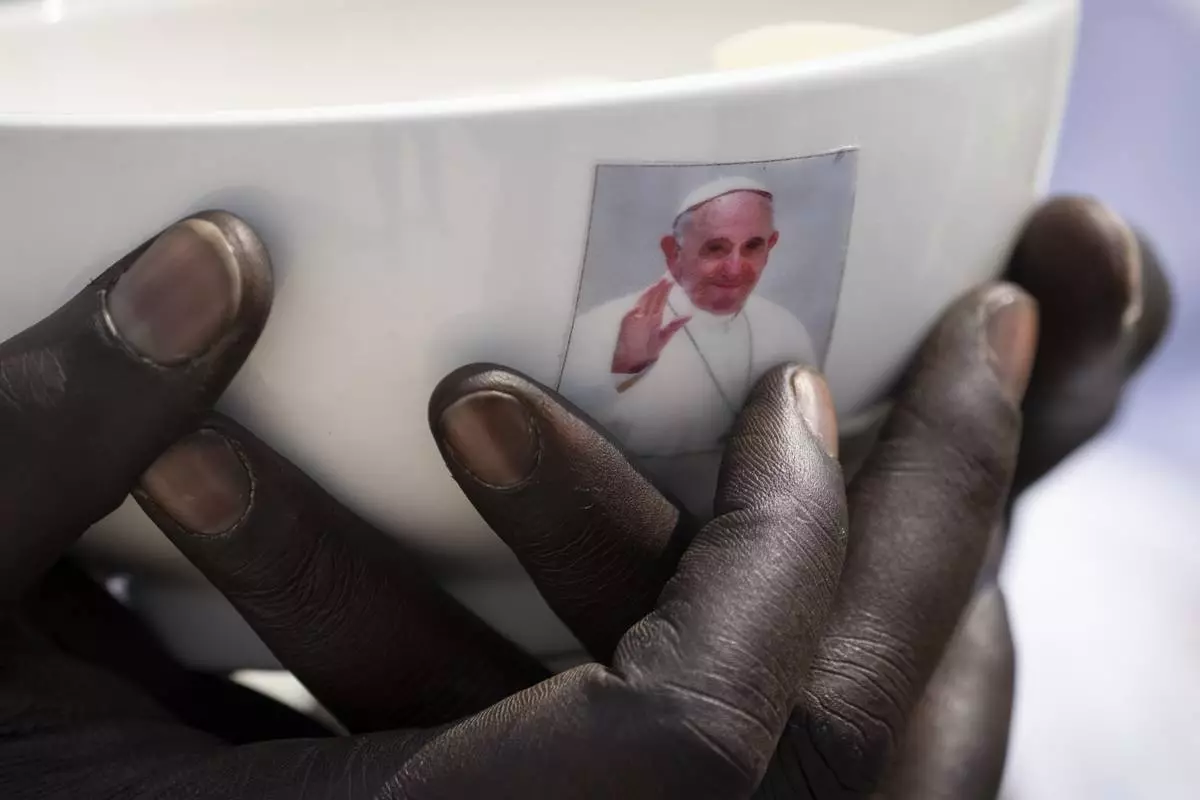
FILE - A priest holds a sacrament bowl showing a photograph of Pope Francis during a Holy Mass at the John Garang Mausoleum in Juba, South Sudan, Feb. 5, 2023. (AP Photo/Ben Curtis, File)
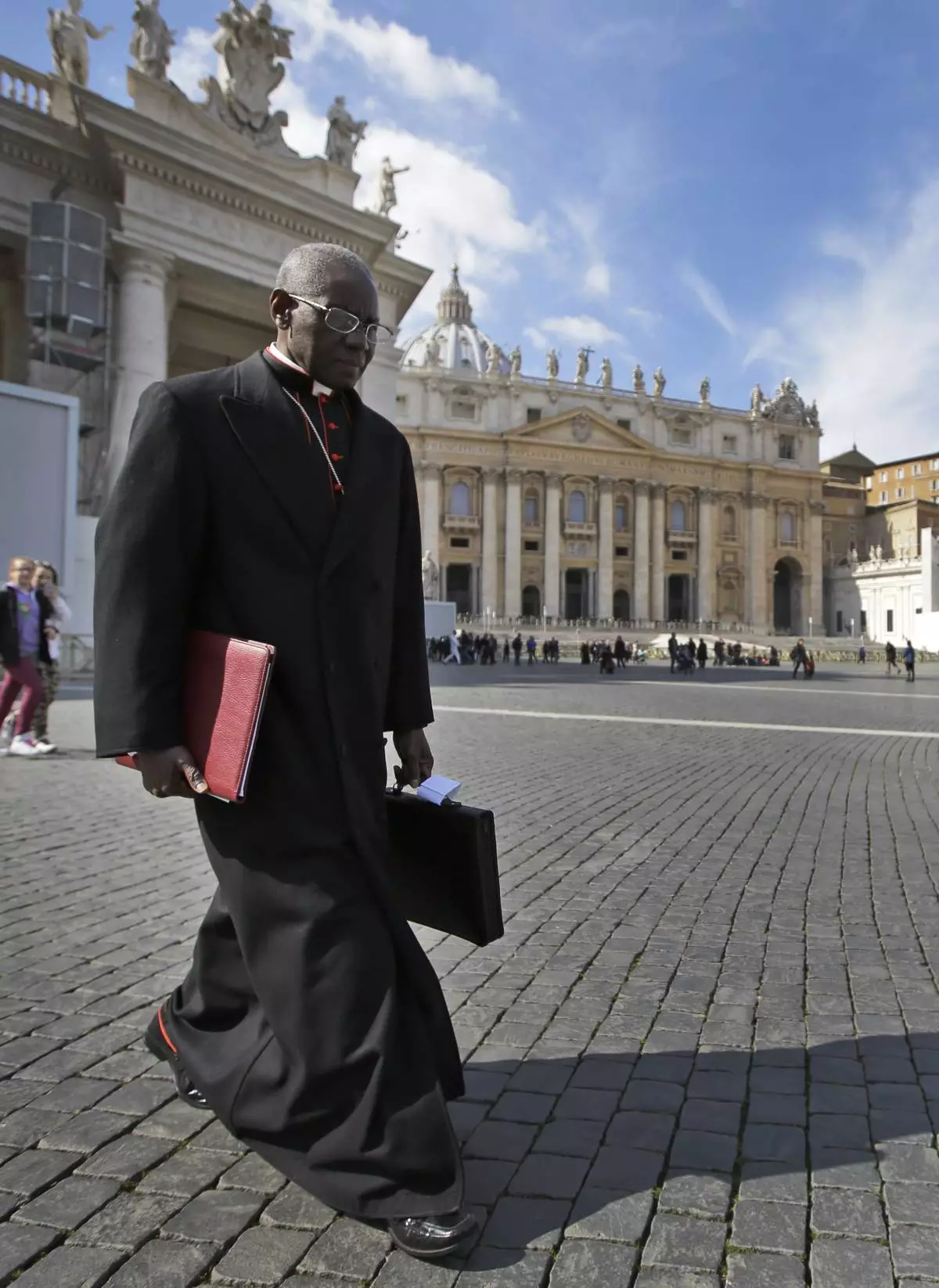
FILE - In this March 4, 2013 file photo, Cardinal Robert Sarah, of Guinea, walks in St. Peter's Square after attending a cardinals' meeting, at the Vatican. (AP Photo/Andrew Medichini, File)
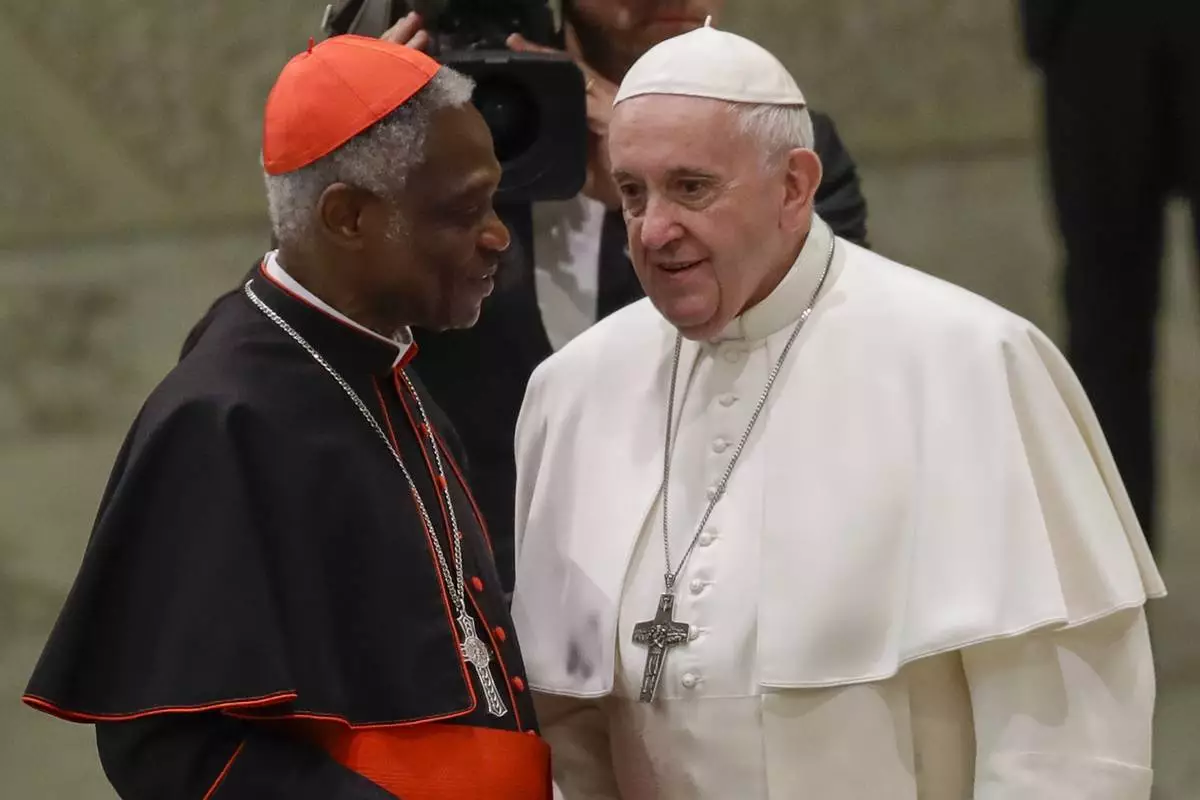
FILE - Pope Francis talks with Cardinal Peter Kodwo Appiah Turkson during his weekly general audience, in Paul VI Hall at the Vatican, Wednesday, Jan. 15, 2020. (AP Photo/Alessandra Tarantino, File)
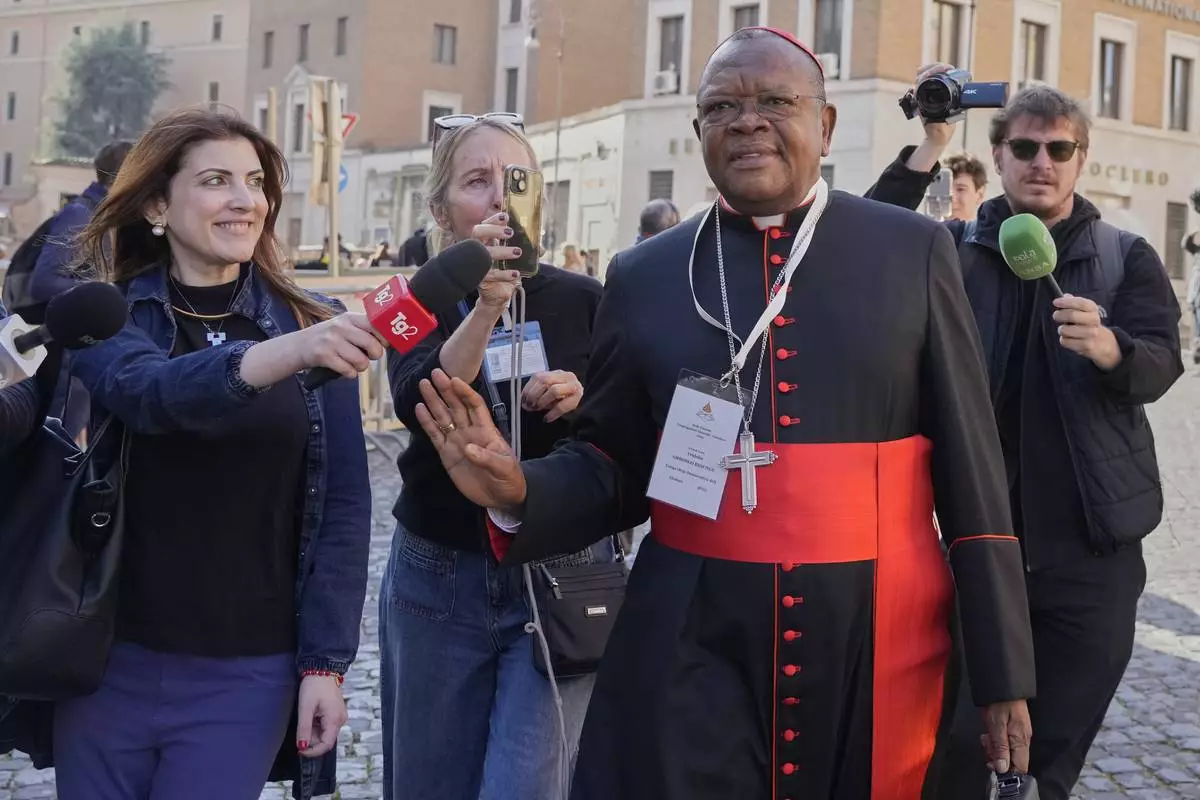
FILE - Cardinal Fridolin Ambongo Besungu is approached by reporters as he arrives for a college of cardinals' meeting, at the Vatican, Wednesday, April 30, 2025. (AP Photo/Gregorio Borgia, File)
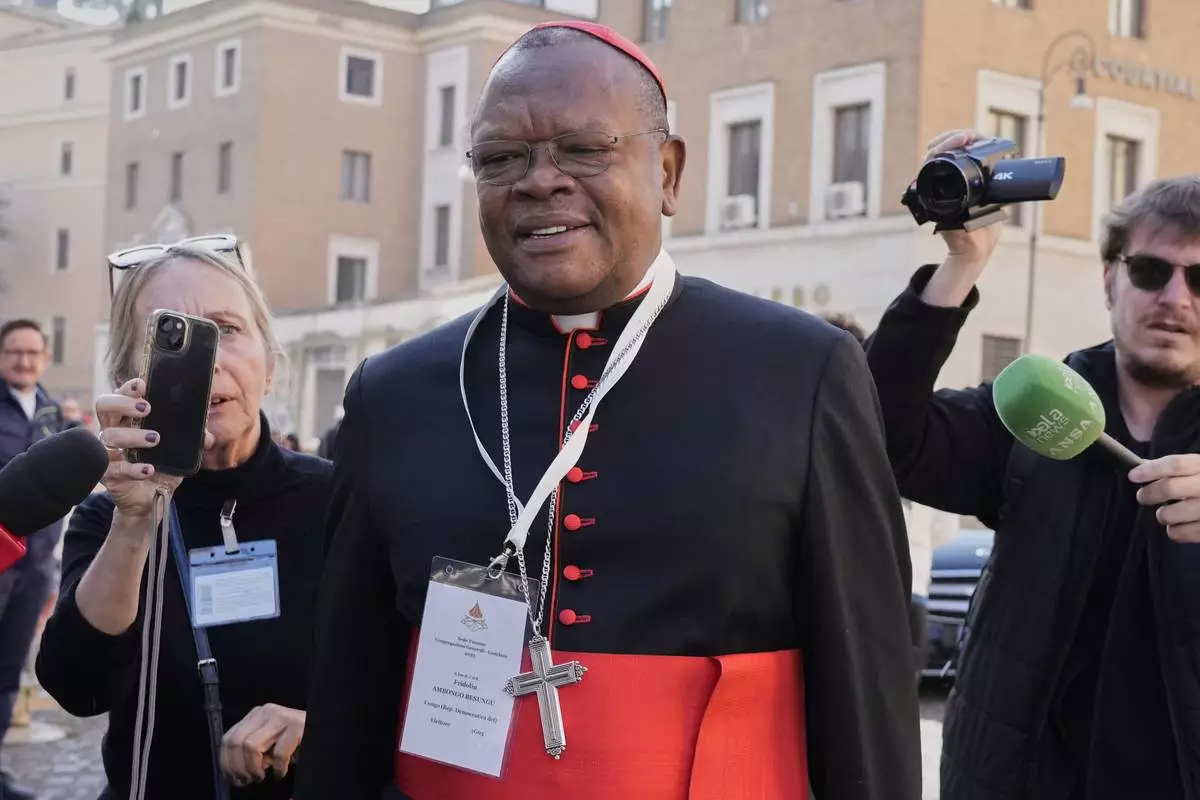
FILE - Cardinal Fridolin Ambongo Besungu arrives for a college of cardinals' meeting, at the Vatican, Wednesday, April 30, 2025. (AP Photo/Gregorio Borgia, File)
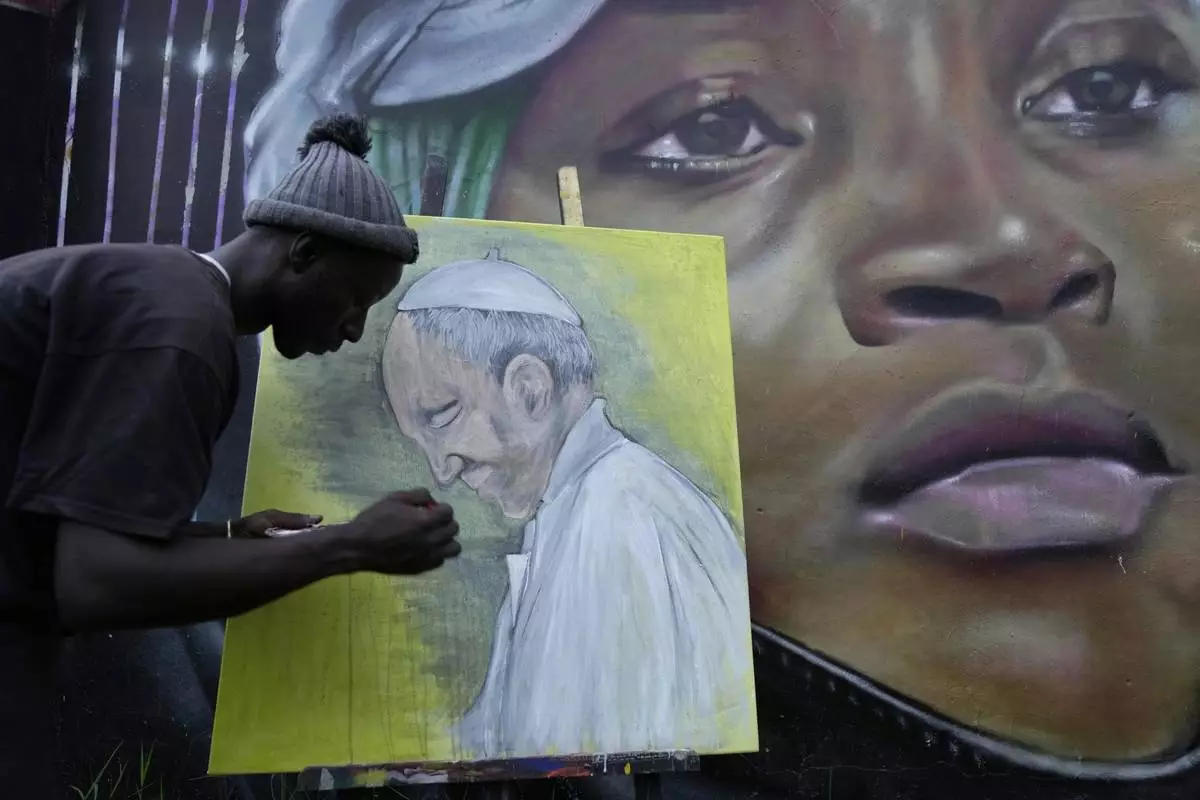
FILE - Graffiti artist Alexander Ikawah, paints Pope Francis on a canvas in Nairobi, Kenya Monday, April 21, 2025. (AP Photo/Brian Inganga, File)