Beijing's Capital and Daxing airports -- the two largest international airports in the capital city -- are expected to handle nearly 1.7 million passenger trips and over 10,000 flights during the five-day May Day holiday starting on Thursday, with Daxing airport expected to set new records since its operation.
During the holiday season, the Beijing Capital International Airport is expected to handle 957,000 passenger trips and safeguard 5,880 flights, while the Beijing Daxing International Airport is expected to handle 714,000 passenger trips and 4,687 flights.
Most of the trip destinations are China's top tourist spots, according to a Daxing Airport official, marking a vibrant tourism market during the holiday.
"During the holiday season, the passenger trips are mostly for tourism and family reunion. The passenger flow in the Daxing Airport centers on traditional tourism flights, including trips to the Yangtze River Delta, the Pearl River Delta, as well as Chengdu City and Chongqing Municipality. In addition, the number of tourists to the cities of Kunming, Haikou, Xi'an, and Urumqi surged significantly," said Pan Xiaofang, business manager of the Aviation Business Department of the Daxing airport.
To meet the different needs of passengers, the Daxing airport has introduced a set of four-colored "wristbands of care" for travelers in need, aiming to provide customized services for all. The Capital airport has activated a plan to dynamically redeploy staff to guide the passenger flow at key points during the busy holiday season.
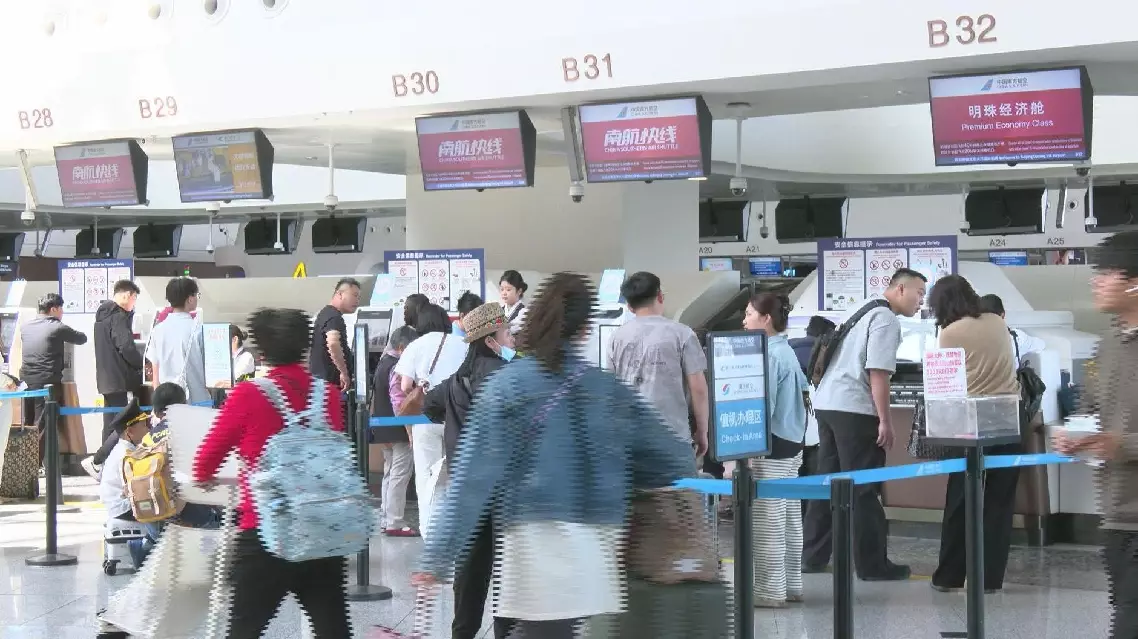
Beijing airports expected to see surge in flights, passenger trips during May Day holiday
Beijing airports expected to see surge in flights, passenger trips during May Day holiday
The improving bilateral relations between China and Canada helps the North American country to build up its economic resilience, and the Canadian government is putting efforts to recalibrate the relationship, a professor from the University of Toronto has said.
Canadian Prime Minister Mark Carney began his official visit to China on Wednesday, marking the first trip by a Canadian prime minister to China since 2017.
Endorsing his visit, Aurel Braun, professor of International Relations and Political Science from the University of Toronto, highlighted the importance for Canada to actively engage and expand trade with China.
"China is an important player not only internationally, but in terms of Canada as well, and the operative word being used by the Canadian government is to recalibrate the relationship. Clearly, the Canadian government is putting a lot of effort into this. There's a very heavy delegation going, [including] the foreign minister. There are people from the provinces as well. Canada, as you know, is a federation. And this is part of Canada's overall goal to diversify trade to build greater resiliency," said the professor.
The effort aligns with Canada's long-term goal of building economic resilience, yet current overdependence on the single market of the U.S. has restrained the Canadian government from taking drastic moves.
"Only about four percent of Canadian exports go to China, and China is the third largest market after the EU. The problem is that about three-quarters of our exports go to the United States, and therefore, you cannot just shift that around in an entirely dramatic way. You can make incremental changes, but there are certain obstacles to that," he said.
The professor cited Canada's tariffs on automobiles, particularly Chinese electric vehicles, as an example of its political and economic constraints.
"Let me give you an example. There have been Canadian tariffs that have been placed on automobiles and vehicles, particularly China's electric vehicles. And that has been done partly because there's an attempt to protect the industry in Canada and also because of pressure from the United States. There has been retaliation on the part of China, which has hurt Canada very hard when it comes to canola exports, when it comes to seafood and beef," he said.
Efforts to ease tensions with China face resistance not only from within the country but also from the United States, making policy adjustments more complex.
"But to change that, there's not only going to be opposition from the province of Ontario, with the automobile industry has [having] been very hard hit, but also from the United States. So this really involves some very careful political and economic choreography on the part of both Canada and China, and also in Canada's relationship with the United States," he said.

China-Canada friendship benefits Canadian economic resilience: professor